Bronchioles are the smallest airways in the respiratory system, playing a critical role in regulating airflow to the lungs. While they are tiny compared to the trachea and bronchi, their structure and function have a major impact on airway resistance and overall breathing efficiency.
Understanding how bronchioles influence airflow helps explain normal respiration, exercise performance, and common respiratory conditions such as asthma.
What Are Bronchioles?
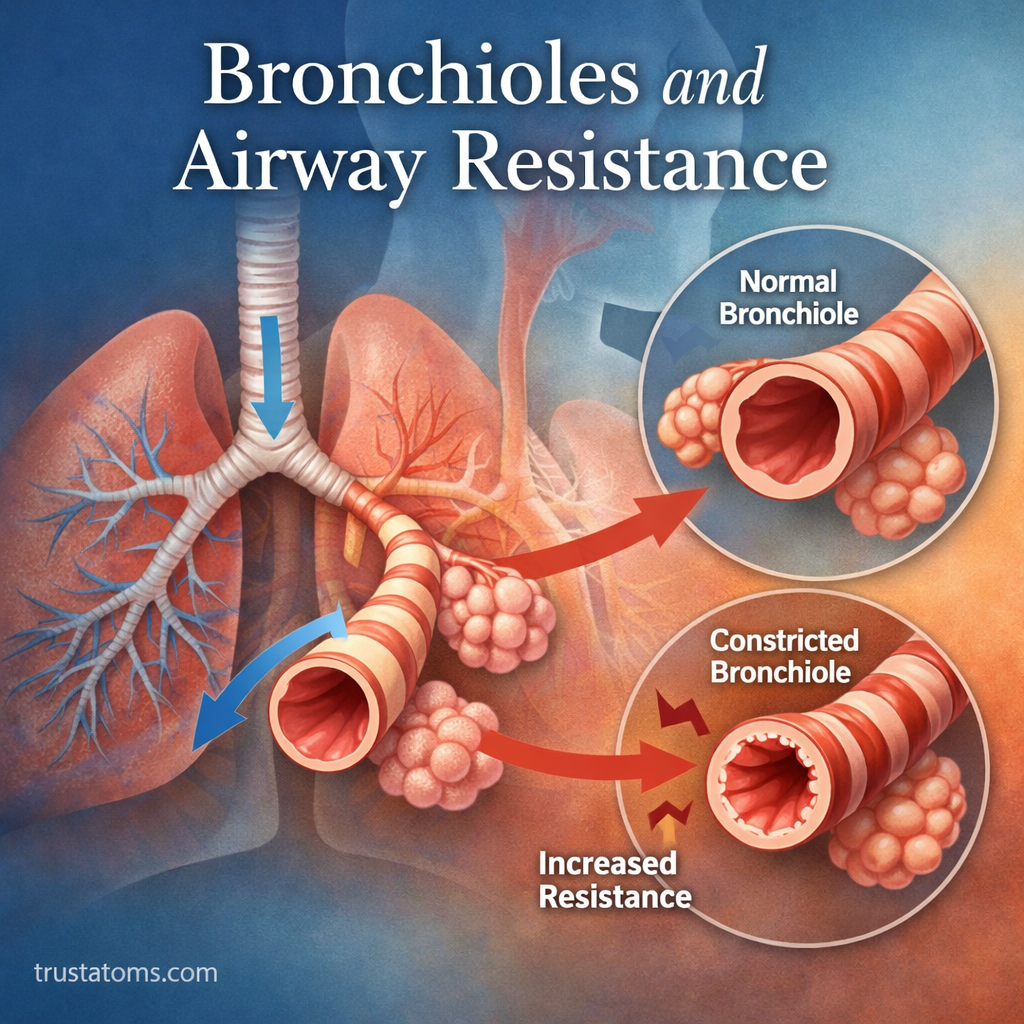
Bronchioles are narrow air passages that branch off from the bronchi and lead directly to the alveoli, where gas exchange occurs.
Key characteristics of bronchioles include:
- Diameter typically less than 1 millimeter
- Lack of cartilage (unlike larger airways)
- Walls made mostly of smooth muscle
- Extensive branching network within the lungs
Because bronchioles lack rigid cartilage, they are highly flexible and can change diameter easily—making them the primary site of airflow regulation.
What Is Airway Resistance?
Airway resistance refers to how much opposition there is to airflow as air moves through the respiratory tract.
In simple terms:
- High resistance = harder to breathe
- Low resistance = easier airflow
Airway resistance depends mainly on:
- Airway diameter
- Length of the airway
- Airflow characteristics (laminar vs turbulent flow)
Among these, airway diameter is the most important factor—and this is where bronchioles play a central role.
Why Bronchioles Control Airway Resistance
Even small changes in bronchiole diameter can dramatically affect airflow.
This is explained by a principle from physics: resistance increases sharply as airway radius decreases. In fact, resistance is inversely proportional to the fourth power of the radius.
This means:
- A slight narrowing → large increase in resistance
- A slight widening → large decrease in resistance
Because bronchioles are small and numerous, they collectively determine how easily air can reach the alveoli.
Smooth Muscle and Bronchiole Function
The walls of bronchioles contain smooth muscle that can contract or relax to adjust airway size.
Bronchoconstriction (Narrowing)
When smooth muscle contracts:
- Bronchioles become narrower
- Airway resistance increases
- Airflow is reduced
Triggers include:
- Allergens
- Cold air
- Irritants (smoke, pollution)
- Parasympathetic nervous system activity
Bronchodilation (Widening)
When smooth muscle relaxes:
- Bronchioles widen
- Airway resistance decreases
- Airflow improves
Triggers include:
- Exercise
- Sympathetic nervous system activation
- Medications like bronchodilators
Role of Bronchioles in Breathing Efficiency
Bronchioles fine-tune how air is distributed throughout the lungs.
They help:
- Direct airflow to different lung regions
- Match airflow with blood flow (ventilation-perfusion matching)
- Maintain efficient gas exchange
During exercise, bronchioles dilate to allow increased airflow. At rest, they maintain a balanced resistance to ensure steady breathing.
Factors That Increase Airway Resistance
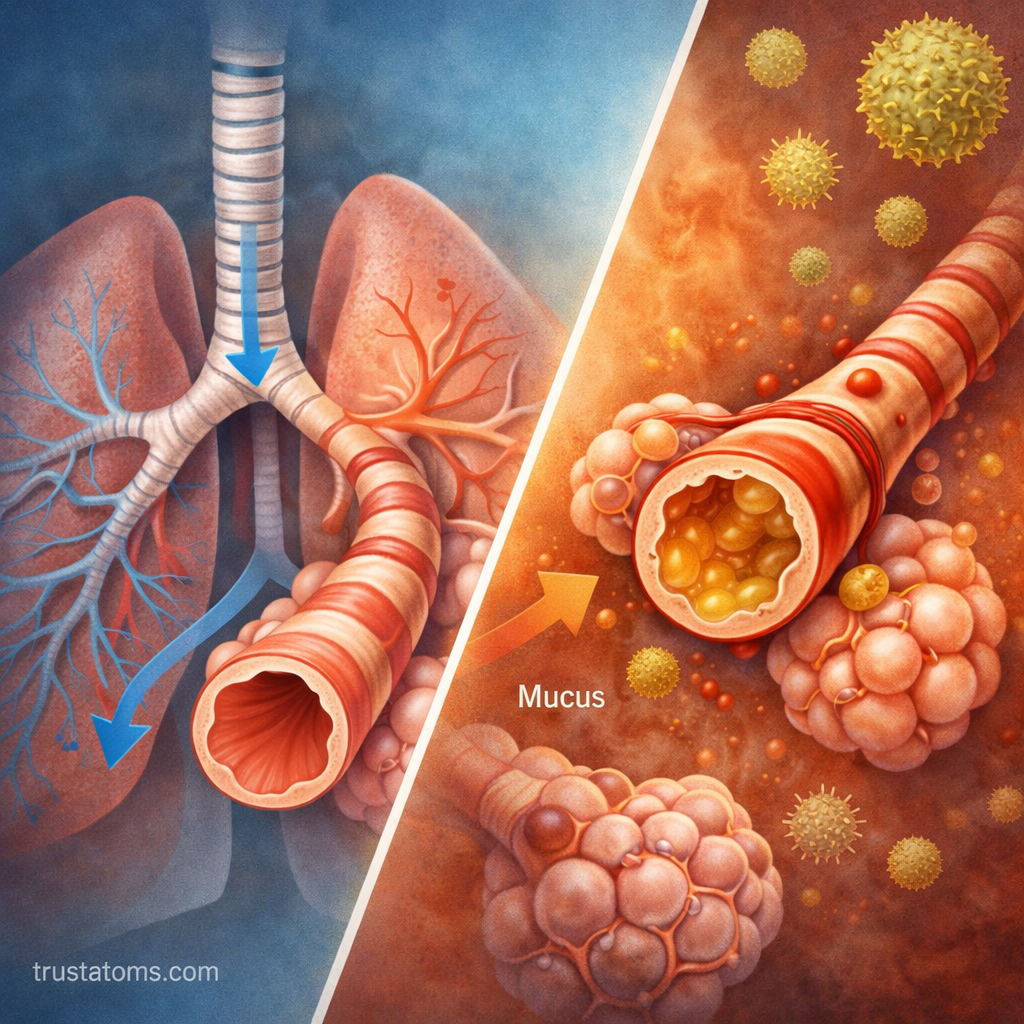
Several conditions can cause bronchioles to narrow, increasing resistance:
1. Inflammation
- Swelling of airway walls
- Common in asthma and infections
2. Mucus Production
- Excess mucus can block airways
- Seen in bronchitis and COPD
3. Smooth Muscle Contraction
- Sudden narrowing due to triggers
- Key feature of asthma attacks
4. Loss of Elasticity
- Reduced ability to keep airways open
- Occurs in chronic lung diseases
Bronchioles and Respiratory Disorders
Because bronchioles are so small and sensitive, they are often the primary site of disease.
Asthma
- Bronchioles constrict and become inflamed
- Leads to wheezing and difficulty breathing
Chronic Obstructive Pulmonary Disease (COPD)
- Long-term narrowing and damage
- Increased resistance and airflow limitation
Bronchiolitis
- Inflammation of bronchioles, often in children
- Caused by viral infections
How the Body Regulates Airway Resistance
The body constantly adjusts bronchiole diameter to meet oxygen demands.
Key regulatory systems include:
- Nervous system
- Sympathetic → bronchodilation
- Parasympathetic → bronchoconstriction
- Chemical signals
- Carbon dioxide levels
- Oxygen demand
- Local factors
- Lung stretch receptors
- Inflammatory mediators
These mechanisms ensure that airflow remains efficient under changing conditions.
Why Bronchioles Matter More Than Larger Airways
Although larger airways carry more air, bronchioles have a greater overall impact on resistance because:
- They are extremely numerous
- Their combined cross-sectional area is large
- Small changes occur across many branches simultaneously
This makes them the “control points” of airflow in the lungs.
Final Thoughts
Bronchioles may be small, but they play a powerful role in breathing. By controlling airway diameter, they directly influence airway resistance and determine how easily air moves through the lungs.
Their ability to rapidly constrict or dilate allows the body to adapt to different conditions—from resting to intense physical activity. However, this same sensitivity also makes them vulnerable to inflammation and disease.
Understanding bronchioles and airway resistance provides valuable insight into both normal respiratory function and common breathing disorders.