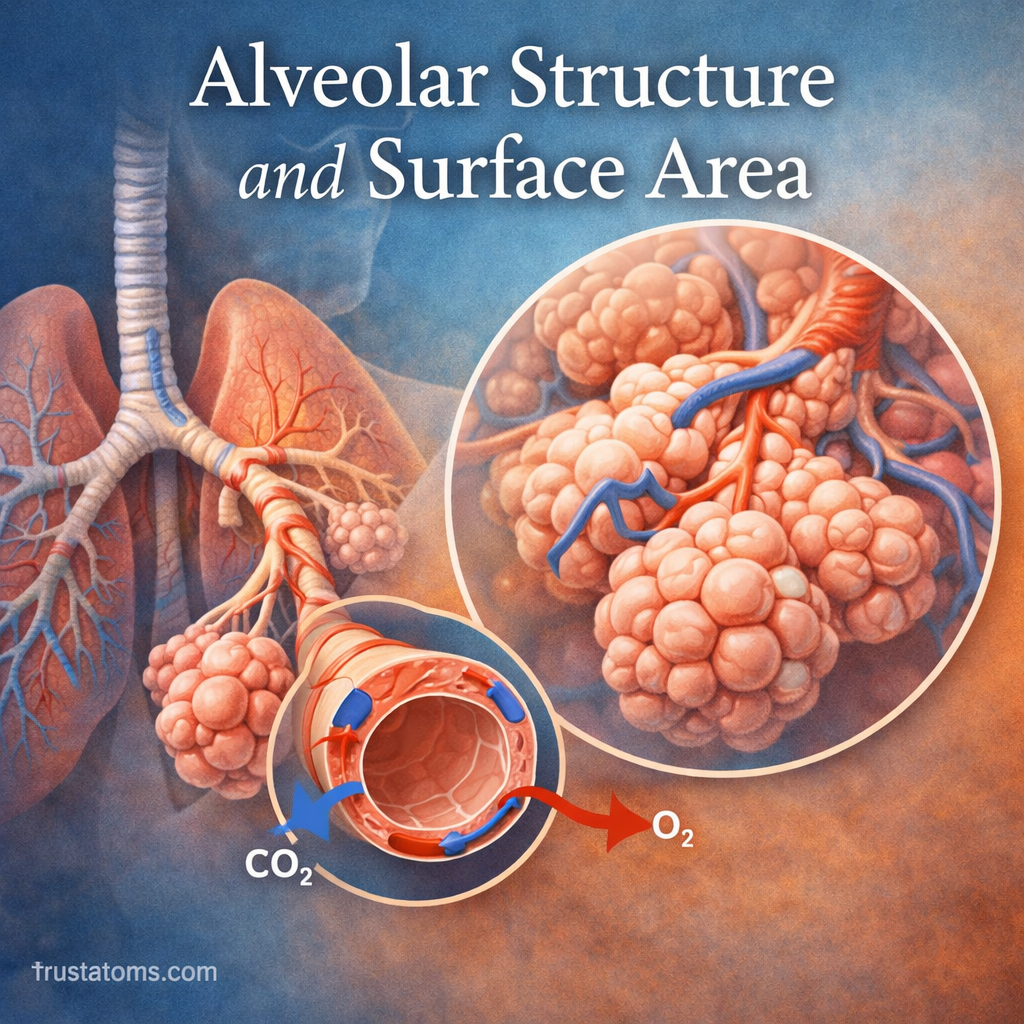
Alveoli are tiny air sacs in the lungs where oxygen and carbon dioxide are exchanged between the air and the bloodstream. Although each alveolus is microscopic, their combined structure creates a massive surface area that is essential for efficient respiration.
Understanding alveolar structure and surface area helps explain how the lungs meet the body’s oxygen demands—and why even small damage to this system can have major consequences.
What Are Alveoli?
Alveoli are the final branches of the respiratory system, located at the ends of bronchioles. They are the primary sites of gas exchange.
Key features of alveoli include:
- Extremely thin walls (one cell thick)
- Surrounded by dense networks of capillaries
- Moist surfaces to allow gas diffusion
- Clustered in groups resembling grapes
Each lung contains hundreds of millions of alveoli, working together to maximize gas exchange efficiency.
The Structure of Alveoli
The structure of alveoli is specifically designed to optimize the movement of gases.
1. Thin Epithelial Walls
Alveoli are lined with simple squamous epithelium, which allows:
- Oxygen to diffuse quickly into the blood
- Carbon dioxide to diffuse out of the blood
This minimal barrier is critical for rapid gas exchange.
2. Capillary Network
Each alveolus is surrounded by a dense network of capillaries.
- Brings deoxygenated blood close to the air
- Allows rapid exchange of gases
- Maintains a strong concentration gradient
3. Surfactant Layer
Alveoli are coated with a substance called surfactant, produced by specialized cells.
Surfactant:
- Reduces surface tension
- Prevents alveolar collapse
- Makes breathing easier
Without surfactant, alveoli would stick together and be much harder to inflate.
Why Surface Area Matters
The lungs are designed to maximize surface area, which directly impacts how much gas can be exchanged.
Key concept:
- Greater surface area = more efficient gas exchange
The total surface area of all alveoli in the lungs is estimated to be around:
- 50 to 75 square meters (about the size of a tennis court)
This massive area allows the lungs to supply oxygen to the entire body efficiently, even during intense activity.
How Alveoli Increase Surface Area
Several structural features contribute to the large surface area of the lungs.
1. Large Number of Alveoli
- Hundreds of millions of alveoli per lung
- Each contributes a small area that adds up significantly
2. Highly Folded Structure
- Alveoli create an expanded internal surface
- Maximizes contact between air and blood
3. Compact Arrangement
- Alveoli are tightly packed together
- Minimizes unused space while maximizing efficiency
Gas Exchange in the Alveoli
Gas exchange occurs through a process called diffusion.
Steps of Gas Exchange:
- Air enters the alveoli during inhalation
- Oxygen concentration is higher in alveoli than in blood
- Oxygen diffuses into capillaries
- Carbon dioxide diffuses from blood into alveoli
- Carbon dioxide is exhaled
This process is fast and continuous, driven by concentration gradients and the thin alveolar membrane.
Factors That Affect Alveolar Efficiency
Several factors influence how well alveoli function.
1. Surface Area
- Reduced surface area decreases oxygen uptake
- Seen in diseases like emphysema
2. Membrane Thickness
- Thicker membranes slow diffusion
- Occurs in inflammation or fluid buildup
3. Blood Flow
- Adequate circulation is required for gas exchange
- Poor blood flow reduces efficiency
4. Ventilation
- Proper airflow must reach alveoli
- Blocked airways limit oxygen delivery
Alveoli and Respiratory Disorders
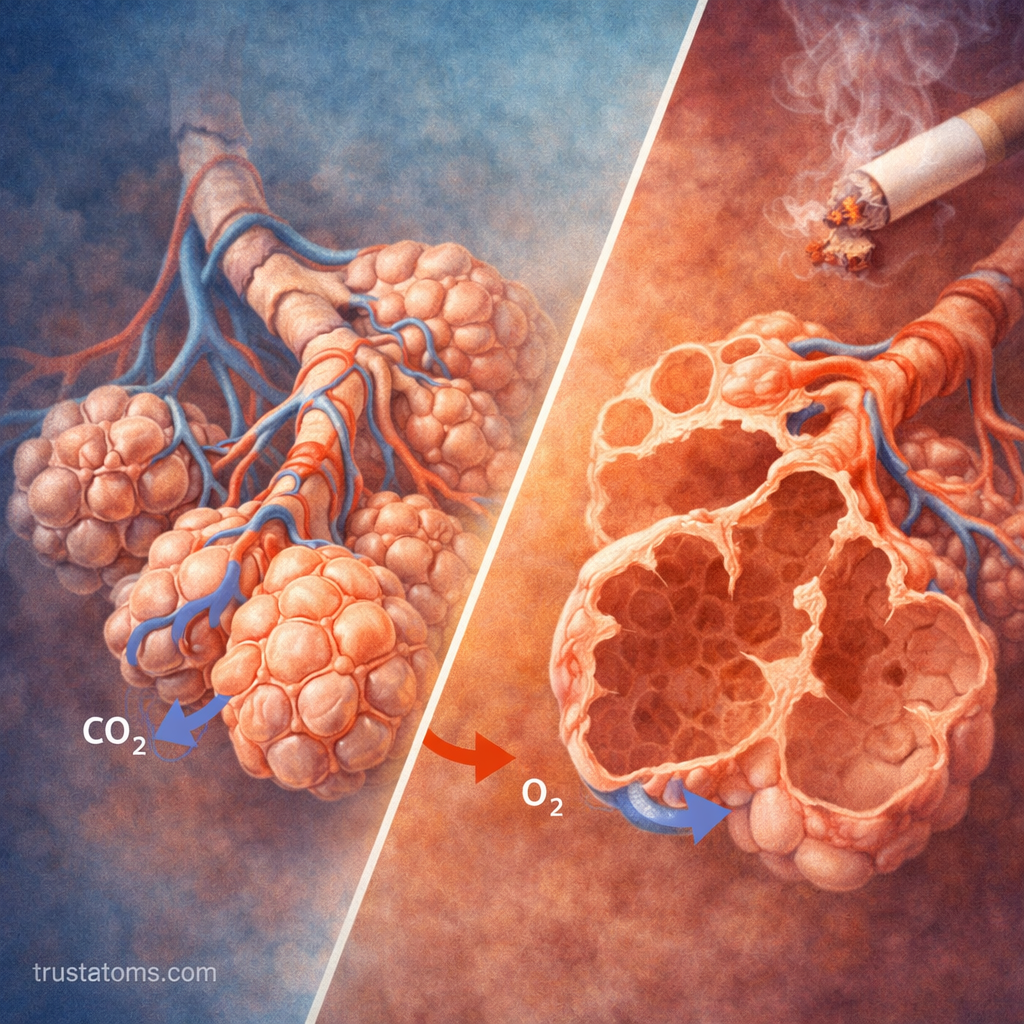
Damage to alveoli can significantly reduce lung function.
Emphysema
- Alveolar walls break down
- Surface area decreases
- Leads to reduced oxygen exchange
Pulmonary Edema
- Fluid accumulates in alveoli
- Increases diffusion distance
- Impairs gas exchange
Acute Respiratory Distress Syndrome (ARDS)
- Severe inflammation damages alveoli
- Reduces both surface area and efficiency
Why Alveolar Design Is So Efficient
The alveoli represent an ideal system for gas exchange because they combine:
- Massive surface area
- Extremely thin diffusion barriers
- Close contact with blood supply
- Moist environment for gas movement
This combination allows the lungs to perform one of the most vital functions in the body—delivering oxygen and removing carbon dioxide—quickly and efficiently.
Final Thoughts
Alveolar structure and surface area are fundamental to how the respiratory system supports life. By maximizing the area available for gas exchange and minimizing the distance gases must travel, the lungs achieve remarkable efficiency.
Any disruption to this delicate structure—whether through disease, injury, or environmental exposure—can significantly impact breathing and overall health.
Understanding how alveoli work provides a deeper appreciation for the complexity and precision of the human body.