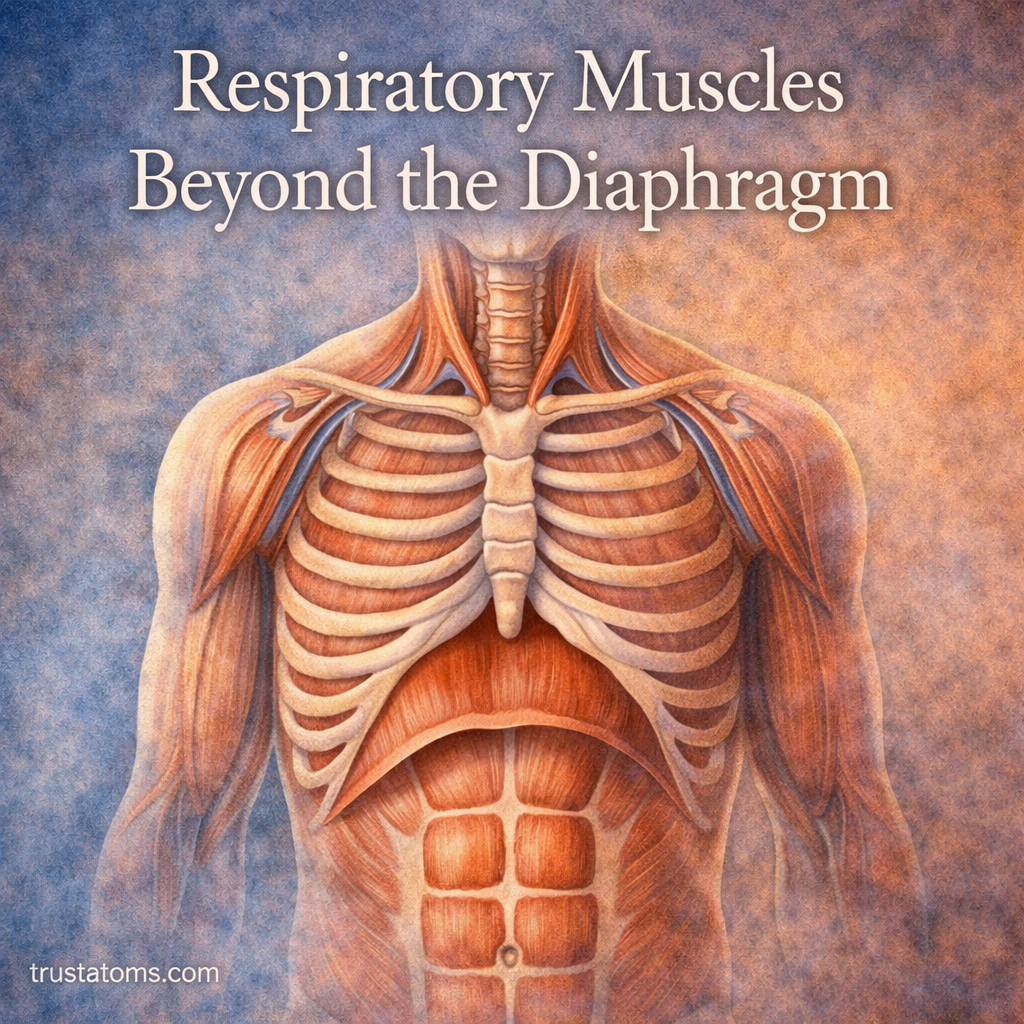
When most people think about breathing, they think of the diaphragm—the primary muscle responsible for inhalation. However, breathing also relies on a group of additional muscles that assist in expanding and compressing the lungs, especially during physical activity or respiratory stress.
These supporting muscles, often called accessory respiratory muscles, play a crucial role in maintaining efficient airflow when the body’s demand for oxygen increases.
The Role of the Diaphragm (Quick Overview)
Before exploring other respiratory muscles, it’s helpful to understand the diaphragm’s role.
- Dome-shaped muscle beneath the lungs
- Contracts and flattens during inhalation
- Increases chest cavity volume
- Draws air into the lungs
While the diaphragm handles most breathing at rest, it does not work alone—especially during exertion.
What Are Accessory Respiratory Muscles?
Accessory respiratory muscles assist with breathing when normal respiration is not sufficient.
They become more active during:
- Exercise
- Deep breathing
- Respiratory distress
- Lung disease
These muscles help expand the chest cavity further or force air out more efficiently.
Muscles Involved in Inspiration (Inhalation)
In addition to the diaphragm, several muscles help lift and expand the rib cage during inhalation.
1. External Intercostal Muscles
- Located between the ribs
- Contract to lift the rib cage upward and outward
- Increase chest volume
These are the primary accessory muscles used during normal, deeper breathing.
2. Sternocleidomastoid Muscles
- Located in the neck
- Lift the sternum (breastbone) when activated
They are especially active during:
- Labored breathing
- Intense physical activity
3. Scalene Muscles
- Found along the sides of the neck
- Elevate the first two ribs
They assist in:
- Deep inhalation
- Stabilizing the upper chest
Muscles Involved in Forced Expiration
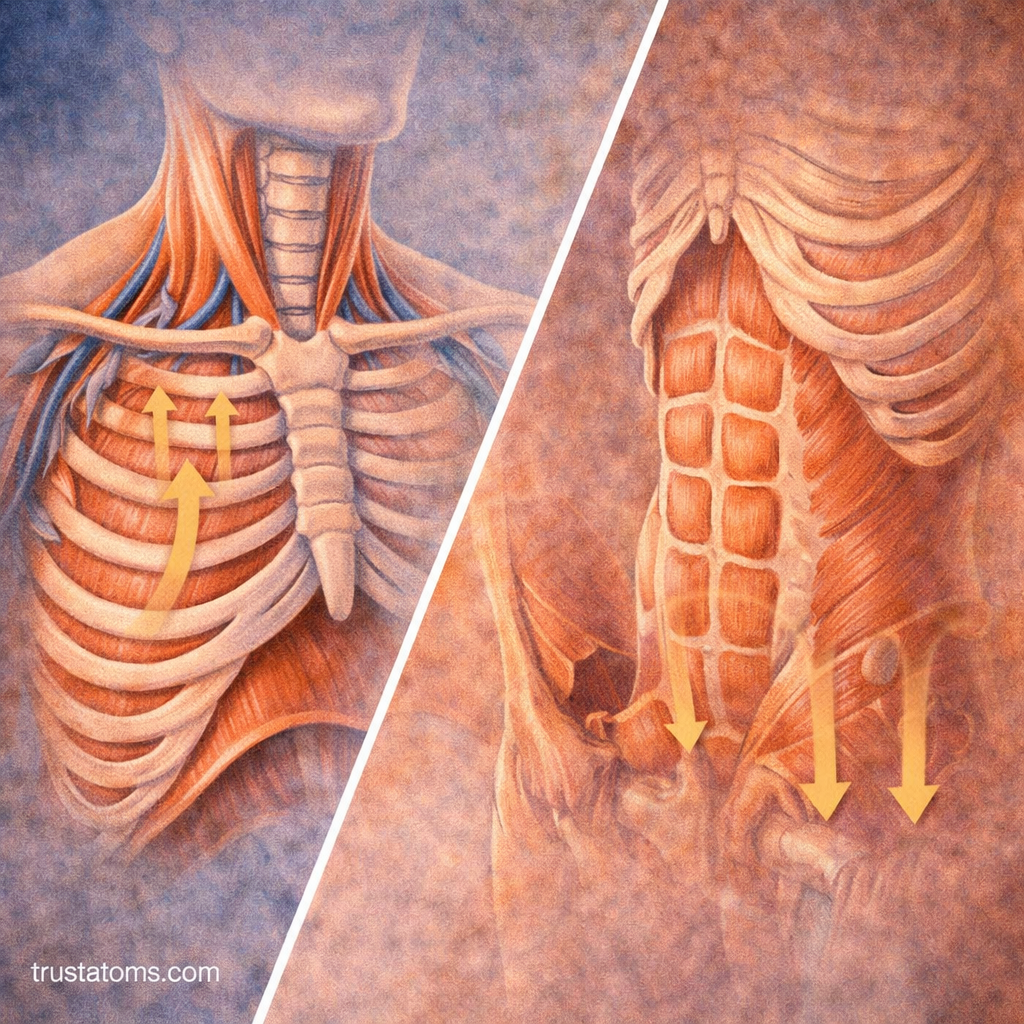
At rest, exhalation is mostly passive. However, during forceful breathing, additional muscles are required.
1. Internal Intercostal Muscles
- Pull the ribs downward and inward
- Decrease chest cavity volume
- Help push air out of the lungs
2. Abdominal Muscles
Key muscles include:
- Rectus abdominis
- External obliques
- Internal obliques
- Transversus abdominis
These muscles:
- Increase pressure within the abdominal cavity
- Push the diaphragm upward
- Force air out of the lungs
When Accessory Muscles Become Important
Accessory respiratory muscles are not heavily used during relaxed breathing but become essential in certain situations.
Common Scenarios:
- Exercise
- Increased oxygen demand requires deeper, faster breathing
- Respiratory illness
- Conditions like asthma or COPD increase breathing effort
- High altitude
- Lower oxygen availability increases respiratory workload
- Stress or anxiety
- Rapid breathing activates neck and chest muscles
Signs of Accessory Muscle Use
Increased reliance on accessory muscles can be a sign of respiratory difficulty.
Observable signs include:
- Neck muscles visibly contracting during breathing
- Shoulder lifting with each breath
- Rapid or labored breathing
- Chest retractions (skin pulling inward between ribs)
These signs often indicate that the body is working harder to move air.
Coordination Between Respiratory Muscles
Efficient breathing requires coordination between multiple muscle groups.
During inhalation:
- Diaphragm contracts and flattens
- External intercostals lift the ribs
- Accessory muscles expand the upper chest
During forced exhalation:
- Abdominal muscles contract
- Internal intercostals pull ribs inward
- Air is pushed out more forcefully
This coordinated effort ensures that airflow meets the body’s needs.
Respiratory Muscles and Exercise Performance
Stronger respiratory muscles can improve breathing efficiency and endurance.
Benefits include:
- Increased oxygen intake
- Reduced fatigue during activity
- Better athletic performance
Some training programs specifically target breathing muscles to enhance performance.
Clinical Relevance of Respiratory Muscles
Understanding these muscles is important in medical settings.
In Respiratory Diseases:
- Increased accessory muscle use signals distress
- Helps clinicians assess breathing difficulty
In Mechanical Ventilation:
- Muscle activity may be reduced or supported
- Proper function must be restored during recovery
In Neuromuscular Disorders:
- Weak respiratory muscles can impair breathing
- May require medical intervention
Why These Muscles Matter
While the diaphragm is the primary driver of breathing, accessory respiratory muscles provide critical support when demand increases.
They:
- Enhance lung expansion
- Assist in forceful breathing
- Help maintain oxygen levels under stress
Without them, the body would struggle to meet oxygen demands during activity or illness.
Final Thoughts
Breathing is a coordinated effort involving more than just the diaphragm. Accessory respiratory muscles play a vital role in adapting to increased physical demands and maintaining efficient airflow.
From everyday activities to intense exercise or illness, these muscles ensure that the respiratory system can respond effectively to the body’s needs.