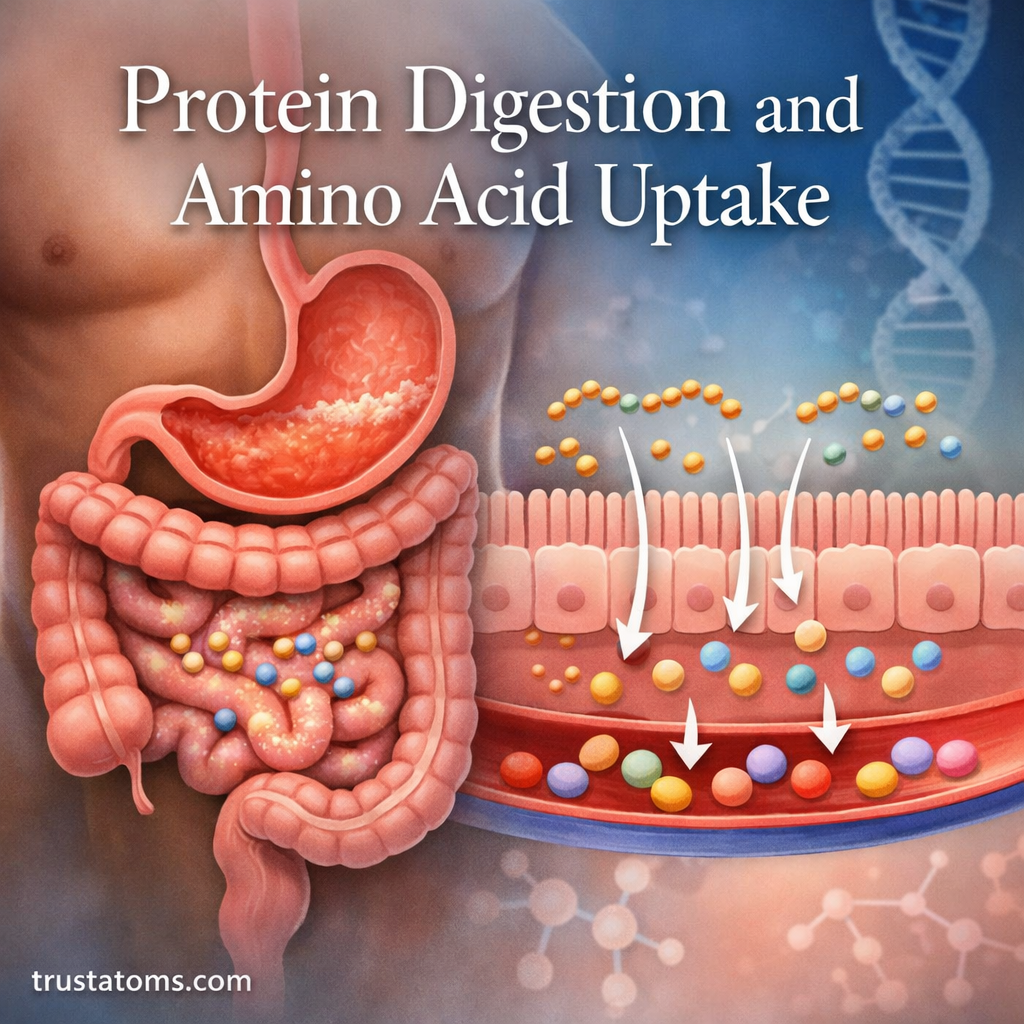
Protein digestion is the process of breaking dietary proteins into amino acids and small peptides that the small intestine can absorb. Digestion begins in the stomach, continues through pancreatic and intestinal enzymes, and ends with amino acids entering the bloodstream for use throughout the body.
This process connects the digestive organs studied in human anatomy with the body’s need to build tissues, produce enzymes, and maintain normal cellular function. Understanding each stage explains why stomach acid, pancreatic enzymes, intestinal transporters, and blood circulation must work together.
What Are Proteins and Amino Acids?
Proteins are large molecules made from chains of amino acids joined by peptide bonds. The body uses 20 standard amino acids to construct proteins with different shapes and functions, including structural proteins, enzymes, transport proteins, and many hormones.
Nine amino acids are considered essential for adults because the body cannot produce enough of them to meet its needs. The remaining amino acids can generally be synthesized, although some become conditionally essential during particular illnesses or physiological stresses.
Digestive enzymes break peptide bonds so dietary proteins can be absorbed. The broader functions of these substances are explained in digestive enzymes and their roles, including how different enzymes act on proteins, carbohydrates, and fats.
The Stages of Protein Digestion
Protein digestion occurs primarily in the stomach and small intestine. Each location provides different chemical conditions and enzymes that progressively reduce large proteins into absorbable components.
1. The Stomach Unfolds and Breaks Down Proteins
Chewing breaks food into smaller pieces, but substantial chemical protein digestion begins in the stomach. Gastric glands release hydrochloric acid and pepsinogen, an inactive precursor of the enzyme pepsin.
Hydrochloric acid creates an acidic environment that unfolds many dietary proteins, exposing peptide bonds to digestive enzymes. Acid also helps convert pepsinogen into active pepsin, which cuts proteins into shorter polypeptide chains.
Pepsin does not usually produce individual amino acids as its main end products. Instead, it begins the breakdown that continues after stomach contents enter the duodenum.
2. Pancreatic Enzymes Continue Digestion
Partially digested proteins move from the stomach into the small intestine. The pancreas releases bicarbonate to neutralize much of the incoming acid and secretes inactive enzyme precursors that become activated within the intestinal lumen.
- Trypsin: Breaks peptide bonds within protein chains and activates other pancreatic enzyme precursors.
- Chymotrypsin: Cuts peptide chains at particular amino acid residues.
- Elastase: Helps digest certain proteins, including elastin.
- Carboxypeptidases: Remove amino acids from the ends of peptide chains.
These enzymes produce a mixture of free amino acids and shorter peptides. Protein digestion differs from fat digestion and lipid transport, which relies heavily on bile-mediated emulsification and specialized lipid absorption pathways.
3. Intestinal Peptidases Complete the Breakdown
Enzymes associated with the intestinal brush border further break down peptides. The brush border consists of microscopic projections called microvilli on the surface of intestinal absorptive cells, or enterocytes.
Digestion produces free amino acids, dipeptides, and tripeptides. Some small peptides undergo additional breakdown inside enterocytes after absorption, rather than being completely digested in the intestinal lumen.
How Amino Acid Absorption Works
Most dietary protein absorption occurs in the small intestine. Enterocytes use specialized membrane transport proteins to move amino acids and small peptides from the intestinal lumen into their cells.
Stomach conditions influence the earlier stages of digestion, but amino acid uptake relies primarily on intestinal transport mechanisms. The relationship between acid secretion and protein breakdown is described in gastric acid and enzyme activity.
Free Amino Acid Transport
Many amino acids enter intestinal cells through sodium-dependent transporters. These systems use the sodium concentration gradient maintained by the sodium-potassium pump, making uptake a form of secondary active transport.
Different transporters recognize different groups of amino acids. This allows the intestine to absorb molecules with varying chemical properties rather than relying on one universal carrier.
Dipeptide and Tripeptide Transport
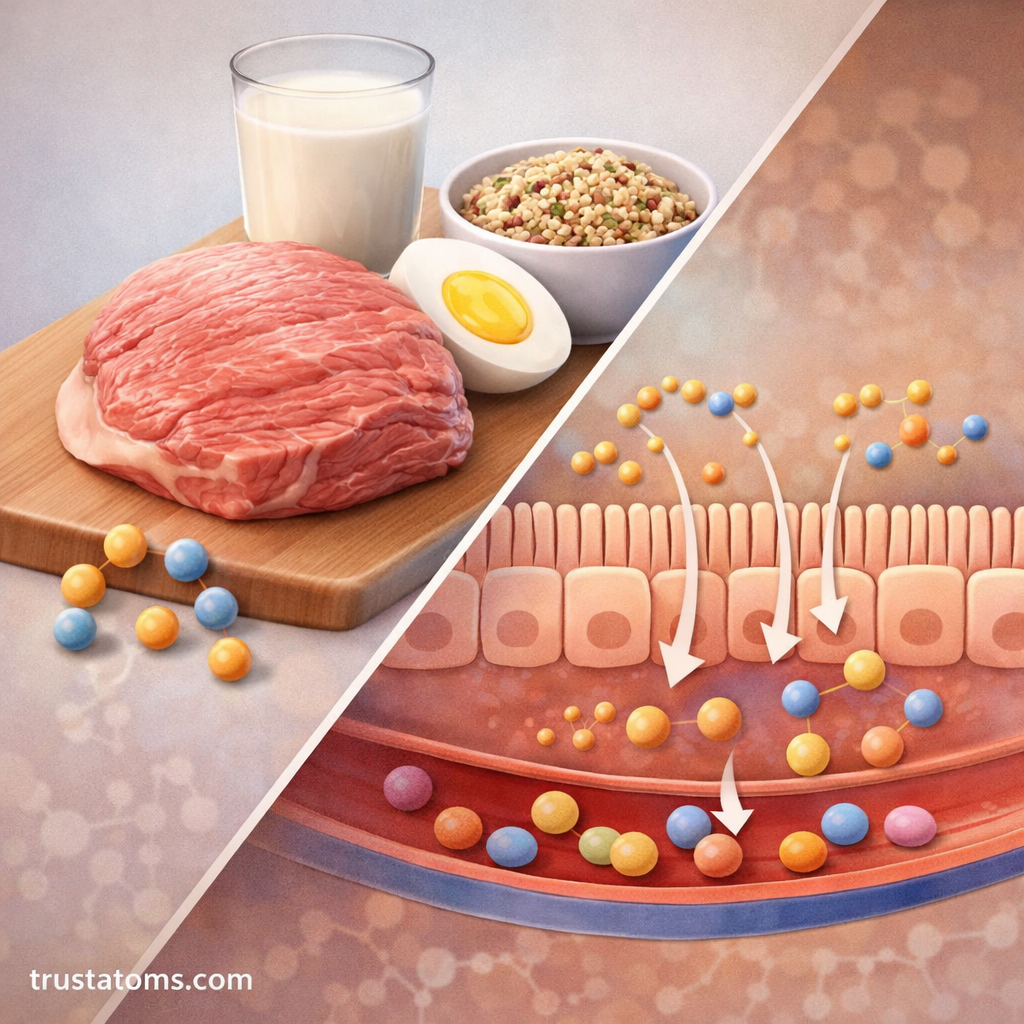
Many dipeptides and tripeptides enter enterocytes through the peptide transporter PepT1, which uses a hydrogen ion gradient to support uptake.
Once inside, intracellular peptidases break most absorbed small peptides into free amino acids. These amino acids then leave the enterocytes through transporters on the basolateral membrane and enter nearby blood capillaries.
This combination of free amino acid and peptide transport makes dietary protein absorption efficient under normal digestive conditions.
What Happens After Absorption?
Absorbed amino acids enter the hepatic portal circulation, which carries blood from the digestive organs toward the liver. The liver uses some amino acids for its own metabolism and releases others into the systemic circulation.
The movement of nutrients from intestinal cells into circulation is explained further in nutrient absorption pathways into blood. Unlike most absorbed dietary fats, which initially enter intestinal lymphatic vessels, amino acids primarily enter blood capillaries.
Cells use absorbed amino acids to synthesize muscle proteins, enzymes, antibodies, transport proteins, and other essential molecules. Amino acids can also be metabolized for energy or converted into other compounds when necessary.
The body does not maintain a dedicated storage reserve of excess amino acids comparable to glycogen or stored fat. When amino acids are broken down, their nitrogen must be processed and eliminated, largely through the liver’s urea cycle and kidney excretion.
Everyday Example: Digesting an Egg
Consider eating one large egg containing approximately 6 grams of protein. That protein consists of many different amino acid chains, not 6 grams of free amino acids immediately available to the bloodstream.
- In the stomach: Acid unfolds egg proteins while pepsin begins cutting their peptide chains.
- In the small intestine: Pancreatic proteases and intestinal peptidases produce amino acids and short peptides.
- Across the intestinal lining: Transporters absorb these digestion products into enterocytes.
- After absorption: Amino acids enter portal blood and become available for metabolism and protein synthesis.
Digestion and absorption occur gradually as the meal moves through the digestive tract. The exact timing depends on meal composition, stomach emptying, and individual digestive function.
Factors That Affect Protein Digestion and Absorption
Protein digestibility varies with food composition, preparation methods, and digestive health. The same meal also contains other nutrients that follow different digestive pathways, including those described in carbohydrate digestion and absorption.
- Protein source: Many animal proteins are highly digestible, while some plant proteins have lower digestibility because of their structure or accompanying compounds.
- Cooking and processing: Heating can improve accessibility to digestive enzymes, although excessive processing or heating may reduce the availability of certain amino acids.
- Pancreatic function: Insufficient digestive enzyme secretion can interfere with protein breakdown.
- Intestinal health: Diseases that damage the intestinal lining can reduce nutrient absorption.
- Food composition: Fiber, fat, and other meal components can influence digestion and gastric emptying.
Protein digestion is normally effective across a wide range of foods and eating patterns. Older age alone does not necessarily cause major protein malabsorption, although illness, medication use, and changes in nutritional needs can affect protein status.
Signs of Impaired Protein Digestion or Absorption
Severe digestive or absorptive disorders can contribute to inadequate protein nutrition. Depending on the cause, possible findings include unintended weight loss, muscle wasting, persistent diarrhea, or broader nutrient deficiencies.
However, bloating, fatigue, or abdominal discomfort alone do not establish a protein digestion problem. These symptoms have many possible causes and require appropriate evaluation when persistent or concerning.
Practical Ways to Support Protein Nutrition
For most healthy people, normal digestive function is sufficient to process dietary protein without special supplements or digestive enzyme products.
- Include varied protein sources such as eggs, dairy, fish, legumes, soy foods, nuts, or meat according to dietary needs.
- Prepare foods safely and use cooking methods appropriate for the protein source.
- Eat sufficient total protein and energy to support the body’s needs.
- Seek medical assessment for persistent digestive symptoms or unexplained weight loss.
Frequently Asked Questions
Where does most protein digestion occur?
Protein digestion begins in the stomach, but much of the enzymatic breakdown occurs in the small intestine through pancreatic proteases and intestinal peptidases.
Are proteins absorbed directly into the bloodstream?
Most dietary proteins must first be broken into amino acids and small peptides. Enterocytes absorb these products, convert most small peptides into amino acids, and release amino acids into portal blood.
Does stomach acid absorb amino acids?
No. Stomach acid helps unfold proteins and activate pepsin, but amino acid absorption occurs primarily through specialized transporters in the small intestine.
Protein digestion transforms large dietary molecules into smaller units that intestinal cells can absorb and transport. Stomach acid initiates the process, pancreatic and intestinal enzymes continue it, and specialized transporters deliver amino acids into portal circulation. These coordinated steps make dietary amino acids available for tissue maintenance, protein synthesis, and metabolism.
This article is for general education and is not medical advice. Talk to a qualified health professional about any medical concern.
Sources: Guyton and Hall Textbook of Medical Physiology; Ganong’s Review of Medical Physiology; OpenStax Anatomy and Physiology 2e.