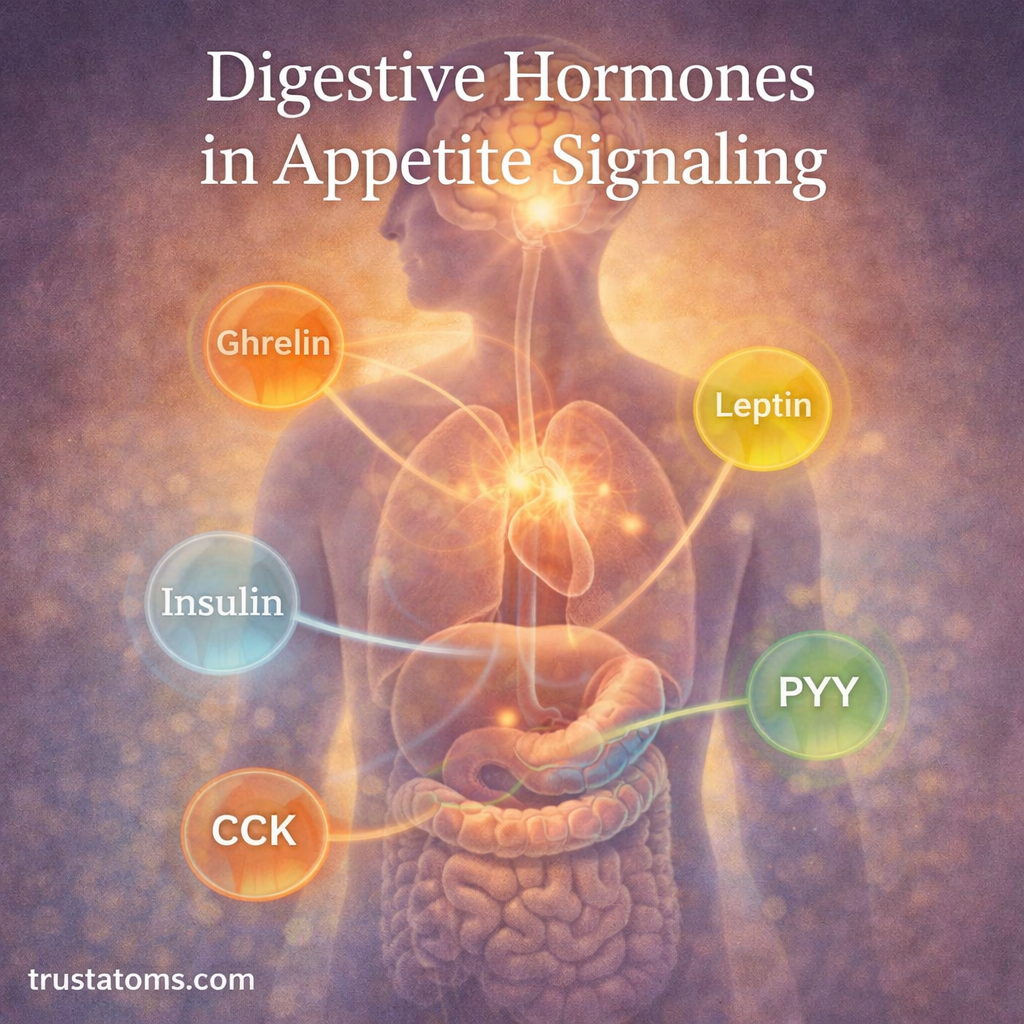
Appetite is not controlled by willpower alone—it is largely regulated by a complex system of hormones that communicate between the digestive system and the brain. These digestive hormones signal when to feel hungry, when to stop eating, and how the body should manage energy intake.
Understanding digestive hormones in appetite signaling helps explain why you feel hungry at certain times, how fullness is triggered, and what influences overeating or reduced appetite.
What Is Appetite Signaling?
Appetite signaling refers to the communication between the gut and the brain that regulates hunger and satiety (fullness).
Key Components Involved
- The digestive system (stomach and intestines)
- The brain, especially the hypothalamus
- Hormones released in response to food intake
These systems work together to maintain energy balance and ensure the body gets the nutrients it needs.
The Gut-Brain Axis
The gut and brain are connected through a communication network known as the gut-brain axis.
How It Works
- Hormones are released from the digestive tract
- Signals travel through the bloodstream and nervous system
- The brain interprets these signals to regulate appetite
This system ensures that your body responds appropriately to both hunger and fullness cues.
Key Hormones That Regulate Appetite
Several hormones play major roles in controlling when you feel hungry and when you feel satisfied.
Ghrelin: The Hunger Hormone
Ghrelin is primarily produced in the stomach and is often called the “hunger hormone.”
Functions of Ghrelin
- Stimulates appetite
- Signals the brain to initiate eating
- Increases before meals and decreases after eating
Higher ghrelin levels are associated with increased hunger and food intake.
Leptin: The Satiety Hormone
Leptin is produced by fat (adipose) tissue and helps regulate long-term energy balance.
Functions of Leptin
- Signals fullness to the brain
- Reduces appetite
- Helps regulate body weight over time
In some individuals, leptin resistance can occur, making it harder for the brain to recognize fullness signals.
Insulin: Energy Regulation Hormone
Insulin is released by the pancreas in response to rising blood glucose levels.
Role in Appetite
- Helps regulate blood sugar
- Signals the brain about energy availability
- Can reduce appetite after meals
Insulin works alongside leptin to promote satiety.
Peptide YY (PYY): Post-Meal Fullness Signal
Peptide YY is released from the small intestine after eating.
Key Functions
- Reduces appetite
- Slows gastric emptying
- Enhances feelings of fullness
PYY levels typically rise after meals, helping prevent overeating.
Cholecystokinin (CCK): Early Satiety Signal
CCK is released in response to fat and protein intake.
What CCK Does
- Promotes digestion by stimulating bile and enzyme release
- Sends early fullness signals to the brain
- Helps reduce meal size
CCK plays a role in short-term appetite regulation.
Glucagon-Like Peptide-1 (GLP-1)
GLP-1 is released from the intestines during food intake.
Functions of GLP-1
- Enhances insulin secretion
- Slows stomach emptying
- Promotes satiety
This hormone is also targeted in some medications used to manage appetite and blood sugar.
How These Hormones Work Together

Appetite regulation is not controlled by a single hormone but by a coordinated system.
Before Eating
- Ghrelin levels rise
- Hunger signals increase
During and After Eating
- CCK and PYY signal fullness
- GLP-1 slows digestion
- Insulin and leptin contribute to satiety
This coordinated response helps balance food intake with the body’s energy needs.
Factors That Influence Appetite Hormones
Several lifestyle and physiological factors can affect how these hormones function.
1. Sleep
- Lack of sleep increases ghrelin levels
- Reduces leptin levels
- Can lead to increased hunger and cravings
2. Diet Composition
- Protein and fat increase satiety hormones like CCK and PYY
- Highly processed foods may disrupt normal signaling
3. Stress
- Chronic stress can alter hormone balance
- May increase hunger or reduce appetite depending on the individual
4. Physical Activity
- Regular exercise can improve hormone sensitivity
- Helps regulate appetite over time
Common Issues with Appetite Regulation
When appetite hormones become imbalanced, it can lead to various health challenges.
Potential Problems
- Overeating due to weak satiety signals
- Chronic hunger despite adequate calorie intake
- Weight gain or difficulty losing weight
- Reduced appetite in certain medical conditions
Understanding these hormonal influences can help explain patterns in eating behavior.
Tips to Support Healthy Appetite Signaling
Supporting balanced hormone function can improve appetite control and overall health.
Practical Strategies
- Prioritize consistent, quality sleep
- Eat balanced meals with protein, healthy fats, and fiber
- Avoid excessive processed foods and sugar
- Manage stress through relaxation techniques
- Stay physically active
Final Thoughts
Digestive hormones play a central role in appetite signaling, helping your body determine when to eat and when to stop. From ghrelin’s hunger signals to leptin’s long-term regulation, these hormones work together to maintain energy balance.
By understanding how appetite is regulated, you can make more informed choices that support healthy eating patterns and long-term well-being.