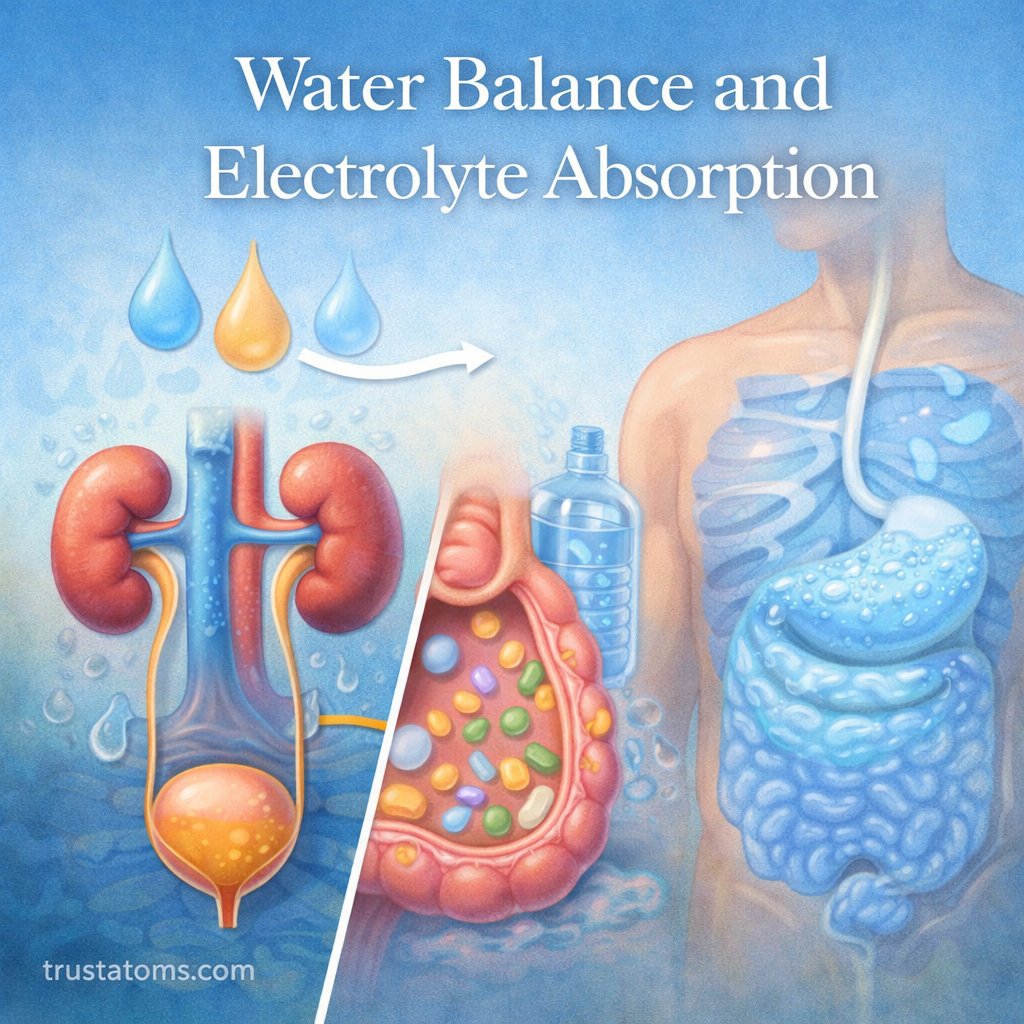
Water balance and electrolyte absorption are essential processes that keep the body functioning properly. From regulating blood pressure to supporting nerve signals and muscle contractions, these systems are tightly controlled—especially within the digestive tract and kidneys.
Understanding how the body manages fluids and electrolytes provides insight into hydration, digestion, and overall physiological stability.
What Is Water Balance?
Water balance refers to the equilibrium between water intake and water loss in the body. This balance ensures that cells, tissues, and organs maintain proper function.
The body constantly adjusts water levels through:
- Thirst mechanisms
- Kidney function
- Hormonal regulation
- Digestive absorption
Maintaining this balance is critical because even small shifts can impact blood volume, temperature regulation, and cellular activity.
What Are Electrolytes?
Electrolytes are minerals that carry an electric charge when dissolved in body fluids. They are vital for many physiological processes.
Key electrolytes include:
- Sodium (Na⁺)
- Potassium (K⁺)
- Chloride (Cl⁻)
- Calcium (Ca²⁺)
- Magnesium (Mg²⁺)
These minerals help regulate fluid distribution, nerve signaling, and muscle contractions.
Where Does Water and Electrolyte Absorption Occur?
Absorption primarily takes place in the digestive system, especially in the intestines.
Small Intestine
- Absorbs most of the water consumed
- Actively transports electrolytes into the bloodstream
- Works efficiently alongside nutrient absorption
Colon (Large Intestine)
- Reabsorbs remaining water from indigestible material
- Concentrates waste into solid stool
- Fine-tunes electrolyte balance
Together, these organs ensure that the body retains what it needs while eliminating excess.
How Water Absorption Works
Water absorption is largely driven by osmosis, a process where water moves across membranes toward areas with higher solute concentration.
Key points:
- Water follows electrolytes, especially sodium
- Absorption occurs through intestinal walls into blood vessels
- The body adjusts absorption based on hydration status
This system allows the body to adapt quickly to changes in fluid intake or loss.
How Electrolyte Absorption Works
Electrolyte absorption involves both passive and active transport mechanisms.
Passive Transport
- Moves electrolytes along concentration gradients
- Requires no energy
- Occurs naturally when levels differ across membranes
Active Transport
- Uses energy to move electrolytes against gradients
- Allows precise control of electrolyte levels
- Especially important for sodium and potassium balance
These processes ensure stable internal conditions, even when dietary intake varies.
The Role of Sodium in Fluid Balance
Sodium is the primary electrolyte responsible for regulating water distribution in the body.
Functions of sodium include:
- Controlling fluid volume in blood and tissues
- Supporting nerve impulse transmission
- Helping muscles contract
Water naturally follows sodium, meaning that sodium levels directly influence hydration status.
Hormonal Regulation of Water and Electrolytes
The body uses hormones to maintain balance:
Antidiuretic Hormone (ADH)
- Signals kidneys to retain water
- Reduces urine output
- Helps prevent dehydration
Aldosterone
- Promotes sodium retention in the kidneys
- Increases water reabsorption
- Helps regulate blood pressure
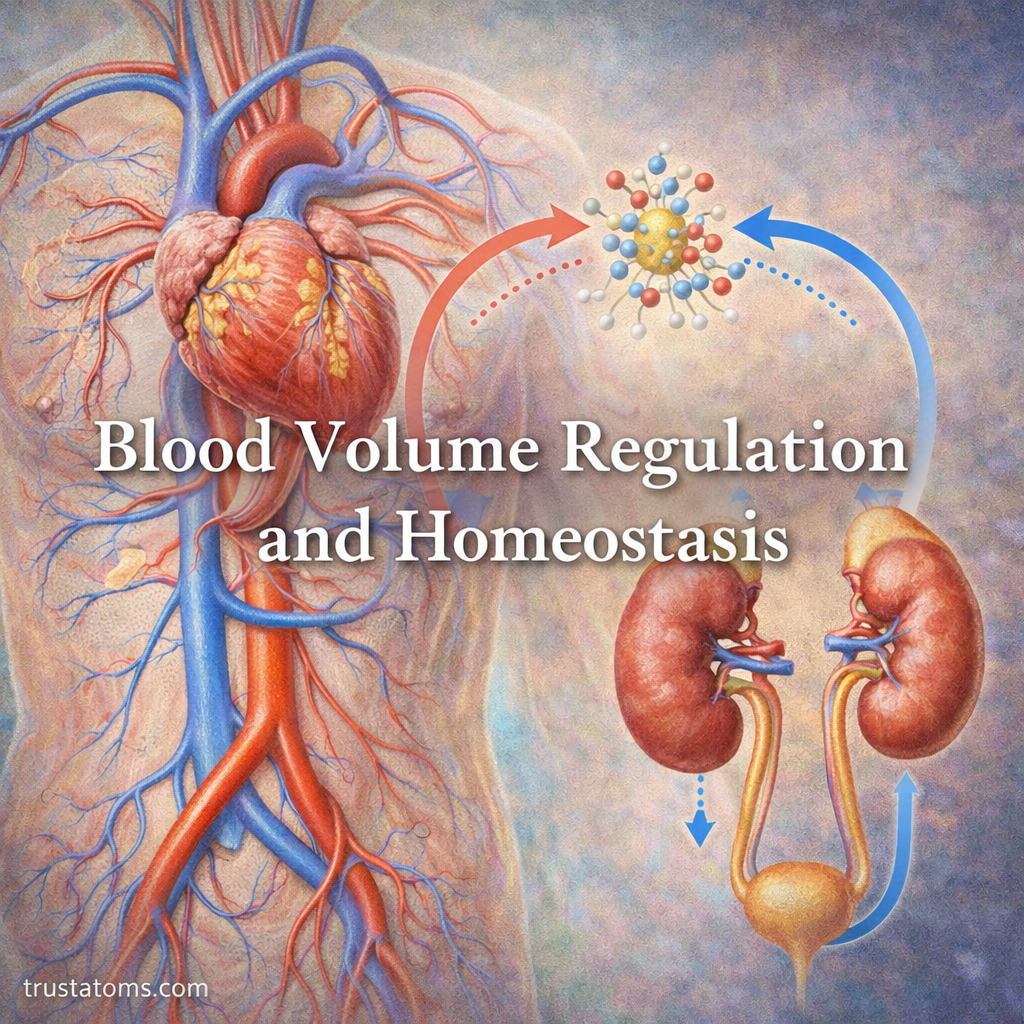
Renin-Angiotensin System
- Activates in response to low blood volume
- Increases sodium and water retention
- Maintains circulation stability
These systems work together to adjust fluid levels based on the body’s needs.
Importance of the Colon in Final Water Balance
While most absorption happens earlier in digestion, the colon plays a crucial finishing role.
It helps:
- Reclaim excess water from waste
- Maintain stool consistency
- Prevent dehydration
If the colon absorbs too much water, constipation can occur. If it absorbs too little, diarrhea may result.
Effects of Imbalance
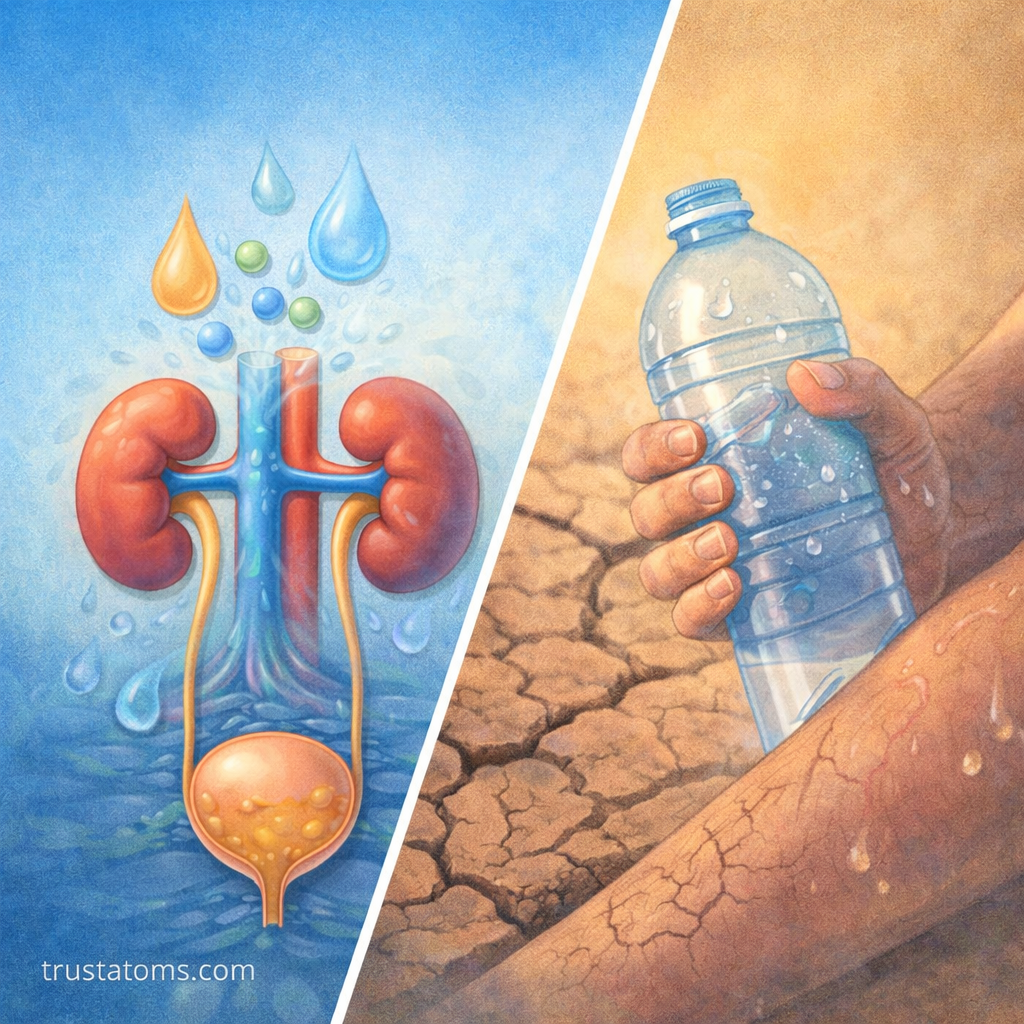
Disruptions in water or electrolyte balance can lead to noticeable symptoms.
Dehydration
- Dry mouth
- Fatigue
- Dizziness
- Reduced urine output
Overhydration (Hyponatremia)
- Low sodium levels
- Nausea
- Confusion
- Swelling in severe cases
Electrolyte Imbalance
- Muscle cramps
- Irregular heartbeat
- Weakness
- Nerve dysfunction
Maintaining balance is essential for preventing these issues.
Factors That Influence Water and Electrolyte Balance
Several everyday factors affect hydration and absorption:
- Diet (salt and nutrient intake)
- Physical activity and sweating
- Climate and temperature
- Illness (vomiting or diarrhea)
- Medications (such as diuretics)
Awareness of these factors can help maintain optimal balance.
Tips for Supporting Healthy Balance
Simple habits can help regulate water and electrolyte levels:
- Drink water consistently throughout the day
- Eat a balanced diet with fruits and vegetables
- Replace electrolytes during prolonged exercise
- Monitor hydration during hot weather
- Avoid excessive intake of processed salty foods
These steps support both digestive and systemic health.
Final Thoughts
Water balance and electrolyte absorption are essential for maintaining the body’s internal stability. Through coordinated actions in the intestines, kidneys, and hormonal systems, the body carefully regulates fluid levels and mineral concentrations.
By understanding these processes, you can better support hydration, digestion, and overall physiological function.