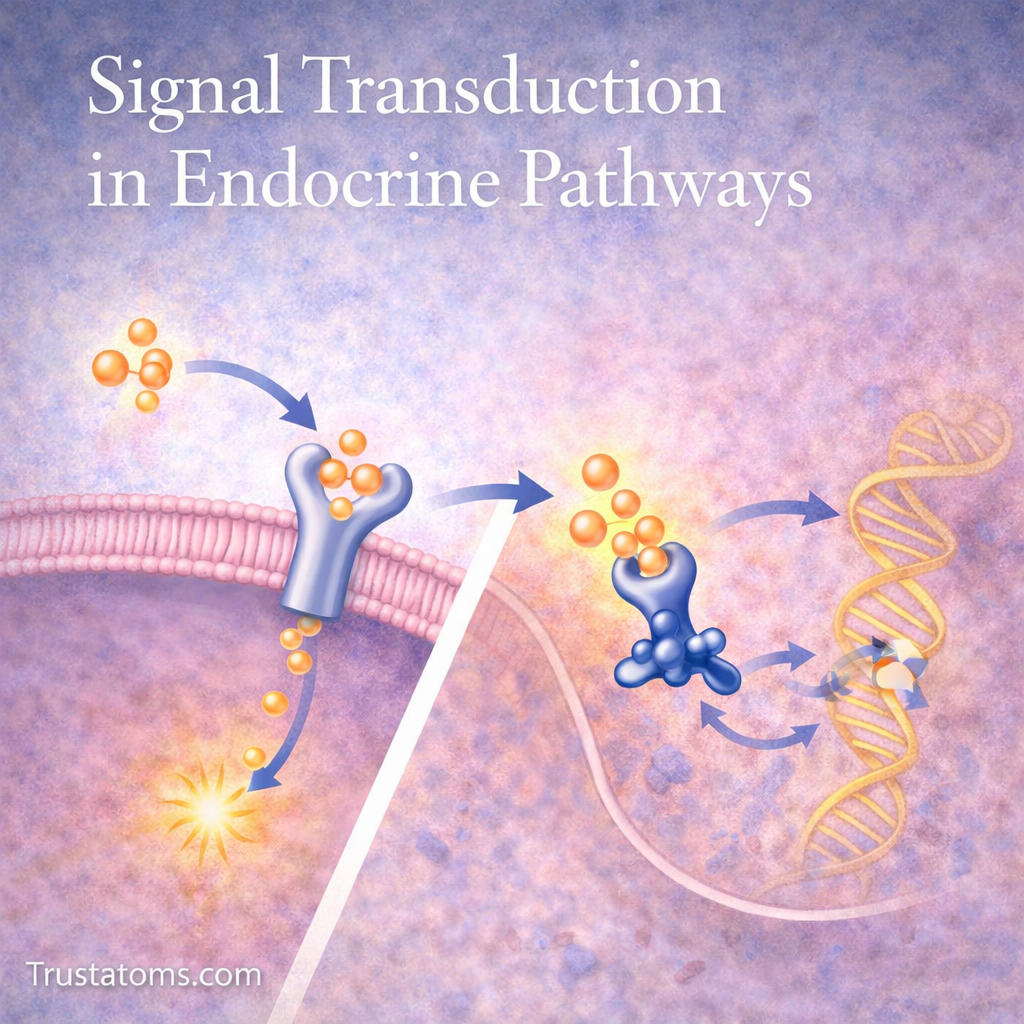
Signal transduction is the process by which a cell converts a chemical message, such as a hormone, into a specific biological response. A hormone binds to a matching receptor, activating molecular processes that change what the cell does.
The endocrine system relies on hormones to send messages throughout the body. But once a hormone reaches its target cell, the message must be converted into action. Understanding this process connects the study of human anatomy with the molecular mechanisms that regulate organs and tissues.
Signal transduction allows hormones to influence metabolism, growth, reproduction, and other body functions. Some responses happen within seconds, while others involve changes in gene expression that develop over hours or longer.
What Is Signal Transduction?
Signal transduction describes the series of molecular events that connects the detection of a signal to a cellular response. In endocrine signaling, the message usually begins when a hormone reaches a cell containing the appropriate receptor.
A receptor is a protein that recognizes a particular signaling molecule. Binding can change the receptor’s activity, allowing it to communicate with other molecules inside the cell.
Only cells with suitable receptors can respond directly to a particular hormone. The relationship between receptor type and cellular behavior is explained further in Hormone Receptors and Target Cell Response.
Hormonal signaling also works alongside communication from the nervous system. This coordination is explored in Endocrine Integration with Nervous Systems.
The Three Main Stages of Signal Transduction
Although individual hormone pathways differ, many can be understood through three stages: reception, transduction, and response.
1. Reception: The Hormone Binds to a Receptor
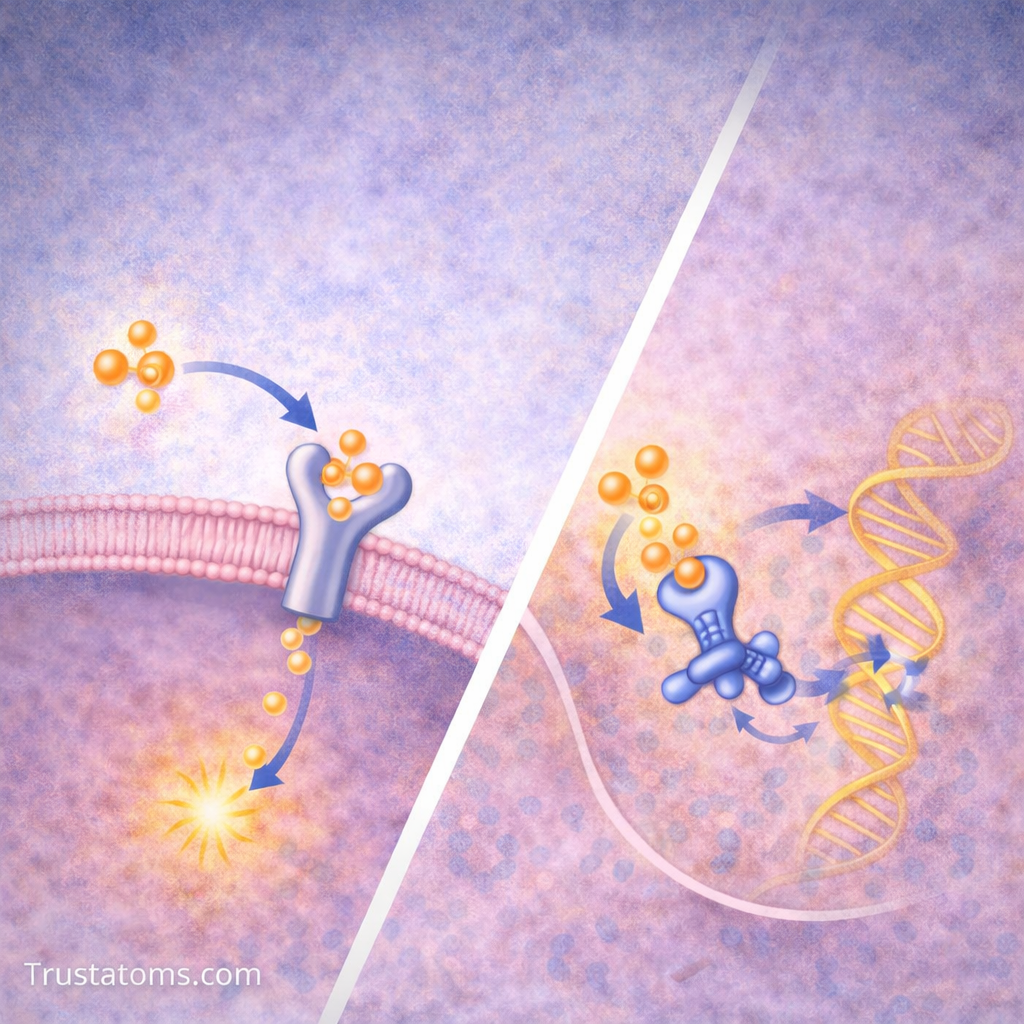
Reception begins when a hormone encounters a compatible receptor. Receptors may be embedded in the cell membrane or located inside the cell.
Many water-soluble hormones bind to receptors on the cell surface because they cannot readily pass through the membrane’s lipid interior. Steroid hormones commonly cross the membrane and bind to intracellular receptors.
Receptor binding changes the activity of the receptor, initiating the next stage of signaling.
2. Transduction: The Signal Travels Through the Cell
Once activated, a receptor may trigger a sequence of interactions involving proteins, enzymes, and small signaling molecules.
These interactions are often called a signaling cascade. One activated protein can influence another, passing the information through the cell.
Some pathways use second messengers, which are small molecules or ions that carry signals within the cell. Others rely on protein phosphorylation, a process in which enzymes add phosphate groups to proteins and change their activity.
3. Response: The Cell Changes Its Activity
The final response depends on the hormone, receptor, and type of target cell. Possible effects include:
- Increasing or decreasing enzyme activity.
- Moving transport proteins to the cell membrane.
- Releasing stored substances through secretion.
- Changing the expression of particular genes.
- Influencing cell growth, division, or differentiation.
For example, insulin signaling can increase glucose uptake in muscle cells, while thyroid hormone signaling can alter the production of proteins involved in metabolism.
Types of Hormone Signal Transduction Pathways
Hormones use different pathways depending on their chemical properties and the receptors present in target cells. These mechanisms are part of the broader processes described in Cell Signaling Pathways in Biological Systems.
G Protein-Coupled Receptor Pathways
G protein-coupled receptors, or GPCRs, are membrane proteins that communicate with intracellular G proteins. When activated, they can influence enzymes and ion channels.
Some GPCR pathways activate adenylyl cyclase, an enzyme that produces cyclic AMP (cAMP). This second messenger can activate protein kinase A, which modifies other proteins.
Other GPCR pathways produce inositol trisphosphate (IP3) and diacylglycerol (DAG). IP3 can stimulate calcium release from internal stores, while DAG helps activate protein kinase C.
Hormones such as glucagon and adrenaline use GPCR signaling in certain target tissues.
Enzyme-Linked Receptor Pathways
Some cell-surface receptors activate enzymes directly or through associated proteins. The insulin receptor is an example of a receptor tyrosine kinase.
When insulin binds, the receptor activates signaling proteins that influence glucose transport, metabolism, and other cellular activities.
Other hormones, including growth hormone, use receptors associated with intracellular enzymes rather than receptors with their own kinase activity.
Intracellular Receptor Pathways
Steroid hormones such as cortisol and estrogen can cross cell membranes and bind to receptors inside cells. The activated receptor complexes regulate the expression of specific genes.
Thyroid hormones also act through intracellular receptors, mainly located in the nucleus. Their signaling changes gene transcription and influences metabolic activity.
Because gene expression and protein production take time, many effects of these pathways develop more slowly than rapid membrane-receptor responses. However, intracellular receptors can also participate in faster signaling mechanisms.
How Second Messengers Carry Hormonal Signals
Second messengers are molecules or ions that transmit information after a receptor has been activated. They help distribute signals to different parts of the cell.
| Second Messenger | Main Function | Example Pathway |
|---|---|---|
| cAMP | Activates signaling proteins, including protein kinase A | Glucagon signaling |
| Calcium ions | Regulate enzymes, secretion, and other cellular processes | Hormone-triggered calcium signaling |
| IP3 | Promotes calcium release from intracellular stores | Gq-coupled receptor signaling |
| DAG | Helps activate protein kinase C | Phospholipase C signaling |
Different second messengers can operate together. For instance, IP3-mediated calcium release and DAG production arise from the same phospholipase C reaction in many signaling pathways.
Real-World Example: How Insulin Helps Cells Absorb Glucose
After a meal containing carbohydrates, glucose enters the bloodstream. Rising blood glucose stimulates pancreatic beta cells to release insulin.
Insulin travels through the bloodstream and binds to insulin receptors on target cells. In skeletal muscle and fat tissue, this activates signaling pathways that increase glucose uptake.
- Insulin binds to its receptor on the cell membrane.
- The receptor activates its tyrosine kinase activity and phosphorylates signaling proteins.
- Intracellular signaling activates pathways involving phosphoinositide 3-kinase (PI3K) and Akt.
- Vesicles containing GLUT4 glucose transporters move toward and fuse with the cell membrane.
- Additional GLUT4 transporters at the membrane allow glucose to enter the cell more readily.
As blood glucose falls, insulin secretion generally decreases. This example demonstrates how a hormone circulating outside a cell can activate an internal pathway that changes the cell membrane’s transport activity.
Insulin also affects liver metabolism, although liver cells regulate glucose transport differently from muscle and fat cells.
How Signal Amplification Produces Strong Responses
Some signaling pathways amplify an initial message. An activated receptor may stimulate several downstream molecules, each of which can influence additional targets.
For example, one activated signaling enzyme may generate many second messenger molecules. Those messengers can activate proteins that modify numerous cellular targets.
Amplification allows low concentrations of certain hormones to produce substantial responses. However, amplification varies between pathways and is limited by receptor availability, enzyme activity, and regulatory mechanisms.
A hormone molecule does not need to bind every receptor on a cell for a response to occur. The relationship between hormone concentration and response depends on the particular signaling system.
How Cells Regulate and Stop Hormone Signals
Hormonal signals must be controlled so cells respond appropriately without remaining continuously activated.
Regulatory mechanisms include:
- Receptor desensitization: Receptors become less responsive after sustained stimulation.
- Receptor internalization: Some receptors are removed from the cell surface.
- Second messenger breakdown: Enzymes remove signaling molecules such as cAMP.
- Protein dephosphorylation: Phosphatases remove phosphate groups and modify protein activity.
- Hormonal feedback: Signals from target tissues influence further hormone secretion.
These controls operate at both cellular and whole-body levels. For example, the brain can regulate hormone release through pathways described in Neuroendocrine Connections, while target cells adjust their sensitivity to circulating hormones.
What Happens When Signal Transduction Is Disrupted?
Abnormal signaling can occur when receptors, signaling proteins, or regulatory mechanisms do not function properly.
Insulin resistance is one example. In insulin-resistant tissues, the biological response to insulin is reduced, and several mechanisms can contribute, including changes in intracellular signaling and metabolism.
Some inherited conditions involve altered hormone receptors or signaling proteins. In other cases, abnormal activation of growth-related signaling pathways can contribute to uncontrolled cell proliferation.
Not every hormonal disorder results from defective signal transduction. A gland may produce too much or too little hormone even when target-cell signaling remains functional.
Frequently Asked Questions
What is the difference between hormone signaling and signal transduction?
Hormone signaling includes hormone production, release, transport, receptor binding, and the resulting effects. Signal transduction refers more specifically to the molecular processes that connect receptor activation with a cellular response.
Do all hormones use second messengers?
No. Many hormones activate pathways involving second messengers such as cAMP or calcium. Others, including steroid and thyroid hormones, commonly act through intracellular receptors that regulate gene expression. Different signaling mechanisms may also interact within the same cell.
Why can the same hormone cause different effects in different tissues?
Cells differ in their receptors, signaling proteins, enzymes, and genes. Consequently, the same hormone may activate different responses depending on the target tissue. Adrenaline, for example, can influence heart activity and blood vessel behavior through different adrenergic receptor subtypes.
Signal transduction connects hormone detection with changes in cellular activity. Membrane receptors, intracellular receptors, second messengers, and signaling enzymes allow different tissues to respond to chemical messages in specific ways. These pathways explain how hormones can produce rapid metabolic adjustments as well as longer-term changes in gene expression.
This article is for general education and is not medical advice. Talk to a qualified health professional about any medical concern.
Sources: Molecular Biology of the Cell by Alberts and colleagues; Guyton and Hall Textbook of Medical Physiology; Williams Textbook of Endocrinology.