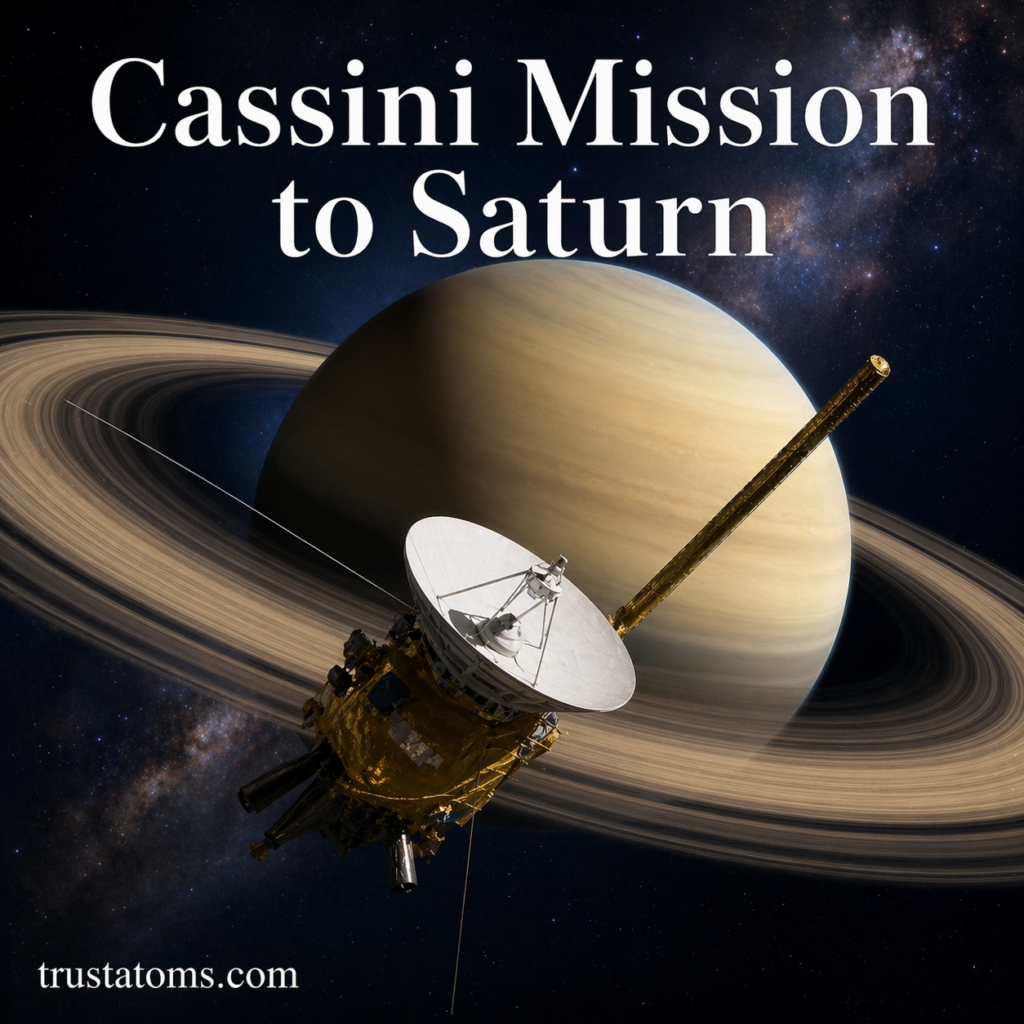
The Cassini Mission was one of the most successful and scientifically rich space missions ever conducted, providing an unprecedented look at Saturn and its complex system of rings and moons.
Led by NASA in collaboration with the European Space Agency and the Italian Space Agency, the mission transformed our understanding of the outer solar system and revealed that Saturn’s moons may hold the ingredients for life.
What Was the Cassini Mission?
Cassini was a robotic spacecraft designed to study Saturn, its rings, and its many moons over an extended period.
Key Mission Facts
- Launch Date: October 15, 1997
- Arrival at Saturn: July 1, 2004
- Mission End: September 15, 2017
- Mission Duration at Saturn: 13 years
- Companion Probe: Huygens Probe
Cassini was the first spacecraft to orbit Saturn, allowing scientists to observe long-term changes in the planet’s atmosphere and environment.
The Journey to Saturn
Reaching Saturn required a complex, multi-year journey using gravity assists.
How Cassini Got There
Cassini used flybys of:
- Earth
- Venus (twice)
- Jupiter
These gravitational boosts helped the spacecraft gain enough speed to reach Saturn, which lies nearly a billion miles from Earth.
The Huygens Probe: Landing on Titan
One of Cassini’s most historic achievements was delivering the Huygens probe to Titan—Saturn’s largest moon.
What Happened on Titan
- Huygens landed in January 2005
- It became the first landing in the outer solar system
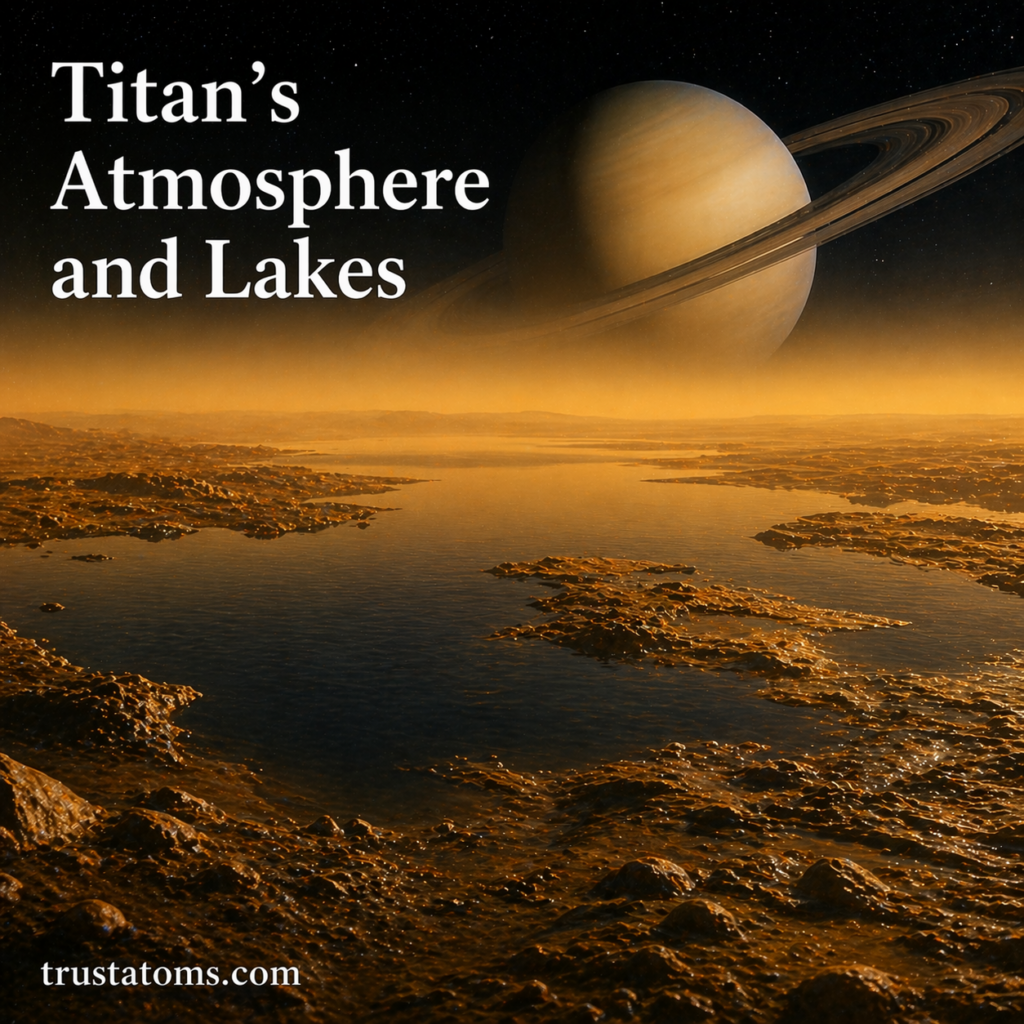
- Sent back images of rivers, lakes, and a hazy atmosphere
Why Titan Matters
- Titan has a thick atmosphere rich in organic molecules
- Features liquid methane and ethane lakes
- Considered one of the most Earth-like environments beyond Earth
Major Discoveries of the Cassini Mission
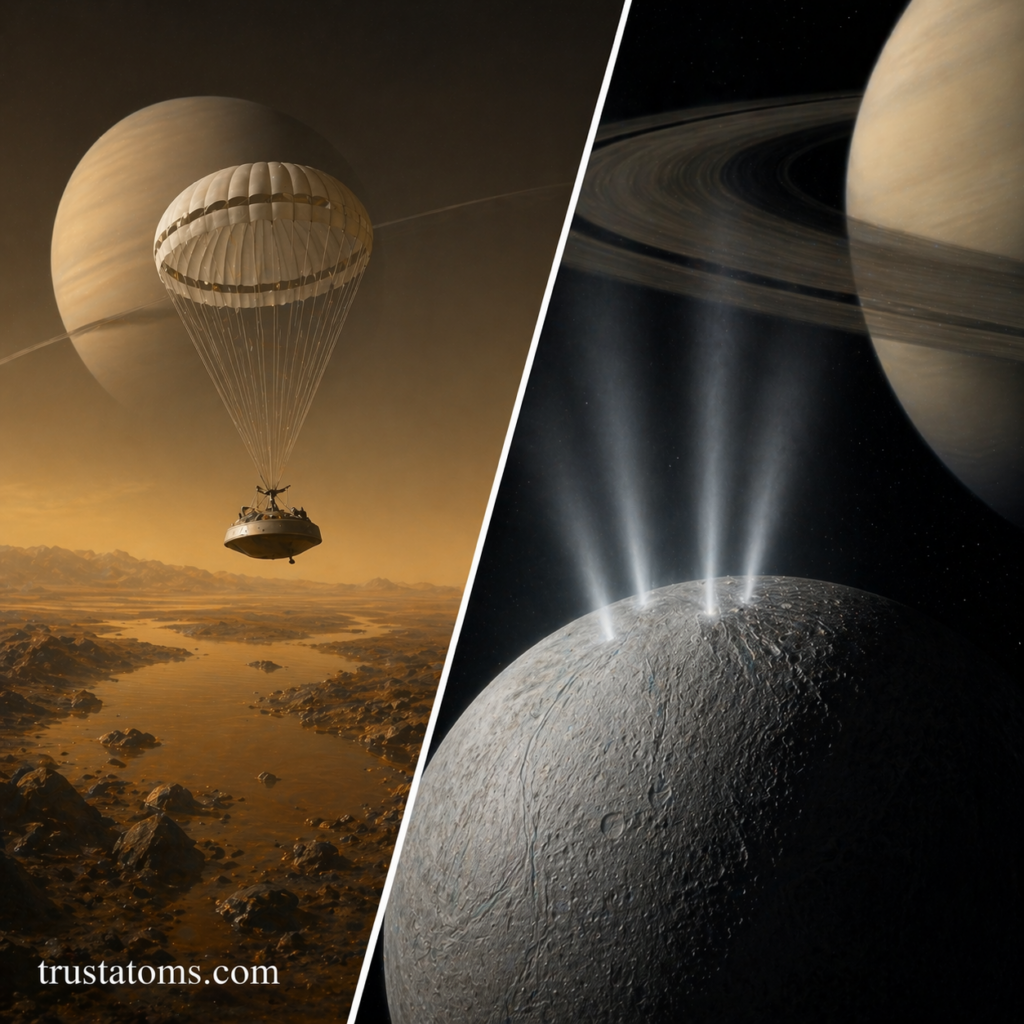
Cassini revealed a dynamic and surprising Saturn system, full of activity and complexity.
1. Enceladus: A Moon with Water Plumes
Cassini discovered that Enceladus is one of the most exciting places in the solar system.
Key findings:
- Massive plumes of water vapor erupting from its दक्षिण pole
- Evidence of a global subsurface ocean
- Presence of organic molecules and heat
These discoveries suggest Enceladus could potentially support microbial life.
2. Saturn’s Rings Are More Dynamic Than Expected
Before Cassini, Saturn’s rings were thought to be relatively stable.
Cassini showed:
- Rings are made of ice particles ranging from dust to boulders
- Constant interaction with Saturn’s moons
- Possible evidence that rings are younger than previously believed
3. Complex Weather and Storms
Saturn’s atmosphere is far more active than once assumed.
Cassini observed:
- Massive storms spanning thousands of miles
- A persistent hexagon-shaped storm at the north pole
- Seasonal changes similar to Earth, but over decades
4. Discovery of New Moons
Cassini helped identify and study several of Saturn’s smaller moons, improving our understanding of how moon systems form and evolve.
How Cassini Worked
Cassini was equipped with a wide range of scientific instruments designed to study Saturn in detail.
Key Instruments
- Imaging Science System: High-resolution cameras
- Spectrometers: Analyze chemical composition
- Radar: Penetrate Titan’s thick atmosphere
- Magnetometer: Study magnetic fields
Orbital Strategy
Cassini performed hundreds of orbits around Saturn, adjusting its path to:
- Fly close to moons
- Study ring structures
- Sample plume material
The Grand Finale: A Dramatic Ending
To protect Saturn’s moons from contamination, scientists ended the mission in a controlled descent.
What Was the Grand Finale?
- Cassini performed 22 daring orbits between Saturn and its rings
- Collected unique data from previously unexplored regions
- Finally plunged into Saturn’s atmosphere in 2017
This ensured that potentially habitable moons like Enceladus and Titan remained uncontaminated by Earth microbes.
Why the Cassini Mission Matters
Cassini reshaped our understanding of the solar system and opened new possibilities for future exploration.
Key Takeaways
- Revealed ocean worlds that may support life
- Provided detailed insights into planetary rings
- Expanded knowledge of moon formation
- Set the stage for future missions to Saturn’s moons
What Comes Next?
Cassini’s discoveries have inspired new missions and research.
Future Exploration Goals
- Missions to explore Titan’s surface and atmosphere
- Further study of Enceladus’s subsurface ocean
- Continued search for extraterrestrial life
These future efforts build directly on Cassini’s groundbreaking legacy.
Final Thoughts
The Cassini Mission to Saturn stands as a landmark achievement in space exploration. By studying Saturn and its moons in extraordinary detail, Cassini revealed a dynamic system full of surprises—from methane lakes on Titan to water plumes on Enceladus.
Its legacy continues to shape how scientists search for life beyond Earth and understand the origins of planetary systems.