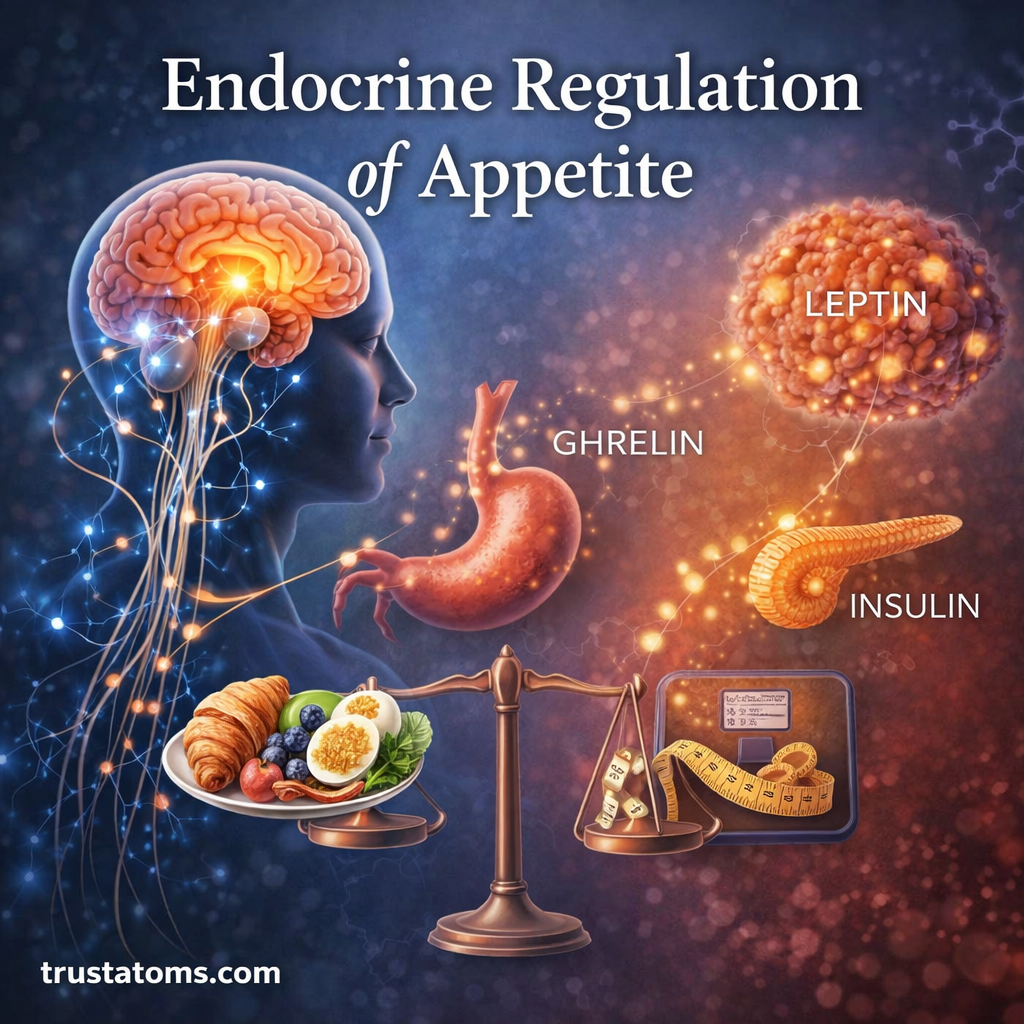
Endocrine regulation of appetite is the process by which hormones from the stomach, intestines, pancreas, and fat tissue communicate with the brain to influence hunger, fullness, and food intake. Ghrelin generally stimulates hunger, while hormones such as leptin, insulin, peptide YY (PYY), and cholecystokinin (CCK) help the brain assess energy availability and respond to meals.
This coordination connects several organs studied in human anatomy, particularly the digestive and endocrine systems. Appetite also responds to food preferences, emotions, sleep, and environmental cues, so hormone signals influence eating behavior without determining it completely.
What Is Appetite Regulation?
Appetite regulation describes how the body integrates signals about recent food intake, stored energy, and physiological needs. Hunger is the drive to eat, satiation is the process that brings a meal to an end, and satiety is the reduced desire to eat that follows a meal.
Hormones communicate with brain circuits that influence these experiences. The interaction between neural activity and circulating hormones is explored further in Neuroendocrine Connections.
Stress can also change eating behavior through autonomic and hormonal responses. The HPA Axis helps coordinate cortisol secretion during stressful situations, although its effects on appetite vary with circumstances and individuals.
How the Hypothalamus Processes Hunger and Fullness
The hypothalamus is the primary brain region responsible for regulating appetite.
Located near the base of the brain, it receives information about circulating hormones, nutrient availability, and signals from other neural networks. The arcuate nucleus contains important populations of neurons that influence food intake and energy expenditure.
Neurons That Promote Hunger
Neurons producing neuropeptide Y (NPY) and agouti-related peptide (AgRP) promote feeding behavior. Ghrelin can stimulate these neurons, while leptin and insulin generally inhibit their activity.
Neurons That Reduce Food Intake
Another population produces pro-opiomelanocortin (POMC), which gives rise to signaling molecules involved in appetite suppression. Leptin and insulin can activate these pathways, helping communicate the availability of stored energy.
Other brain regions, including the brainstem and reward-related circuits, also influence eating. Appetite is therefore controlled by interconnected networks rather than a simple on-and-off switch.
Major Hormones That Regulate Appetite
Different hormones provide information about meal timing, nutrient intake, and longer-term energy stores. Their digestive origins and functions are discussed further in Digestive Hormones in Appetite Signaling.
Ghrelin: A Signal That Promotes Hunger
Ghrelin is produced mainly by cells in the stomach. Its circulating concentration commonly rises before meals and decreases after eating, although the pattern varies with feeding schedules and physiological conditions.
Ghrelin acts on receptors in the brain and other tissues, helping stimulate hunger and food-seeking behavior. It also participates in growth hormone regulation and gastrointestinal function.
Leptin: A Signal of Stored Energy
Leptin is released primarily by adipose tissue. Its circulating concentration generally reflects the amount of energy stored in body fat, although short-term nutritional changes also affect secretion.
Higher fat stores typically lead to higher leptin levels, reducing hunger—although this system can become dysregulated.
In many people with obesity, leptin concentrations are elevated, but the brain’s response to leptin may be reduced. This phenomenon is commonly described as leptin resistance and helps explain why increased leptin does not always produce lower appetite.
Insulin: Connecting Nutrient Metabolism and Appetite
Insulin is released by pancreatic beta cells, particularly in response to rising blood glucose after meals. It promotes glucose uptake in muscle and fat tissue and regulates the storage and use of nutrients.
Insulin also communicates with the brain about energy availability. Its effects on appetite depend on metabolic conditions and interactions with other hormonal and neural signals.
Peptide YY and Cholecystokinin: Signals After Eating
Peptide YY (PYY) is released mainly from specialized cells in the lower small intestine and colon after food intake. It contributes to reduced appetite and can slow gastrointestinal movement.
Cholecystokinin (CCK) is secreted by cells in the upper small intestine, especially when fats and proteins enter the digestive tract. It stimulates pancreatic enzyme secretion, promotes gallbladder contraction, and contributes to meal-related fullness through neural and digestive pathways.
GLP-1: Linking Digestion to Satiety
Glucagon-like peptide-1 (GLP-1) is released from intestinal cells after eating. It enhances glucose-dependent insulin secretion, slows gastric emptying, and acts through pathways that can reduce food intake.
GLP-1 illustrates how one hormone can influence both blood glucose regulation and appetite rather than performing only a single function.
Short-Term vs. Long-Term Appetite Regulation
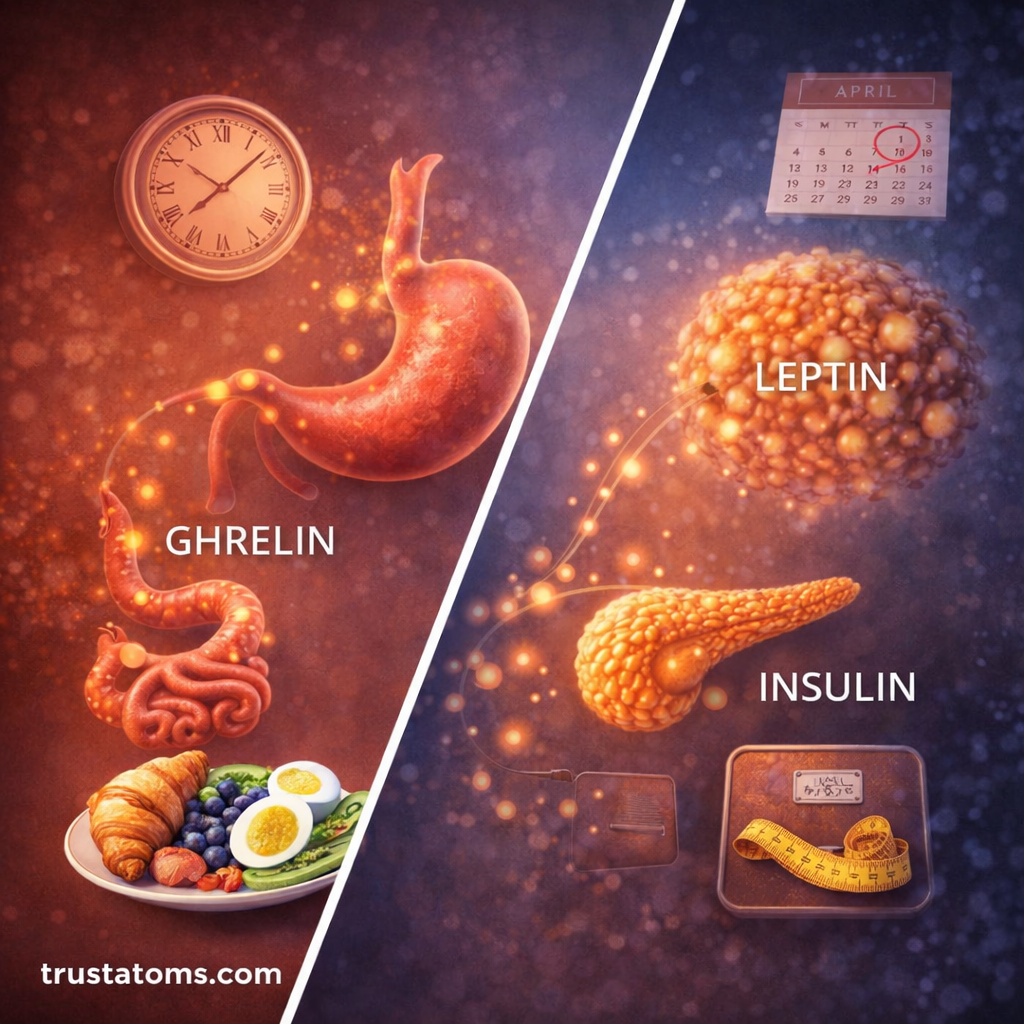
Appetite regulation operates over different timescales. Short-term signals influence when a meal begins and ends, while longer-term signals help the brain respond to changes in stored energy.
| Feature | Short-term regulation | Long-term regulation |
|---|---|---|
| Main function | Influences meal timing and size | Responds to energy reserves |
| Major signals | Ghrelin, CCK, PYY, GLP-1 | Leptin and central insulin signaling |
| Primary sources | Stomach and intestines | Adipose tissue and pancreas |
| Typical timescale | Minutes to hours | Days to longer periods |
These systems interact continuously. Longer-term energy status can change how strongly the brain responds to meal-related hunger and fullness signals.
Example: Hormonal Changes Before and After Lunch
Imagine someone who eats breakfast at 7 a.m. and begins feeling hungry before lunch at noon. As the next meal approaches, ghrelin signaling may contribute to the growing desire to eat.
During lunch, stomach stretching activates sensory pathways, while nutrients entering the intestine stimulate hormones such as CCK, PYY, and GLP-1. These signals help reduce the motivation to continue eating.
Insulin secretion also increases in response to the meal’s nutrients. Meanwhile, leptin continues to provide information related to longer-term energy stores rather than changing solely to indicate that lunch has ended.
The exact timing and intensity of hunger or fullness vary with meal composition, previous food intake, sleep, and individual physiology.
Feedback Signals Help Adjust Food Intake
Appetite regulation involves feedback between the digestive tract, endocrine organs, and brain. As nutrients are consumed, gut hormones and neural signals communicate that food has entered the body.
These signals can reduce hunger and help terminate a meal. Over longer periods, changes in fat stores alter leptin signaling and influence the body’s responses to energy shortage or surplus.
Feedback does not guarantee constant body weight. Food availability, reward processing, learned habits, medications, and other biological factors can influence eating independently of immediate energy requirements.
How Sleep, Stress, and Diet Affect Appetite
Appetite hormones respond to more than food intake. Several everyday conditions can modify hunger and satiety:
- Sleep restriction: Can increase hunger and food reward responses, although changes in ghrelin and leptin are not identical across studies.
- Stress: May increase or decrease appetite depending on the individual, stress duration, and circumstances.
- Meal composition: Protein, fiber, and food volume can influence fullness through digestive and hormonal mechanisms.
- Physical activity: Can temporarily alter hunger and gut hormone responses while also affecting energy requirements.
- Changes in body fat: Influence leptin concentrations and longer-term energy regulation.
When Appetite Regulation Becomes Disrupted
Changes in appetite can occur with metabolic conditions, endocrine disorders, medications, and illnesses. Obesity is often associated with altered responses to leptin and other energy-regulating signals, while diabetes can involve disturbances in insulin production or action.
Eating disorders such as anorexia nervosa and binge eating disorder involve complex interactions among psychological, behavioral, social, and biological factors. They cannot be explained by a single appetite hormone.
Persistent or unexplained changes in appetite, particularly when accompanied by significant weight changes or other symptoms, may warrant professional assessment.
Frequently Asked Questions
Which hormone makes you feel hungry?
Ghrelin is one of the main hormones that promotes hunger. It is produced primarily in the stomach and commonly rises before meals, but hunger also depends on brain activity, energy status, and environmental cues.
What hormones help you feel full after eating?
CCK, PYY, and GLP-1 contribute to meal-related fullness. Insulin also participates in energy signaling, while leptin provides information about longer-term energy reserves.
Why can someone feel hungry even with high leptin levels?
High leptin concentrations do not always suppress appetite effectively. Reduced sensitivity to leptin signaling, interactions with other appetite pathways, and non-hormonal influences on eating can contribute to continued hunger.
Appetite emerges from continuous communication among the digestive tract, adipose tissue, pancreas, and brain. Ghrelin and meal-related gut hormones help influence eating over hours, while leptin and insulin contribute information about energy availability over longer periods. Understanding these overlapping signals explains why hunger and fullness change with meals, sleep, stress, and metabolic conditions rather than following a single hormonal switch.
This article is for general education and is not medical advice. Talk to a qualified health professional about any medical concern.
Sources: Guyton and Hall Textbook of Medical Physiology; Williams Textbook of Endocrinology; National Institute of Diabetes and Digestive and Kidney Diseases.