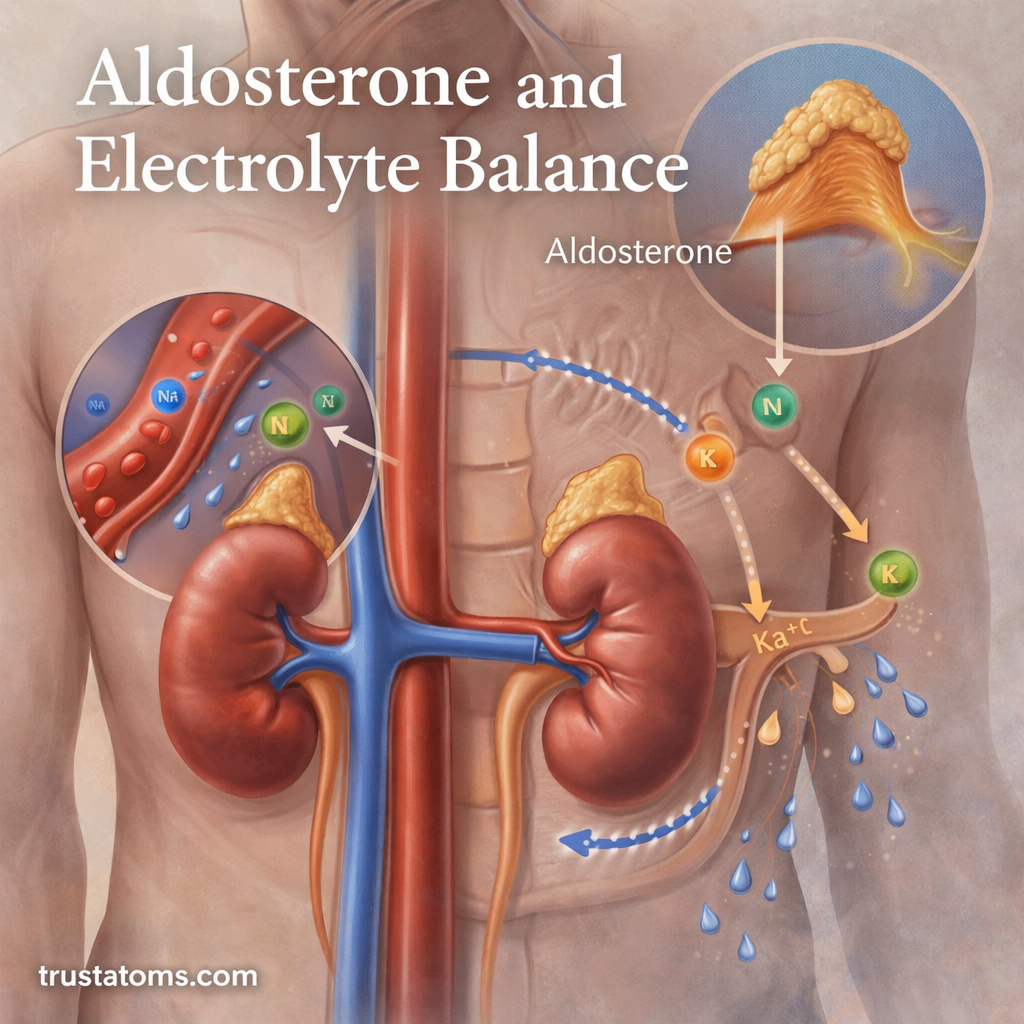
Maintaining the right balance of electrolytes—especially sodium and potassium—is essential for nerve signaling, muscle contraction, and fluid regulation. One of the key hormones responsible for this balance is aldosterone.
This article explains how aldosterone works, how it regulates electrolytes, and why it’s vital for maintaining blood pressure and overall homeostasis.
What Is Aldosterone?
Aldosterone is a steroid hormone produced by the adrenal glands, which sit on top of each kidney. It belongs to a group of hormones called mineralocorticoids.
Key Functions of Aldosterone
- Regulates sodium (Na⁺) levels
- Controls potassium (K⁺) excretion
- Influences water retention
- Helps maintain blood pressure
Its main role is to signal the kidneys to adjust how much sodium and potassium are retained or excreted.
How Aldosterone Regulates Electrolyte Balance
Aldosterone acts primarily on the distal tubules and collecting ducts of the kidneys.
Mechanism of Action
- Aldosterone is released into the bloodstream
- It binds to receptors in kidney cells
- This increases sodium reabsorption into the blood
- Potassium is excreted into the urine
- Water follows sodium, increasing blood volume
This process helps maintain the correct balance of electrolytes and fluids in the body.
The Renin-Angiotensin-Aldosterone System (RAAS)
Aldosterone is part of a larger hormonal system called the renin-angiotensin-aldosterone system (RAAS), which regulates blood pressure and fluid balance.
How RAAS Works
- Low blood pressure or low sodium levels are detected
- The kidneys release renin
- Renin converts angiotensinogen into angiotensin I
- Angiotensin I is converted to angiotensin II
- Angiotensin II stimulates aldosterone release
- Aldosterone increases sodium and water retention
This system ensures that blood pressure and electrolyte levels are quickly corrected when they drop.
Effects of Aldosterone on the Body
Aldosterone influences several important physiological processes.
Kidney Effects
- Increases sodium reabsorption
- Promotes potassium excretion
- Enhances water retention
Blood Pressure Regulation
- Increases blood volume
- Helps stabilize or raise blood pressure
Electrolyte Stability
- Maintains proper sodium-potassium balance
- Supports nerve and muscle function
What Triggers Aldosterone Release?
The body carefully regulates aldosterone secretion based on internal conditions.
1. Low Blood Pressure
- Activates the RAAS system
- Leads to increased aldosterone production
2. Low Sodium Levels
- Signals the need to conserve sodium
- Triggers aldosterone release
3. High Potassium Levels
- Directly stimulates aldosterone secretion
- Promotes potassium excretion
4. Hormonal Signals
- Angiotensin II is the primary hormonal trigger
- ACTH (adrenocorticotropic hormone) has a minor role
Aldosterone vs ADH: Key Differences
Although both aldosterone and ADH regulate fluid balance, they work in different ways.
Aldosterone
- Targets sodium and potassium balance
- Works by adjusting electrolyte transport
- Indirectly affects water retention
ADH (Antidiuretic Hormone)
- Directly controls water reabsorption
- Does not significantly affect sodium levels
- Primarily regulates urine concentration
Together, these hormones coordinate to maintain fluid and electrolyte homeostasis.
What Happens When Aldosterone Is Imbalanced?
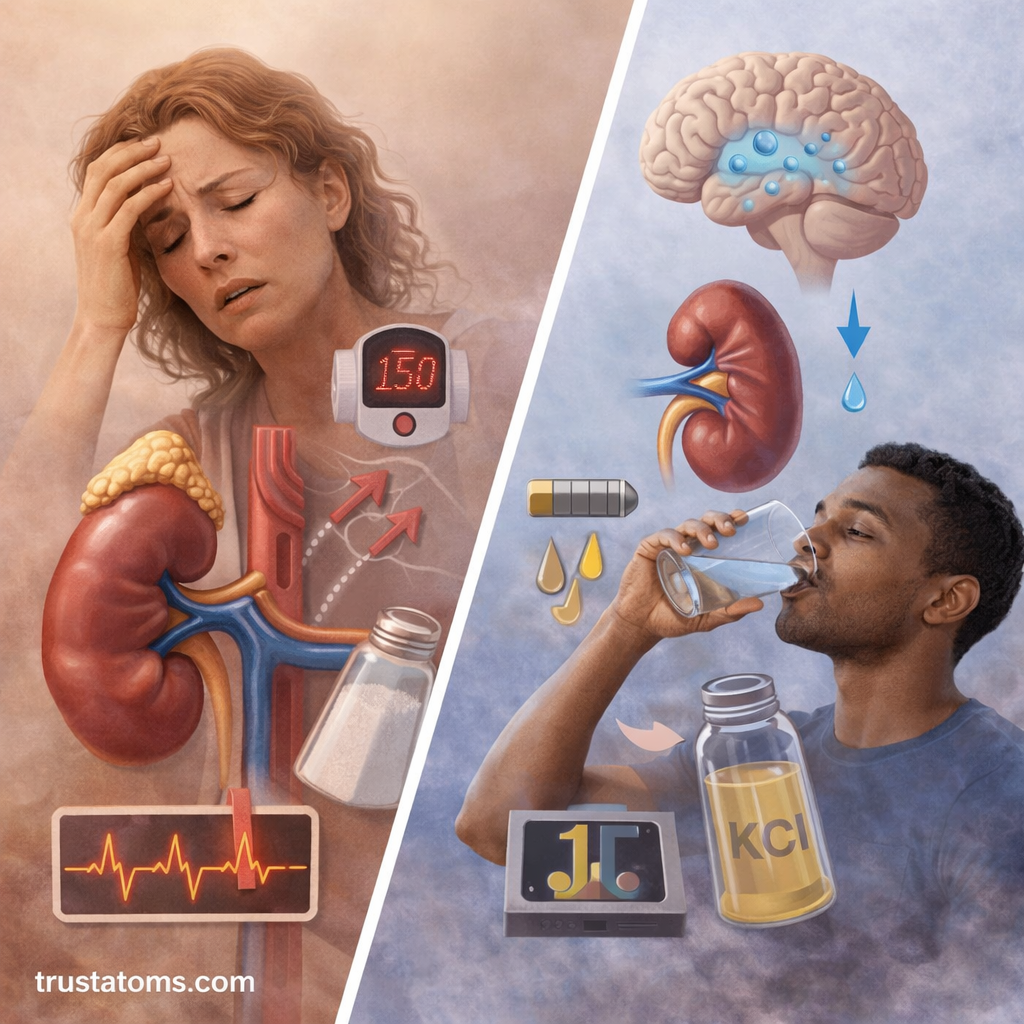
Abnormal aldosterone levels can disrupt electrolyte balance and blood pressure.
Too Much Aldosterone: Hyperaldosteronism
- Excess sodium retention
- Increased blood pressure (hypertension)
- Low potassium levels (hypokalemia)
Symptoms may include:
- Muscle weakness
- Fatigue
- Irregular heart rhythms
Too Little Aldosterone: Addison’s Disease
- Reduced sodium levels (hyponatremia)
- Increased potassium levels (hyperkalemia)
- Low blood pressure (hypotension)
Symptoms may include:
- Dizziness
- Dehydration
- Salt cravings
Relationship Between Electrolytes and Fluid Balance
Electrolytes play a key role in controlling fluid movement in the body.
- Sodium attracts and holds water in the bloodstream
- Potassium helps regulate cellular function
- Aldosterone ensures these electrolytes remain balanced
When sodium is reabsorbed:
- Water follows
- Blood volume increases
When sodium is lost:
- Water is also lost
- Blood volume decreases
Summary
Aldosterone is a vital hormone that regulates electrolyte balance, particularly sodium and potassium levels. By controlling how the kidneys reabsorb sodium and excrete potassium, it helps maintain fluid balance, blood pressure, and proper cellular function.
Key takeaways:
- Aldosterone is produced by the adrenal glands
- It increases sodium reabsorption and potassium excretion
- It is regulated by the RAAS system
- It plays a critical role in blood pressure control
- Imbalances can lead to serious health conditions
Understanding aldosterone provides insight into how the body maintains internal stability and responds to changes in blood pressure and electrolyte levels.