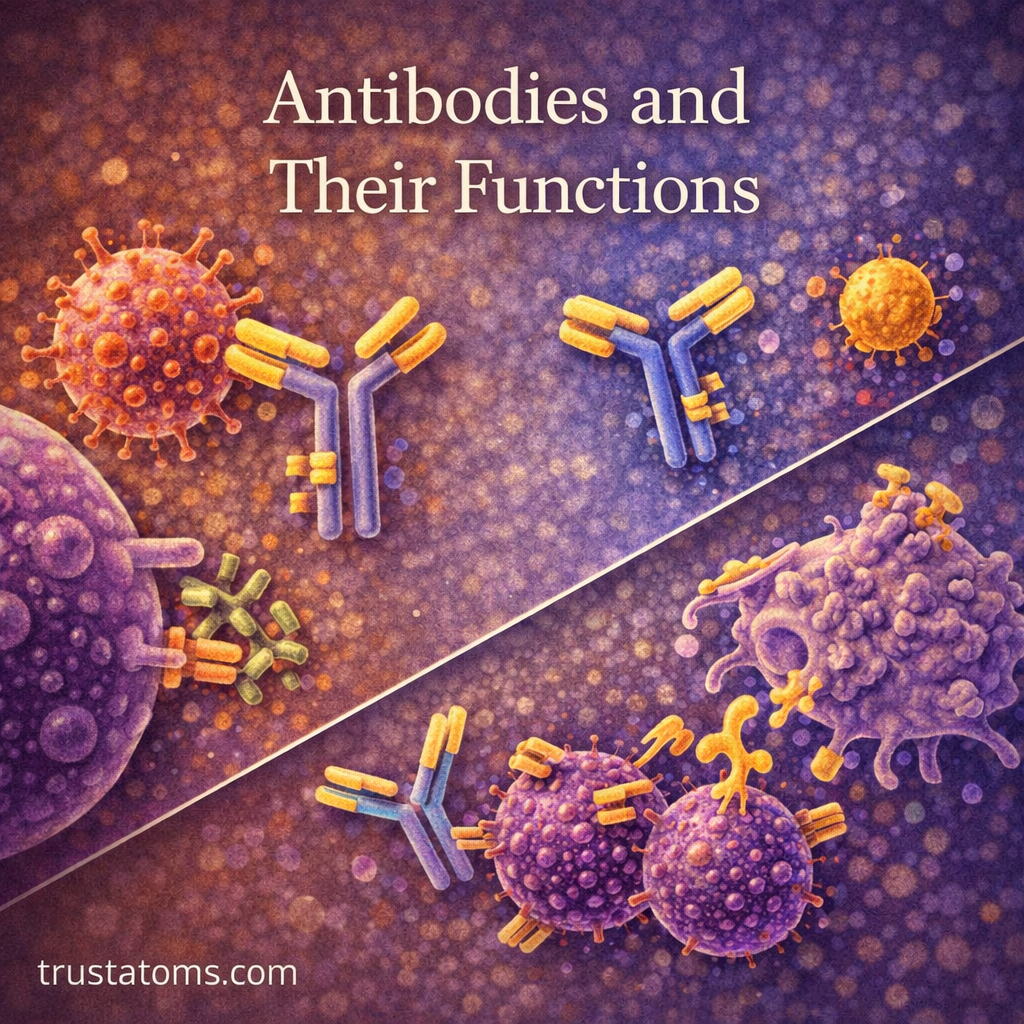
Antibodies are one of the most important tools your immune system uses to fight infections. These specialized proteins identify harmful invaders, bind to them, and help neutralize or destroy them.
They play a central role in protecting the body from disease and are key to how immunity—and vaccines—work.
What Are Antibodies?
Antibodies, also known as immunoglobulins, are proteins produced by B cells (a type of white blood cell). Each antibody is designed to recognize a specific antigen, such as a virus or bacterium.
Think of antibodies as precision-targeting molecules that lock onto threats and mark them for elimination.
How Antibodies Work
Antibodies function through a highly specific process:
- Recognition
An antibody binds to a matching antigen on a pathogen - Attachment
The antibody attaches tightly, forming an antigen-antibody complex - Neutralization or Tagging
The pathogen is neutralized or marked for destruction - Elimination
Other immune cells destroy the tagged invader
This targeted approach allows the immune system to respond efficiently and accurately.
Structure of an Antibody
Antibodies have a unique Y-shaped structure that allows them to bind to antigens.
Key Parts
- Variable region (tips of the Y)
- Binds specifically to an antigen
- Constant region (stem of the Y)
- Signals other immune cells to act
This structure enables antibodies to both recognize threats and trigger immune responses.
Types of Antibodies
There are five main types of antibodies, each with a distinct role:
IgG (Immunoglobulin G)
- Most abundant antibody in the blood
- Provides long-term protection
- Can cross the placenta to protect a fetus
IgA (Immunoglobulin A)
- Found in mucous membranes (respiratory, digestive tracts)
- Present in saliva, tears, and breast milk
- Protects body surfaces exposed to the environment
IgM (Immunoglobulin M)
- First antibody produced during an infection
- Provides early-stage defense
IgE (Immunoglobulin E)
- Involved in allergic reactions
- Helps defend against parasites
IgD (Immunoglobulin D)
- Found on the surface of B cells
- Plays a role in activating immune responses
Key Functions of Antibodies
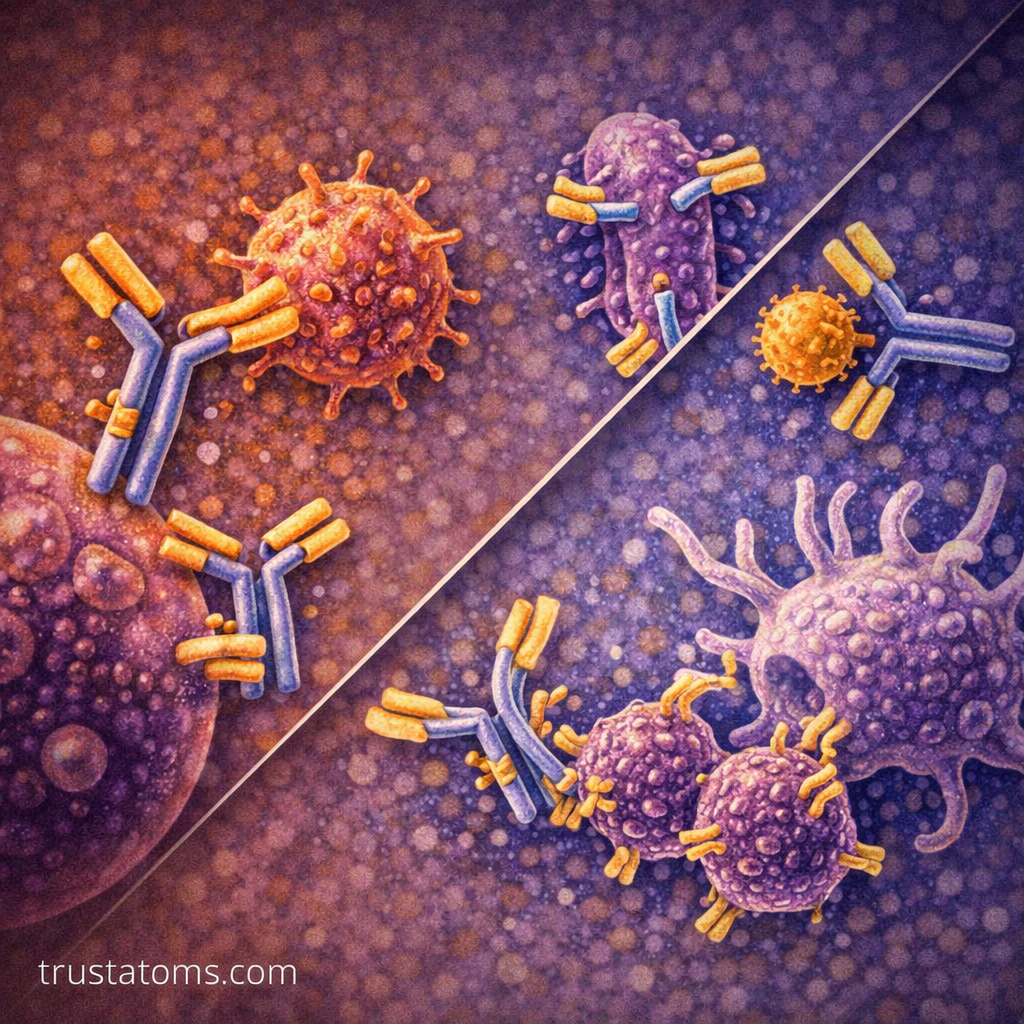
Antibodies perform several essential functions in immune defense:
Neutralization
They block pathogens or toxins from entering and damaging cells.
Opsonization (Tagging for Destruction)
Antibodies mark pathogens so that immune cells like phagocytes can easily recognize and destroy them.
Activation of Complement System
They trigger a group of proteins (complement system) that helps destroy pathogens and enhance inflammation.
Agglutination
Antibodies can bind multiple pathogens together, clumping them for easier removal.
Antibodies and Immune Memory
One of the most powerful features of antibodies is their role in immune memory.
After an infection:
- Memory B cells remain in the body
- They can quickly produce antibodies if the same pathogen returns
- The response is faster and stronger
This is why you often don’t get sick from the same infection twice.
Role of Antibodies in Vaccination
Vaccines work by stimulating antibody production without causing disease.
How Vaccines Use Antibodies
- Introduce a harmless form of an antigen
- Trigger antibody production
- Create memory cells
- Prepare the immune system for future exposure
This process provides long-term protection against specific diseases.
What Happens When Antibody Function Is Disrupted?
Problems with antibodies can lead to health issues:
Immunodeficiency
- The body produces too few or ineffective antibodies
- Leads to frequent infections
Autoimmune Diseases
- Antibodies mistakenly target the body’s own tissues
Allergies
- IgE antibodies overreact to harmless substances like pollen or food
Factors That Influence Antibody Production
Several factors affect how well your body produces antibodies:
- Nutrition – essential vitamins and minerals support immune function
- Sleep – critical for immune regulation
- Stress – chronic stress can weaken responses
- Age – immune efficiency may decline over time
- Vaccination status – influences antibody availability
Simple Way to Understand Antibodies
Think of antibodies as guided missiles:
- They seek out specific targets (antigens)
- Lock onto them precisely
- Signal other immune cells to destroy them
This precision makes them one of the most effective defense tools in the body.
Final Thoughts
Antibodies are a cornerstone of the immune system, providing targeted defense against infections and long-term protection through immune memory. From neutralizing pathogens to supporting vaccines, their role is essential for maintaining health.
Understanding how antibodies work helps explain how the body fights disease—and why supporting your immune system is so important.