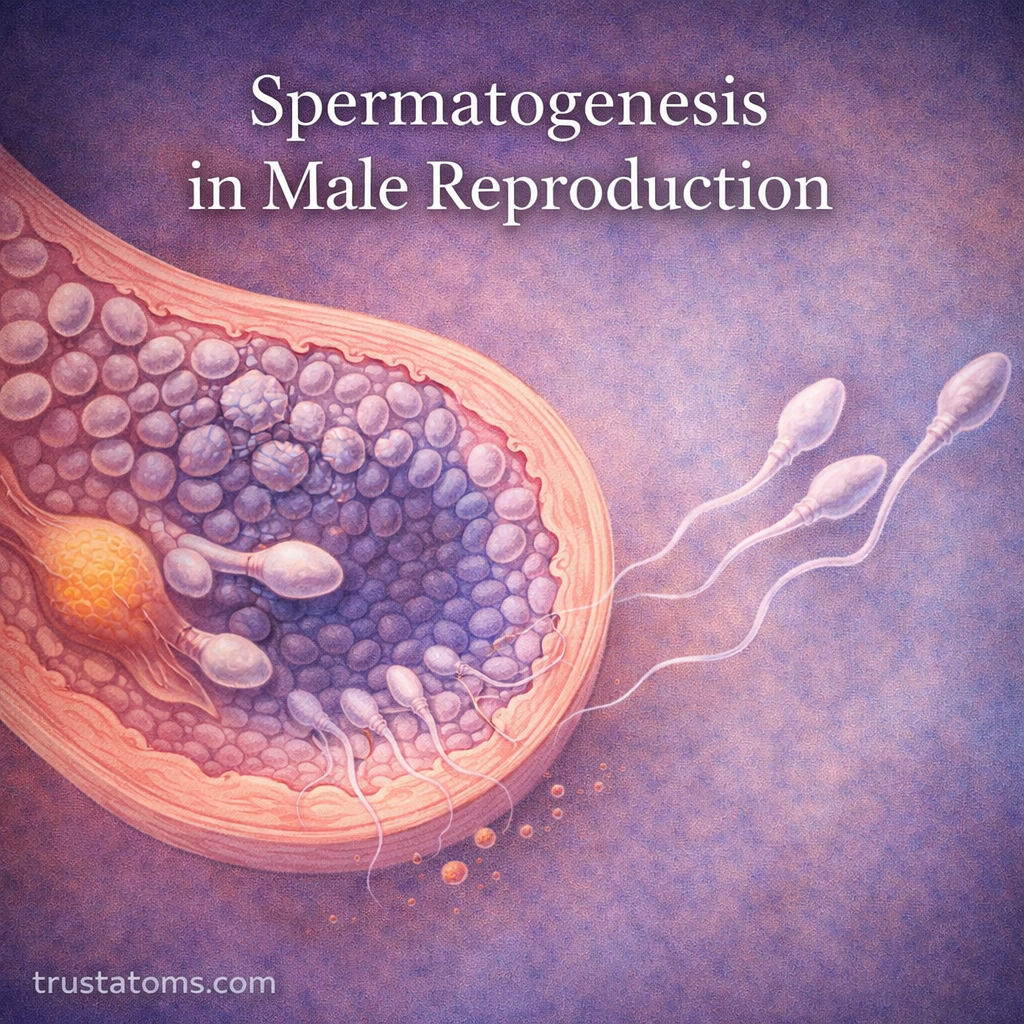
Spermatogenesis is the biological process by which male reproductive cells—sperm—are produced. This process occurs in the testes and is essential for human reproduction, as it generates the cells needed to fertilize an egg.
Spermatogenesis is continuous, highly regulated, and begins at puberty, continuing throughout a male’s life.
What Is Spermatogenesis?
Spermatogenesis is a specialized form of cell division that transforms immature germ cells into fully developed sperm cells.
- Occurs in the seminiferous tubules of the testes
- Produces haploid sperm cells with 23 chromosomes
- Takes approximately 64–74 days to complete one cycle
The goal of spermatogenesis is to create functional sperm capable of reaching and fertilizing an egg.
Where Spermatogenesis Occurs
Seminiferous Tubules
Spermatogenesis takes place inside tightly coiled structures in the testes called seminiferous tubules.
- Lined with developing sperm cells at different stages
- Supported by Sertoli cells, which nourish and protect developing sperm
- Surrounded by Leydig cells, which produce testosterone
This environment provides the ideal conditions for sperm development.
Stages of Spermatogenesis
Spermatogenesis occurs in three main stages:
1. Spermatogonial Phase (Mitosis)
- Stem cells called spermatogonia divide through mitosis
- Some remain as stem cells, while others begin development
- Ensures a continuous supply of sperm-producing cells
2. Meiotic Phase (Meiosis)
- Primary spermatocytes undergo meiosis I and II
- Chromosome number is reduced from 46 to 23
- Produces haploid spermatids
This stage introduces genetic variation and prepares cells for fertilization.
3. Spermiogenesis (Maturation)
- Spermatids transform into mature sperm cells
- Development of key structures:
- Head (contains DNA)
- Midpiece (energy production)
- Tail (movement)
Sperm gain their characteristic shape and mobility during this phase.
Structure of a Mature Sperm Cell
A fully developed sperm cell is specialized for movement and fertilization.
Key Parts
- Head
- Contains genetic material (DNA)
- Includes the acrosome, which helps penetrate the egg
- Midpiece
- Packed with mitochondria
- Provides energy for movement
- Tail (Flagellum)
- Enables swimming motion
- Propels the sperm toward the egg
This streamlined structure allows sperm to travel efficiently through the female reproductive tract.
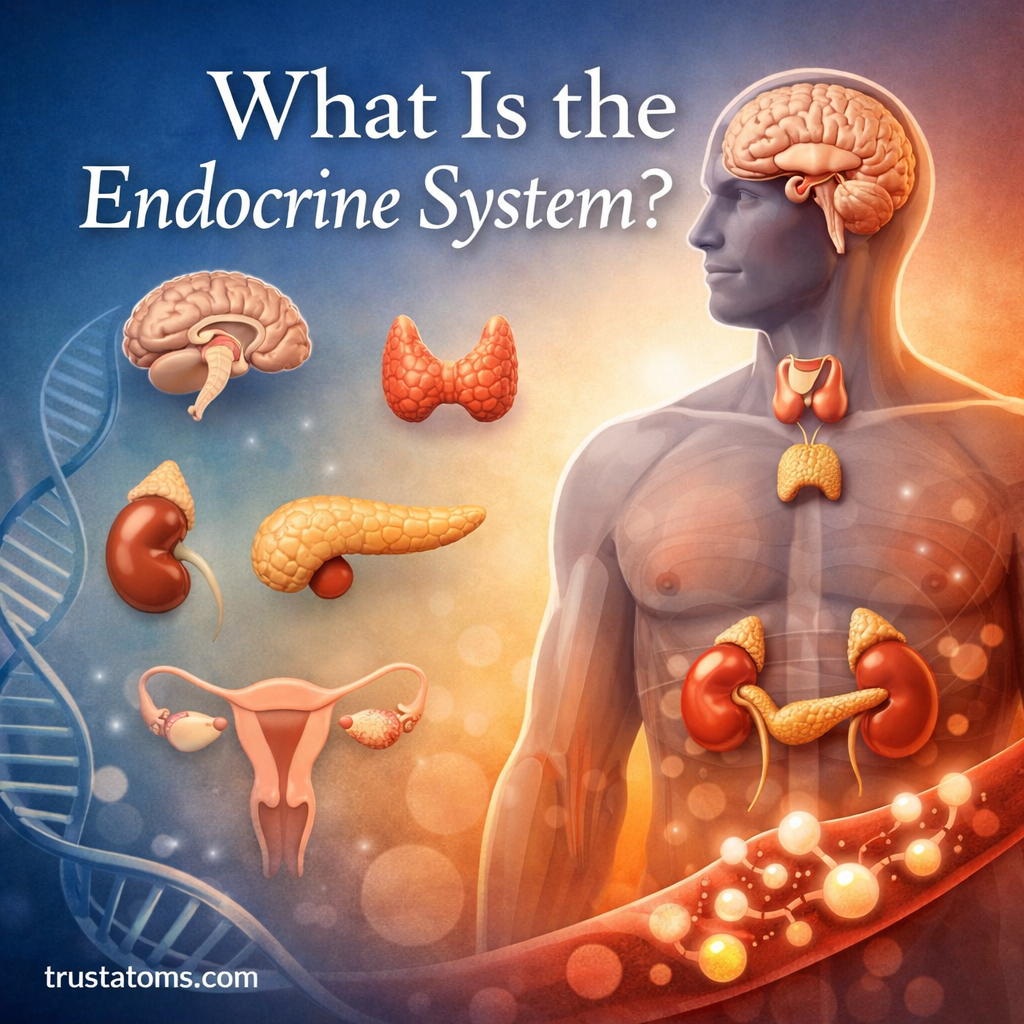
Hormonal Regulation of Spermatogenesis
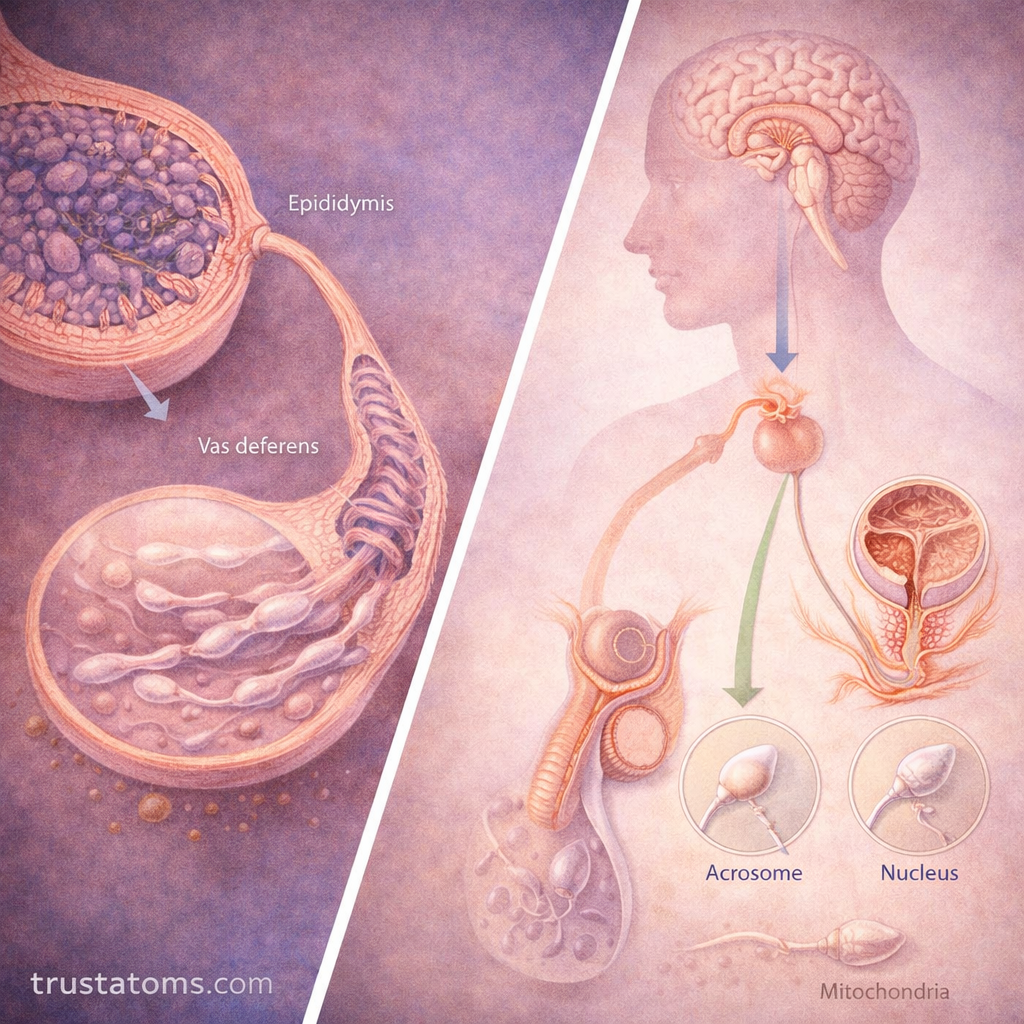
Spermatogenesis is controlled by a network of hormones.
Key Hormones
- Testosterone
- Produced by Leydig cells
- Essential for sperm development
- Follicle-stimulating hormone (FSH)
- Stimulates Sertoli cells
- Supports sperm maturation
- Luteinizing hormone (LH)
- Signals testosterone production
These hormones are regulated by the hypothalamus and pituitary gland in the brain.
Timeline and Efficiency of Sperm Production
Spermatogenesis is a continuous and highly productive process.
- Takes about 2–2.5 months for sperm to fully develop
- Millions of sperm are produced daily
- Sperm are stored and matured in the epididymis after formation
This ongoing production ensures a steady supply of sperm for reproduction.
Factors That Affect Spermatogenesis
Several internal and external factors can influence sperm production:
Biological Factors
- Hormonal imbalances
- Age-related changes
- Genetic conditions
Environmental and Lifestyle Factors
- Heat exposure (e.g., tight clothing, hot environments)
- Poor nutrition
- Smoking, alcohol, or drug use
- Exposure to toxins or radiation
Maintaining healthy conditions is important for optimal sperm production.
Common Issues Related to Spermatogenesis
Problems in spermatogenesis can lead to fertility challenges.
- Low sperm count (oligospermia)
- Poor sperm motility
- Abnormal sperm shape (morphology issues)
- Azoospermia – absence of sperm in semen
These issues may result from disruptions in any stage of sperm development.
Why Spermatogenesis Matters
Spermatogenesis is essential for:
- Male fertility and reproduction
- Passing genetic information to offspring
- Maintaining population continuity
It also provides insight into overall reproductive health and hormonal balance.
Final Thoughts
Spermatogenesis is a complex and continuous process that transforms simple germ cells into highly specialized sperm cells. From mitosis and meiosis to final maturation, each stage is carefully regulated to ensure successful reproduction.
Understanding spermatogenesis helps explain how male fertility works and highlights the importance of maintaining reproductive health through proper lifestyle and medical care.