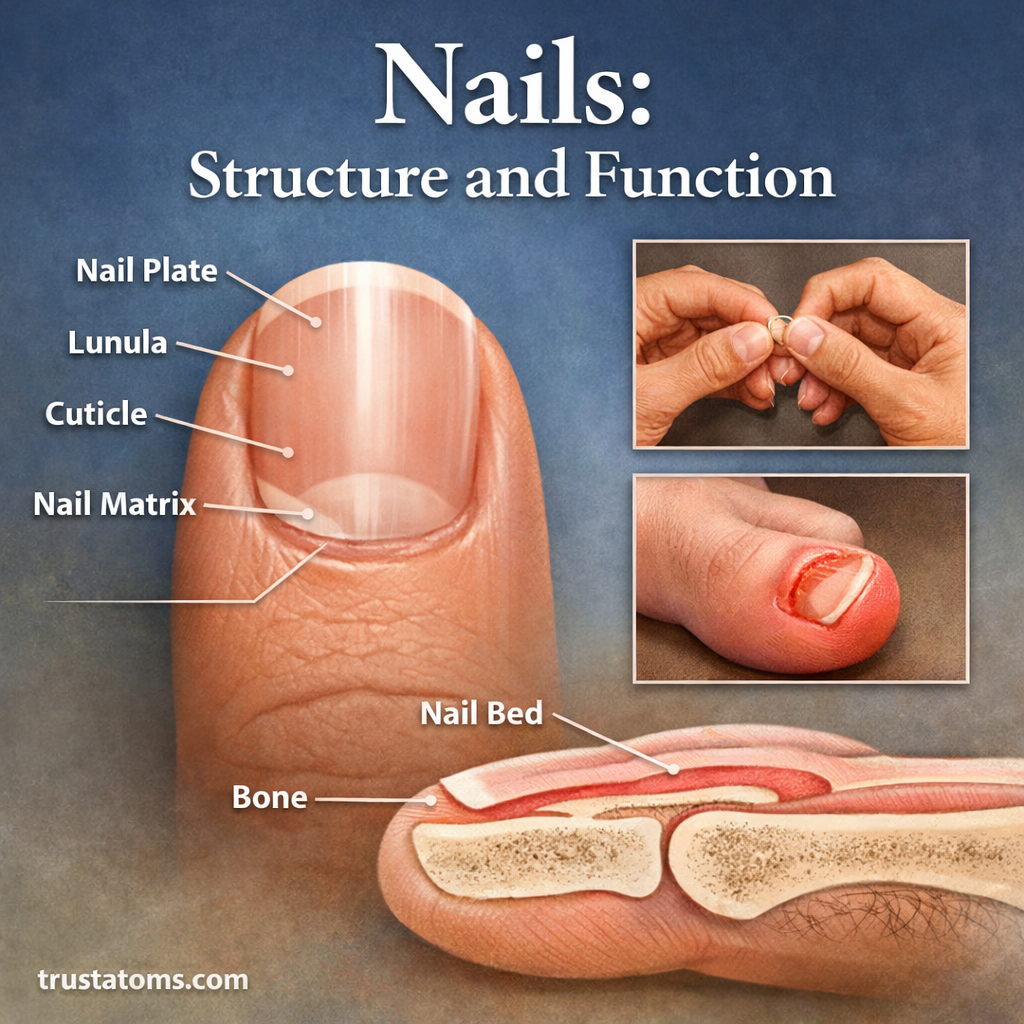
Human nails are hard, keratin-rich structures that protect the tips of the fingers and toes while helping with gripping, precise movements, and touch. Each nail consists of a visible nail plate and underlying tissues that produce, support, and anchor it as it grows.
Although nails appear simple, their structure includes specialized skin cells, blood vessels, and protective folds. Studying these components connects nail function to human anatomy and explains why nail injuries, growth changes, and everyday care can affect the surrounding tissues.
What Are Nails Made Of?
Nails are hard, protective coverings made primarily of a protein called keratin. They are part of the integumentary system, which also includes skin and hair.
The visible nail consists of tightly packed, flattened cells that have undergone keratinization. During this process, developing cells accumulate keratin, lose their nuclei, and become part of the firm nail plate. Unlike living skin beneath it, the mature nail plate contains no nerves or blood vessels.
Fingernails and toenails share the same basic anatomy, but toenails are generally thicker and grow more slowly. Their shape and thickness also reflect the different mechanical demands placed on hands and feet.
Nail Structure Explained
A nail is more than its visible surface. Several connected structures form the nail unit, including the nail plate, nail bed, matrix, lunula, cuticle, and surrounding nail folds.
Nail Plate
The nail plate is the hard, slightly curved structure visible on each finger and toe. It is made of compact keratinized cells arranged in layers. Because the plate is partly translucent, the blood-rich tissue beneath it contributes to the nail’s pink appearance.
Nail Bed
The nail bed is the specialized skin beneath the nail plate. It helps keep the plate attached and contains blood vessels and sensory nerves. The nail bed supports the moving plate, although most nail production occurs in the matrix rather than the bed.
Nail Matrix
The nail matrix is the primary growth-producing tissue, located mainly beneath the skin at the base of the nail. Its cells divide and differentiate to form new nail plate material. Injury to the matrix can cause persistent ridges, splitting, or changes in nail shape, depending on the severity and location of damage.
Lunula
The lunula is the pale, crescent-shaped region sometimes visible near the nail base, especially on the thumbs. It represents the visible portion of the distal nail matrix. Its size and visibility vary naturally, and an inconspicuous lunula does not necessarily indicate abnormal nail growth.
Cuticle and Nail Folds
The cuticle is a thin layer of dead tissue that adheres to the nail plate near its base, helping seal the space between the plate and surrounding skin. The proximal and lateral nail folds surround and protect the growing nail. Together, these structures help limit the entry of microorganisms and irritants.
Nails and hair are both keratinized skin appendages, but their growth structures differ. The hair structure and growth cycle illustrates how follicles produce hair through a different process. Understanding skin structure and its layers also helps explain how nail-producing tissues relate to the surrounding epidermis and dermis.
How Fingernails and Toenails Grow
Nail growth begins in the matrix, where living cells continually divide. As new cells form, older cells are pushed forward, become keratinized, and join the nail plate. The plate gradually advances over the nail bed toward the fingertip or toe tip.
Fingernails typically grow about 3 millimeters per month, while toenails grow approximately 1–1.5 millimeters per month. These are averages rather than fixed rates. Age, health, injury, and individual differences can influence growth.
For a concrete example, replacing a 12-millimeter-long fingernail plate at an average growth rate of 3 millimeters per month would take roughly four months. In practice, complete fingernail replacement commonly takes about four to six months, while toenails may require 12–18 months.
Because growth occurs at the matrix, a temporary disruption can leave a groove that gradually moves toward the free edge as the nail grows. The nail plate itself does not heal like living skin; damaged sections must generally grow out.
How Nails Protect the Fingers and Improve Dexterity
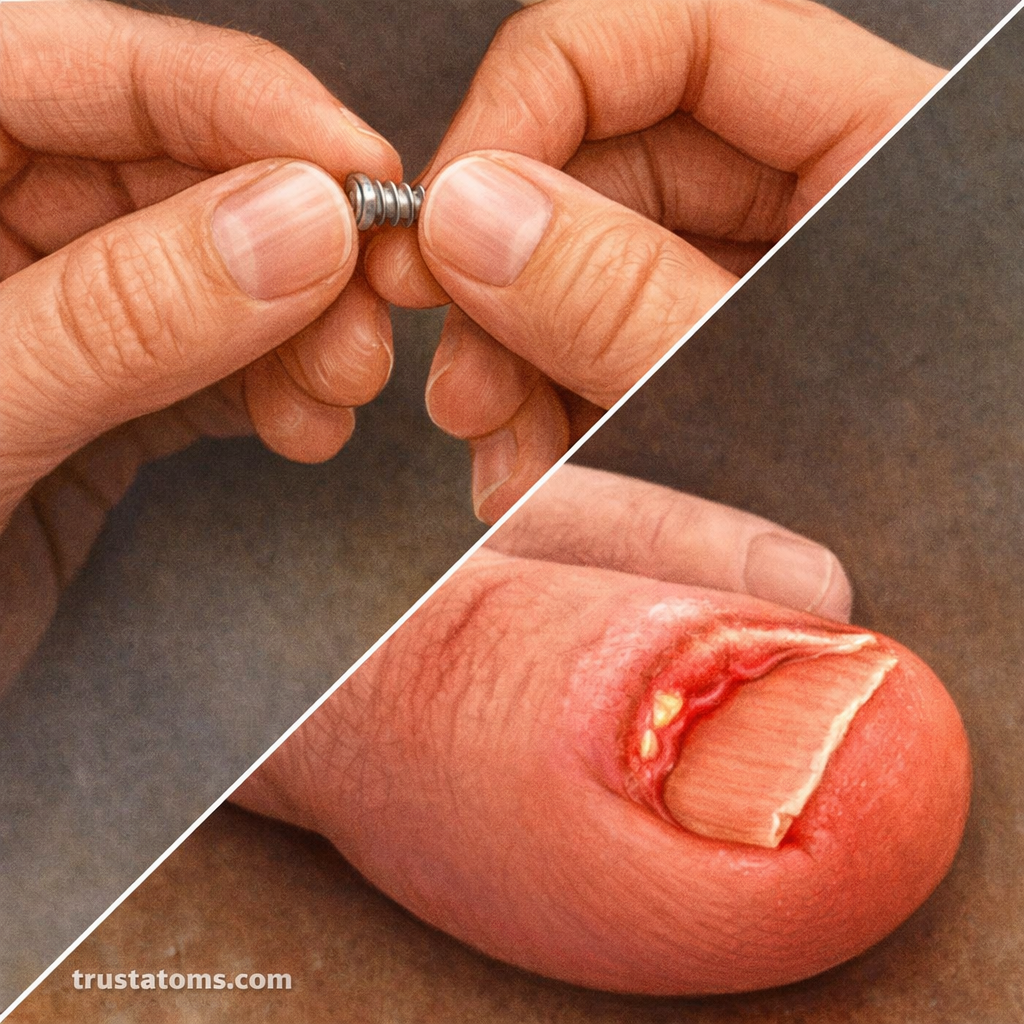
Nails serve several mechanical and sensory functions that become noticeable during ordinary activities.
- Protection: The rigid plate helps shield the sensitive ends of fingers and toes from minor impacts and pressure.
- Fine motor control: Nails provide a firm backing that helps fingertips manipulate small objects.
- Touch support: Counterpressure from the nail helps the fingertip pad deform against objects, supporting tactile perception.
- Grooming: The free edge can assist with scratching and removing small particles from the skin.
Consider picking up a coin lying flat on a table. The nail provides a firm surface behind the fingertip, helping you apply controlled pressure and position the finger beneath the coin’s edge. Nails do not contain touch receptors themselves; sensory information comes from nerves in the surrounding living tissues.
What Nail Changes Can Reveal About Health
Healthy nails commonly have a relatively smooth surface, consistent shape, and color appropriate to the individual’s skin and nail-bed pigmentation. Some longitudinal ridging is common with age and does not automatically indicate disease.
Changes in nail appearance can result from local injury, repeated moisture exposure, infection, inflammatory skin conditions, or occasionally broader health problems.
- Yellow or thickened nails: May occur with fungal infection, psoriasis, or repeated trauma.
- Brittle or splitting nails: Often reflect repeated wetting, drying, chemical exposure, or physical damage.
- Horizontal grooves: Can develop after a temporary interruption of nail matrix activity.
- Nail separation: May result from trauma, inflammatory conditions, or other causes.
- New or changing dark streaks: May require medical assessment, particularly when pigment extends onto surrounding skin.
Nail appearance alone cannot reliably diagnose a nutritional deficiency or systemic disease. Persistent, painful, or unexplained changes should be evaluated in their clinical context.
Common Nail Problems and Their Causes
Fungal Nail Infections
Onychomycosis is a fungal infection that may cause thickening, discoloration, crumbling, or separation of the nail. Toenails are affected more frequently than fingernails. Because other conditions can look similar, testing may be needed before treatment.
Ingrown Toenails
An ingrown toenail develops when the nail edge presses into or penetrates surrounding skin. This can cause pain, redness, swelling, and sometimes infection. Tight footwear, nail shape, and improper trimming may contribute.
Nail Trauma and Inflammation
Crushing or striking a nail can cause bleeding beneath the plate, known as a subungual hematoma. Inflammation or infection around the nail fold is called paronychia. Significant pain, spreading redness, or suspected serious injury warrants medical attention.
Everyday Habits That Protect Nail Health
Simple care practices help protect the nail plate and surrounding skin without interfering with normal growth.
- Keep nails clean and dry them thoroughly after washing.
- Trim fingernails regularly and cut toenails generally straight across, avoiding deeply rounded corners.
- Avoid biting nails, picking at folds, or cutting away protective cuticle tissue.
- Apply moisturizer to dry nails and surrounding skin.
- Wear protective gloves when using cleaning chemicals or working with prolonged moisture.
- Choose footwear with adequate toe room to reduce repeated nail pressure.
A balanced diet supports normal tissue growth, but supplements are not automatically necessary for healthy nails. Repeated injury or irritation may have a more direct effect on nail appearance than minor dietary differences.
Frequently Asked Questions
Are fingernails made of bone or living tissue?
Fingernails are not bones. The visible nail plate consists of hardened, keratinized cells that are no longer living. The matrix and nail bed beneath it contain living cells, blood vessels, and nerves.
Why do fingernails grow faster than toenails?
Fingernails generally have a faster growth rate because nail growth activity differs between fingers and toes. The precise reasons involve several biological factors, including local tissue conditions and differences in matrix activity.
Can a damaged nail grow back normally?
Often, yes. If the nail matrix remains intact, a damaged nail may gradually be replaced by normal growth. Severe matrix injury can cause permanent changes in thickness, shape, or surface texture.
Nails combine a hard keratin plate with living growth and supporting tissues to protect the digits and assist with precise touch and movement. The matrix produces new nail material, while the nail bed and surrounding folds help support and protect it. Understanding these structures makes it easier to recognize normal growth, prevent avoidable damage, and identify changes that deserve attention.
This article is for general education and is not medical advice. Talk to a qualified health professional about any medical concern.
Sources: Bolognia, Schaffer, and Cerroni, Dermatology; American Academy of Dermatology; Merck Manual Professional Edition.