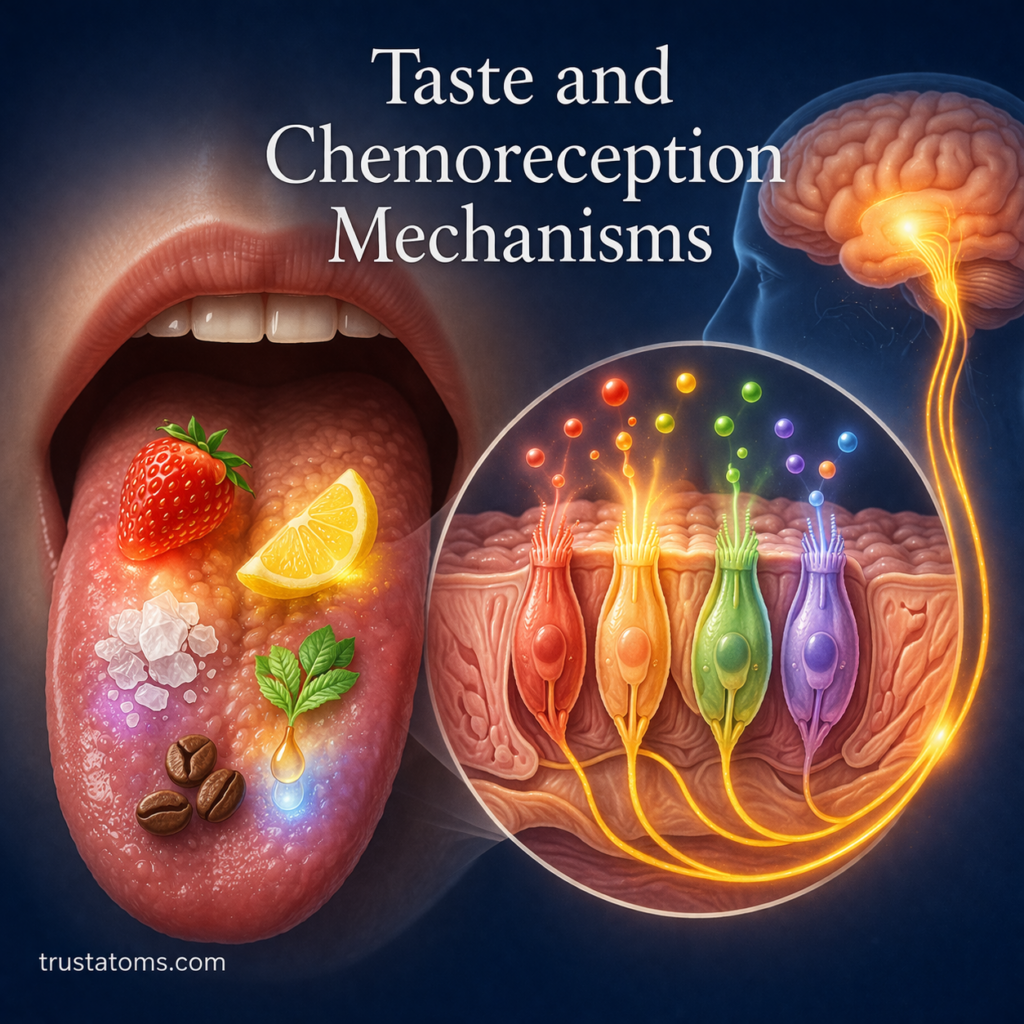
Taste is one of the body’s key sensory systems, helping us evaluate food, detect nutrients, and avoid harmful substances. While it may seem simple, taste is part of a broader process called chemoreception, where the body detects chemical stimuli from the environment.
From enjoying a sweet dessert to reacting to bitter or spoiled food, taste plays an essential role in survival and daily experience.
What Is Chemoreception?
Chemoreception is the ability of the body to detect chemical molecules and convert them into sensory signals.
There are two primary types:
- Gustation (taste) – detects chemicals in food
- Olfaction (smell) – detects airborne chemicals
Together, taste and smell create what we perceive as flavor.
Overview of the Taste System
The taste system involves:
- Taste receptors in the mouth
- Cranial nerves that transmit signals
- The brain, which interprets taste
Taste begins when food molecules dissolve in saliva and interact with receptors on the tongue.
Structure of the Tongue
The tongue is the primary organ for taste and contains specialized structures called papillae.
Types of Papillae
- Fungiform papillae
Found on the tip and sides of the tongue; contain taste buds - Foliate papillae
Located on the sides; more prominent in children - Circumvallate papillae
Large structures at the back of the tongue - Filiform papillae
Do not contain taste buds; help with texture and grip
Taste Buds and Receptor Cells
Taste buds are small sensory organs located within papillae.
Key Features
- Each taste bud contains taste receptor cells
- These cells detect dissolved chemicals
- Each cell responds to specific taste types
The Five Basic Tastes
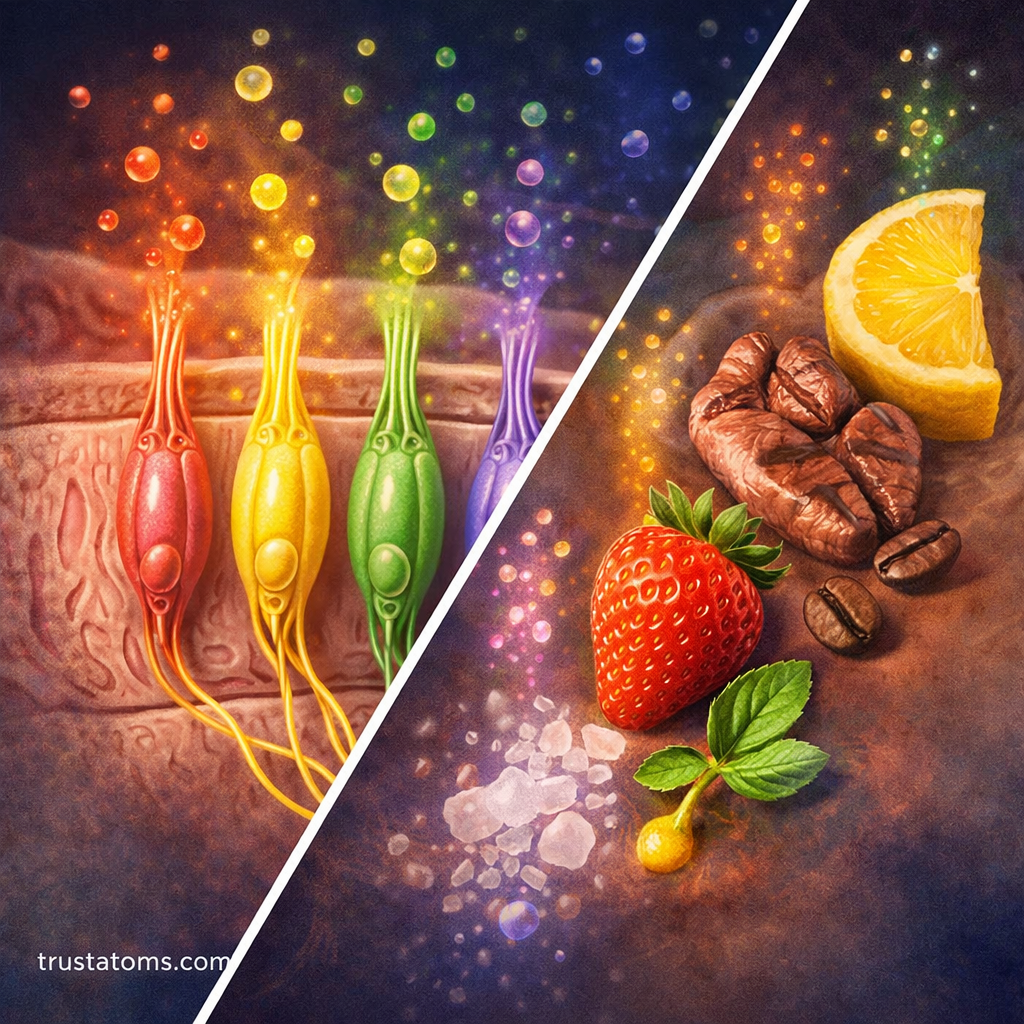
Humans can detect five primary taste categories:
1. Sweet
- Signals energy-rich foods (sugars)
- Generally perceived as pleasant
2. Salty
- Indicates the presence of sodium and electrolytes
- Important for fluid balance
3. Sour
- Detects acidity
- Can signal spoilage or unripe food
4. Bitter
- Often associated with toxins
- Acts as a protective mechanism
5. Umami
- Savory taste linked to amino acids (e.g., glutamate)
- Found in protein-rich foods
How Taste Transduction Works
Taste transduction is the process of converting chemical signals into electrical signals.
Step-by-Step Process
- Food dissolves in saliva
Chemicals are broken down into molecules. - Molecules bind to receptors
Taste receptor cells detect specific compounds. - Activation of receptor cells
Triggers electrical signals within the cells. - Signal transmission
Signals are sent to sensory nerves.
Neural Pathways of Taste
Once signals are generated, they travel to the brain for interpretation.
Cranial Nerves Involved
- Facial nerve (VII) – front of the tongue
- Glossopharyngeal nerve (IX) – back of the tongue
- Vagus nerve (X) – throat and epiglottis
Pathway to the Brain
- Signals travel through cranial nerves
- Reach the brainstem
- Relay through the thalamus
- Arrive at the gustatory cortex
Role of Smell in Taste Perception
Taste alone cannot fully explain flavor.
How Smell Contributes
- Olfactory receptors detect aromas
- Signals combine with taste in the brain
- Enhances flavor perception
Example
- Food tastes bland when you have a cold because smell is reduced
Other Factors That Influence Taste
Taste perception is influenced by more than just taste buds.
Temperature
- Warm foods may taste stronger
- Cold foods may dull taste sensitivity
Texture
- Crunchy vs. creamy affects perception
Visual Cues
- Appearance can influence taste expectations
Personal Differences
- Genetics affect taste sensitivity (e.g., sensitivity to bitterness)
Protective Role of Taste
Taste plays an important role in survival.
Key Functions
- Helps identify nutritious foods
- Warns against toxic substances
- Encourages balanced nutrition
Common Taste Disorders
Disruptions in taste can affect appetite and quality of life.
Types of Disorders
- Ageusia – complete loss of taste
- Hypogeusia – reduced taste sensitivity
- Dysgeusia – distorted taste perception
Possible Causes
- Illness or infection
- Medications
- Nerve damage
- Aging
Why Taste and Chemoreception Matter
Taste is more than enjoyment—it’s a critical biological function.
Key takeaways:
- Chemoreception allows the body to detect chemical stimuli
- Taste receptors convert chemicals into neural signals
- The brain integrates taste and smell for flavor perception
- Taste helps protect and guide dietary choices
Final Thoughts
The taste system is a complex and highly adaptive sensory process that allows us to interact with the chemical world. From detecting nutrients to avoiding harmful substances, taste and chemoreception are essential for both survival and enjoyment.
By understanding how taste works, we gain a deeper appreciation for the sensory experiences that shape our daily lives.