Understanding Earth’s density and internal structure helps explain everything from gravity and magnetic fields to earthquakes and volcanic activity. Although we can’t directly observe most of Earth’s interior, scientists have developed reliable models using seismic waves, rock samples, and physics.
What Is Earth’s Density?
Density is defined as mass divided by volume. For a planet, it tells us how tightly matter is packed together.
Earth has an average density of about 5.51 grams per cubic centimeter (g/cm³), making it the densest planet in the solar system.
Why Is Earth So Dense?
Several factors contribute to Earth’s high density:
- Metal-rich core made mostly of iron and nickel
- Gravitational compression pulling materials inward
- Layered differentiation during early formation
Heavier elements sank toward the center, while lighter materials rose toward the surface. This process is called planetary differentiation.
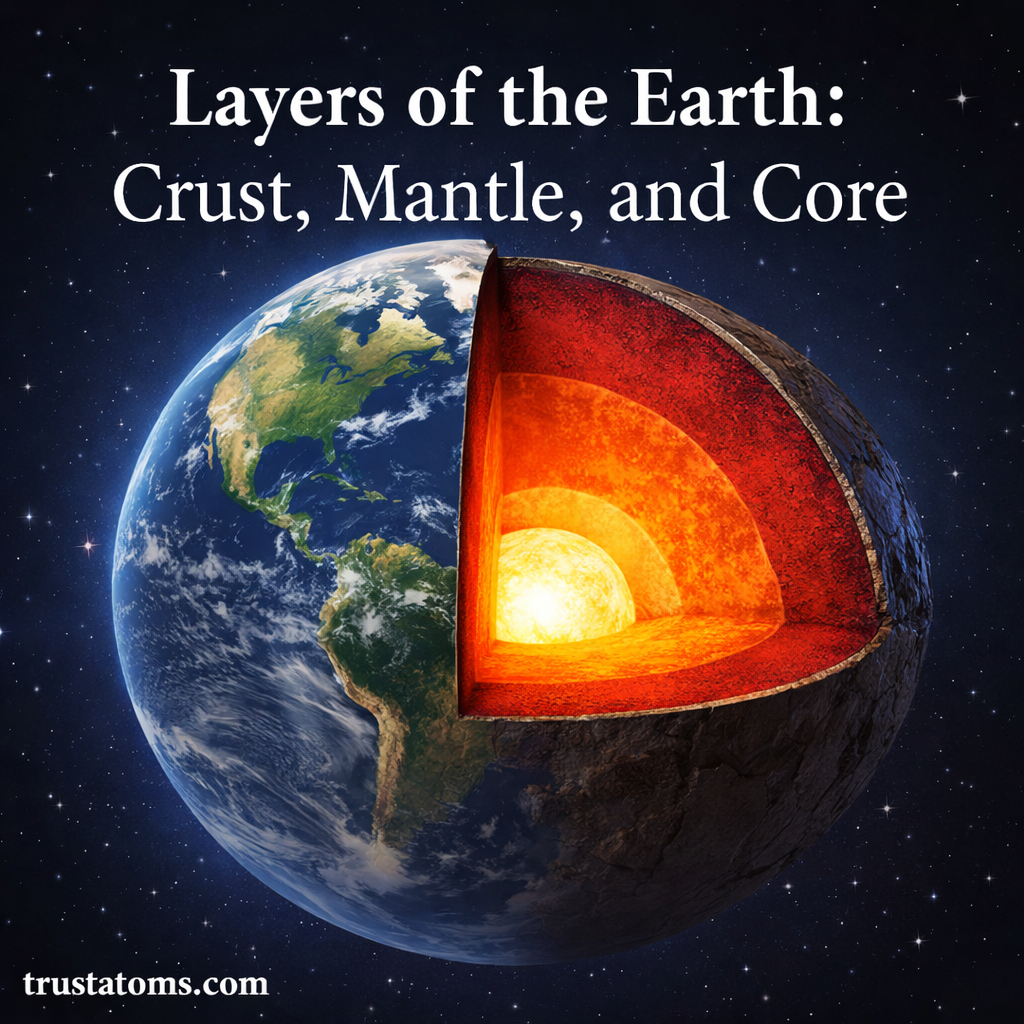
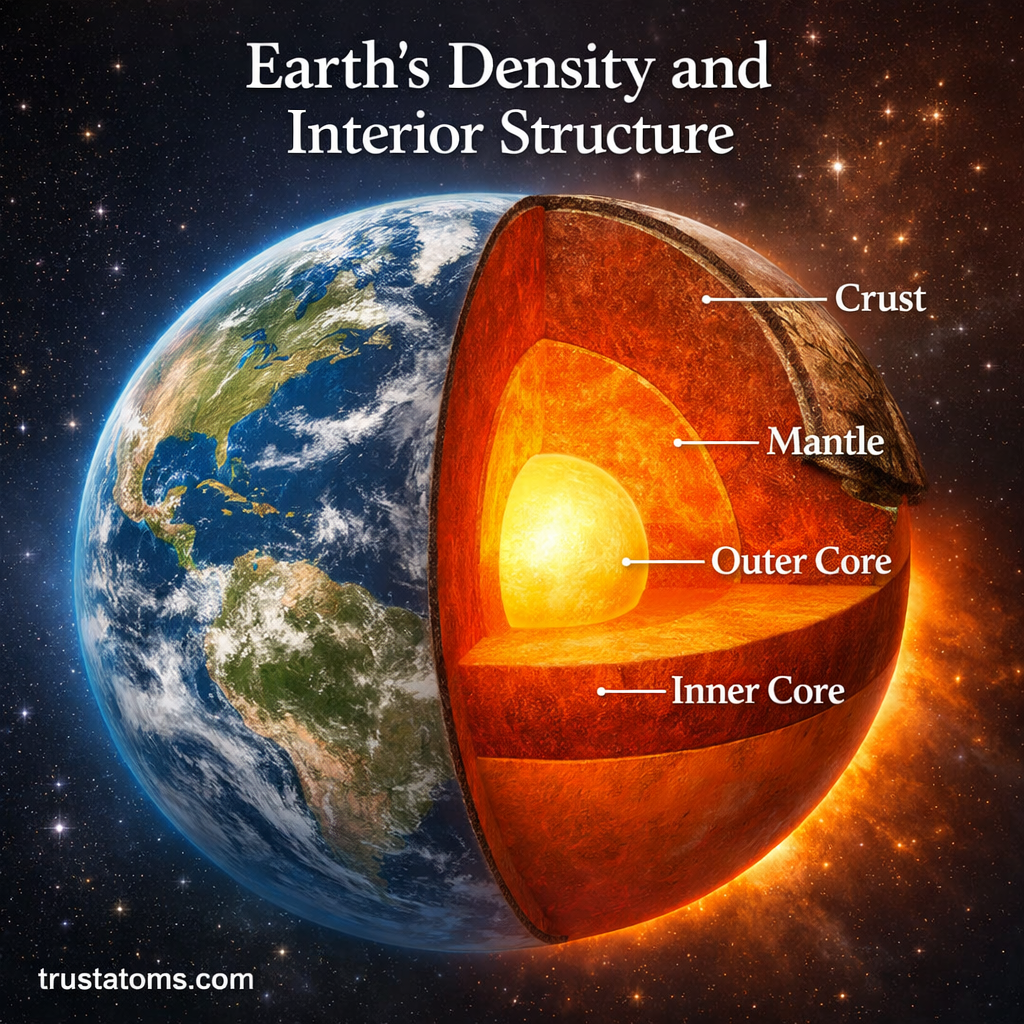
Overview of Earth’s Interior Structure
Earth is divided into three main layers:
- Crust
- Mantle
- Core
Each layer has distinct physical and chemical properties.
The Crust
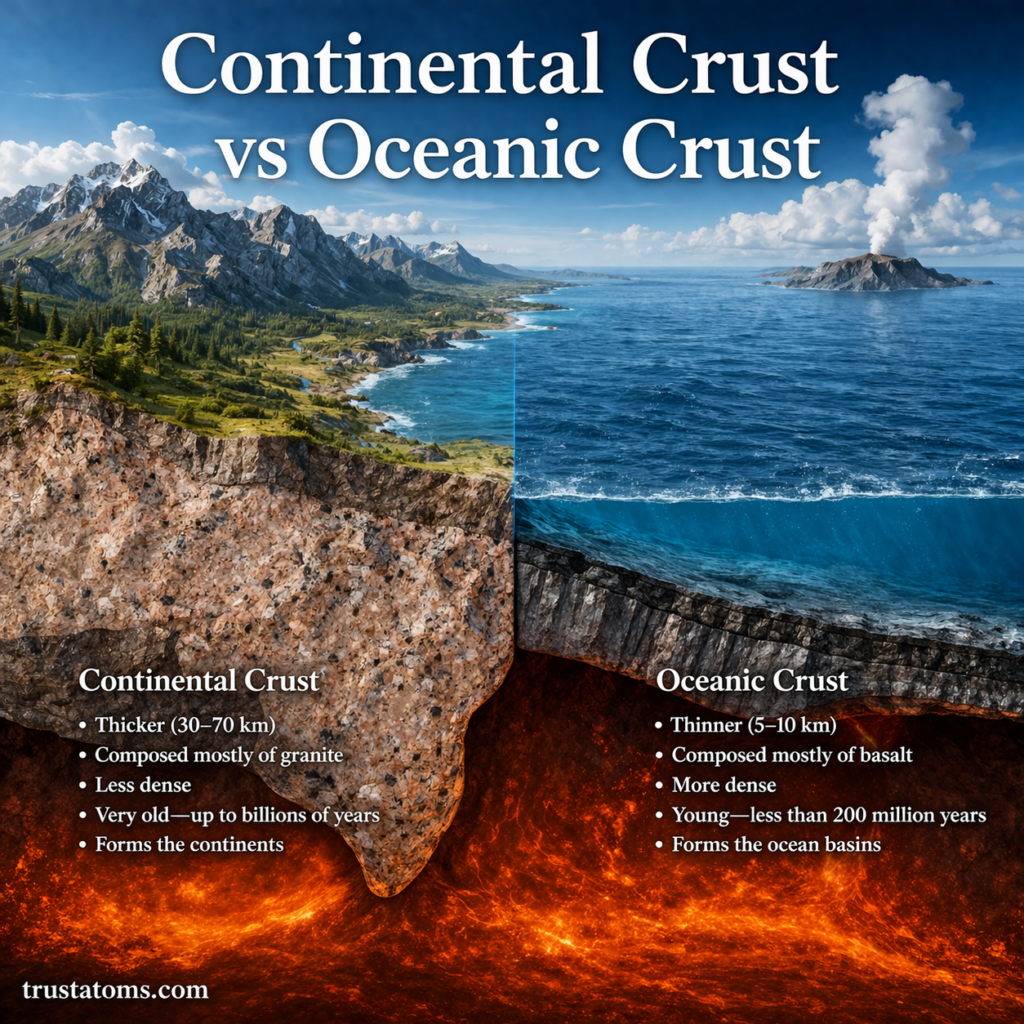
The crust is the outermost layer where we live. It is relatively thin compared to the rest of the planet.
Key Characteristics
- Thickness: 5–70 km
- Composition: Mostly silicate rocks
- Types:
- Continental crust (thicker, less dense)
- Oceanic crust (thinner, denser)
Importance
- Supports ecosystems and human life
- Contains natural resources like minerals and fossil fuels
- Broken into tectonic plates that drive geological activity
The Mantle
The mantle lies beneath the crust and makes up about 84% of Earth’s volume.
Key Characteristics
- Thickness: ~2,900 km
- Composition: Silicate minerals rich in magnesium and iron
- Behavior: Mostly solid, but capable of slow flow
Mantle Convection
Heat from the core causes convection currents in the mantle:
- Hot material rises
- Cooler material sinks
- This movement drives plate tectonics
Subdivisions
- Upper mantle (includes the asthenosphere)
- Lower mantle (more rigid due to pressure)
The Core
The core is the densest part of Earth and is primarily composed of metals.
Outer Core
- State: Liquid
- Thickness: ~2,200 km
- Composition: Iron and nickel
The movement of liquid metal generates Earth’s magnetic field through the geodynamo process.
Inner Core
- State: Solid
- Radius: ~1,220 km
- Extremely high pressure keeps it solid despite high temperatures
How Scientists Study Earth’s Interior
Since direct observation is limited, scientists rely on indirect methods.
Seismic Waves
Earthquakes produce seismic waves that travel through the planet:
- P-waves (primary waves): Travel through solids and liquids
- S-waves (secondary waves): Travel only through solids
Changes in wave speed and direction reveal:
- Layer boundaries
- Material composition
- Physical states (solid vs liquid)
Additional Methods
- Gravity measurements
- Magnetic field studies
- Laboratory simulations of high-pressure conditions
Density Differences Within Earth
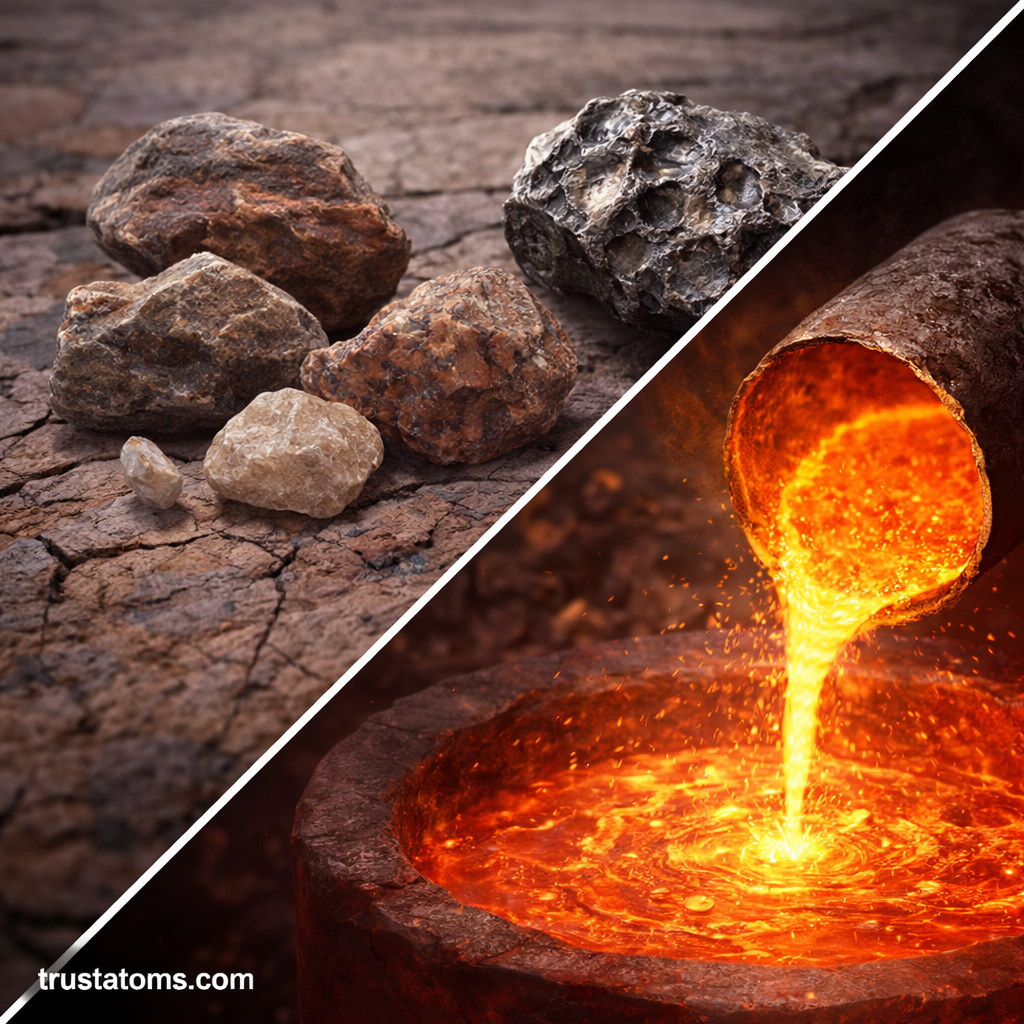
Density increases with depth due to pressure and composition.
Approximate Density by Layer
- Crust: 2.7–3.0 g/cm³
- Mantle: 3.3–5.7 g/cm³
- Core: 10–13 g/cm³
This gradient explains why heavier materials are concentrated at the center.
Why Earth’s Structure Matters
Earth’s internal structure affects many essential processes:
Geological Activity
- Plate tectonics
- Earthquakes
- Volcanic eruptions
Magnetic Field
- Protects Earth from solar radiation
- Enables navigation systems
Heat Transfer
- Drives mantle convection
- Influences long-term climate stability
Key Takeaways
- Earth’s average density is 5.51 g/cm³, the highest among planets
- The planet is divided into crust, mantle, and core
- Density increases with depth due to pressure and composition
- Seismic waves are the primary tool for studying Earth’s interior
- Internal processes drive tectonics, magnetism, and heat flow
Conclusion
Earth’s density and layered structure are the result of billions of years of physical and chemical processes. From the thin crust we inhabit to the dense metallic core deep below, each layer plays a critical role in shaping the planet’s behavior. By studying these internal features, scientists gain valuable insights into not only Earth’s past, but also its future.