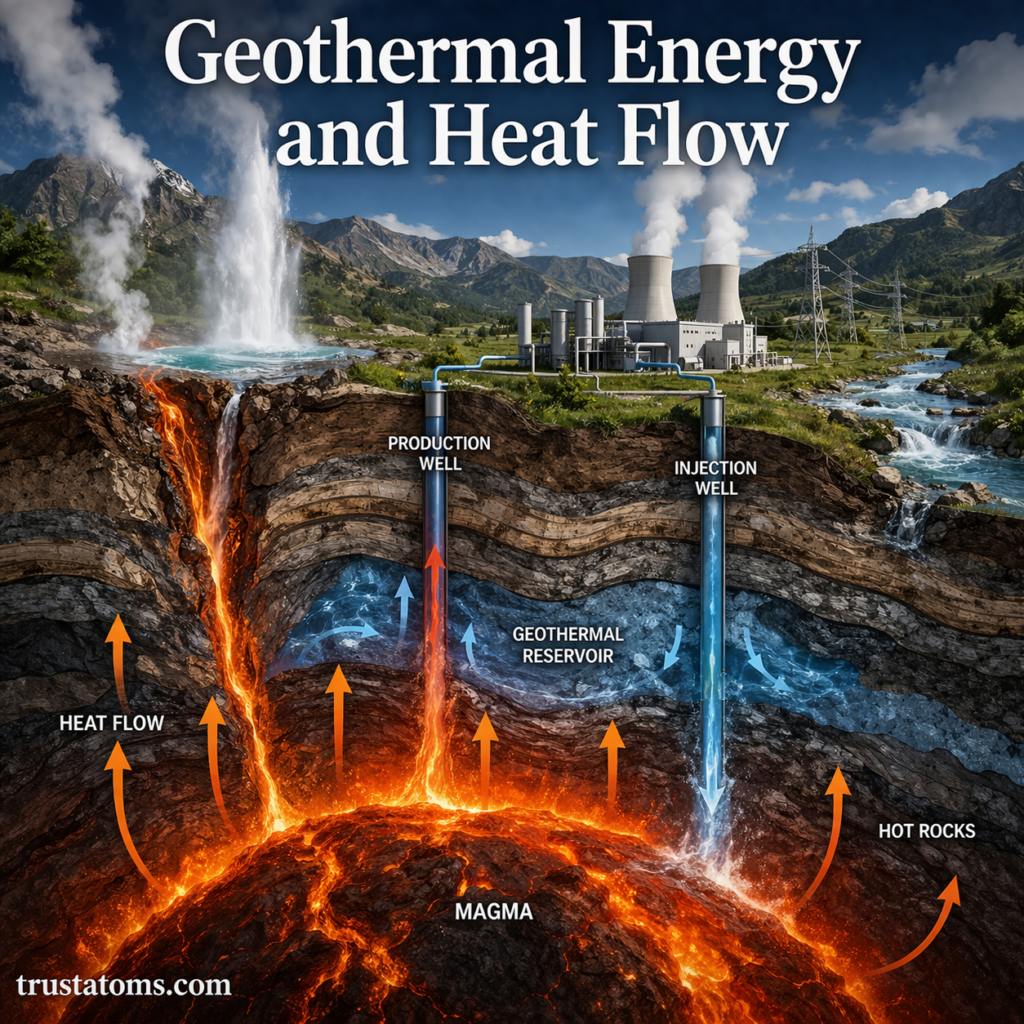
Geothermal energy is a powerful and sustainable resource that comes directly from the heat inside Earth. This internal heat drives many geological processes and can also be harnessed to produce electricity and provide heating. Understanding geothermal energy and heat flow reveals how Earth’s interior influences both natural systems and human energy use.
What Is Geothermal Energy?
Geothermal energy is heat derived from within the Earth. The word “geo” means Earth, and “thermal” means heat.
This energy originates from:
- Residual heat from Earth’s formation
- Radioactive decay of elements like uranium and thorium
- Ongoing heat transfer from the core to the surface
Understanding Heat Flow in Earth
Heat flow refers to the movement of heat from Earth’s interior toward the surface.
Key Characteristics
- Heat moves from hotter regions to cooler regions
- The average geothermal gradient is about 25–30°C per kilometer of depth
- Heat flow varies depending on geological conditions
Methods of Heat Transfer
Heat moves through Earth in three main ways:
1. Conduction
- Heat transfers through solid materials
- Dominant in Earth’s crust
- Slow process
2. Convection
- Heat is transferred by the movement of fluids or semi-fluid material
- Occurs in the mantle
- Drives tectonic plate movement
3. Radiation
- Heat transfer through electromagnetic waves
- Less important inside Earth compared to conduction and convection
Sources of Geothermal Energy
Geothermal energy is concentrated in specific geological settings.
Major Sources
- Magma chambers beneath volcanoes
- Hot water reservoirs underground
- Deep rock layers with high temperatures
These sources create geothermal systems that can be used for energy.
Types of Geothermal Systems
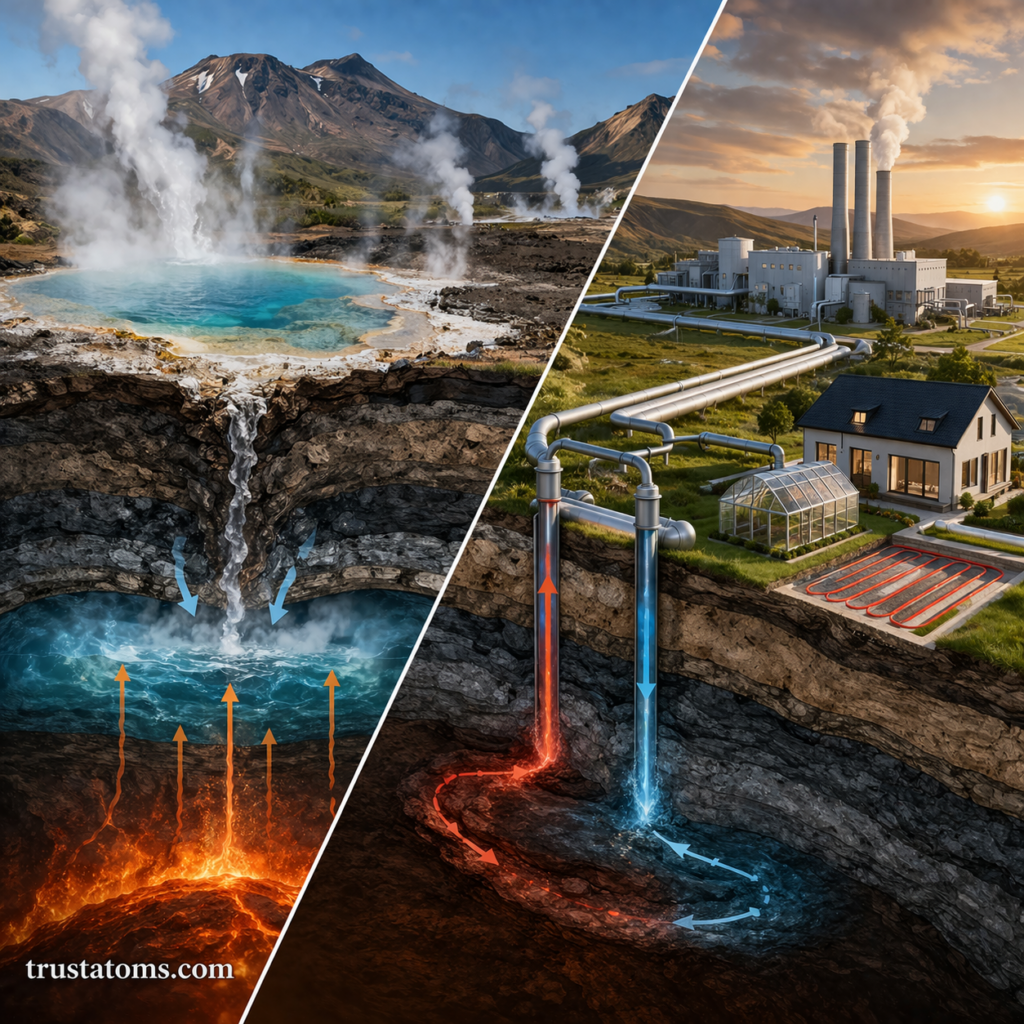
Geothermal systems vary based on temperature and water availability.
1. Hydrothermal Systems
- Most common type
- Use naturally occurring hot water or steam
- Found near volcanic regions
2. Enhanced Geothermal Systems (EGS)
- Involve injecting water into hot dry rocks
- Artificially create reservoirs
- Expand geothermal potential beyond volcanic areas
3. Geothermal Heat Pumps
- Use shallow ground temperatures
- Provide heating and cooling for buildings
- Widely used in residential systems
How Geothermal Energy Is Used
Geothermal energy has a wide range of practical applications.
Electricity Generation
- Steam from underground reservoirs spins turbines
- Common in regions with high geothermal activity
Direct Heating
- Used for homes, greenhouses, and industrial processes
- Efficient and cost-effective
Everyday Applications
- Spa and hot spring facilities
- District heating systems
- Agricultural drying processes
Geological Controls on Geothermal Energy
The availability of geothermal energy depends on geological conditions.
Key Factors
- Proximity to tectonic plate boundaries
- Presence of volcanic activity
- Rock permeability (allows fluid movement)
- Availability of water
Regions with active geology typically have higher geothermal potential.
Global Distribution of Geothermal Energy
Geothermal energy is not evenly distributed across Earth.
High-Potential Regions
- Iceland (mid-ocean ridge activity)
- Japan (volcanic arc)
- Indonesia (Ring of Fire)
- Western United States (tectonic activity)
These regions benefit from high heat flow and accessible geothermal systems.
Advantages of Geothermal Energy
Geothermal energy offers several benefits as a renewable resource.
Key Advantages
- Renewable and sustainable
- Low greenhouse gas emissions
- Reliable (not dependent on weather)
- Small land footprint
Challenges and Limitations
Despite its benefits, geothermal energy has some limitations.
Common Challenges
- High initial drilling costs
- Limited to suitable geological areas
- Potential for induced seismic activity
- Resource depletion if not managed properly
Geothermal Energy and Sustainability
Sustainable use of geothermal energy requires careful management.
Best Practices
- Monitoring reservoir pressure and temperature
- Reinjection of water into reservoirs
- Long-term planning and regulation
Proper management ensures geothermal systems remain productive for decades.
Final Thoughts
Geothermal energy and heat flow are fundamental aspects of Earth’s internal processes. From powering volcanic activity to providing clean energy, the heat beneath our feet plays a vital role in shaping the planet and supporting modern society.
By understanding and responsibly using geothermal energy, we can tap into a reliable and sustainable energy source that helps reduce dependence on fossil fuels.