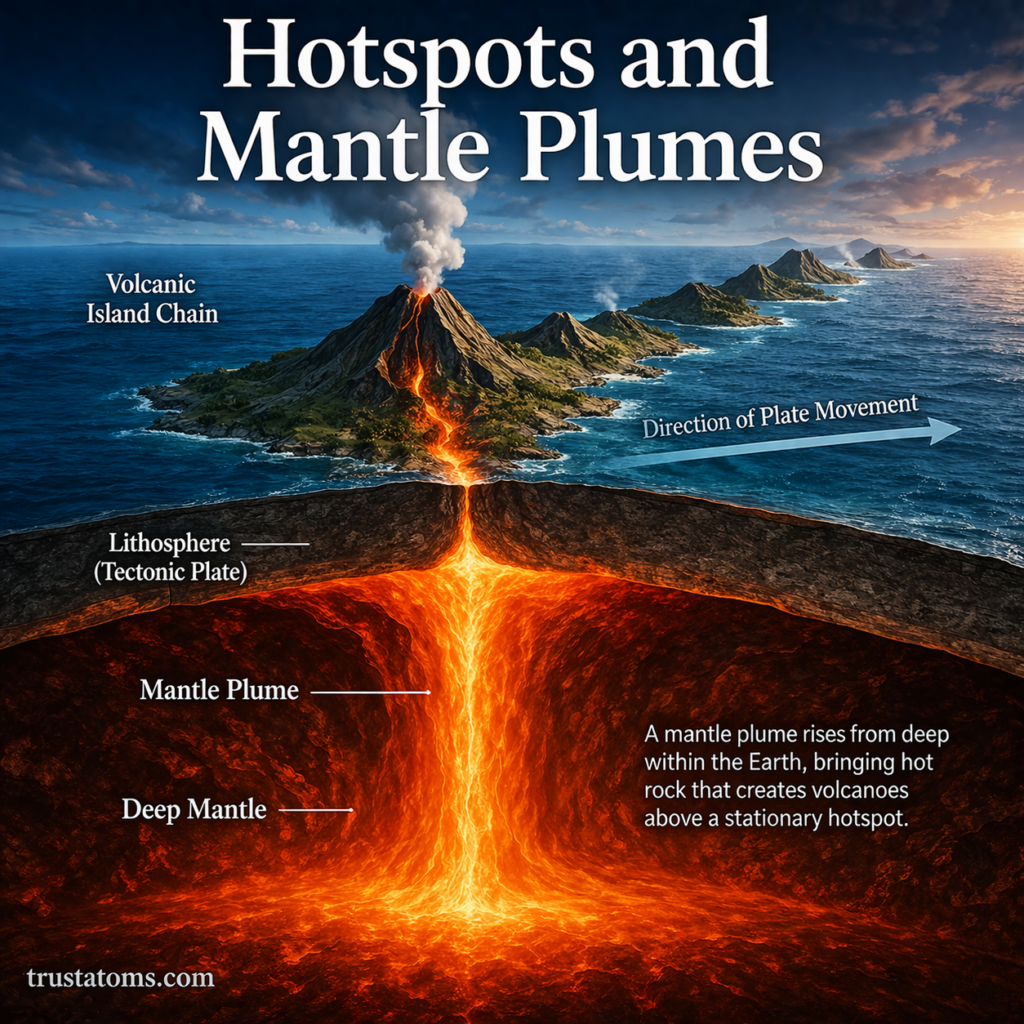
Hotspots and mantle plumes are powerful geological phenomena that help explain volcanic activity far from tectonic plate boundaries. Unlike most volcanoes, which form along plate edges, hotspots can occur in the middle of plates—creating chains of volcanoes and islands across the ocean floor.
From the Hawaiian Islands to Yellowstone, these features reveal deep connections between Earth’s surface and its interior.
What Are Hotspots?
A hotspot is a location on Earth’s surface where unusually hot material rises from deep within the mantle, producing volcanic activity.
Key characteristics of hotspots:
- Occur away from plate boundaries
- Relatively stationary compared to moving tectonic plates
- Create long chains of volcanoes over time
- Can exist beneath oceans or continents
Hotspots provide important evidence for processes happening deep inside Earth.
What Are Mantle Plumes?
Mantle plumes are columns of hot, buoyant rock that rise from deep within Earth’s mantle—possibly from near the core-mantle boundary.
Key Features of Mantle Plumes
- Extremely hot compared to surrounding mantle
- Rise slowly over millions of years
- Spread out beneath the lithosphere
- Feed magma to the surface
When a mantle plume reaches the base of the crust, it can create a hotspot and initiate volcanic activity.
How Hotspots Form Volcanoes
Hotspot volcanism follows a unique process compared to plate-boundary volcanoes.
Step-by-Step Formation
- A mantle plume rises toward the surface
- Pressure decreases, causing partial melting
- Magma accumulates beneath the crust
- Volcanoes form as magma erupts
- The tectonic plate moves over the stationary hotspot
- A chain of volcanoes develops
Over time, older volcanoes move away from the hotspot and become inactive, while new ones form above it.
Hotspot Island Chains
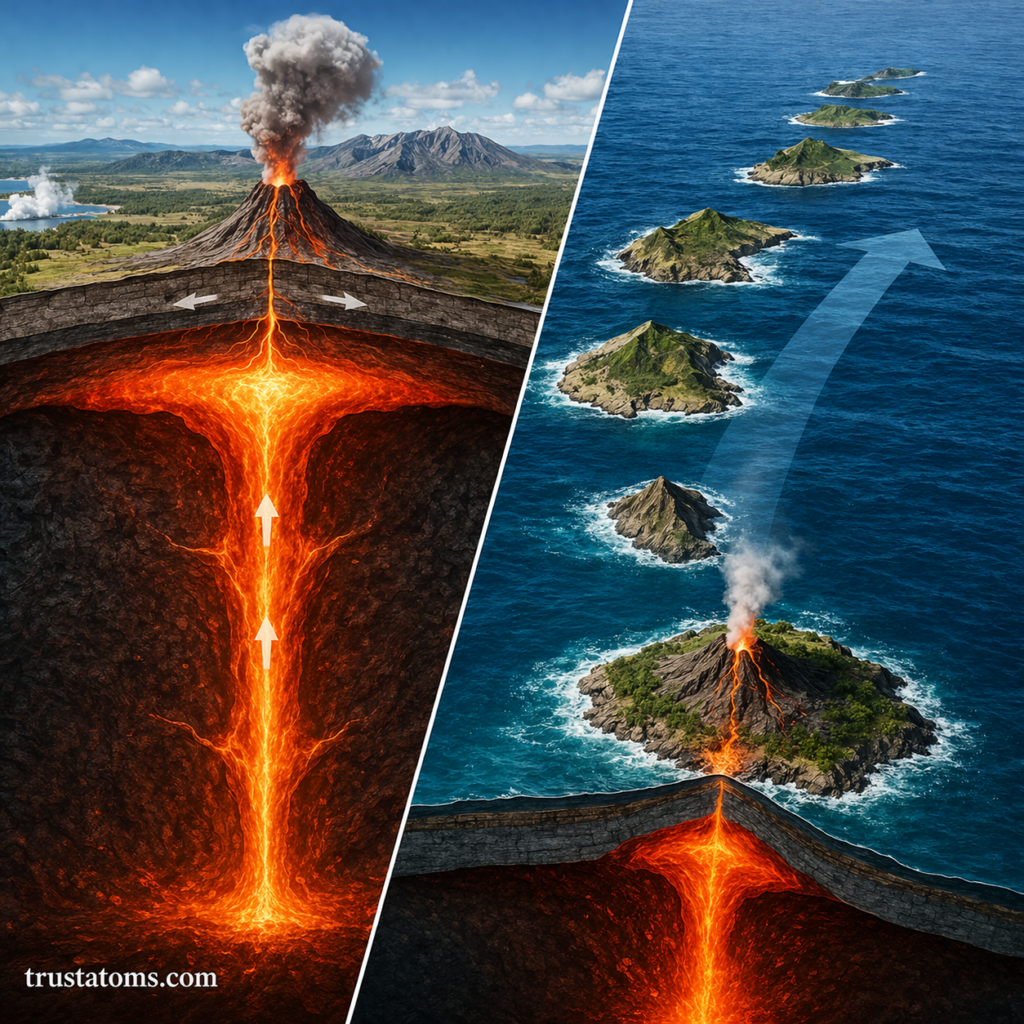
One of the most recognizable features created by hotspots is a chain of volcanic islands.
Key Characteristics
- Linear arrangement of islands
- Age progression along the chain
- Active volcano at one end
Example: Hawaiian Islands
- Youngest and most active volcanoes are located at the southeastern end
- Older islands are more eroded and inactive
- The chain records the movement of the Pacific Plate
This pattern provides clear evidence of both plate motion and hotspot activity.
Continental Hotspots
Hotspots can also occur beneath continents, leading to different types of volcanic features.
Example: Yellowstone Hotspot
- Located beneath North America
- Creates geothermal features like geysers and hot springs
- Has produced massive volcanic eruptions in the past
Unlike oceanic hotspots, continental hotspots may not form island chains but can still leave a trail of volcanic activity.
Differences Between Hotspots and Plate Boundary Volcanoes
Understanding these differences helps clarify how Earth’s volcanic systems operate.
Hotspots:
- Occur within tectonic plates
- Driven by mantle plumes
- Form linear chains with age progression
Plate boundary volcanoes:
- Occur at convergent or divergent boundaries
- Driven by subduction or seafloor spreading
- Often form arcs or ridges
Evidence for Mantle Plumes
Scientists use several types of evidence to support the mantle plume theory.
Geological Evidence
- Age progression of volcanic chains
- Large volcanic provinces
Geophysical Evidence
- Seismic imaging showing rising columns of hot material
- Variations in mantle temperature
Geochemical Evidence
- Unique chemical signatures in volcanic rocks
- Deep mantle origin indicators
The Life Cycle of Hotspot Volcanoes
Hotspot volcanoes go through a predictable life cycle.
- Formation above the hotspot
- Active volcanic growth
- Movement away from hotspot
- Dormancy and erosion
- Eventual submergence (in oceanic settings)
Older volcanoes may become seamounts or guyots as they sink below sea level.
Why Hotspots Matter
Hotspots and mantle plumes are essential to understanding Earth’s internal processes.
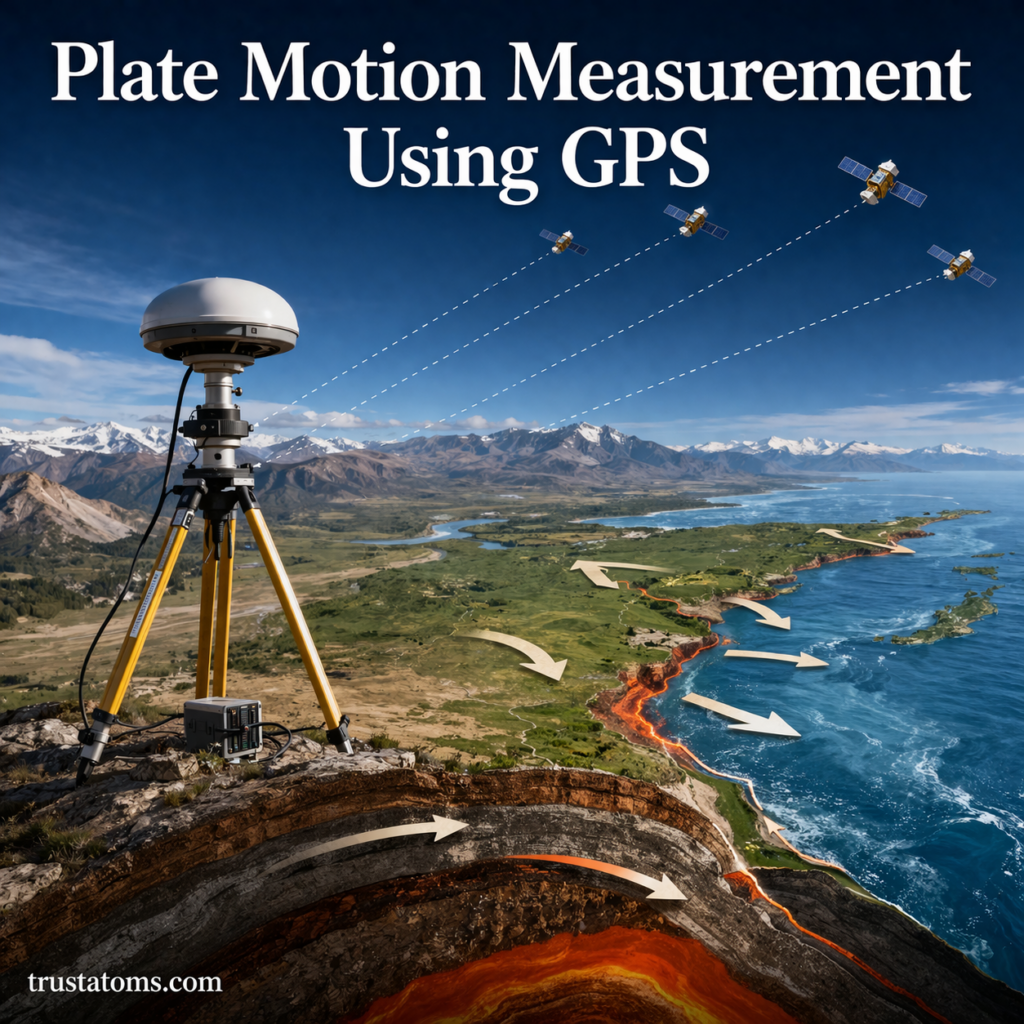
Plate Movement Tracking
- Hotspot chains act as “tracks” of plate motion
- Help measure speed and direction of tectonic plates
Volcanic Hazards
- Can produce large eruptions
- Impact surrounding regions
Geological Insight
- Provide clues about deep Earth structure
- Help scientists study mantle dynamics
Key Takeaways
- Hotspots are volcanic regions fed by mantle plumes
- They occur away from tectonic plate boundaries
- Mantle plumes rise from deep within Earth’s interior
- Hotspot chains show clear age progression
- These features help track plate movement and study Earth’s mantle
Final Thoughts
Hotspots and mantle plumes reveal a hidden layer of Earth’s activity—one that operates deep beneath the surface yet shapes landscapes on a massive scale.
By studying these phenomena, scientists gain valuable insight into how heat flows through the planet and how Earth continues to evolve over time.