Snow is one of the most recognizable features of winter weather, yet its formation involves a complex interaction of temperature, moisture, and atmospheric dynamics. From light flurries to powerful blizzards, snowstorms are driven by specific conditions in the atmosphere.
Understanding how snow forms and how winter storms develop helps explain why some regions experience heavy snowfall while others remain dry and cold.
What Is Snow?
Snow is a form of precipitation made up of ice crystals that form in clouds when temperatures are below freezing.
Unlike rain, which falls as liquid droplets, snow forms directly as ice and maintains its crystalline structure as it falls to the ground—provided temperatures remain cold enough.
Key Characteristics
- Composed of frozen water crystals
- Forms in cold cloud environments
- Falls when ice crystals grow large enough
How Snow Forms in the Atmosphere
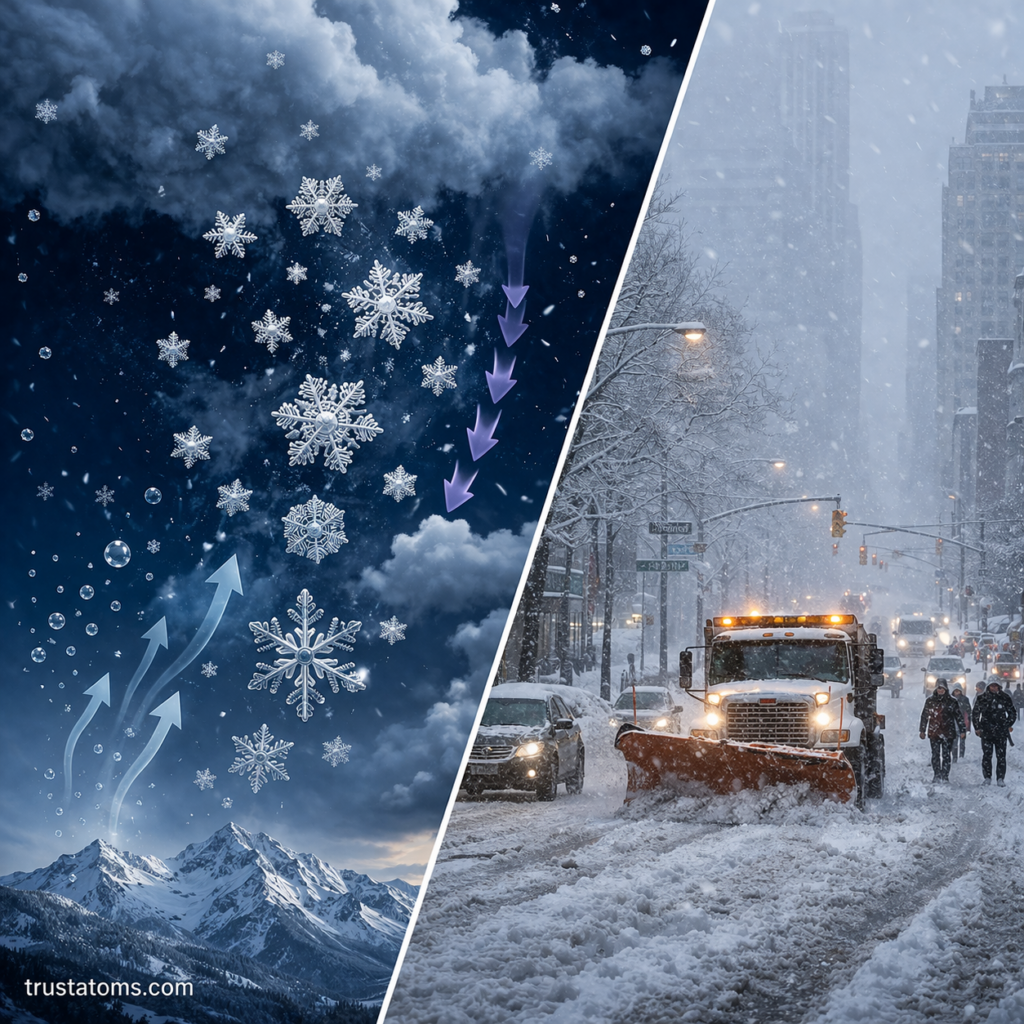
Snow formation begins high in the atmosphere inside cold clouds.
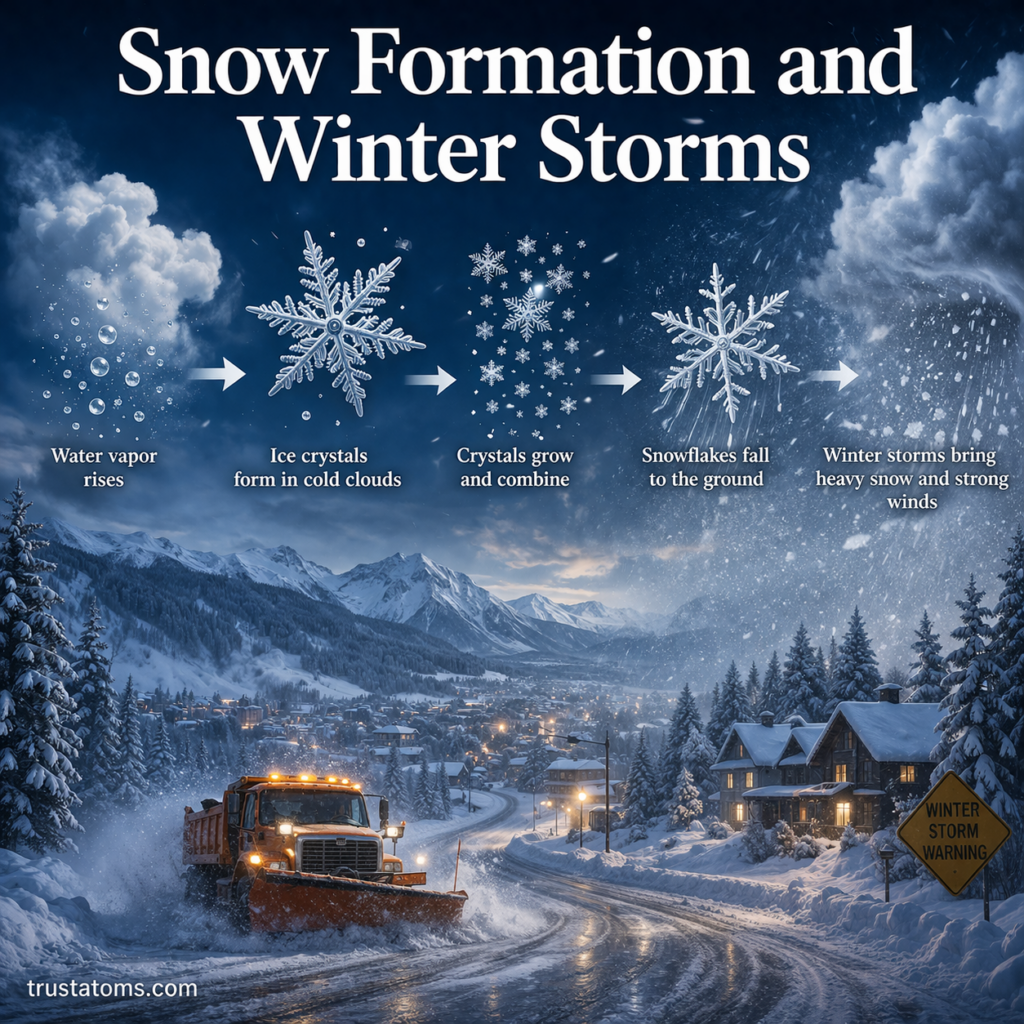
Step-by-Step Process
- Water vapor rises into the atmosphere
- Temperatures drop below freezing
- Water vapor deposits directly into ice crystals (without becoming liquid first)
- Ice crystals grow as more vapor attaches
- Crystals combine to form snowflakes
- Snowflakes fall when they become heavy enough
This process is known as deposition, where water vapor turns directly into ice.
The Role of Temperature in Snow Formation
Temperature is the most critical factor in determining whether precipitation falls as snow, rain, or a mix.
Temperature Layers Matter
- Below freezing (32°F / 0°C) → Snow remains intact
- Above freezing layer present → Snow may melt into rain
- Mixed layers → Can produce sleet or freezing rain
Even if snow forms in clouds, it may melt before reaching the ground if it passes through warmer air.
Snowflake Formation and Shapes
Snowflakes are known for their intricate and unique patterns.
Why Snowflakes Differ
- Temperature variations
- Humidity levels
- Growth conditions in the cloud
Common Snow Crystal Types
- Plates
- Columns
- Dendrites (classic branching snowflakes)
Each snowflake’s shape reflects the conditions it experienced while forming.
Moisture: A Key Ingredient
Cold air alone is not enough for snow—moisture is essential.
Sources of Moisture
- Oceans and large bodies of water
- Evaporation from the ground
- Atmospheric systems transporting humid air
More moisture typically leads to:
- Larger snowflakes
- Heavier snowfall
- Stronger winter storms
Types of Winter Storms
Winter storms vary in intensity and structure depending on atmospheric conditions.
1. Snowstorms
- Steady snowfall over a period of time
- Can range from light to heavy
2. Blizzards
- Heavy snow combined with strong winds
- Visibility reduced to less than ¼ mile
- Lasts for at least 3 hours
3. Lake-Effect Snow
- Occurs near large lakes
- Cold air passes over warmer water, picking up moisture
- Produces intense, localized snowfall
4. Nor’easters
- Powerful coastal storms (common in the northeastern U.S.)
- Bring heavy snow, strong winds, and coastal flooding
How Winter Storms Develop
Winter storms form when cold air, moisture, and lifting mechanisms come together.
Key Ingredients
- Cold Air
- Needed to keep precipitation frozen
- Moisture
- Supplies water vapor for cloud and snow formation
- Lift
- Causes air to rise and cool (fronts, low-pressure systems, mountains)
Development Process
- Warm, moist air rises over cold air
- Cooling leads to cloud formation
- Ice crystals develop and grow
- Snow begins to fall
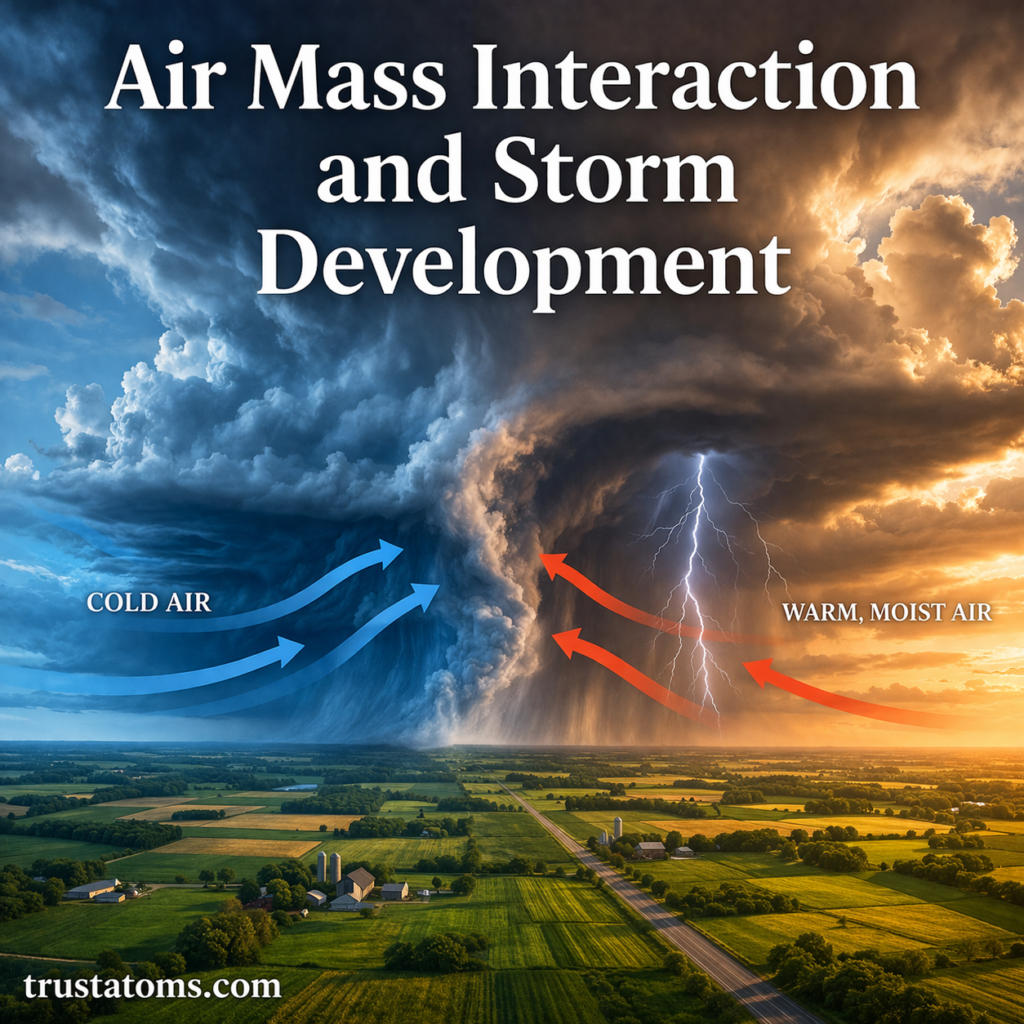
The Role of Air Masses and Fronts
Winter storms are often associated with frontal systems.
Types of Fronts
- Cold Fronts → Can trigger quick snowfall
- Warm Fronts → Often produce widespread, steady snow
- Stationary Fronts → Can lead to prolonged snow events
The interaction between different air masses determines storm intensity and duration.
Impacts of Winter Storms
Snowstorms can have significant effects on both the environment and human activity.
Common Impacts
- Travel disruptions (roads, flights)
- Power outages
- School and business closures
- Increased accident risk
- Infrastructure strain
Positive Effects
- Water supply replenishment
- Insulation for soil and crops
- Support for winter ecosystems
Why Some Snow Is Light and Fluffy vs. Heavy and Wet
Snow consistency depends on temperature and moisture.
Light, Fluffy Snow
- Forms in very cold, dry conditions
- Low moisture content
- Easy to shovel
Heavy, Wet Snow
- Forms near freezing temperatures
- High moisture content
- Dense and harder to move
This is often described as the “snow-to-water ratio.”
Key Takeaways
- Snow forms when water vapor turns directly into ice crystals
- Temperature determines whether precipitation falls as snow or rain
- Moisture is essential for snow development
- Winter storms require cold air, moisture, and atmospheric lift
- Different storm types produce varying snowfall patterns and intensities
Final Thoughts
Snow formation and winter storms are the result of precise atmospheric conditions working together. From delicate snowflakes to powerful blizzards, these processes highlight the complexity of Earth’s weather system.
By understanding how snow forms and how winter storms develop, you can better anticipate weather patterns and appreciate the science behind winter’s most iconic feature.