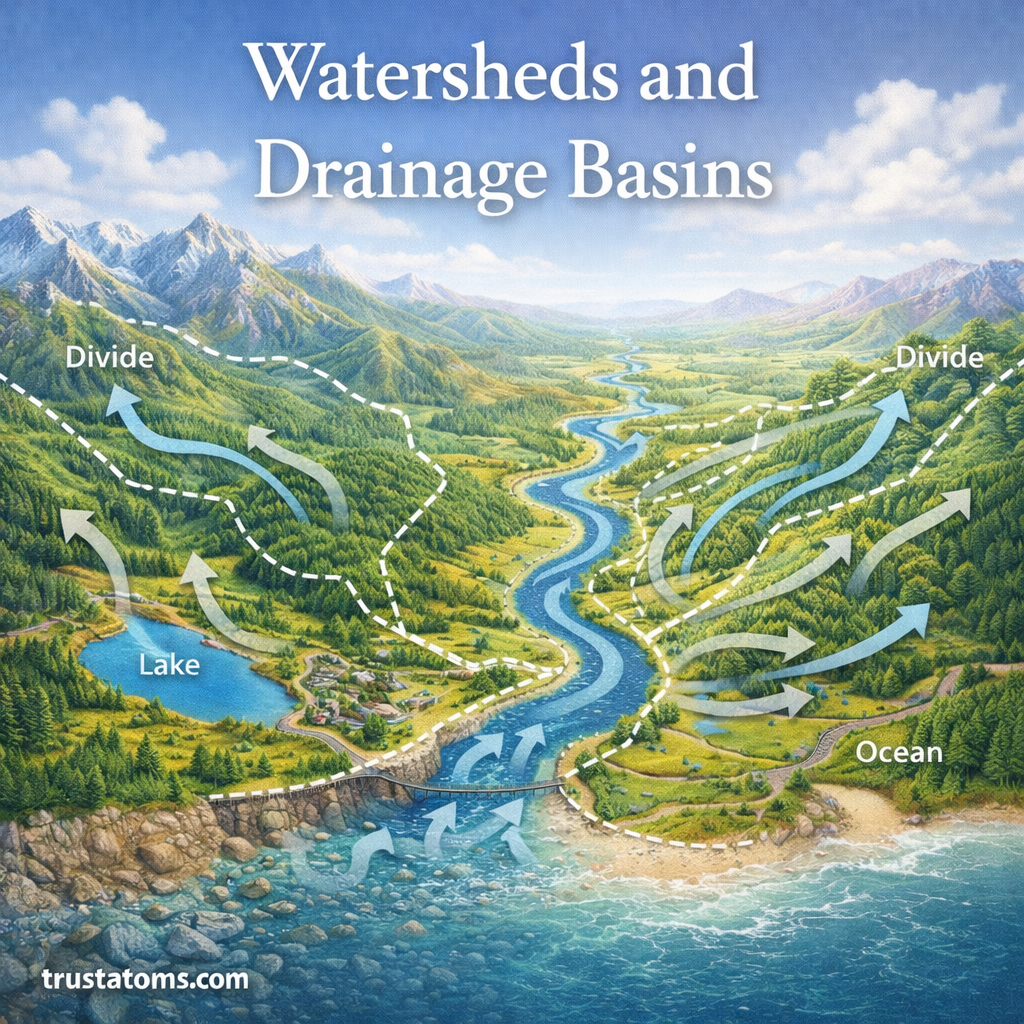
Every drop of rain that falls on Earth eventually finds its way to a river, lake, or ocean. The path it takes is shaped by watersheds and drainage basins—natural systems that direct the flow of water across the land.
Understanding these systems helps explain flooding, water supply, pollution movement, and how ecosystems stay connected.
What Is a Watershed?
A watershed is an area of land where all precipitation drains to a common outlet, such as:
- A river
- A lake
- A wetland
- An ocean
No matter where rain falls within a watershed, it eventually flows to the same destination.
What Is a Drainage Basin?
A drainage basin is essentially another term for a watershed, often used in a broader or more regional context.
- Watersheds can be small (a single stream)
- Drainage basins can be large (entire river systems like the Mississippi River Basin)
Both terms describe how land is divided based on water flow.
Key Features of Watersheds
Watersheds are made up of several important components that guide water movement.
Divide (Watershed Boundary)
- A high point of land (ridge or hill)
- Separates one watershed from another
- Water flows in different directions on either side
Tributaries
- Smaller streams that feed into larger rivers
- Form branching networks within a watershed
Main Channel
- The primary river or stream
- Carries water to the final outlet
Outlet
- The point where water leaves the watershed
- Could be a lake, ocean, or another river
How Water Moves Through a Watershed
Water movement within a watershed is influenced by the hydrologic cycle.
Key Pathways
- Precipitation
- Rain or snow falls onto land
- Infiltration
- Water soaks into the soil and becomes groundwater
- Runoff
- Water flows over land into streams and rivers
- Evaporation and Transpiration
- Water returns to the atmosphere
These pathways work together to move water through the landscape.
Factors That Influence Watersheds
Different environmental conditions affect how water flows within a watershed.
Topography
- Steep slopes increase runoff speed
- Flat areas allow more infiltration
Soil Type
- Sandy soils absorb water easily
- Clay soils slow infiltration and increase runoff
Vegetation
- Plants reduce runoff by absorbing water
- Roots help stabilize soil and prevent erosion
Climate
- Heavy rainfall increases runoff and flood risk
- Dry climates reduce surface water flow
Types of Drainage Patterns
Watersheds can form different drainage patterns depending on the landscape.
Dendritic Pattern
- Tree-like branching structure
- Common in flat or gently sloping areas
Radial Pattern
- Water flows outward from a central high point (like a volcano)
Trellis Pattern
- Parallel streams with right-angle tributaries
- Often found in folded rock regions
Rectangular Pattern
- Streams follow fault lines or fractures
- Creates sharp bends
Importance of Watersheds
Watersheds are essential for both natural systems and human life.
Water Supply
- Provide drinking water for communities
- Support agriculture and industry
Ecosystem Health
- Sustain habitats for plants and animals
- Transport nutrients through ecosystems
Flood Control
- Natural landscapes absorb and slow water
- Reduce flood intensity
Pollution Transport
- Watersheds carry pollutants downstream
- Contamination in one area can affect distant regions
Human Impact on Watersheds
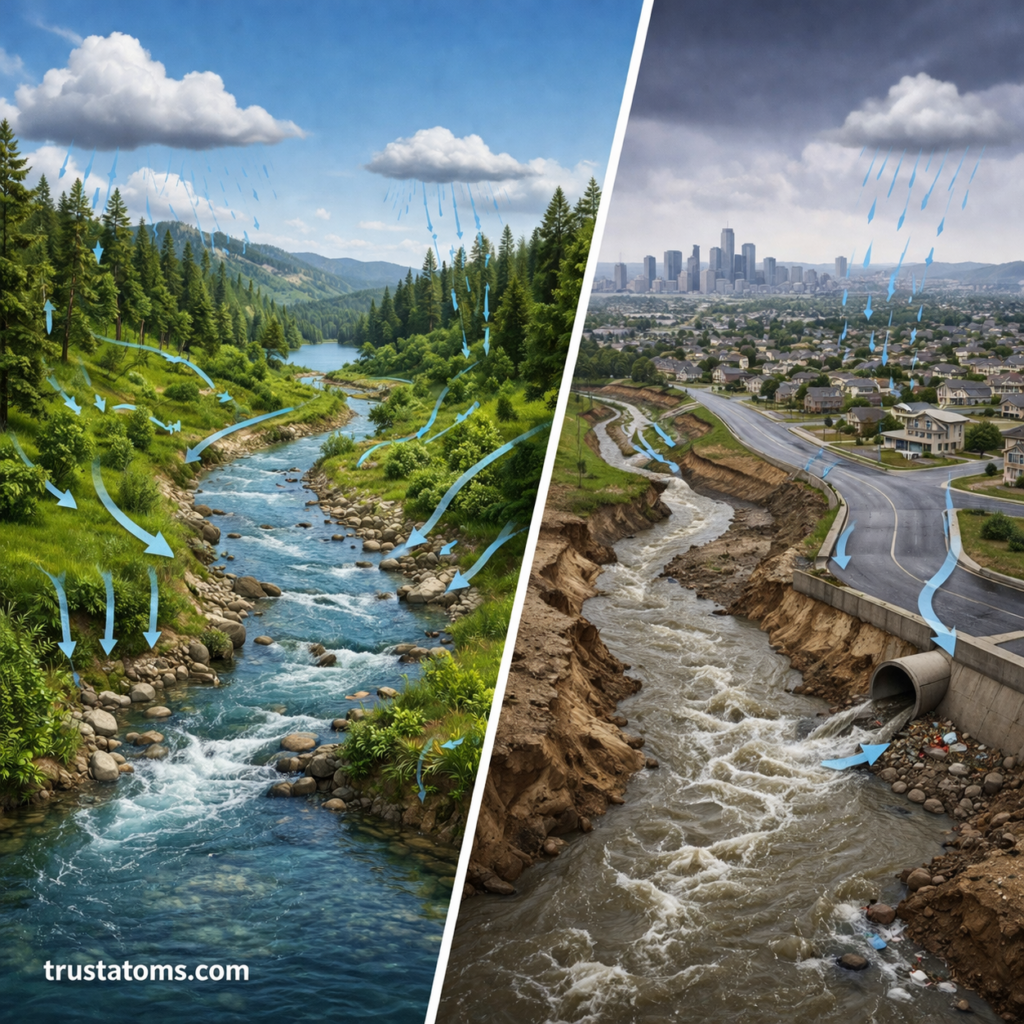
Human activities can significantly alter watershed function.
Urbanization
- Pavement reduces infiltration
- Increases runoff and flooding
Deforestation
- Removes vegetation that slows water flow
- Leads to erosion and sediment buildup
Agriculture
- Can introduce fertilizers and pesticides into waterways
- Affects water quality
Infrastructure
- Dams and levees change natural flow patterns
- Alter ecosystems and sediment movement
Watershed Management and Protection
Protecting watersheds is critical for maintaining clean and reliable water supplies.
Key Strategies
- Reduce Pollution
- Limit chemical runoff
- Improve waste management
- Protect Vegetation
- Preserve forests and wetlands
- Restore natural habitats
- Manage Land Use
- Plan urban development carefully
- Use permeable surfaces where possible
- Monitor Water Quality
- Track pollutants and ecosystem health
- Implement conservation policies
Real-World Examples of Drainage Basins
Mississippi River Basin (United States)
- One of the largest drainage basins in the world
- Drains water from multiple states into the Gulf of Mexico
Amazon Basin (South America)
- Largest river basin globally
- Supports vast rainforest ecosystems
Colorado River Basin (United States)
- Supplies water to millions of people
- Heavily managed with dams and reservoirs
Final Thoughts
Watersheds and drainage basins are the natural systems that guide water across Earth’s surface. They connect landscapes, ecosystems, and human communities through the movement of water.
By understanding how these systems work—and how human actions impact them—we can better manage water resources, reduce pollution, and protect the environment for future generations.