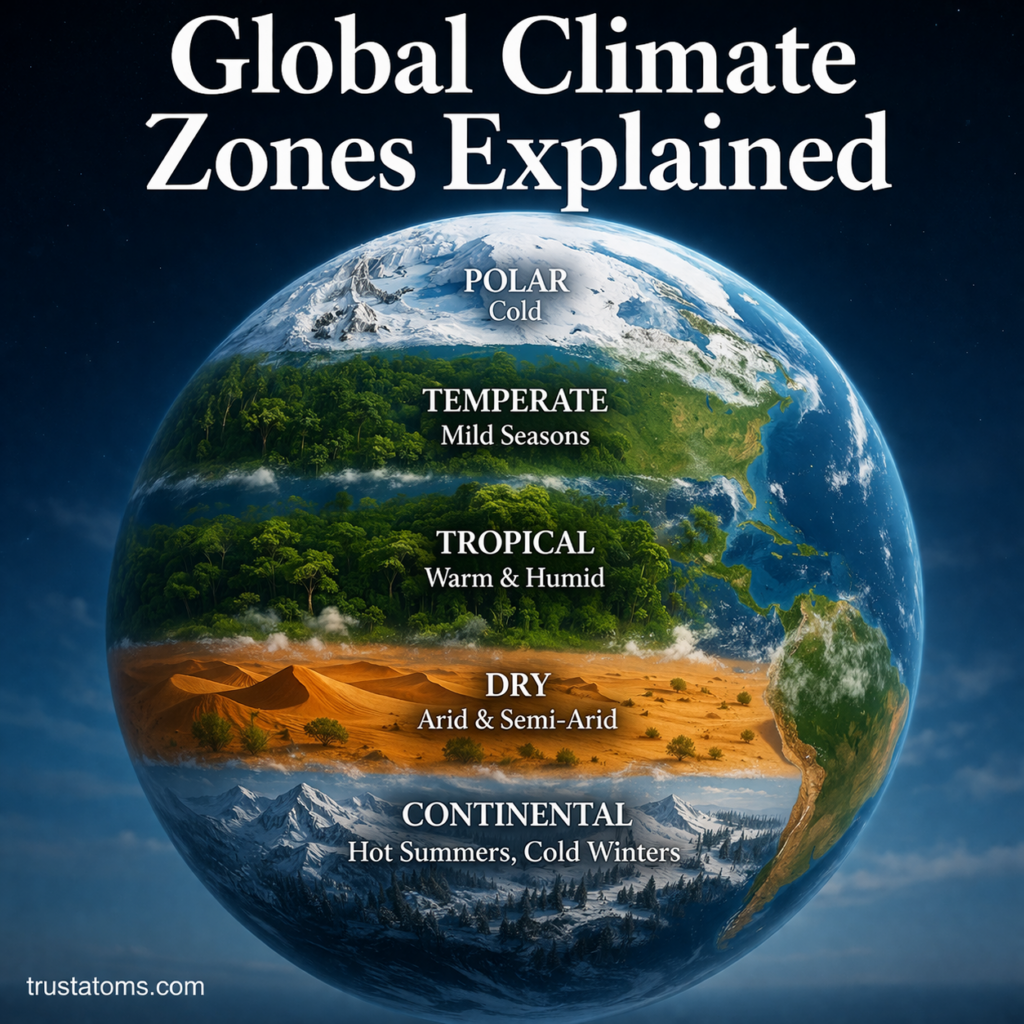
Understanding global climate zones helps explain why different regions of Earth experience distinct weather patterns, ecosystems, and lifestyles. From tropical rainforests to polar ice caps, climate zones shape everything from agriculture to biodiversity.
In this guide, we’ll break down the major climate zones, what defines them, and why they matter.
What Are Climate Zones?
Climate zones are large geographic areas defined by long-term patterns of temperature, precipitation, and seasonal changes. Unlike daily weather, climate reflects averages measured over decades.
Scientists classify climate zones to better understand environmental conditions and how they influence life on Earth.
The Main Types of Climate Zones
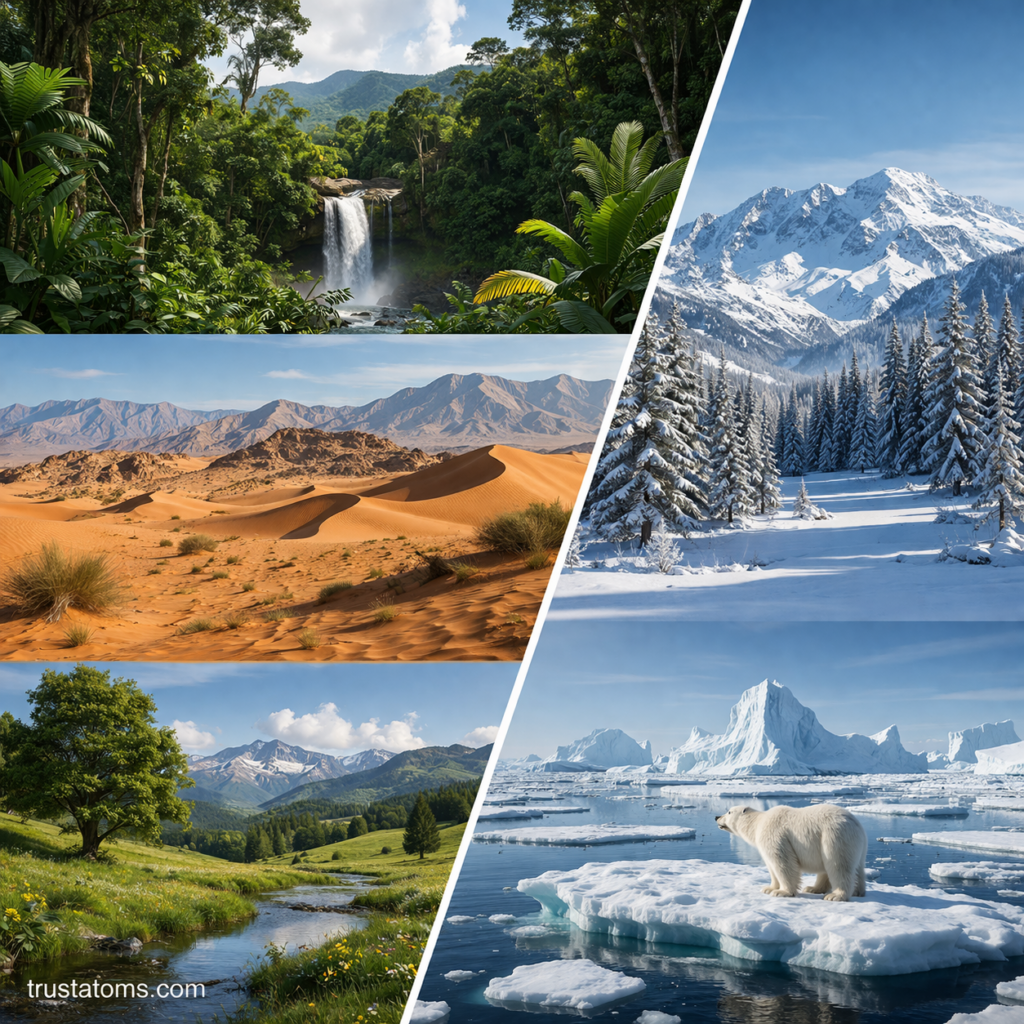
Earth is commonly divided into five primary climate zones:
Tropical Climate Zone
Located near the equator, this zone is warm year-round.
Key characteristics:
- High temperatures with little seasonal variation
- Heavy rainfall in many regions
- High humidity levels
Common regions:
- Amazon Rainforest
- Central Africa
- Southeast Asia
Subtypes:
- Tropical rainforest (wet year-round)
- Tropical savanna (wet and dry seasons)
Why it matters:
- Supports the highest biodiversity on Earth
- Plays a major role in global oxygen and carbon cycles
Dry (Arid and Semi-Arid) Climate Zone
These regions receive very little rainfall.
Key characteristics:
- Low precipitation
- Large temperature swings (especially deserts)
- Sparse vegetation
Common regions:
- Sahara Desert
- Middle East
- Parts of Australia
Subtypes:
- Arid (desert)
- Semi-arid (steppe)
Why it matters:
- Limited water availability shapes human settlement
- Ecosystems are adapted to extreme dryness
Temperate Climate Zone
This zone experiences moderate temperatures and distinct seasons.
Key characteristics:
- Warm summers and cool winters
- Moderate rainfall
- Four distinct seasons in many areas
Common regions:
- United States (many regions)
- Europe
- East Asia
Subtypes:
- Mediterranean (dry summers, wet winters)
- Humid subtropical
- Marine west coast
Why it matters:
- Ideal for agriculture and dense populations
- Supports diverse ecosystems
Continental Climate Zone
Found inland, away from oceans, this zone has more extreme seasonal changes.
Key characteristics:
- Hot summers and very cold winters
- Significant seasonal variation
- Moderate precipitation
Common regions:
- Northern United States
- Canada
- Russia
Why it matters:
- Seasonal extremes impact infrastructure and agriculture
- Short growing seasons in colder areas
Polar Climate Zone
Located at the Earth’s poles, this zone is extremely cold.
Key characteristics:
- Very low temperatures year-round
- Minimal precipitation (often classified as cold deserts)
- Ice-covered landscapes
Common regions:
- Antarctica
- Greenland
- Arctic regions
Subtypes:
- Tundra (some seasonal thaw)
- Ice cap (permanent ice)
Why it matters:
- Regulates global temperature through ice reflection (albedo)
- Sensitive indicators of climate change
How Climate Zones Are Determined
Climate classification is based on several key factors:
Temperature
- Average annual temperature
- Seasonal variations
- Extreme highs and lows
Precipitation
- Total yearly rainfall or snowfall
- Seasonal distribution (wet vs dry seasons)
Latitude
- Distance from the equator affects sunlight intensity
- Equatorial regions receive more direct sunlight
Elevation
- Higher altitudes are typically cooler
- Mountains can create rain shadows
Ocean Influence
- Coastal areas have milder climates
- Ocean currents can warm or cool regions
The Köppen Climate Classification System
One of the most widely used systems is the Köppen classification.
It divides climates into categories based on temperature and precipitation patterns:
- A: Tropical
- B: Dry
- C: Temperate
- D: Continental
- E: Polar
This system helps scientists, geographers, and researchers compare climates across the world.
Why Climate Zones Matter
Climate zones are more than just labels—they directly affect life on Earth.
Impact on Ecosystems
- Determine which plants and animals can survive
- Shape biodiversity hotspots
Influence on Human Life
- Affect agriculture and food production
- Influence housing, clothing, and infrastructure
Role in Climate Change
- Some zones are shifting due to global warming
- Polar and tropical regions are especially vulnerable
Climate Zones vs Weather
It’s important not to confuse climate with weather.
- Weather: Short-term atmospheric conditions (hours to days)
- Climate: Long-term patterns (decades or more)
For example, a cold day in a tropical region doesn’t change its climate classification.
How Climate Zones Are Changing
Global climate zones are not fixed. Due to climate change:
- Tropical zones are expanding
- Dry regions are becoming drier
- Polar ice is shrinking
- Temperate zones are shifting
These changes can lead to:
- Altered ecosystems
- Increased extreme weather events
- Challenges for agriculture and water supply
Final Thoughts
Global climate zones provide a framework for understanding Earth’s diverse environments. By studying these zones, we gain insight into weather patterns, ecosystems, and how human activities influence the planet.
As climate change continues to reshape these zones, understanding them becomes more important than ever.