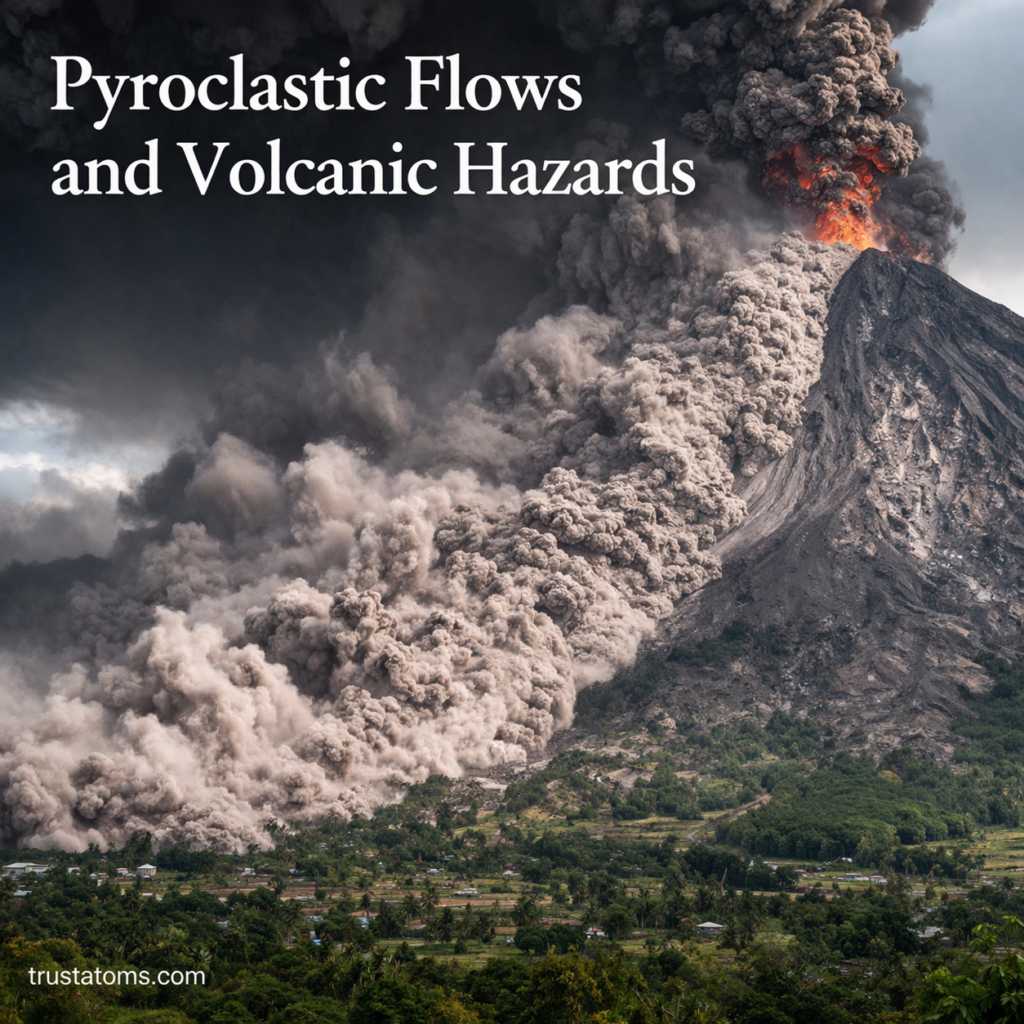
Volcanic eruptions can produce a wide range of hazards, but few are as fast, destructive, and deadly as pyroclastic flows. These superheated avalanches of gas, ash, and rock can wipe out everything in their path within minutes.
In this guide, we’ll explore what pyroclastic flows are, how they form, and the broader range of volcanic hazards that can impact people and the environment.
What Is a Pyroclastic Flow?
A pyroclastic flow is a fast-moving current of hot gas, ash, and volcanic debris that travels down the sides of a volcano during an eruption.
These flows are extremely dangerous due to their speed, temperature, and unpredictability.
Key Characteristics of Pyroclastic Flows
- Temperatures can exceed 1,000°F (540°C)
- Speeds can reach over 100 mph (160 km/h)
- Move downhill following valleys and slopes
- Destroy nearly everything in their path
Unlike lava flows, which move relatively slowly, pyroclastic flows strike with little warning and leave no time for escape.
How Do Pyroclastic Flows Form?
Pyroclastic flows typically occur during explosive volcanic eruptions when pressure builds up inside the volcano.
Common Formation Processes
- Collapse of an Eruption Column
- Ash and gas rise into the air, then collapse under their own weight
- Creates a dense, fast-moving flow
- Lava Dome Collapse
- Thick lava builds up near the crater
- Portions break off and rush downhill
- Directed Explosions
- Sideways blasts of energy send material outward
- Can produce devastating lateral flows
Why Are Pyroclastic Flows So Dangerous?
Pyroclastic flows combine multiple deadly elements into a single event.
Main Dangers
- Extreme heat that can instantly burn or ignite materials
- High speeds that make escape nearly impossible
- Toxic gases that can suffocate living organisms
- Impact force capable of flattening buildings and forests
Even being several miles away from a volcano may not guarantee safety during a major eruption.
Types of Volcanic Hazards
Pyroclastic flows are just one of several hazards associated with volcanic eruptions.
Lava Flows
Lava flows occur when molten rock reaches the surface and moves across the land.
Characteristics
- Slower-moving compared to pyroclastic flows
- Can destroy homes, roads, and vegetation
- Usually allow time for evacuation
Ashfall
Volcanic ash consists of fine particles of rock and glass that are ejected into the atmosphere.
Risks of Ashfall
- Breathing difficulties and respiratory issues
- Reduced visibility
- Damage to machinery and buildings
- Disruption of air travel
Lahars (Volcanic Mudflows)
Lahars are fast-moving mixtures of water, ash, and debris that flow down volcano slopes.
How Lahars Form
- Heavy rainfall mixing with ash deposits
- Melting snow and ice during eruptions
- Collapse of volcanic material into rivers
Lahars can travel long distances and bury entire communities.
Volcanic Gases
Volcanoes release gases such as sulfur dioxide, carbon dioxide, and hydrogen sulfide.
Effects of Volcanic Gases
- Air pollution and acid rain
- Health hazards for humans and animals
- Environmental damage to crops and water sources
Pyroclastic Surges vs Flows
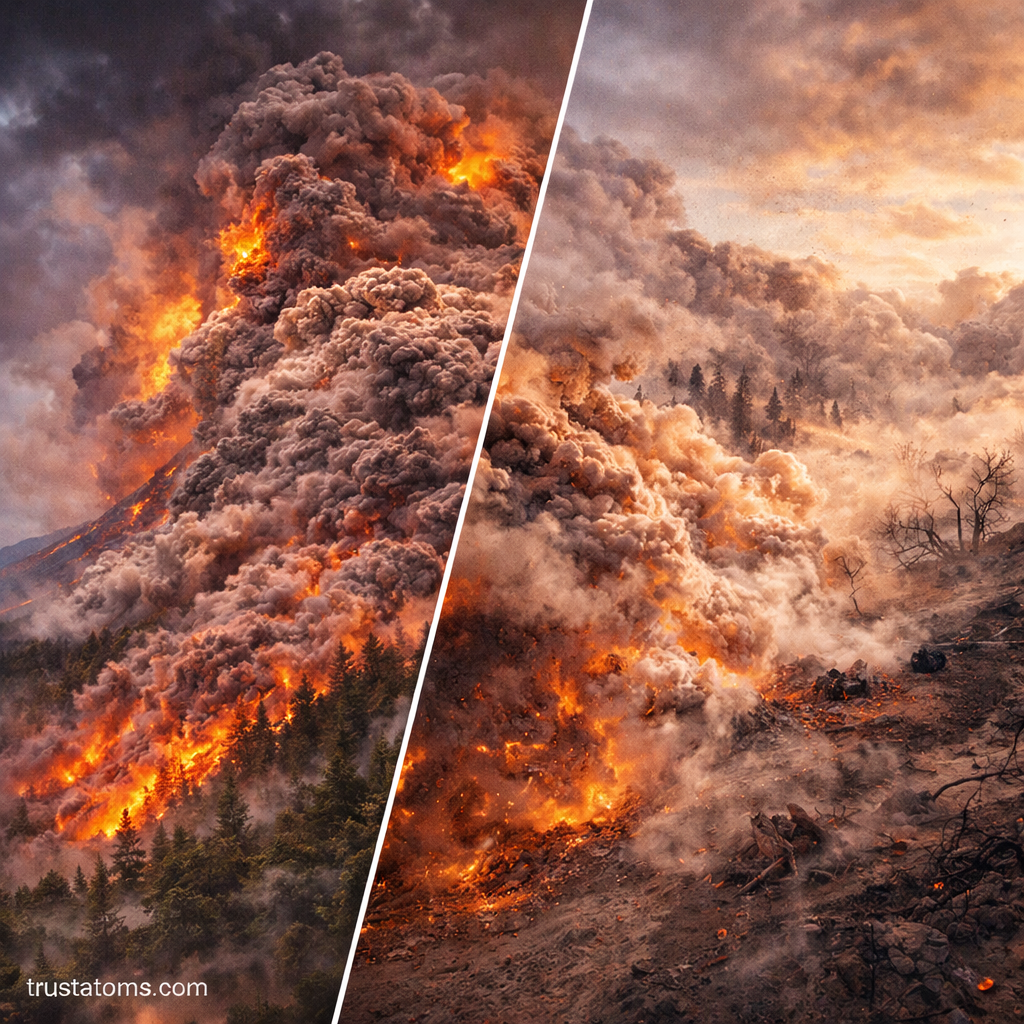
While often grouped together, pyroclastic surges and flows have some differences.
Pyroclastic Flows
- Dense and ground-hugging
- Follow terrain closely
- More concentrated and destructive
Pyroclastic Surges
- Lighter and more turbulent
- Can move over hills and obstacles
- Spread over wider areas
Both are extremely dangerous and should be treated with the same level of caution.
How Scientists Monitor Volcanic Hazards
Volcanologists use advanced tools to track volcanic activity and assess risks.
Monitoring Methods
- Seismic activity tracking
- Gas emission measurements
- Ground deformation monitoring
- Satellite observations
These tools help identify warning signs before major eruptions occur.
Can Pyroclastic Flows Be Predicted?
While exact timing is difficult to predict, scientists can identify conditions that increase the likelihood of pyroclastic flows.
Warning Signs
- Increased seismic activity
- Rapid growth of lava domes
- Rising gas emissions
- Visible changes in the volcano’s shape
Early warnings can save lives by allowing evacuation of high-risk areas.
Safety Tips During Volcanic Eruptions
Preparedness is essential in volcanic regions.
How to Stay Safe
- Evacuate immediately when instructed
- Avoid valleys and low-lying areas
- Wear masks to protect from ash
- Stay informed through official alerts
- Keep emergency supplies ready
When it comes to pyroclastic flows, distance is the only real protection.
Common Misconceptions
“Lava is the most dangerous volcanic hazard”
Not always—pyroclastic flows are often far more deadly due to speed and heat.
“You can outrun a pyroclastic flow”
False—these flows move too quickly for escape on foot or even by vehicle.
“Volcanic hazards only affect nearby areas”
Ashfall, gases, and lahars can impact regions far from the eruption site.
Final Thoughts
Pyroclastic flows are among the most destructive forces in nature, capable of reshaping landscapes and threatening lives within minutes. However, they are just one part of a larger system of volcanic hazards.
By understanding how these hazards form and behave, scientists and communities can better prepare, respond, and reduce the risks associated with volcanic activity.