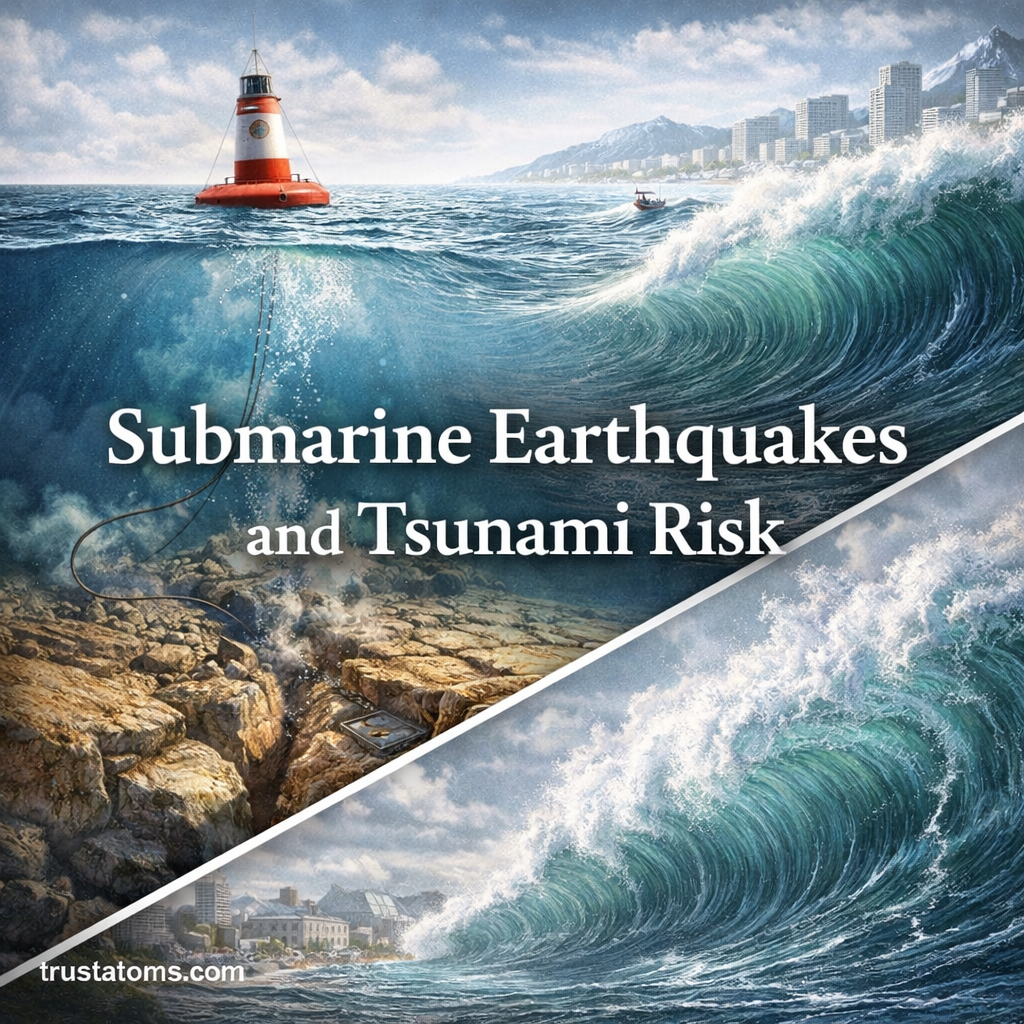
Submarine earthquakes occur beneath the ocean floor and are among the most powerful geological events on Earth. While many go unnoticed, some can trigger tsunamis—massive ocean waves capable of causing widespread destruction along coastlines.
Understanding how these underwater earthquakes work and how they lead to tsunamis is essential for coastal safety and disaster preparedness.
What Is a Submarine Earthquake?
A submarine earthquake is an earthquake that occurs beneath the ocean floor, typically along tectonic plate boundaries.
Just like earthquakes on land, they are caused by the sudden release of energy when tectonic plates shift, collide, or slide past one another.
Key characteristics include:
- Occur under oceans or seas
- Often linked to plate boundaries
- Can displace large sections of the seafloor
How Do Submarine Earthquakes Happen?
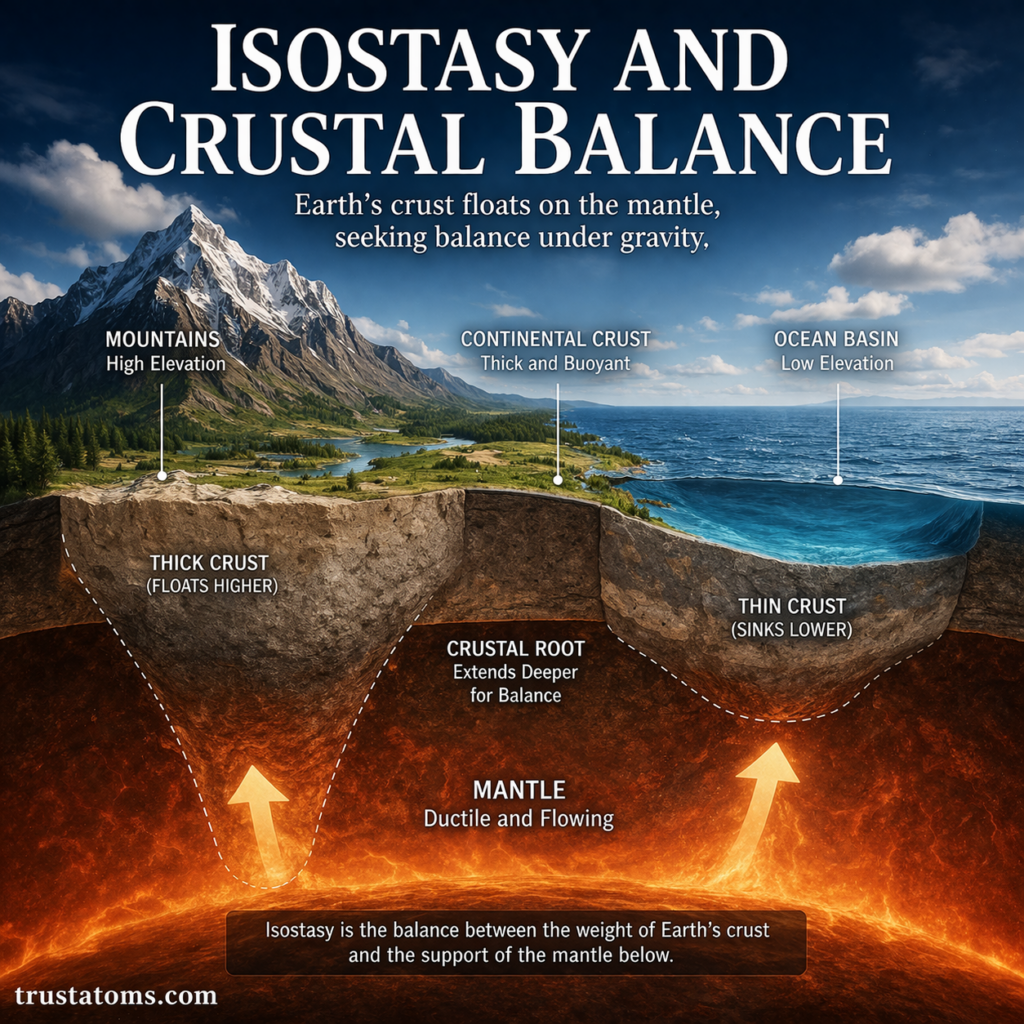
Submarine earthquakes are primarily driven by plate tectonics—the movement of Earth’s outer shell.
1. Plate Boundaries
Most occur at:
- Convergent boundaries (plates collide)
- Transform boundaries (plates slide past each other)
2. Subduction Zones
- One tectonic plate is forced beneath another
- Stress builds over time as plates lock together
- Sudden release causes powerful earthquakes
3. Fault Movement
- Fault lines beneath the ocean floor shift
- Vertical displacement is especially important for tsunami formation
What Is a Tsunami?
A tsunami is a series of large ocean waves caused by the displacement of water, usually due to a submarine earthquake.
Unlike regular ocean waves caused by wind, tsunamis involve the movement of the entire water column—from the surface to the ocean floor.
How Submarine Earthquakes Trigger Tsunamis
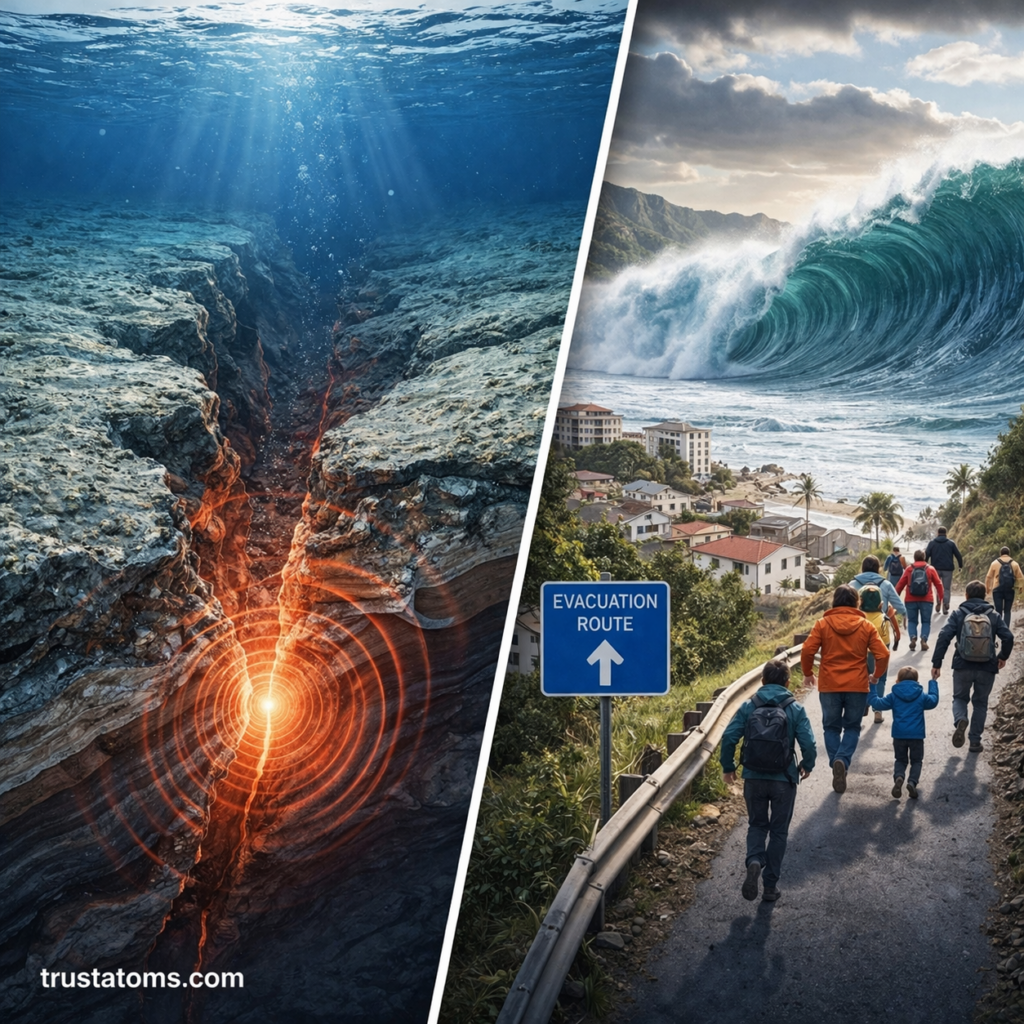
Not all underwater earthquakes create tsunamis. Specific conditions must be met.
Key Requirements
- The earthquake must be strong (typically magnitude 7.0 or higher)
- It must occur under or near the ocean
- There must be vertical movement of the seafloor
The Process
- Seafloor suddenly shifts upward or downward
- Water above is displaced
- Waves radiate outward in all directions
- Waves grow taller as they approach shallow coastal areas
This process can occur within minutes, leaving little time for reaction.
Characteristics of Tsunami Waves
Tsunamis behave differently from normal ocean waves:
- Long wavelengths (can span hundreds of miles)
- Travel at high speeds (up to 500–600 mph in deep water)
- Low height in deep ocean, making them hard to detect
- Dramatically increase in height near shore
When reaching land, they can appear as:
- A rapidly rising tide
- A series of powerful surges
- Walls of water in extreme cases
Where Do Tsunamis Occur?
Tsunamis are most common in regions with active tectonic activity, especially around the Pacific Ocean.
This region is often called the “Ring of Fire,” where many earthquakes and volcanic eruptions occur.
High-risk areas include:
- Japan
- Indonesia
- Chile
- Alaska (USA)
- Pacific island nations
Warning Signs of a Tsunami
Natural warning signs can provide critical clues before a tsunami arrives:
- Strong or long-lasting earthquake near the coast
- Sudden retreat of ocean water (exposing the seafloor)
- Loud roaring sound from the ocean
If any of these occur, immediate evacuation to higher ground is essential.
Impacts of Tsunamis
Tsunamis can cause devastating damage:
- Flooding of coastal areas
- Destruction of buildings and infrastructure
- Loss of life and displacement of populations
- Contamination of freshwater supplies
- Long-term environmental damage
Even small tsunamis can be dangerous due to strong currents and repeated waves.
How Tsunamis Are Detected and Monitored
Modern technology helps detect and track tsunamis in real time:
- Seismographs detect underwater earthquakes
- Ocean buoys measure changes in water pressure
- Satellite systems track wave movement
- Tsunami warning centers issue alerts
These systems provide early warnings that can save lives.
How to Stay Safe During a Tsunami
Preparation and quick action are critical.
Before a Tsunami
- Know evacuation routes
- Stay informed about local risks
- Practice emergency plans
During a Tsunami Warning
- Move to higher ground immediately
- Avoid beaches and coastal areas
- Follow official instructions
After a Tsunami
- Stay away from flooded areas
- Watch for additional waves
- Wait for official “all clear” announcements
Key Takeaways
- Submarine earthquakes occur beneath the ocean floor due to tectonic movement
- Tsunamis are caused by sudden displacement of water, often from these earthquakes
- Not all underwater earthquakes trigger tsunamis
- Warning signs include strong shaking and sudden ocean retreat
- Early detection systems and preparedness are critical for safety
Final Thoughts
Submarine earthquakes and tsunamis demonstrate the immense power of Earth’s geological processes. While these events can be sudden and destructive, advances in science and monitoring have greatly improved our ability to respond.
By understanding the risks and knowing how to react, coastal communities can better protect themselves from one of nature’s most formidable hazards.