Earth is constantly changing. From earthquakes and volcanic eruptions to landslides and tsunamis, geological hazards are a natural part of our planet’s behavior. While these events cannot be prevented, their impact can be significantly reduced.
Geological disaster risk reduction focuses on minimizing damage, protecting lives, and improving resilience through science, planning, and preparedness.
What Is Geological Disaster Risk Reduction?
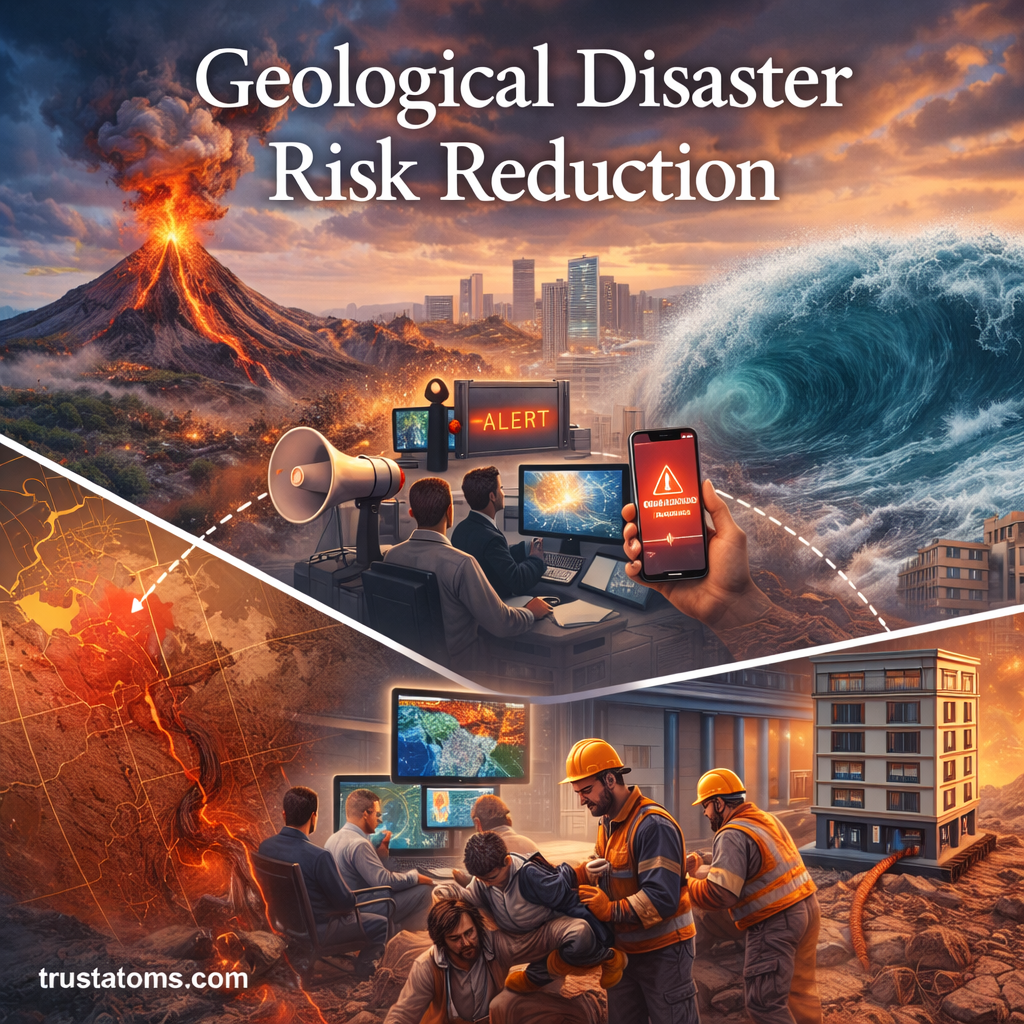
Geological disaster risk reduction (GDRR) involves strategies and actions designed to reduce the impact of natural hazards caused by Earth processes.
It combines:
- Scientific research
- Infrastructure planning
- Public education
- Emergency response systems
The goal is simple: reduce vulnerability and increase resilience.
Types of Geological Hazards
Understanding the types of hazards is the first step in reducing risk.
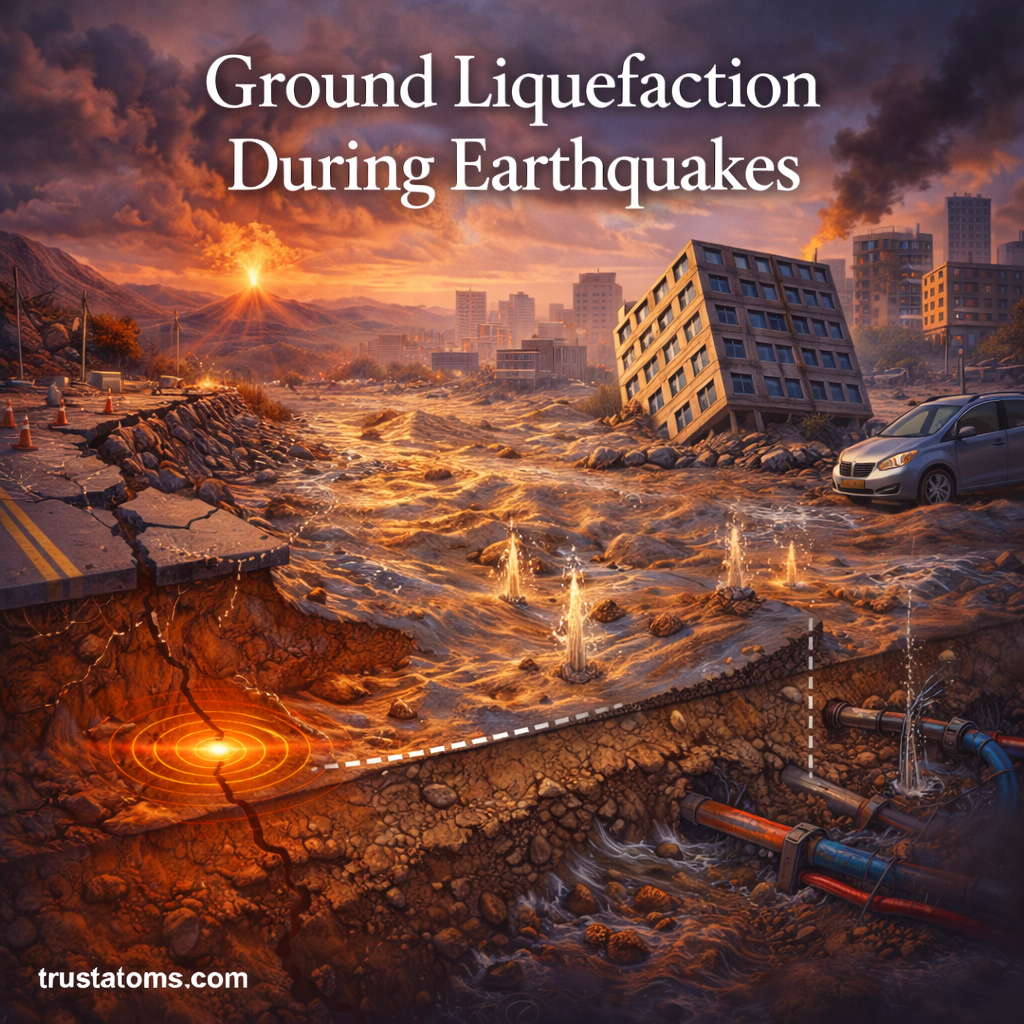
Earthquakes
Sudden ground shaking caused by tectonic movement can lead to:
- Building collapse
- Infrastructure damage
- Secondary hazards like fires
Volcanic Eruptions
Eruptions can produce:
- Lava flows
- Ash clouds
- Pyroclastic flows
- Lahars (volcanic mudflows)
Landslides
Mass movements of rock or soil that can be triggered by:
- Heavy rainfall
- Earthquakes
- Human activity
Tsunamis
Large ocean waves often caused by underwater earthquakes or landslides that can flood coastal regions.
Why Risk Reduction Matters
Without proper planning, geological disasters can have devastating consequences.
Risk reduction helps:
- Save lives
- Protect infrastructure
- Reduce economic losses
- Improve recovery time after disasters
As urban populations grow—especially in hazard-prone areas—risk reduction becomes even more critical.
Key Strategies for Risk Reduction
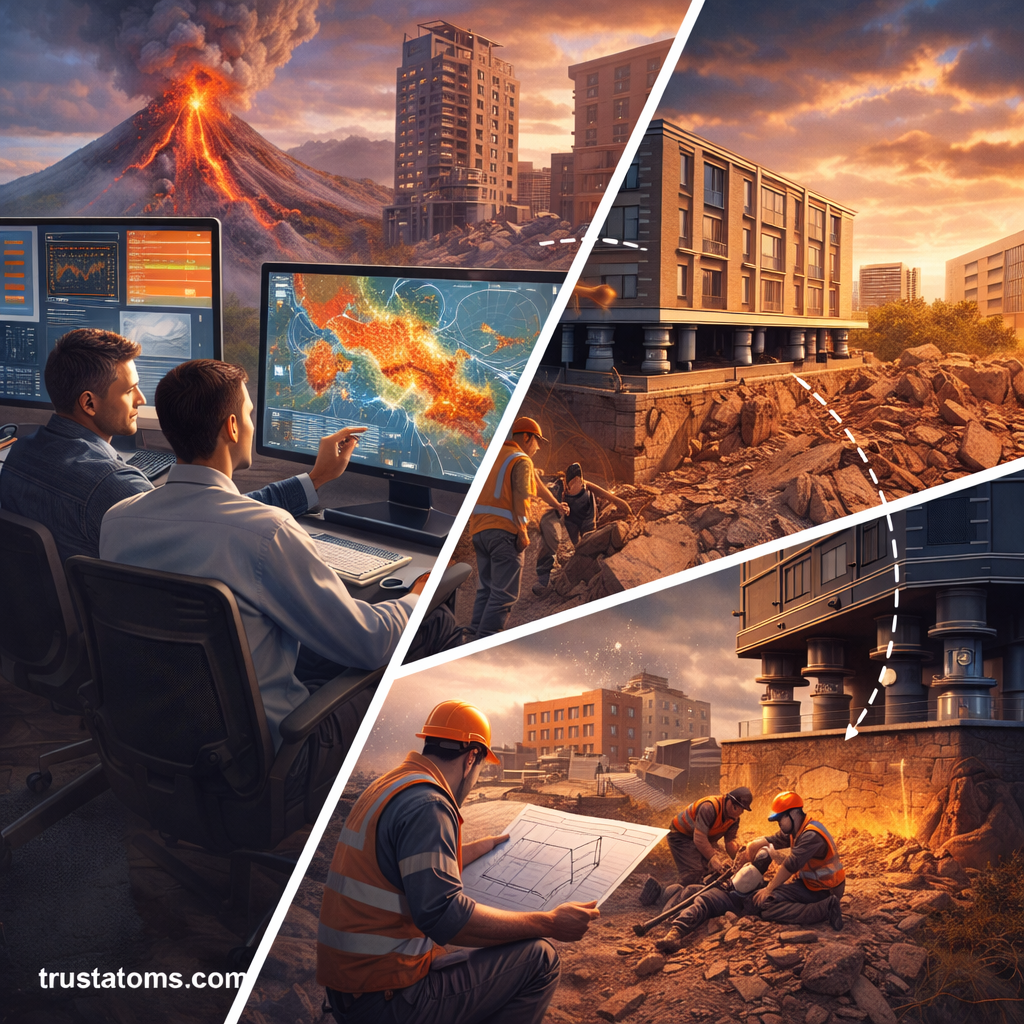
Effective disaster risk reduction relies on a combination of approaches.
1. Hazard Mapping and Monitoring
Scientists identify high-risk areas using:
- Seismic monitoring networks
- Satellite imagery
- Geological surveys
Hazard maps show where disasters are most likely to occur, helping guide planning decisions.
2. Early Warning Systems
Technologies like earthquake early warning systems and tsunami alerts provide critical seconds to minutes of notice.
Organizations such as the United States Geological Survey play a key role in monitoring and alerting systems.
Benefits include:
- Time to evacuate
- Automatic shutdown of critical systems
- Reduced panic and confusion
3. Resilient Infrastructure
Engineering plays a major role in reducing disaster impact.
Key measures include:
- Earthquake-resistant buildings
- Reinforced bridges and roads
- Flood-resistant coastal structures
Building codes are often updated based on lessons learned from past disasters.
4. Land-Use Planning
Where people build matters.
Smart land-use strategies include:
- Avoiding construction on fault lines
- Restricting development in landslide-prone areas
- Protecting natural barriers like wetlands and forests
5. Community Education and Preparedness
Public awareness can save lives.
Communities are encouraged to:
- Learn emergency procedures
- Participate in drills
- Prepare emergency kits
Simple actions—like knowing how to respond during an earthquake—can make a major difference.
6. Emergency Response and Recovery Planning
Preparedness doesn’t end before a disaster—it continues afterward.
Effective response plans include:
- Coordinated emergency services
- Clear evacuation routes
- Rapid medical response
Recovery planning ensures communities can rebuild quickly and safely.
The Role of Technology
Modern technology has transformed disaster risk reduction.
Key Innovations:
- Real-time monitoring systems
- Geographic Information Systems (GIS)
- Artificial intelligence for hazard prediction
- Mobile alert systems
These tools improve both detection and response, making communities more resilient.
Global Efforts and Cooperation
Geological disasters often affect multiple regions or countries, making international cooperation essential.
The United Nations Office for Disaster Risk Reduction promotes global strategies such as the Sendai Framework for Disaster Risk Reduction.
Goals include:
- Reducing disaster mortality
- Minimizing economic losses
- Strengthening resilience worldwide
Common Challenges
Despite progress, several challenges remain:
- Limited resources in developing regions
- Rapid urbanization in high-risk areas
- Climate change increasing hazard severity
- Gaps in public awareness and preparedness
Addressing these challenges requires long-term commitment and investment.
Lessons From Past Disasters
Historic events have shaped modern risk reduction strategies.
Key lessons include:
- Early warning systems save lives
- Strong building codes reduce damage
- Prepared communities recover faster
- Ignoring risk leads to greater loss
Each disaster provides valuable data that helps improve future responses.
How Individuals Can Reduce Risk
Everyone has a role to play in disaster preparedness.
Practical Steps:
- Create an emergency plan for your household
- Keep a disaster supply kit ready
- Stay informed about local risks
- Follow official guidance during emergencies
Prepared individuals contribute to stronger, safer communities.
Final Thoughts
Geological disaster risk reduction is not about stopping natural events—it’s about reducing their impact. By combining science, technology, planning, and education, societies can better prepare for the challenges posed by Earth’s dynamic systems.
As our understanding improves, so does our ability to protect lives and build resilient communities in the face of natural hazards.