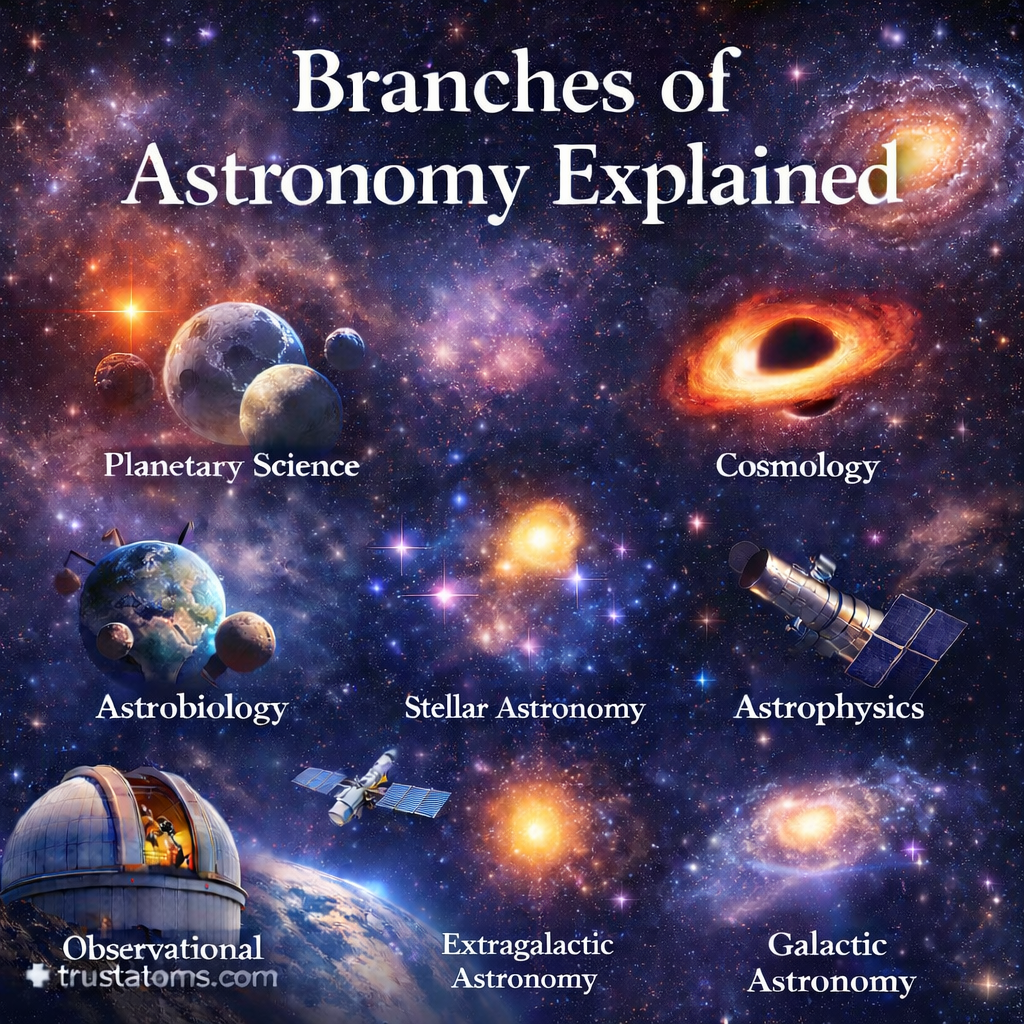
Astronomy is a vast field that explores everything beyond Earth’s atmosphere—from nearby planets to the farthest galaxies. Because the universe is so complex, astronomy is divided into multiple branches, each focusing on a specific type of object, method, or concept.
Understanding these branches makes it easier to see how scientists study space and uncover its mysteries.
What Are the Main Branches of Astronomy?
Astronomy can be grouped into two broad categories:
- Observational astronomy – focused on collecting data
- Theoretical astronomy – focused on explaining and modeling that data
From there, the field branches into more specialized areas.
Observational Astronomy

Observational astronomy involves gathering data from space using telescopes and instruments. Different branches are based on how astronomers detect and study light and energy.
Optical Astronomy
- Studies visible light from stars and galaxies
- Uses traditional telescopes
- Helps identify shapes, brightness, and motion
Radio Astronomy
- Detects radio waves emitted by space objects
- Can observe regions hidden by dust clouds
- Used to study pulsars, galaxies, and cosmic radiation
Infrared Astronomy
- Observes heat energy (infrared radiation)
- Useful for studying cool objects like dust clouds and forming stars
- Can see through cosmic dust
X-ray and Gamma-ray Astronomy
- Focuses on high-energy phenomena
- Studies black holes, neutron stars, and supernova explosions
- Requires space-based telescopes due to Earth’s atmosphere blocking these rays
Theoretical Astronomy
Theoretical astronomy uses mathematics and physics to explain observations and predict cosmic behavior.
What Theoretical Astronomers Do
- Build models of how stars and galaxies evolve
- Simulate cosmic events using supercomputers
- Develop theories about the origin and fate of the universe
This branch works closely with observational data to refine our understanding of space.
Astrophysics
Astrophysics is one of the most important branches of astronomy. It focuses on the physical properties and behavior of celestial objects.
Key Areas of Astrophysics
- How stars produce energy
- The life cycle of stars
- Gravity and motion in space
- Black holes and relativity
Astrophysics combines astronomy with physics to explain how the universe works.
Cosmology
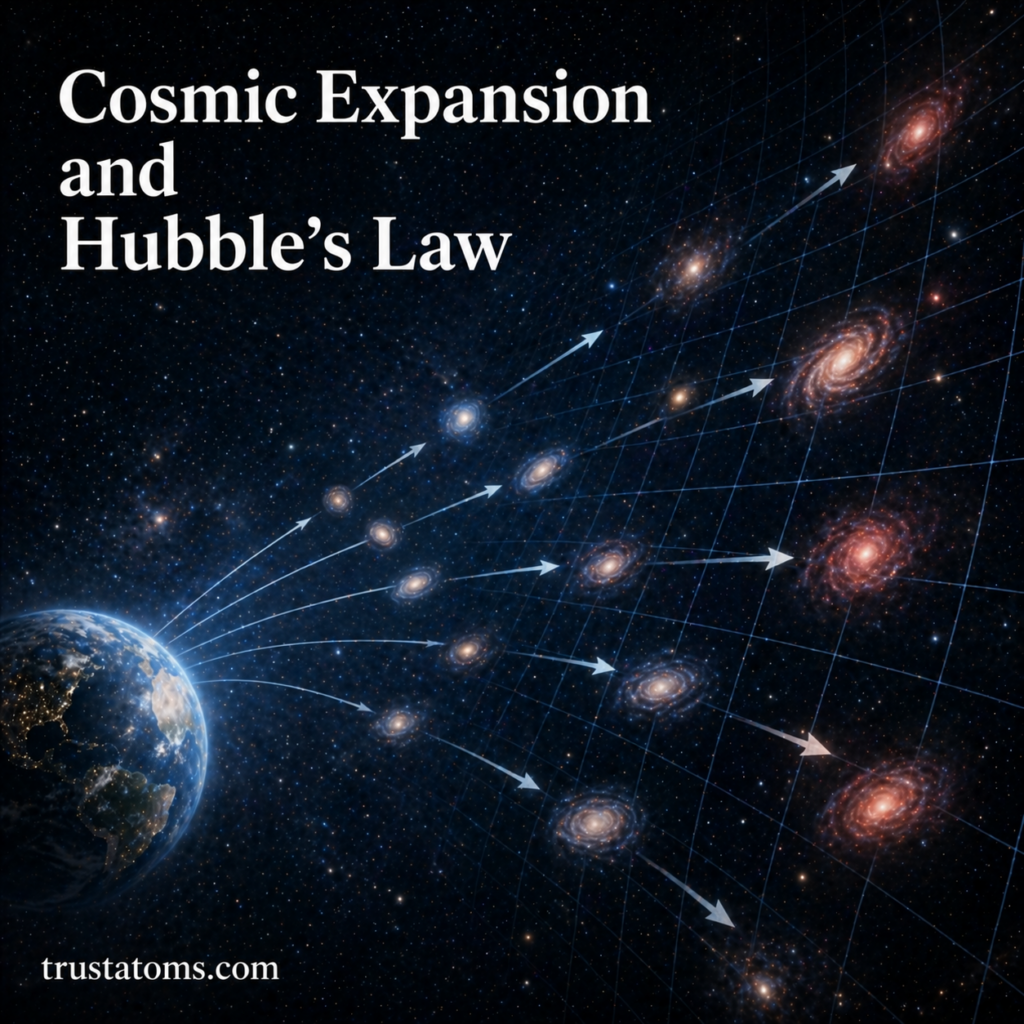
Cosmology studies the universe as a whole—its origin, structure, and evolution.
Topics in Cosmology
- The Big Bang theory
- Expansion of the universe
- Dark matter and dark energy
- The ultimate fate of the universe
Cosmologists aim to answer some of the biggest questions about existence itself.
Planetary Science
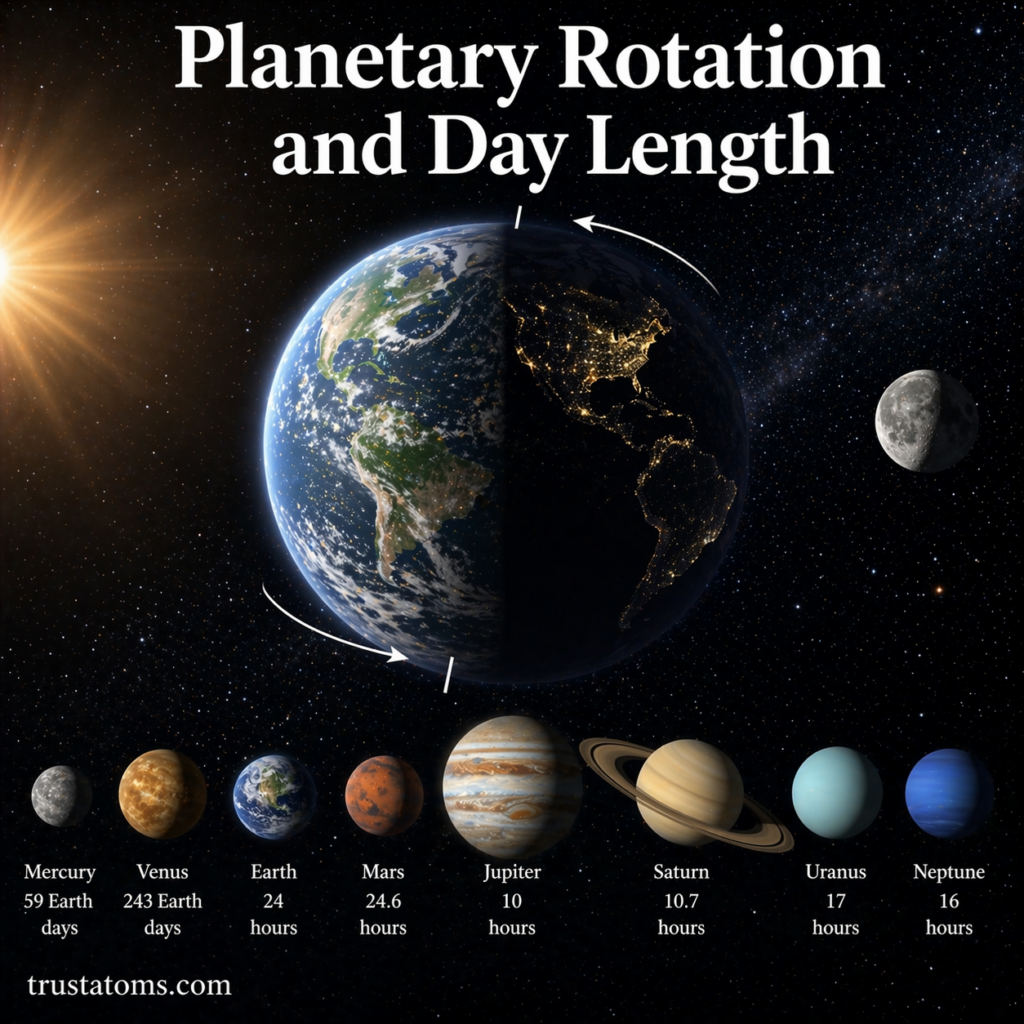
Planetary science focuses on planets, moons, and other objects within solar systems.
What It Covers
- Planet formation and structure
- Atmospheres and climates
- Surface conditions and geology
- Search for life beyond Earth
This branch plays a key role in space missions and exploration.
Stellar Astronomy
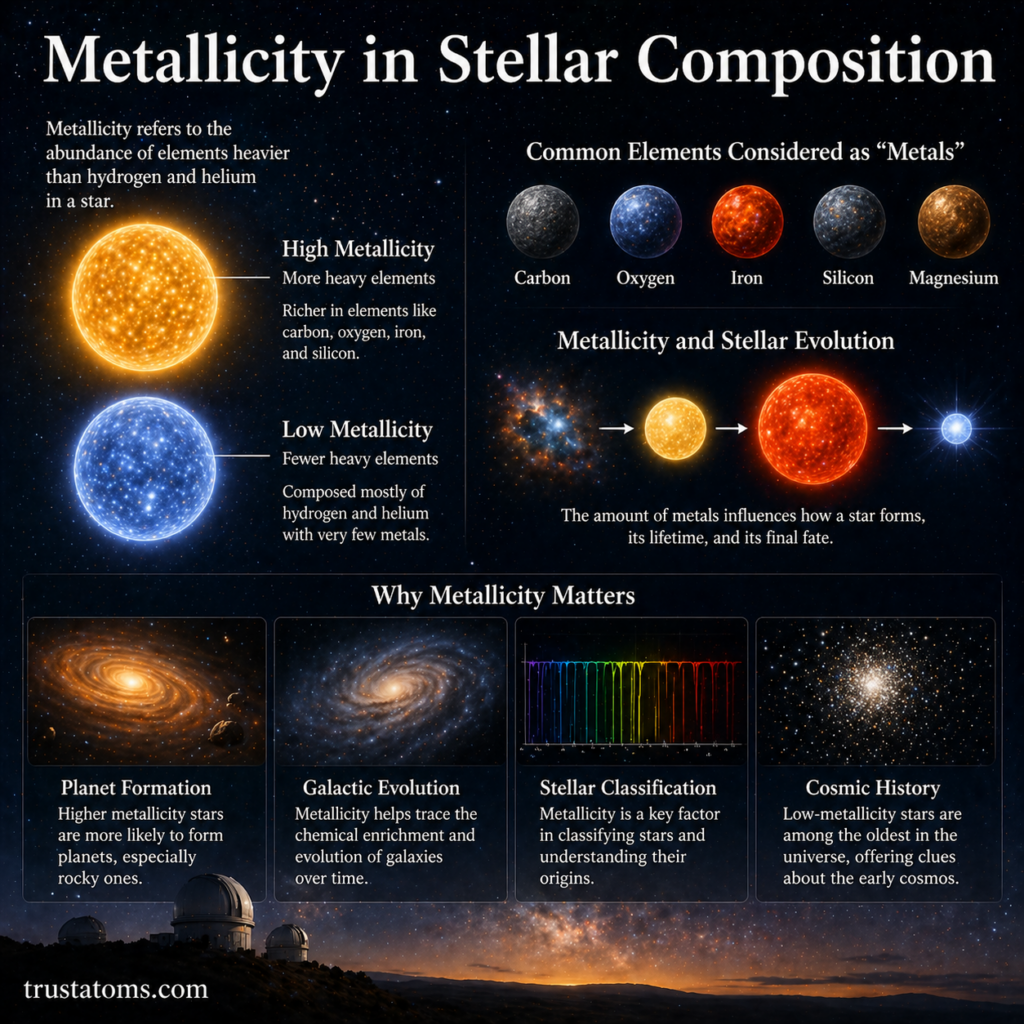
Stellar astronomy studies stars in detail.
Areas of Focus
- Star formation in nebulae
- Nuclear fusion inside stars
- Supernova explosions
- White dwarfs, neutron stars, and black holes
Understanding stars helps scientists understand the building blocks of galaxies.
Galactic Astronomy
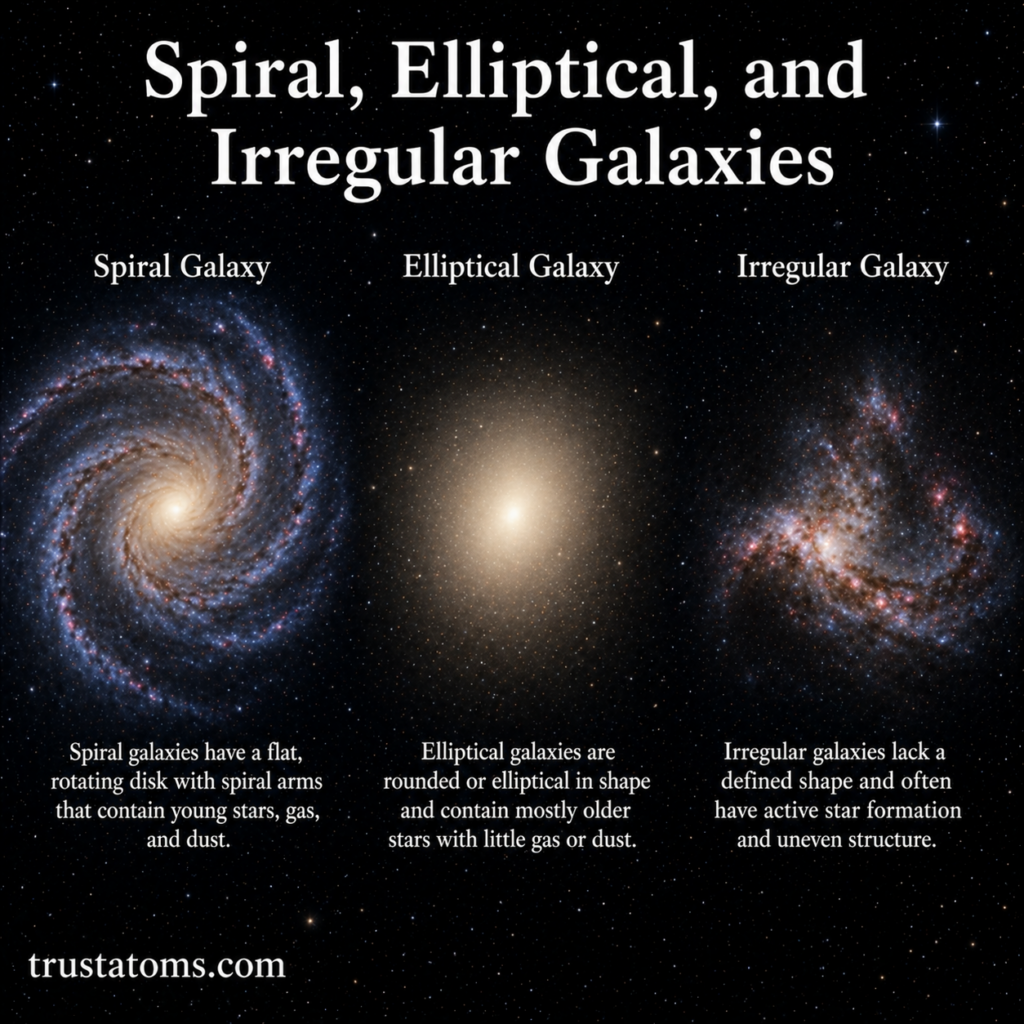
Galactic astronomy focuses on galaxies and their structure.
Key Topics
- Spiral, elliptical, and irregular galaxies
- The Milky Way’s structure
- Star clusters and galactic evolution
- Interactions between galaxies
This branch helps explain how galaxies form and change over time.
Extragalactic Astronomy
Extragalactic astronomy studies objects beyond our galaxy.
What It Includes
- Distant galaxies
- Quasars and active galactic nuclei
- Large-scale structure of the universe
This branch extends our view to billions of light-years away.
Astrobiology
Astrobiology explores the possibility of life beyond Earth.
Key Questions
- How did life begin?
- Can life exist on other planets?
- What conditions are necessary for life?
It combines astronomy, biology, and chemistry to search for life in the universe.
Why These Branches Matter
Each branch of astronomy plays a role in building a complete picture of the universe.
Benefits of Specialized Branches
- Allows deeper study of specific phenomena
- Encourages collaboration across sciences
- Drives innovation in technology and research
- Helps answer complex cosmic questions
Together, these branches help scientists piece together how the universe works—from the smallest particles to the largest structures.
Final Thoughts
Astronomy isn’t a single field—it’s a collection of specialized branches working together to explore the universe. From observing distant galaxies to modeling the origins of space and time, each branch contributes to our understanding of the cosmos.
Whether you’re interested in planets, stars, or the universe as a whole, there’s a branch of astronomy dedicated to uncovering those mysteries.