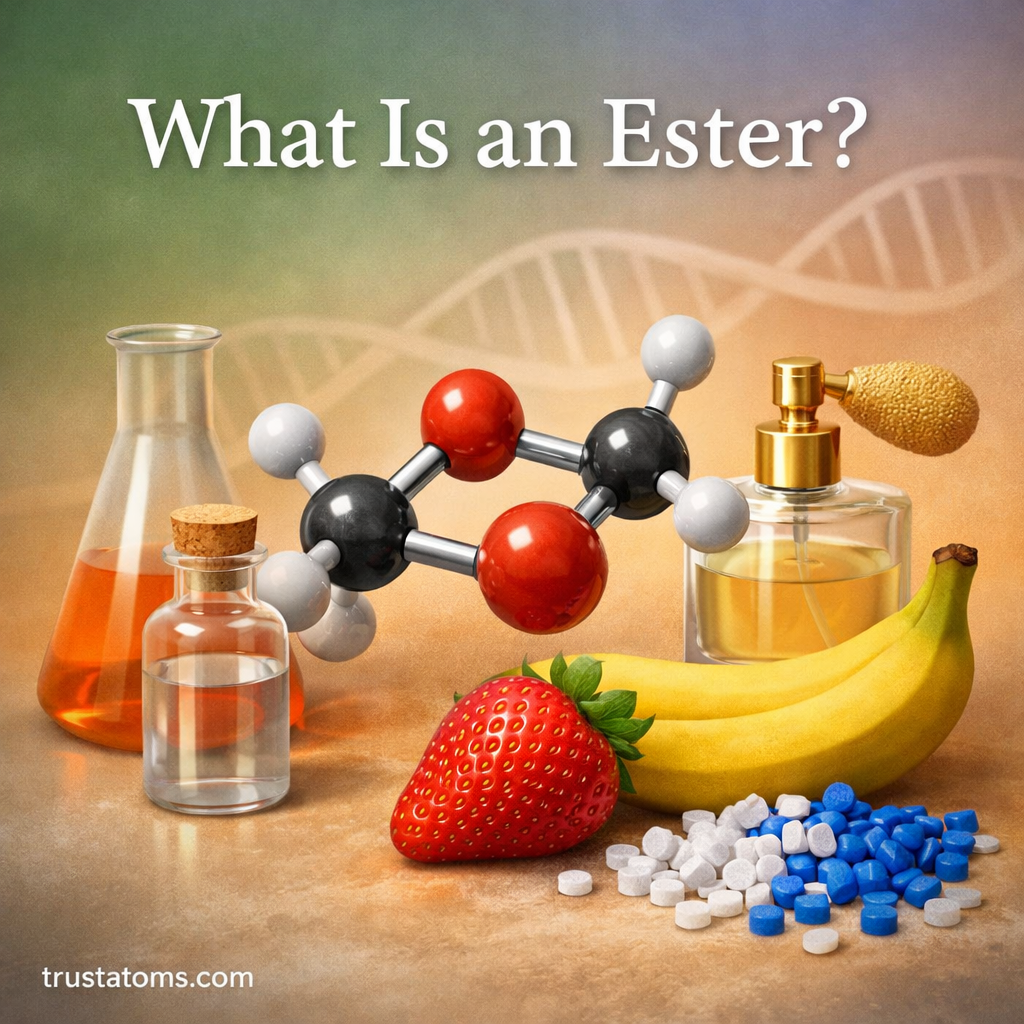
Esters are a class of organic compounds widely found in nature and commonly used in everyday products such as perfumes, flavorings, and solvents. Chemically, an ester forms when an alcohol reacts with a carboxylic acid in a process known as esterification.
These compounds are known for their pleasant, often fruity aromas, which is why they are frequently used in artificial flavorings and fragrances. Beyond their smells, esters also play important roles in biology, chemistry, and industrial manufacturing.
Understanding esters helps explain how many natural scents and flavors are produced, as well as how certain plastics, solvents, and biological molecules function.
Continue reading “What Is an Ester?”