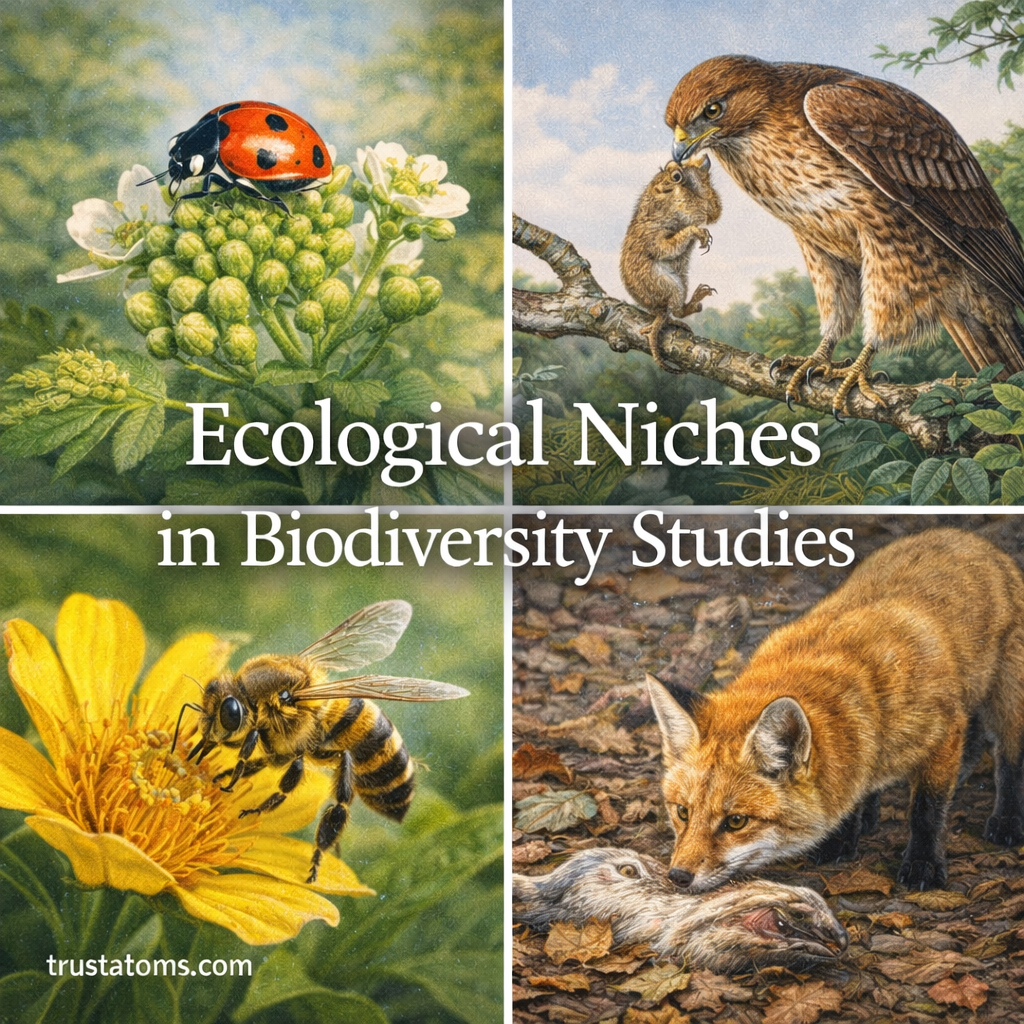
Ecological Niches in Biodiversity Studies

Educational illustration showing different ecological niches including a bee pollinating a flower, a hawk hunting prey, a ladybug eating aphids, and a fox scavenging.
Illustration showing different ecological niches such as pollinators, predators, and scavengers within biodiversity studies. trustatoms.com.

An ecological niche describes the role a species plays within its environment. It includes how an organism obtains resources, interacts with other species, and contributes to the functioning of an ecosystem.

In biodiversity studies, ecological niches help scientists understand how multiple species can coexist in the same environment without competing for exactly the same resources. By occupying different niches, species reduce competition and help maintain ecological balance.

Studying ecological niches provides insight into species diversity, ecosystem stability, and the complex relationships that shape life on Earth.

Continue reading “Ecological Niches in Biodiversity Studies”
What Is a Biome?

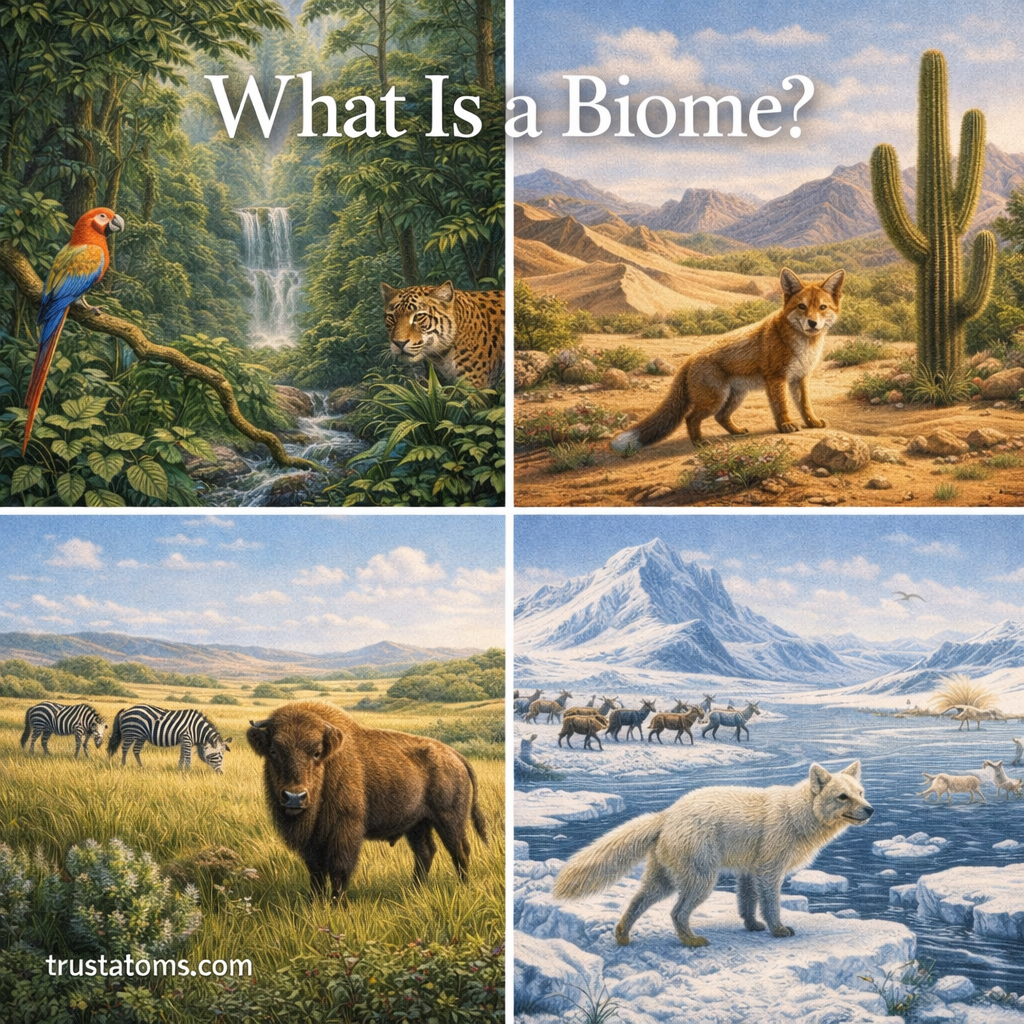
Educational illustration showing four major biomes including tropical rainforest, desert, grassland, and tundra with animals adapted to each environment.
Illustration showing major Earth biomes including rainforest, desert, grassland, and tundra ecosystems. trustatoms.com.

A biome is a large ecological region on Earth defined by its climate, vegetation, and the types of animals that live there. Biomes represent broad environmental zones where living organisms share similar adaptations to the surrounding conditions.

From tropical rainforests to icy tundra landscapes, each biome supports unique communities of plants and animals. Scientists use the concept of biomes to understand how ecosystems are organized across the planet and how life responds to different climates.

Studying biomes helps researchers explain patterns of biodiversity, species distribution, and ecological relationships at a global scale.

Continue reading “What Is a Biome?”

What Is a Habitat?

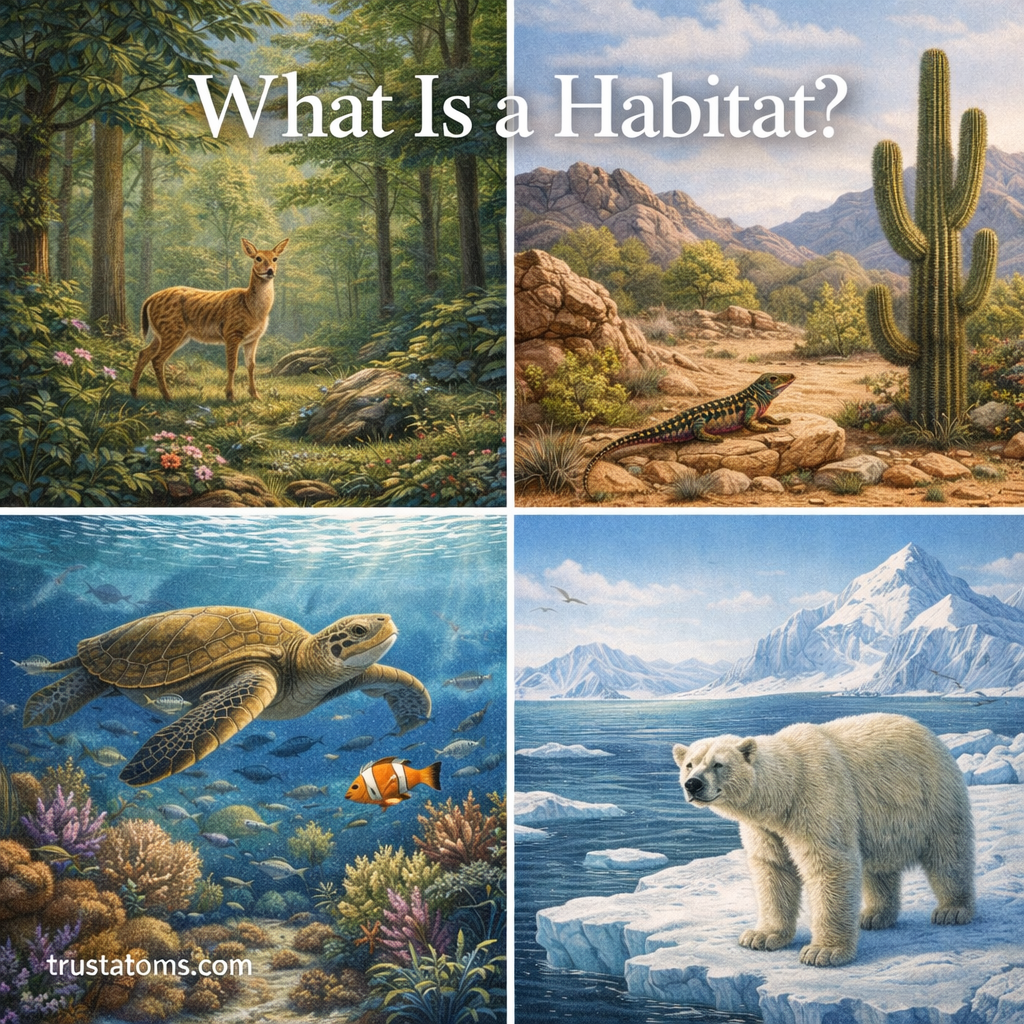
Educational illustration showing multiple habitats including forest, desert, ocean, and Arctic environments with animals adapted to each ecosystem.
Illustration showing different natural habitats including forest, desert, ocean, and Arctic ecosystems. trustatoms.com.

A habitat is the natural environment where a plant, animal, or microorganism lives. It provides the conditions and resources that organisms need to survive, grow, and reproduce.

Habitats exist everywhere on Earth—from forests and oceans to deserts and wetlands. Each habitat contains unique environmental conditions such as temperature, water availability, soil type, and food sources.

Understanding habitats is essential in biology because they explain how organisms interact with their surroundings and why certain species live in particular locations.

Continue reading “What Is a Habitat?”

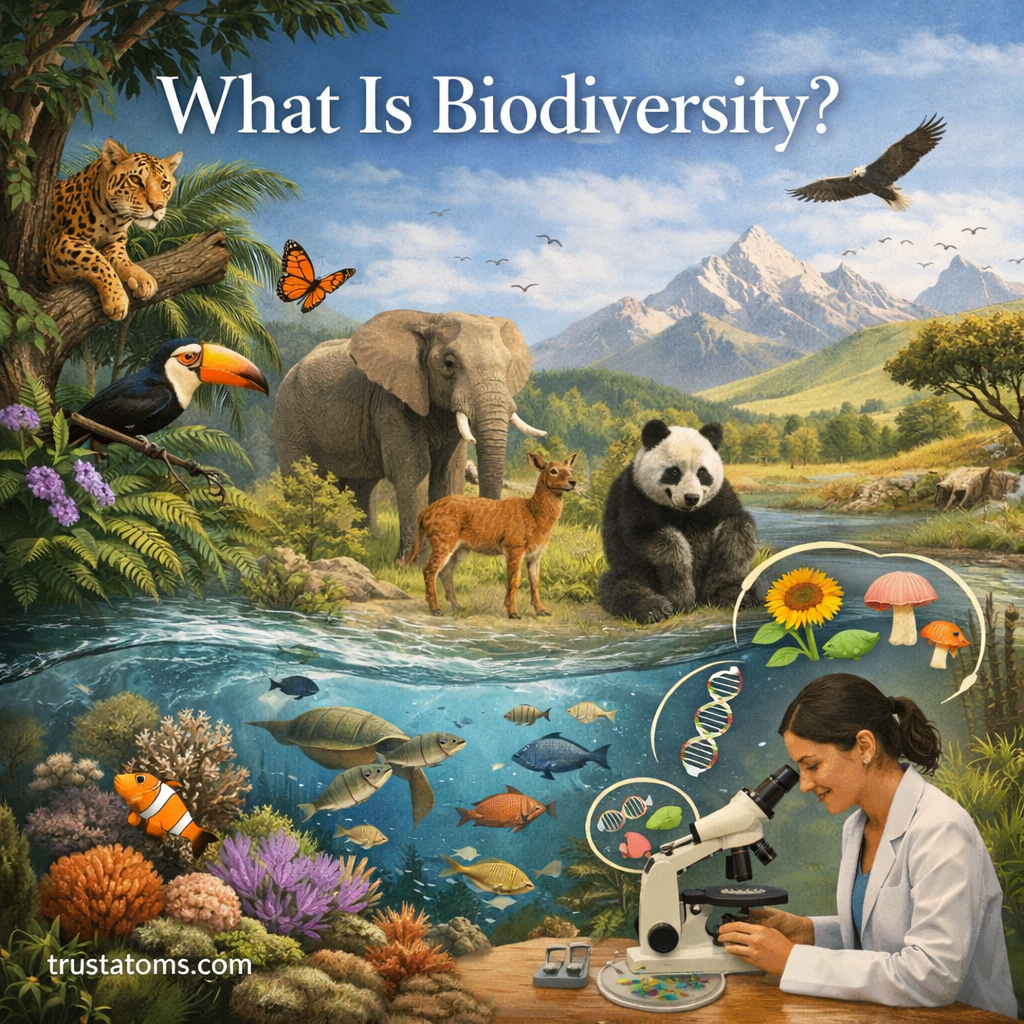
What Is Biodiversity?

Illustration showing multiple ecosystems with diverse animals, plants, and marine life representing biodiversity on Earth.
Illustration showing diverse species across land and ocean ecosystems representing global biodiversity. trustatoms.com.

Biodiversity refers to the variety of life on Earth. It includes the different species of plants, animals, fungi, and microorganisms, as well as the ecosystems they form and the genetic differences within each species.

Scientists consider biodiversity one of the most important indicators of a healthy planet. From tropical rainforests to deep ocean ecosystems, biodiversity supports ecological balance, food systems, medicine development, and climate stability.

Understanding biodiversity helps explain how life evolves, how ecosystems function, and why protecting nature is critical for the survival of both wildlife and humans.

Continue reading “What Is Biodiversity?”

What Is an Ecosystem?

Educational illustration showing multiple ecosystems including forest, wetland, desert, and farmland with energy flow connecting plants, animals, and environmental factors.
Illustrated ecosystem diagram showing forests, wetlands, deserts, and farmland with plants, animals, sunlight, and nutrient cycling interacting within ecosystems. trustatoms.com.

An ecosystem is a community of living organisms interacting with each other and with their physical environment. These interactions form complex systems where plants, animals, microorganisms, and environmental factors such as water, soil, air, and sunlight work together to support life.

Ecosystems exist everywhere on Earth—from vast oceans and forests to small ponds and even a patch of soil in a backyard. Each ecosystem contains unique combinations of species and environmental conditions that shape how organisms survive, grow, and reproduce.

Understanding ecosystems is essential in biology because they explain how energy moves through nature, how nutrients cycle through environments, and how life remains balanced across the planet.

Continue reading “What Is an Ecosystem?”

What Is Ecology?

Illustrated ecology diagram showing forest wildlife, wetlands, farmland, and ocean ecosystems connected by energy flow from the sun.
Educational illustration showing multiple ecosystems—including forests, wetlands, farmland, and oceans—demonstrating ecological relationships and energy flow in nature. trustatoms.com.

Ecology is the branch of biology that studies how living organisms interact with each other and with their environment. These interactions determine how ecosystems function, how species survive, and how energy and nutrients move through nature.

From microscopic bacteria in soil to massive forests and oceans, ecology examines the complex relationships that sustain life on Earth. It also helps scientists understand how environmental changes—such as climate shifts, pollution, and habitat loss—affect organisms and ecosystems.

Understanding ecology is essential for protecting biodiversity, managing natural resources, and maintaining the balance of life on our planet.

Continue reading “What Is Ecology?”

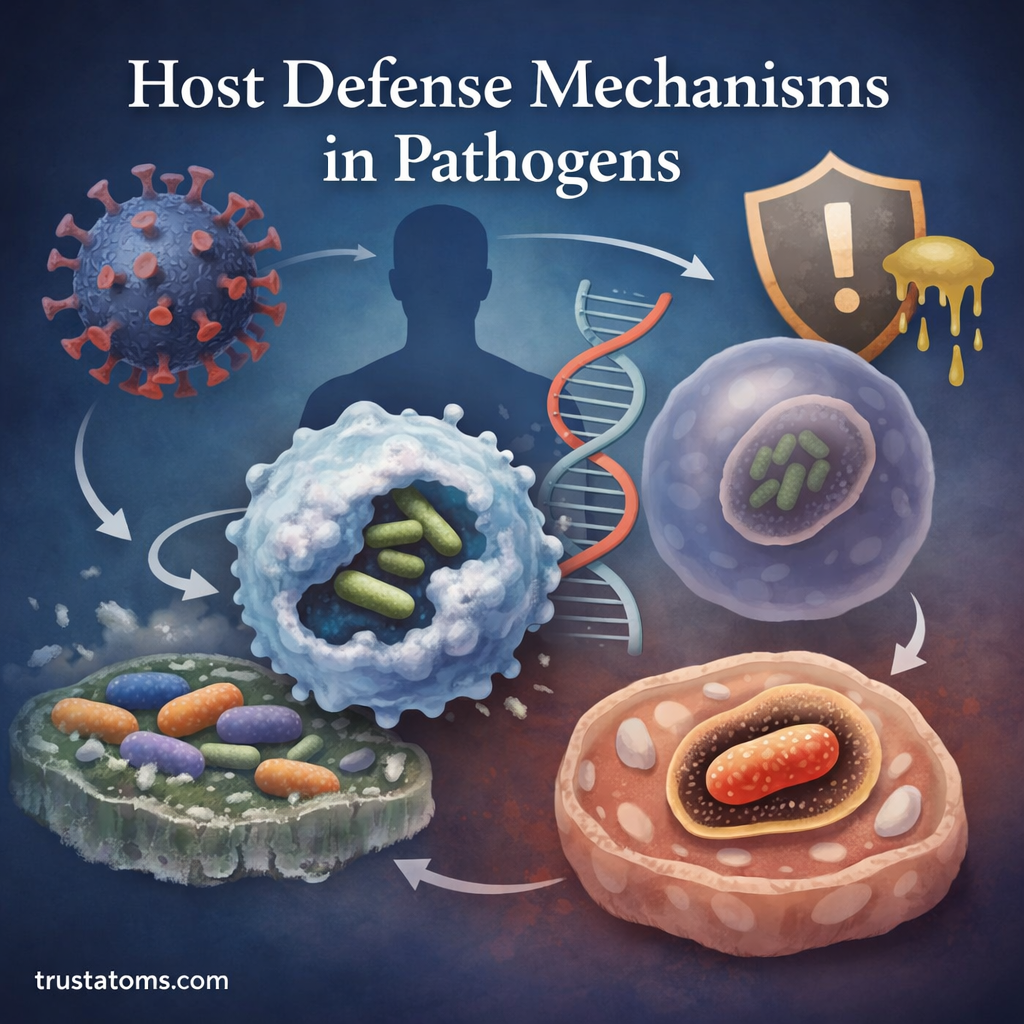
Host Defense Mechanisms in Pathogens

Illustrated biology diagram showing pathogens using defense strategies such as immune evasion, intracellular survival, and biofilm protection against the host immune system.
Educational illustration showing how pathogens use defense mechanisms like immune evasion, biofilms, and intracellular survival to resist host immune responses. trustatoms.com.

Pathogens such as bacteria, viruses, fungi, and parasites constantly face attacks from the immune systems of the organisms they infect. To survive, replicate, and spread, these microorganisms have evolved host defense mechanisms that allow them to evade, resist, or manipulate the immune responses of their hosts.

These strategies are the result of long-term evolutionary competition between pathogens and host immune systems. While hosts develop stronger defenses, pathogens simultaneously evolve ways to overcome them. Understanding these mechanisms is important in biology, medicine, and epidemiology because they explain how infections persist and why some diseases are difficult to treat.

This article explores the major ways pathogens defend themselves against host immune responses and how these strategies influence disease progression.

Continue reading “Host Defense Mechanisms in Pathogens”

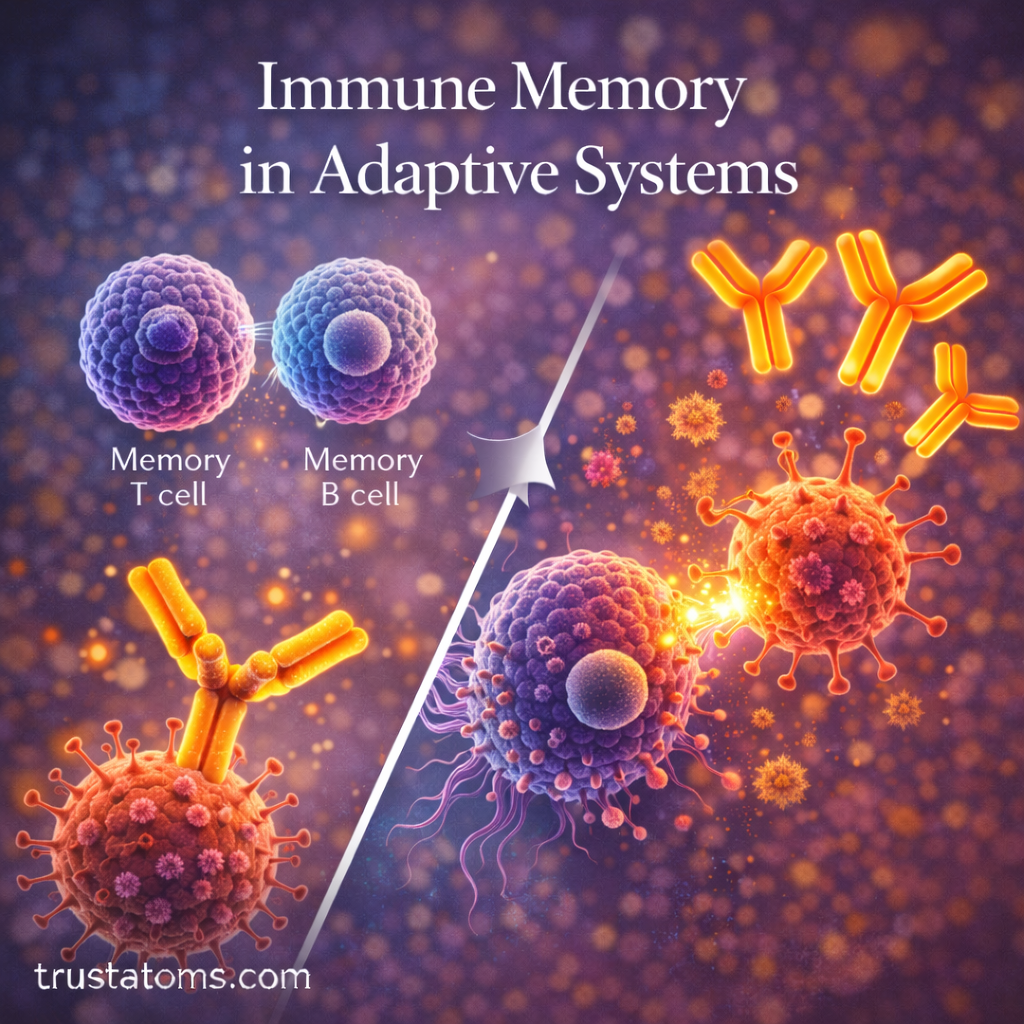
Immune Memory in Adaptive Systems

Educational illustration showing immune memory with memory immune cells and antibodies responding quickly to familiar pathogens.
Illustration showing immune memory where memory immune cells enable faster antibody responses to previously encountered pathogens. trustatoms.com.

Immune memory is one of the most remarkable features of the adaptive immune system. It allows organisms—especially vertebrates—to remember previously encountered pathogens and respond to them more quickly and effectively in the future.

This biological memory forms the basis of long-term immunity and is the reason vaccines can provide lasting protection against many infectious diseases. By retaining specialized immune cells that recognize specific pathogens, the adaptive immune system can prevent reinfection or significantly reduce disease severity.

Understanding immune memory is essential in immunology, medicine, and vaccine development.

Continue reading “Immune Memory in Adaptive Systems”

Adaptive Immune Responses in Vertebrates

Educational illustration showing adaptive immune responses with immune cells and antibodies targeting pathogens in the body.
Illustration showing adaptive immune responses where immune cells and antibodies identify and attack invading pathogens. trustatoms.com.

Adaptive immune responses are specialized defense mechanisms that allow vertebrates to recognize, target, and eliminate specific pathogens. Unlike innate immunity, which provides immediate but non-specific protection, adaptive immunity develops over time and creates long-lasting immune memory.

This system allows vertebrates—including humans, birds, reptiles, amphibians, and fish—to mount precise responses against pathogens they have previously encountered. Because of this ability to “remember” infections, adaptive immunity is the biological foundation behind vaccination and long-term disease protection.

Understanding adaptive immune responses helps scientists develop vaccines, treatments, and strategies for controlling infectious diseases.

Continue reading “Adaptive Immune Responses in Vertebrates”

Innate Immune Responses in Organisms

Educational illustration showing innate immune defenses including skin barriers, bacteria and viruses near tissue, and immune cells attacking pathogens.
Illustration showing innate immune responses such as physical barriers and immune cells defending organisms against invading pathogens. trustatoms.com.

Innate immune responses are the first line of defense that organisms use to protect themselves from harmful pathogens. These responses are rapid, non-specific, and present in nearly all living organisms—from simple invertebrates to complex mammals.

Unlike adaptive immunity, which develops targeted responses over time, innate immunity responds immediately when the body detects potential threats. It forms the foundation of an organism’s immune system and plays a crucial role in preventing infections before they spread.

Understanding innate immune responses helps scientists explain how organisms defend themselves against bacteria, viruses, fungi, and parasites.

Continue reading “Innate Immune Responses in Organisms”