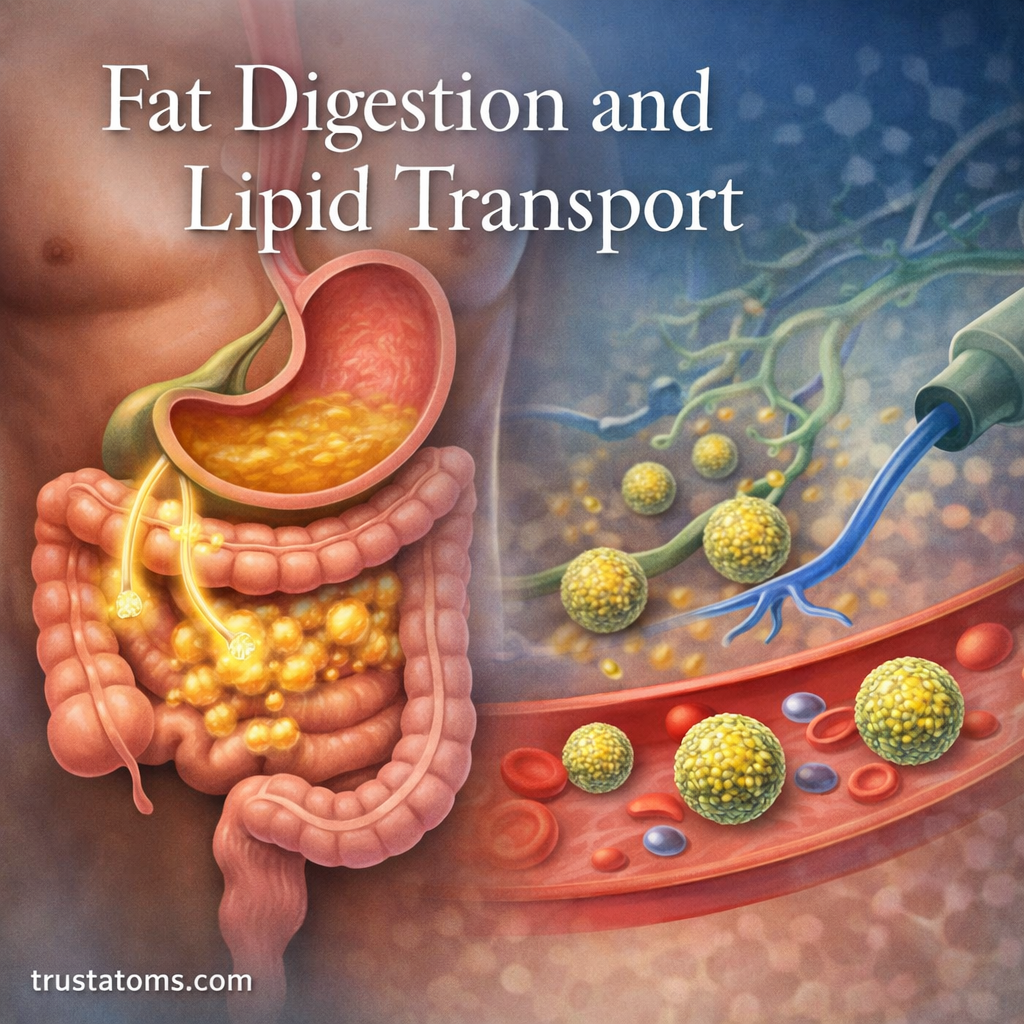
Fat Digestion and Lipid Transport

Illustration showing fat digestion in the small intestine with bile emulsification and lipid transport through lymphatic and blood vessels.
Illustration of how fats are broken down, emulsified, and transported through the lymphatic system and bloodstream. trustatoms.com.

Fats are a vital part of the human diet, providing a concentrated source of energy, supporting cell structure, and aiding in the absorption of fat-soluble vitamins. However, before the body can use dietary fats, they must undergo a specialized digestion process and be transported efficiently through the body.

Fat digestion and lipid transport involve multiple organs, enzymes, and unique pathways that differ significantly from how carbohydrates and proteins are processed.

Continue reading “Fat Digestion and Lipid Transport”
Protein Digestion and Amino Acid Uptake

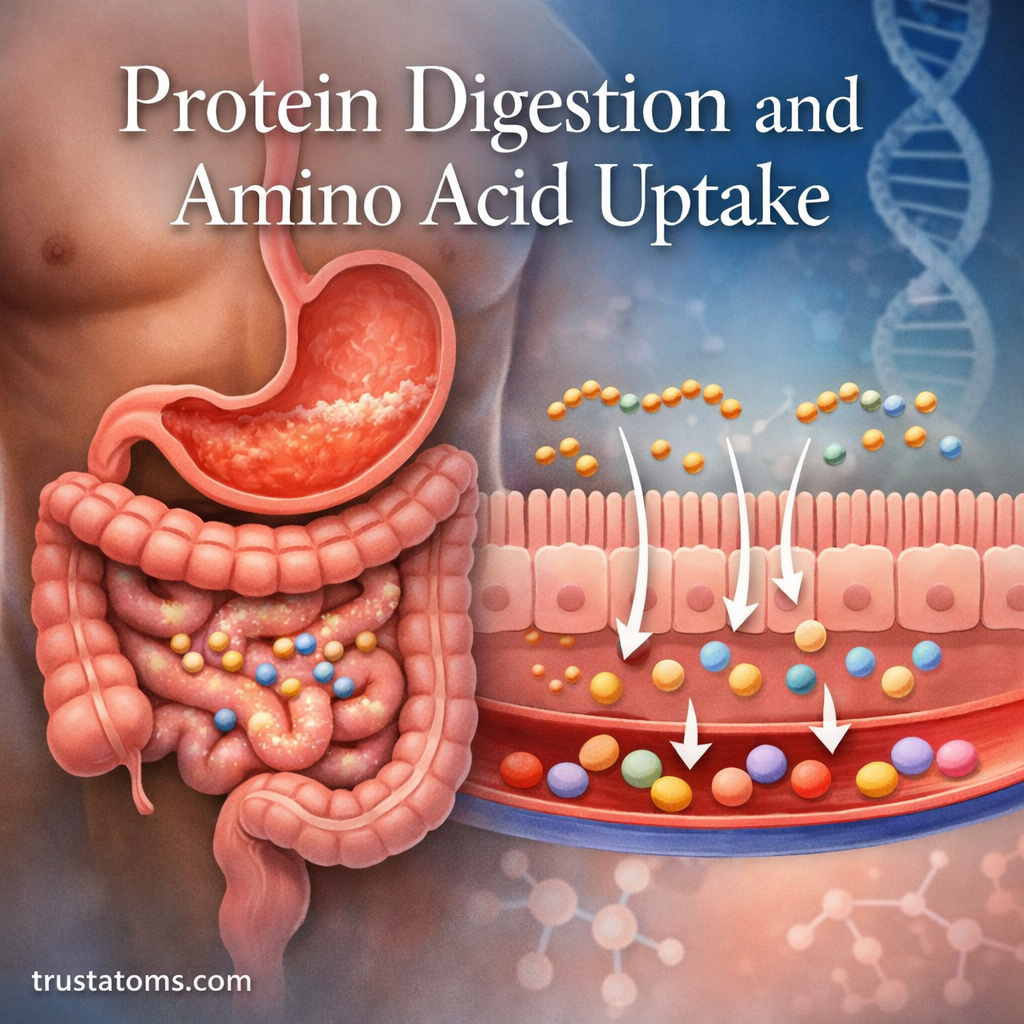
Illustration showing protein digestion in the stomach and small intestine with amino acid absorption into the bloodstream.
Illustration of how proteins are broken down and absorbed as amino acids in the digestive system. trustatoms.com.

Proteins are essential macronutrients that play a central role in building and repairing tissues, producing enzymes and hormones, and supporting overall body function. But before your body can use protein, it must first break it down into smaller components called amino acids. This process—protein digestion and amino acid uptake—is a carefully coordinated journey that begins in the stomach and ends in the bloodstream.

Understanding how this system works can help you make better dietary choices and optimize nutrient absorption.

Continue reading “Protein Digestion and Amino Acid Uptake”

Carbohydrate Digestion and Absorption: How Your Body Turns Food into Energy

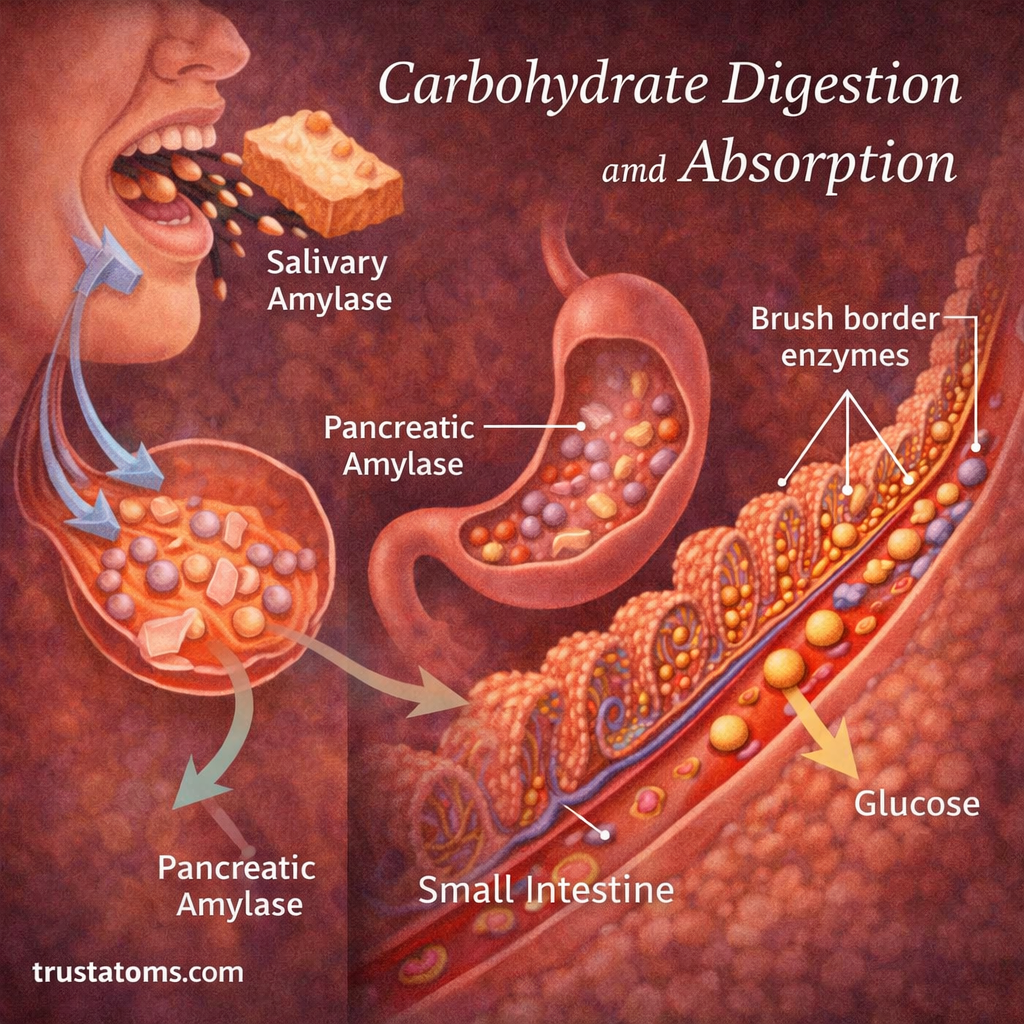
Illustration showing carbohydrate digestion from the mouth to the small intestine and glucose absorption into the bloodstream.
Diagram illustrating how carbohydrates are broken down by enzymes and absorbed as glucose into the bloodstream. trustatoms.com

Carbohydrates are one of the body’s primary sources of energy. From a slice of bread to a piece of fruit, the carbohydrates you eat must be broken down and absorbed before your body can use them.

In this guide, you’ll learn how carbohydrate digestion works, where it happens, and how glucose ultimately enters your bloodstream to fuel your cells.

Continue reading “Carbohydrate Digestion and Absorption: How Your Body Turns Food into Energy”

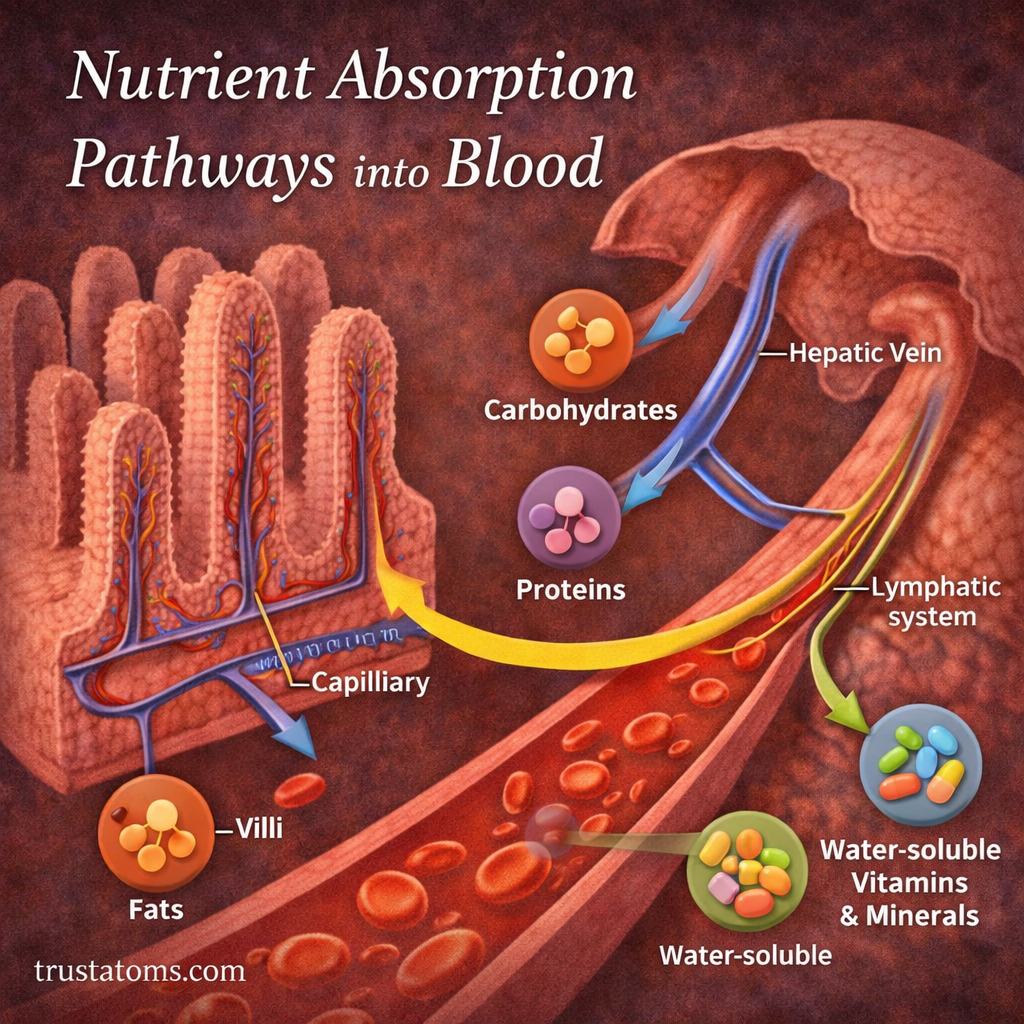
Nutrient Absorption Pathways into Blood: How Your Body Transports What You Eat

Illustration showing how nutrients are absorbed through intestinal villi into the bloodstream and lymphatic system.
Diagram of nutrient absorption pathways showing how carbohydrates, proteins, fats, and vitamins enter the blood and lymphatic system. trustatoms.com

Digestion doesn’t end when food is broken down. The real goal is absorption—getting nutrients from your digestive system into your bloodstream so your body can use them.

In this guide, you’ll learn how nutrients move from the intestines into the blood, the pathways involved, and why this process is essential for energy, growth, and overall health.

Continue reading “Nutrient Absorption Pathways into Blood: How Your Body Transports What You Eat”

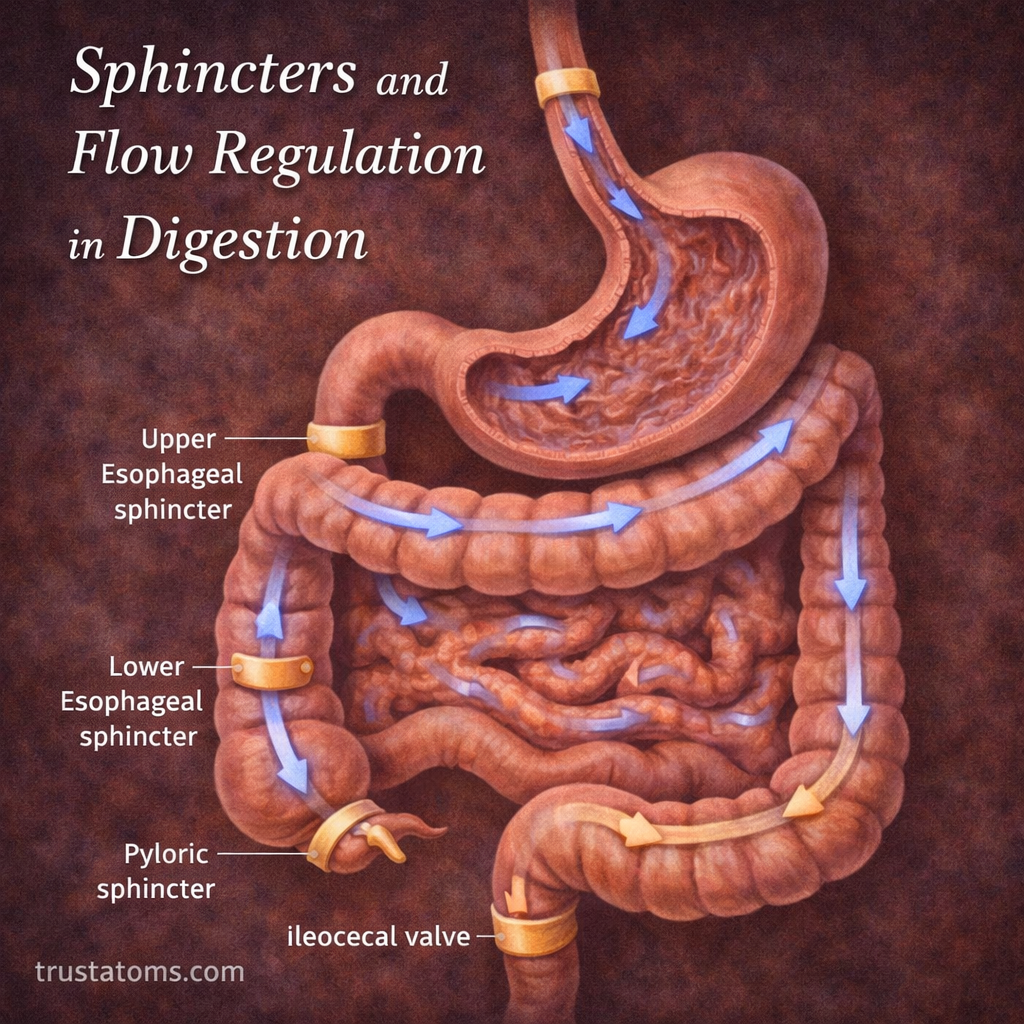
Sphincters and Flow Regulation in Digestion: How Your Body Controls Movement

Illustration showing digestive sphincters controlling food flow through the esophagus, stomach, and intestines.
Diagram highlighting key digestive sphincters and how they regulate the movement of food through the digestive system. trustatoms.com

Digestion isn’t just about breaking down food—it’s also about controlling where and when that food moves. This precise control is managed by sphincters, specialized muscles that act like gates throughout the digestive system.

In this guide, you’ll learn how sphincters regulate digestive flow, where they are located, and why they are essential for efficient digestion.

Continue reading “Sphincters and Flow Regulation in Digestion: How Your Body Controls Movement”

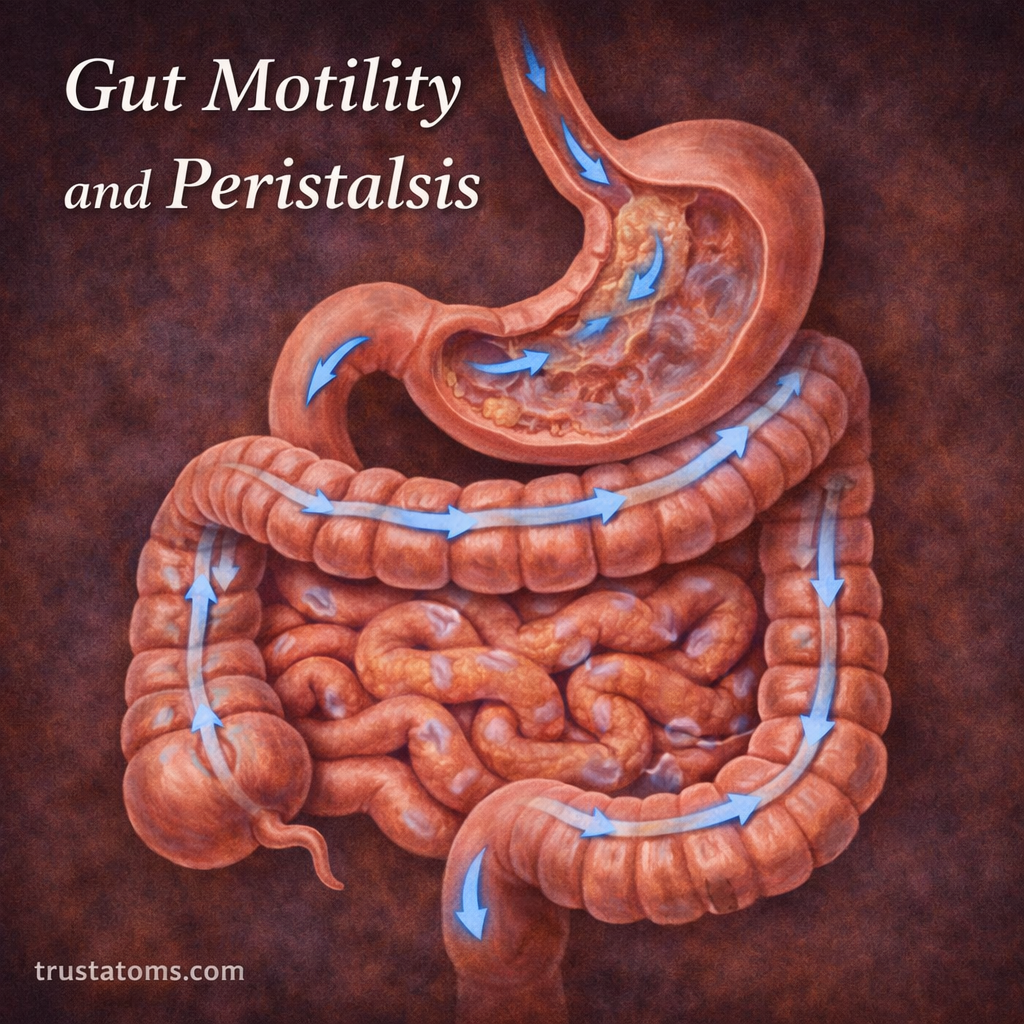
Gut Motility and Peristalsis: How Food Moves Through Your Digestive System

Illustration showing peristalsis and gut motility with wave-like muscle contractions moving food through the digestive tract.
Diagram illustrating peristalsis and gut motility, showing how wave-like contractions move food through the digestive system. trustatoms.com

Your digestive system isn’t just about breaking down food—it’s also about moving it efficiently from one stage to the next. This movement is known as gut motility, and one of its most important mechanisms is peristalsis.

In this guide, you’ll learn how gut motility works, what peristalsis is, and why this process is essential for digestion and overall health.

Continue reading “Gut Motility and Peristalsis: How Food Moves Through Your Digestive System”

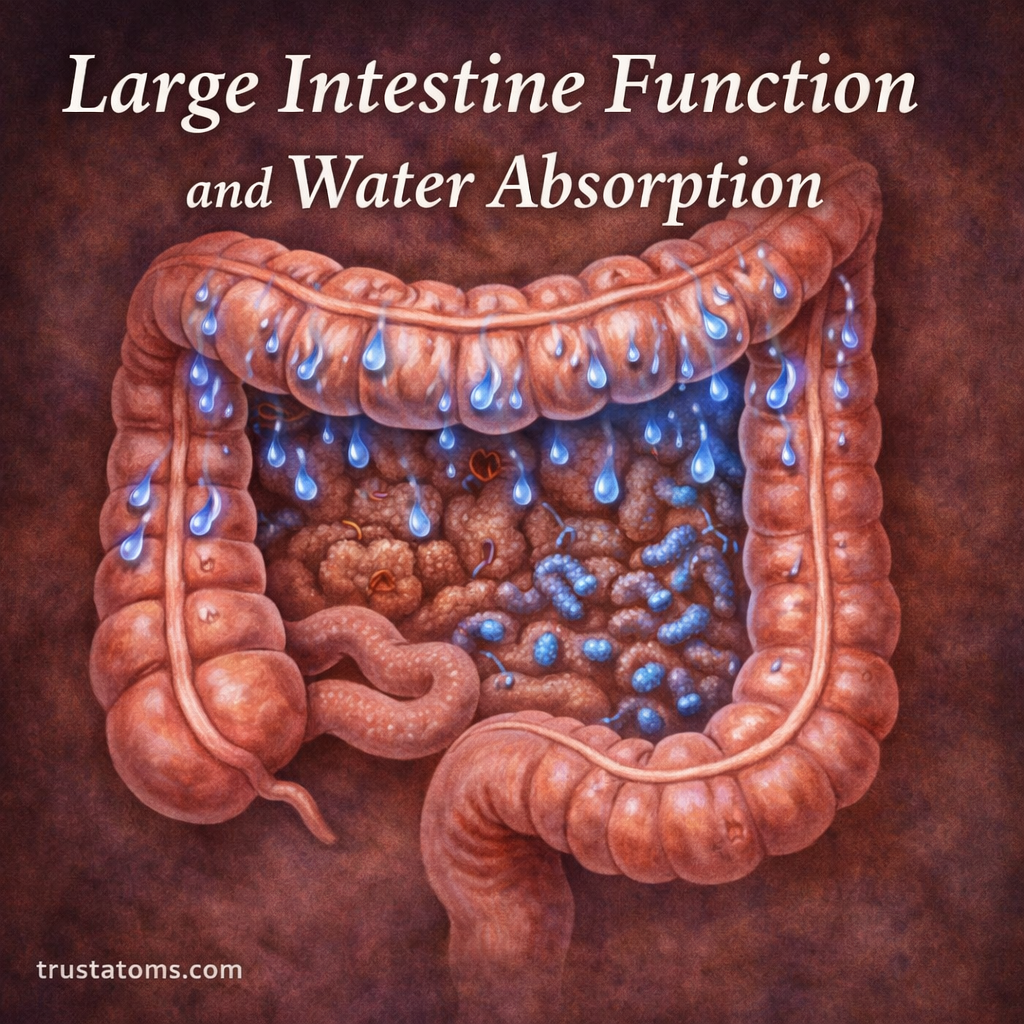
Large Intestine Function and Water Absorption: How Your Body Maintains Balance

Illustration of the large intestine showing water absorption and the role of gut bacteria in digestion.
Diagram of the large intestine highlighting water absorption and the role of gut bacteria in forming solid waste. trustatoms.com

The large intestine plays a crucial role in the final stages of digestion. While most nutrient absorption happens earlier in the digestive tract, the large intestine focuses on water balance, waste formation, and maintaining gut health.

In this guide, you’ll learn how the large intestine works, how it absorbs water, and why this process is essential for overall health.

Continue reading “Large Intestine Function and Water Absorption: How Your Body Maintains Balance”

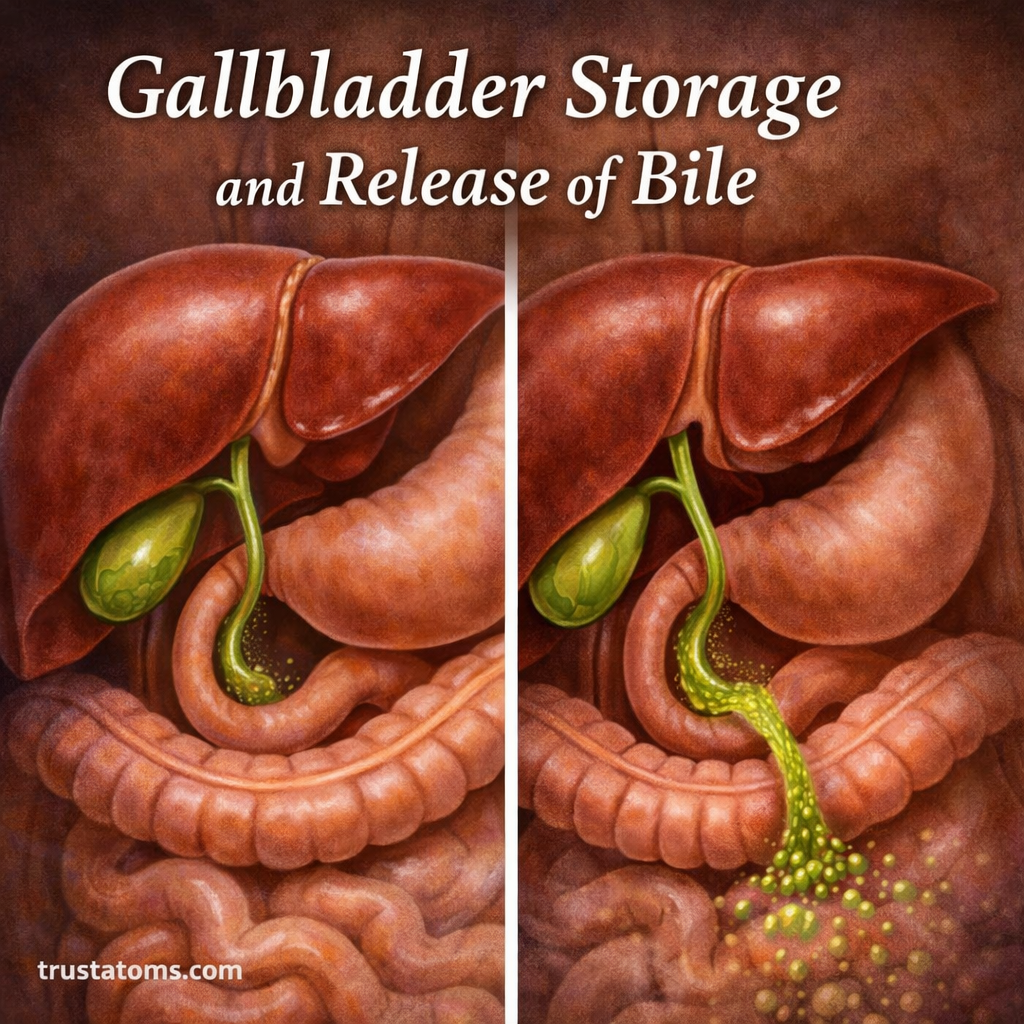
Gallbladder Storage and Release of Bile: How Your Body Manages Fat Digestion

Illustration showing the gallbladder storing bile and releasing it into the small intestine during digestion.
Diagram of the gallbladder storing bile and releasing it into the small intestine to aid fat digestion. trustatoms.com

The gallbladder may be small, but it plays a powerful role in digestion. Its main function is to store and release bile—a substance essential for breaking down fats.

In this guide, you’ll learn how the gallbladder works, how bile is stored and released, and why this process is crucial for efficient digestion.

Continue reading “Gallbladder Storage and Release of Bile: How Your Body Manages Fat Digestion”

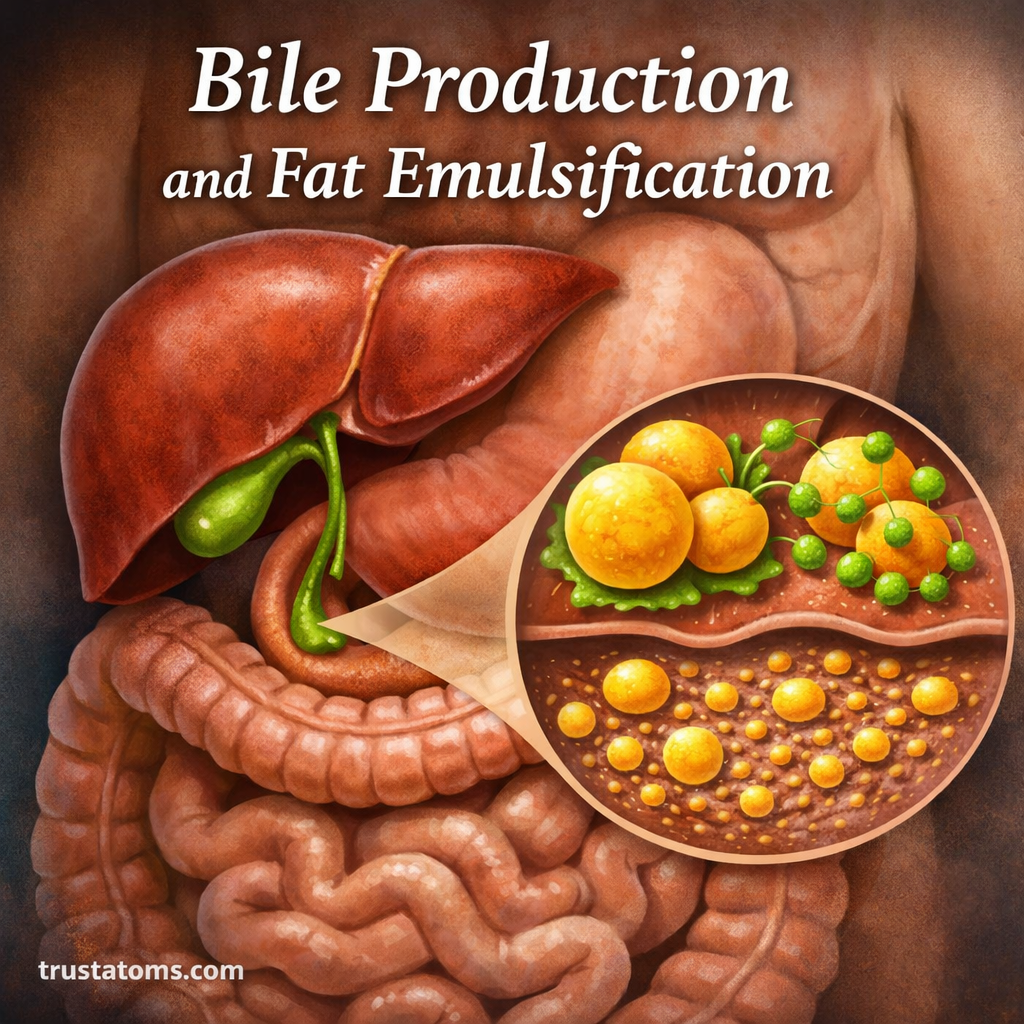
Bile Production and Fat Emulsification: How Your Body Digests Fats

Illustration of bile production in the liver and fat emulsification process in the small intestine.
Diagram showing how bile from the liver and gallbladder helps break down fats in the small intestine. trustatoms.com

Understanding how your body processes fats is essential to understanding digestion as a whole. One of the key players in this process is bile—a substance produced by the liver that makes fat digestion possible.

In this guide, we’ll break down how bile is produced, where it’s stored, and how it helps your body absorb fats efficiently.

Continue reading “Bile Production and Fat Emulsification: How Your Body Digests Fats”

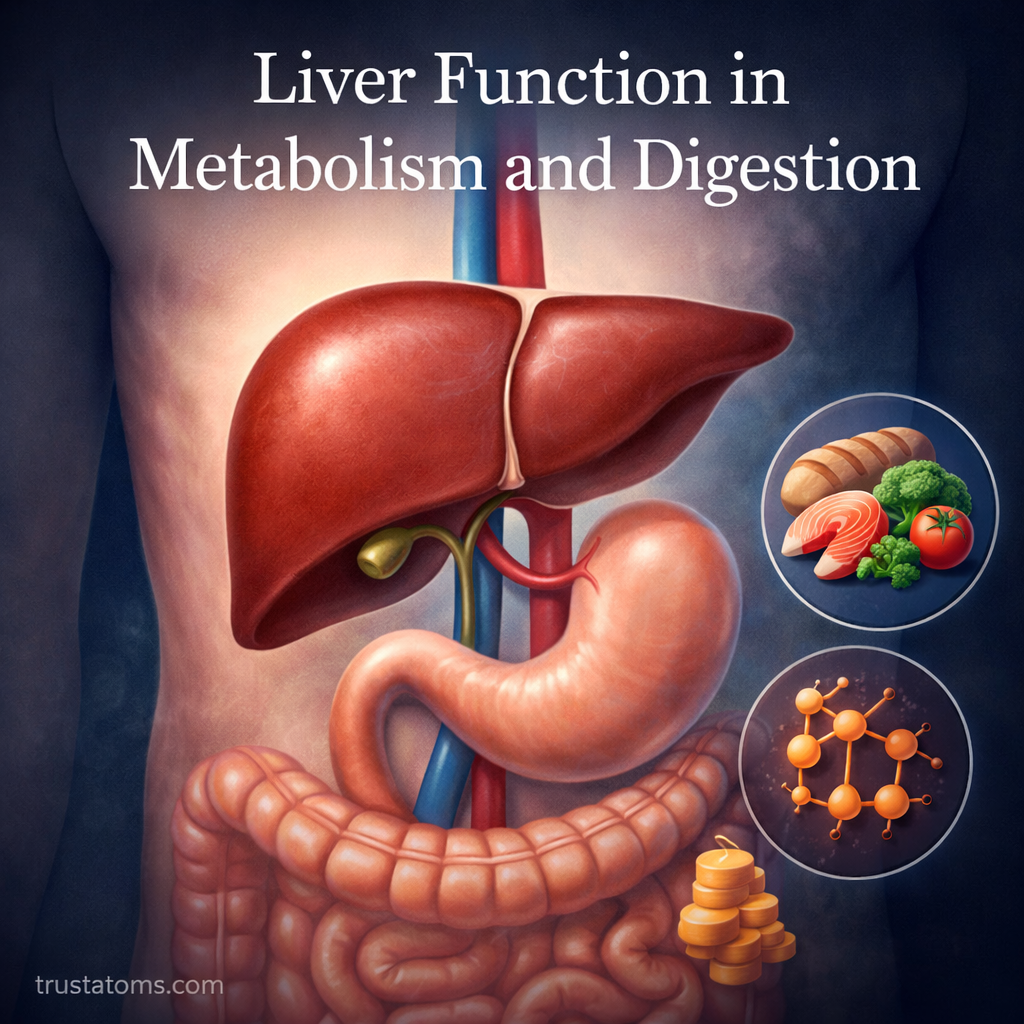
Liver Function in Metabolism and Digestion

Simplified illustration of the liver showing its role in metabolism and digestion with surrounding digestive organs.
Simplified diagram showing the liver’s role in digestion and metabolism. trustatoms.com.

The liver is one of the most important organs in the human body, performing hundreds of essential functions that support digestion, metabolism, and overall health. While it is best known for processing nutrients and detoxifying harmful substances, the liver also plays a key role in digestion through the production of bile.

Understanding how the liver functions helps explain how the body manages nutrients, energy, and waste efficiently.

Continue reading “Liver Function in Metabolism and Digestion”