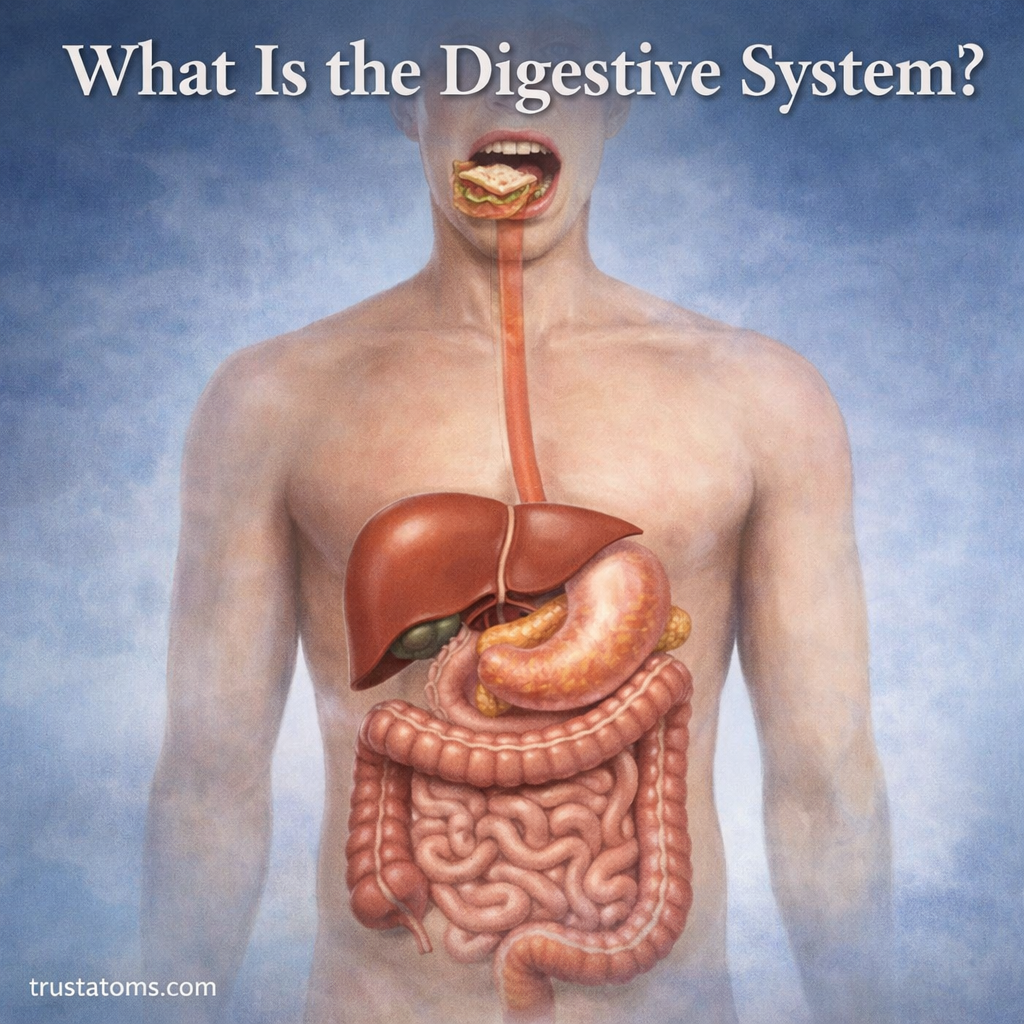
What Is the Digestive System?

Illustration of the human digestive system showing the mouth, esophagus, stomach, liver, and intestines.
Overview diagram of the human digestive system highlighting key organs involved in digestion. trustatoms.com.

The digestive system is a complex network of organs that work together to break down food, absorb nutrients, and eliminate waste. It plays a vital role in keeping the body energized, nourished, and functioning properly.

Every time you eat, your digestive system begins a coordinated process that transforms food into usable fuel for cells, tissues, and organs.

Continue reading “What Is the Digestive System?”
Knee Joint Mechanics and Force Transmission

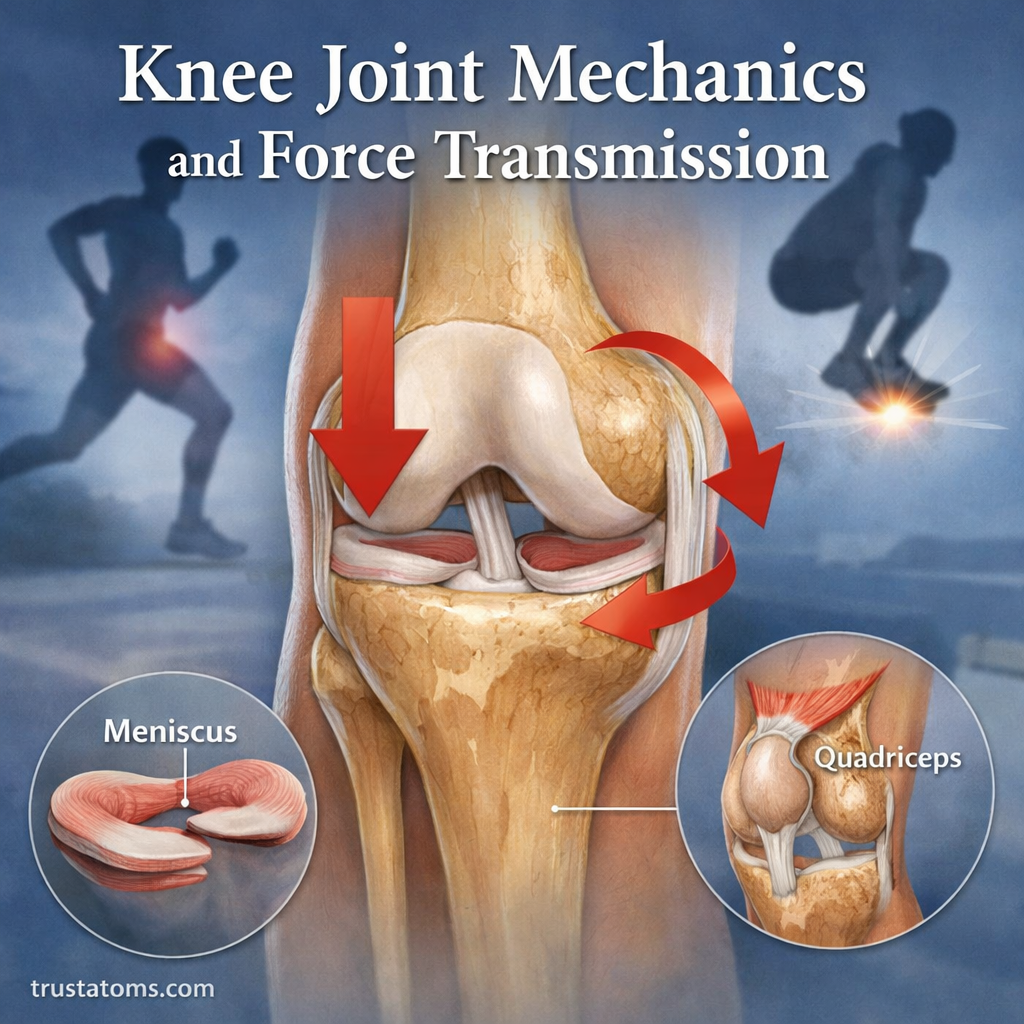
Illustration of knee joint mechanics showing force transmission through the femur, tibia, and patella with directional arrows.
Simple diagram illustrating how forces move through the knee joint during movement. trustatoms.com

The knee joint is one of the most complex and heavily used structures in the human body. It must balance mobility and stability while transmitting forces between the upper and lower limbs during everyday activities like walking, running, and jumping.

Understanding how the knee works mechanically—and how it handles force—can help explain everything from athletic performance to common injuries.

Continue reading “Knee Joint Mechanics and Force Transmission”

Hip Joint Mechanics and Stability

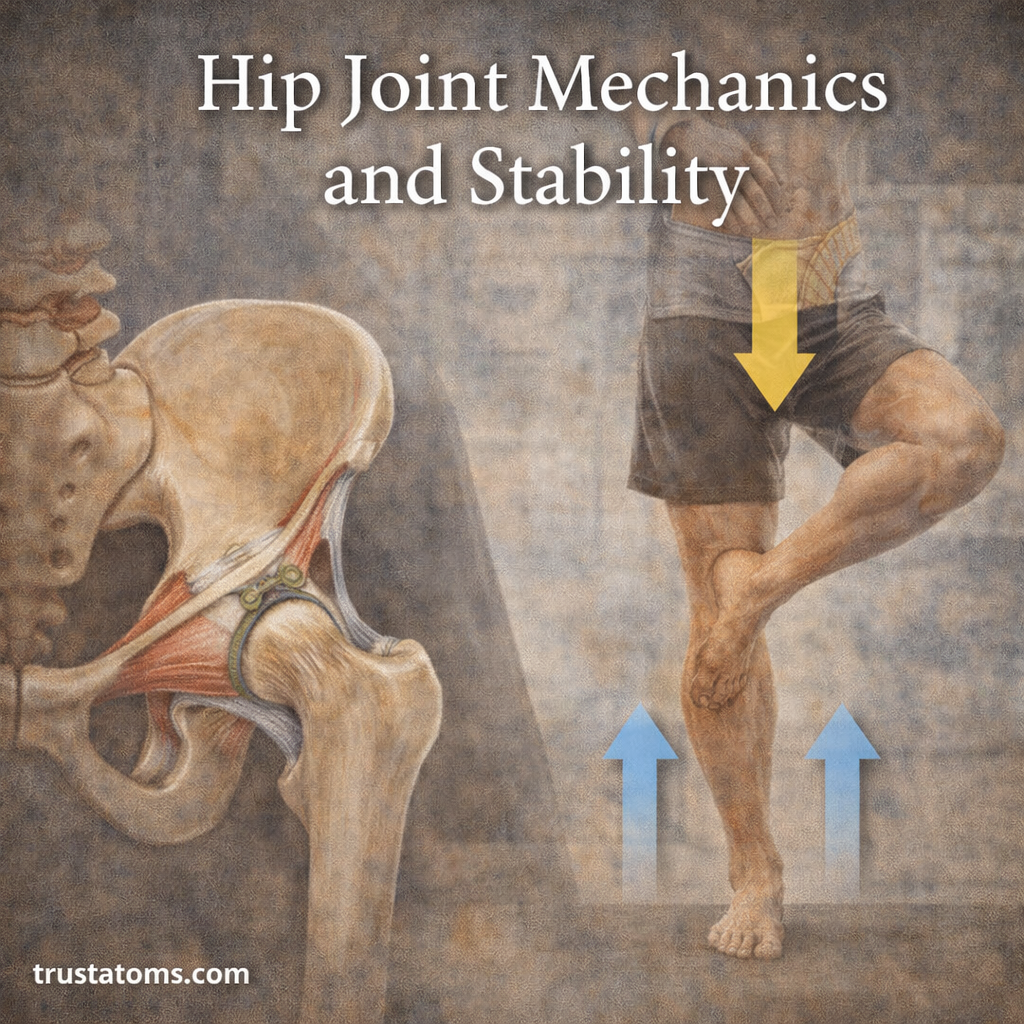
Illustration of the hip joint showing anatomy and load distribution during single-leg balance.
Visual overview of hip joint mechanics and stability during weight-bearing movement. trustatoms.com.

The hip joint is one of the most important structures in the human body, responsible for supporting body weight, enabling movement, and maintaining balance. Unlike the shoulder, which prioritizes mobility, the hip is designed to provide both strength and stability while still allowing a wide range of motion.

Understanding hip joint mechanics and stability helps explain how we walk, run, lift, and maintain posture—and why hip health is essential for overall movement.

Continue reading “Hip Joint Mechanics and Stability”

Shoulder Joint Mechanics and Mobility

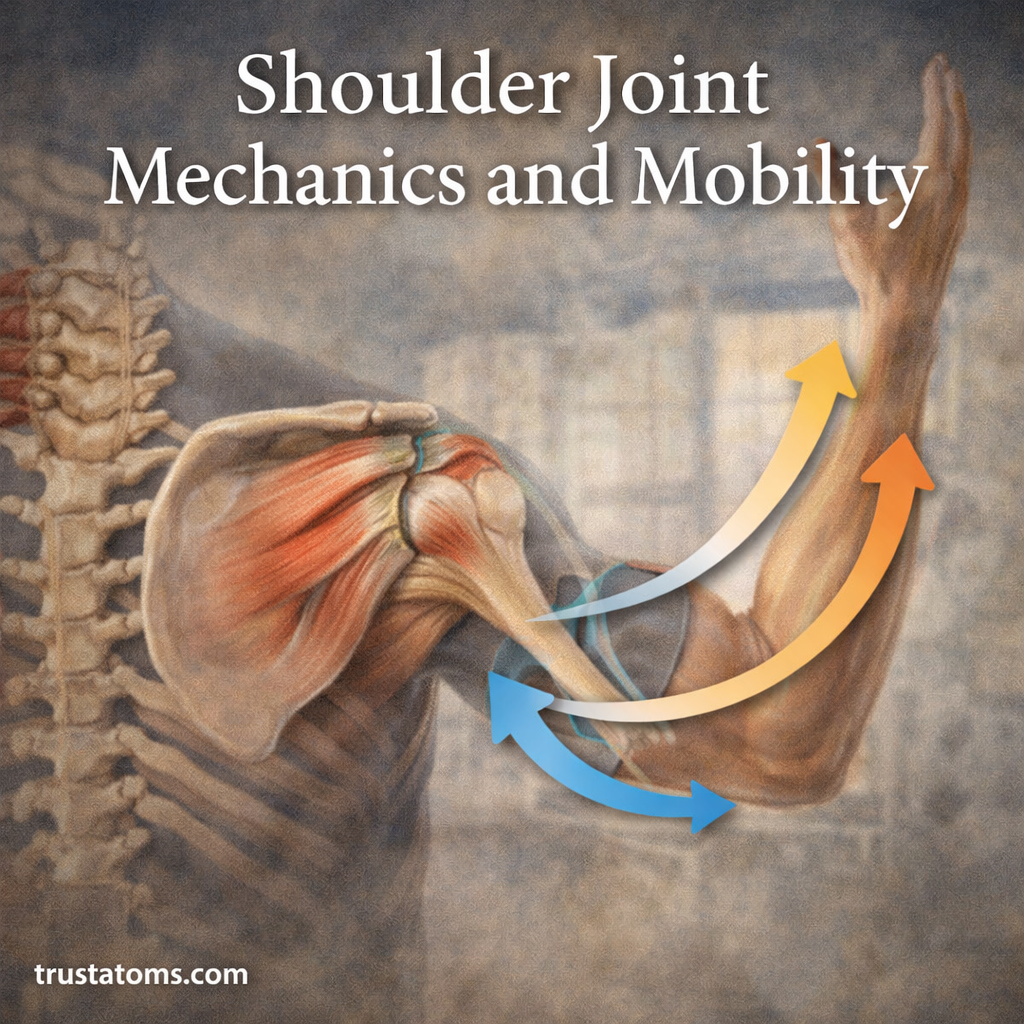
Illustration of the shoulder joint showing muscles, bones, and movement directions during arm motion.
Visual overview of shoulder joint mechanics and mobility during arm movement. trustatoms.com.

The shoulder joint is one of the most mobile and complex joints in the human body. It allows a wide range of motion necessary for daily activities such as reaching, lifting, throwing, and pushing. However, this high level of mobility comes with a trade-off—reduced stability compared to other joints.

Understanding shoulder joint mechanics and mobility helps explain how movement is produced, how injuries occur, and how to maintain long-term joint health.

Continue reading “Shoulder Joint Mechanics and Mobility”

Load Bearing in the Spine

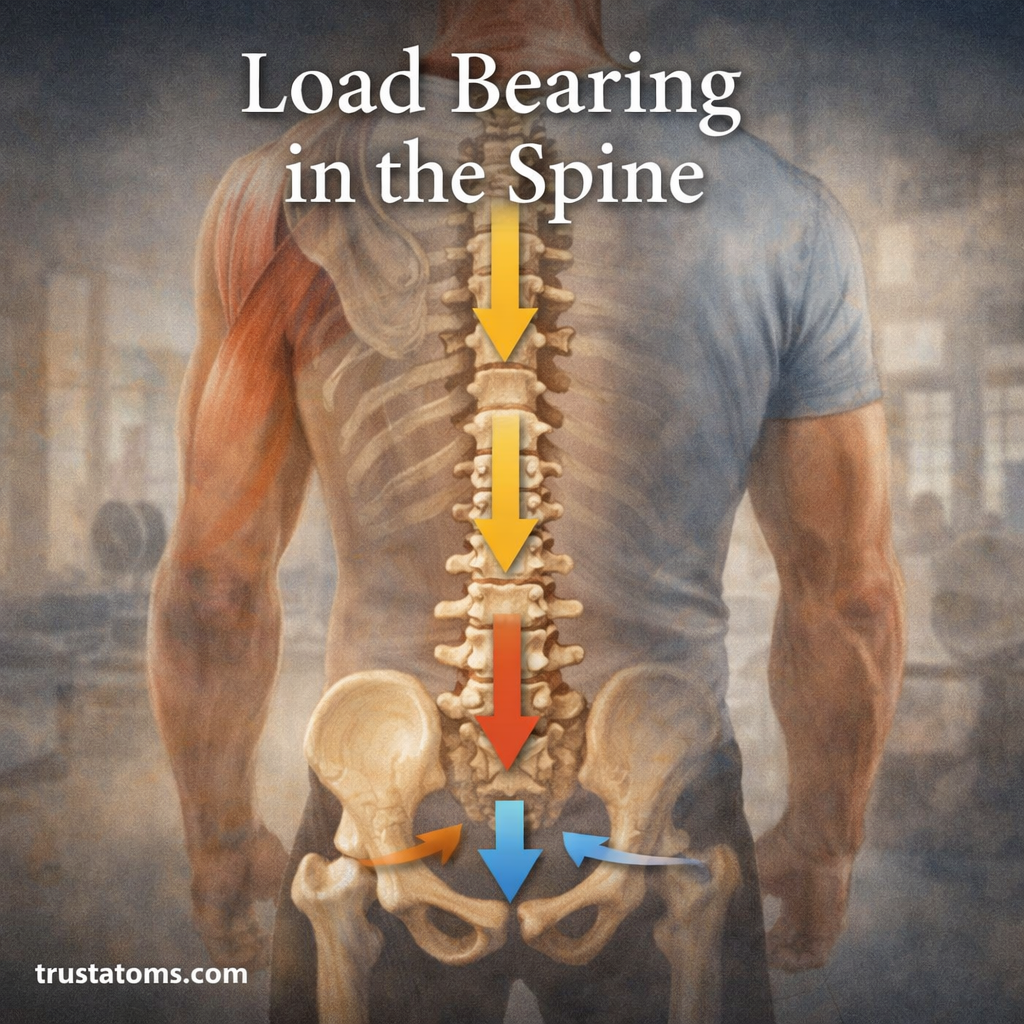
Illustration of the human spine showing load distribution from the upper back through the lumbar region into the pelvis.
Visual representation of how the spine distributes and transfers load through the body. trustatoms.com.

Load bearing in the spine refers to how the vertebral column supports, distributes, and transfers weight throughout the body. Every time you stand, sit, walk, or lift, your spine manages forces from gravity, body mass, and external loads.

Understanding how the spine handles these forces is essential for maintaining posture, preventing injury, and improving overall movement efficiency.

Continue reading “Load Bearing in the Spine”

Torque Production at Joints

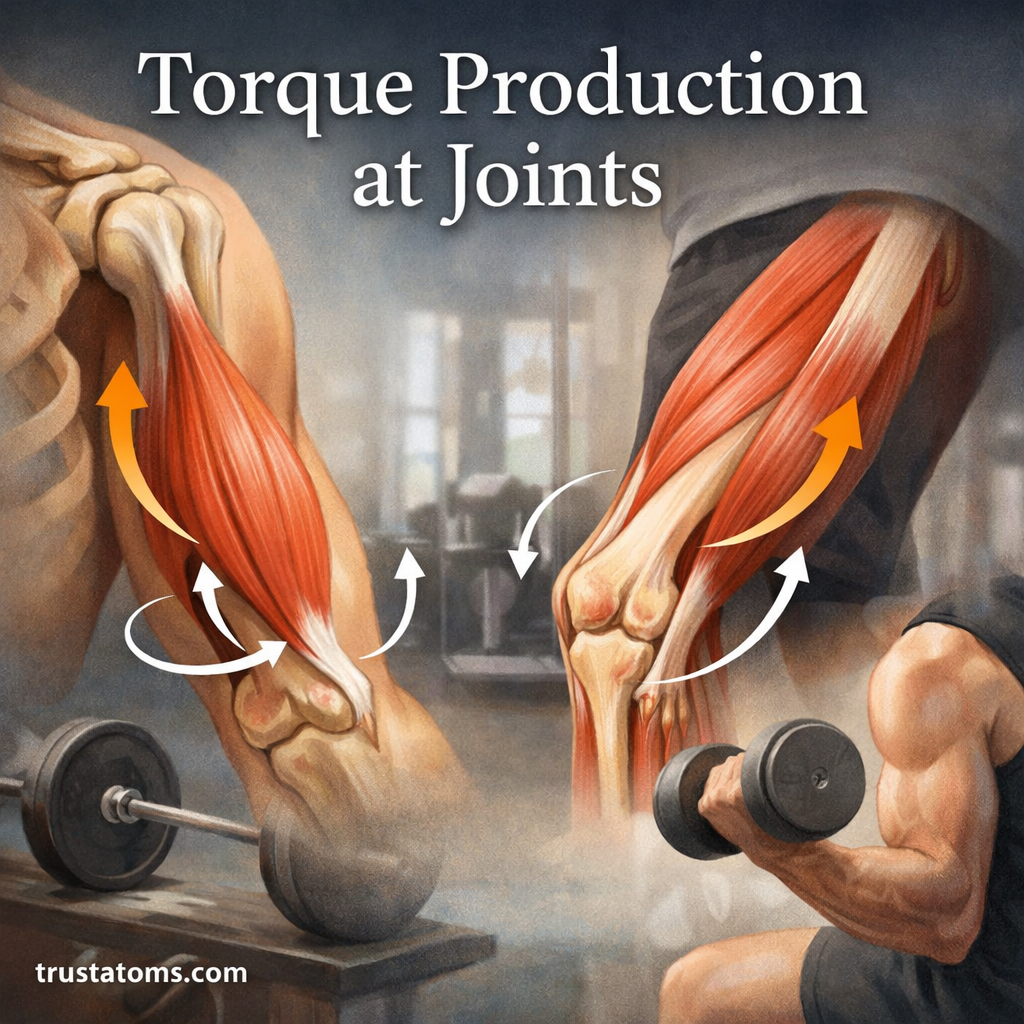
Illustration showing torque production at joints with muscles generating rotational force at the elbow and knee.
Visual representation of how muscles generate torque to create movement at joints. trustatoms.com.

Torque production at joints is a fundamental concept in human movement, explaining how muscles generate rotational force to move bones around joints. Whether you’re lifting a weight, walking up stairs, or throwing a ball, torque is the key mechanical principle that allows your body to create motion.

Understanding how torque works in the body helps explain strength, efficiency, injury risk, and performance in both everyday activities and athletic movements.

Continue reading “Torque Production at Joints”

Mechanical Work in Human Movement: How the Body Produces Force and Motion

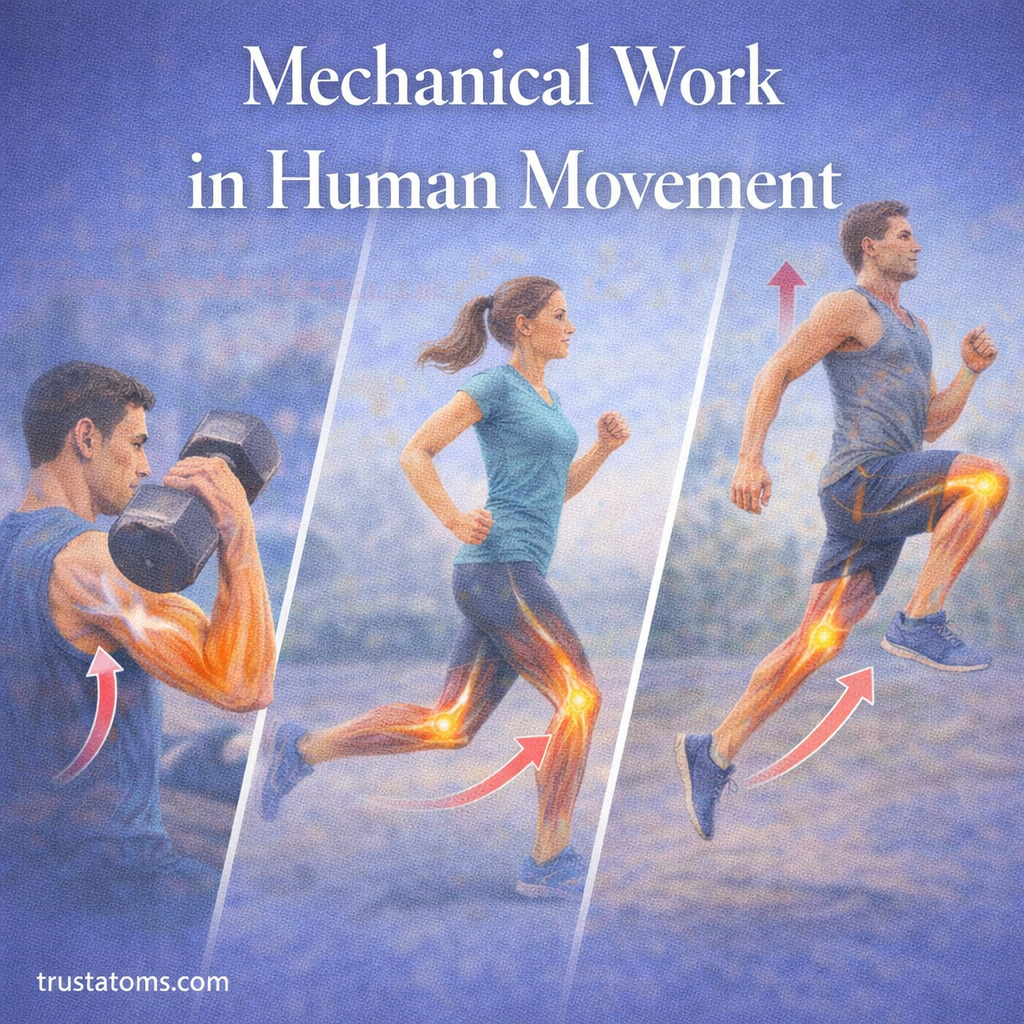
Illustration showing mechanical work in human movement with examples of weightlifting, running, and jumping highlighting muscle activity.
Mechanical work in human movement demonstrated through lifting, running, and jumping actions.

Every time you walk, lift an object, or climb stairs, your body is performing mechanical work. This concept comes from physics but applies directly to human anatomy and movement. Understanding mechanical work helps explain how muscles generate force, how energy is used, and how movement becomes more efficient.

Continue reading “Mechanical Work in Human Movement: How the Body Produces Force and Motion”

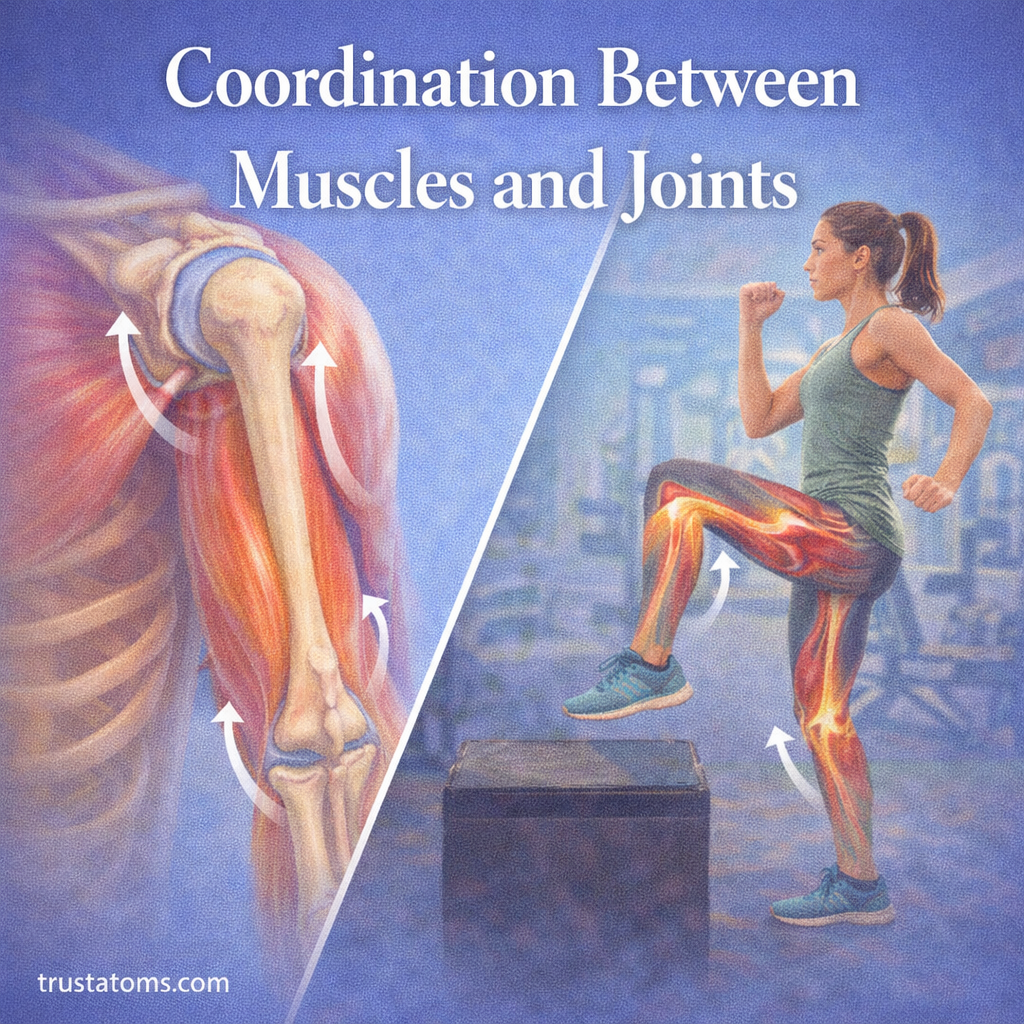
Coordination Between Muscles and Joints: How the Body Moves Smoothly

Illustration showing muscle and joint coordination with a shoulder joint diagram and a person performing a step-up exercise.
Coordination between muscles and joints demonstrated through joint movement and functional exercise.

Every movement you make—whether it’s walking, lifting, or typing—relies on precise coordination between muscles and joints. This coordination allows your body to move efficiently, maintain stability, and perform complex actions without conscious effort.

Understanding how muscles and joints work together can help improve movement quality, reduce injury risk, and enhance overall physical performance.

Continue reading “Coordination Between Muscles and Joints: How the Body Moves Smoothly”

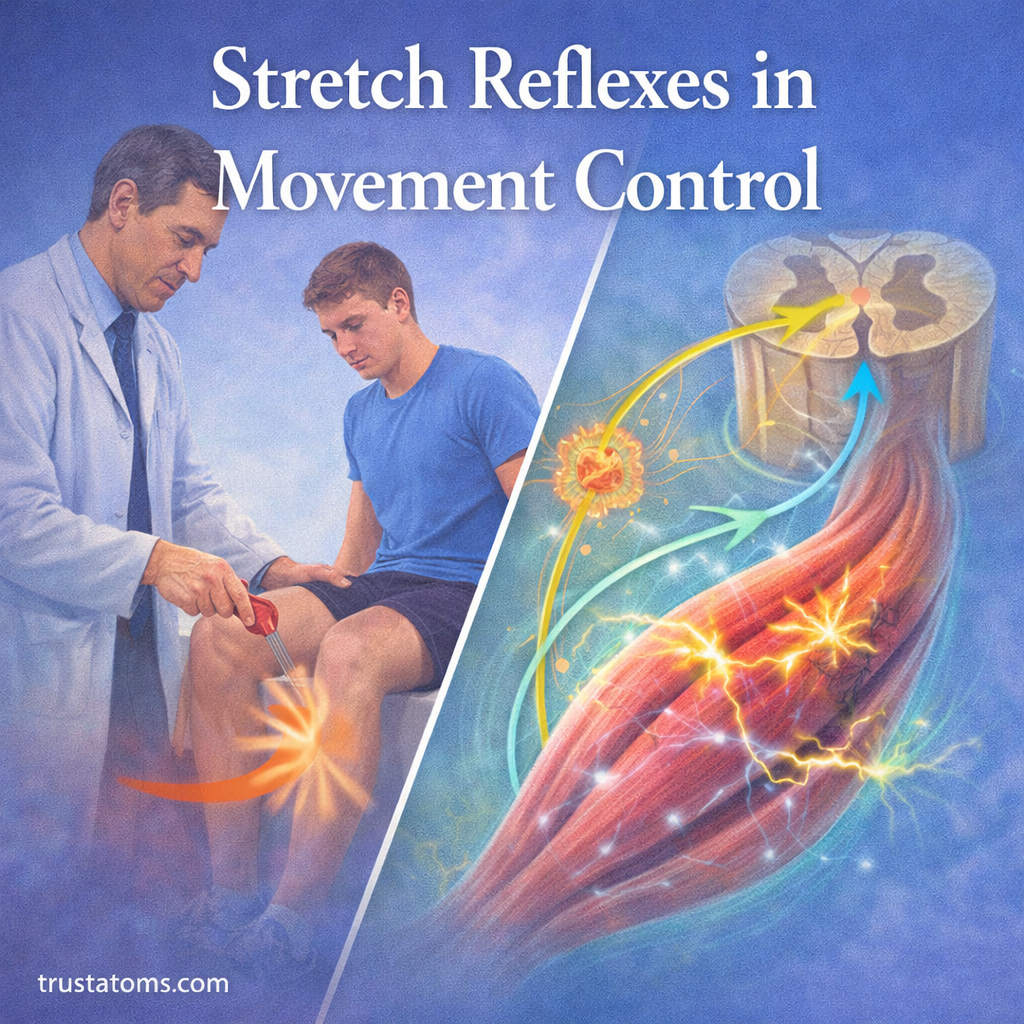
Stretch Reflexes in Movement Control: How the Body Reacts Instantly

Illustration showing a knee-jerk reflex test and neural pathway between muscle and spinal cord demonstrating stretch reflexes.
Stretch reflexes illustrated through knee-jerk response and muscle-to-spinal cord signaling.

The human body is constantly adjusting to maintain stability, coordination, and movement efficiency. One of the fastest and most important mechanisms behind this is the stretch reflex. This automatic response helps muscles react instantly to changes in length, protecting the body and supporting smooth movement.

Understanding stretch reflexes provides insight into how your nervous system and muscles work together in real time.

Continue reading “Stretch Reflexes in Movement Control: How the Body Reacts Instantly”

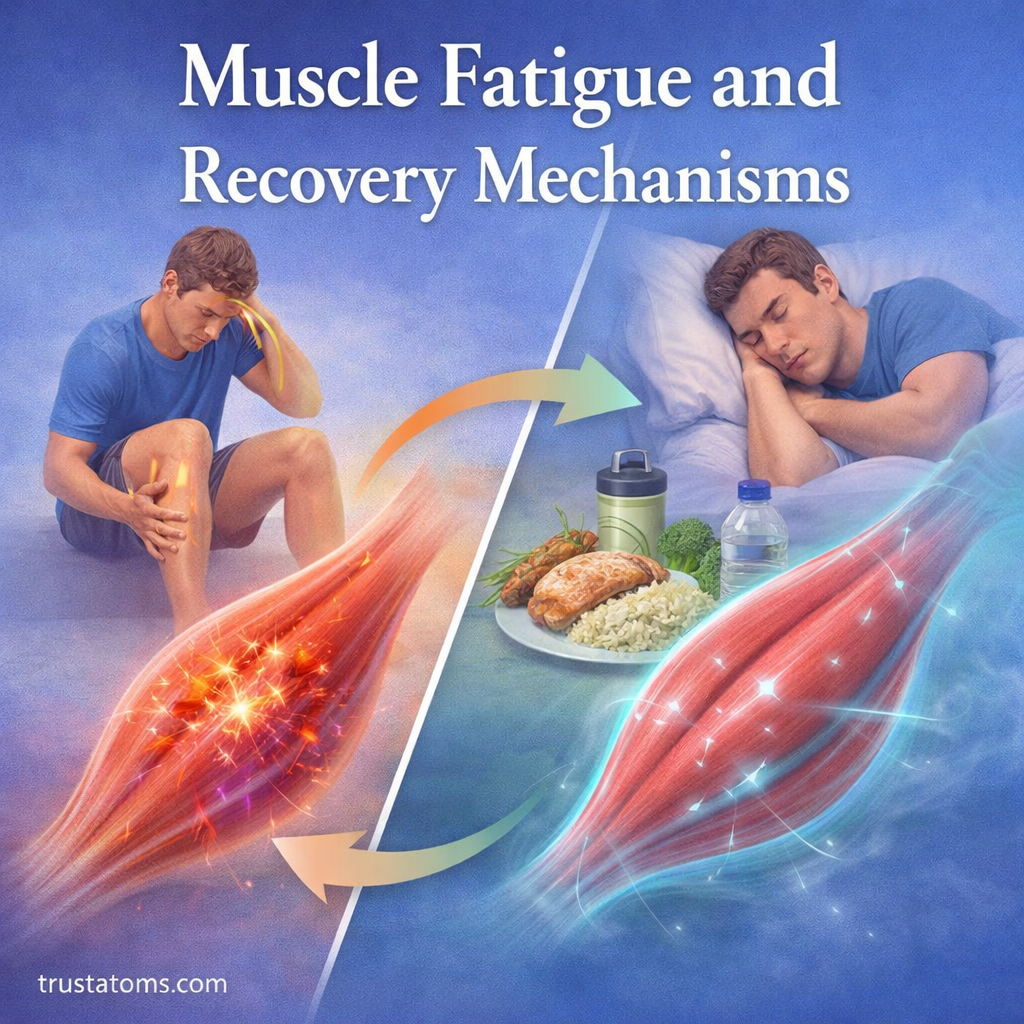
Muscle Fatigue and Recovery Mechanisms: How the Body Handles Stress and Repair

Illustration showing muscle fatigue with strain and recovery through rest, nutrition, and muscle repair processes.
Muscle fatigue and recovery illustrated through strain, rest, and repair processes.

Muscle fatigue is a natural part of physical activity. Whether you’re exercising, working, or performing repetitive tasks, your muscles eventually lose the ability to generate the same level of force. Fortunately, the body has built-in recovery mechanisms that repair and strengthen muscles over time.

Understanding how muscle fatigue and recovery work can help you improve performance, prevent injury, and optimize overall health.

Continue reading “Muscle Fatigue and Recovery Mechanisms: How the Body Handles Stress and Repair”