Balance Control in Postural Systems: How the Body Stays Upright

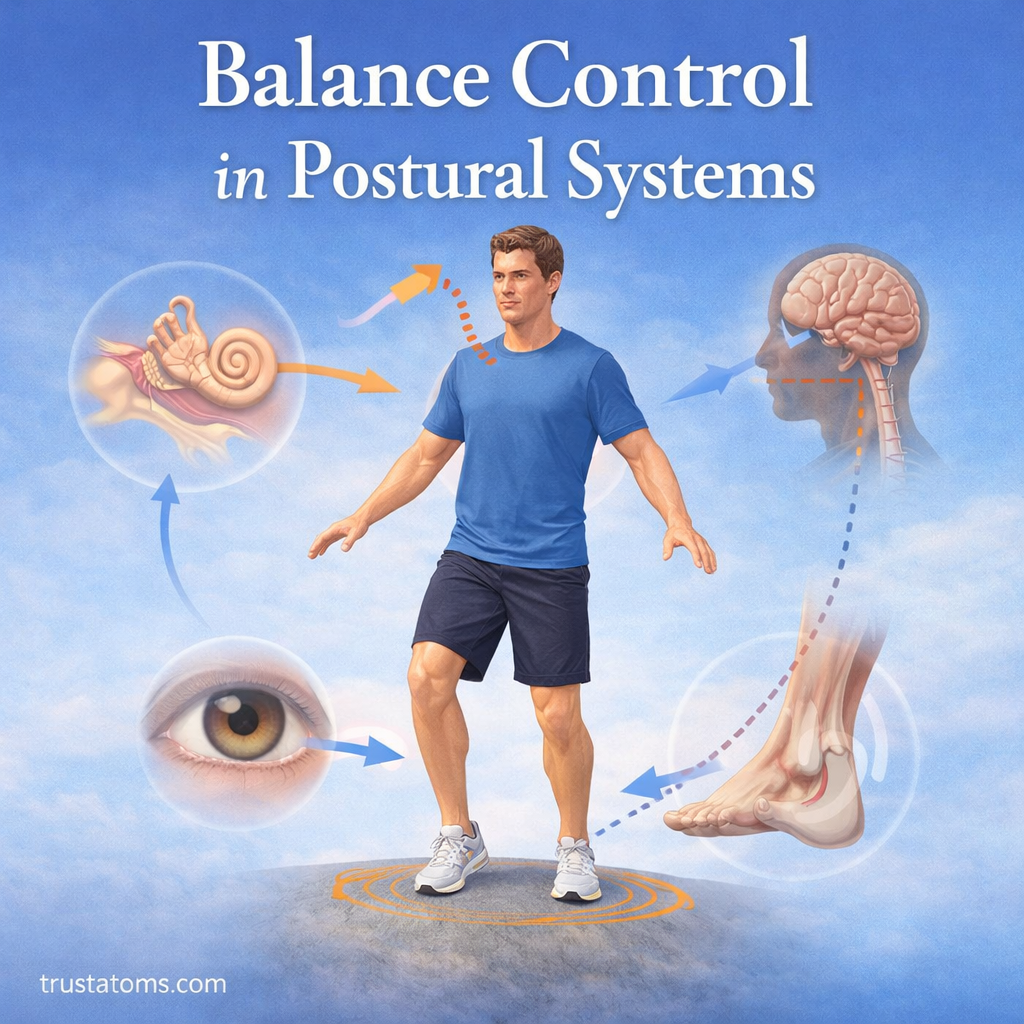
Illustration showing a man maintaining balance with visual, vestibular, and proprioceptive systems highlighted around the body.
Balance control illustrated through the interaction of visual, inner ear, and body awareness systems.

Balance is something most people take for granted—until it’s disrupted. Whether you’re standing still, walking, or reacting to sudden movement, your body is constantly working behind the scenes to maintain stability. This process is known as balance control in postural systems, and it involves a complex interaction between the brain, muscles, and sensory systems.

Continue reading “Balance Control in Postural Systems: How the Body Stays Upright”
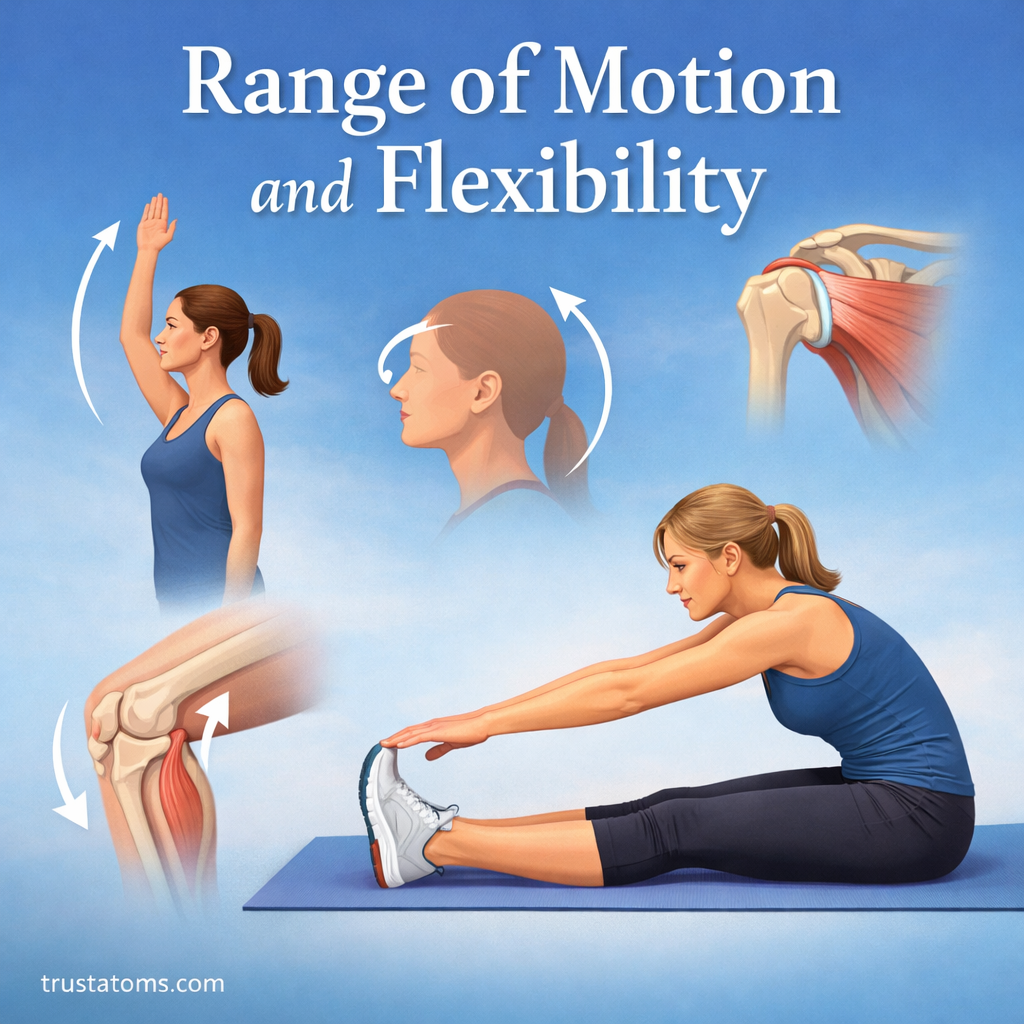
Range of Motion and Flexibility: What They Are and Why They Matter

Illustration showing a woman performing stretching exercises with joint movement diagrams representing range of motion and flexibility.
Range of motion and flexibility illustrated through stretching movements and joint mobility.

Understanding how your body moves is essential for maintaining long-term health, preventing injuries, and improving performance in everyday life. Two key concepts that often come up in this context are range of motion and flexibility. While they’re closely related, they are not exactly the same—and knowing the difference can help you train smarter.

Continue reading “Range of Motion and Flexibility: What They Are and Why They Matter”

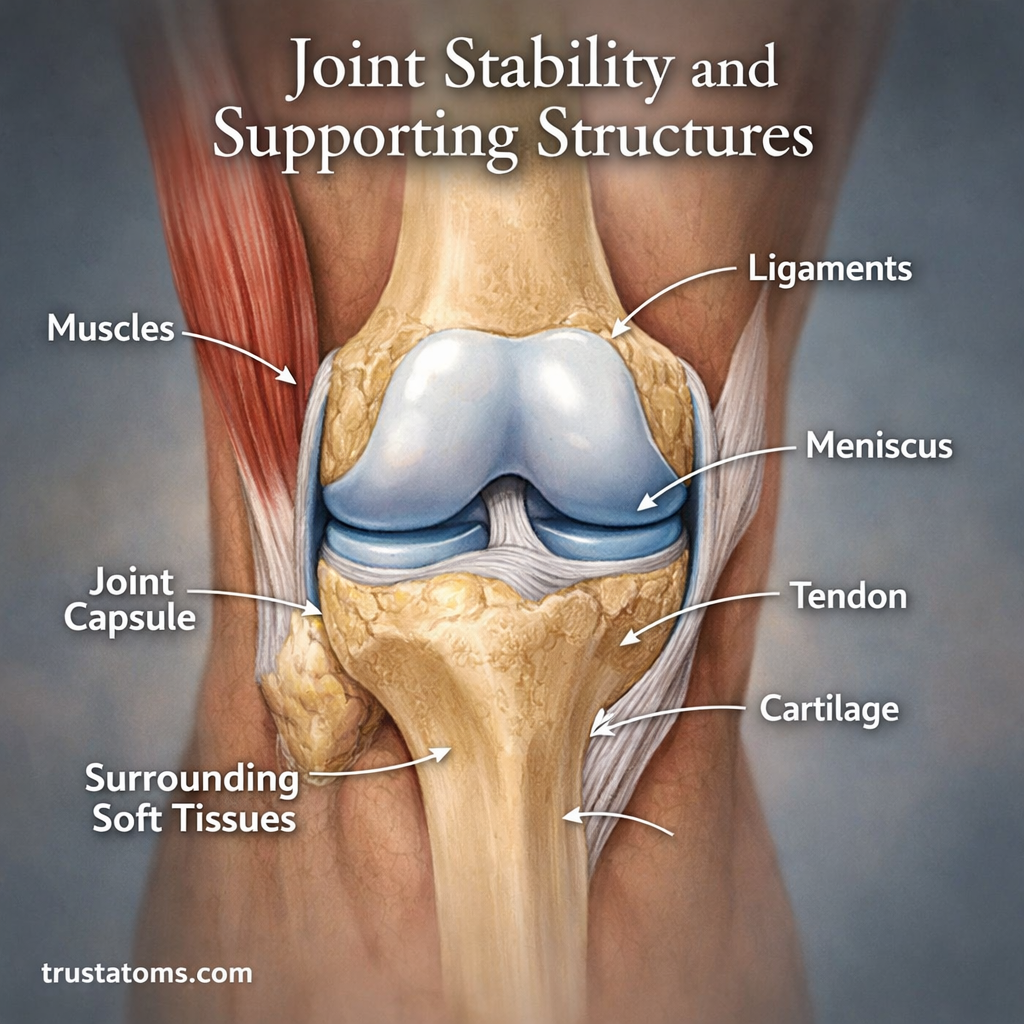
Joint Stability and Supporting Structures

Illustration of knee joint stability showing ligaments, cartilage, tendons, muscles, and joint capsule supporting the knee structure
The knee relies on ligaments, cartilage, tendons, muscles, and surrounding tissues to maintain alignment and control movement.

Joint stability is the ability of a joint to maintain controlled alignment and resist excessive movement under physical forces. Bones, ligaments, muscles, tendons, joint capsules, and sensory feedback work together to keep joints supported while allowing normal movement.

Understanding joint stability is an important part of human anatomy because every activity, from walking downstairs to lifting a grocery bag, requires a balance between mobility and support. Different joints achieve that balance through different combinations of structural and muscular control.

Continue reading “Joint Stability and Supporting Structures”

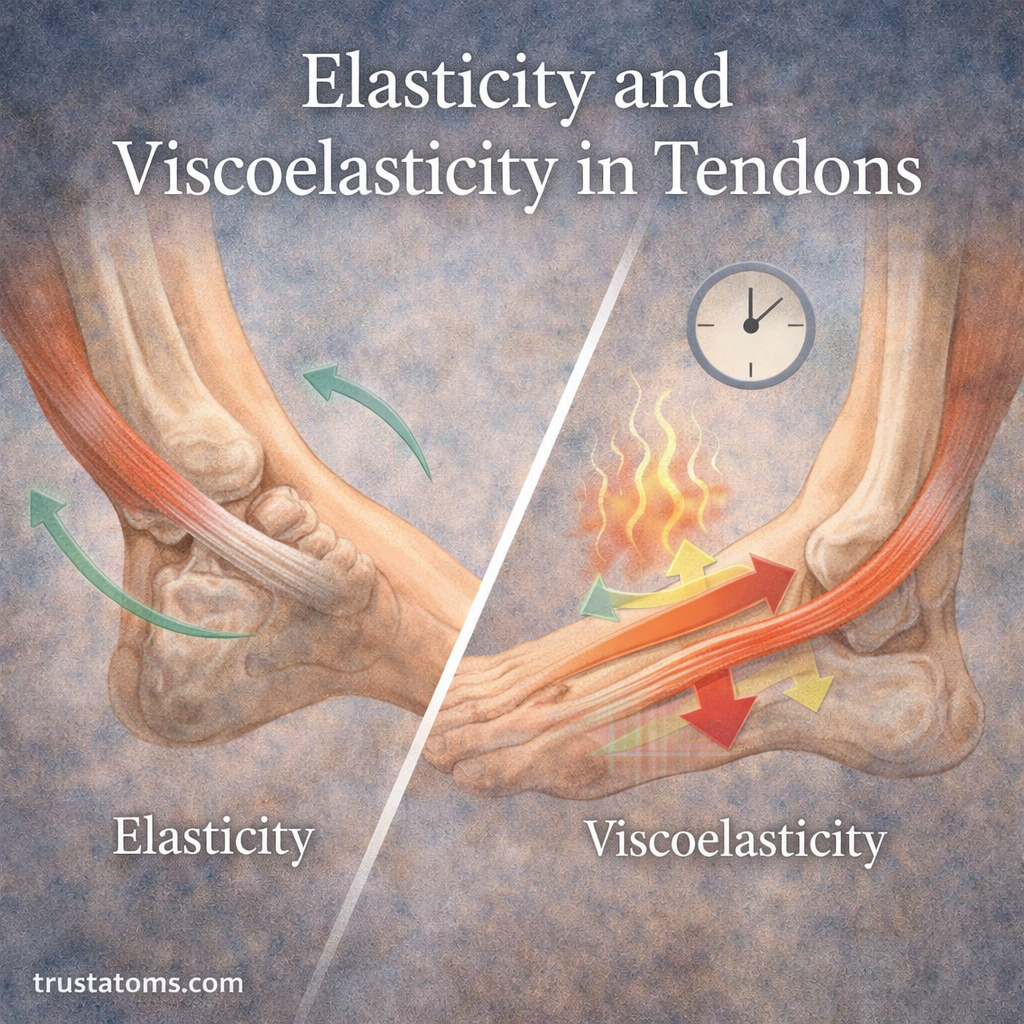
Elasticity and Viscoelasticity in Tendons

Illustration showing elasticity and viscoelasticity in tendons with stretching and time-dependent response examples.
Diagram illustrating how tendons exhibit elasticity and viscoelastic behavior during movement.

Tendon elasticity is the ability to deform under force and recover its original shape when the force is removed, while viscoelasticity describes how tendon deformation and recovery depend on loading speed and duration. Together, these mechanical properties allow tendons to transmit muscle forces, store and release elastic energy, and respond to repeated movements such as walking, running, and jumping.

These properties reflect the specialized structure of tendons and illustrate how tissue organization influences movement in human anatomy. Understanding their differences helps explain why tendons behave like springs during rapid movement but respond differently when stretched or loaded for longer periods.

Continue reading “Elasticity and Viscoelasticity in Tendons”

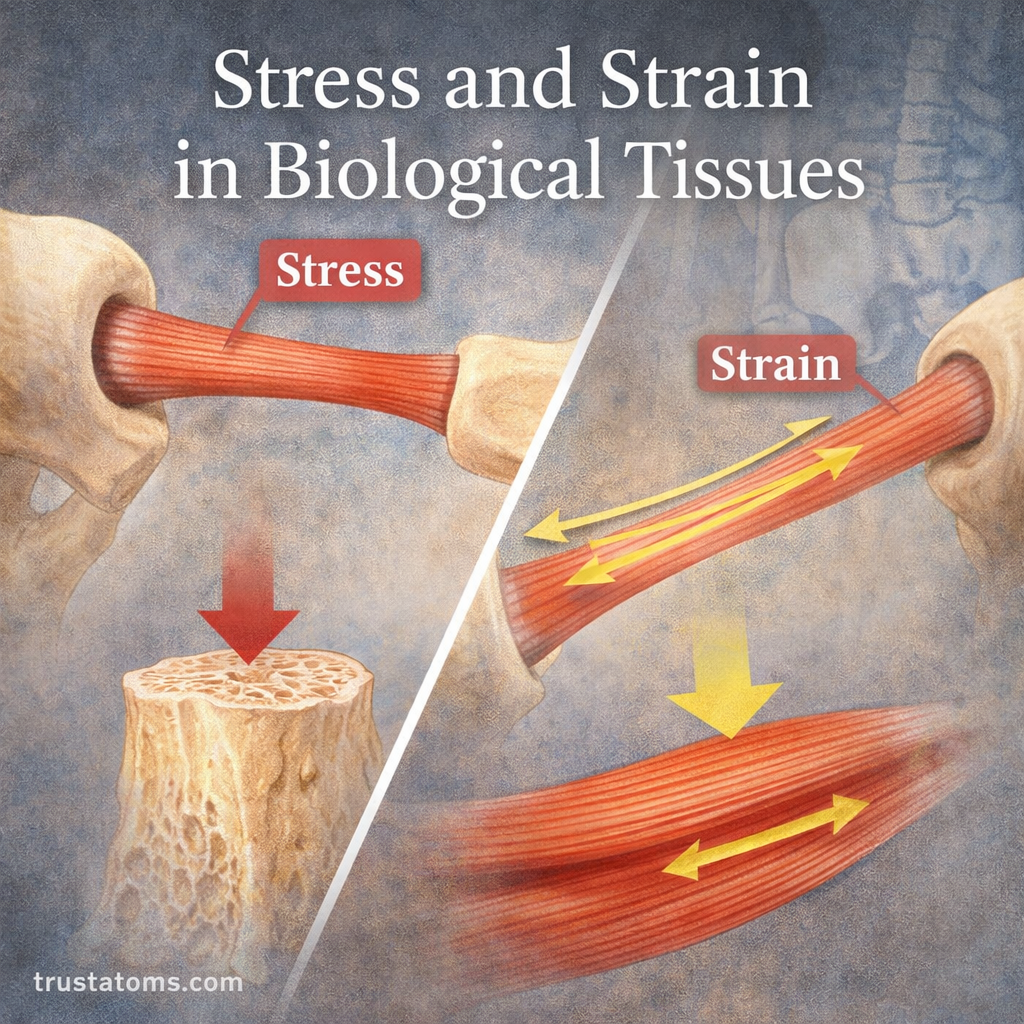
Stress and Strain in Biological Tissues

Illustration showing stress and strain in biological tissues with tendon stretching and bone compression examples.
Diagram illustrating how stress and strain affect biological tissues like tendons and bones. trustatoms.com

Biological tissues are constantly exposed to forces during everyday activities like walking, lifting, and even breathing. Understanding how these tissues respond to forces is essential in fields like anatomy, biomechanics, medicine, and physical therapy.

Two key concepts used to describe how tissues respond to forces are stress and strain. These principles help explain how bones, muscles, tendons, and ligaments bear loads, adapt, and sometimes fail.

Continue reading “Stress and Strain in Biological Tissues”

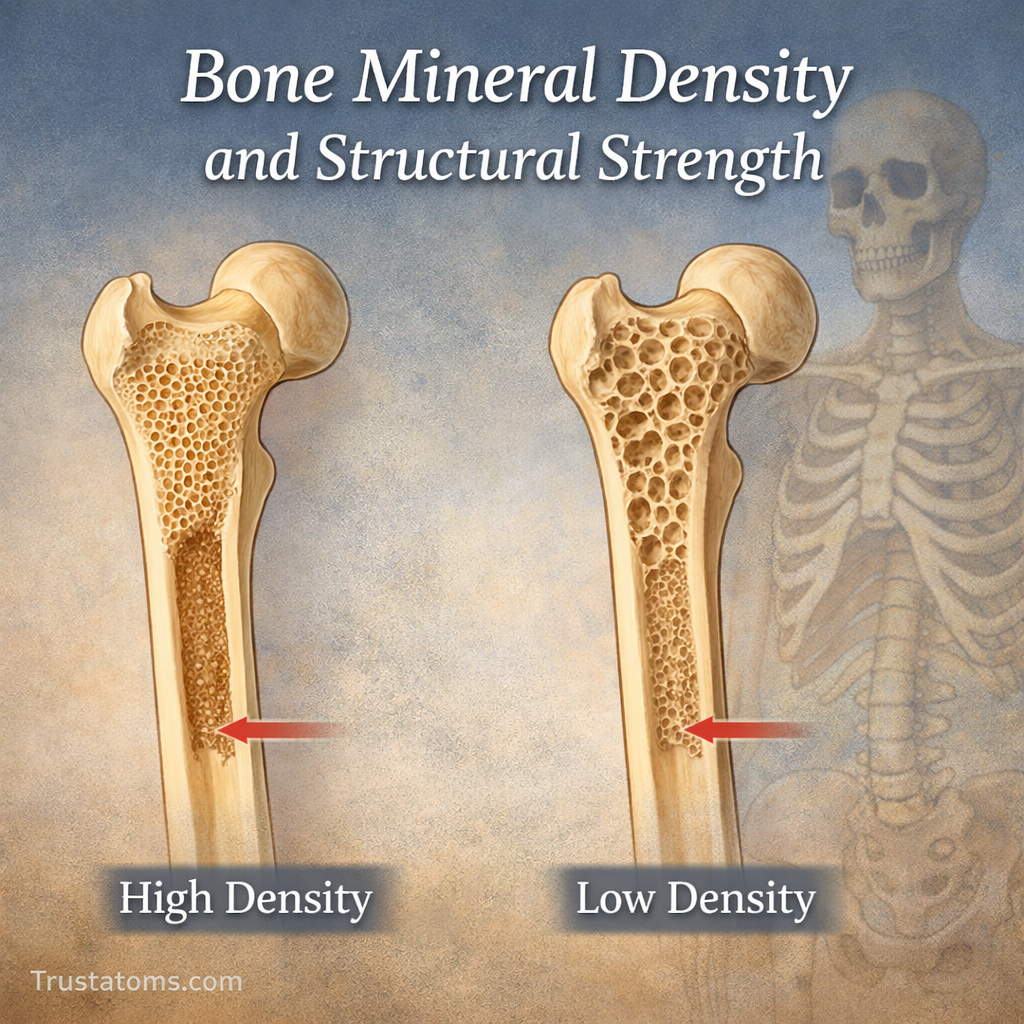
Bone Mineral Density and Structural Strength

Illustration comparing high and low bone mineral density showing differences in internal bone structure and strength.
Bones with lower mineral density often have reduced structural strength, although fracture resistance also depends on bone architecture and material quality.

Bone mineral density (BMD) measures the amount of mineral in bone and helps estimate how well bones resist fractures. Higher BMD generally indicates stronger bones, but structural strength also depends on bone shape, internal architecture, and the quality of the bone tissue.

In human anatomy, bones provide support, protect organs, and withstand forces generated by movement. Understanding mineral density alongside bone structure explains why some bones fracture under relatively small loads while others tolerate substantial physical stress.

Continue reading “Bone Mineral Density and Structural Strength”

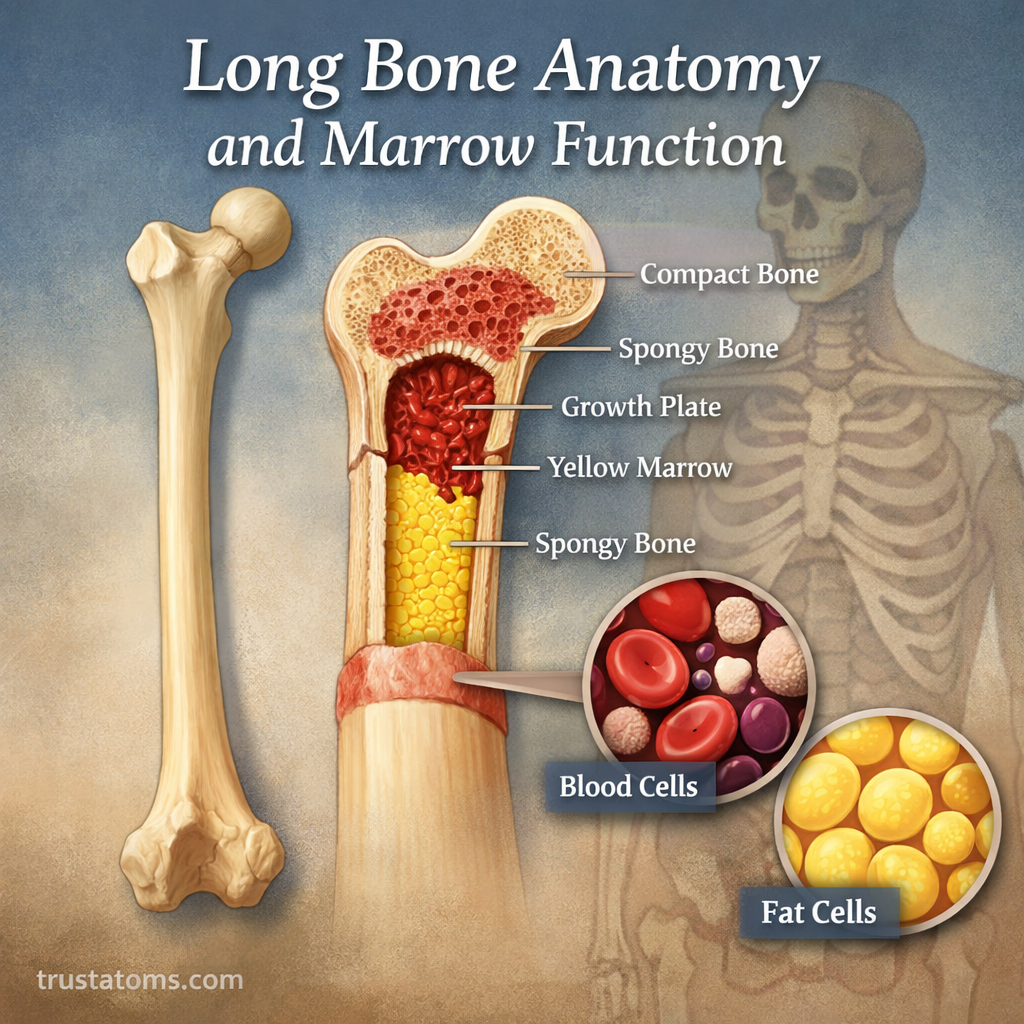
Long Bone Anatomy and Marrow Function

Long bone anatomy illustration showing compact bone, spongy bone, red and yellow marrow, and growth plate structure.
A long bone contains a strong outer layer, an internal marrow cavity, spongy bone near its ends, and growth regions that develop during childhood.

Long bones are elongated skeletal structures that support body weight, act as levers for movement, and contain marrow within their internal spaces. Red bone marrow produces blood cells, while yellow marrow contains abundant fat cells and contributes to energy storage.

Their design combines a strong outer shell with a lighter internal framework, allowing bones to withstand everyday forces without being completely solid. Understanding this arrangement connects human anatomy with movement, growth, and blood cell production.

This article explores the anatomy of long bones and the role of bone marrow in keeping the body functioning properly.

Continue reading “Long Bone Anatomy and Marrow Function”

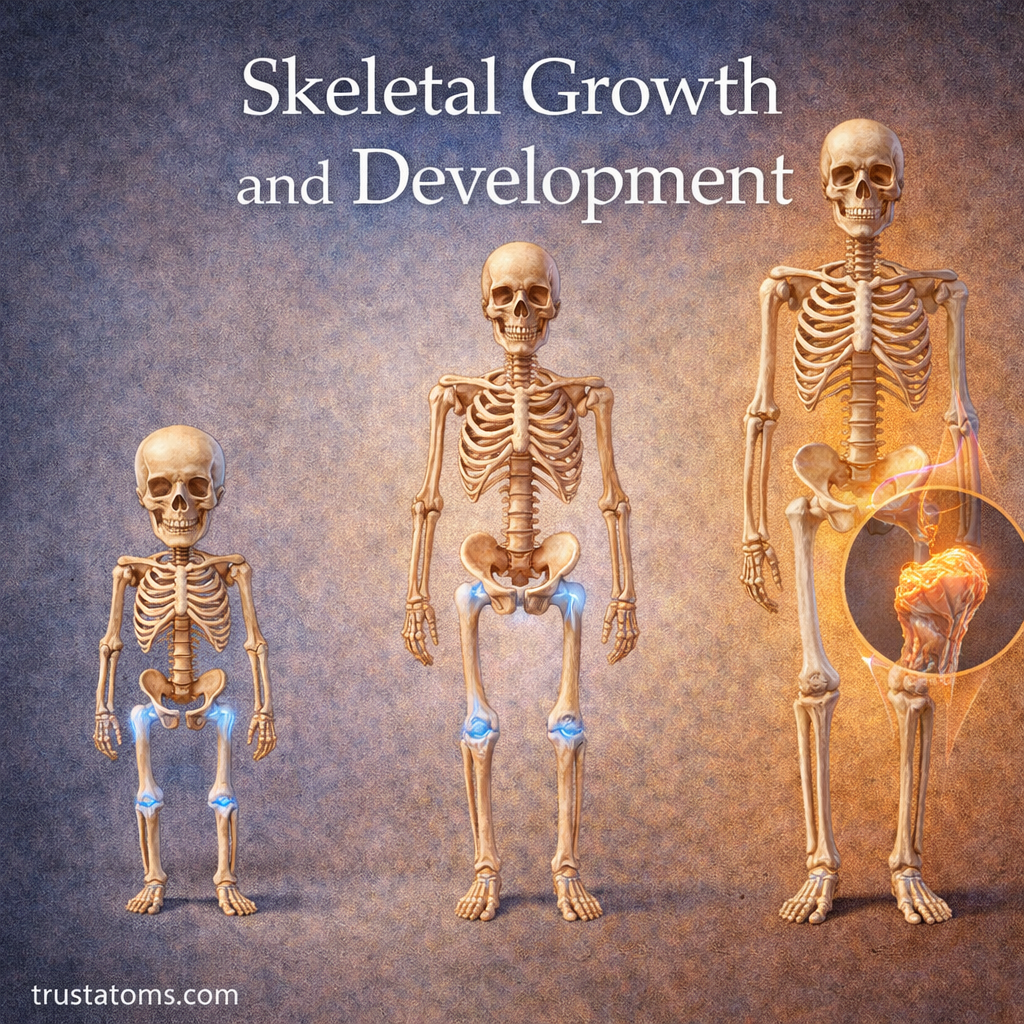
Skeletal Growth and Development

Illustration of skeletal growth and development showing infant, child, and adult skeleton stages.
Visual representation of skeletal growth from infancy to adulthood. trustatoms.com.

The human skeleton is not a fixed structure—it grows, adapts, and changes throughout life. From infancy to adulthood, bones develop in size, shape, and strength to support movement, protect organs, and maintain overall body structure.

Understanding skeletal growth and development helps explain how the body matures, how bones heal, and why proper nutrition and activity are essential for long-term health.

Continue reading “Skeletal Growth and Development”

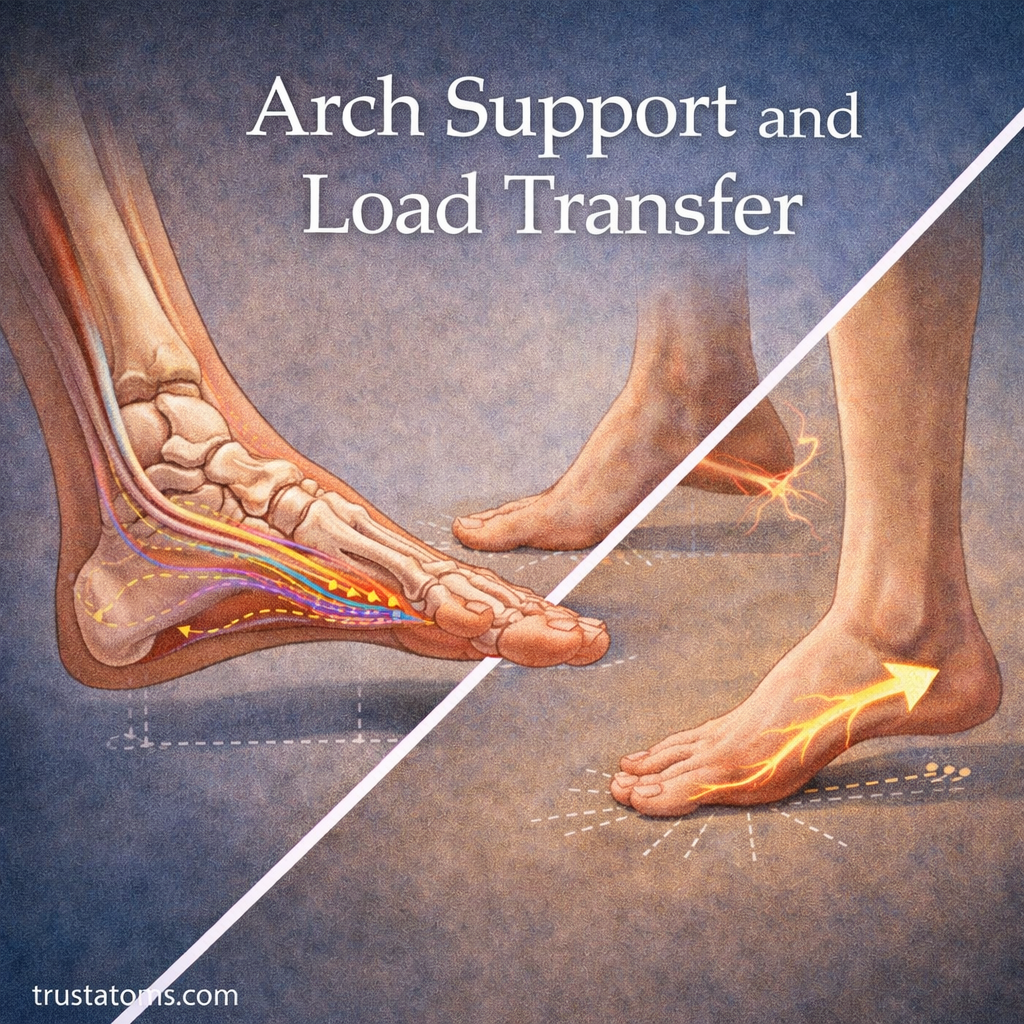
Arch Support and Load Transfer

Illustration of foot arches and load transfer showing how forces move through the foot during walking.
The foot arches help distribute body weight and manage forces as the foot contacts the ground and pushes off.

Arch support helps the foot distribute body weight, absorb impact, and remain stable during movement. Load transfer describes how forces pass between the ground, the foot, and the rest of the body as you stand, walk, or run.

The foot combines flexible arches with bones, ligaments, muscles, and tendons to manage these forces. Understanding this relationship is part of human anatomy and helps explain why the same foot can cushion a landing and form a firm platform for pushing forward.

Continue reading “Arch Support and Load Transfer”

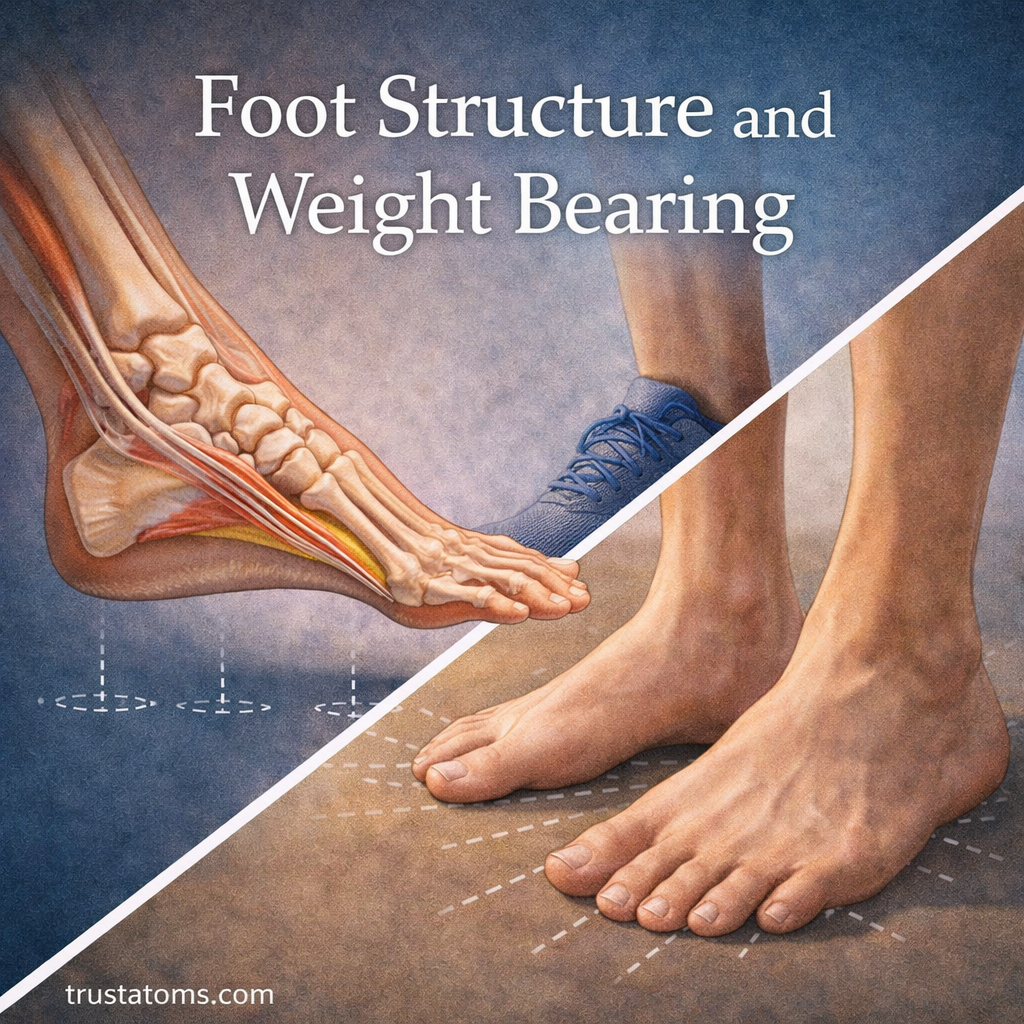
Foot Structure and Weight Bearing

Illustration of foot structure showing bones, arches, and weight distribution during standing.
Visual overview of foot structure and how weight is distributed across the foot.

The human foot supports body weight through a coordinated arrangement of bones, joints, arches, ligaments, muscles, and tendons. During standing and movement, these structures distribute pressure, absorb impact, maintain balance, and transfer force from the ground through the lower limbs.

Foot structure is an example of how human anatomy influences everyday movement. Understanding where weight travels through the foot explains why the heel, arches, and forefoot experience different loads during standing, walking, and running.

Continue reading “Foot Structure and Weight Bearing”