What Is the Circulatory System?

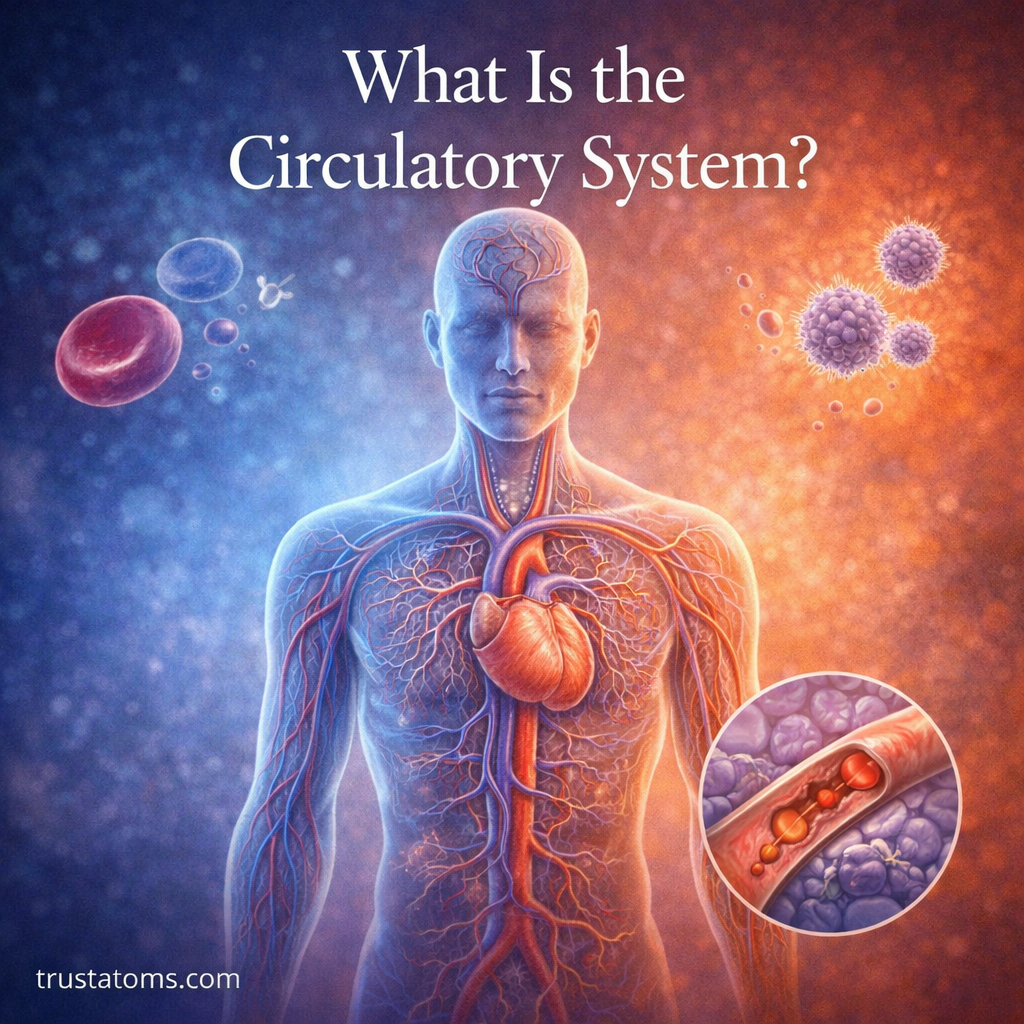
Illustration of the circulatory system showing the human heart, blood vessels, and blood flow throughout the body.
Overview of the circulatory system highlighting the heart, blood vessels, and blood circulation. trustatoms.com

The circulatory system is one of the body’s most essential systems, responsible for transporting blood, oxygen, nutrients, hormones, and waste products throughout the body. It acts as a delivery and removal network, ensuring that every cell gets what it needs to function properly.

Without the circulatory system, vital processes like energy production, temperature regulation, and immune defense would not be possible.

Continue reading “What Is the Circulatory System?”
Neural Regulation of Temperature Control

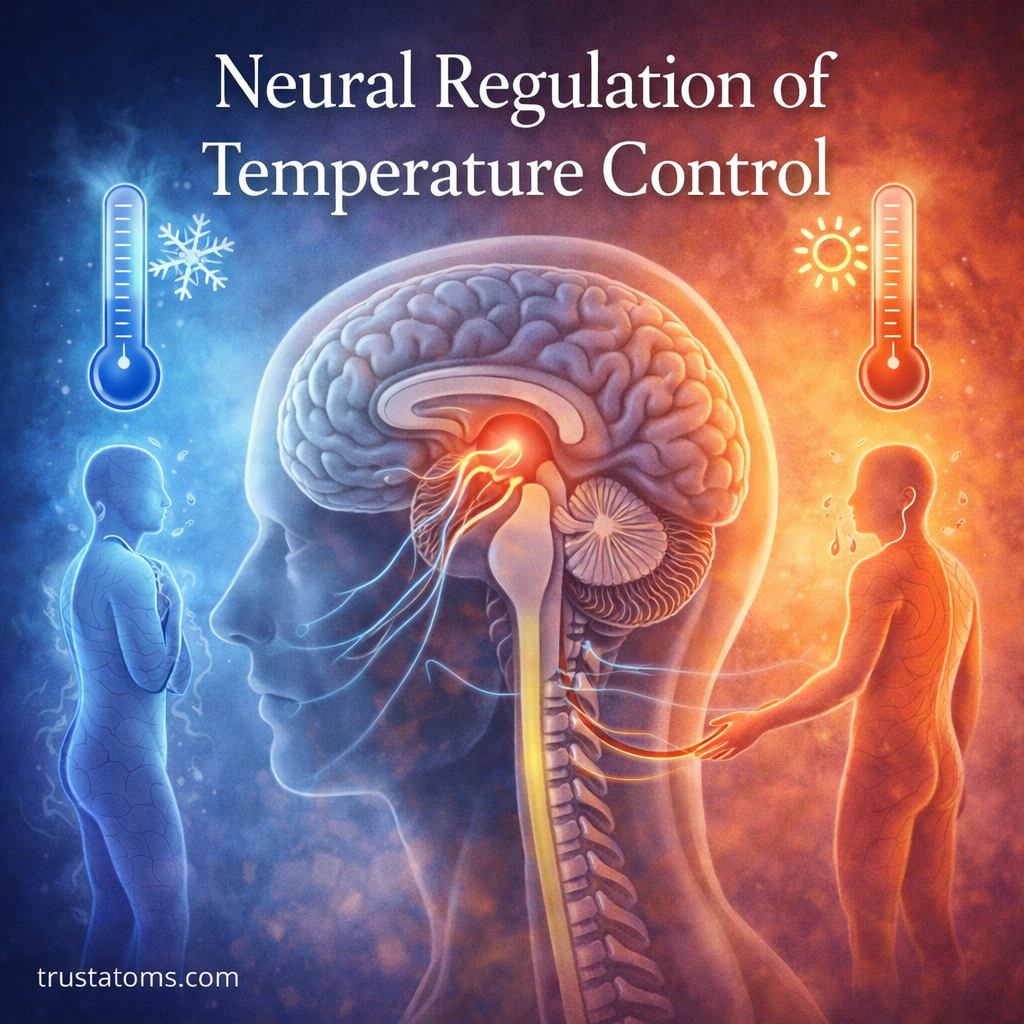
Illustration of neural regulation of temperature control showing the hypothalamus coordinating responses to heat and cold in the human body.
Neural control of body temperature through the hypothalamus and nervous system responses to heat and cold. trustatoms.com

The human body maintains a stable internal temperature despite constant changes in the environment. This process, known as thermoregulation, is tightly controlled by the nervous system—especially the brain.

Neural regulation of temperature ensures that core body temperature stays around 37°C (98.6°F), allowing enzymes, cells, and organs to function optimally. Whether you’re sweating on a hot day or shivering in the cold, your nervous system is constantly adjusting to keep your body in balance.

Continue reading “Neural Regulation of Temperature Control”

Spinal Nerve Roots and Segmental Organization

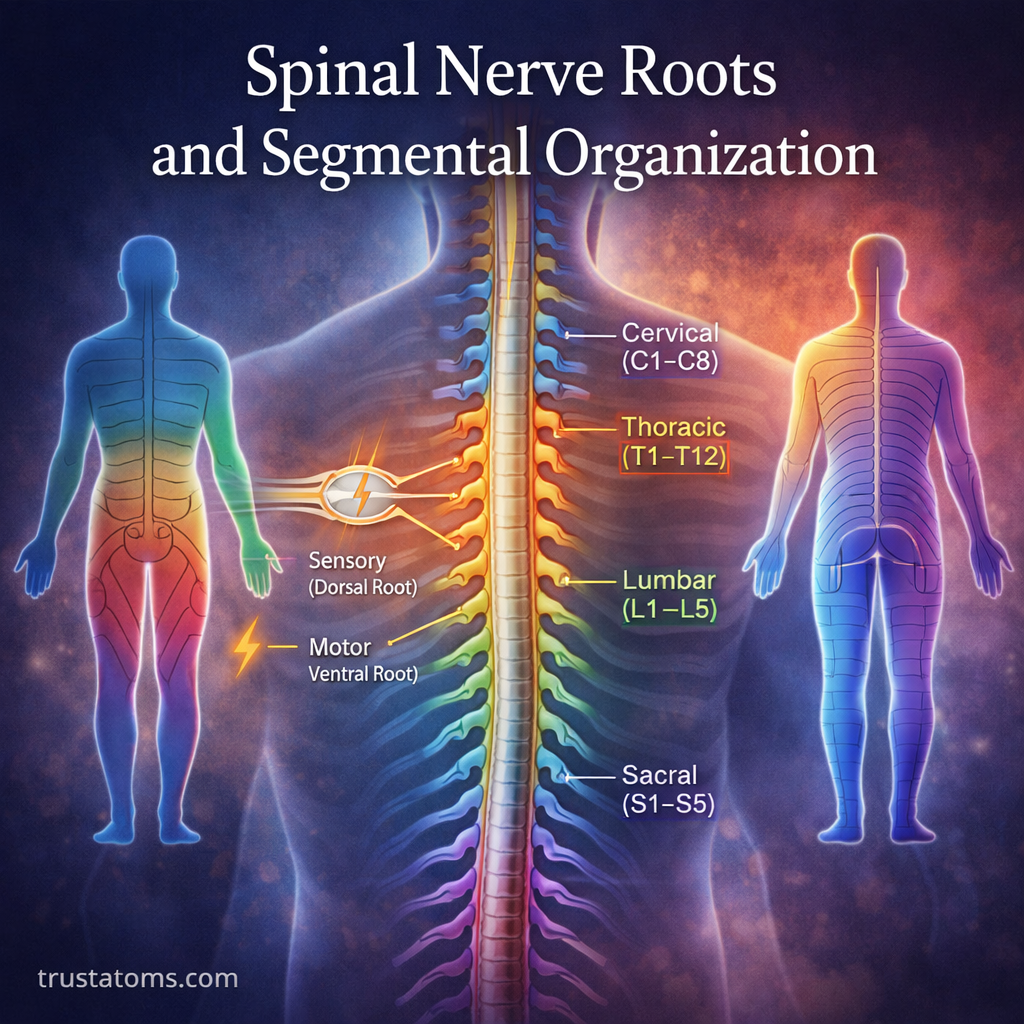
Illustration of spinal nerve roots and segmental organization showing cervical, thoracic, lumbar, and sacral regions with sensory and motor pathways.
Spinal nerve roots and segmental organization illustrated with clearly defined spinal regions and nerve functions. trustatoms.com

The spinal cord is a highly organized structure that connects the brain to the rest of the body. One of its most important features is its segmental organization—how it is divided into repeating sections, each linked to specific spinal nerve roots.

Spinal nerve roots act as communication highways, carrying sensory information into the spinal cord and motor commands out to muscles. Understanding how these roots are arranged helps explain everything from reflexes to patterns of pain and muscle weakness.

Continue reading “Spinal Nerve Roots and Segmental Organization”

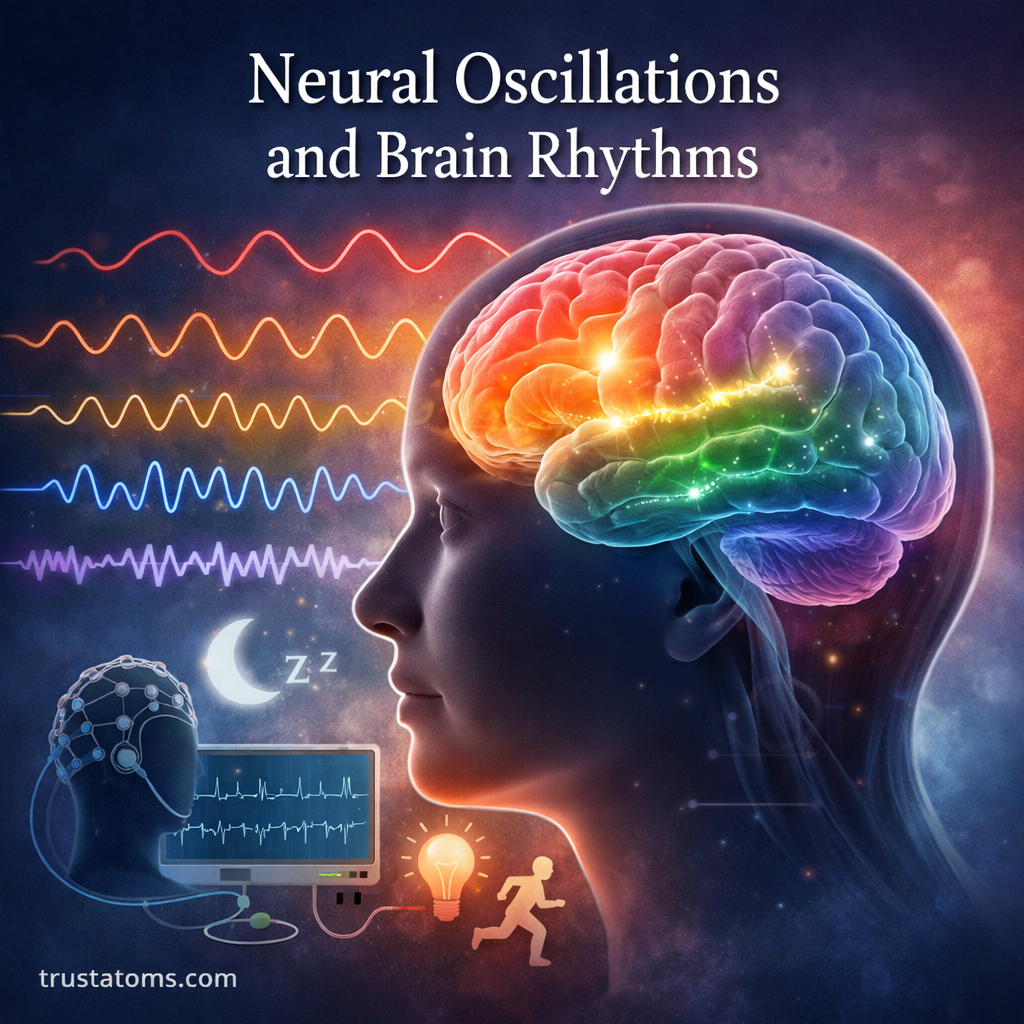
Neural Oscillations and Brain Rhythms

Illustration of neural oscillations and brain rhythms showing brain wave patterns and a human head with highlighted brain activity.
Visualization of neural oscillations and brain rhythms in the human brain. trustatoms.com

Neural oscillations—often called brain waves—are rhythmic patterns of electrical activity produced by neurons in the brain. These oscillations play a central role in how the brain processes information, coordinates activity across regions, and supports functions like attention, memory, and sleep.

From slow, deep rhythms during rest to fast, high-frequency activity during intense focus, brain rhythms are constantly shifting to match what your mind and body need in the moment.

Continue reading “Neural Oscillations and Brain Rhythms”

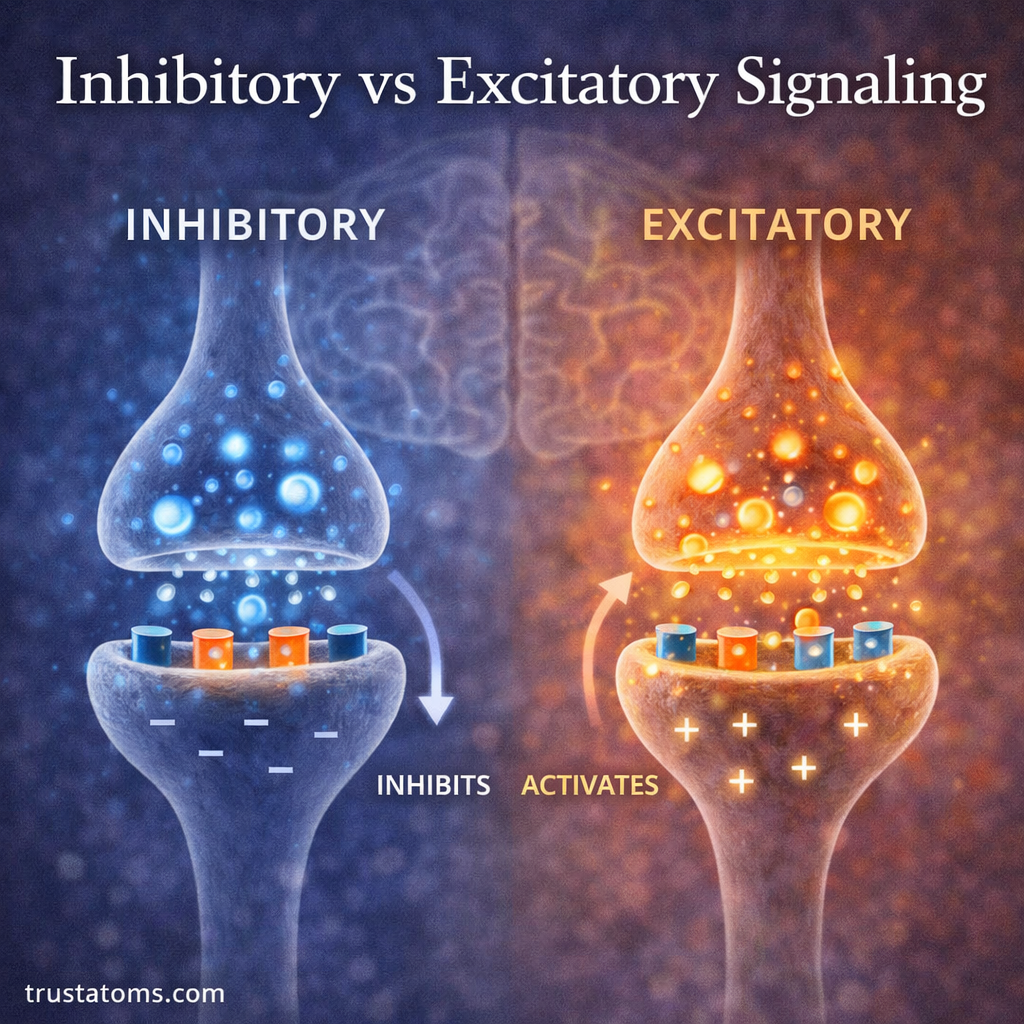
Inhibitory vs Excitatory Signaling

Split illustration comparing inhibitory and excitatory synaptic signaling with blue inhibitory signals and orange excitatory signals in neurons.
Diagram comparing inhibitory and excitatory signaling, showing how neurons either suppress or activate activity. trustatoms.com

The brain operates through a constant balance of electrical and chemical signals. Every thought, movement, and sensation depends on how neurons communicate with one another. Two fundamental types of signaling make this possible: excitatory signaling and inhibitory signaling.

These opposing processes work together to regulate brain activity, ensuring that signals are neither too weak nor overly intense. Understanding this balance is key to understanding how the nervous system functions.

Continue reading “Inhibitory vs Excitatory Signaling”

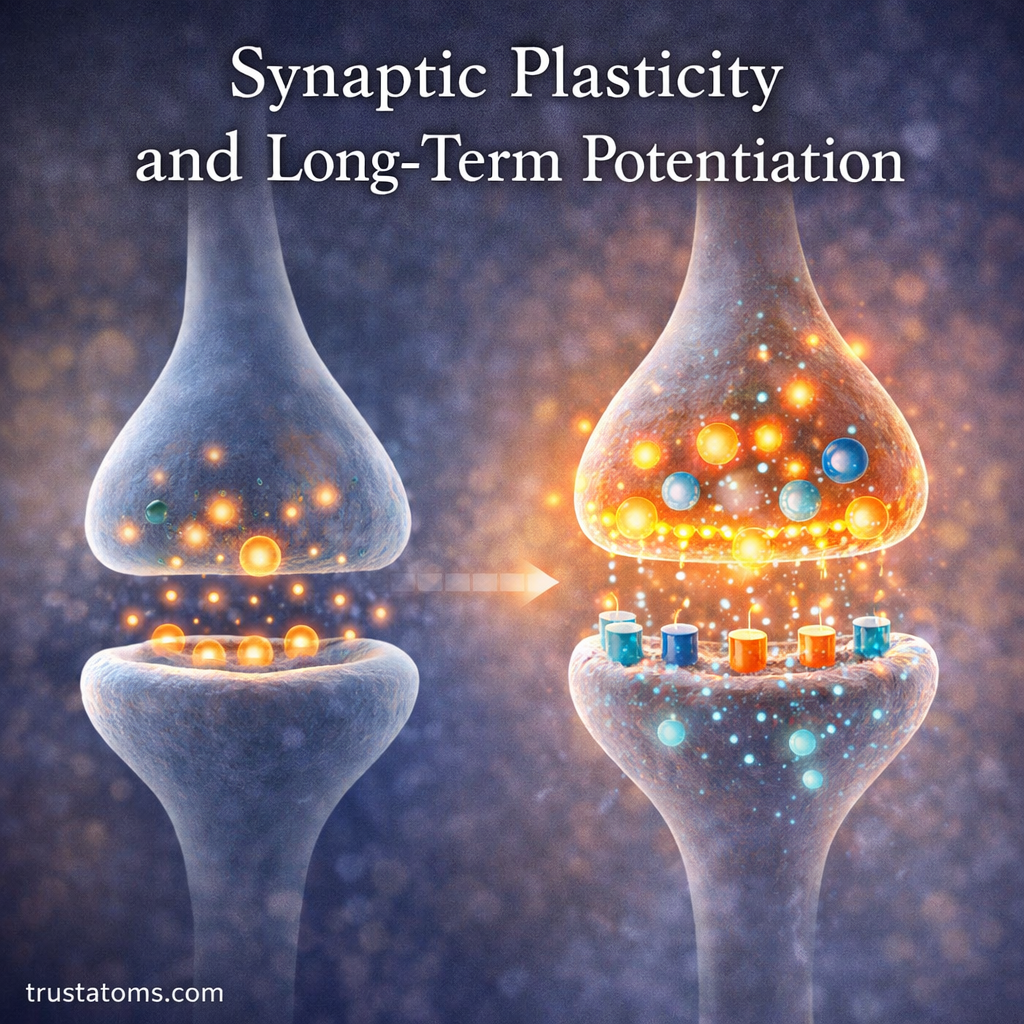
Synaptic Plasticity and Long-Term Potentiation

Illustration of two neuron synapses showing strengthening connections during long-term potentiation with increased neurotransmitter activity.
Diagram illustrating how synaptic connections strengthen through long-term potentiation during learning and memory formation. trustatoms.com

The human brain is constantly changing. Every time you learn a new skill, remember a fact, or adapt to an experience, your brain is physically reshaping itself. This ability is known as synaptic plasticity, and one of its most important mechanisms is long-term potentiation (LTP).

Together, these processes form the biological foundation of learning and memory.

Continue reading “Synaptic Plasticity and Long-Term Potentiation”

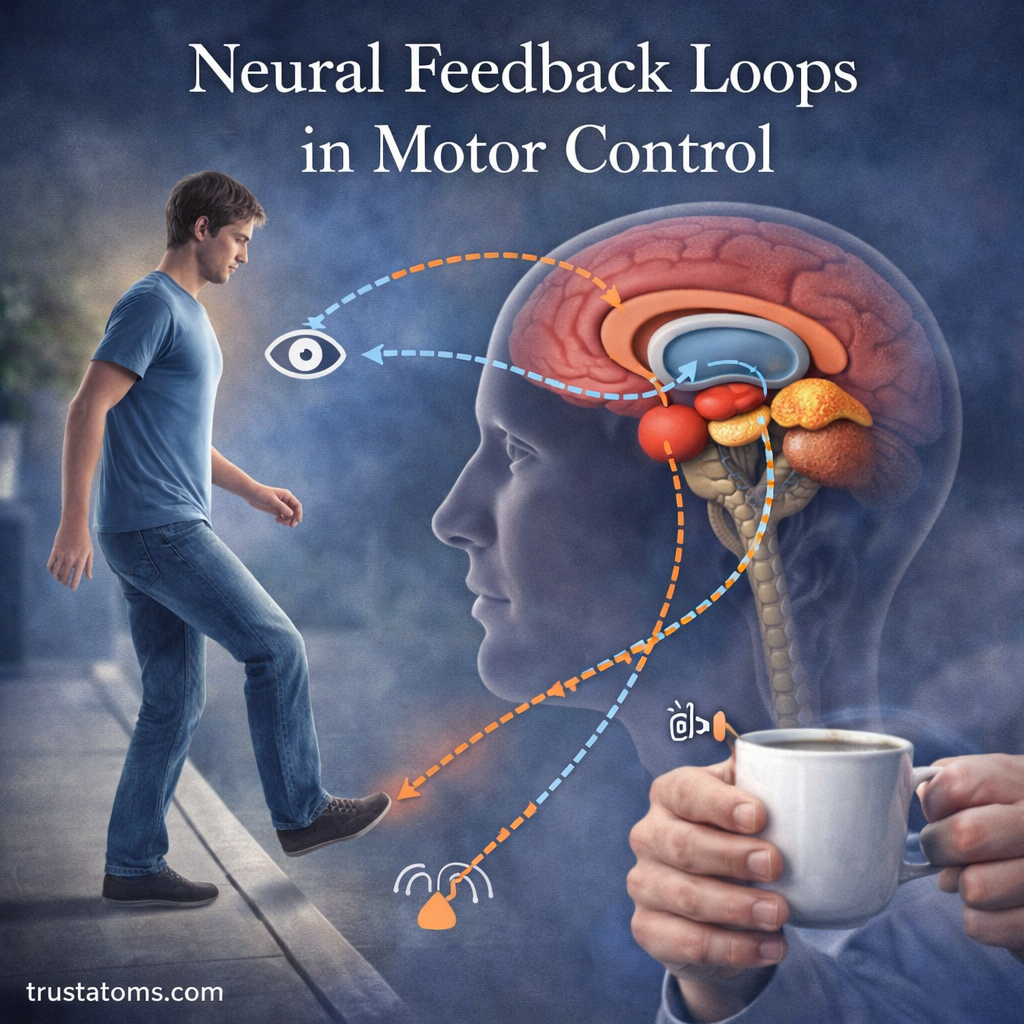
Neural Feedback Loops in Motor Control

Illustration showing neural feedback loops in motor control with brain pathways and body movement interactions like walking and holding an object.
Diagram illustrating how the brain and body communicate through feedback loops to control and refine movement. trustatoms.com

Every movement you make—whether it’s picking up a cup or walking across a room—relies on constant communication between the brain and body. This communication happens through neural feedback loops, which allow the nervous system to monitor, adjust, and refine movement in real time.

Rather than sending a single command and hoping for the best, the brain continuously receives feedback and updates its instructions. This dynamic process is what makes movement smooth, accurate, and adaptable.

Continue reading “Neural Feedback Loops in Motor Control”

Basal Ganglia in Movement Planning

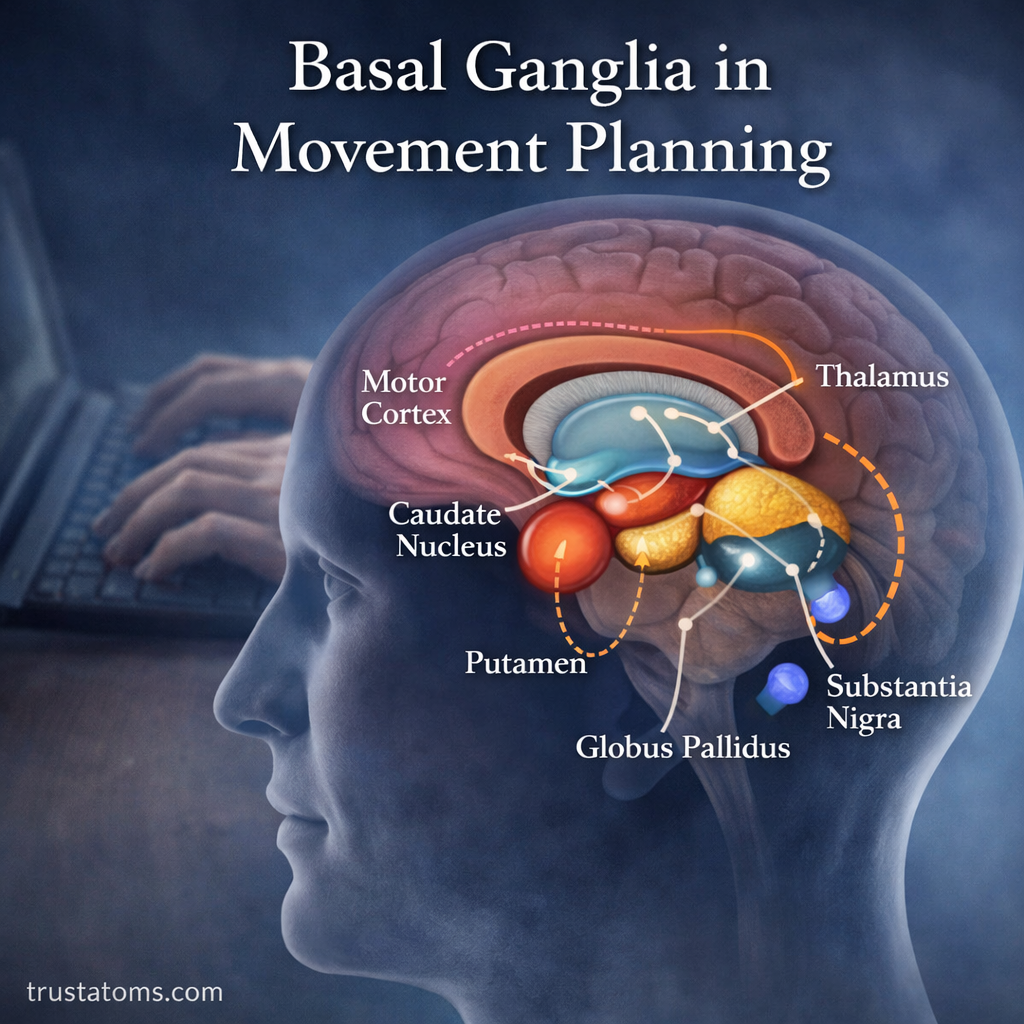
Illustration of the brain showing basal ganglia structures including caudate nucleus, putamen, globus pallidus, and substantia nigra in movement planning.
Diagram highlighting how the basal ganglia and related brain regions coordinate movement planning and control. trustatoms.com

Movement may feel automatic—walking, typing, reaching—but behind every action is a complex coordination system within the brain. One of the most important contributors to this process is the basal ganglia, a group of deep brain structures responsible for initiating, regulating, and refining movement.

Rather than directly causing muscles to move, the basal ganglia help plan, select, and control movements, ensuring they are smooth, purposeful, and efficient.

Continue reading “Basal Ganglia in Movement Planning”

Emotion Circuits: Limbic System Overview

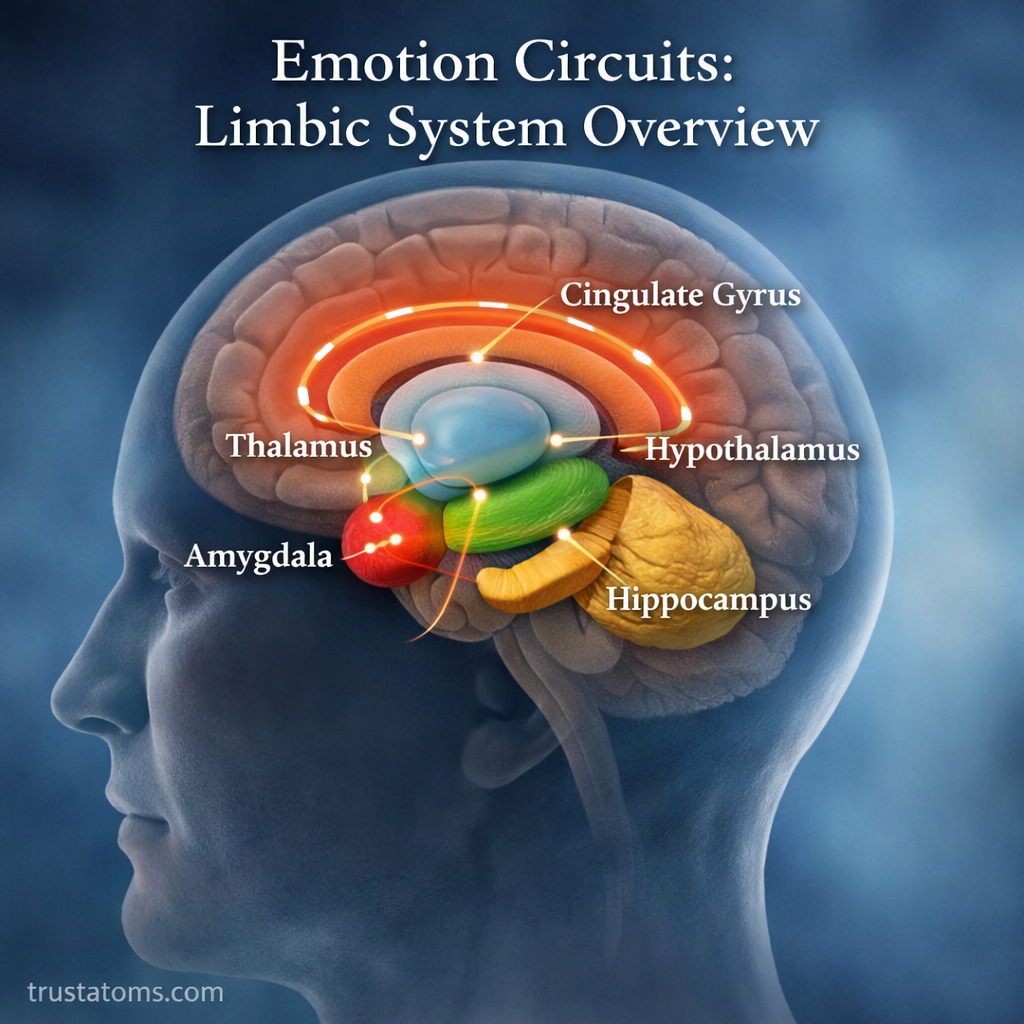
Illustration of the human brain highlighting the limbic system including amygdala, hippocampus, hypothalamus, thalamus, and cingulate gyrus.
Diagram showing key structures of the limbic system involved in emotion, memory, and behavior. trustatoms.com

The human brain is not just a thinking machine—it is also an emotional engine. At the center of this emotional processing lies the limbic system, a network of interconnected brain structures responsible for emotions, memory, motivation, and behavior.

Understanding the limbic system helps explain why we feel fear, form attachments, react to stress, and store emotionally significant memories. It is a core part of how we experience the world and respond to it.

Continue reading “Emotion Circuits: Limbic System Overview”

Memory Systems: Hippocampus and Related Circuits

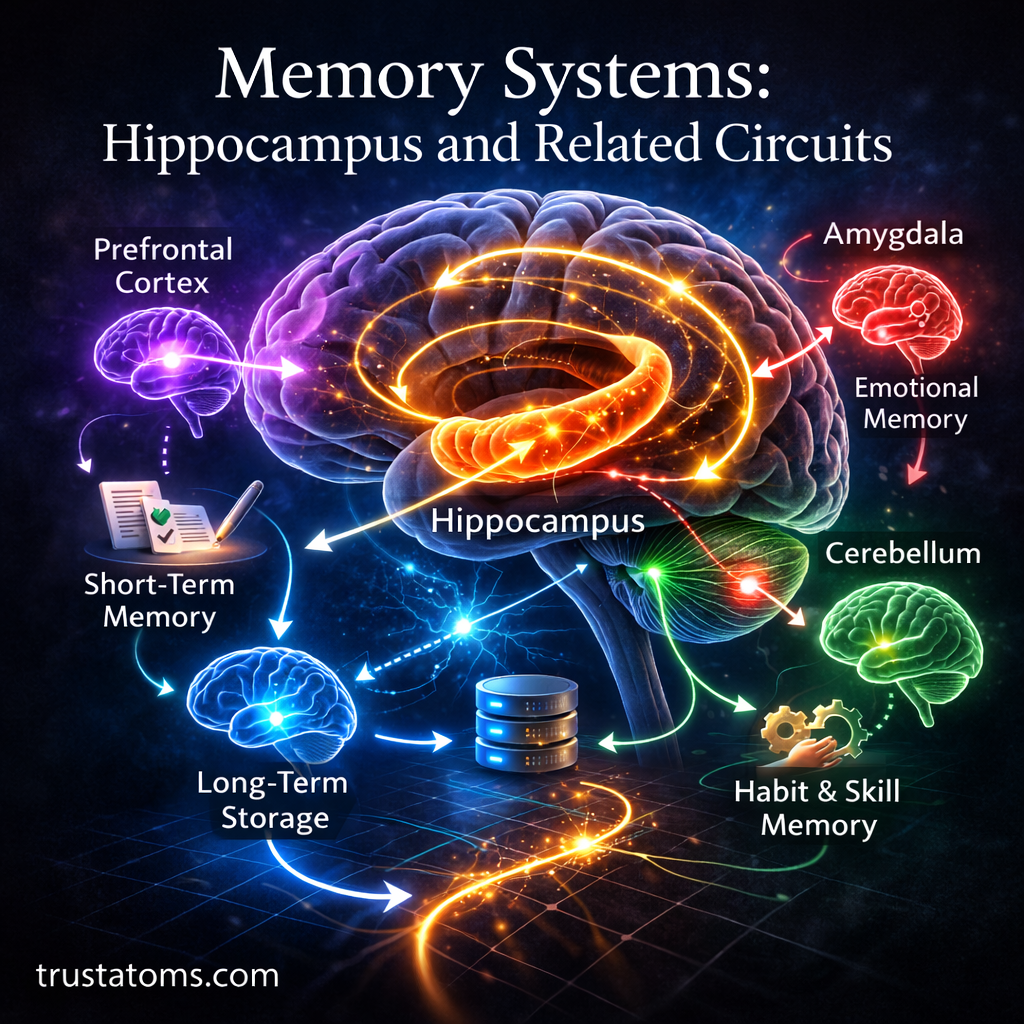
Illustration of the brain highlighting the hippocampus and related memory circuits involved in short-term, long-term, and emotional memory.
Visual representation of how the hippocampus and related brain circuits work together to form and store memories. trustatoms.com

Memory is one of the brain’s most essential functions, allowing us to store experiences, learn new information, and navigate the world. At the center of this process is the hippocampus—a key brain structure that works alongside a network of related circuits to form, organize, and retrieve memories.

In this article, we’ll explore how the hippocampus functions, how memory systems are organized, and how different brain regions collaborate to support learning and recall.

Continue reading “Memory Systems: Hippocampus and Related Circuits”