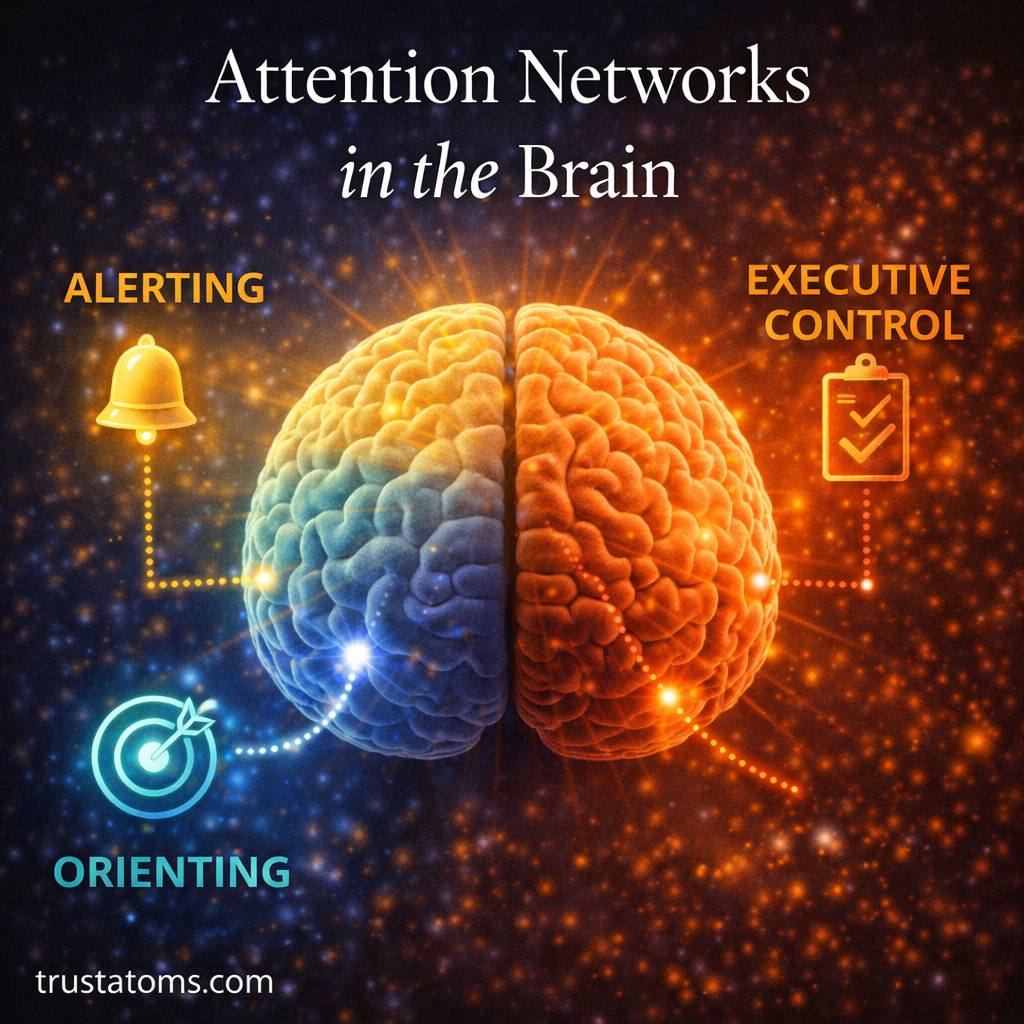
Attention Networks in the Brain

Illustration of the brain highlighting alerting, orienting, and executive control attention networks with distinct colored regions.
Visual representation of the brain’s three attention networks—alerting, orienting, and executive control—working together to manage focus. trustatoms.com

Attention is the brain’s ability to focus on relevant information while filtering out distractions. Whether you’re reading, driving, or having a conversation, your brain is constantly selecting what matters most at any given moment.

This process is not controlled by a single brain region. Instead, it relies on interconnected systems known as attention networks. These networks work together to manage focus, shift awareness, and maintain concentration.

Continue reading “Attention Networks in the Brain”
Sleep–Wake Regulation in Neural Systems

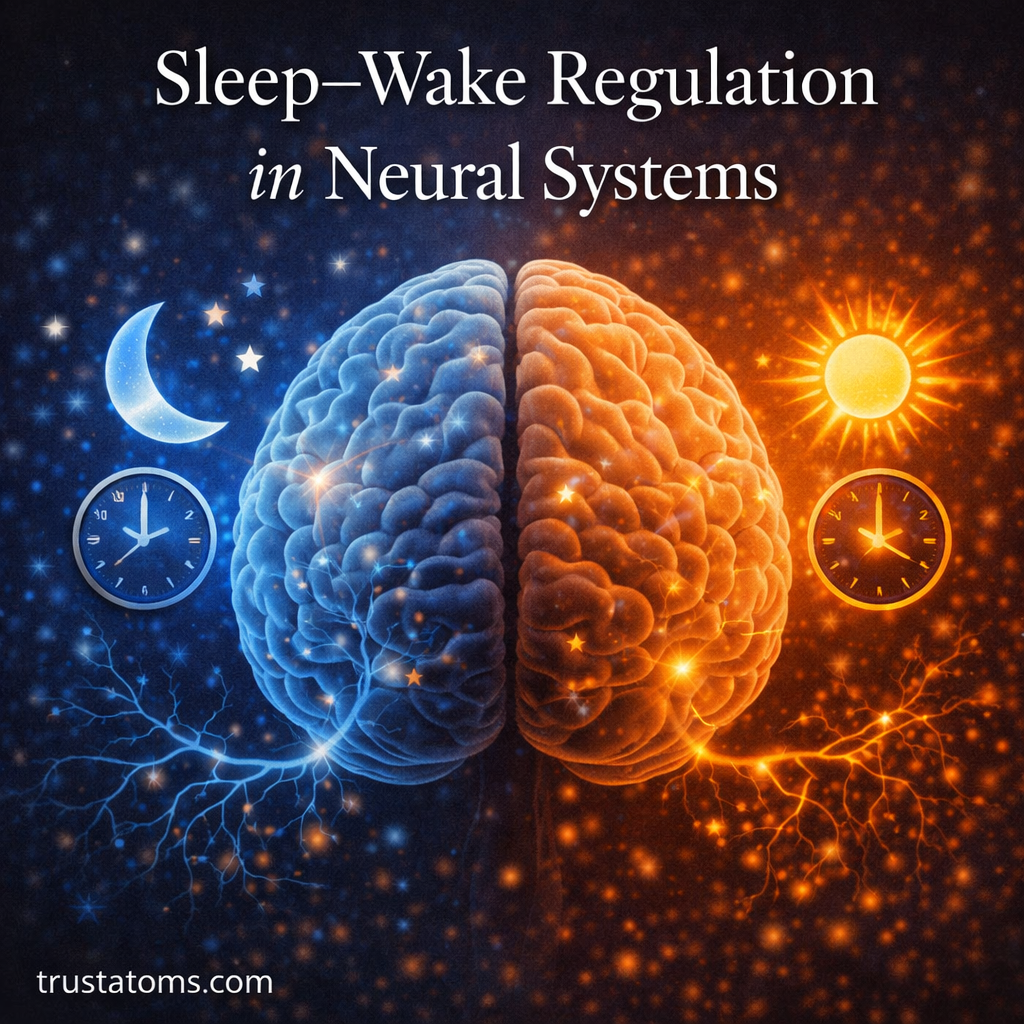
Illustration of a brain divided into sleep and wake states with moon and sun symbols representing circadian rhythm and neural activity.
Visual representation of how the brain regulates sleep and wake cycles through neural systems and circadian rhythms. trustatoms.com

Sleep is not simply a passive state of rest—it is an active, highly regulated process controlled by complex neural systems. The brain continuously balances signals that promote wakefulness with those that trigger sleep, creating a dynamic cycle known as the sleep–wake cycle.

In this article, we’ll explore how neural systems regulate sleep and wakefulness, the key brain regions involved, and why this balance is essential for overall health and cognitive function.

Continue reading “Sleep–Wake Regulation in Neural Systems”

Brain Lateralization and Functional Specialization

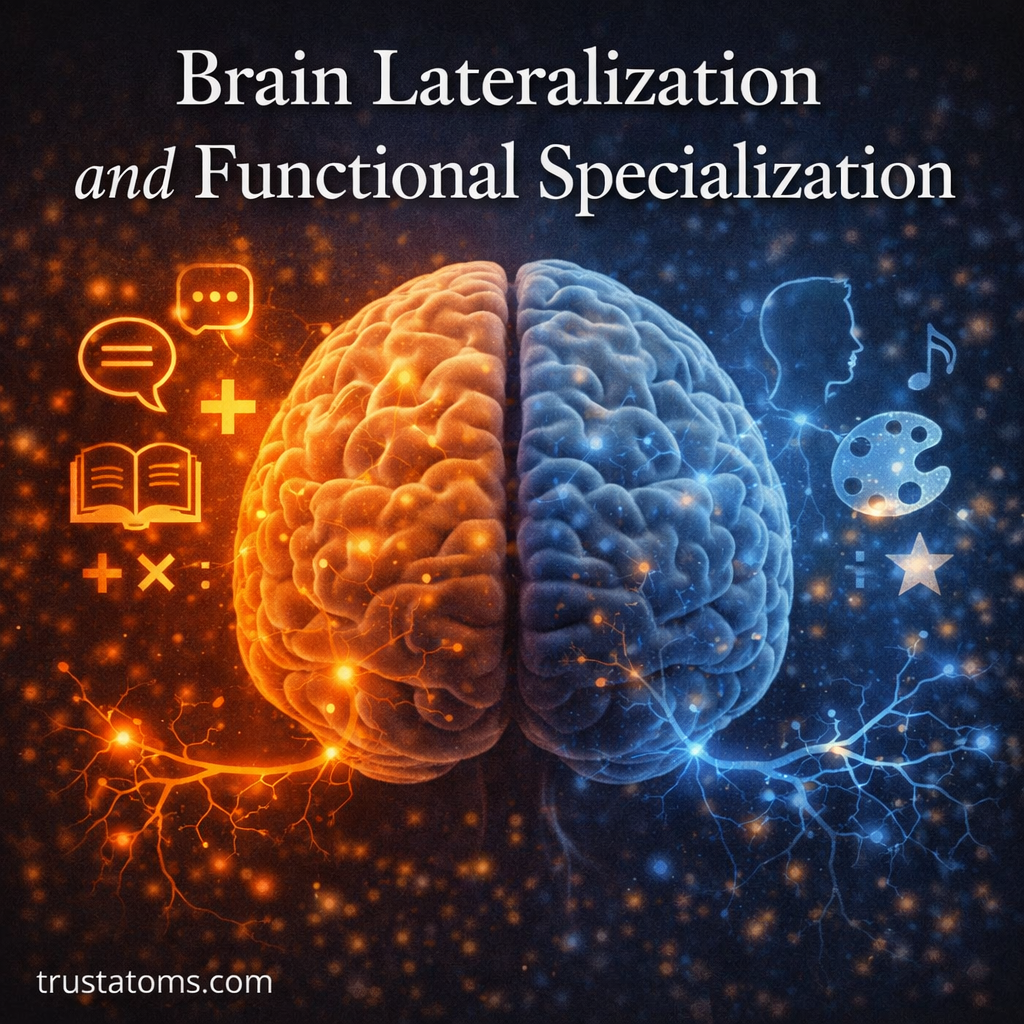
Illustration of a split human brain showing left hemisphere logical functions and right hemisphere creative functions.
Visual representation of how the brain’s left and right hemispheres specialize in different cognitive functions. trustatoms.com

The human brain is often described as having two halves, but these halves are not identical in function. Brain lateralization refers to the idea that certain cognitive processes and functions are more dominant in one hemisphere than the other. Alongside this, functional specialization explains how specific brain regions are dedicated to particular tasks.

In this article, we’ll explore how the brain divides responsibilities, what each hemisphere is known for, and why this organization is essential for efficient thinking and behavior.

Continue reading “Brain Lateralization and Functional Specialization”

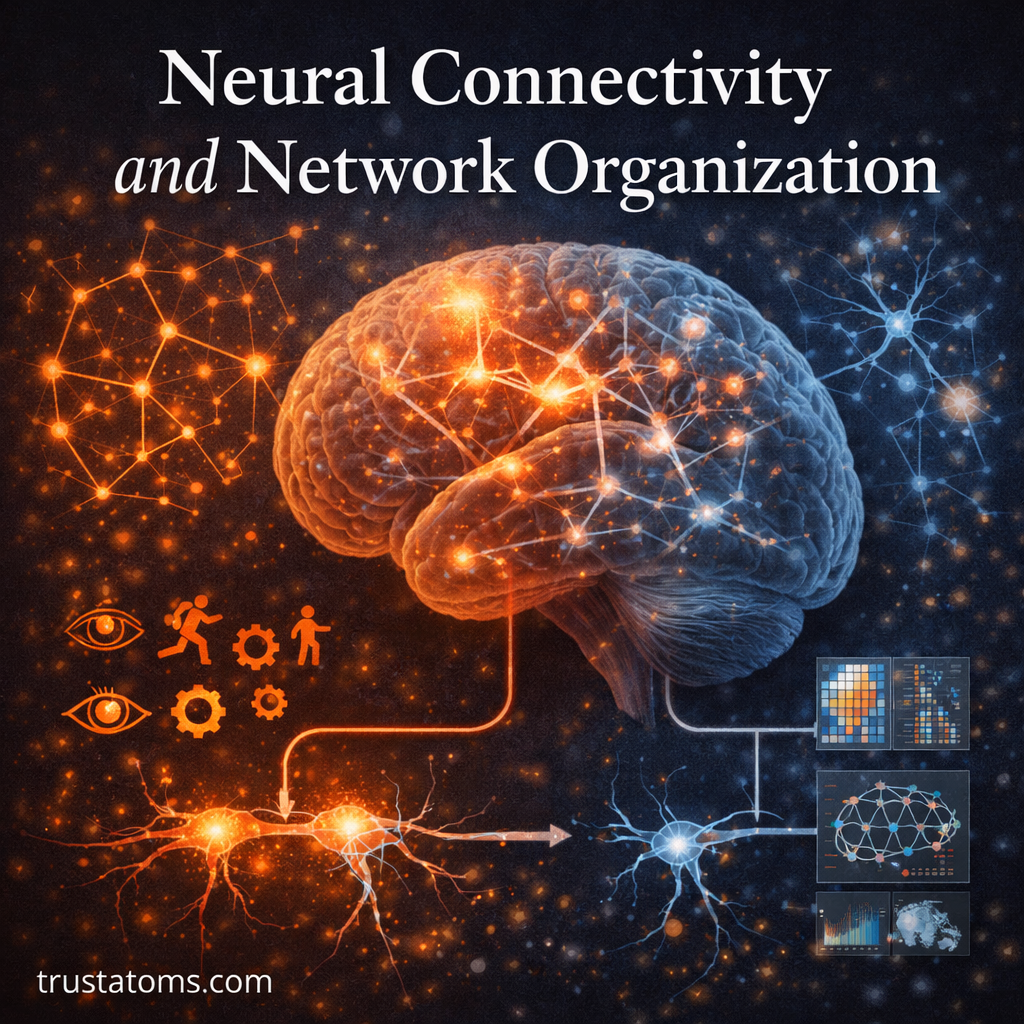
Neural Connectivity and Network Organization

Illustration of the human brain showing interconnected neural networks and pathways representing structural and functional connectivity.
Visual representation of how neural connections form organized networks that support brain function and communication. trustatoms.com

The human brain is one of the most complex networks known to science. Rather than functioning as isolated units, neurons form vast, interconnected systems that allow information to flow efficiently across different regions. This intricate web of connections is known as neural connectivity, and its structure is referred to as network organization.

In this article, we’ll explore how neurons connect, how brain networks are structured, and why this organization is essential for cognition, behavior, and overall brain function.

Continue reading “Neural Connectivity and Network Organization”

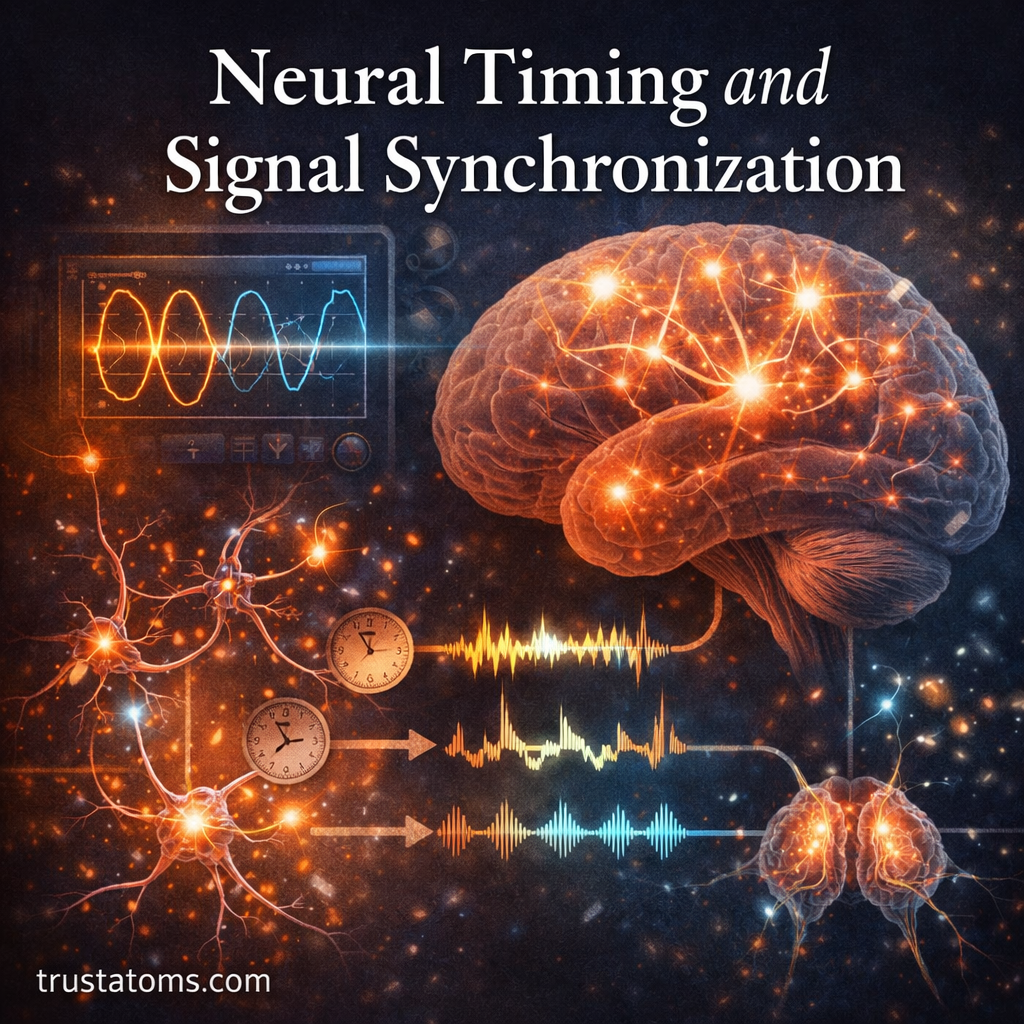
Neural Timing and Signal Synchronization

Illustration of brain activity showing synchronized neural signals and timing patterns with waveforms and connected neurons.
Visual representation of how neural timing and synchronization coordinate brain activity and communication. trustatoms.com

The human brain is not just a network of neurons firing randomly—it is a precisely timed system where when signals occur can be just as important as how often they occur. Neural timing and signal synchronization play a critical role in how the brain processes information, coordinates actions, and creates perception.

In this article, we’ll explore how timing shapes neural communication, why synchronization matters, and how these processes influence everything from movement to memory.

Continue reading “Neural Timing and Signal Synchronization”

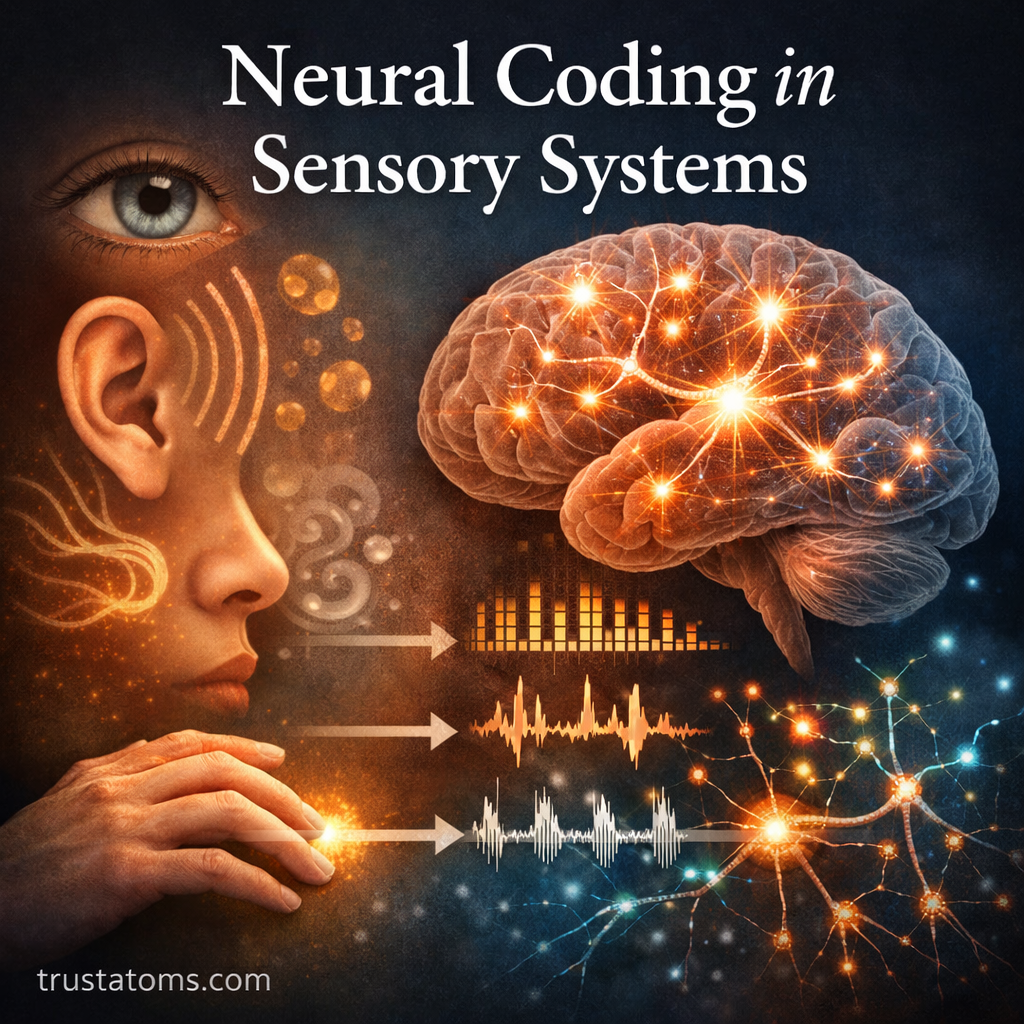
Neural Coding in Sensory Systems

Illustration showing sensory inputs like vision, hearing, smell, and touch being processed by the brain through neural signals.
Visual representation of how sensory information is encoded into neural signals in the brain. trustatoms.com

Understanding how the brain interprets the world begins with one key concept: neural coding. Every sight, sound, smell, taste, and touch you experience is converted into electrical signals and interpreted by the nervous system. This process allows the brain to transform raw sensory input into meaningful perception.

In this article, we’ll explore how neural coding works, the major coding strategies used by the brain, and why this process is essential for perception and behavior.

Continue reading “Neural Coding in Sensory Systems”

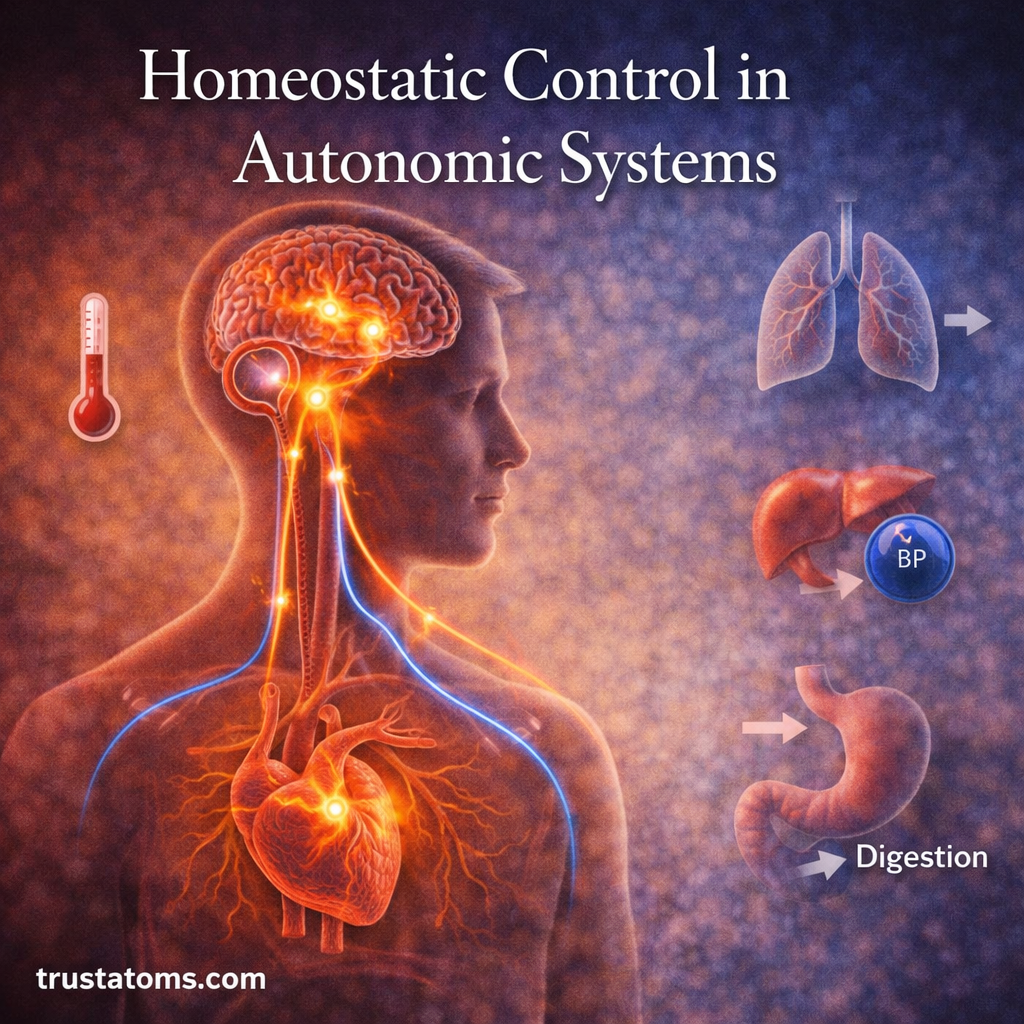
Homeostatic Control in Autonomic Systems

Illustration of autonomic nervous system controlling homeostasis including brain, heart, lungs, digestion, and blood pressure regulation.
Diagram showing how the autonomic nervous system maintains homeostasis by regulating temperature, breathing, heart rate, and digestion. trustatoms.com.

The human body constantly works to maintain internal balance, even as external conditions change. This balance—known as homeostasis—is largely regulated by the autonomic nervous system (ANS), which controls essential functions without conscious effort.

From heart rate and digestion to temperature and blood pressure, autonomic systems ensure that the body stays stable and functional in every situation.

Continue reading “Homeostatic Control in Autonomic Systems”

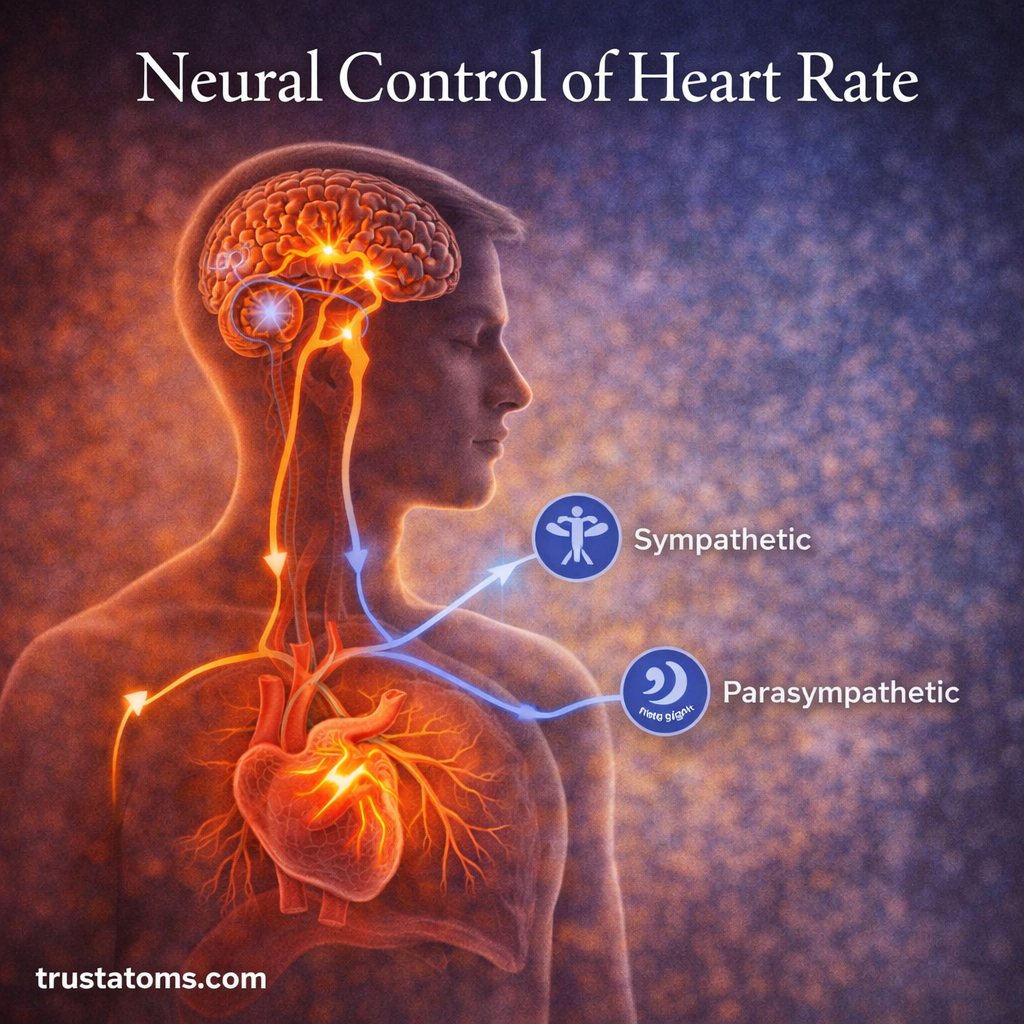
Neural Control of Heart Rate

Illustration of neural control of heart rate showing brainstem, autonomic nervous system pathways, and heart activity.
Diagram showing how the autonomic nervous system regulates heart rate through signals from the brain to the heart. trustatoms.com.

Your heart beats continuously, adjusting its speed and strength to match your body’s needs. Whether you’re resting, exercising, or reacting to stress, your heart rate is tightly regulated by the nervous system.

The neural control of heart rate ensures that blood circulation remains efficient, delivering oxygen and nutrients where they are needed most while maintaining overall balance in the body.

Continue reading “Neural Control of Heart Rate”

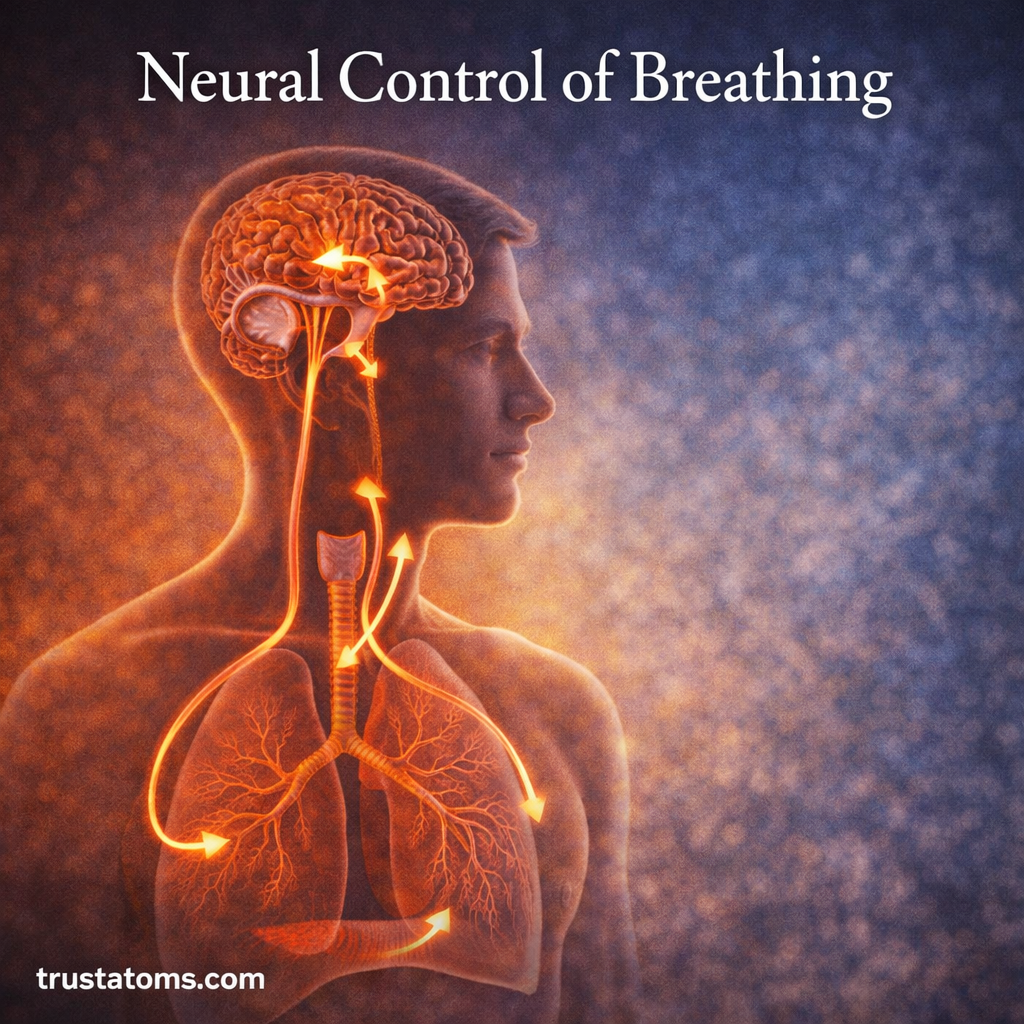
Neural Control of Breathing

Illustration of neural control of breathing showing brainstem, neural pathways, lungs, and diaphragm regulating respiration.
Diagram showing how the brainstem and neural pathways control breathing and coordinate lung and diaphragm function. trustatoms.com.

Breathing is one of the most vital and continuous processes in the human body. While it often feels automatic, it is tightly regulated by complex neural circuits that ensure oxygen enters the body and carbon dioxide is removed efficiently.

The neural control of breathing involves coordinated activity between the brainstem, sensory receptors, and respiratory muscles—allowing us to breathe without conscious effort while still giving us the ability to control it when needed.

Continue reading “Neural Control of Breathing”

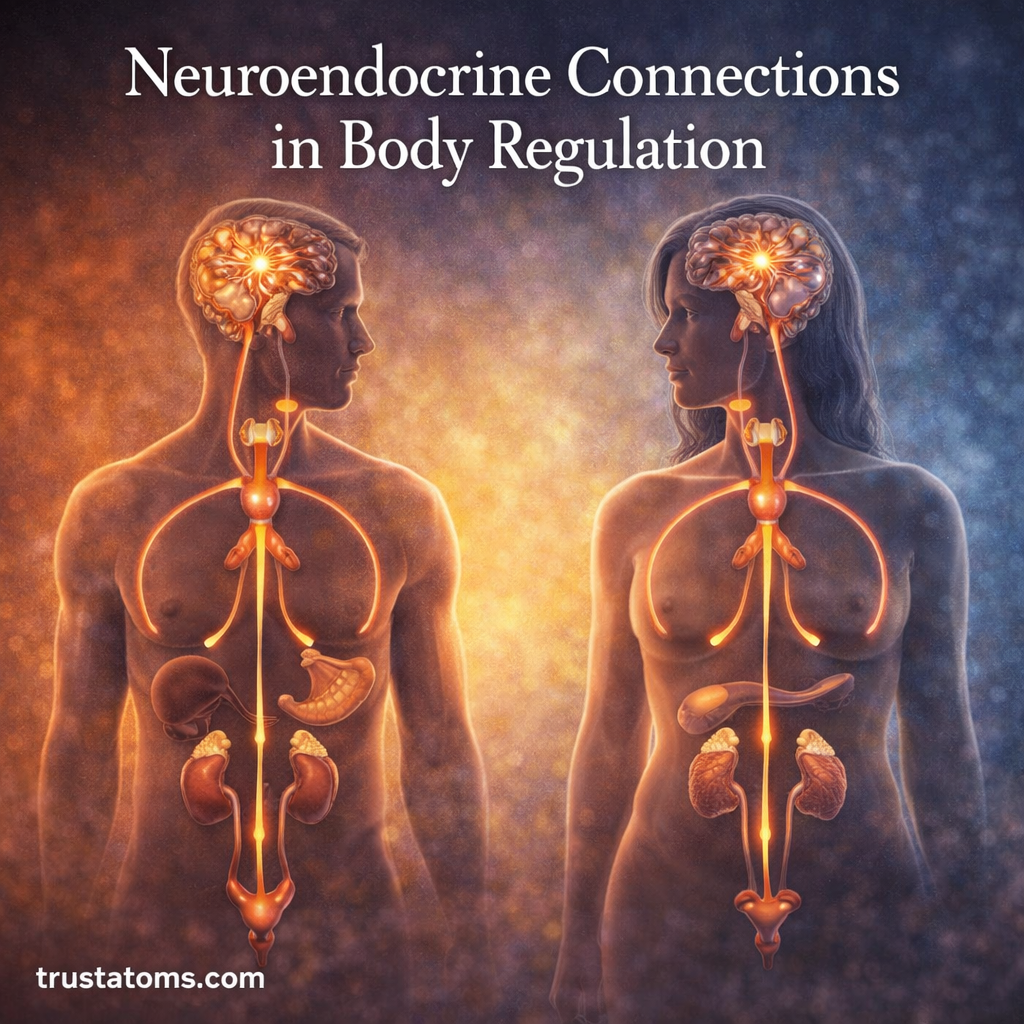
Neuroendocrine Connections in Body Regulation

Illustration of neuroendocrine system showing brain, hypothalamus, pituitary gland, and endocrine organs coordinating body regulation.
Diagram illustrating how the brain and endocrine glands work together to regulate body functions through neuroendocrine connections. trustatoms.com.

The human body maintains balance through constant communication between its systems. One of the most important partnerships is between the nervous system and the endocrine system—together known as the neuroendocrine system.

This connection allows the body to respond quickly to changes while also regulating long-term processes like growth, metabolism, stress, and reproduction.

Continue reading “Neuroendocrine Connections in Body Regulation”