Neural Development Across the Lifespan

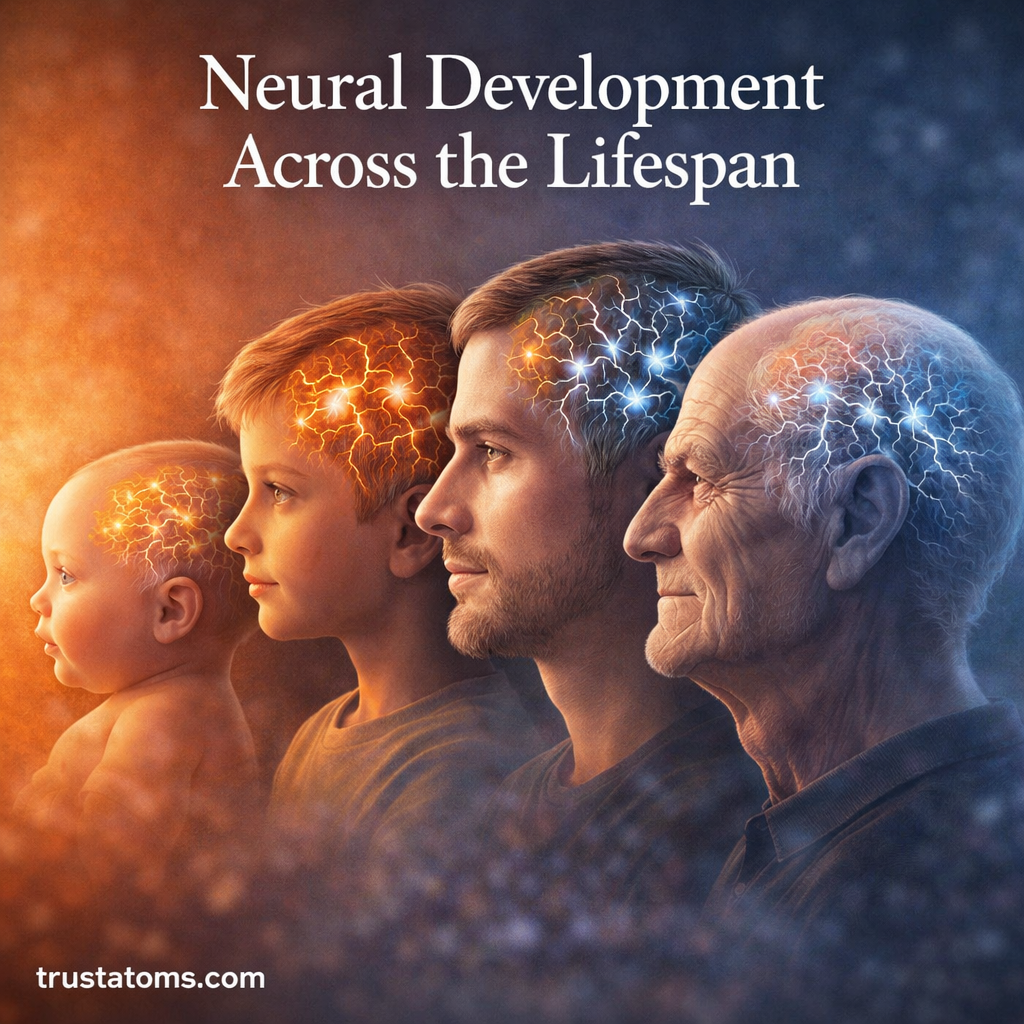
Illustration showing neural development across the lifespan from infancy to old age with evolving brain activity patterns.
Illustration depicting how brain structure and neural activity change from infancy through adulthood to aging. trustatoms.com.

The human nervous system is not static—it evolves continuously from before birth through old age. Neural development across the lifespan involves the growth, organization, adaptation, and gradual changes of brain cells and neural connections that shape how we think, move, feel, and respond to the world.

Understanding these changes helps explain everything from early learning in childhood to cognitive aging later in life.

Continue reading “Neural Development Across the Lifespan”
Neural Circuits in Pattern Generation

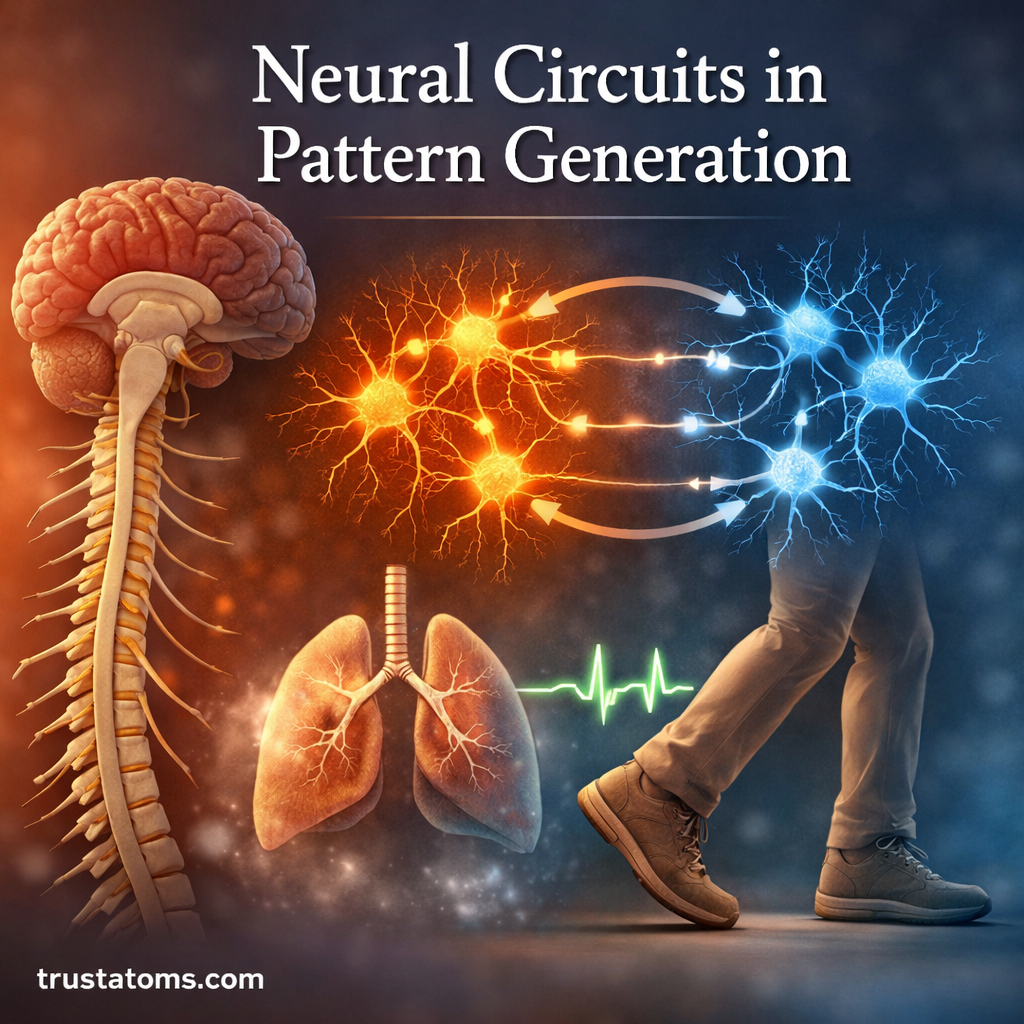
Illustration of neural circuits in pattern generation showing brain, spinal cord, and rhythmic neuron activity controlling walking and breathing.
Illustration of neural circuits coordinating rhythmic movement and automatic functions like walking and breathing. trustatoms.com.

Neural circuits are the foundation of how the nervous system produces coordinated, repeatable actions. From walking and breathing to chewing and blinking, many of our everyday movements rely on built-in neural patterns that operate automatically.

At the center of this process are pattern-generating circuits, specialized networks of neurons that can produce rhythmic or repetitive outputs without requiring constant conscious control.

Continue reading “Neural Circuits in Pattern Generation”

Blood–Brain Barrier in Neural Protection

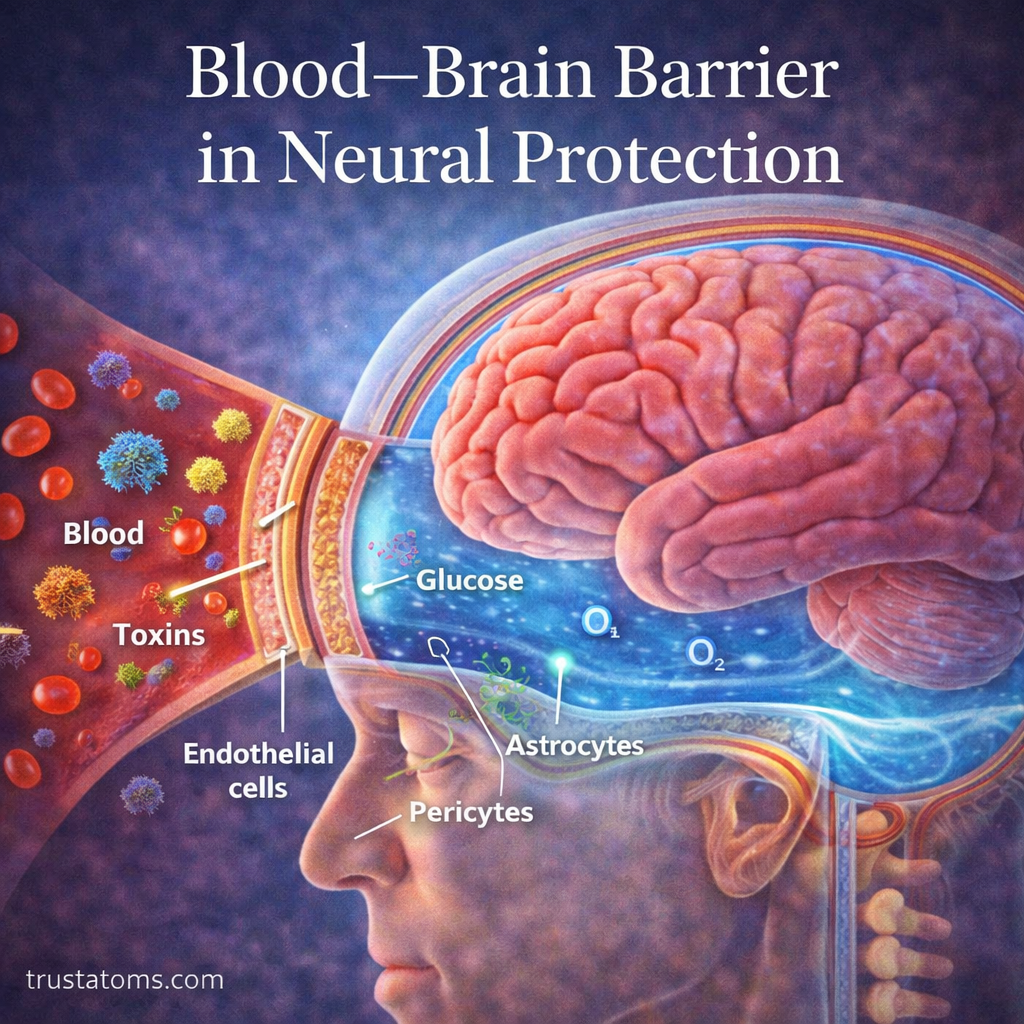
Illustration showing the blood-brain barrier regulating substances between the bloodstream and the brain.
Diagram illustrating how the blood-brain barrier protects the brain by filtering substances from the bloodstream. trustatoms.com

The brain is one of the most sensitive and vital organs in the human body. To function properly, it requires a stable and carefully controlled environment. The blood–brain barrier (BBB) plays a crucial role in maintaining this environment by regulating what substances can enter the brain from the bloodstream.

This specialized protective system acts as a selective filter, allowing essential nutrients to pass through while blocking harmful substances such as toxins and pathogens. Without the blood–brain barrier, the brain would be highly vulnerable to damage.

Continue reading “Blood–Brain Barrier in Neural Protection”

CNS Protection: Meninges and Cerebrospinal Fluid

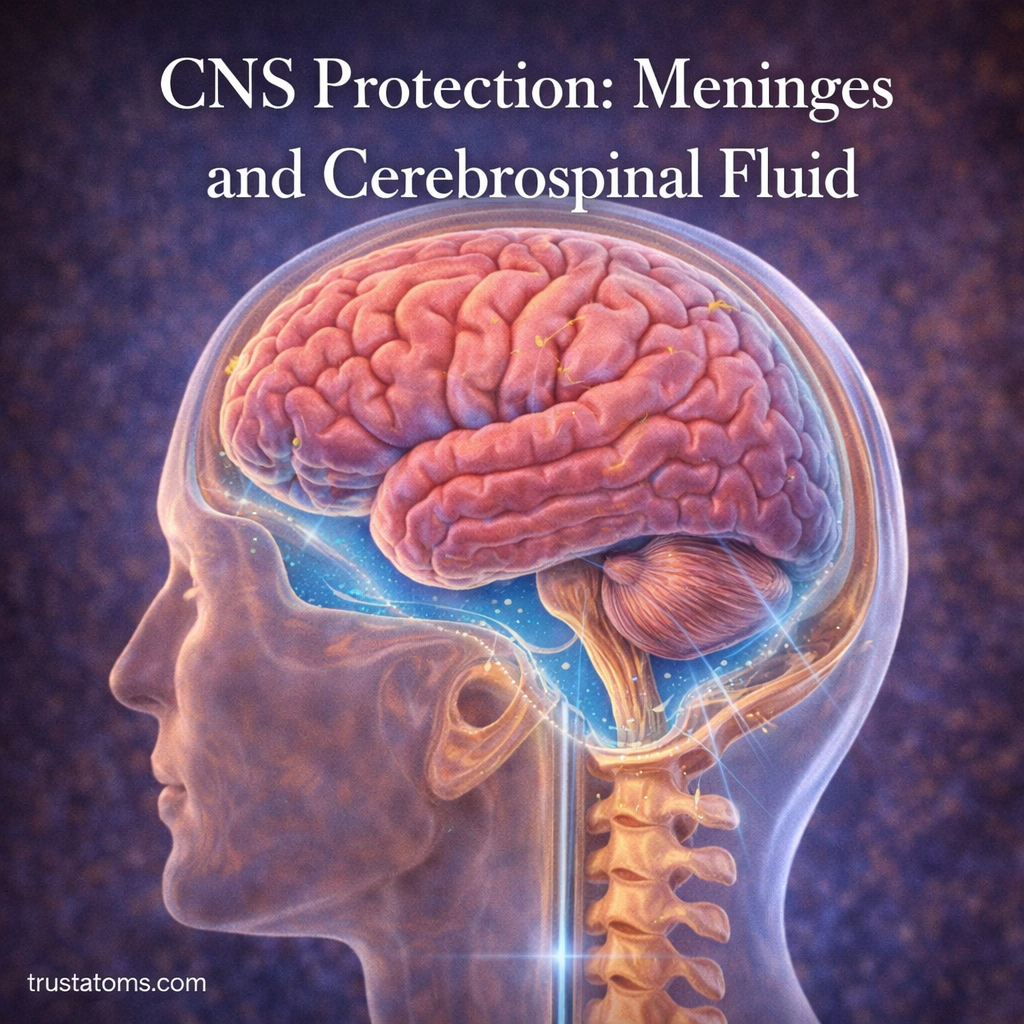
Illustration showing the brain and spinal cord protected by the meninges and surrounded by cerebrospinal fluid.
Diagram showing how the meninges and cerebrospinal fluid protect the brain and spinal cord. trustatoms.com

The central nervous system (CNS), which includes the brain and spinal cord, is one of the most vital and sensitive systems in the human body. Because of its importance, it requires multiple layers of protection to prevent damage from physical impact, infection, and environmental changes.

Two key protective components are the meninges and cerebrospinal fluid (CSF). Together, they create a supportive environment that cushions, stabilizes, and nourishes the brain and spinal cord.

Understanding how these structures work helps explain how the body protects its most critical control center.

Continue reading “CNS Protection: Meninges and Cerebrospinal Fluid”

Peripheral Nerves and Signal Routing

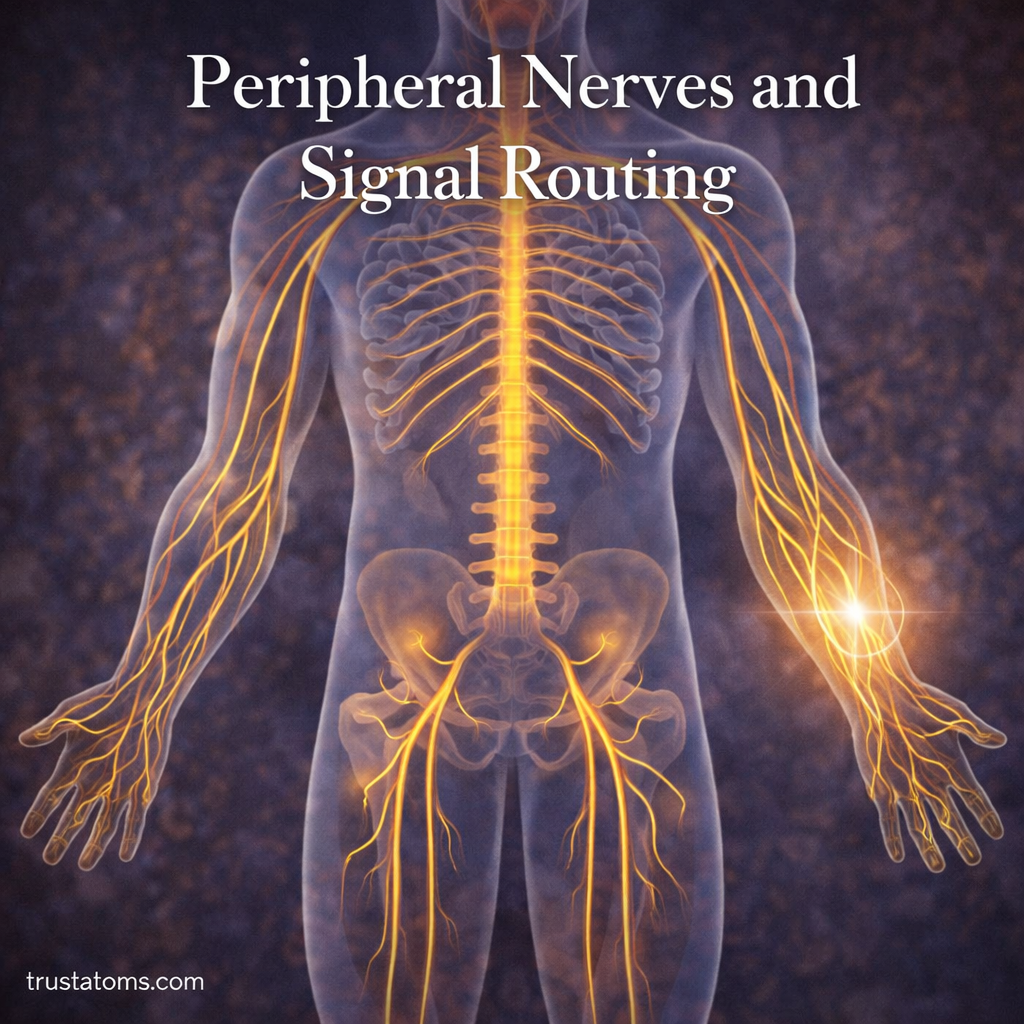
Illustration showing peripheral nerves branching from the spinal cord throughout the body to transmit signals between the brain and muscles.
Diagram showing peripheral nerves routing signals between the spinal cord and the rest of the body. trustatoms.com

Peripheral nerves form an extensive communication network that connects the brain and spinal cord to the rest of the body. These nerves carry signals that control movement, relay sensory information, and regulate many automatic body functions.

Through this network, the nervous system can quickly route messages between the central nervous system and muscles, organs, and sensory receptors. Without peripheral nerves, the brain would have no way to receive information from the body or send commands that control movement.

Understanding how peripheral nerves route signals provides insight into how the body coordinates sensation, motion, and internal regulation.

Continue reading “Peripheral Nerves and Signal Routing”

Cranial Nerves and Their Functions

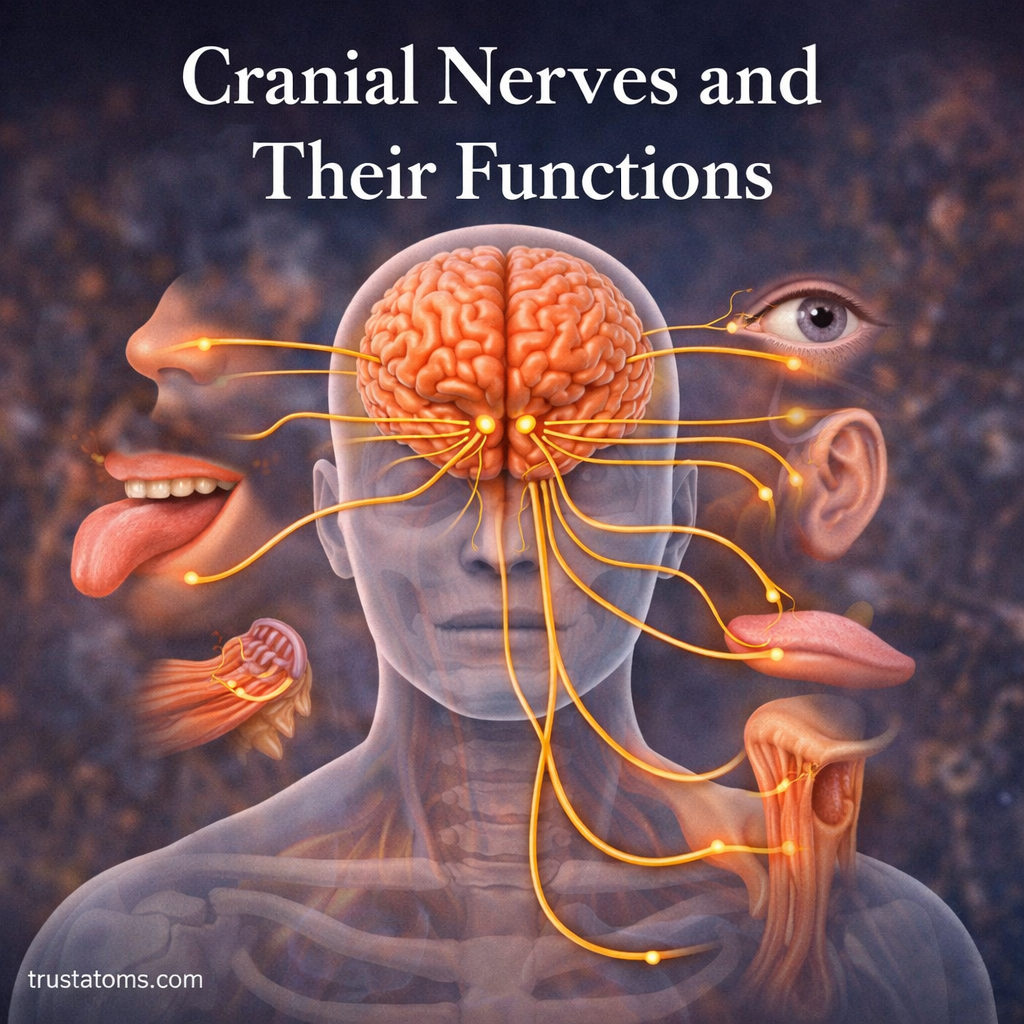
Illustration showing cranial nerves extending from the brain to sensory organs including the eyes, ears, nose, tongue, and throat.
Medical illustration showing cranial nerves connecting the brain to sensory organs and muscles in the head and neck. trustatoms.com

Cranial nerves are a group of 12 pairs of nerves that originate directly from the brain rather than the spinal cord. These nerves play a critical role in controlling sensory perception, muscle movement, and essential body functions in the head, neck, and some internal organs.

They allow the brain to process sensory information such as smell, vision, hearing, taste, and facial sensation while also controlling movements like eye motion, facial expressions, and swallowing.

Understanding cranial nerves helps explain how the nervous system manages many everyday actions that occur without conscious thought.

Continue reading “Cranial Nerves and Their Functions”

Neural Integration in the Spinal Cord

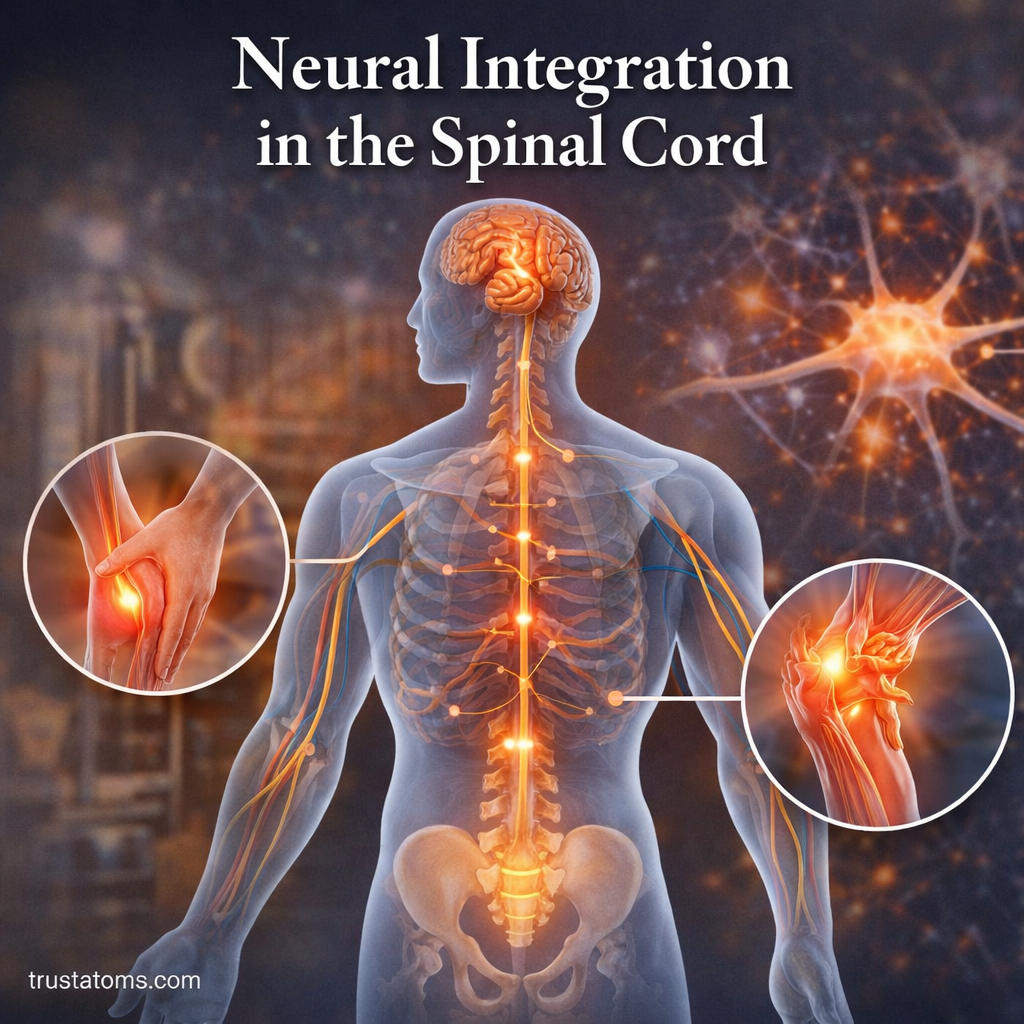
Split diagram showing a reflex arc pulling a hand away from heat and neural pathways communicating between the spinal cord and brain.
Illustration showing a spinal reflex arc and communication between the spinal cord and brain during rapid protective responses. trustatoms.com

The spinal cord is more than just a pathway that carries signals between the brain and the body. It also acts as an important processing center that integrates sensory information and coordinates motor responses.

Neural integration in the spinal cord allows the body to respond quickly to stimuli, maintain posture, and coordinate movement without always needing direct involvement from the brain. This ability is especially important for reflexes and rapid protective responses.

Understanding how the spinal cord processes and integrates neural signals helps explain how the nervous system manages both automatic and voluntary actions.

Continue reading “Neural Integration in the Spinal Cord”

Proprioception and Body Position Sensing

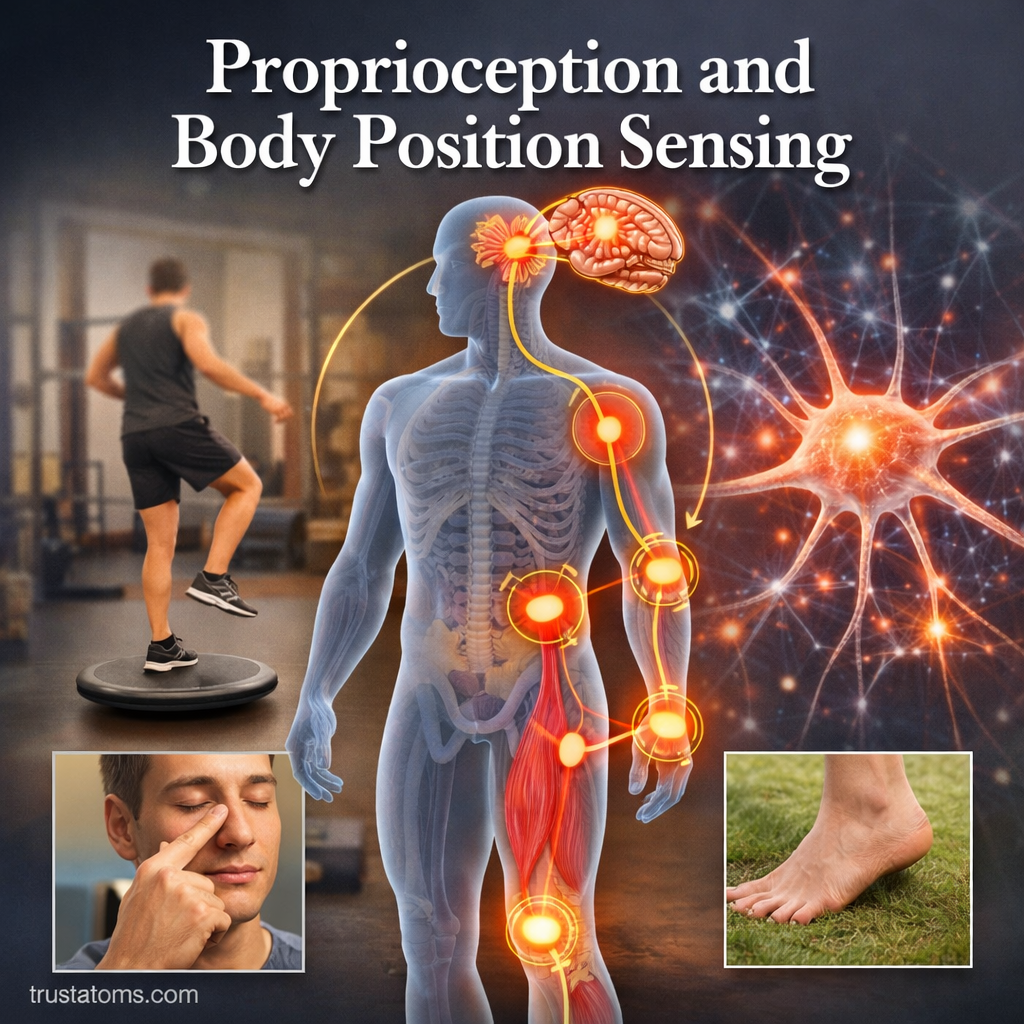
Illustration showing how proprioception allows the brain to sense body position through signals from muscles, joints, and the nervous system.
Illustration explaining proprioception and how the body senses position and movement. trustatoms.com

Proprioception is the body’s ability to sense its own position, movement, and balance without needing to look. It allows you to walk without watching your feet, reach for objects accurately, and maintain posture automatically.

Often called the “sixth sense,” proprioception works through a network of sensory receptors in muscles, joints, and tendons that constantly send information to the brain about body position and movement.

This system operates continuously and mostly unconsciously, helping the brain coordinate movement, maintain balance, and prevent injury.

Continue reading “Proprioception and Body Position Sensing”

Pain Pathways and Nociception

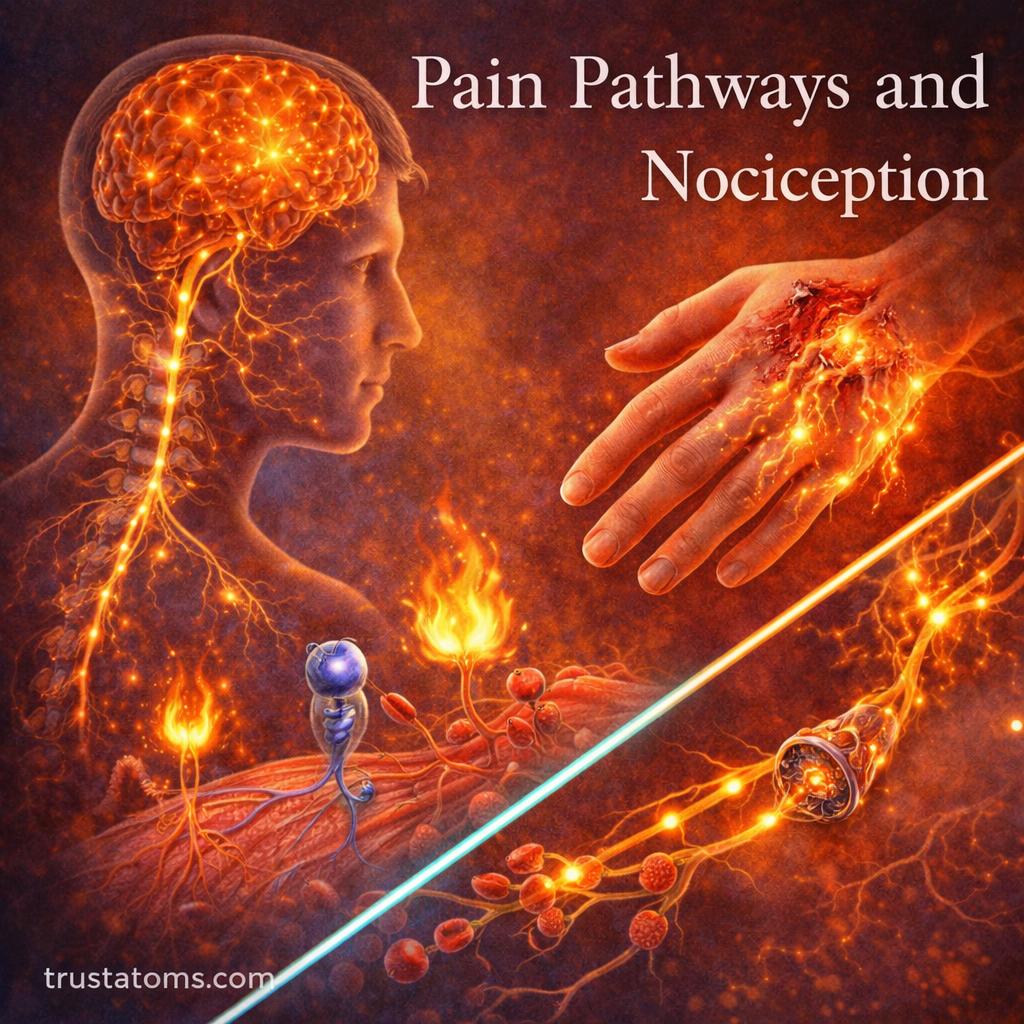
Illustration showing pain pathways where nociceptors detect injury and transmit signals through the spinal cord to the brain.
Illustration depicting how nociceptors detect harmful stimuli and send pain signals through the spinal cord to the brain. trustatoms.com.

Pain is one of the body’s most important protective signals. When tissues are injured or exposed to potentially harmful conditions, the nervous system activates specialized pathways that alert the brain to danger. This process helps the body avoid further injury and initiate protective responses.

The biological detection and processing of harmful stimuli is known as nociception. Pain pathways carry these signals from sensory receptors in the body to the brain, where they are interpreted as the sensation of pain.

Understanding how nociception and pain pathways work provides insight into how the body detects injury, protects itself, and regulates responses to harmful stimuli.

Continue reading “Pain Pathways and Nociception”

Sensory Receptors and Transduction Mechanisms

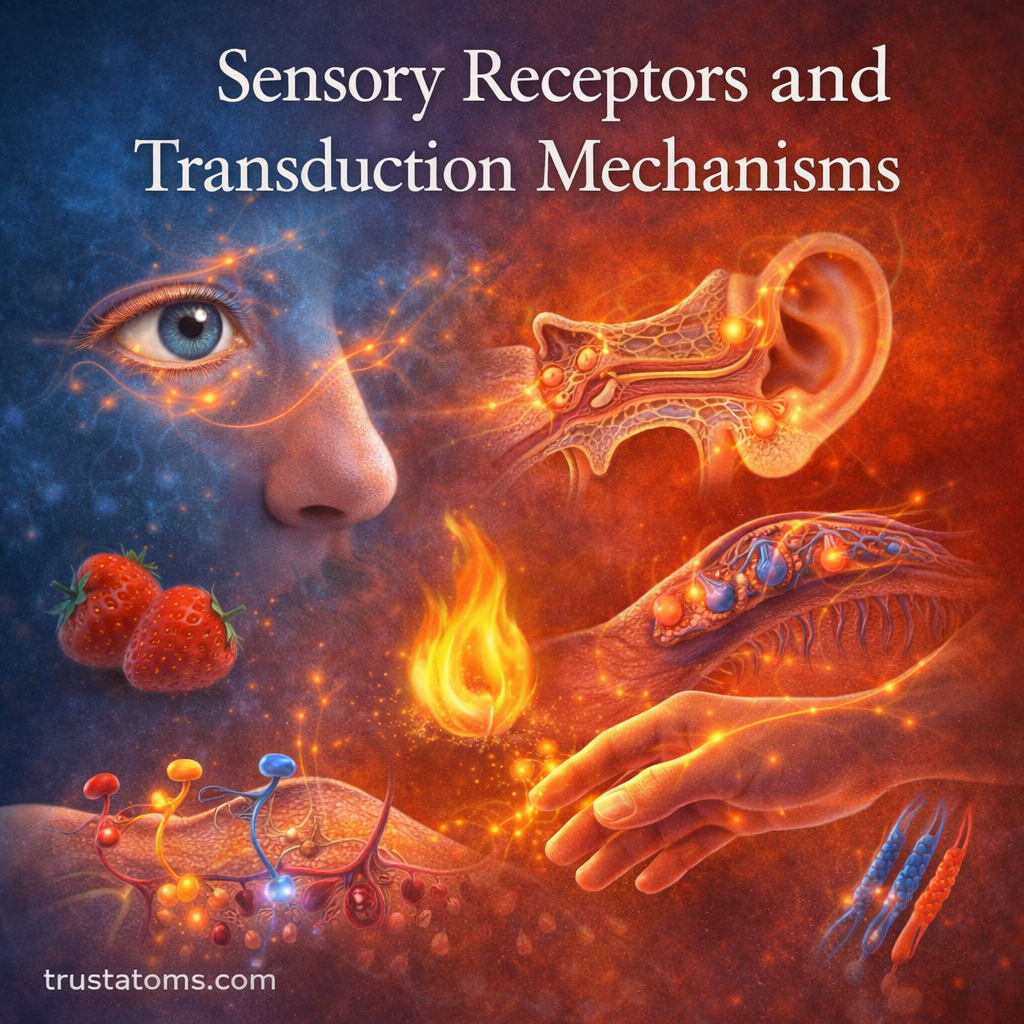
Illustration showing human sensory receptors detecting stimuli such as light, sound, touch, heat, and smell and converting them into neural signals.
Illustration of sensory receptors detecting environmental stimuli and converting them into neural signals through sensory transduction. trustatoms.com.

The human body constantly gathers information about its surroundings and internal conditions. Every sight, sound, touch, taste, and smell begins with specialized structures known as sensory receptors. These receptors detect physical or chemical stimuli and convert them into electrical signals that the nervous system can interpret.

This process of converting environmental signals into neural impulses is called sensory transduction. It forms the foundation of perception, allowing the brain to interpret the world and respond appropriately.

Understanding sensory receptors and transduction mechanisms reveals how the nervous system translates external stimuli into meaningful sensory experiences.

Continue reading “Sensory Receptors and Transduction Mechanisms”