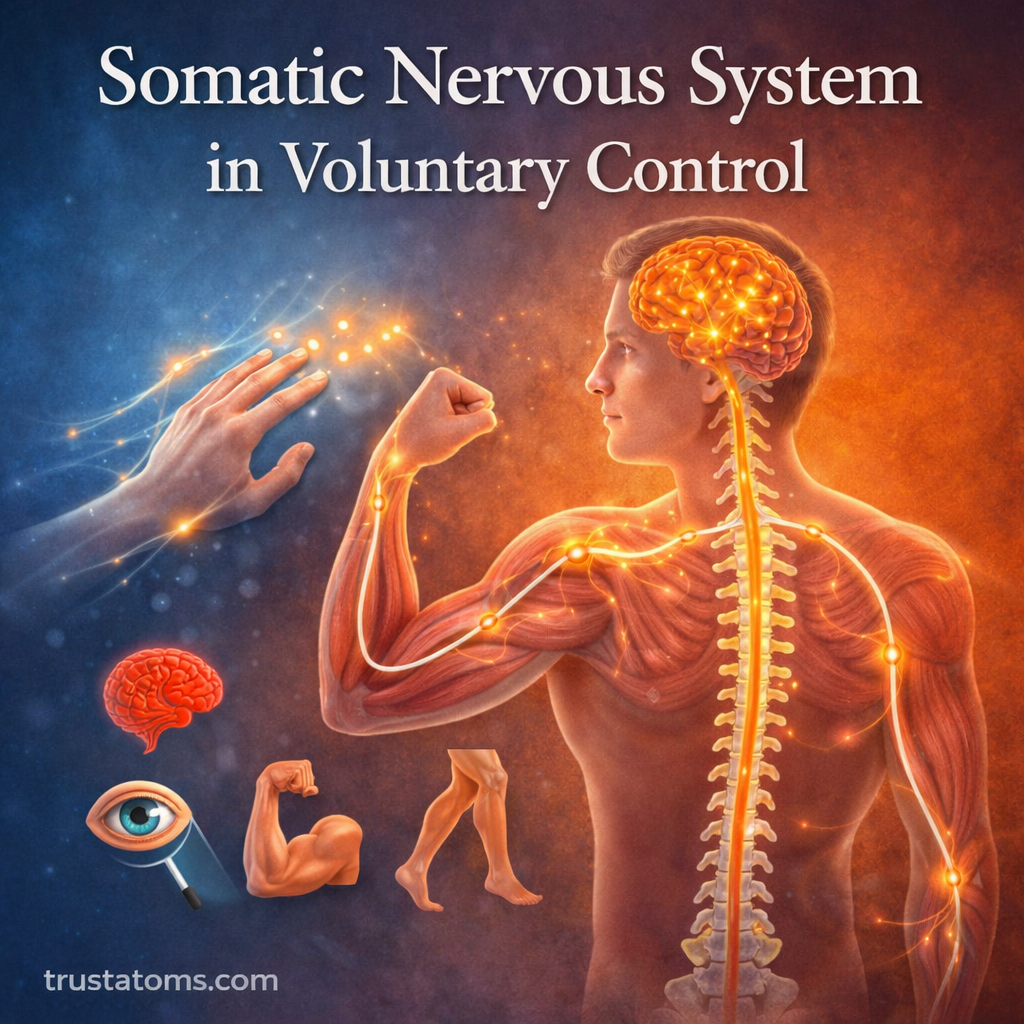
Somatic Nervous System in Voluntary Control

Illustration showing the somatic nervous system controlling voluntary muscle movement through signals between the brain, spinal cord, and skeletal muscles.
Illustration of the somatic nervous system demonstrating how the brain and spinal cord control voluntary skeletal muscle movement. trustatoms.com.

The human body performs thousands of movements every day, from simple actions like picking up a cup to complex activities such as writing, speaking, or playing sports. These movements are controlled by a specialized part of the nervous system known as the somatic nervous system.

The somatic nervous system is responsible for voluntary control of skeletal muscles, allowing humans to consciously direct body movements. It also plays a major role in transmitting sensory information from the environment to the brain.

Understanding how the somatic nervous system functions helps explain how the brain coordinates movement, maintains posture, and interacts with the physical world.

Continue reading “Somatic Nervous System in Voluntary Control”
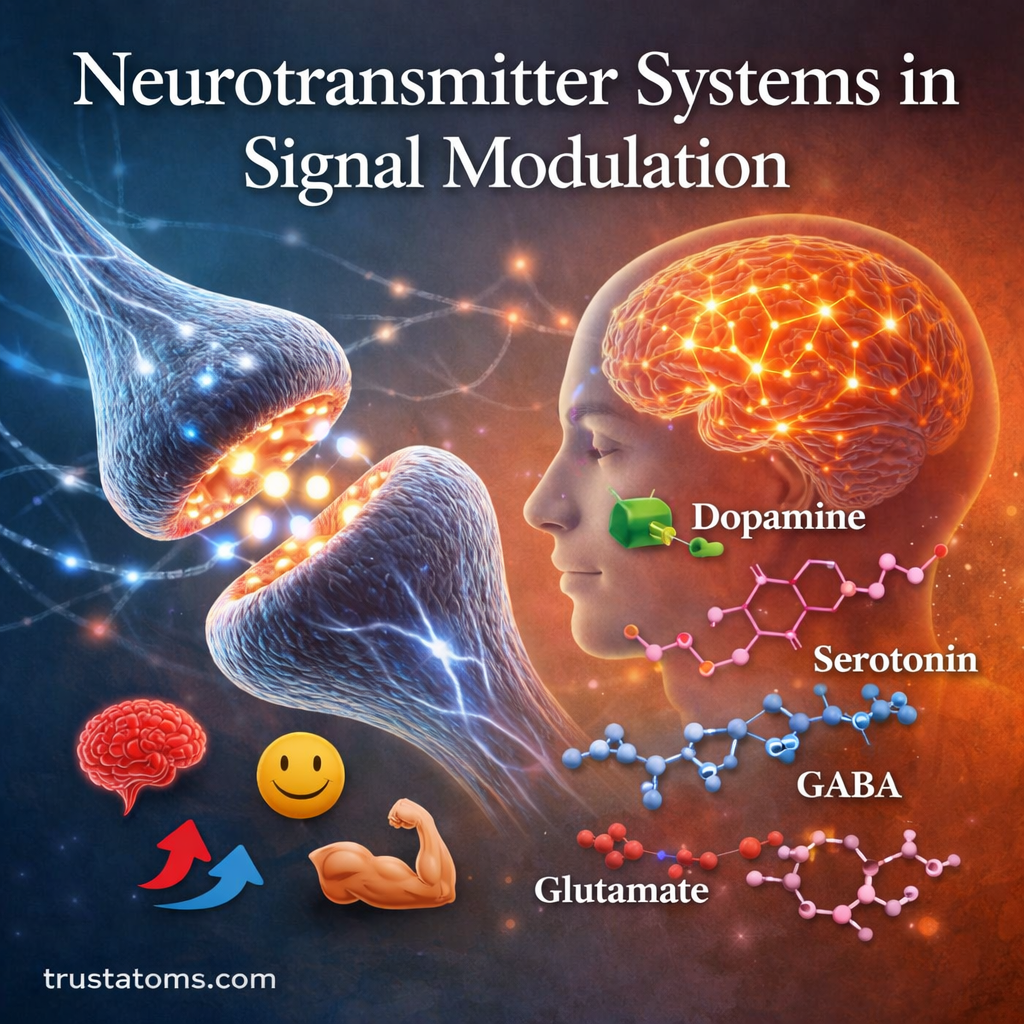
Neurotransmitter Systems in Signal Modulation

Illustration of neurons communicating across a synapse representing neurotransmitter systems involved in signal modulation in the human brain.
Illustration showing how neurotransmitter systems modulate neural signals in the human brain. trustatoms.com.

The human nervous system relies on precise communication between billions of neurons. While electrical signals travel along nerve cells, the actual communication between neurons happens chemically through substances called neurotransmitters. These chemical messengers allow the brain and nervous system to regulate everything from movement and mood to memory and attention.

Neurotransmitter systems play a crucial role in signal modulation, meaning they influence how strongly or weakly signals are transmitted across neural networks. Rather than simply turning signals “on” or “off,” neurotransmitters fine-tune communication throughout the brain.

Understanding how these systems work helps explain many aspects of human behavior, cognition, and neurological health.

Continue reading “Neurotransmitter Systems in Signal Modulation”

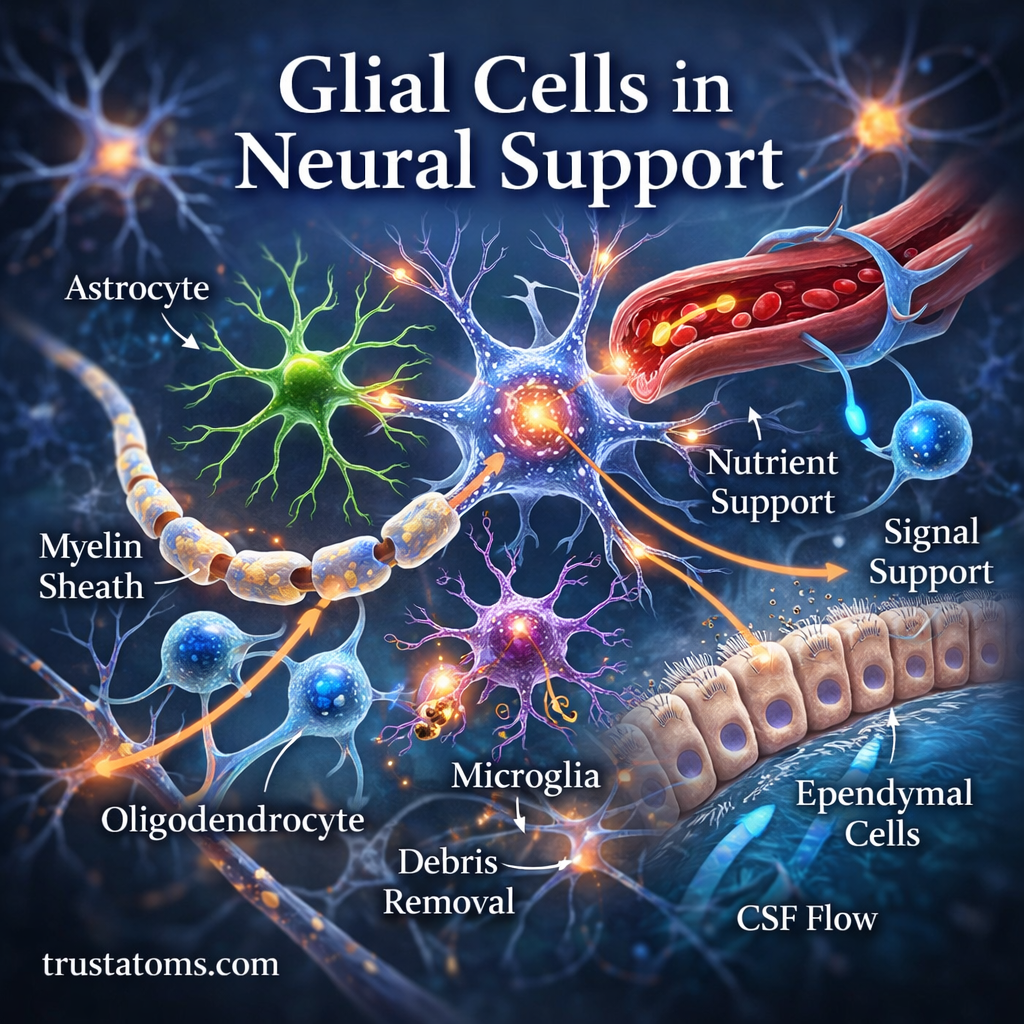
Glial Cells in Neural Support

Illustration of glial cells supporting neurons in the nervous system, including astrocytes, oligodendrocytes, and microglia around neural networks.
Illustration showing glial cells supporting neurons by providing protection, nutrient delivery, and myelin formation in the nervous system. trustatoms.com

When people think about the nervous system, they often focus on neurons—the cells responsible for sending electrical signals throughout the brain and body. However, neurons do not function alone. The nervous system also relies on a large population of supportive cells known as glial cells.

Glial cells play essential roles in maintaining the health, structure, and efficiency of neural networks. They protect neurons, regulate the surrounding environment, provide nutrients, and assist in signal transmission.

Understanding glial cells reveals how the nervous system operates as a cooperative system rather than a collection of isolated neurons.

Continue reading “Glial Cells in Neural Support”

Myelination and Signal Conduction Speed

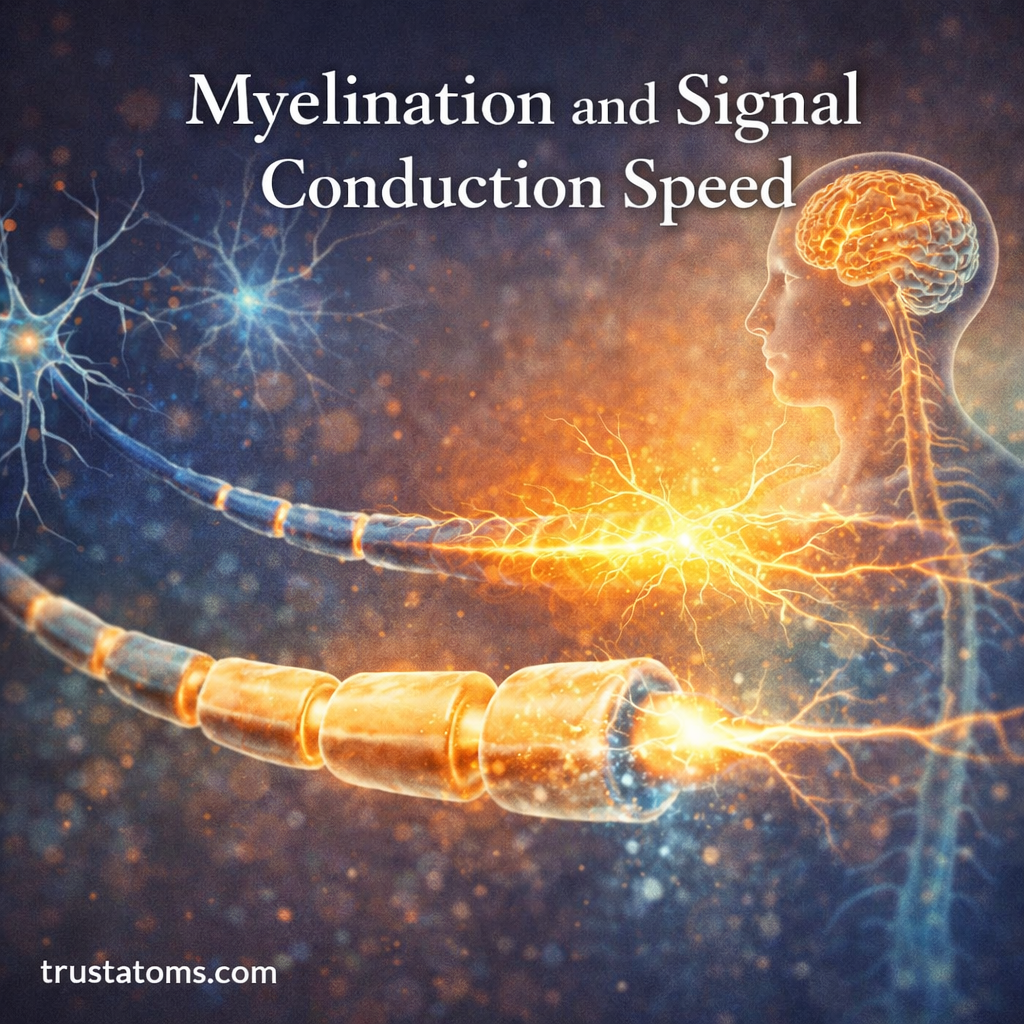
Illustration showing a myelinated neuron with segmented myelin sheath speeding electrical signals along the axon.
Illustration of myelinated nerve fibers demonstrating how myelin increases signal conduction speed in the nervous system. trustatoms.com

The human nervous system relies on rapid communication between billions of neurons. Whether you are reacting to a hot surface, remembering a fact, or coordinating movement, nerve signals must travel quickly and efficiently throughout the body.

One of the most important biological mechanisms that improves this communication speed is myelination. Myelination allows electrical signals in the nervous system to travel faster and more reliably, helping the brain and body function smoothly.

Understanding myelination explains how the nervous system increases signal transmission speed and why it is essential for development, learning, and healthy neurological function.

Continue reading “Myelination and Signal Conduction Speed”

Neural Plasticity in Learning and Adaptation

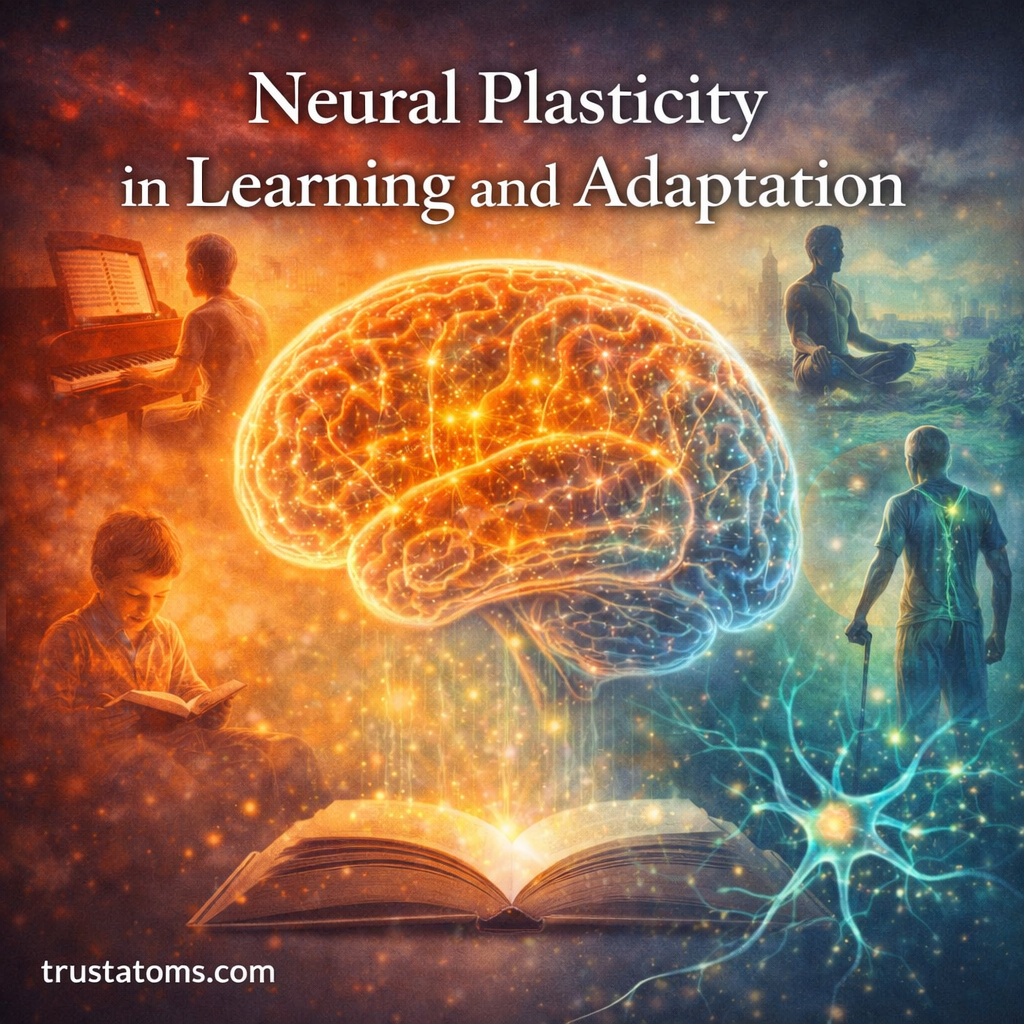
Illustration of neural plasticity showing a glowing brain with neural connections representing learning, memory formation, and brain adaptation.
Illustration representing neural plasticity, where the brain forms and strengthens neural connections during learning and adaptation. trustatoms.com

The human brain is not a fixed structure. Instead, it is constantly changing in response to experiences, learning, and environmental influences. This remarkable ability to adapt is known as neural plasticity, often called neuroplasticity.

Neural plasticity allows the brain to form new connections, strengthen important pathways, and reorganize itself throughout life. These changes are essential for learning new skills, forming memories, recovering from injuries, and adapting to new situations.

Understanding neural plasticity helps explain how the brain supports lifelong learning and behavioral adaptation.

Continue reading “Neural Plasticity in Learning and Adaptation”

Sympathetic vs Parasympathetic Systems

Illustration comparing the sympathetic and parasympathetic nervous systems showing the body’s fight-or-flight response versus rest-and-digest state.
Illustration comparing the sympathetic fight-or-flight response and the parasympathetic rest-and-digest system within the autonomic nervous system. trustatoms.com

The human body constantly adjusts to changing conditions, whether reacting to danger, digesting food, or recovering after physical activity. These automatic adjustments are controlled by the autonomic nervous system (ANS).

Within the autonomic nervous system are two key divisions that work together to maintain balance in the body:

  • The sympathetic nervous system
  • The parasympathetic nervous system

These systems regulate many involuntary functions such as heart rate, breathing, digestion, and blood pressure. Understanding how they differ—and how they cooperate—reveals how the body responds to stress and maintains internal stability.

Continue reading “Sympathetic vs Parasympathetic Systems”

Cerebral Cortex and Higher Processing

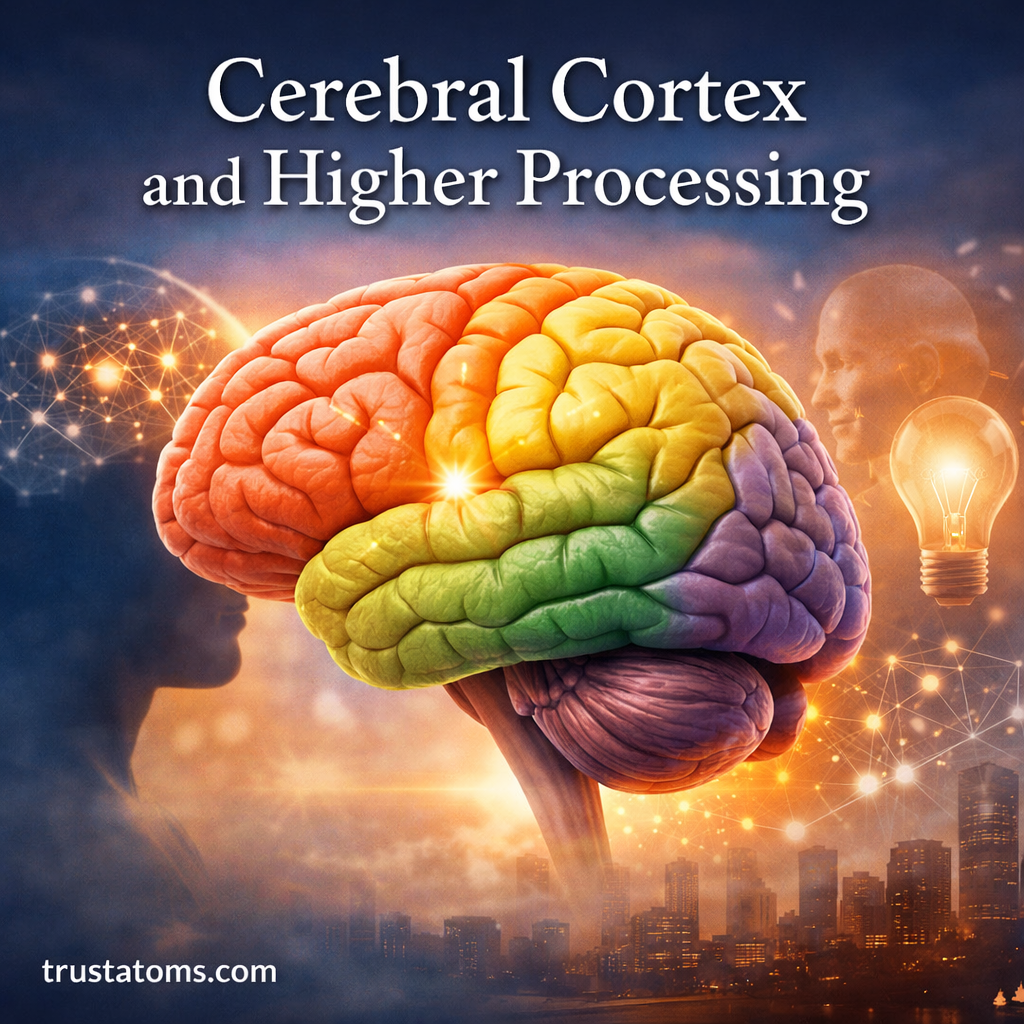
Illustration diagram of the human cerebral cortex highlighting higher brain processing functions such as thinking, memory, and decision-making.
Illustration of the cerebral cortex showing the brain region responsible for higher cognitive processing. trustatoms.com

The human brain is capable of incredible complexity, allowing us to think, reason, speak, plan, and interpret the world around us. At the center of these abilities is the cerebral cortex, the outer layer of the brain responsible for many of our highest cognitive functions.

From solving math problems to recognizing faces and forming memories, the cerebral cortex plays a key role in how we experience and understand reality. This article explores the structure of the cerebral cortex, the regions involved in higher processing, and how this remarkable brain layer enables complex human behavior.

Continue reading “Cerebral Cortex and Higher Processing”

Autonomic Nervous System Overview

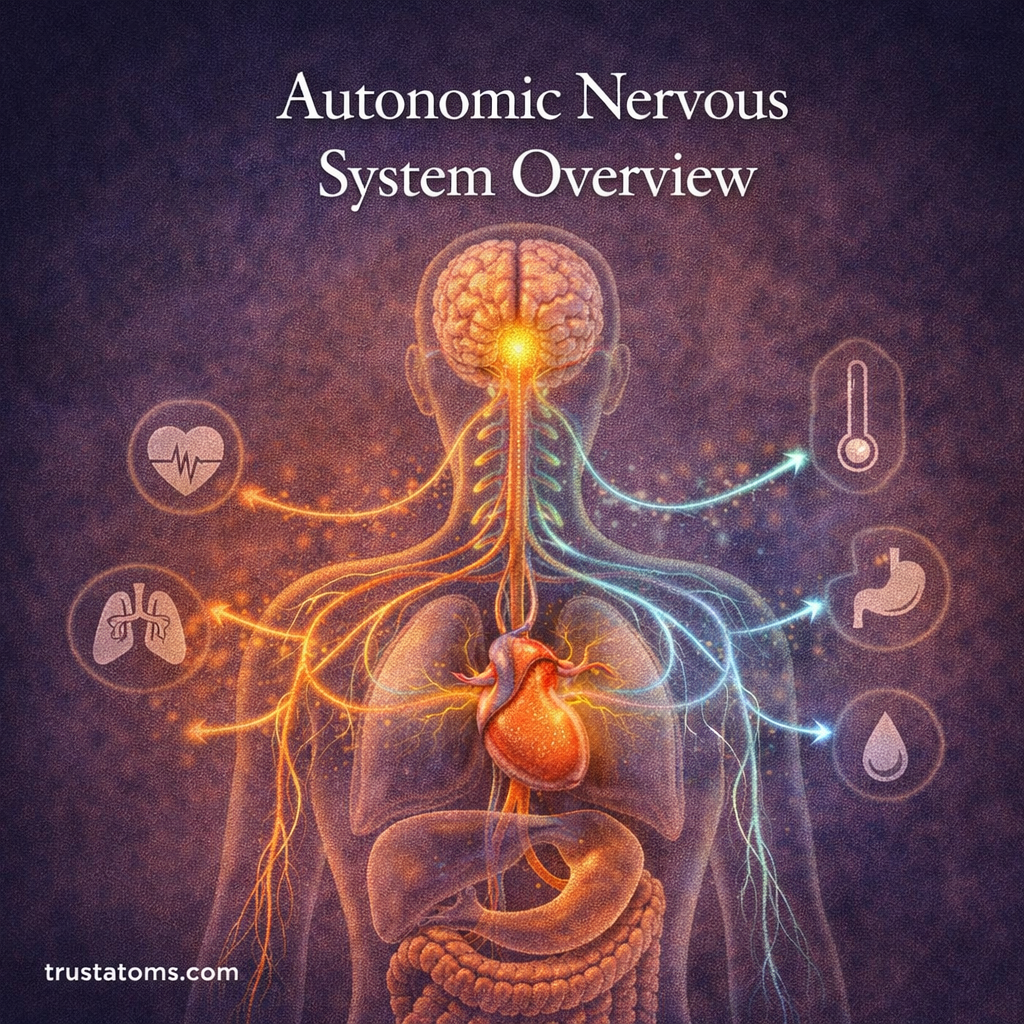
Educational illustration showing the autonomic nervous system regulating organs such as the heart, lungs, stomach, and temperature through sympathetic and parasympathetic pathways.
Diagram illustrating how the autonomic nervous system controls automatic body functions including heart rate, digestion, breathing, and temperature regulation. trustatoms.com.

The autonomic nervous system (ANS) is responsible for regulating many of the body’s automatic processes. These functions occur without conscious effort and include activities such as heart rate, digestion, breathing, and blood pressure control.

As a division of the peripheral nervous system, the autonomic nervous system works continuously to maintain balance within the body. It monitors internal conditions and adjusts physiological processes to keep the body functioning properly.

Understanding the autonomic nervous system helps explain how the body maintains stability and responds automatically to changes in the environment.

Continue reading “Autonomic Nervous System Overview”

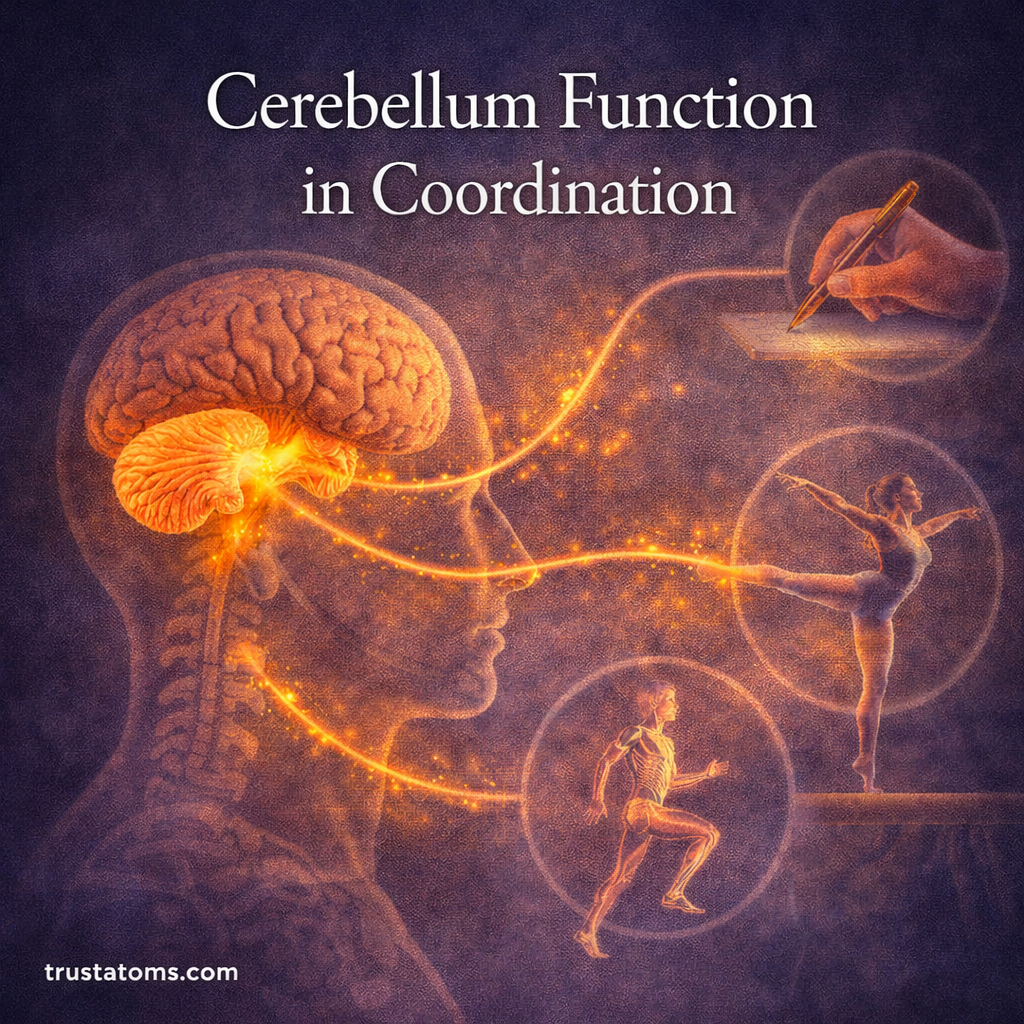
Cerebellum Function in Coordination

Educational illustration showing the cerebellum coordinating movement, balance, and fine motor skills such as walking, writing, and athletic motion.
Diagram illustrating how the cerebellum coordinates balance, posture, and fine motor control during activities like walking, writing, and athletic movement. trustatoms.com.

The cerebellum is a vital part of the brain responsible for coordinating movement, maintaining balance, and refining motor activity. Although it makes up only about 10% of the brain’s volume, it contains more than half of the brain’s neurons, highlighting its importance in neural processing.

Located at the back of the brain beneath the cerebrum, the cerebellum plays a key role in ensuring that movements are smooth, accurate, and well-timed. Without it, even simple tasks such as walking, reaching for objects, or maintaining posture would become difficult and uncoordinated.

By integrating sensory information with motor signals, the cerebellum allows the body to perform complex movements efficiently and maintain stability during motion.

Continue reading “Cerebellum Function in Coordination”

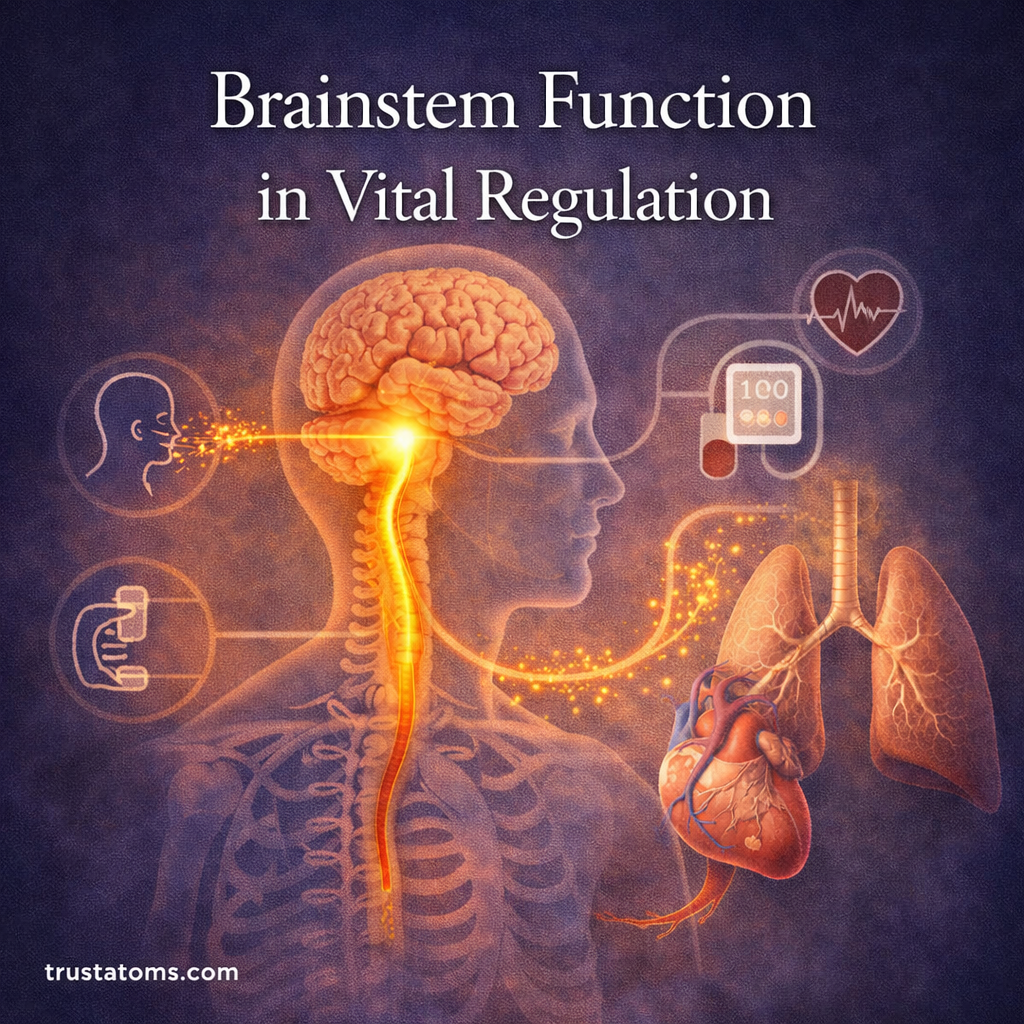
Brainstem Function in Vital Regulation

Educational illustration highlighting the brainstem regulating vital functions such as breathing, heart rate, and blood pressure while connecting the brain to the spinal cord.
Diagram showing how the brainstem regulates essential life functions including breathing, heart rate, and circulation while linking the brain to the spinal cord. trustatoms.com.

The brainstem is one of the most essential structures in the human nervous system. It connects the brain to the spinal cord and controls many of the body’s most critical life-sustaining functions. Activities such as breathing, heart rate, blood pressure, and basic reflexes are regulated by this small but powerful region.

Located at the base of the brain, the brainstem acts as a control center that keeps the body functioning automatically. Many of the processes it manages occur without conscious effort, allowing humans to breathe, swallow, and maintain circulation even while sleeping.

Understanding how the brainstem works helps explain how the nervous system regulates vital functions and maintains stability throughout the body.

Continue reading “Brainstem Function in Vital Regulation”