Science explores the natural world through observation, experimentation, and evidence-based discovery. From the smallest biological processes to the largest structures in the universe, science helps explain how things work and why they happen.
Within this section, you’ll find educational articles covering astronomy, biology, chemistry, physics, earth science, human anatomy, and related fields. Whether you’re curious about space, the human body, natural systems, or scientific principles, Trust Atoms provides accessible explanations designed to make complex topics easier to understand.
Our goal is to help students, lifelong learners, and curious readers explore scientific ideas with clear, practical, and reliable educational content.
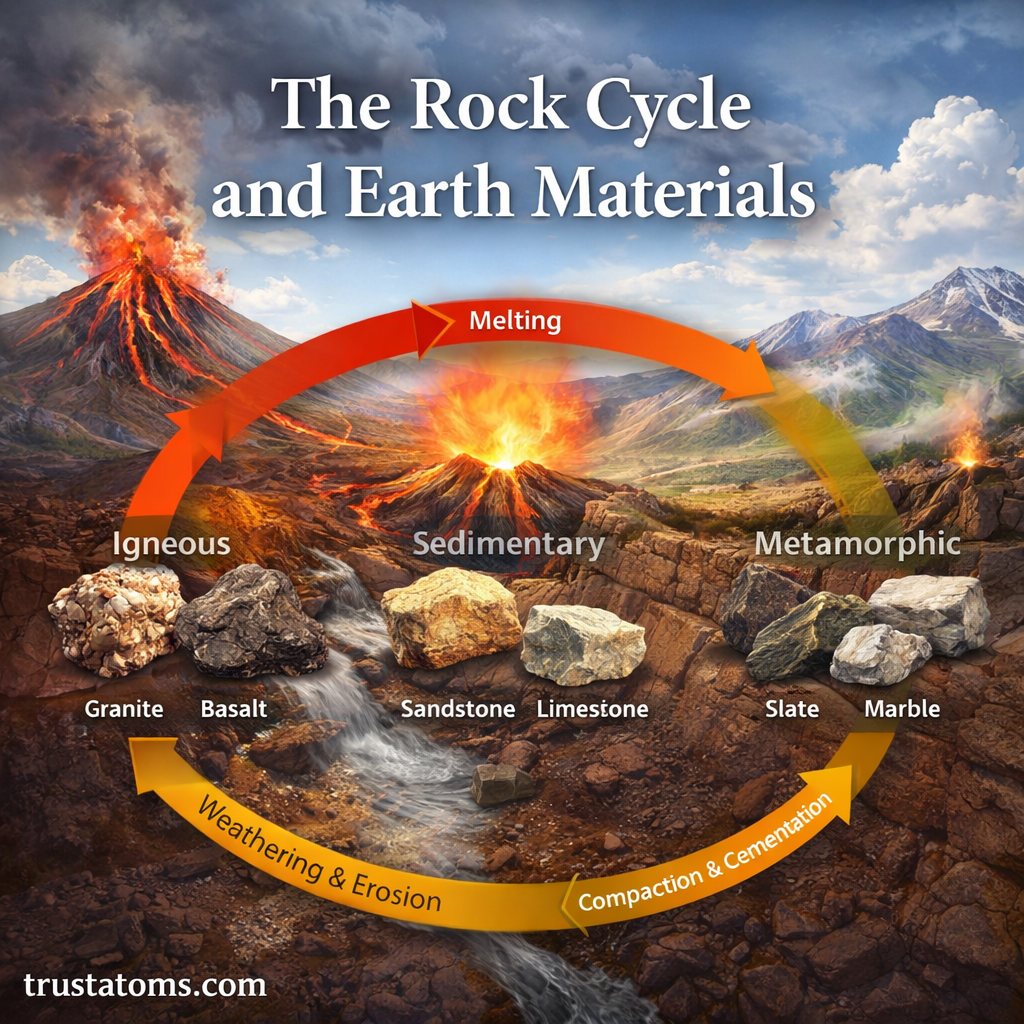
Rock cycle illustration showing how Earth materials transform between igneous, sedimentary, and metamorphic rocks. trustatoms.com.
The rock cycle is the continuous process that forms, breaks down, and transforms rocks on Earth. It explains how different types of rocks—igneous, sedimentary, and metamorphic—are created and recycled over time.
This cycle is driven by natural forces such as heat, pressure, weathering, and erosion. Understanding the rock cycle helps explain how Earth’s surface changes and how materials move through different layers of the planet.
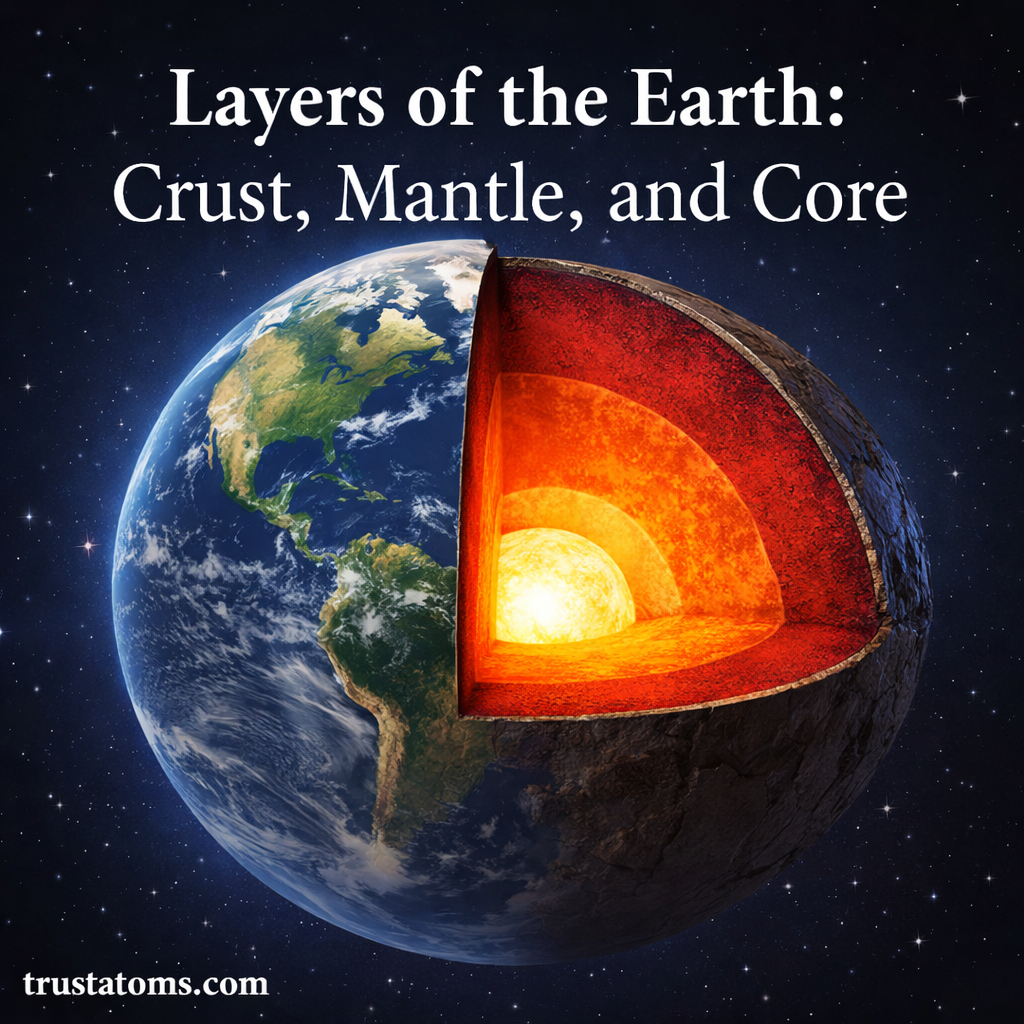
Cutaway illustration of Earth highlighting the crust, mantle, and core layers. trustatoms.com.
The Earth is made up of several layers, each with its own unique composition, structure, and role in shaping the planet. These layers—known as the crust, mantle, and core—work together to drive processes like earthquakes, volcanic activity, and plate tectonics.
Understanding Earth’s layers helps explain how the planet formed, how it continues to change, and why natural events occur.
Illustration representing Earth science concepts including land, water, atmosphere, and geological activity. trustatoms.com.
Earth science is the study of our planet—its structure, systems, processes, and history. It explores everything from rocks and oceans to weather systems, earthquakes, and Earth’s place within the solar system.
Rather than focusing on a single topic, Earth science combines multiple scientific disciplines to explain how Earth works as a dynamic and interconnected system. It helps scientists understand natural events, environmental changes, and the processes that shape life on Earth.
Earth science also overlaps with several scientific fields. Planetary studies frequently connect with What Is Astronomy?, environmental systems often intersect with What Is Biology?, and many geological processes rely on concepts found in What Is Chemistry?and What Is Physics?.
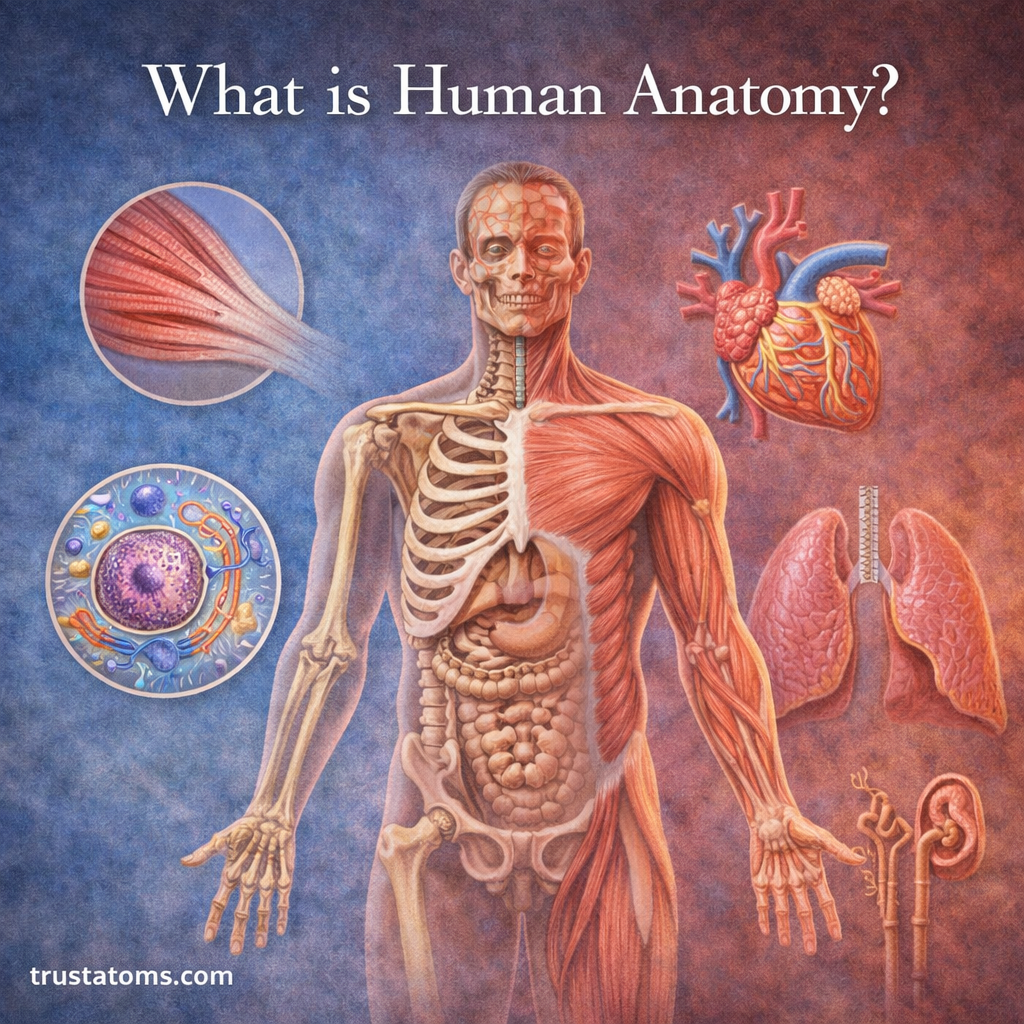
Overview of human anatomy highlighting bones, muscles, and internal organs that make up the body. trustatoms.com.
Human anatomy is the scientific study of the structure of the human body. It examines how body parts are organized, how they relate to one another, and how structure supports function.
From cells and tissues to organs and body systems, anatomy provides a framework for understanding how the human body is built. It serves as a foundation for medicine, biology, healthcare, fitness, and scientific research.
Human anatomy also overlaps heavily with What Is Biology?, especially when studying cells and living systems, while many body processes rely on molecular interactions explored in What Is Chemistry?.
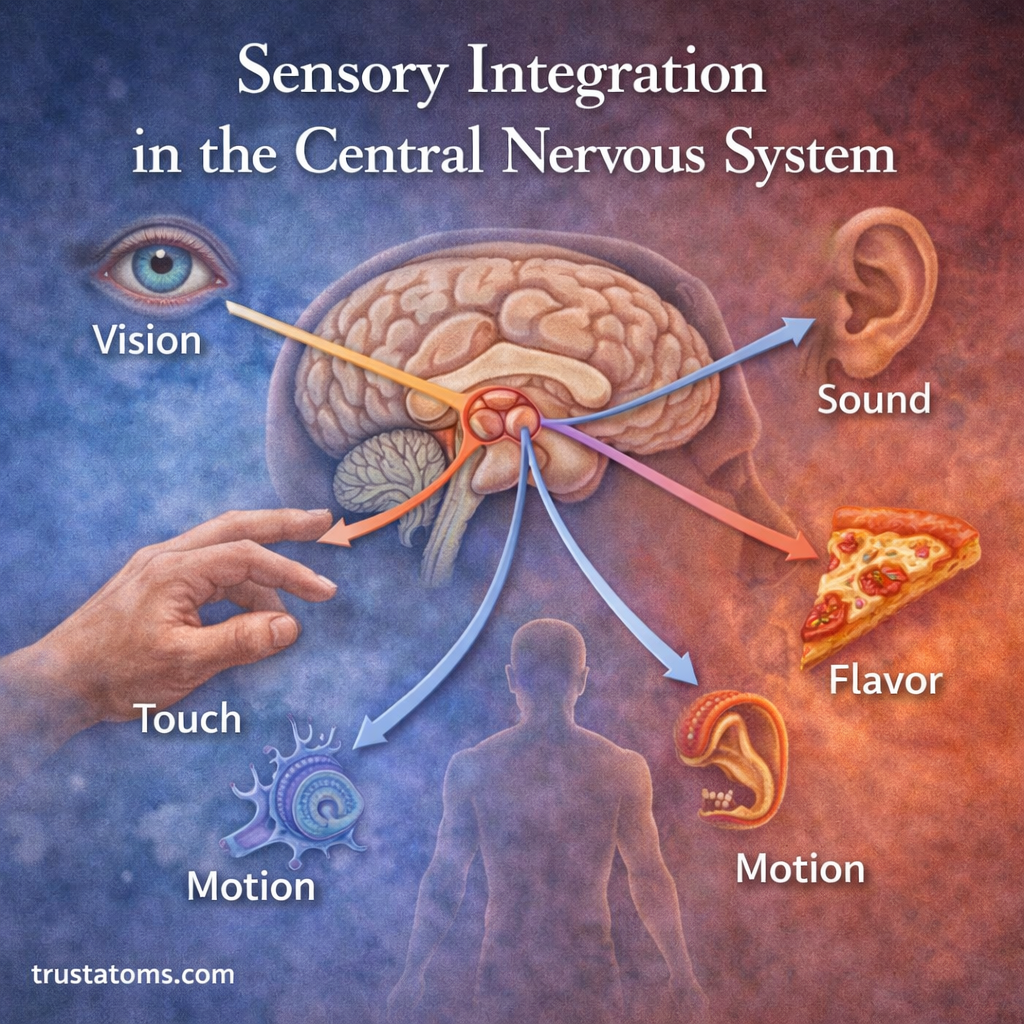
Diagram of how the brain integrates sensory inputs such as vision, sound, and touch into a unified experience. trustatoms.com.
Every second, your body receives a constant stream of sensory information—touch, sound, sight, temperature, and more. The central nervous system (CNS) is responsible for organizing and interpreting this data so you can respond effectively to your environment.
This process, known as sensory integration, allows the brain to combine multiple sensory inputs into a unified experience.
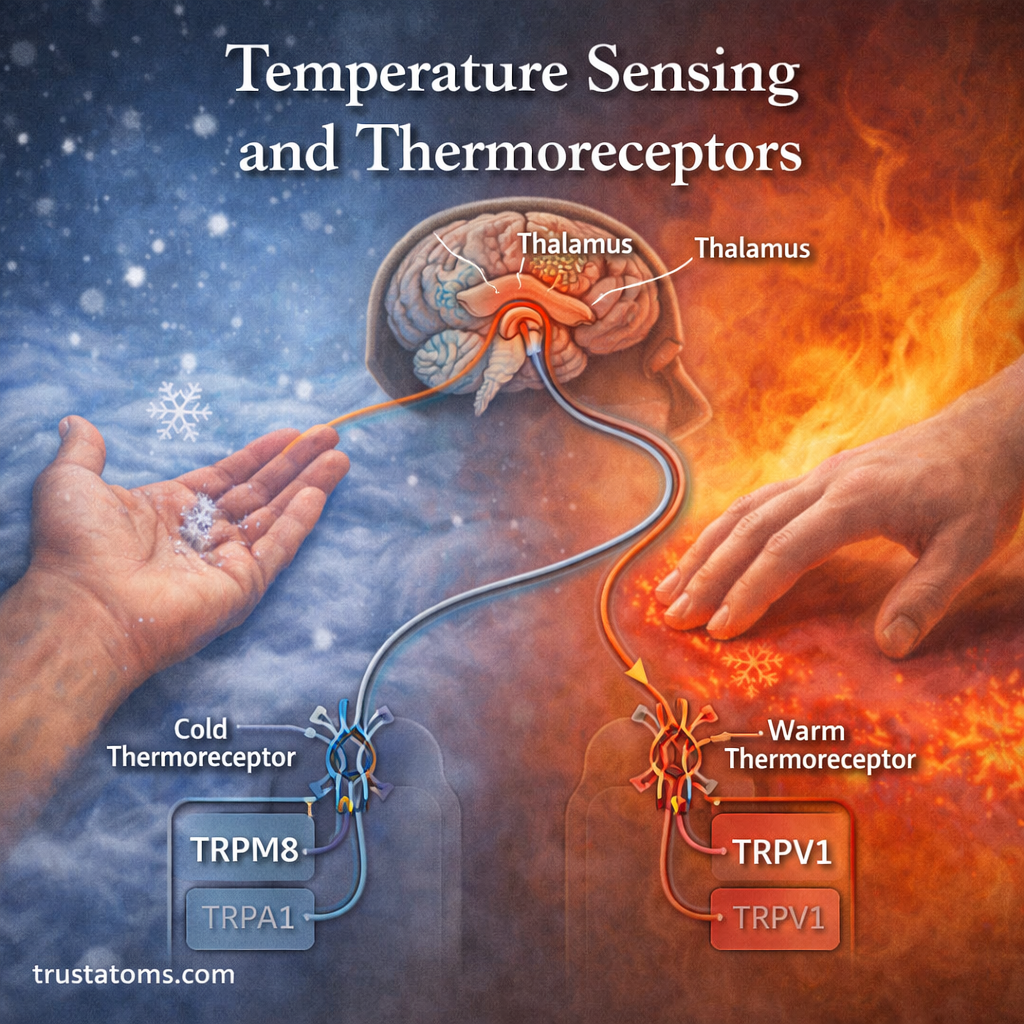
Visual representation of thermoreceptors detecting heat and cold and sending signals through the nervous system to the brain. trustatoms.com.
Temperature sensing is a vital function of the human body, helping maintain internal stability and protect against environmental extremes. Whether you’re stepping into cold water or touching a hot surface, specialized receptors in your skin and body instantly detect temperature changes and send signals to the brain.
This guide explains how thermoreceptors work, the pathways involved, and how your body interprets temperature.
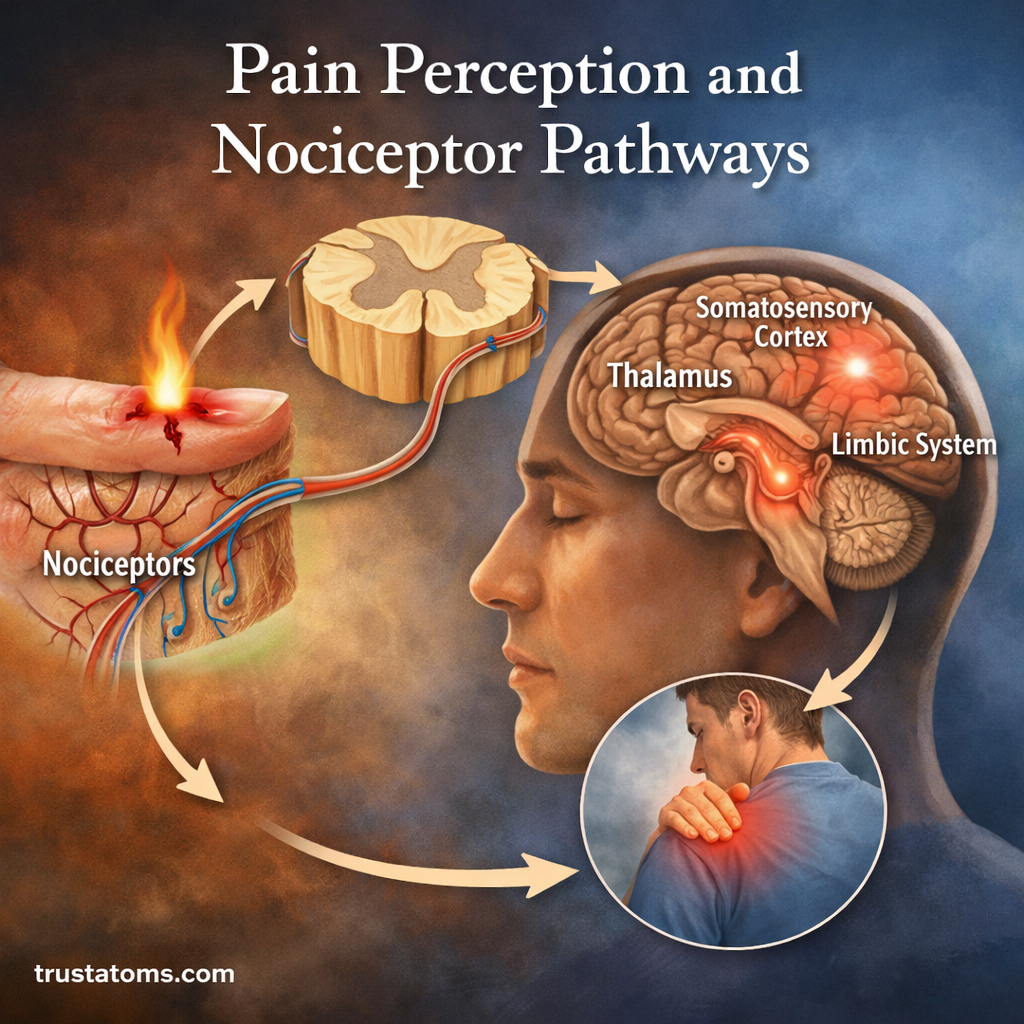
Diagram illustrating how nociceptors detect injury and transmit pain signals through the spinal cord to the brain. trustatoms.com.
Pain is one of the body’s most important protective mechanisms. It alerts you to injury, prevents further damage, and drives healing behaviors. But pain is not just a simple sensation—it’s a complex process involving specialized receptors, neural pathways, and brain interpretation.
This guide breaks down how pain works, focusing on nociceptors and the pathways that carry pain signals from the body to the brain.
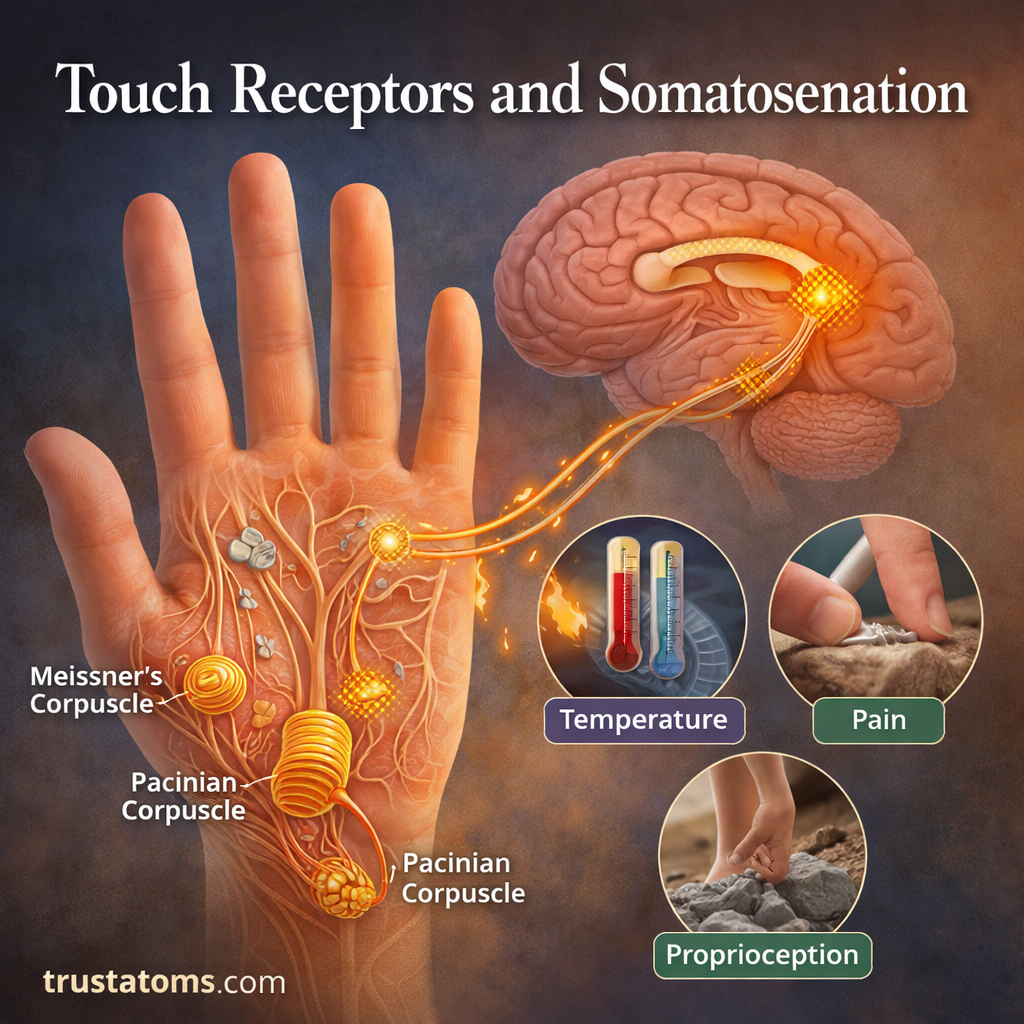
Diagram showing how touch receptors in the skin send signals to the brain for processing sensation and perception. trustatoms.com
Touch is one of the most essential and complex sensory systems in the human body. Known scientifically as somatosensation, it allows us to perceive pressure, temperature, pain, vibration, and body position. From feeling a gentle breeze to reacting to a hot surface, touch receptors constantly gather information that helps us interact safely and effectively with our environment.
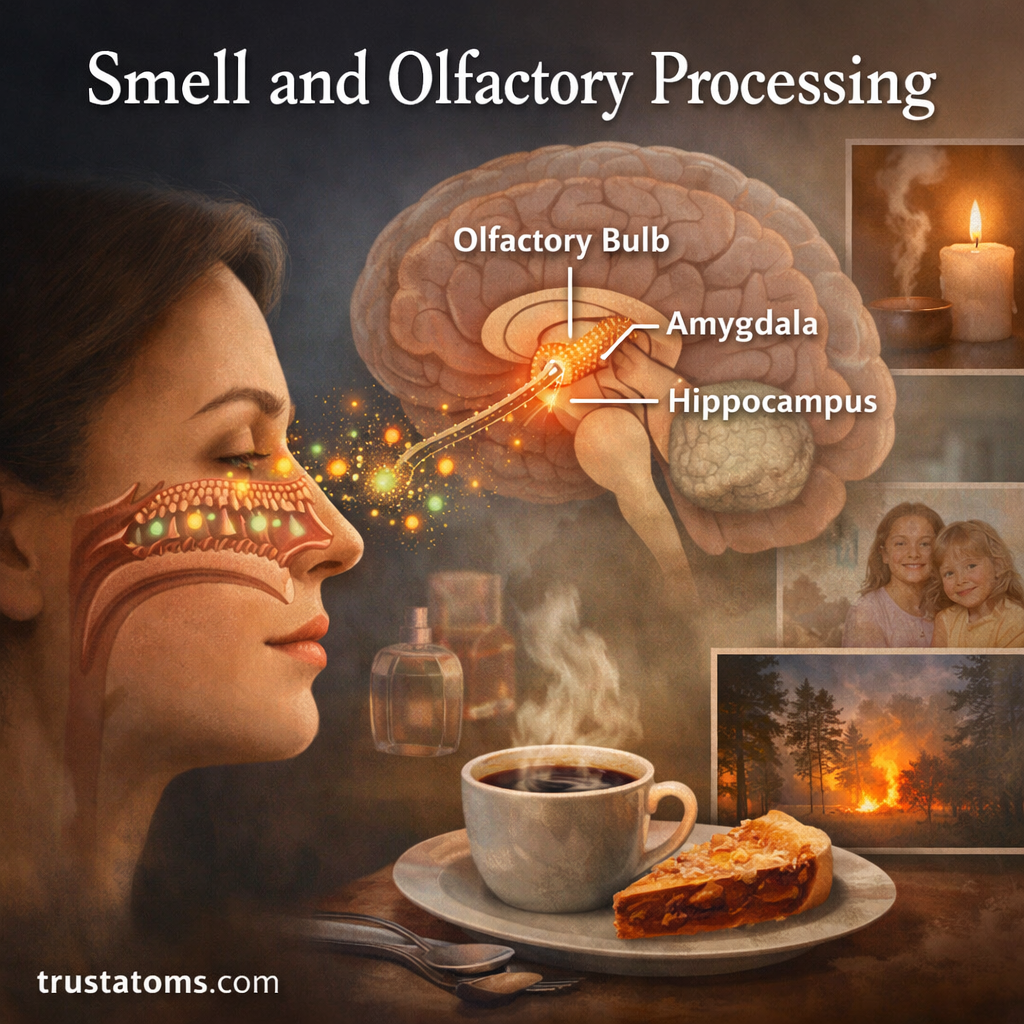
Visual diagram of how smell signals travel from the nose to the brain, highlighting key olfactory structures. trustatoms.com
The sense of smell, also known as olfaction, is one of the most direct and powerful sensory systems in the human body. Unlike vision or hearing, smell is closely tied to memory, emotion, and instinctive behavior. From detecting danger (like smoke or spoiled food) to enhancing taste and triggering memories, olfactory processing plays a critical role in daily life.
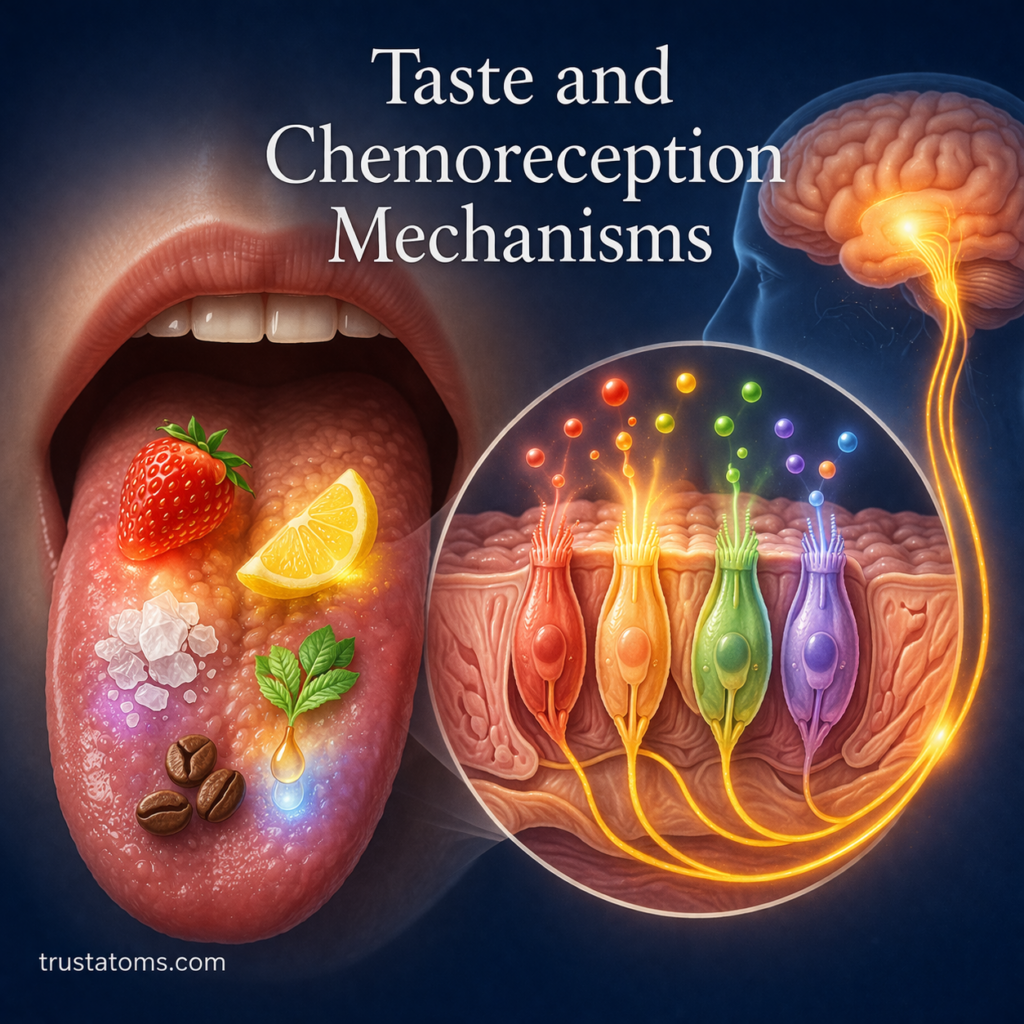
Diagram showing how taste buds detect chemicals and send signals to the brain. trustatoms.com
Taste is one of the body’s key sensory systems, helping us evaluate food, detect nutrients, and avoid harmful substances. While it may seem simple, taste is part of a broader process called chemoreception, where the body detects chemical stimuli from the environment.
From enjoying a sweet dessert to reacting to bitter or spoiled food, taste plays an essential role in survival and daily experience.