Skeletal Muscle Structure and Function

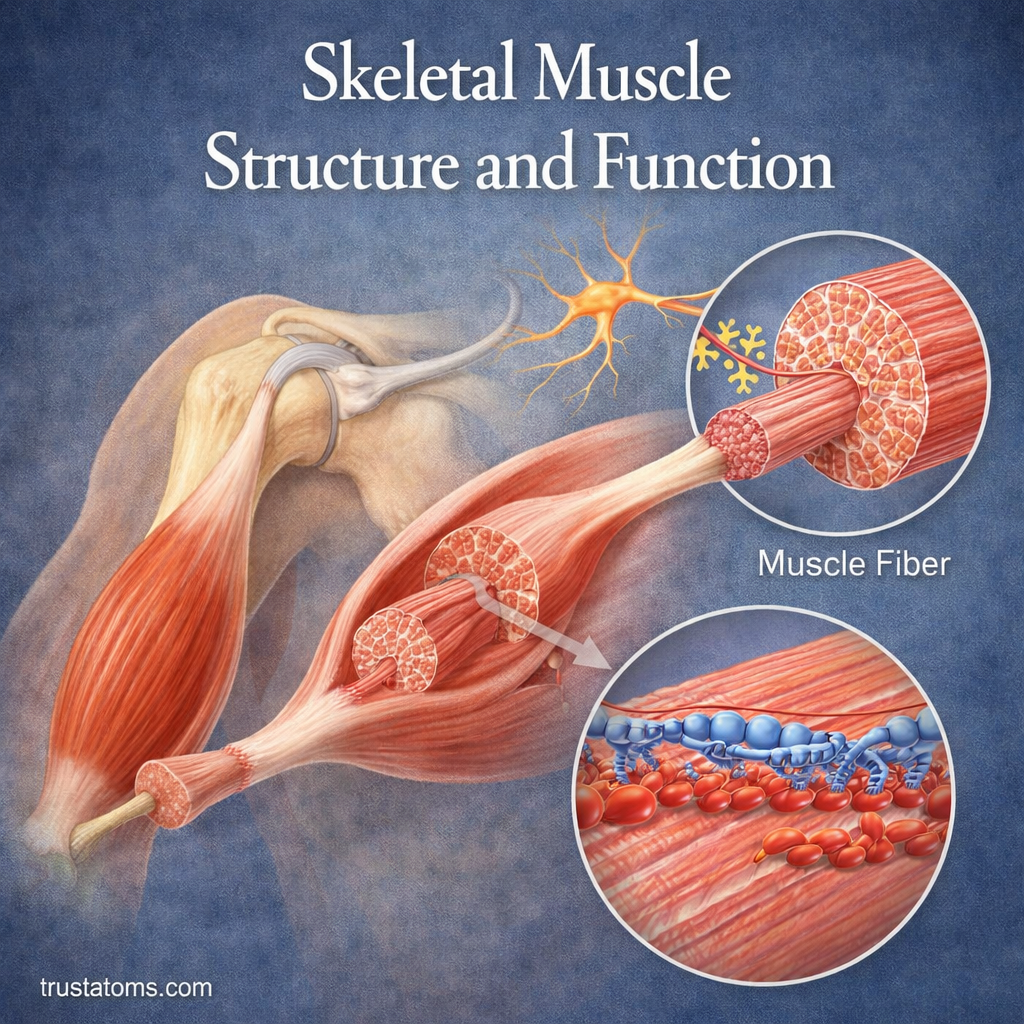
Illustration of skeletal muscle structure showing muscle fibers, fascicles, and actin-myosin interaction during contraction.
Diagram of skeletal muscle structure and function highlighting muscle fibers and contraction mechanism. trustatoms.com.

Skeletal muscles are the muscles attached to your bones that allow voluntary movement. Whether you’re walking, lifting, or even smiling, skeletal muscles are responsible for making those actions possible.

They are one of three muscle types in the body and play a key role in movement, posture, and overall physical strength.

Continue reading “Skeletal Muscle Structure and Function”
Bone Remodeling and Mineral Balance

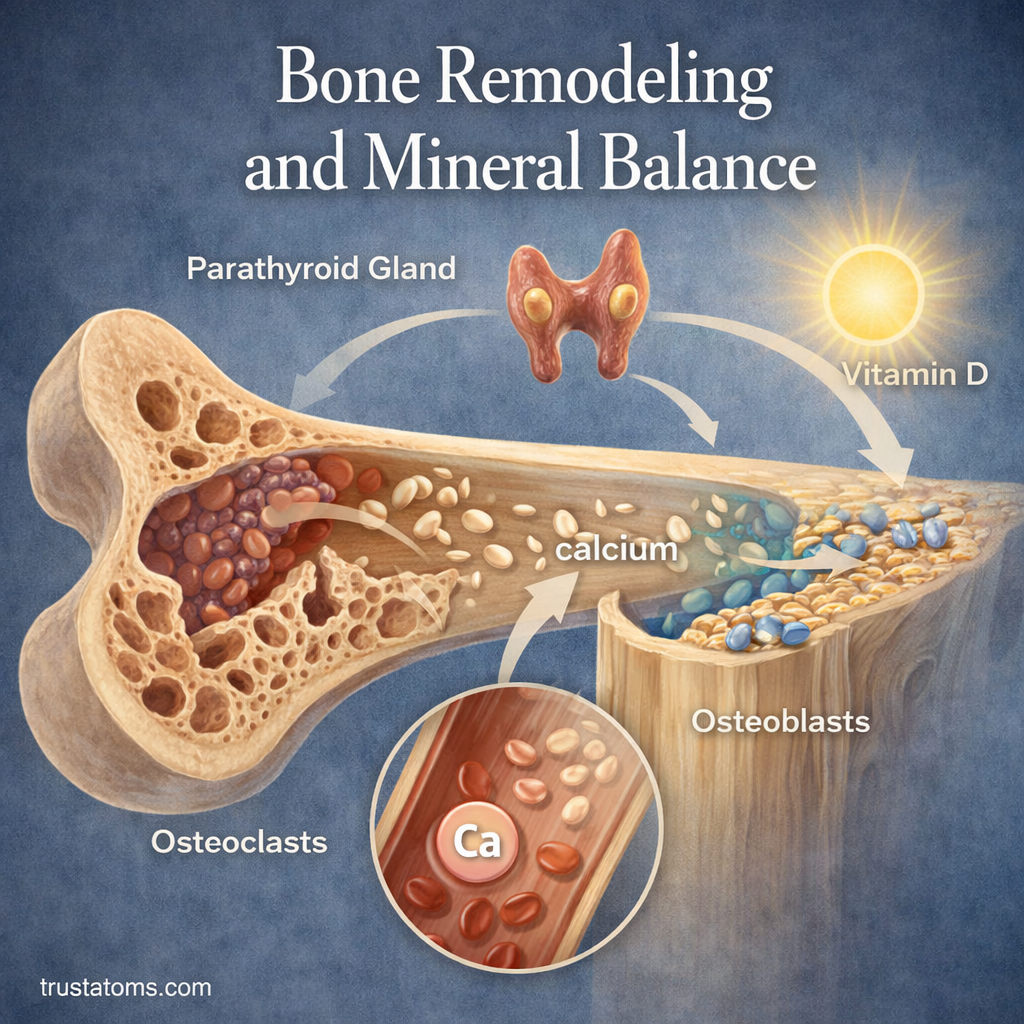
Illustration showing bone remodeling process with osteoclasts breaking down bone and osteoblasts rebuilding bone, highlighting calcium balance.
Diagram illustrating bone remodeling and mineral balance, including calcium movement and bone cell activity. trustatoms.com.

Bone is not a static tissue. It is constantly being broken down and rebuilt through a process called bone remodeling. This ongoing cycle helps maintain bone strength, repair damage, and regulate essential minerals like calcium and phosphorus in the body.

Understanding bone remodeling and mineral balance is key to maintaining healthy bones throughout life.

Continue reading “Bone Remodeling and Mineral Balance”

Bone Structure: Compact vs Spongy Bone

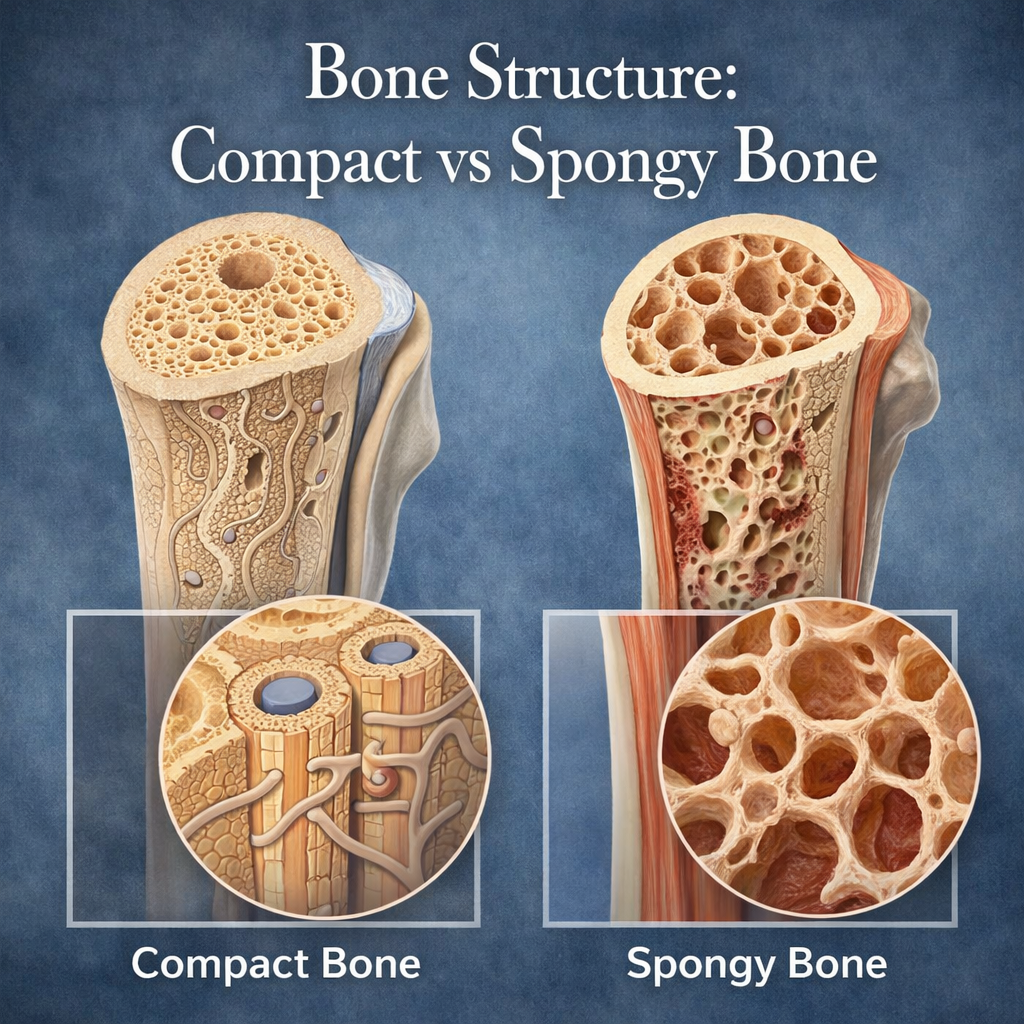
Diagram comparing compact bone and spongy bone showing dense outer bone and porous inner bone structure.
Comparison of compact and spongy bone structure highlighting density and internal composition. trustatoms.com.

Bones may look solid from the outside, but internally they have a complex structure that balances strength, flexibility, and lightness. Two main types of bone tissue—compact bone and spongy bone—work together to give bones their unique properties.

Understanding how these two types differ helps explain how bones support the body, protect organs, and produce blood cells.

Continue reading “Bone Structure: Compact vs Spongy Bone”

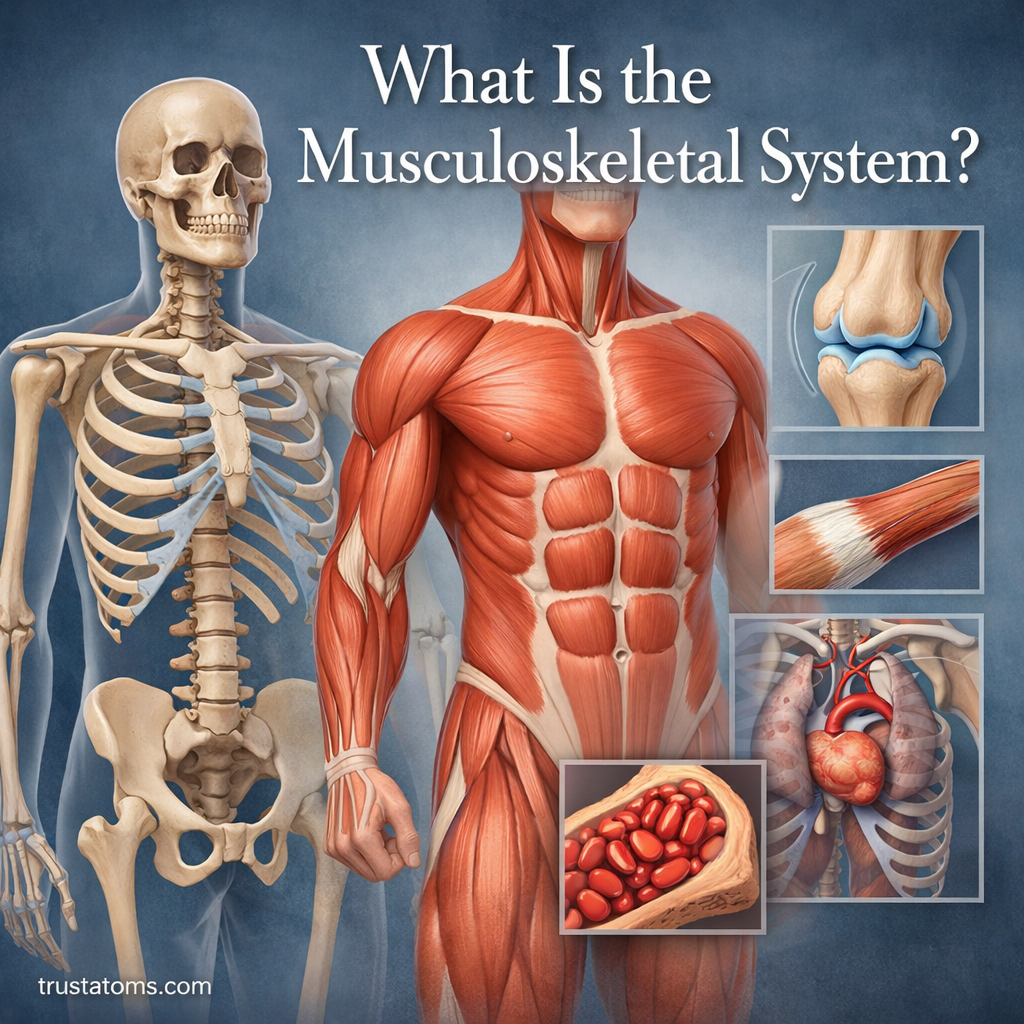
What Is the Musculoskeletal System?

Illustration showing the human musculoskeletal system with skeleton, muscles, joints, and connective tissues.
Illustration of the human musculoskeletal system highlighting bones, muscles, and joints. trustatoms.com.

The musculoskeletal system is the body’s structural and movement system. It includes bones, muscles, cartilage, tendons, ligaments, and joints working together to support your body, enable movement, and protect vital organs.

Without this system, standing, walking, lifting, and even maintaining posture would not be possible. It also plays an important role in storing minerals and producing blood cells.

Continue reading “What Is the Musculoskeletal System?”

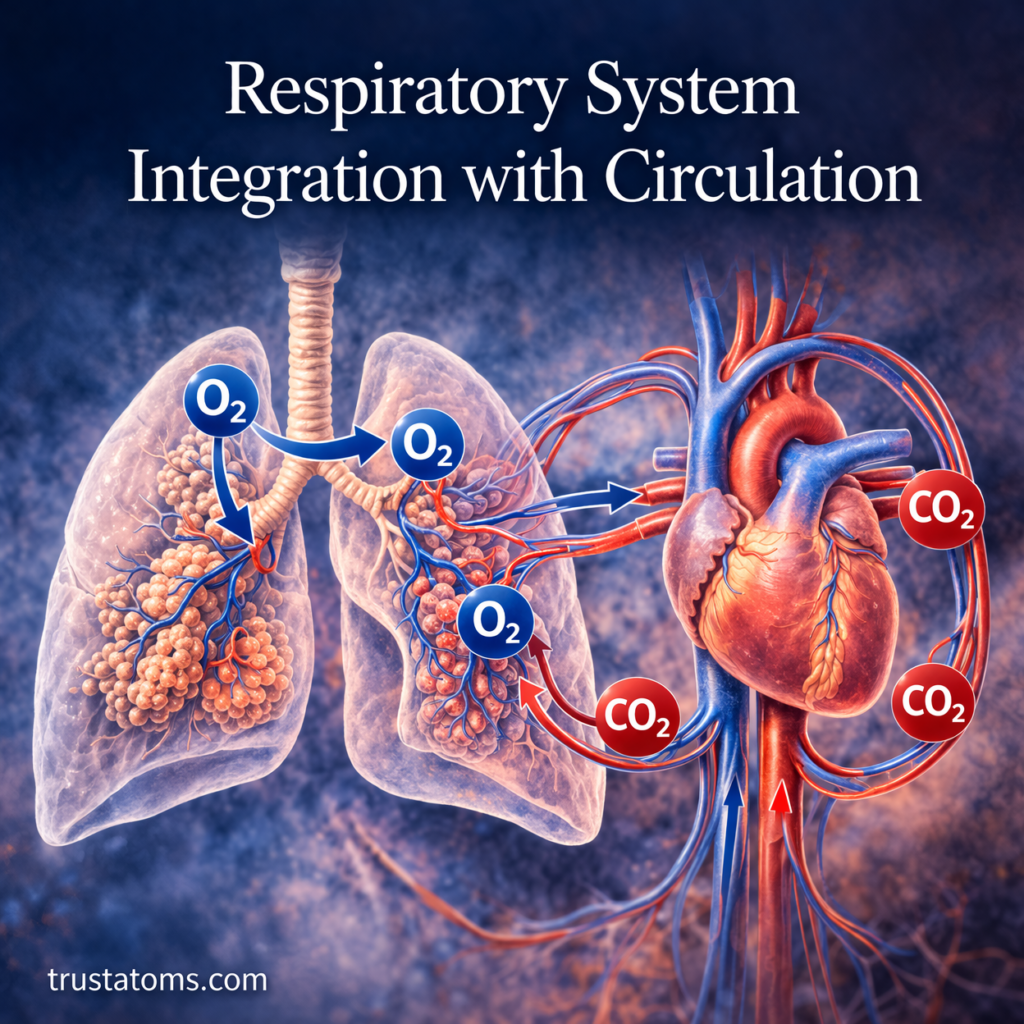
Respiratory System Integration with Circulation

Illustration showing how oxygen and carbon dioxide move between the lungs and heart in the respiratory and circulatory systems.
Illustration demonstrating the integration of the respiratory and circulatory systems, showing oxygen delivery and carbon dioxide removal. trustatoms.com

The human body relies on a tightly coordinated partnership between the respiratory and circulatory systems. While the lungs bring oxygen into the body, it’s the bloodstream that delivers that oxygen to every cell—and removes carbon dioxide in return.

This integration is essential for survival, energy production, and overall physiological balance. In this article, we’ll explore how these two systems work together to support life.

Continue reading “Respiratory System Integration with Circulation”

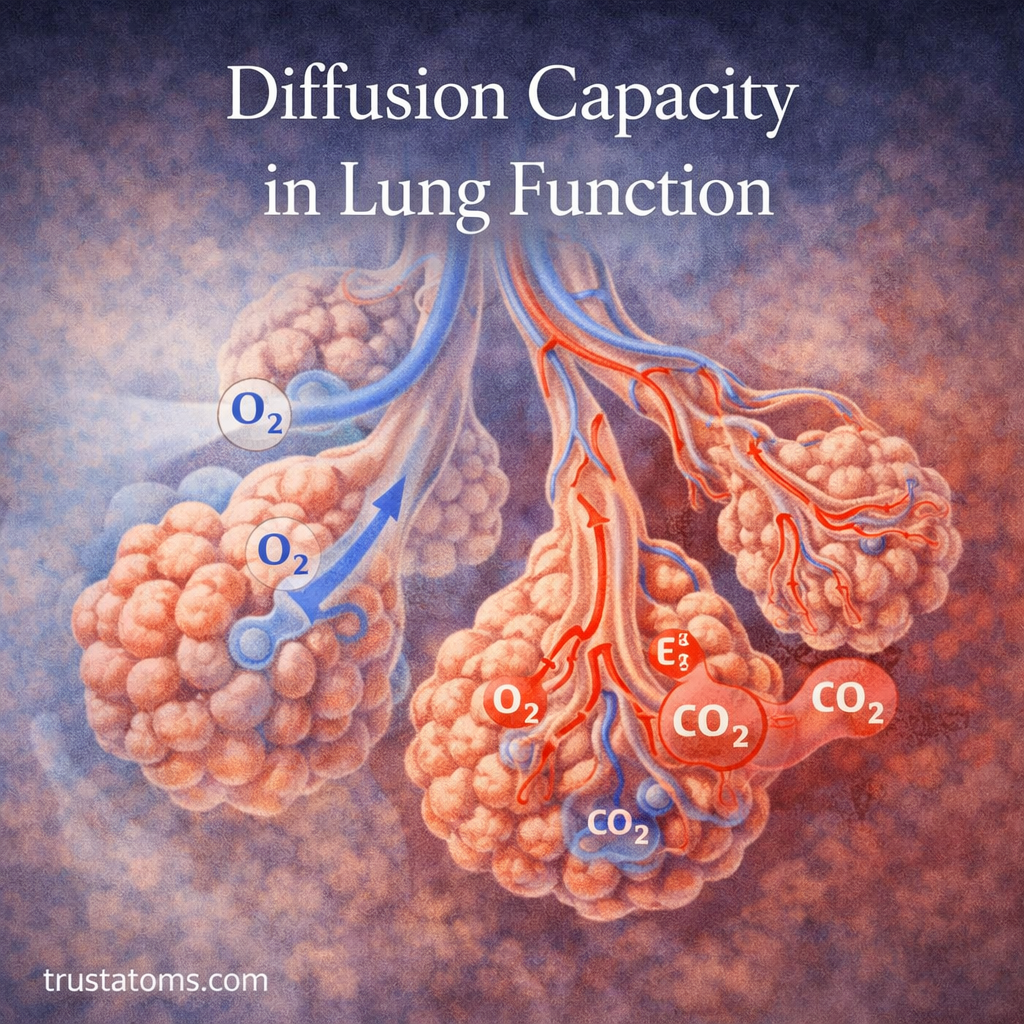
Diffusion Capacity in Lung Function

Illustration of gas exchange in the lungs, showing oxygen entering the blood and carbon dioxide leaving through the alveoli. trustatoms.com

Every breath you take brings oxygen into your lungs—but getting oxygen into the bloodstream is only part of the process. For the body to function properly, oxygen must diffuse across the thin membrane of the alveoli into the blood, while carbon dioxide diffuses out.

This ability is known as diffusion capacity, and it plays a critical role in overall lung function and respiratory health.

Continue reading “Diffusion Capacity in Lung Function”

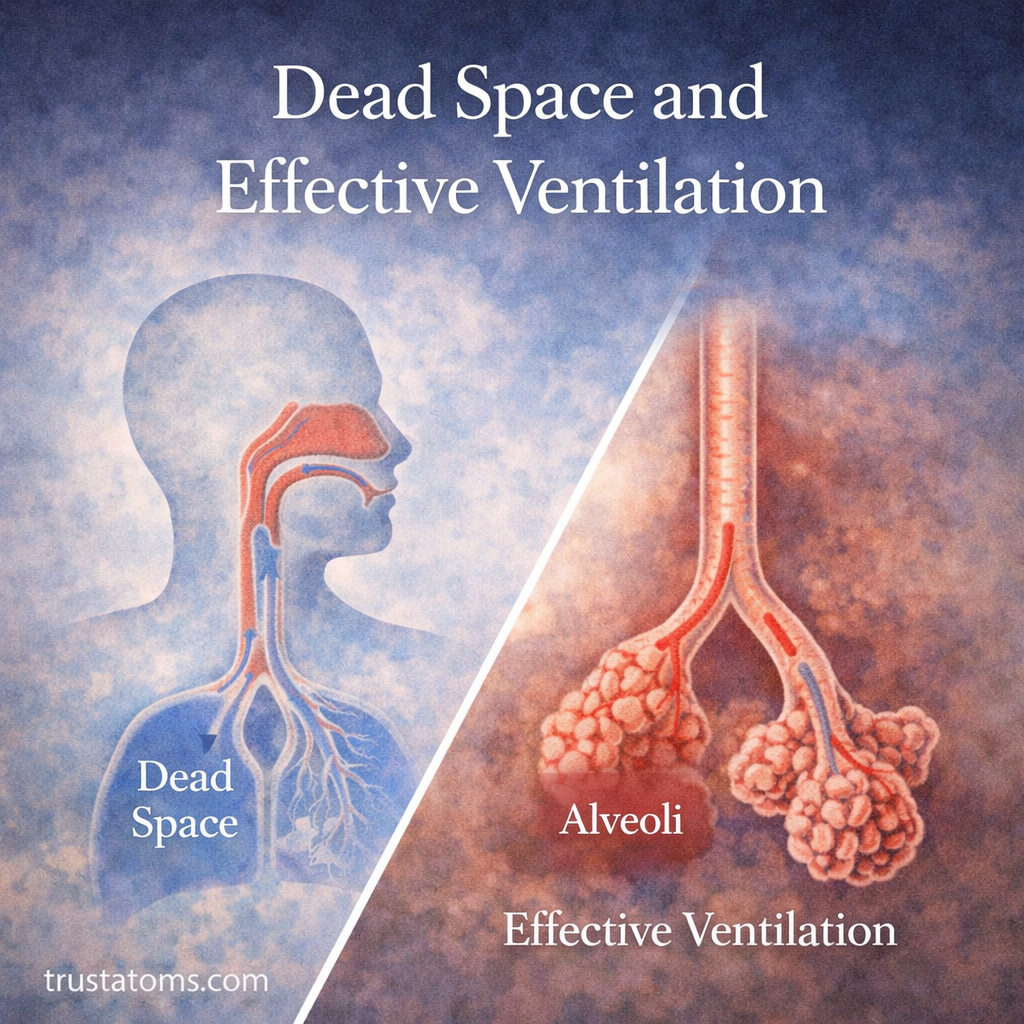
Dead Space and Effective Ventilation

Illustration showing dead space in the upper airways and effective ventilation in the alveoli of the lungs.
Illustration comparing dead space in the respiratory tract with effective ventilation occurring in the alveoli. trustatoms.com

Breathing may seem simple, but not every breath you take contributes equally to oxygen exchange. In fact, a portion of the air you inhale never reaches the areas of the lungs where gas exchange occurs. This concept is known as dead space, and it plays a crucial role in understanding how efficiently your respiratory system works.

In this article, we’ll break down what dead space is, how it affects effective ventilation, and why it matters for both health and performance.

Continue reading “Dead Space and Effective Ventilation”

Airflow Patterns and Turbulence

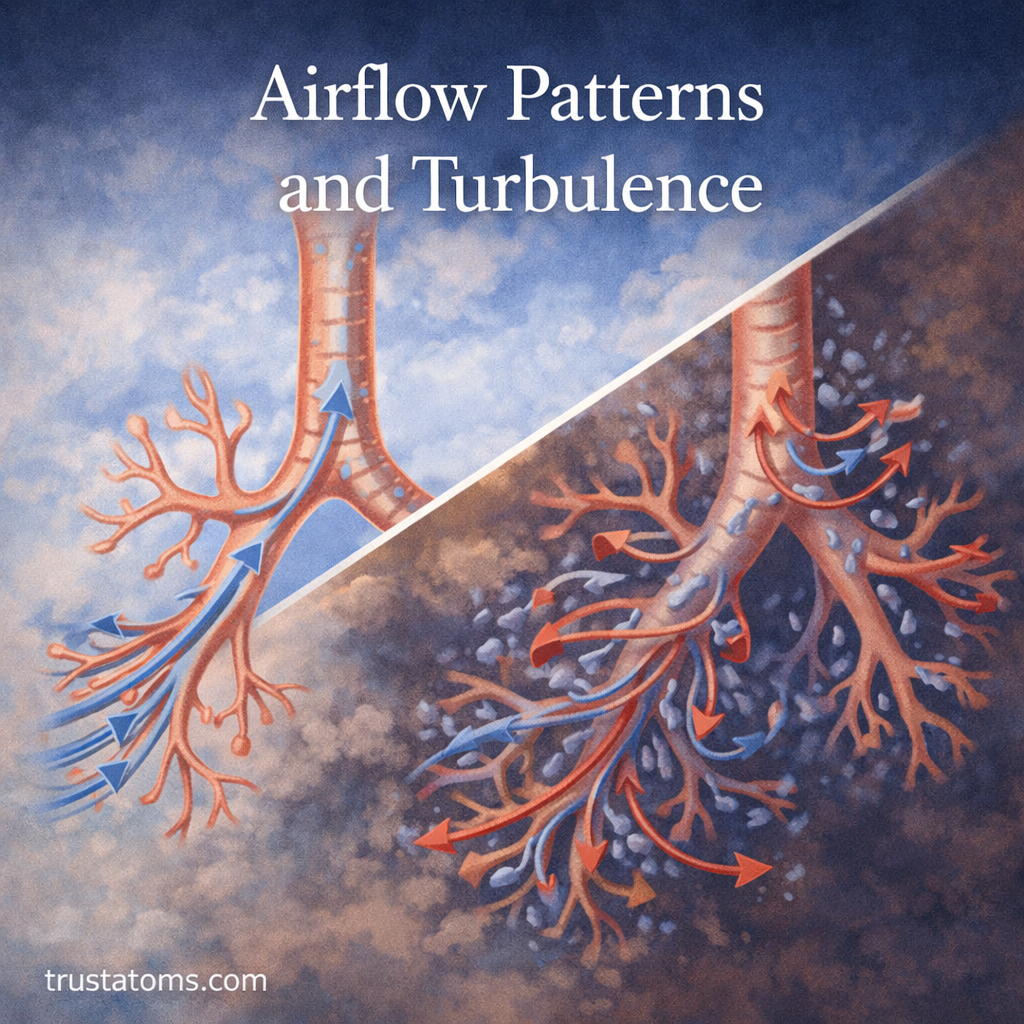
Illustration comparing laminar and turbulent airflow patterns in the human respiratory system.
Illustration showing the difference between smooth laminar airflow and chaotic turbulent airflow in the respiratory system. trustatoms.com

Air moves through your respiratory system with every breath, but it doesn’t always flow in the same way. Depending on factors like speed, airway size, and resistance, airflow can be smooth and orderly—or chaotic and turbulent.

Understanding airflow patterns and turbulence is essential in human anatomy, especially when studying breathing efficiency, lung health, and respiratory disorders.

Continue reading “Airflow Patterns and Turbulence”

Exercise and Increased Ventilation

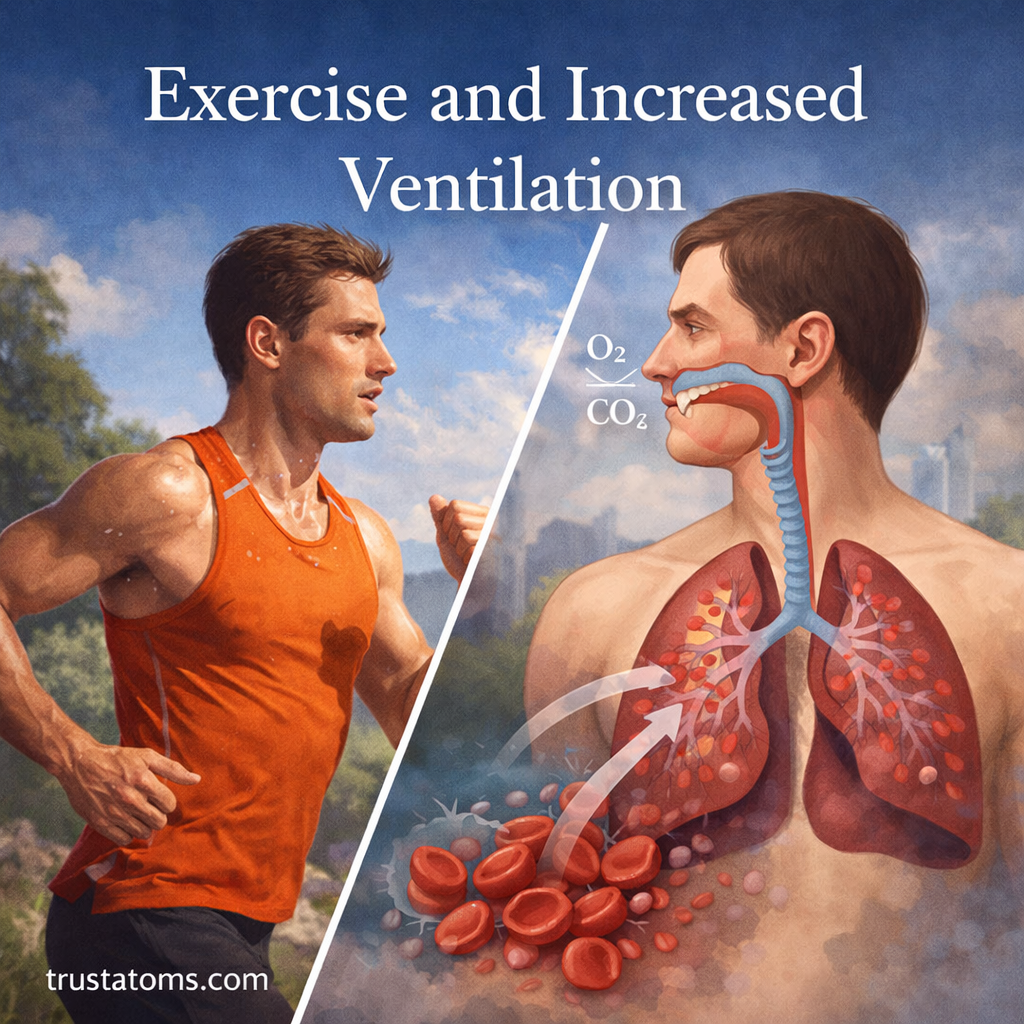
Illustration of a runner with a split view of the respiratory system showing oxygen intake and carbon dioxide release during exercise.
Illustration showing how exercise increases ventilation, with faster oxygen intake and carbon dioxide removal in the lungs. trustatoms.com

When you exercise, your body demands more energy—and that energy requires oxygen. To meet this demand, your respiratory system rapidly adjusts by increasing ventilation, or the movement of air in and out of the lungs.

This process is essential for delivering oxygen to working muscles and removing carbon dioxide, a waste product of metabolism. In this article, we’ll explore how and why ventilation increases during exercise, and what it means for overall performance and health.

Continue reading “Exercise and Increased Ventilation”

Respiratory Adaptations at High Altitude

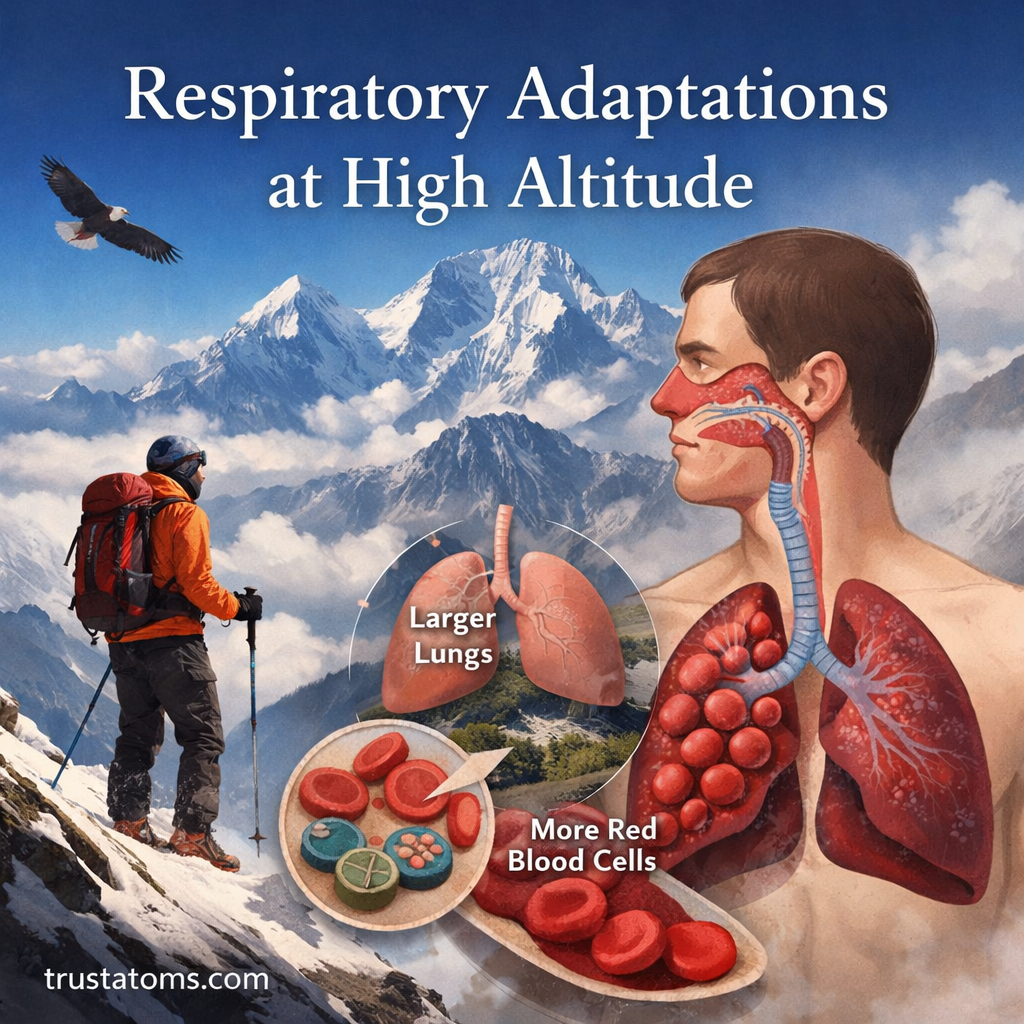
Illustration of respiratory adaptations at high altitude showing a mountaineer, lungs, and increased red blood cells.
Illustration of how the human respiratory system adapts to high altitude with increased lung function and oxygen transport. trustatoms.com

High-altitude environments present a unique challenge to the human body. As elevation increases, atmospheric pressure drops, meaning less oxygen is available with each breath. Despite this, millions of people live, work, and even perform intense physical activity at high altitudes.

So how does the body adapt?

This article explores the fascinating respiratory changes that occur when humans are exposed to high-altitude conditions—whether for a short trip or long-term living.

Continue reading “Respiratory Adaptations at High Altitude”