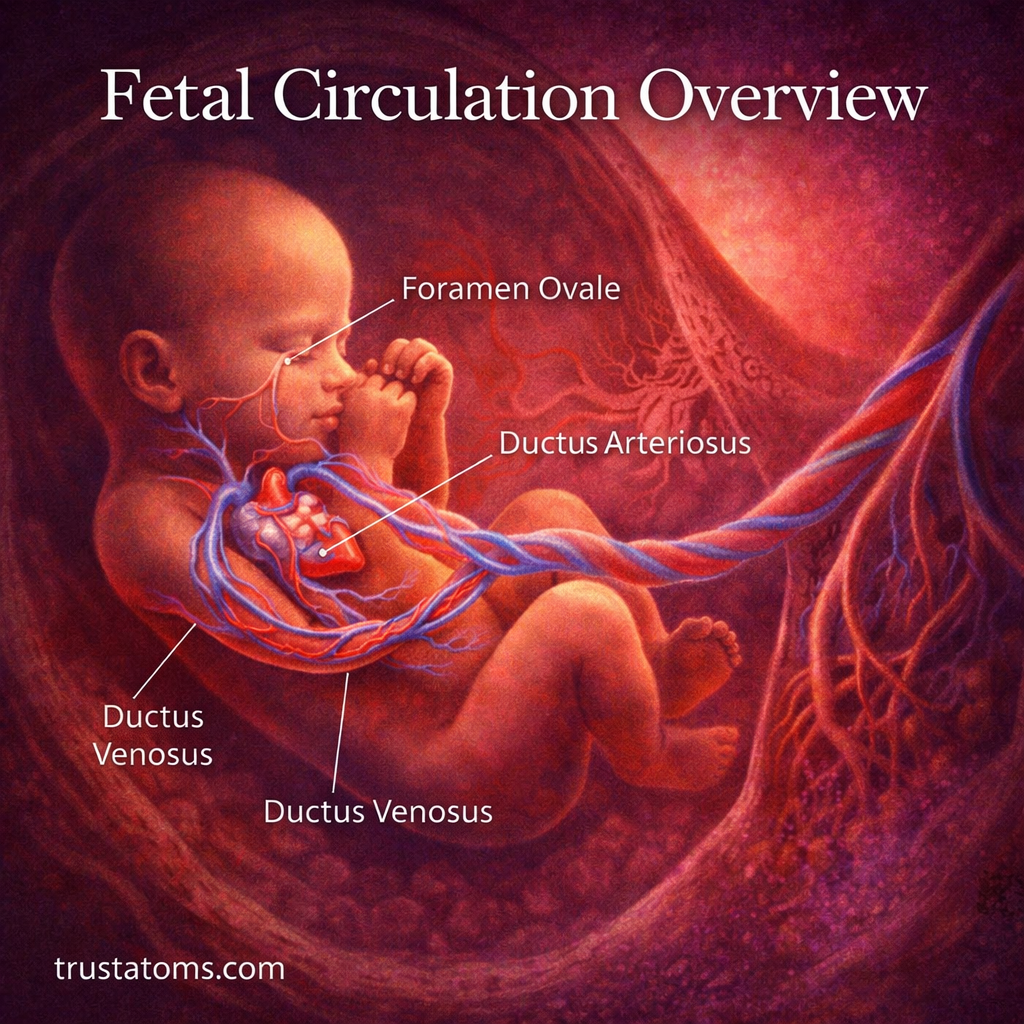
Fetal Circulation Overview

Illustration of fetal circulation showing blood flow through the placenta, foramen ovale, ductus arteriosus, and ductus venosus.
Diagram of fetal circulation highlighting key shunts and blood flow before birth. trustatoms.com

Fetal circulation is a specialized system that allows a developing baby to receive oxygen and nutrients from the mother while its own lungs are not yet functioning. Unlike postnatal circulation, fetal blood flow uses unique structures to bypass the lungs and liver, ensuring efficient delivery of oxygen-rich blood.

Understanding fetal circulation provides insight into how the body adapts before birth—and how it transitions immediately after delivery.

Continue reading “Fetal Circulation Overview”
Portal Circulation in Digestive Absorption

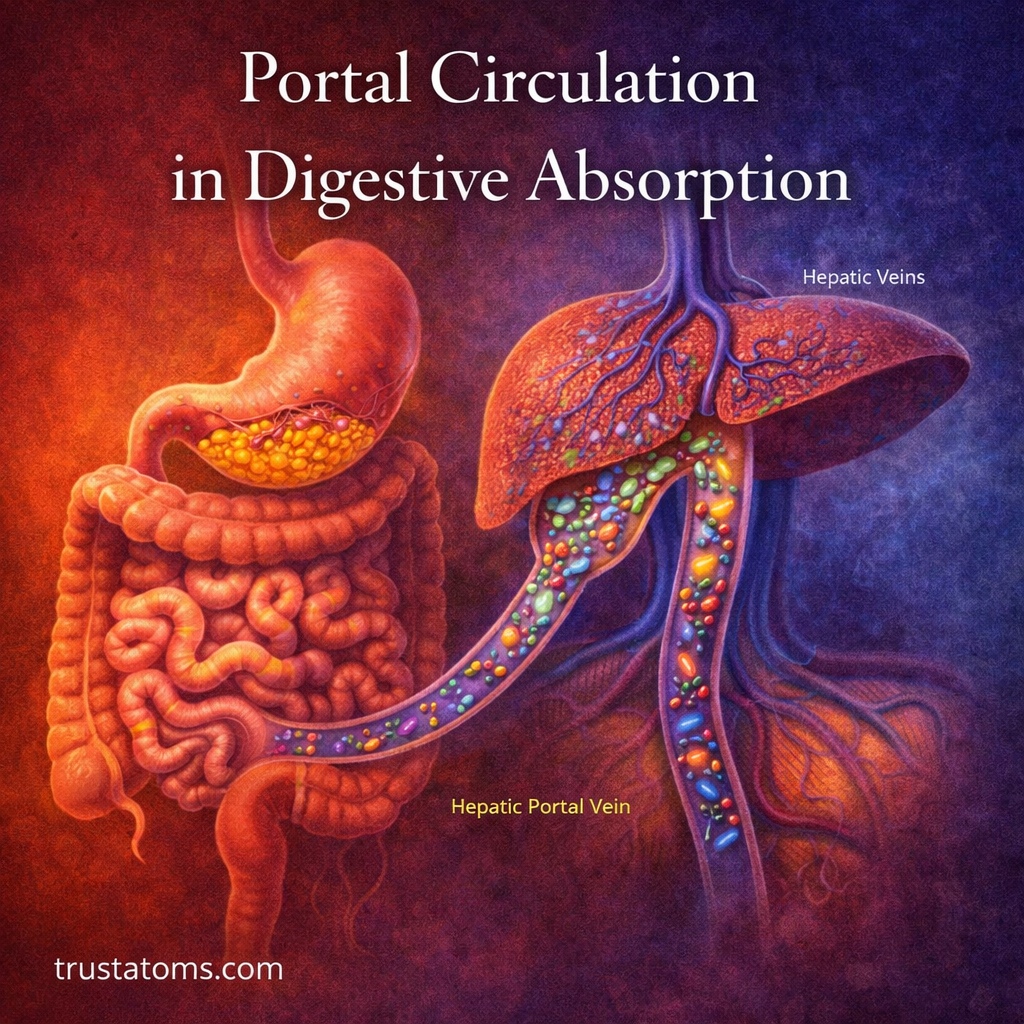
Illustration of portal circulation showing nutrient-rich blood flowing from the intestines to the liver through the hepatic portal vein.
Diagram of portal circulation transporting nutrients from the digestive system to the liver. trustatoms.com

The human digestive system does more than break down food—it also ensures that nutrients are efficiently transported to where they are needed. A key part of this process is portal circulation, a specialized pathway that carries nutrient-rich blood from the digestive organs to the liver.

Understanding portal circulation helps explain how the body processes nutrients, detoxifies substances, and maintains metabolic balance.

Continue reading “Portal Circulation in Digestive Absorption”

Thermoregulation via Skin Blood Flow

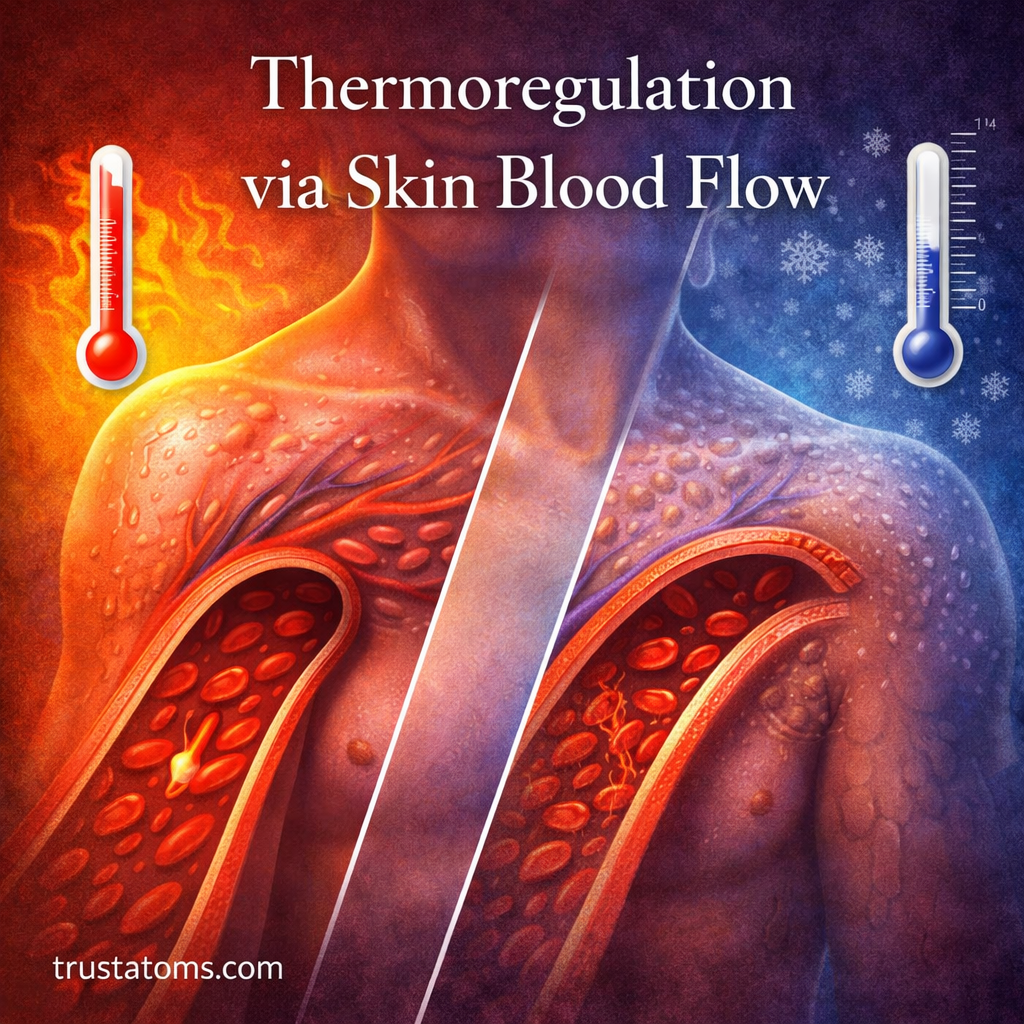
Illustration showing thermoregulation via skin blood flow with vasodilation in heat and vasoconstriction in cold conditions.
Diagram of thermoregulation through skin blood flow showing heat loss and heat conservation. trustatoms.com

The human body maintains a stable internal temperature despite changes in the external environment. One of the most important mechanisms behind this balance is thermoregulation via skin blood flow.

By adjusting how much blood flows to the skin, the body can either release heat or conserve it—helping maintain optimal conditions for cellular function.

Continue reading “Thermoregulation via Skin Blood Flow”

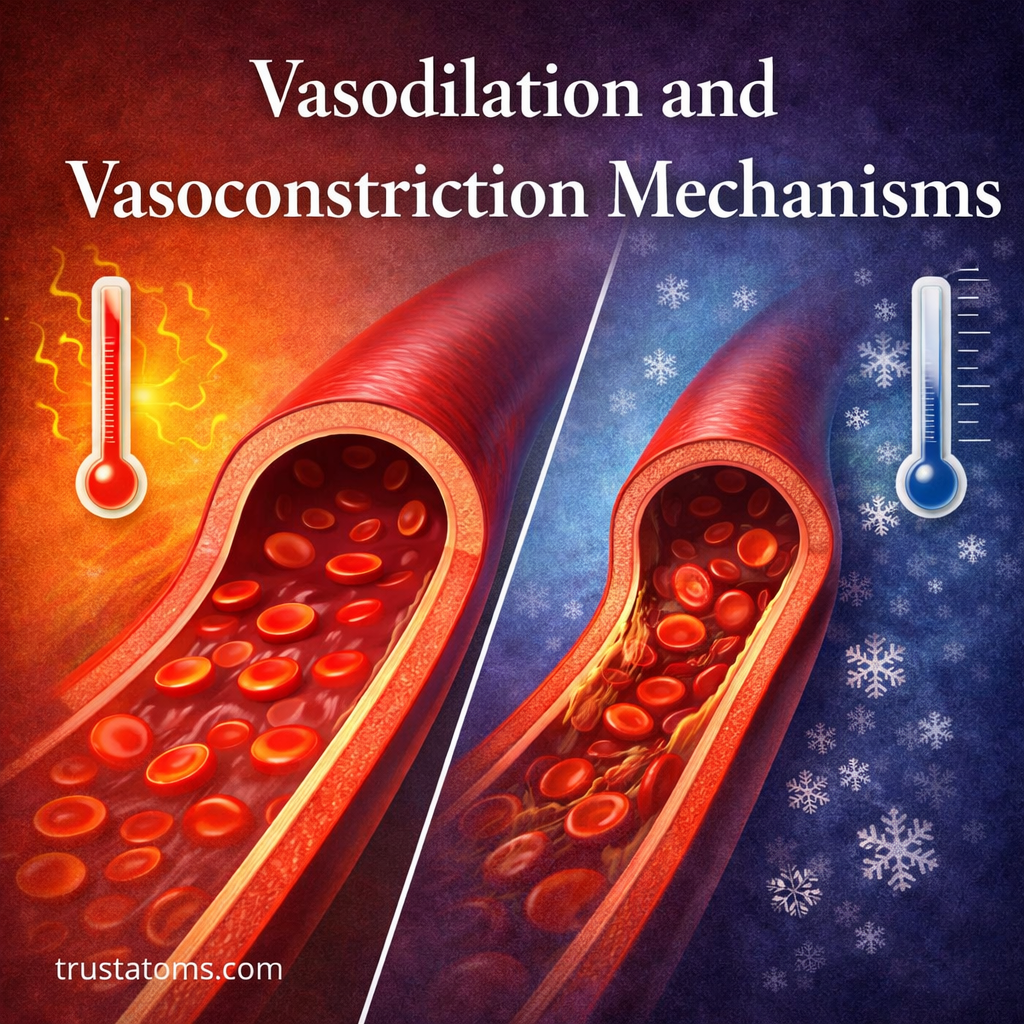
Vasodilation and Vasoconstriction Mechanisms

Illustration comparing vasodilation and vasoconstriction showing widened and narrowed blood vessels with blood flow differences.
Diagram comparing vasodilation and vasoconstriction in blood vessels. trustatoms.com

Blood vessels are not static tubes—they actively adjust their diameter to regulate blood flow, pressure, and temperature. Two key processes control this behavior: vasodilation and vasoconstriction.

These mechanisms are essential for maintaining homeostasis, allowing the body to respond quickly to changes such as exercise, stress, or environmental temperature.

Continue reading “Vasodilation and Vasoconstriction Mechanisms”

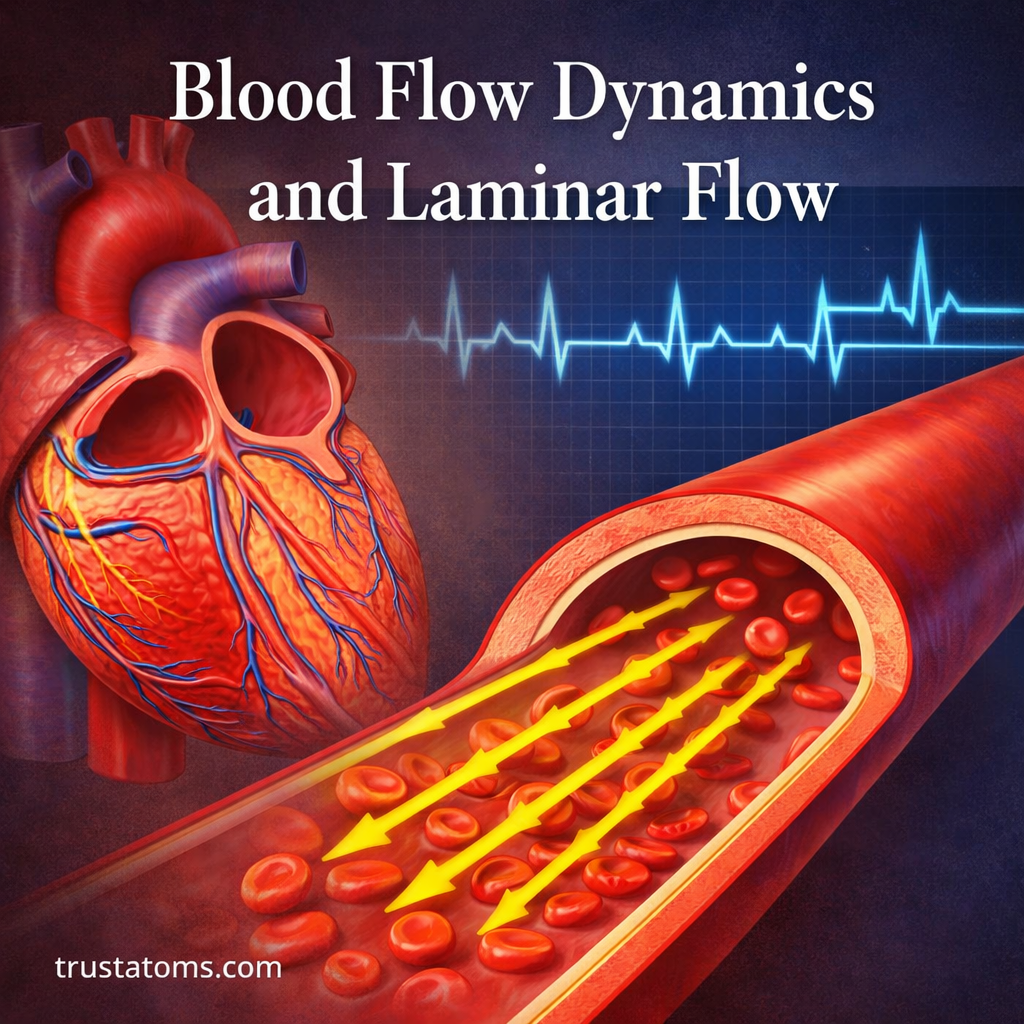
Blood Flow Dynamics and Laminar Flow

Illustration of blood flow dynamics showing laminar flow in a blood vessel with red blood cells moving in parallel layers and a heart in the background.
Diagram illustrating laminar blood flow and circulation dynamics within a blood vessel. trustatoms.com

Blood flow is a fundamental part of human physiology, delivering oxygen, nutrients, and hormones while removing waste products. The way blood moves through vessels—known as blood flow dynamics—plays a critical role in overall cardiovascular health.

One of the most important concepts in this system is laminar flow, a smooth and orderly type of blood movement that allows the body to function efficiently.

Continue reading “Blood Flow Dynamics and Laminar Flow”

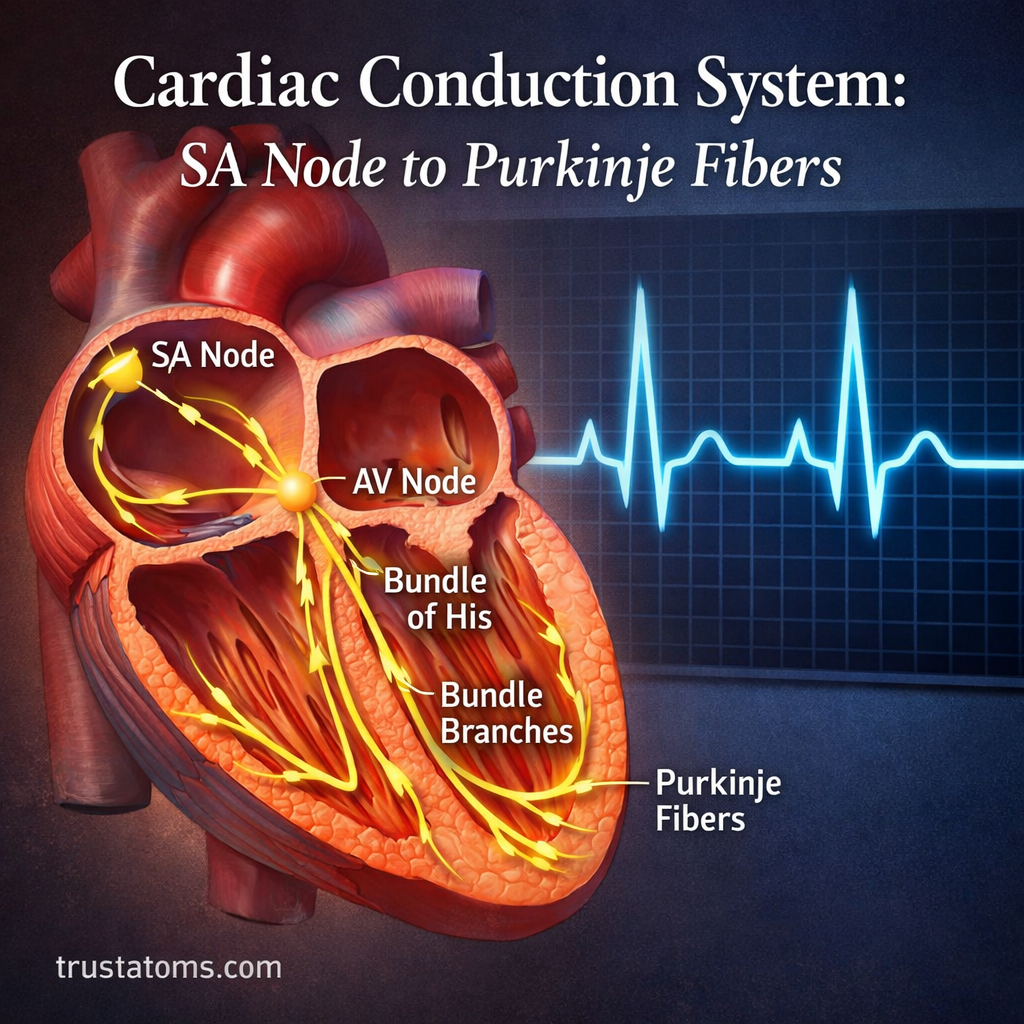
Cardiac Conduction System: SA Node to Purkinje Fibers

Illustration of the cardiac conduction system showing SA node, AV node, bundle of His, bundle branches, and Purkinje fibers with electrical pathways.
Diagram of the cardiac conduction system from SA node to Purkinje fibers. trustatoms.com

The human heart beats with remarkable precision thanks to an internal electrical system known as the cardiac conduction system. This system coordinates each heartbeat, ensuring blood is pumped efficiently throughout the body.

Understanding how electrical impulses travel from the sinoatrial (SA) node to the Purkinje fibers provides insight into how the heart maintains rhythm—and what happens when that rhythm is disrupted.

Continue reading “Cardiac Conduction System: SA Node to Purkinje Fibers”

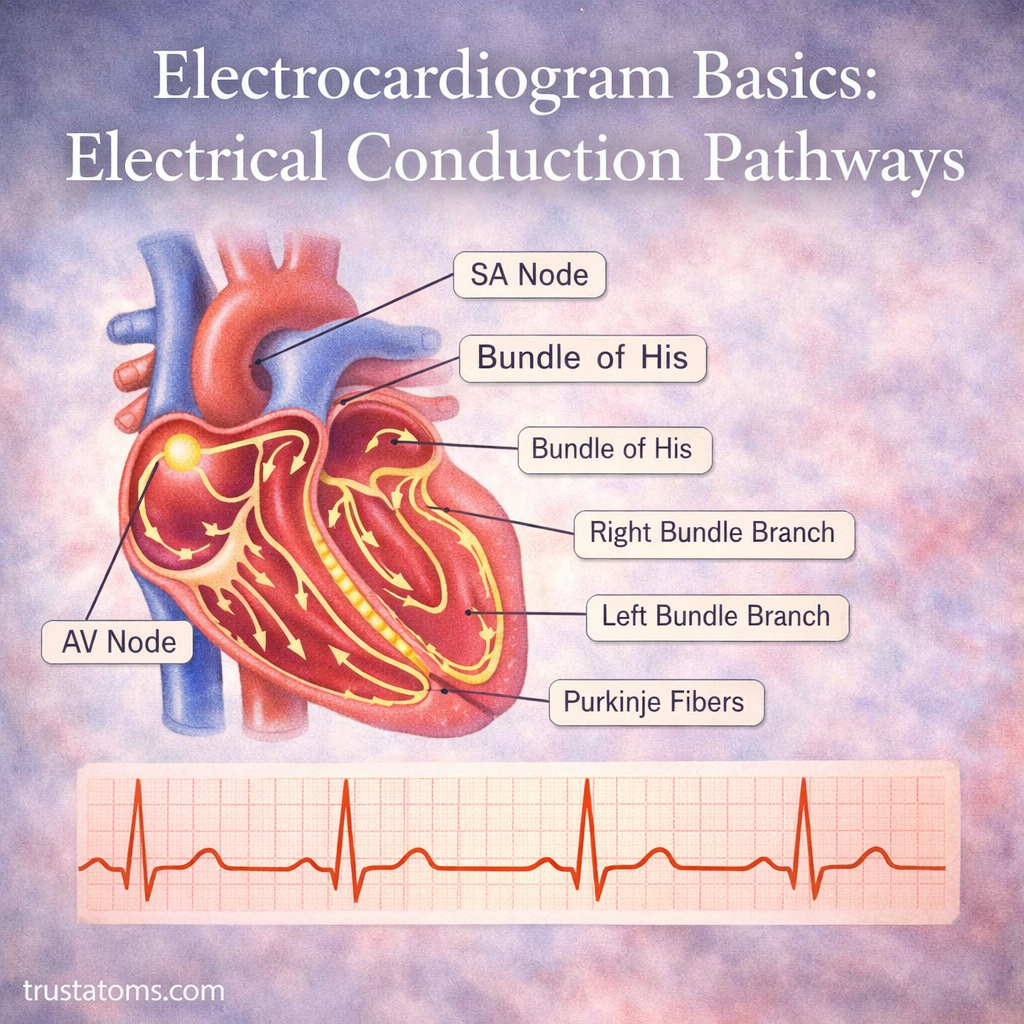
Electrocardiogram Basics: Electrical Conduction Pathways

Illustration of the heart’s electrical conduction system showing SA node, AV node, bundle of His, bundle branches, and Purkinje fibers with ECG waveform.
Diagram of the heart’s electrical conduction pathways and ECG waveform showing how signals control heartbeat rhythm. trustatoms.com.

An electrocardiogram (ECG or EKG) is a simple, non-invasive test that records the electrical activity of the heart. It provides valuable insight into how the heart beats, how signals travel through it, and whether the rhythm is normal.

Understanding the electrical conduction pathways of the heart is essential for interpreting ECG readings and recognizing how the heart maintains a steady, coordinated rhythm.

Continue reading “Electrocardiogram Basics: Electrical Conduction Pathways”

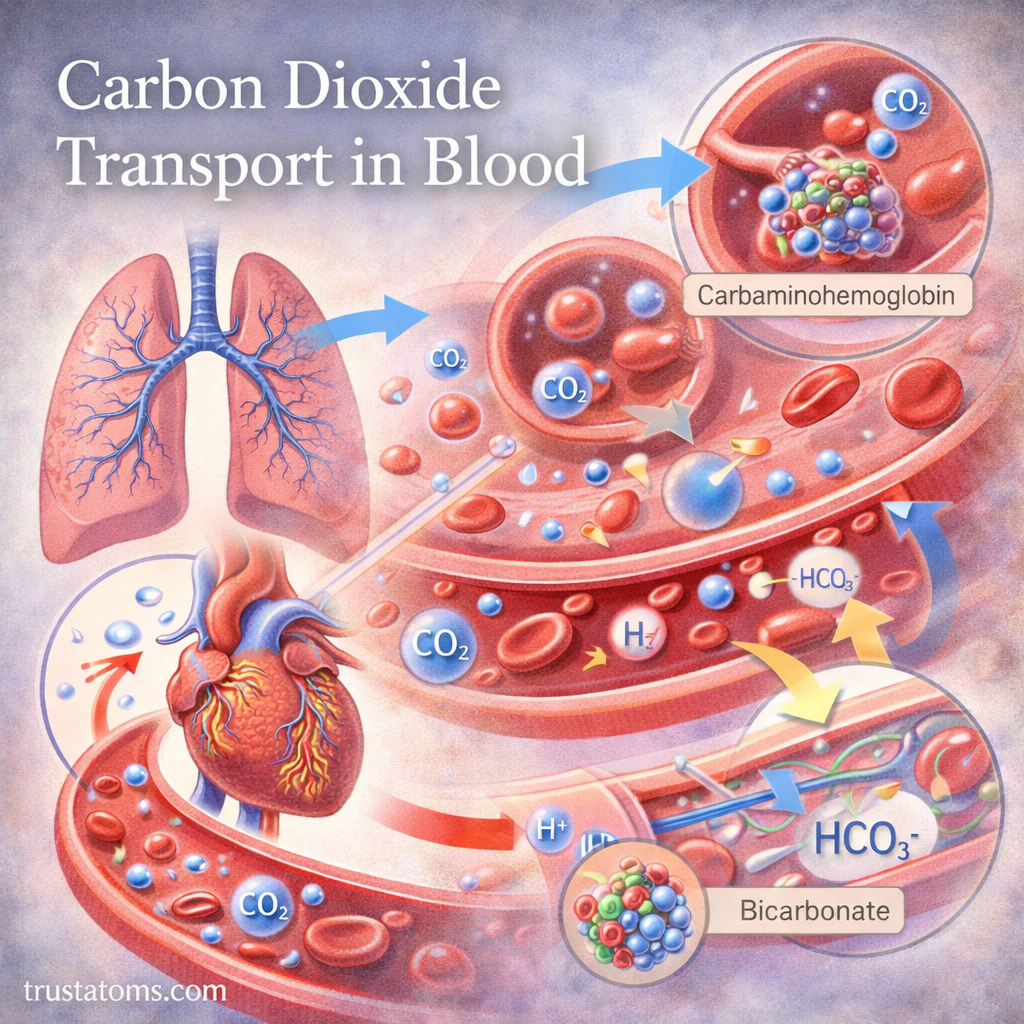
Carbon Dioxide Transport in Blood

Illustration showing carbon dioxide transport in blood including dissolved CO2, carbaminohemoglobin, and bicarbonate (HCO3-) formation.
Diagram of carbon dioxide transport in blood highlighting dissolved CO2, hemoglobin binding, and bicarbonate (HCO3-) conversion. trustatoms.com.

Carbon dioxide (CO₂) transport is a critical physiological process that helps maintain the body’s acid-base balance and supports efficient respiration. As cells produce carbon dioxide as a waste product of metabolism, it must be transported from tissues to the lungs for removal.

The body uses multiple mechanisms to move carbon dioxide through the bloodstream safely and efficiently.

Continue reading “Carbon Dioxide Transport in Blood”

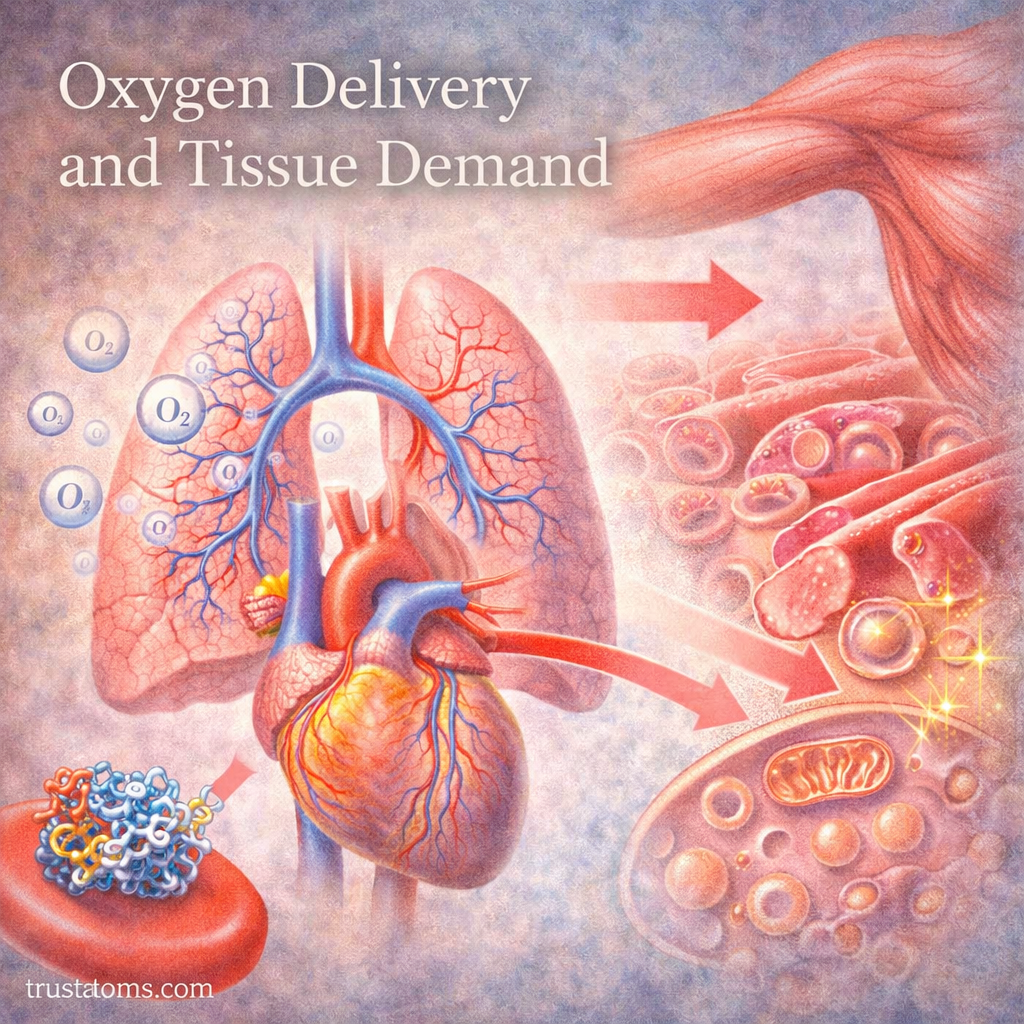
Oxygen Delivery and Tissue Demand

Illustration showing oxygen delivery from the lungs and heart to body tissues and cells where energy is produced.
Diagram of how oxygen moves from the lungs through the bloodstream to tissues to meet cellular energy demands. trustatoms.com.

Oxygen delivery is a fundamental process that allows cells to produce energy and maintain normal function. Every tissue in the body depends on a steady supply of oxygen, and the body continuously adjusts blood flow to match changing demands.

This balance between oxygen delivery and tissue demand is essential for survival, especially during activities like exercise, stress, or illness.

Continue reading “Oxygen Delivery and Tissue Demand”

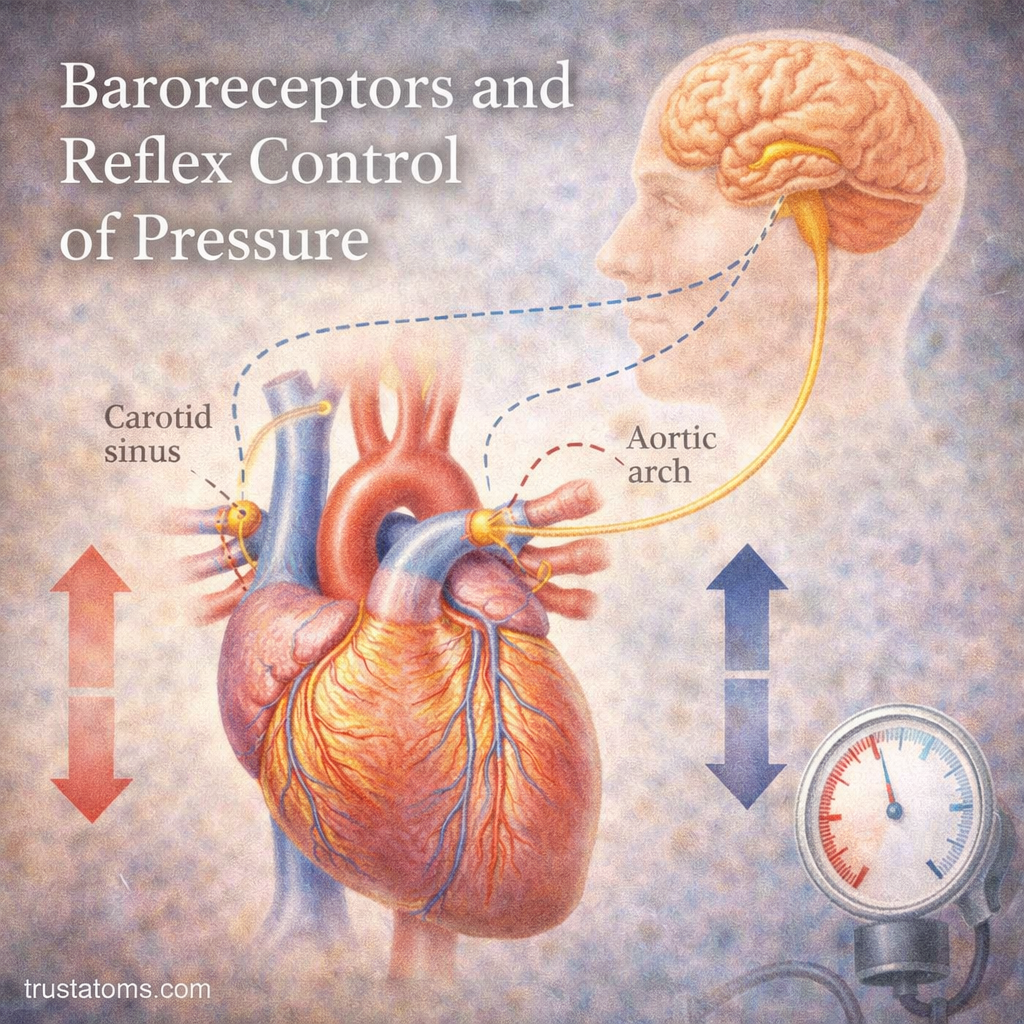
Baroreceptors and Reflex Control of Pressure

Illustration of baroreceptors in the carotid sinus and aortic arch regulating blood pressure through reflex control involving the heart and brain.
Diagram showing how baroreceptors detect pressure changes and trigger reflex responses to maintain stable blood pressure. trustatoms.com.

The human body constantly monitors and adjusts blood pressure to ensure stable circulation. One of the most important mechanisms involved in this process is the baroreceptor reflex—a rapid feedback system that helps maintain cardiovascular stability.

Baroreceptors act as pressure sensors, detecting changes in blood pressure and triggering immediate responses to keep it within a healthy range.

Continue reading “Baroreceptors and Reflex Control of Pressure”