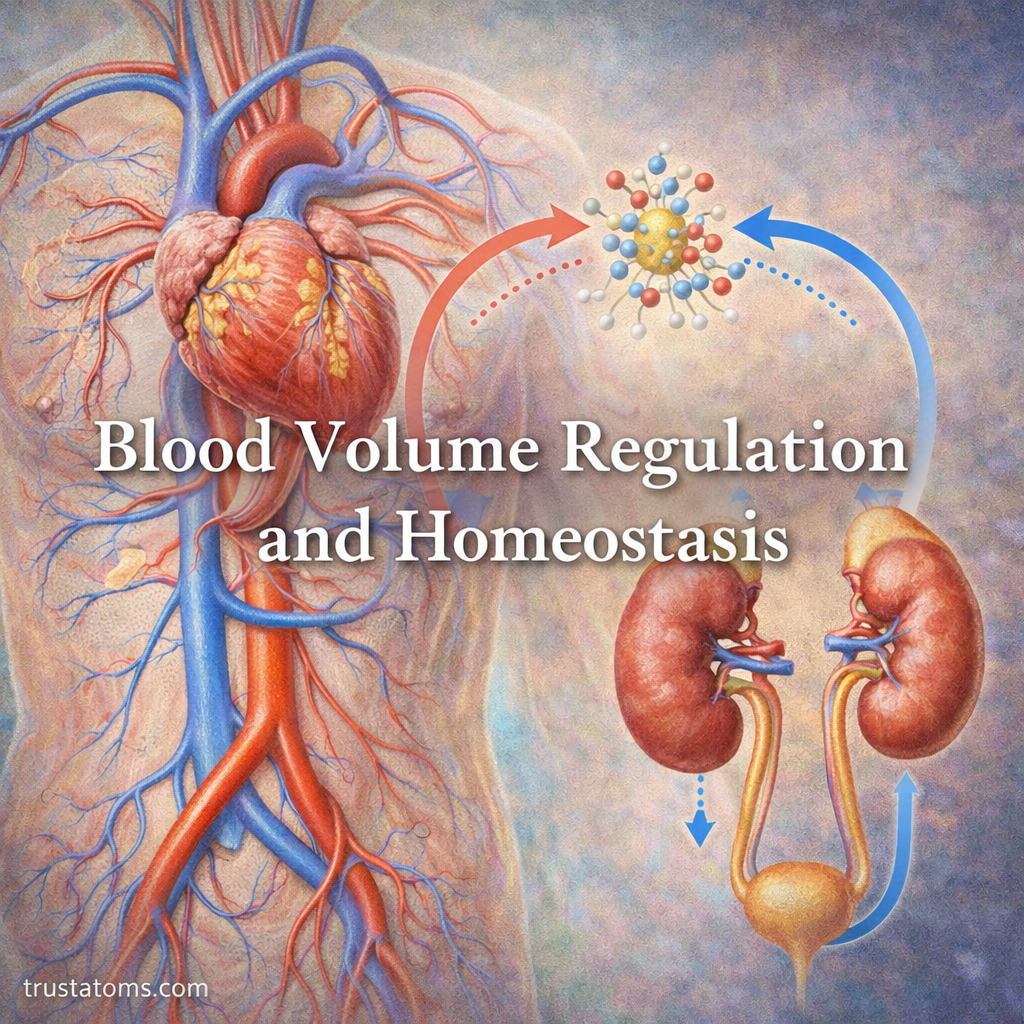
Blood Volume Regulation and Homeostasis

Illustration showing blood volume regulation and homeostasis with the heart, kidneys, and fluid balance processes.
Diagram illustrating how the heart, kidneys, and hormones work together to regulate blood volume and maintain homeostasis. trustatoms.com.

Blood volume regulation is essential for maintaining stable internal conditions in the human body. It ensures that tissues receive adequate oxygen and nutrients while keeping blood pressure within a healthy range.

This process is part of homeostasis—the body’s ability to maintain balance despite internal and external changes. When blood volume is properly regulated, organs function efficiently, and overall health is preserved.

Continue reading “Blood Volume Regulation and Homeostasis”
Lymph Vessels and Lymph Nodes Overview

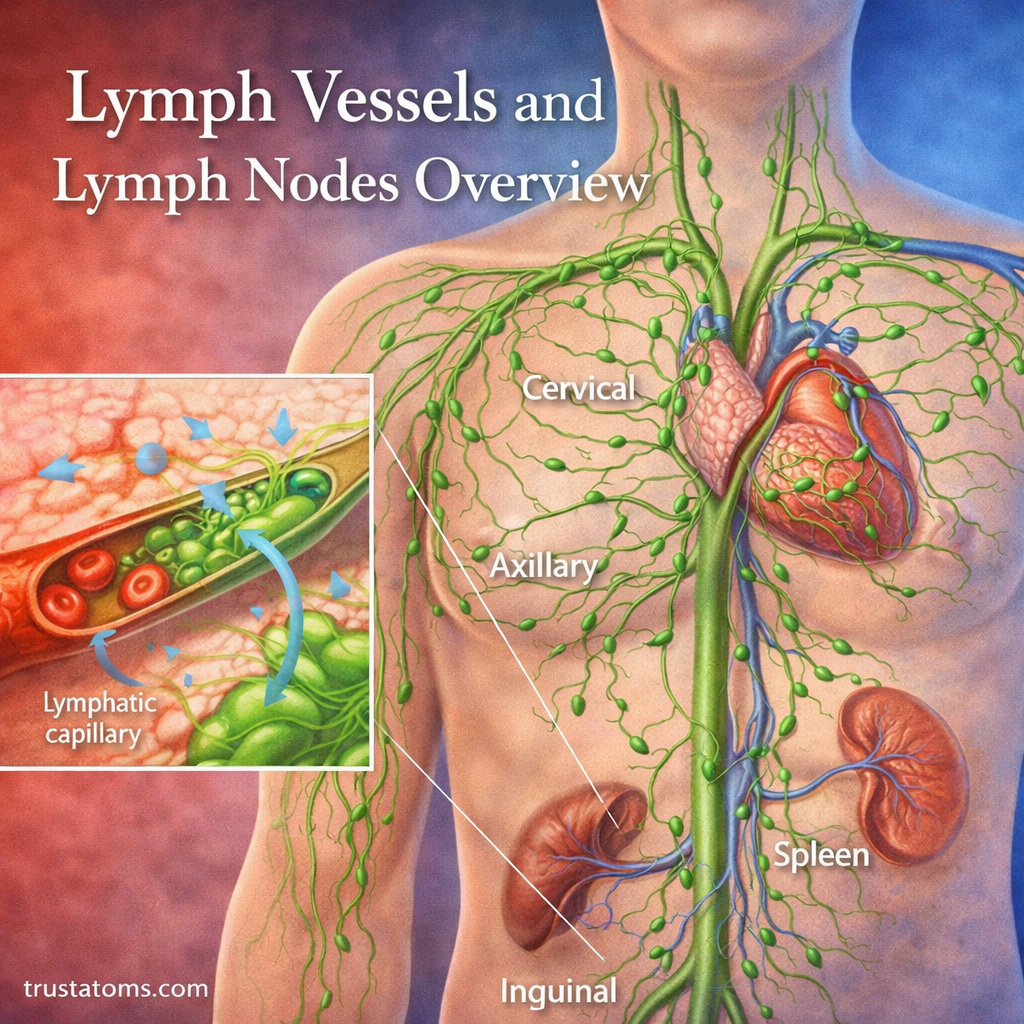
Illustration of lymph vessels and lymph nodes in the human body showing lymph flow, node locations, and capillary interaction.
Overview of lymph vessels and lymph nodes illustrating fluid transport and immune filtration across the body. trustatoms.com.

The lymphatic system is a critical part of human anatomy that supports fluid balance and immune defense. At the core of this system are lymph vessels and lymph nodes—structures that work together to transport lymph and protect the body from harmful invaders.

Understanding how these components function provides insight into how the body maintains internal stability and responds to infection.

Continue reading “Lymph Vessels and Lymph Nodes Overview”

Lymphatic System and Fluid Balance

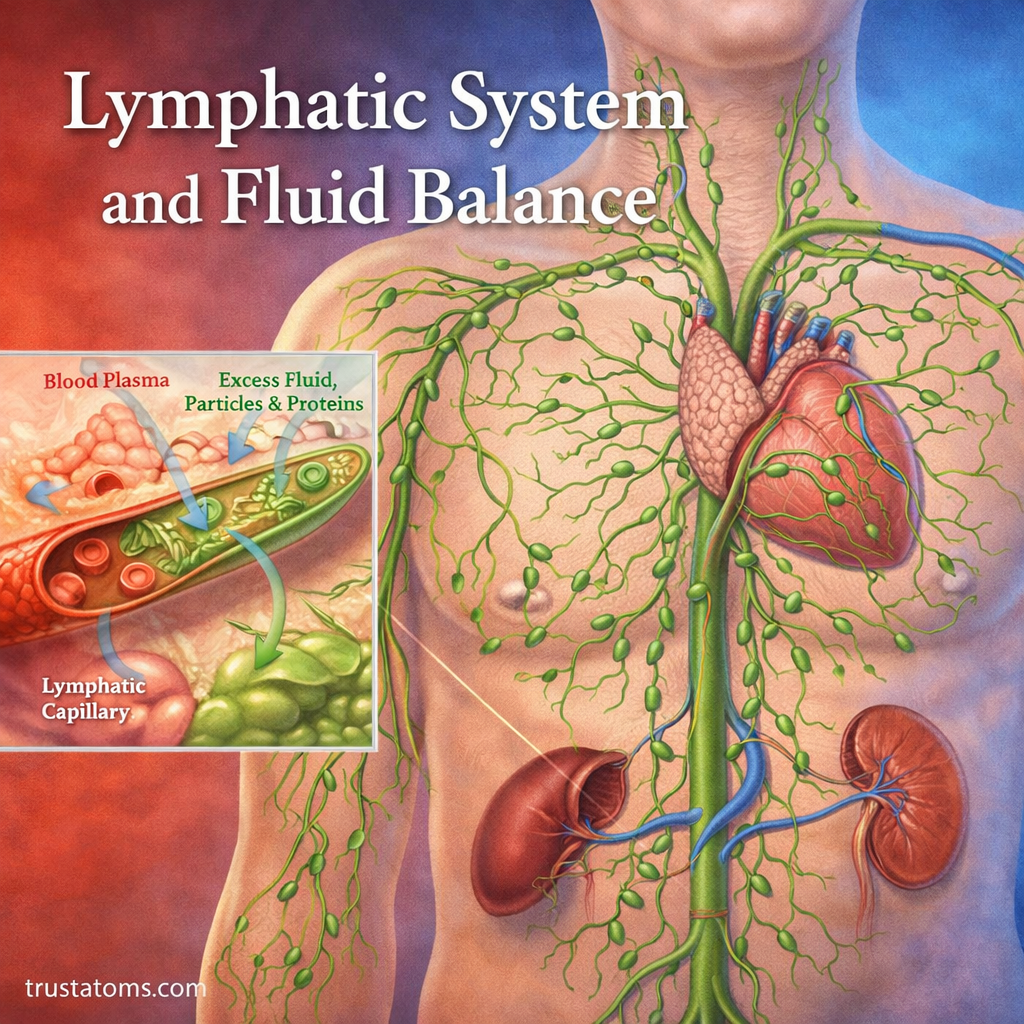
Illustration of the lymphatic system showing lymph vessels, nodes, and fluid movement from tissues back to the bloodstream.
Overview of the lymphatic system and its role in maintaining fluid balance and immune function. trustatoms.com.

The lymphatic system plays a crucial role in maintaining fluid balance, supporting immune defense, and removing waste from tissues. While often overlooked compared to the circulatory system, it acts as a vital partner in keeping the body stable and functioning efficiently.

Without the lymphatic system, excess fluid would accumulate in tissues, leading to swelling and impaired cellular function.

Continue reading “Lymphatic System and Fluid Balance”

Microcirculation in Tissue Systems

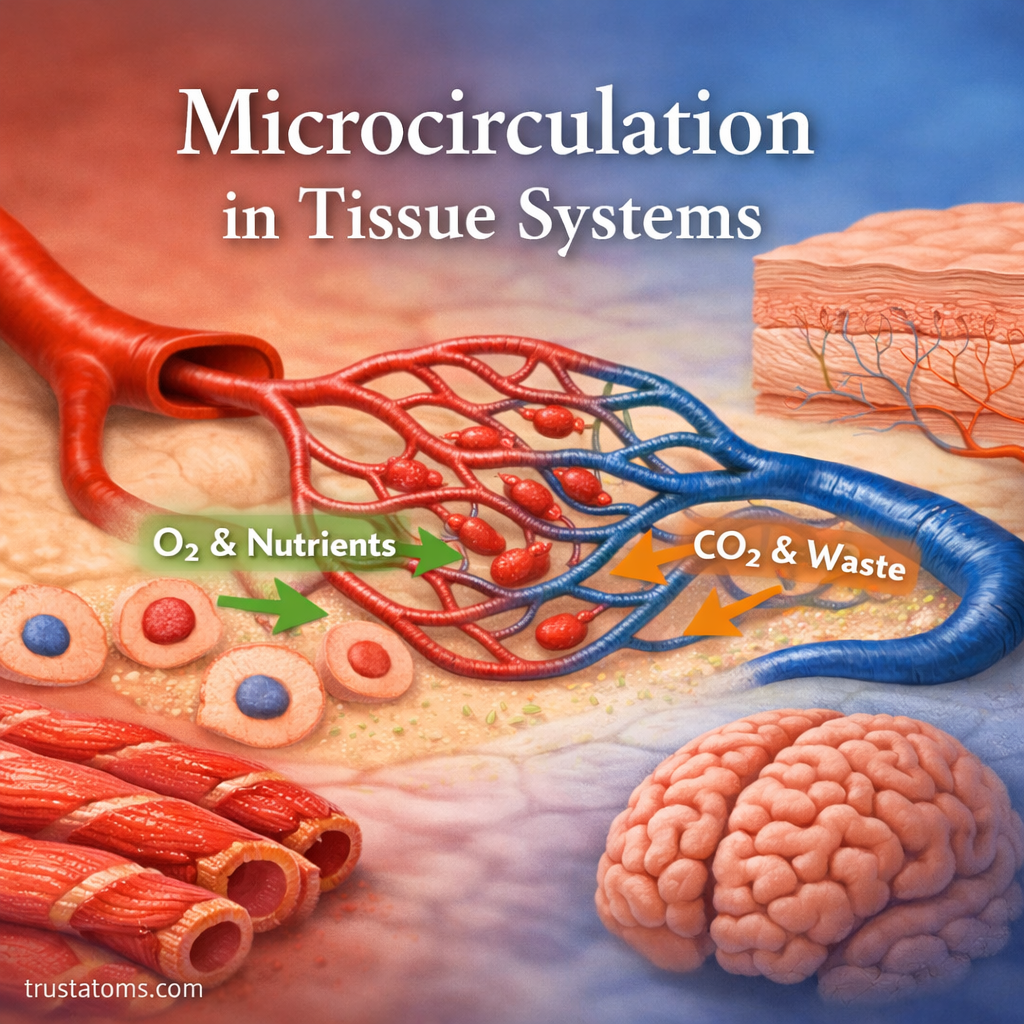
Illustration showing microcirculation in tissue systems with capillaries delivering oxygen and nutrients and removing carbon dioxide and waste.
Visual representation of how microcirculation supports oxygen and nutrient exchange in body tissues. trustatoms.com.

Microcirculation is the foundation of how oxygen, nutrients, and waste products move between the bloodstream and body tissues. While large arteries and veins handle bulk blood flow, it is the smallest vessels—capillaries, arterioles, and venules—that determine how effectively tissues are nourished and maintained.

Understanding microcirculation helps explain everything from wound healing and exercise performance to chronic disease progression.

Continue reading “Microcirculation in Tissue Systems”

Venous Return and Valve Function

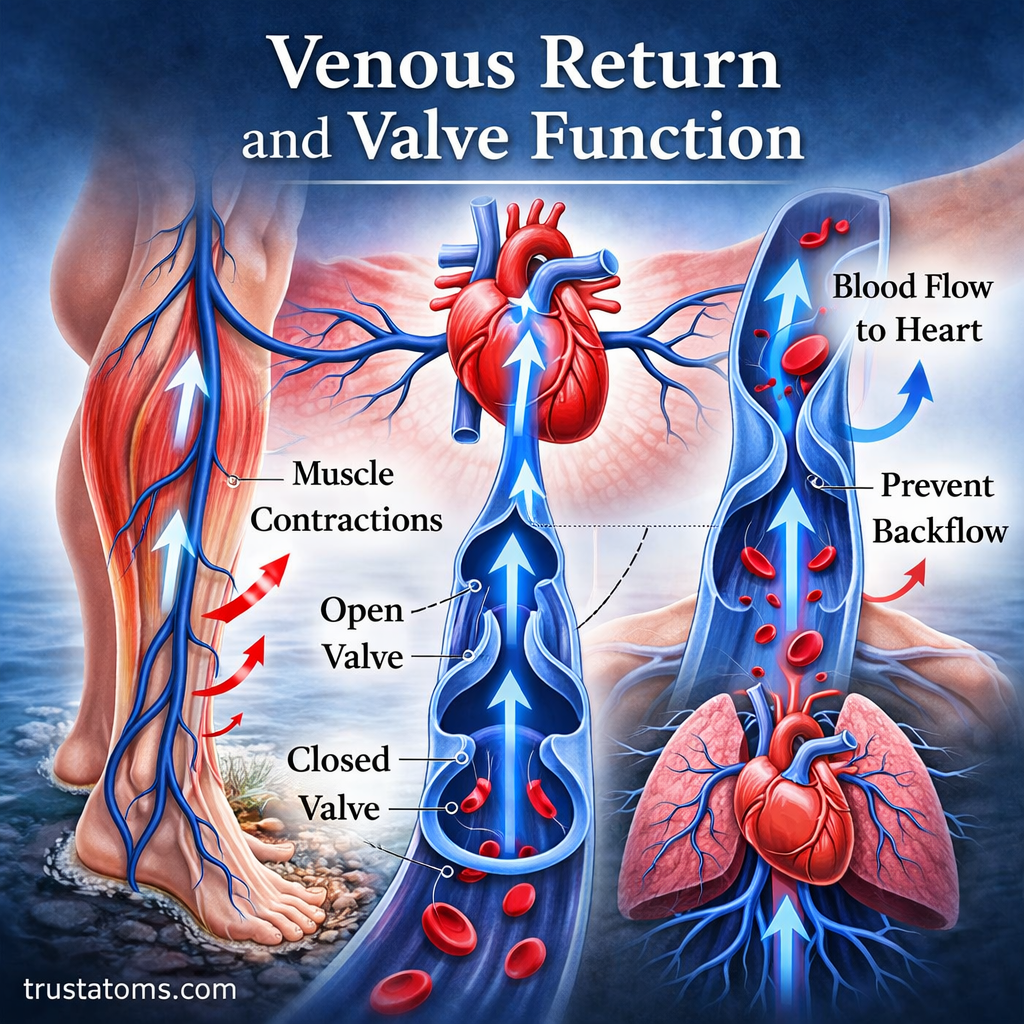
Illustration of venous return showing blood flow toward the heart with vein valves preventing backflow and muscle contractions aiding circulation.
Diagram showing how venous valves and muscle contractions help return blood to the heart and prevent backflow. trustatoms.com.

Introduction

After delivering oxygen and nutrients to tissues, blood must return to the heart to be reoxygenated and circulated again. This process is known as venous return, and it plays a critical role in maintaining efficient circulation.

Unlike arteries, veins operate under lower pressure, meaning they rely on additional mechanisms—such as valves and muscle contractions—to keep blood moving in the right direction. Understanding venous return and valve function helps explain how your body prevents blood pooling and maintains steady blood flow.

Continue reading “Venous Return and Valve Function”

Capillary Exchange and Tissue Perfusion

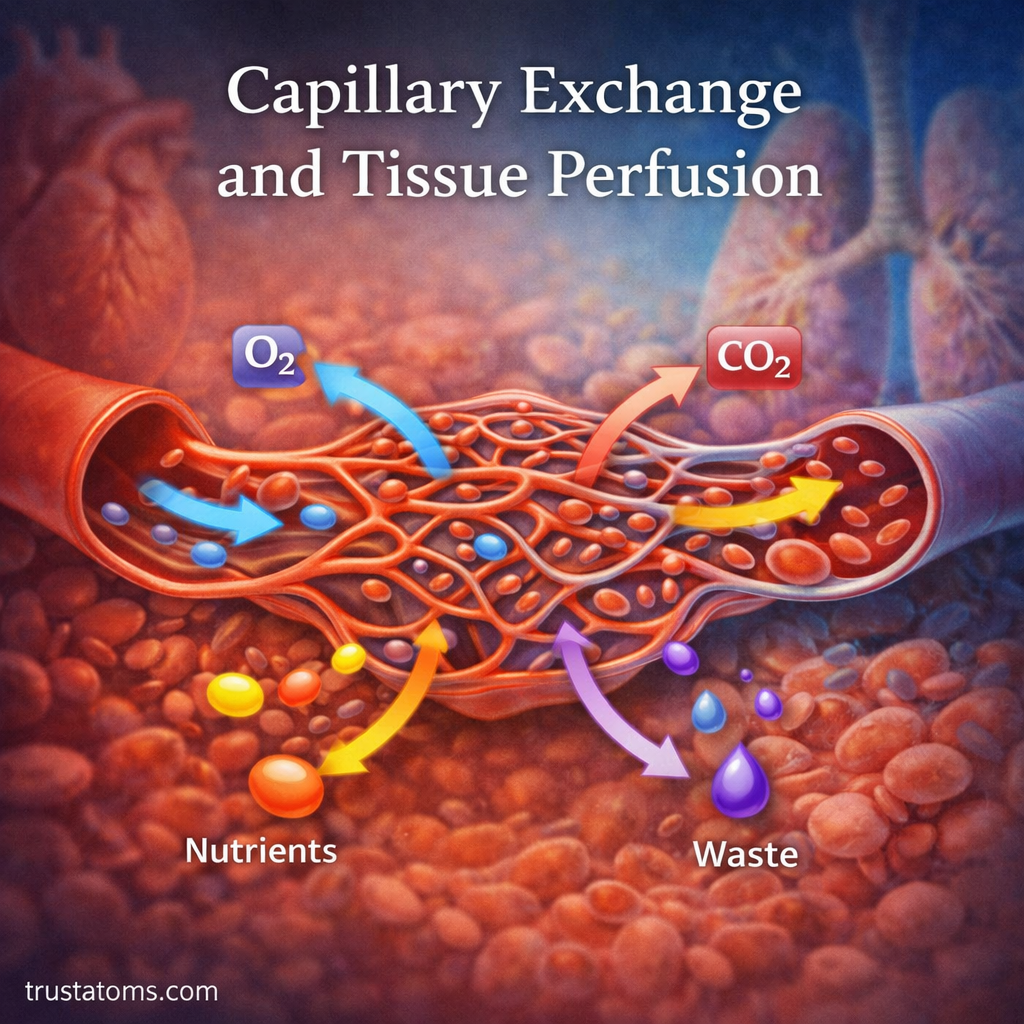
Illustration of capillary exchange showing oxygen, carbon dioxide, nutrients, and waste moving between blood vessels and tissues.
Diagram showing how capillaries exchange oxygen, nutrients, and waste products between blood and surrounding tissues. trustatoms.com.

Introduction

Every cell in your body depends on a constant supply of oxygen, nutrients, and waste removal. This essential exchange happens in tiny blood vessels called capillaries, where the circulatory system directly interacts with body tissues.

Capillary exchange and tissue perfusion are fundamental processes that ensure cells stay alive and function properly. Understanding how they work helps explain everything from exercise performance to healing and overall health.

Continue reading “Capillary Exchange and Tissue Perfusion”

Vascular Resistance and Flow Control

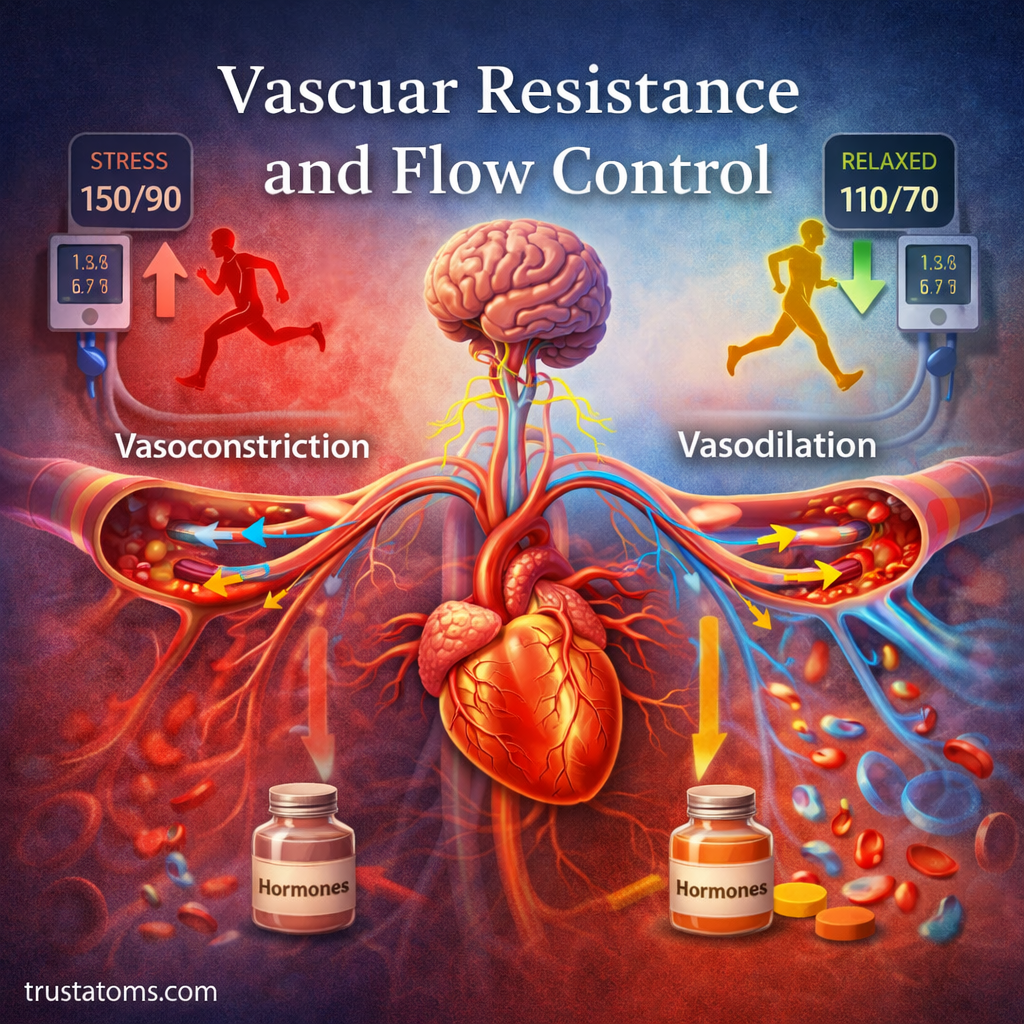
Illustration of vascular resistance and flow control showing vasoconstriction and vasodilation effects on blood vessels and circulation.
Diagram showing how vasoconstriction and vasodilation regulate blood flow and resistance in the circulatory system. trustatoms.com.

Introduction

Blood doesn’t just move randomly through your body—it flows through a highly regulated system of vessels that adjust constantly to meet your body’s needs. Whether you’re exercising, resting, or responding to stress, your circulatory system fine-tunes blood flow using a concept known as vascular resistance.

Vascular resistance plays a critical role in controlling blood pressure, directing oxygen delivery, and maintaining overall cardiovascular stability. Understanding how it works helps explain how your body adapts to changing conditions in real time.

Continue reading “Vascular Resistance and Flow Control”

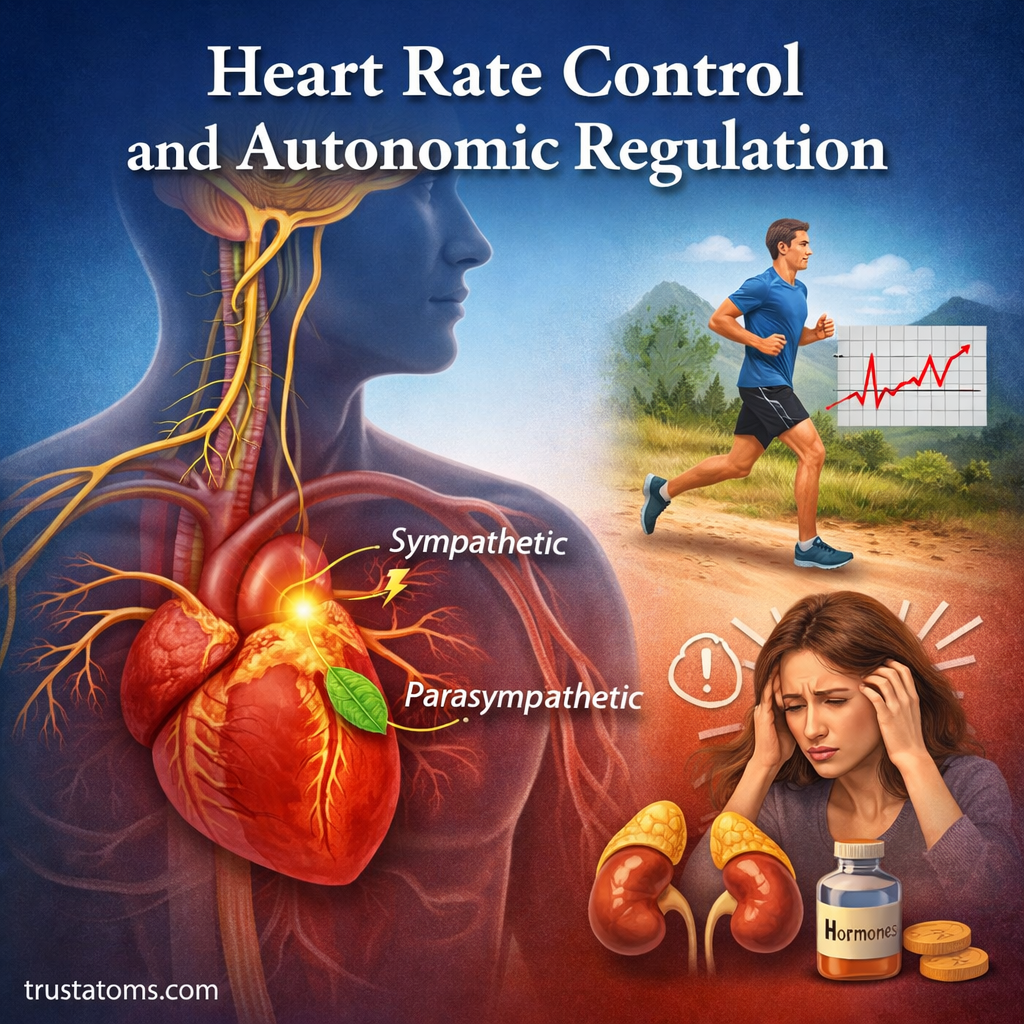
Heart Rate Control and Autonomic Regulation

Illustration of heart rate control and autonomic regulation showing the heart, nervous system, and stress and exercise responses.
Illustration showing how the autonomic nervous system regulates heart rate during rest, stress, and physical activity. trustatoms.com.

Introduction

Your heart doesn’t beat randomly—it’s tightly controlled by an advanced system that responds instantly to your body’s needs. Whether you’re resting, exercising, or feeling stressed, your heart rate adjusts automatically.

This control system is largely governed by the autonomic nervous system (ANS), which regulates involuntary functions like breathing, digestion, and heart activity. Understanding how heart rate is controlled helps explain everything from fitness performance to stress responses and overall cardiovascular health.

Continue reading “Heart Rate Control and Autonomic Regulation”

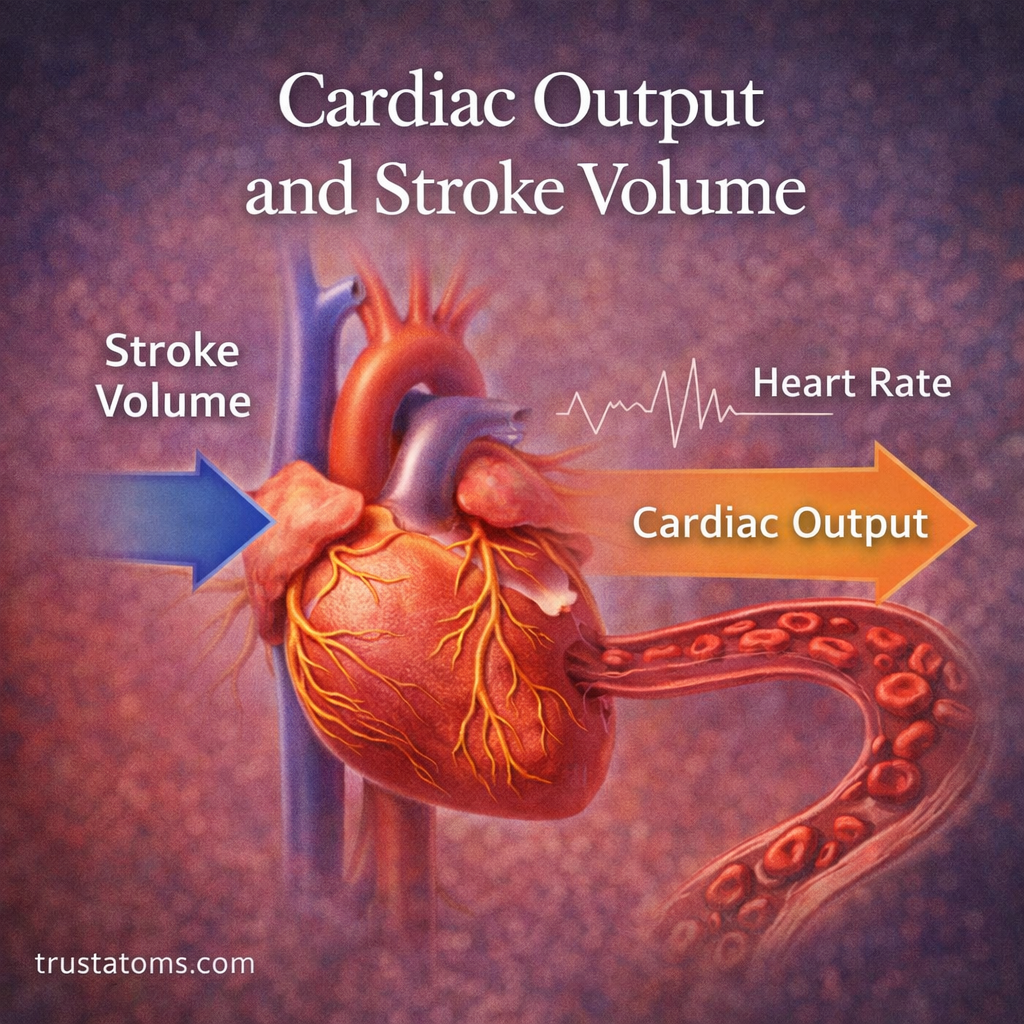
Cardiac Output and Stroke Volume

Diagram showing cardiac output and stroke volume with blood flow from the heart.
Illustration explaining how stroke volume and heart rate contribute to cardiac output. trustatoms.com.

Your heart works continuously to pump blood throughout your body, delivering oxygen and nutrients while removing waste. Two key measurements help explain how efficiently your heart performs this task: cardiac output and stroke volume.

Understanding these concepts provides insight into how your heart adapts to rest, exercise, and different health conditions.

Continue reading “Cardiac Output and Stroke Volume”

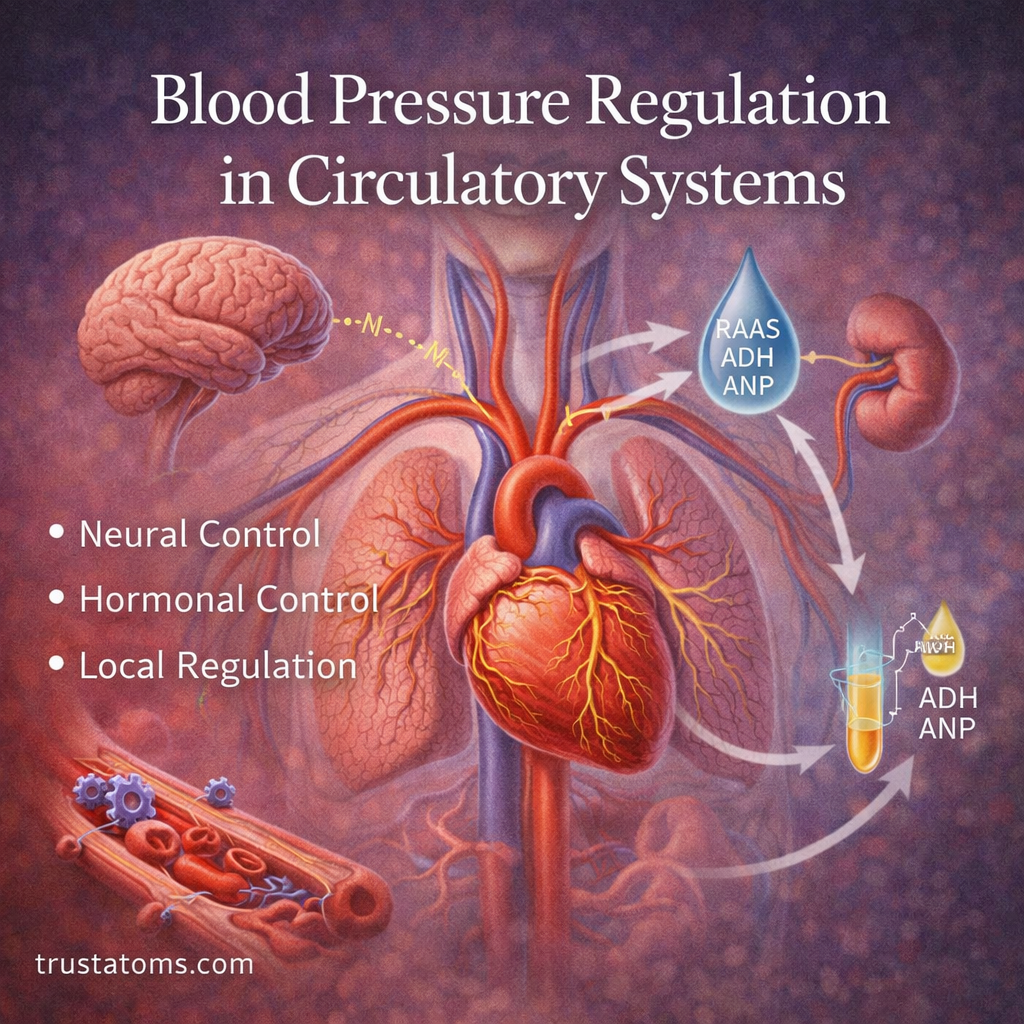
Blood Pressure Regulation in Circulatory Systems

Illustration showing how the brain, heart, blood vessels, and kidneys regulate blood pressure in the body.
Overview of how blood pressure is regulated by the nervous system, hormones, and organs. trustatoms.com.

Blood pressure is the force of blood pushing against the walls of your blood vessels. It plays a critical role in ensuring that oxygen and nutrients reach every part of your body.

However, blood pressure must be carefully regulated. If it’s too high or too low, it can lead to serious health problems. The body uses a combination of organs, hormones, and feedback systems to keep blood pressure within a healthy range.

Continue reading “Blood Pressure Regulation in Circulatory Systems”