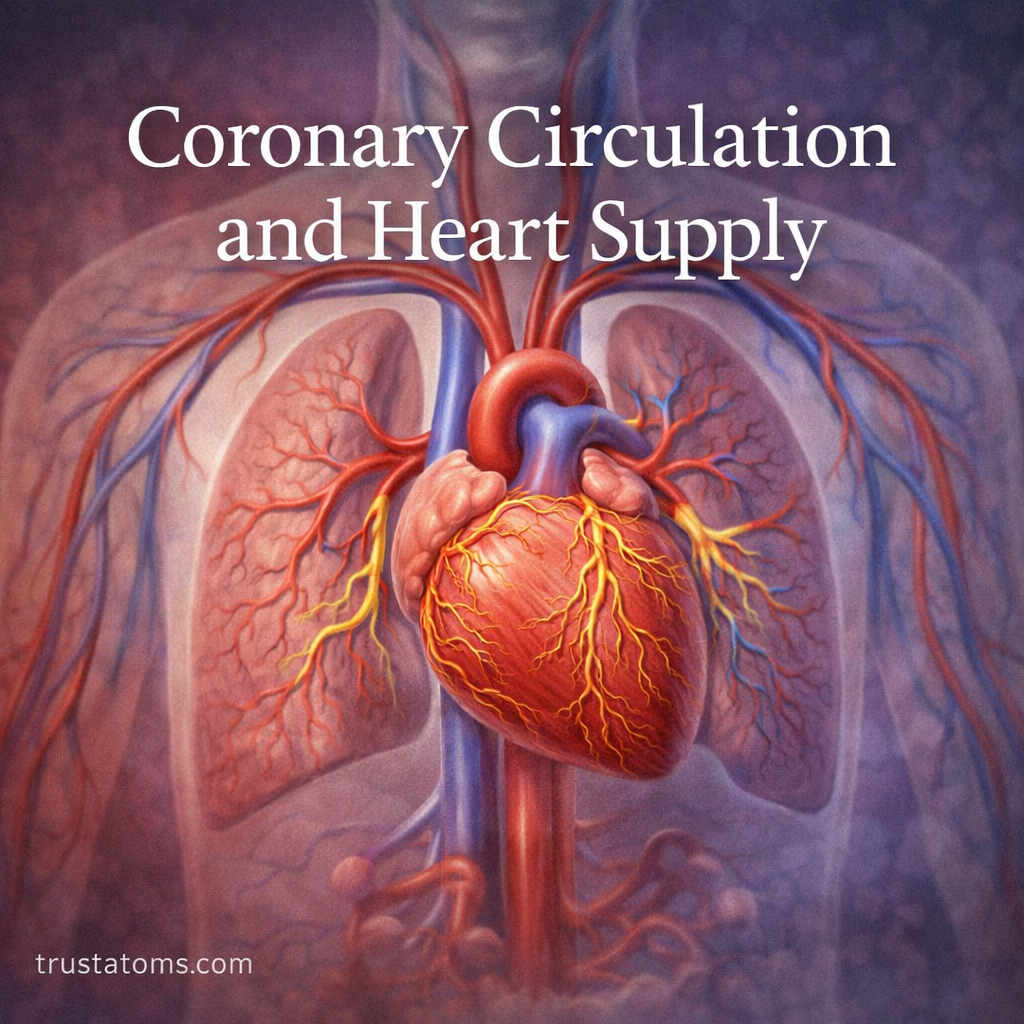
Coronary Circulation and Heart Supply

Illustration of coronary arteries supplying oxygen-rich blood to the heart muscle.
Coronary circulation supplying oxygen and nutrients to the heart muscle. trustatoms.com.

The heart is responsible for pumping blood throughout your body—but it also needs its own dedicated blood supply to function properly. This specialized system is called coronary circulation.

Coronary circulation ensures that the heart muscle (myocardium) receives oxygen and nutrients while removing waste products. Without it, the heart would not be able to sustain its continuous activity.

Continue reading “Coronary Circulation and Heart Supply”
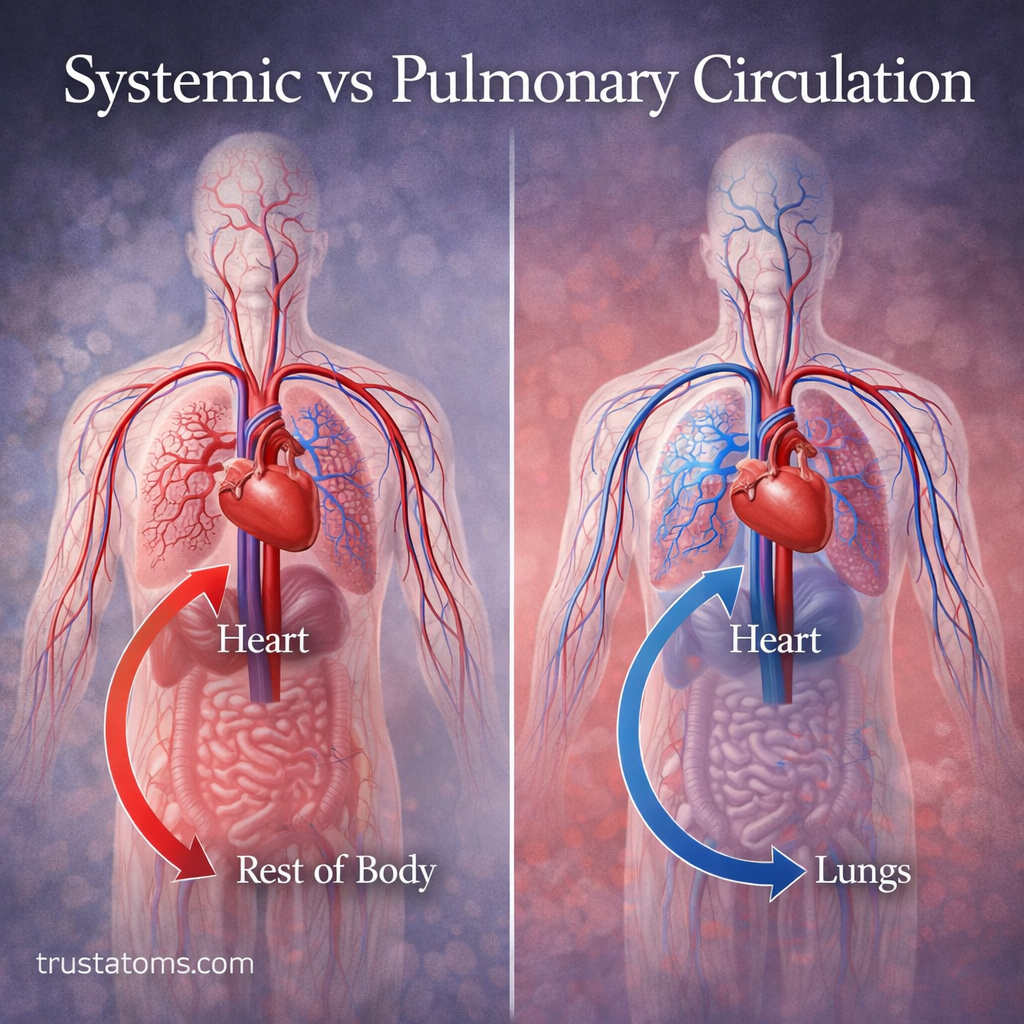
Systemic vs Pulmonary Circulation

Diagram comparing systemic and pulmonary circulation showing blood flow between the heart, lungs, and body.
Comparison of systemic and pulmonary circulation pathways in the human body. trustatoms.com.

Your circulatory system is responsible for transporting oxygen, nutrients, and waste products throughout your body. At the core of this system are two essential pathways: systemic circulation and pulmonary circulation.

While they work together seamlessly, each serves a distinct purpose. Understanding how these two types of circulation differ—and how they connect—helps explain how your body stays alive and functioning every second.

Continue reading “Systemic vs Pulmonary Circulation”

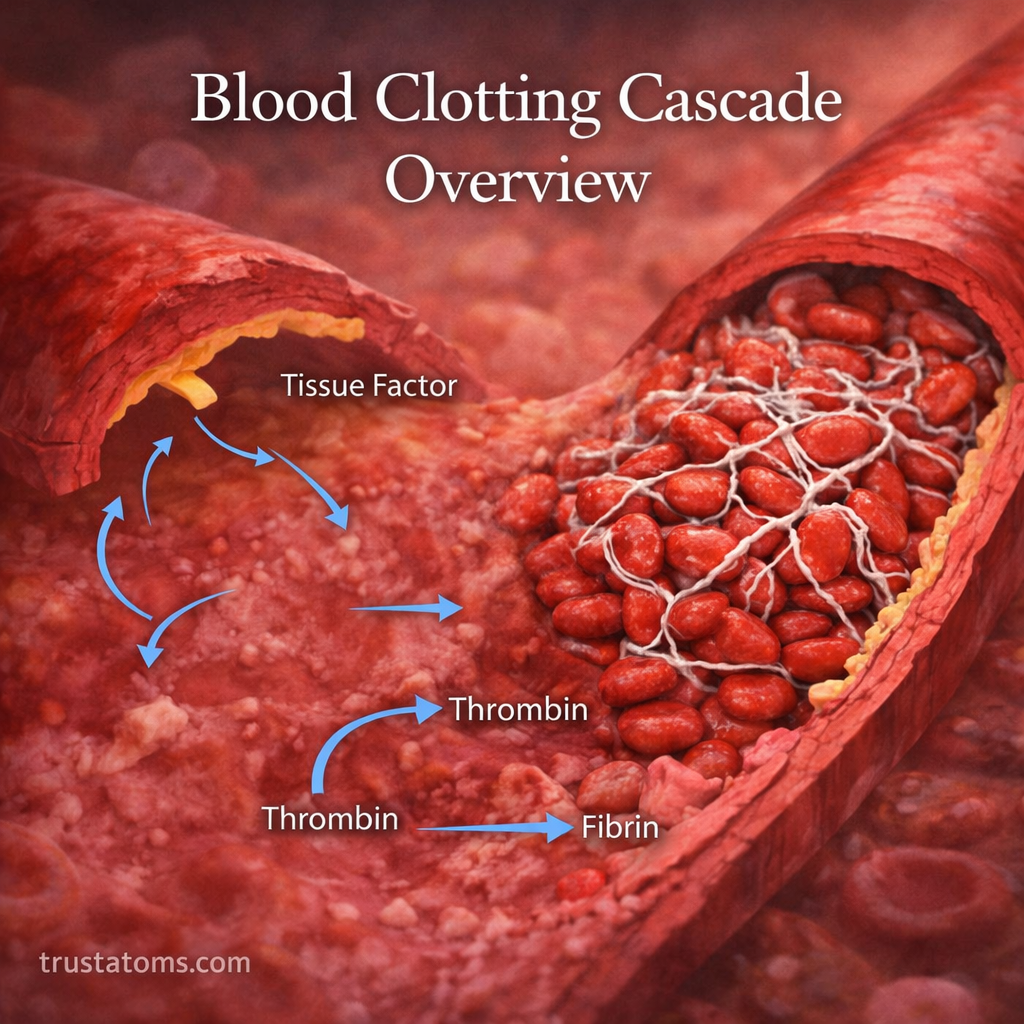
Blood Clotting Cascade Overview

Simplified illustration of blood clotting cascade showing fibrin clot formation inside a damaged blood vessel.
Simplified view of the blood clotting cascade forming a stable fibrin clot. trustatoms.com.

The human body has a remarkable ability to stop bleeding quickly after injury. This process relies on a complex chain reaction known as the blood clotting cascade. While platelets form the initial plug, the clotting cascade strengthens and stabilizes it, ensuring long-term protection and proper healing.

In this guide, you’ll learn how the clotting cascade works, the key pathways involved, and why this system is essential for survival.

Continue reading “Blood Clotting Cascade Overview”

Platelets and Clot Formation Basics

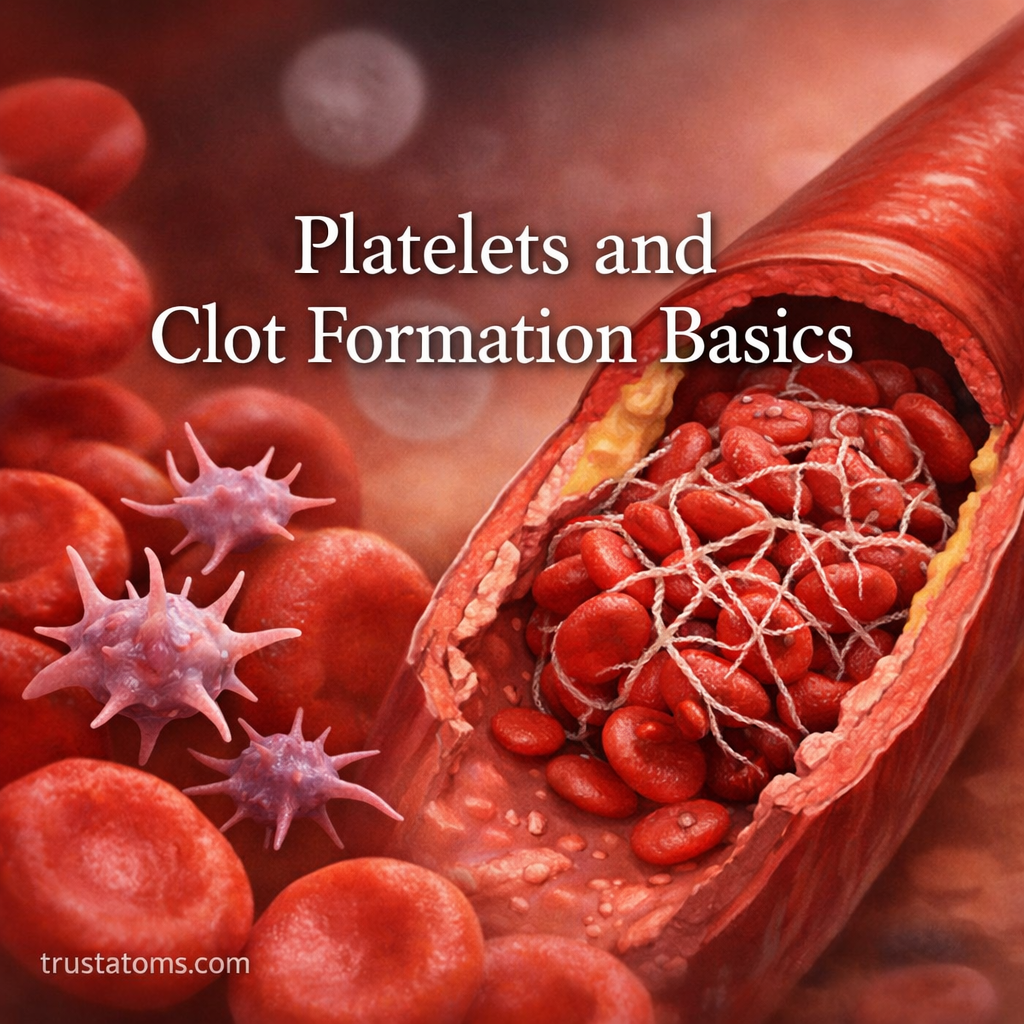
Illustration of platelets forming a blood clot inside a damaged blood vessel with fibrin mesh.
Platelets forming a clot to stop bleeding inside a damaged blood vessel. trustatoms.com.

When you get a cut or injury, your body reacts almost instantly to stop the bleeding. This life-saving process is called clot formation (or coagulation), and platelets play a central role. Despite being tiny and often overlooked, platelets are essential for preventing excessive blood loss and supporting healing.

In this guide, you’ll learn what platelets are, how clot formation works step by step, and why this process is so important for your health.

Continue reading “Platelets and Clot Formation Basics”

White Blood Cells in Circulation

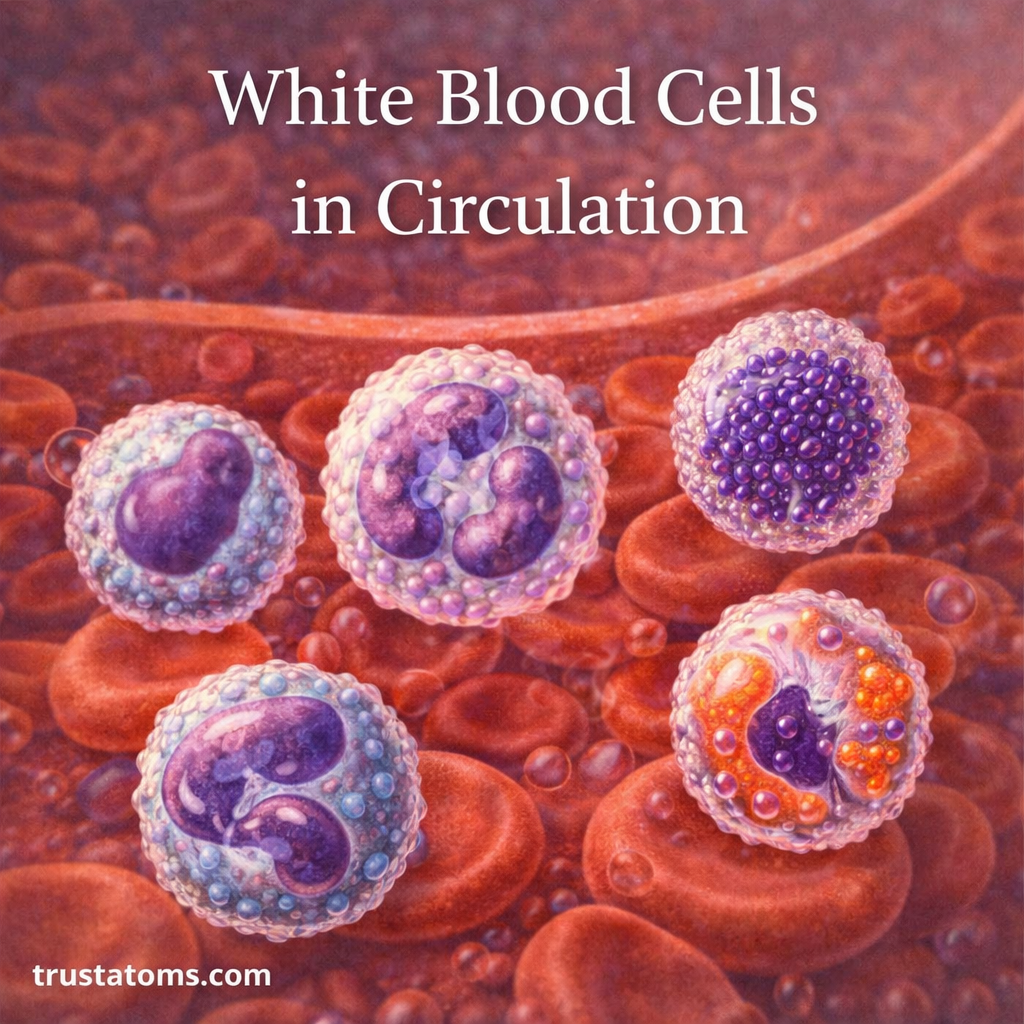
Illustration showing different types of white blood cells circulating among red blood cells in a blood vessel.
Diagram showing white blood cells circulating in the bloodstream alongside red blood cells. trustatoms.com.

White blood cells are a crucial part of the body’s defense system. Unlike red blood cells, which primarily transport oxygen, white blood cells (leukocytes) protect the body against infections, foreign invaders, and abnormal cells.

Their ability to circulate through the bloodstream and move into tissues makes them essential for maintaining health and responding to threats.

Continue reading “White Blood Cells in Circulation”

Hemoglobin and Gas Binding

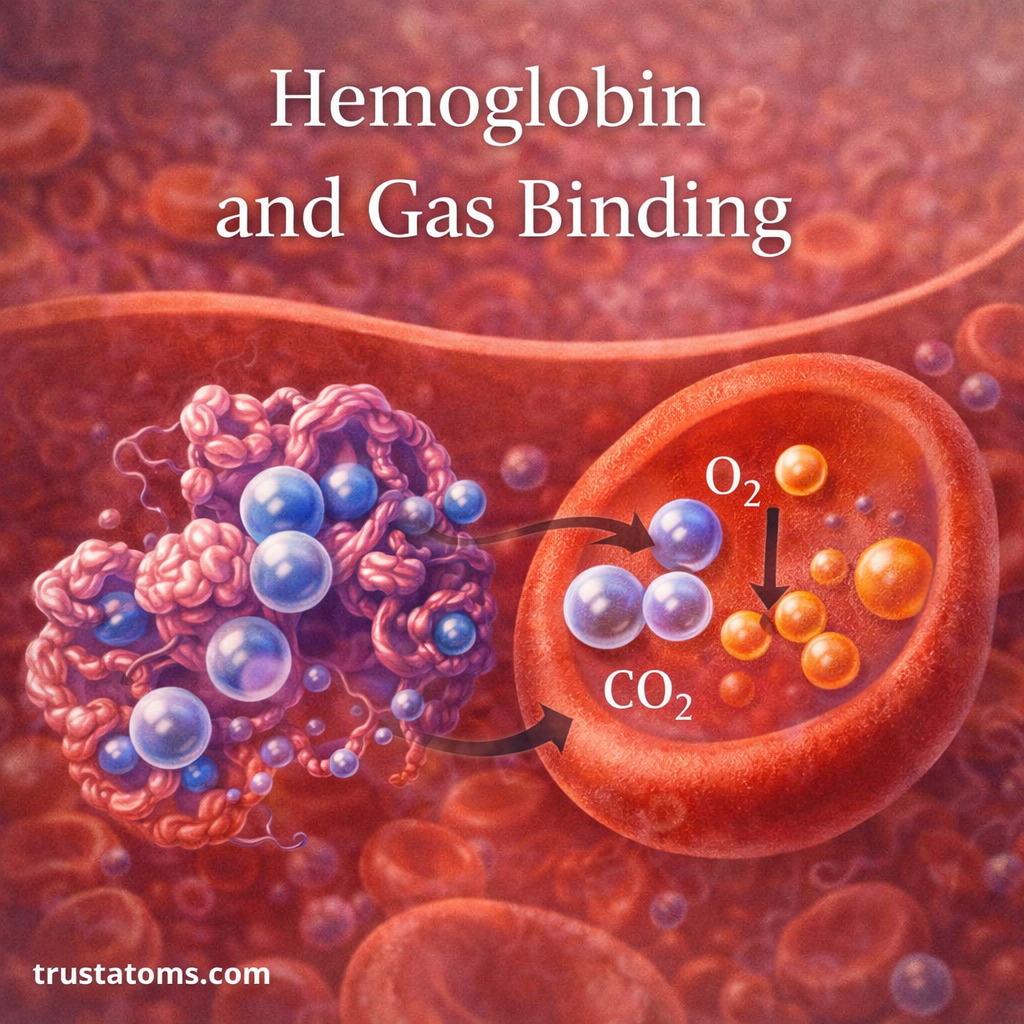
Illustration showing hemoglobin binding oxygen and carbon dioxide within red blood cells.
Diagram illustrating how hemoglobin binds and releases oxygen and carbon dioxide in red blood cells. trustatoms.com.

Hemoglobin is a vital protein found in red blood cells that enables the transport of oxygen and carbon dioxide throughout the body. Without it, the bloodstream would not be able to carry enough oxygen to support life.

This protein’s ability to bind and release gases efficiently is central to respiration and cellular function.

Continue reading “Hemoglobin and Gas Binding”

Red Blood Cells and Oxygen Transport

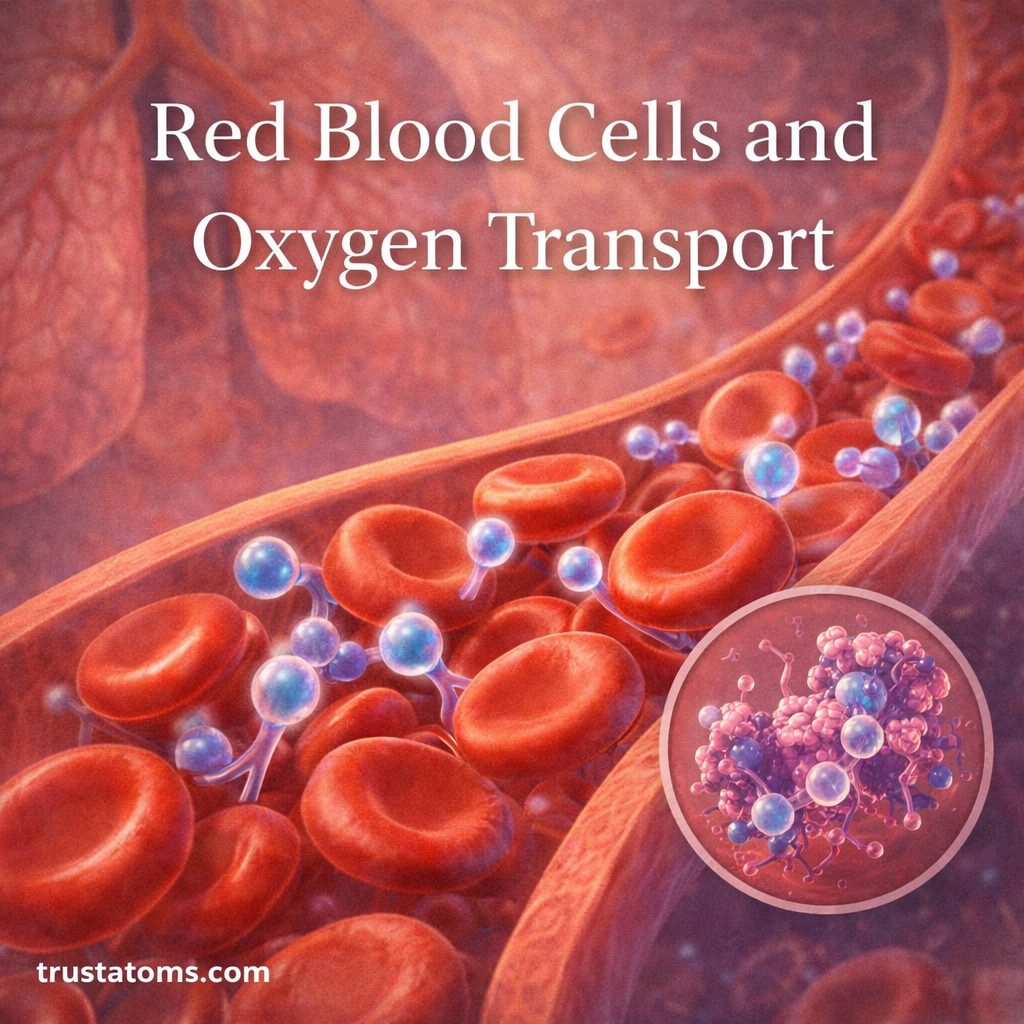
Illustration of red blood cells carrying oxygen through a blood vessel with oxygen molecules attached.
Diagram showing red blood cells transporting oxygen through the bloodstream in the circulatory system. trustatoms.com.

Red blood cells play a critical role in keeping the body alive by transporting oxygen from the lungs to tissues and carrying carbon dioxide back for removal. These specialized cells are uniquely designed to maximize efficiency, ensuring every part of the body receives the oxygen it needs to function.

Understanding how red blood cells work provides insight into one of the most essential processes in human biology.

Continue reading “Red Blood Cells and Oxygen Transport”

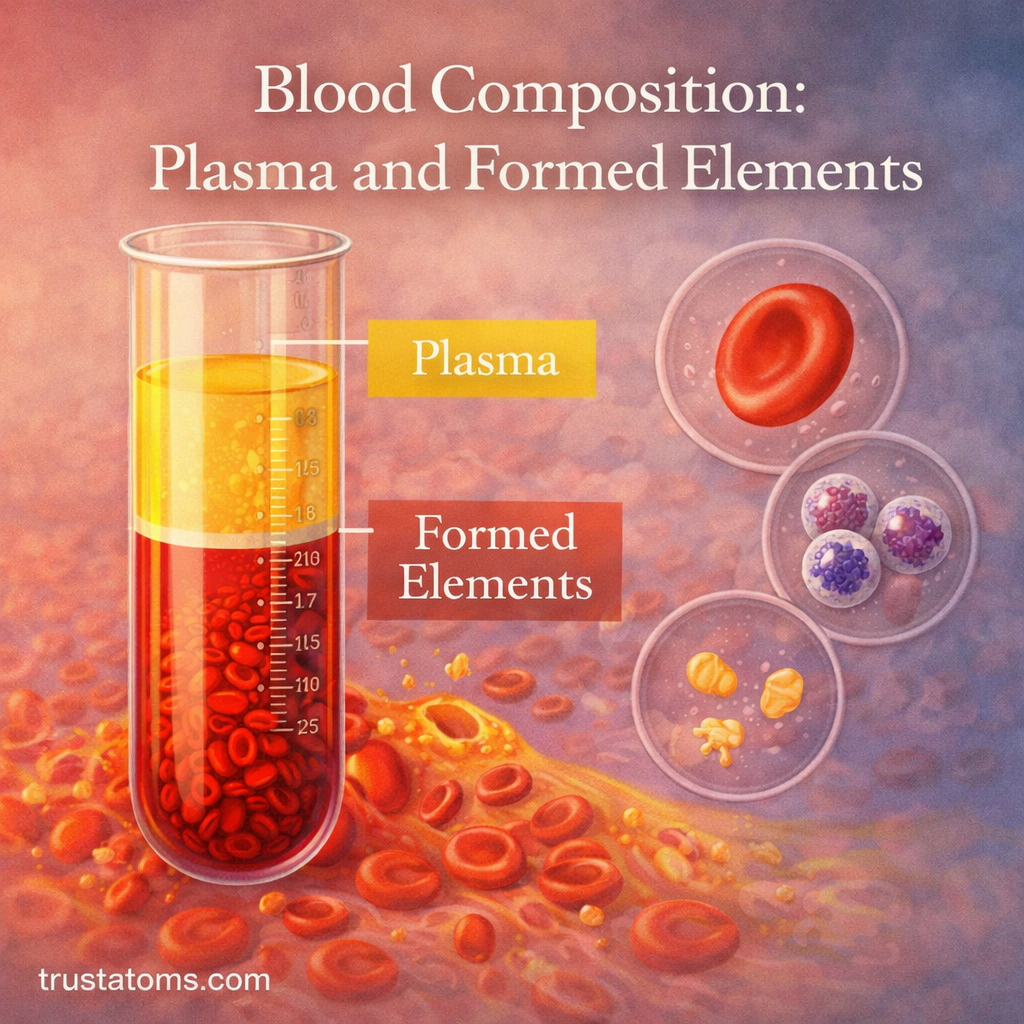
Blood Composition: Plasma and Formed Elements

Illustration showing blood composition with plasma and formed elements including red blood cells, white blood cells, and platelets.
Diagram illustrating plasma and formed elements in blood, including red blood cells, white blood cells, and platelets. trustatoms.com.

Blood is a specialized fluid that circulates throughout the body, delivering oxygen, nutrients, hormones, and removing waste products. While it may look like a simple red liquid, blood is actually made up of different components that each play a critical role in maintaining life.

These components are broadly divided into two categories: plasma and formed elements.

Continue reading “Blood Composition: Plasma and Formed Elements”

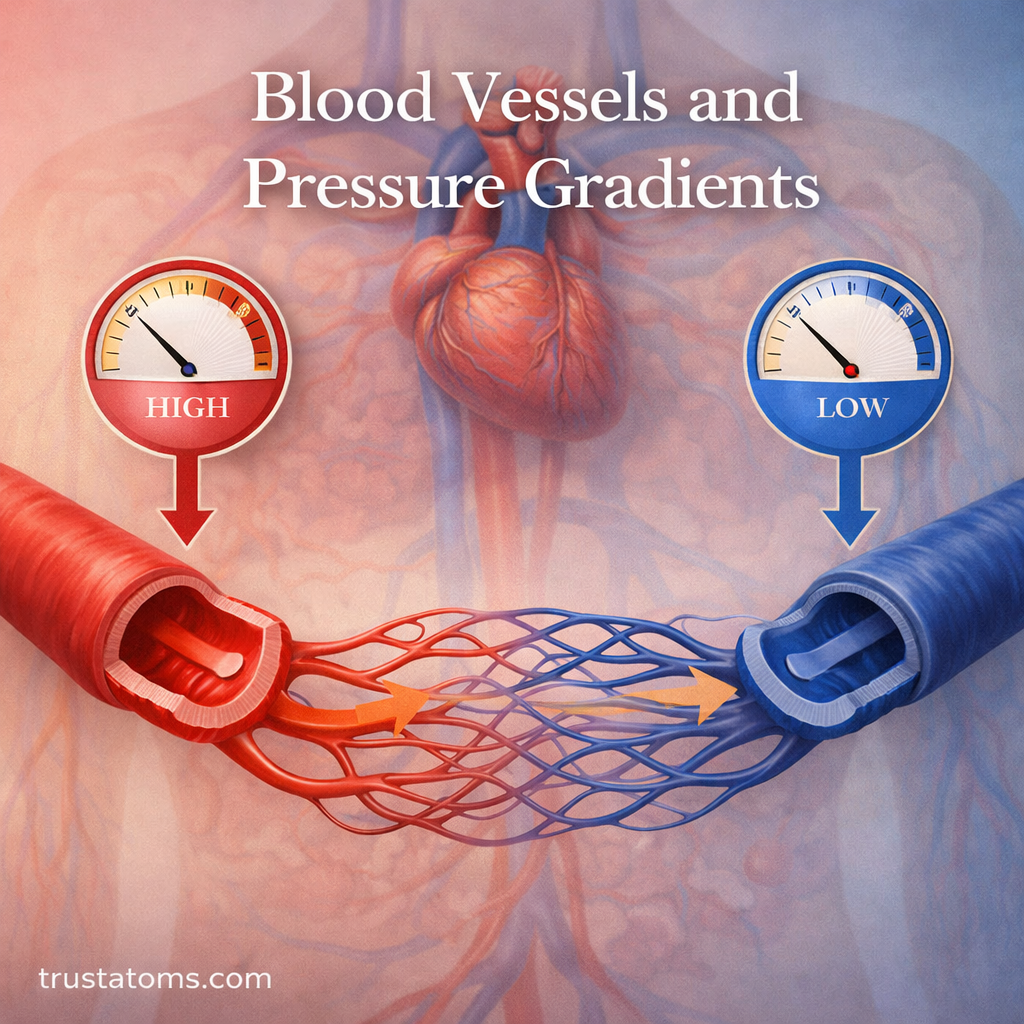
Blood Vessels and Pressure Gradients

Illustration showing pressure differences in arteries, capillaries, and veins with blood flow direction.
Diagram illustrating how pressure changes from arteries to capillaries to veins in the circulatory system. trustatoms.com.

Blood circulation in the human body depends on more than just the heart pumping—it relies heavily on pressure gradients within blood vessels. These pressure differences allow blood to move efficiently through arteries, capillaries, and veins, ensuring that oxygen and nutrients reach tissues while waste products are removed.

Understanding pressure gradients helps explain how blood flows continuously, even when it moves against gravity.

Continue reading “Blood Vessels and Pressure Gradients”

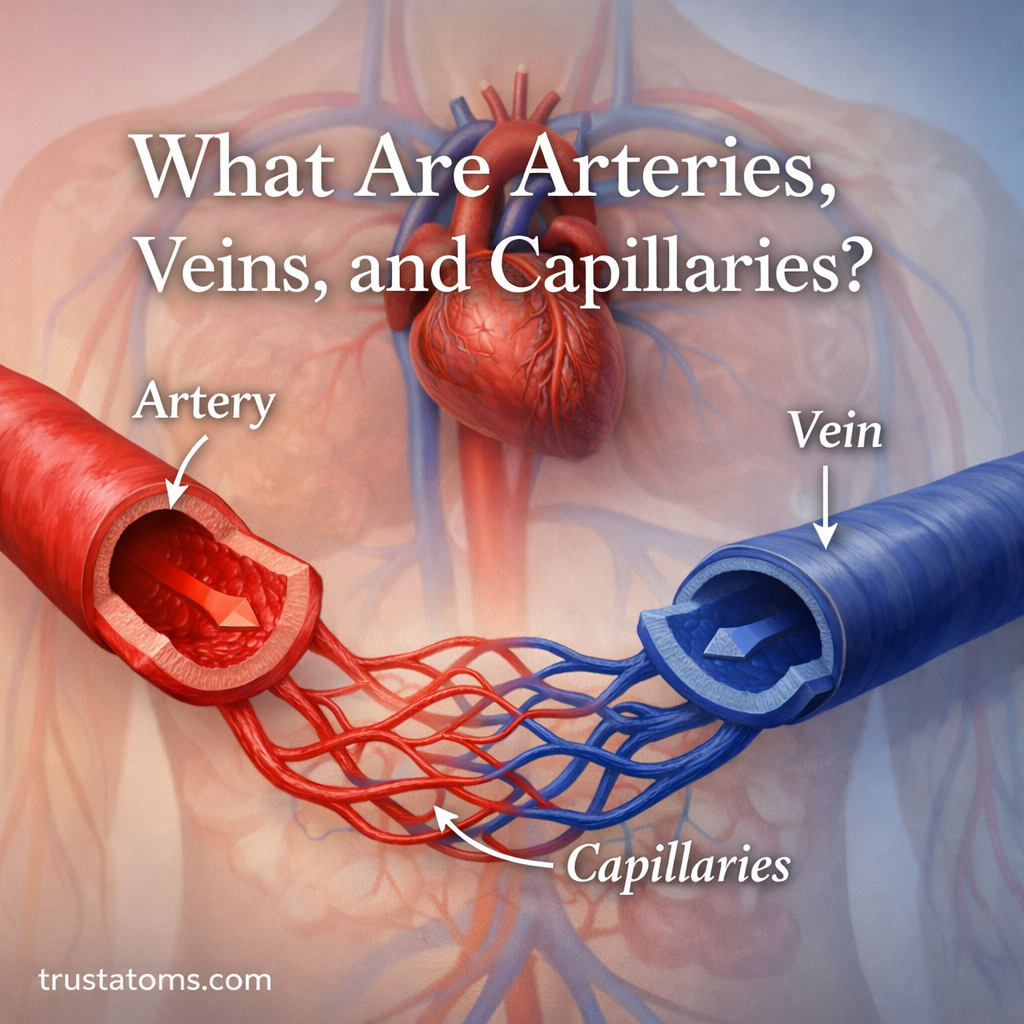
What Are Arteries, Veins, and Capillaries?

Illustration showing arteries, veins, and capillaries with blood flow between them.
Simple diagram of arteries, veins, and capillaries showing how blood circulates through the body. trustatoms.com.

The human circulatory system is a vast and efficient network responsible for transporting blood, oxygen, nutrients, and waste products throughout the body. At the core of this system are three main types of blood vessels: arteries, veins, and capillaries.

Each plays a unique role in keeping your body functioning properly. Understanding how they work together helps explain how oxygen reaches your cells and how waste is removed.

Continue reading “What Are Arteries, Veins, and Capillaries?”