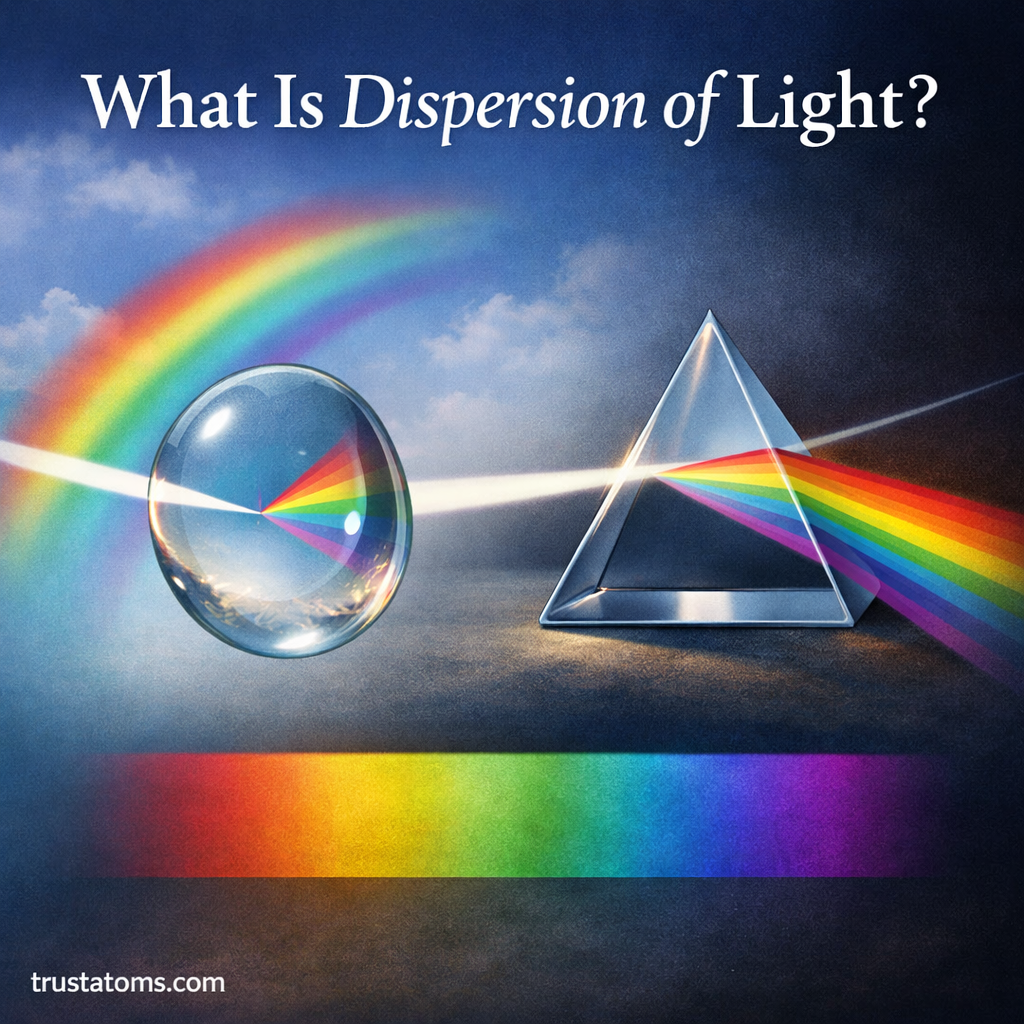
What Is Dispersion of Light?

Illustration showing white light entering a prism and separating into a rainbow spectrum to explain dispersion of light.
Simple diagram showing white light splitting into rainbow colors through a prism to demonstrate dispersion of light. trustatoms.com.

Introduction

Dispersion of light is a fascinating optical phenomenon where white light separates into its individual colors when it passes through certain materials. This effect occurs because different wavelengths of light travel at different speeds when entering a new medium, such as glass or water.

The most familiar example of dispersion is the rainbow, where sunlight is split into a spectrum of colors by water droplets in the atmosphere. Dispersion helps scientists understand the nature of light and plays an important role in optics, spectroscopy, and many scientific instruments.

Continue reading “What Is Dispersion of Light?”
What Is Refraction of Light?

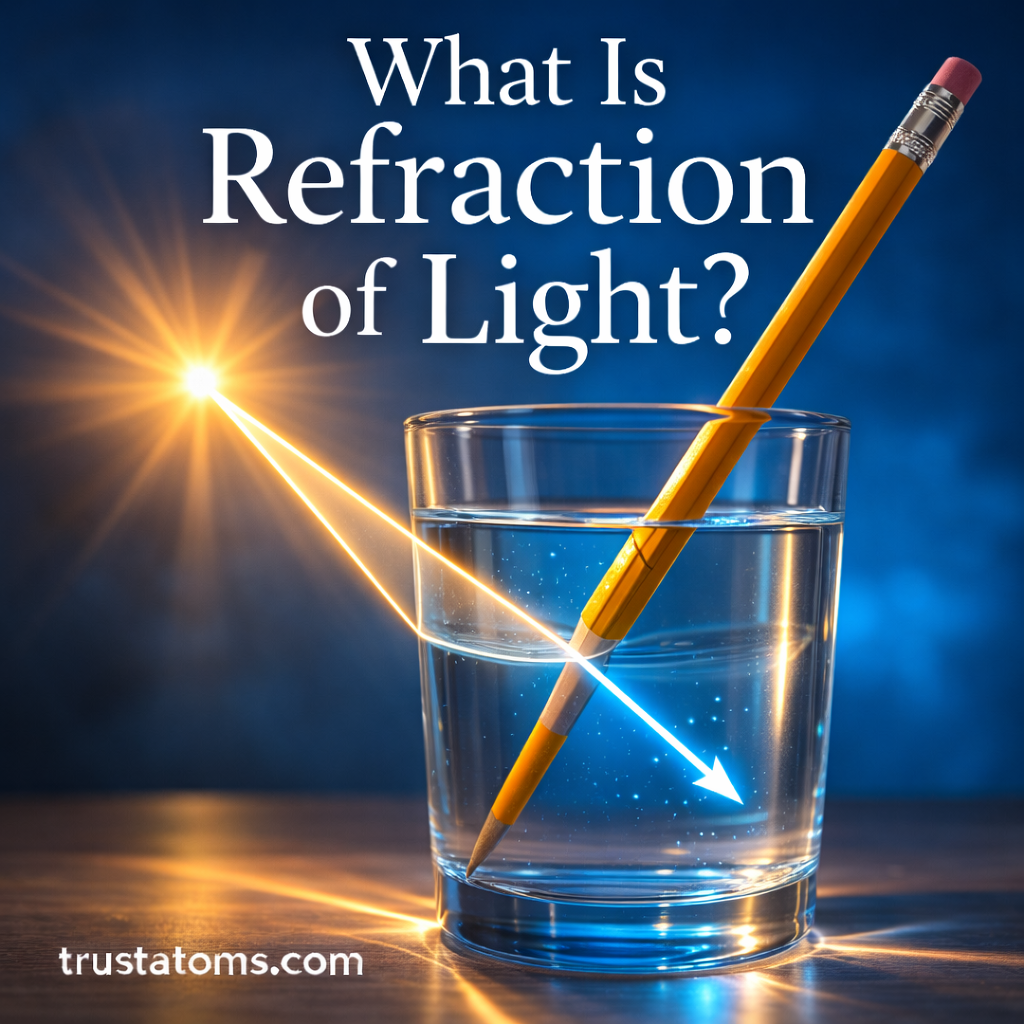
Illustration showing a pencil appearing bent inside a glass of water due to refraction of light.
Educational illustration demonstrating refraction of light using a pencil placed in a glass of water where the pencil appears bent due to light bending between air and water. trustatoms.com.

Refraction of light is a fundamental concept in physics that explains how light changes direction when it passes from one medium to another. This bending of light occurs because light travels at different speeds in different materials.

Refraction is responsible for many everyday visual effects, such as a straw appearing bent in a glass of water or rainbows forming in the sky. It also plays a key role in technologies like lenses, cameras, microscopes, and eyeglasses.

Understanding refraction helps scientists and engineers design optical systems and explains how light behaves as it moves through the world.

Continue reading “What Is Refraction of Light?”

What Is Reflection of Light?

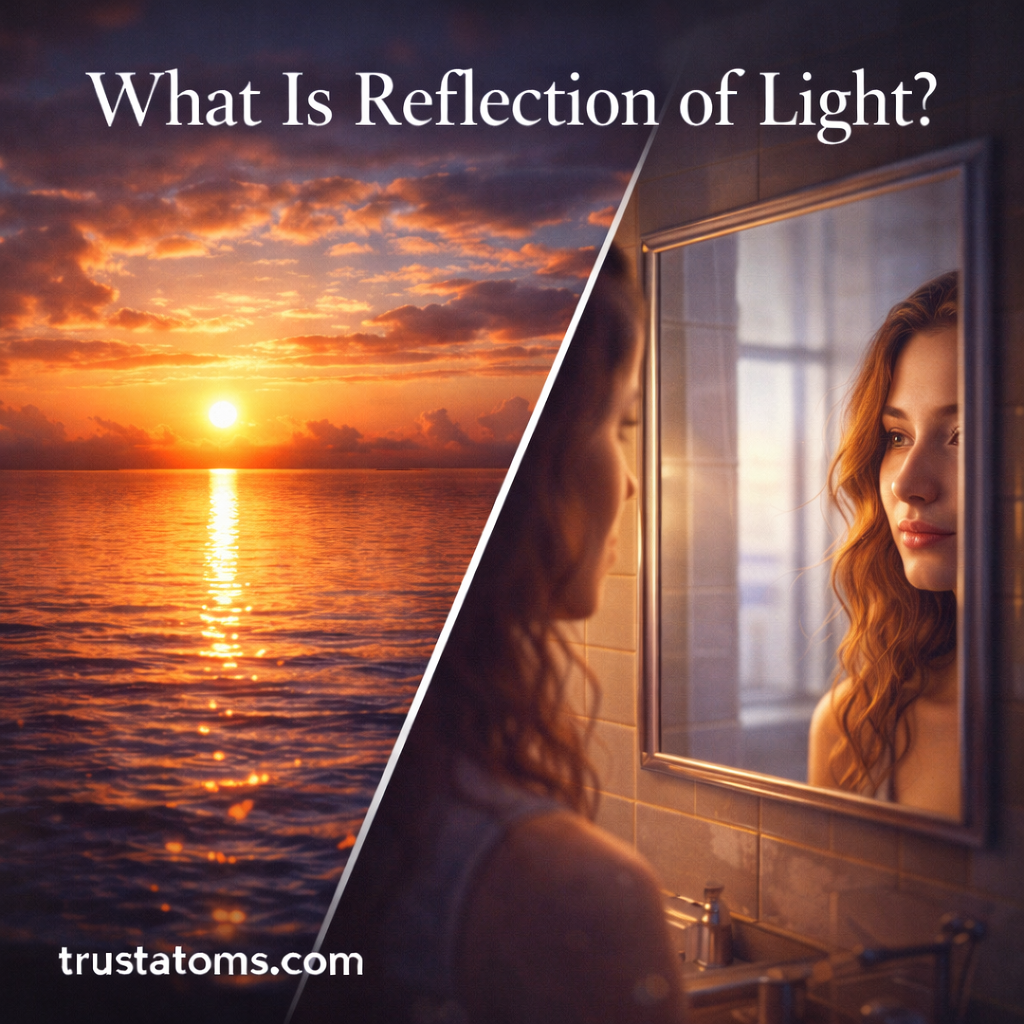
Split illustration showing sunlight reflecting on ocean water and a woman looking at her reflection in a mirror.
Educational illustration demonstrating reflection of light with examples of sunlight reflecting off water and a mirror reflecting a person’s image. trustatoms.com.

Reflection of light is a basic physical process that occurs when light waves bounce off a surface instead of passing through it. This phenomenon allows us to see objects, observe mirrors, and understand how light interacts with the world around us.

Every day, reflection makes many common experiences possible—from looking at your reflection in a mirror to seeing sunlight reflecting off water or glass. In physics, studying how light reflects helps scientists understand optics, imaging systems, and the behavior of electromagnetic waves.

Continue reading “What Is Reflection of Light?”

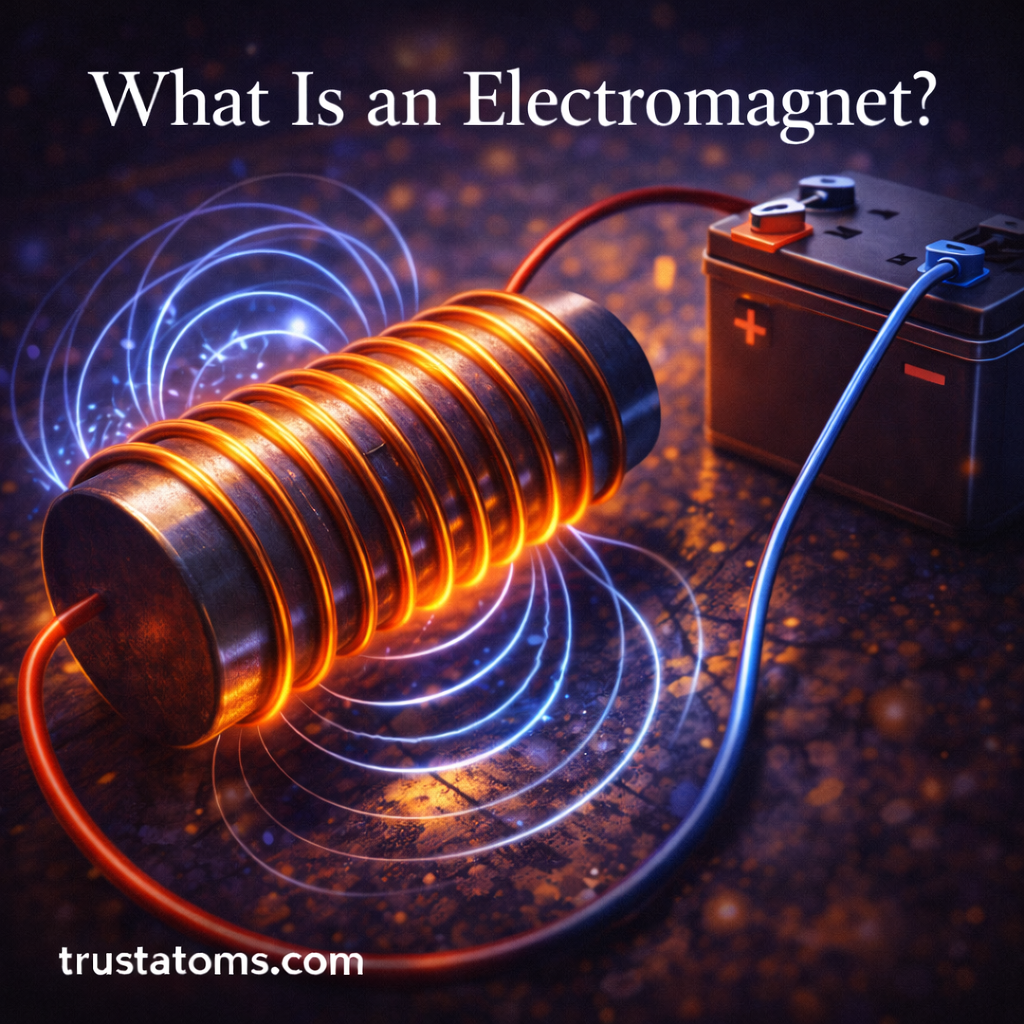
What Is an Electromagnet?

Illustration showing a simple electromagnet made of copper wire coiled around an iron core connected to a battery creating a magnetic field.
Educational illustration showing how an electromagnet works using a coiled copper wire around an iron core connected to a battery that generates a magnetic field. trustatoms.com.

Magnets are commonly associated with permanent materials such as iron magnets on refrigerators. However, some magnets only produce magnetic fields when electricity flows through them. These are known as electromagnets.

Electromagnets are an essential part of modern technology. They power motors, enable data storage, operate industrial machines, and even help doctors create detailed medical images. Unlike permanent magnets, electromagnets can be turned on or off simply by controlling the flow of electricity.

Understanding electromagnets helps explain how electricity and magnetism are connected and how many everyday technologies work.

Continue reading “What Is an Electromagnet?”

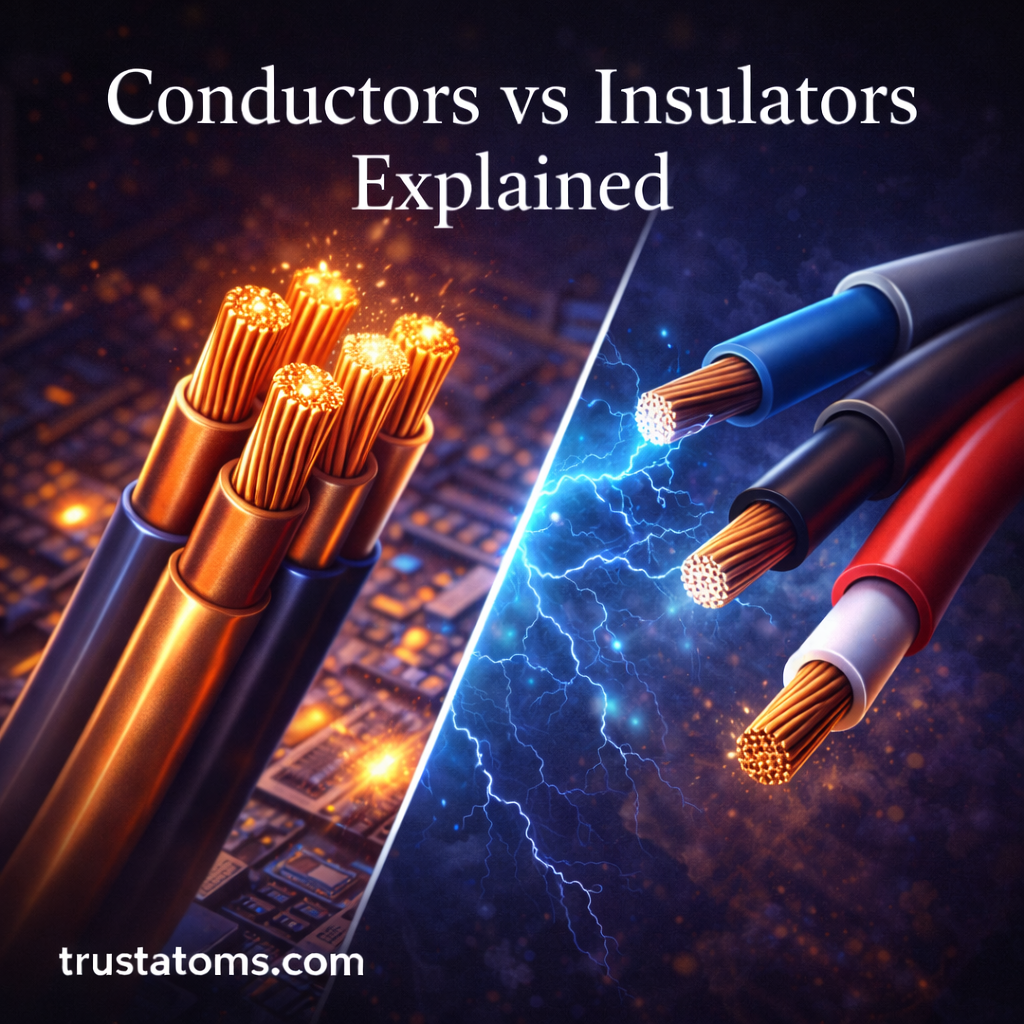
Conductors vs Insulators Explained

Illustration comparing electrical conductors and insulators showing exposed copper wires conducting electricity and insulated wires preventing current flow.
Educational illustration comparing conductors and insulators, showing copper wires that allow electricity to flow and insulated wires that prevent electrical current from escaping. trustatoms.com.

Electricity powers modern technology, from household appliances to global communication networks. But electricity does not move through all materials in the same way. Some materials allow electric current to flow easily, while others resist the movement of electric charge.

These two categories are known as conductors and insulators. Understanding the difference between them is essential in physics, electrical engineering, and everyday electrical safety.

In simple terms, conductors allow electricity to flow, while insulators prevent or restrict that flow.

Continue reading “Conductors vs Insulators Explained”

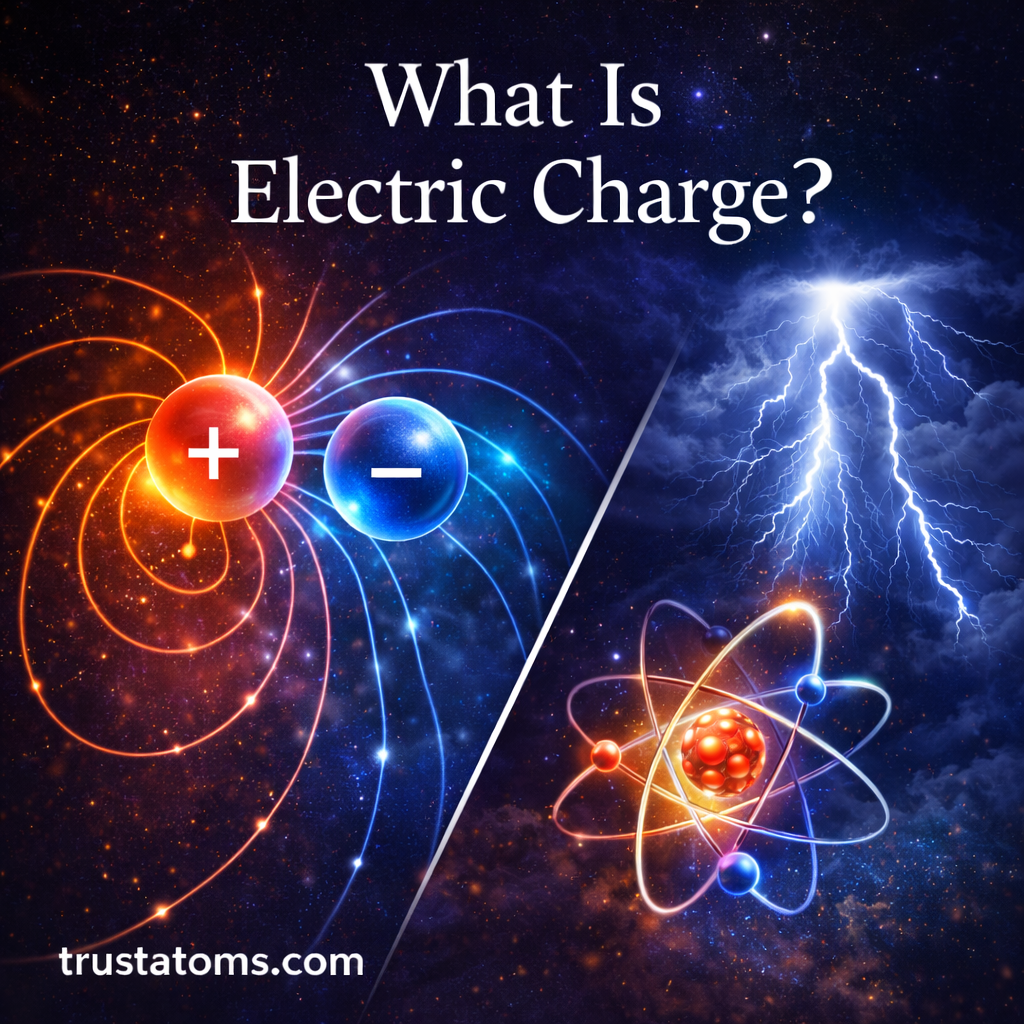
What Is Electric Charge?

Illustration showing positive and negative electric charges interacting with electric field lines along with an atom and lightning.
Educational illustration showing positive and negative electric charges, electric field lines, atomic structure, and lightning to represent how electric charge works in nature and physics. trustatoms.com.

Electric charge is one of the most fundamental properties in physics. It explains how particles interact through electric forces and forms the foundation of electricity, magnetism, and many modern technologies.

Everything from lightning storms to electronic devices relies on the behavior of electric charges. At the microscopic level, electric charge governs how particles attract, repel, and exchange energy.

Understanding electric charge helps explain how atoms work, how electric currents flow, and how electrical systems power the modern world.

Continue reading “What Is Electric Charge?”

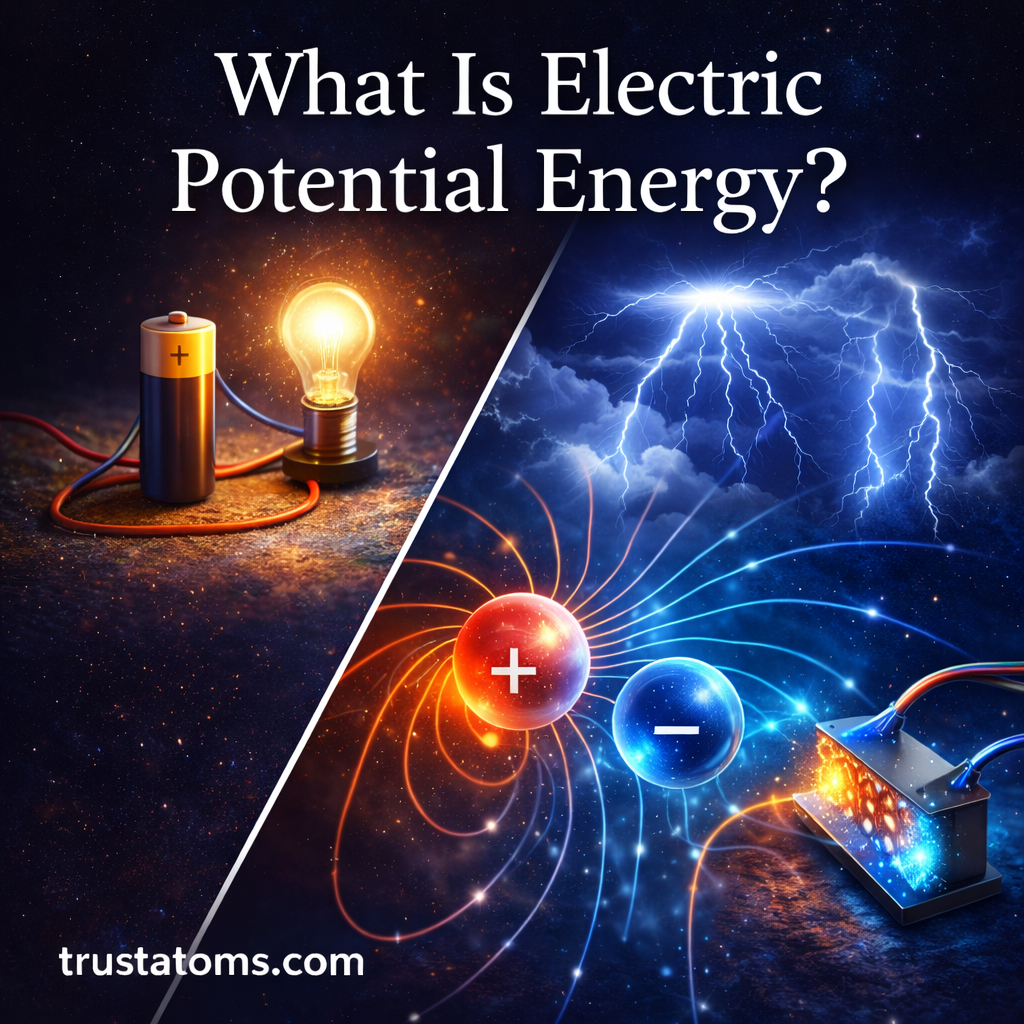
What Is Electric Potential Energy?

Illustration showing examples of electric potential energy including a battery powering a light bulb, lightning, and interacting electric charges.
Educational illustration representing electric potential energy with examples such as a battery circuit, lightning discharge, and charged particles interacting in an electric field. trustatoms.com.

Electric potential energy is a form of stored energy that results from the position of charged particles within an electric field. It plays an important role in electricity, electronics, and many natural processes involving charged particles.

Whenever electric charges interact with one another—whether attracting or repelling—they create conditions where energy can be stored and later released. This stored energy is known as electric potential energy.

Understanding electric potential energy helps explain how batteries work, how electrical circuits operate, and how charged particles behave in fields created by other charges.

Continue reading “What Is Electric Potential Energy?”

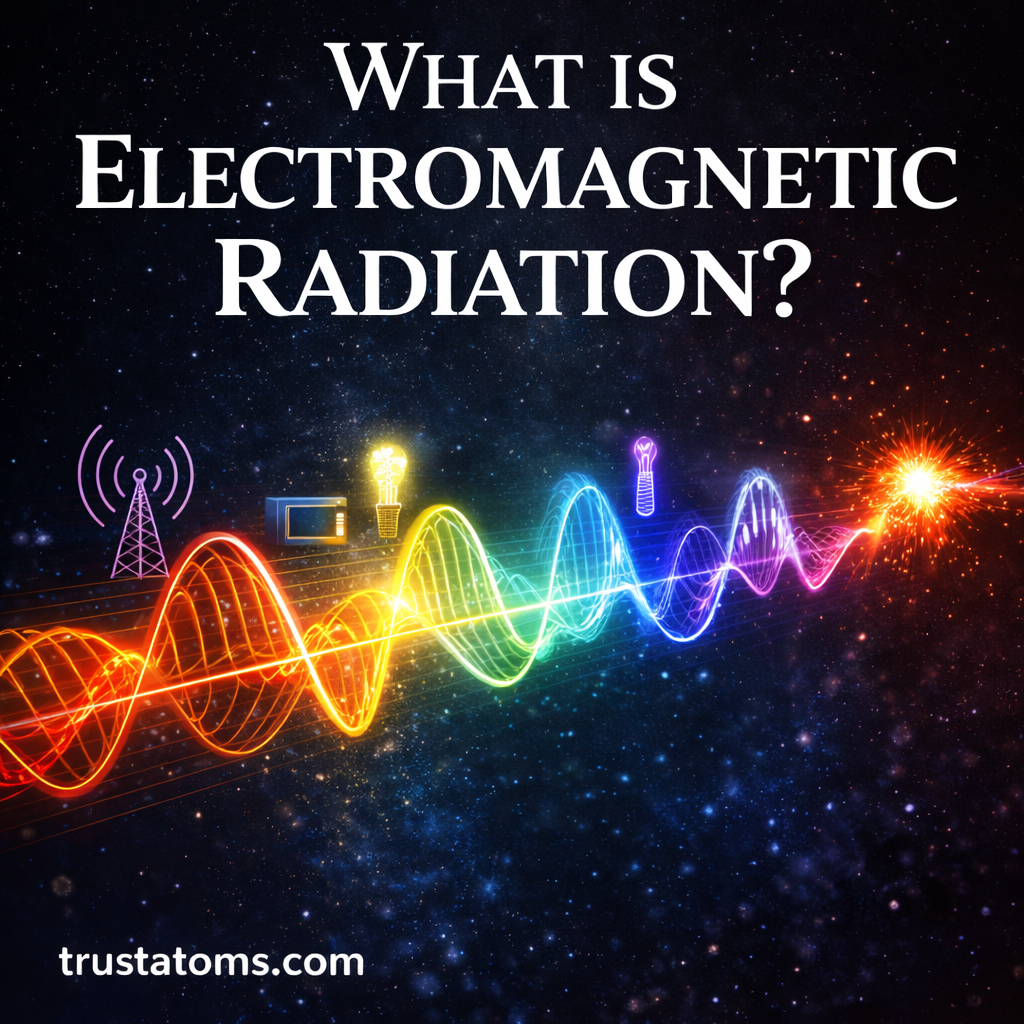
What Is Electromagnetic Radiation?

Illustration of colorful electromagnetic waves traveling through space representing different types of electromagnetic radiation.
Conceptual illustration of electromagnetic waves across the spectrum, representing energy traveling through space. trustatoms.com.

Electromagnetic radiation is a fundamental form of energy that travels through space as waves made of electric and magnetic fields. It surrounds us constantly and plays a major role in both natural phenomena and modern technology.

Sunlight, radio signals, X-rays, and microwaves are all examples of electromagnetic radiation. Although these forms of energy behave differently in everyday use, they are all part of the same physical system known as the electromagnetic spectrum.

Understanding electromagnetic radiation helps explain how light travels, how wireless communication works, and how scientists observe the universe.

Continue reading “What Is Electromagnetic Radiation?”

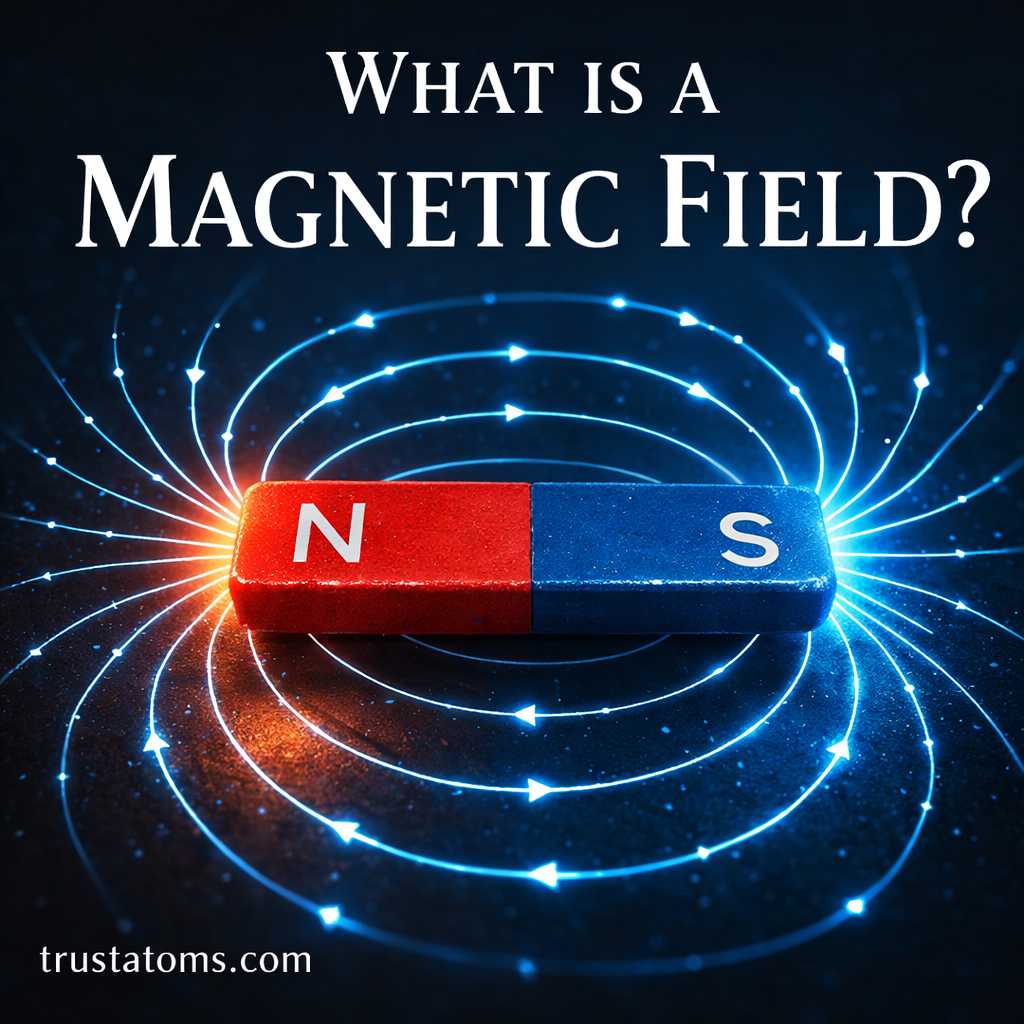
What Is a Magnetic Field?

Educational illustration of a bar magnet with glowing magnetic field lines curving from the north pole to the south pole.
Illustration showing a bar magnet with visible magnetic field lines representing how magnetic forces extend through space. trustatoms.com.

Magnetic fields are one of the fundamental forces that shape the physical world. From the way a compass points north to how planets interact with the Sun, magnetic fields influence motion, energy, and matter across both everyday life and the universe.

In physics, a magnetic field describes the region around a magnet, electric current, or moving charged particle where magnetic forces can be detected. Although invisible, magnetic fields can be measured, mapped, and observed through their effects on objects.

This article explains what a magnetic field is, how it works, and why it plays such an important role in science and technology.

Continue reading “What Is a Magnetic Field?”

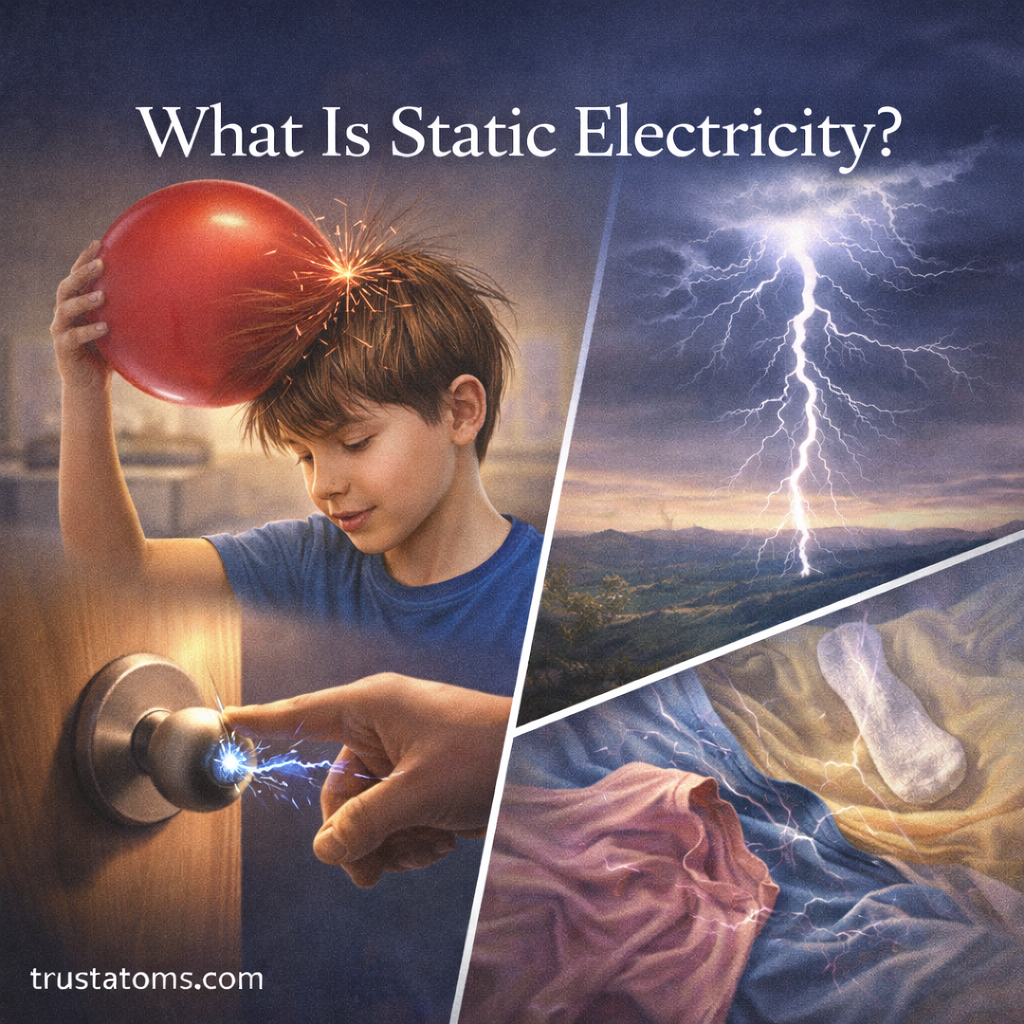
What Is Static Electricity?

Educational illustration showing examples of static electricity including a balloon attracting hair, a spark from a doorknob, lightning, and clothes sticking together.
Illustration demonstrating static electricity through everyday examples such as a balloon and hair, a small electric shock from a doorknob, lightning, and static cling in clothing. trustatoms.com.

Static electricity is a common physical phenomenon that occurs when electric charges build up on the surface of an object. You may have experienced it when touching a metal doorknob after walking across a carpet or when clothes stick together after coming out of a dryer.

In physics, static electricity refers to the imbalance of electric charges on the surface of materials. These charges remain in one place rather than flowing continuously like the electricity in power lines.

Understanding static electricity helps explain everyday experiences as well as important natural events such as lightning.

Continue reading “What Is Static Electricity?”