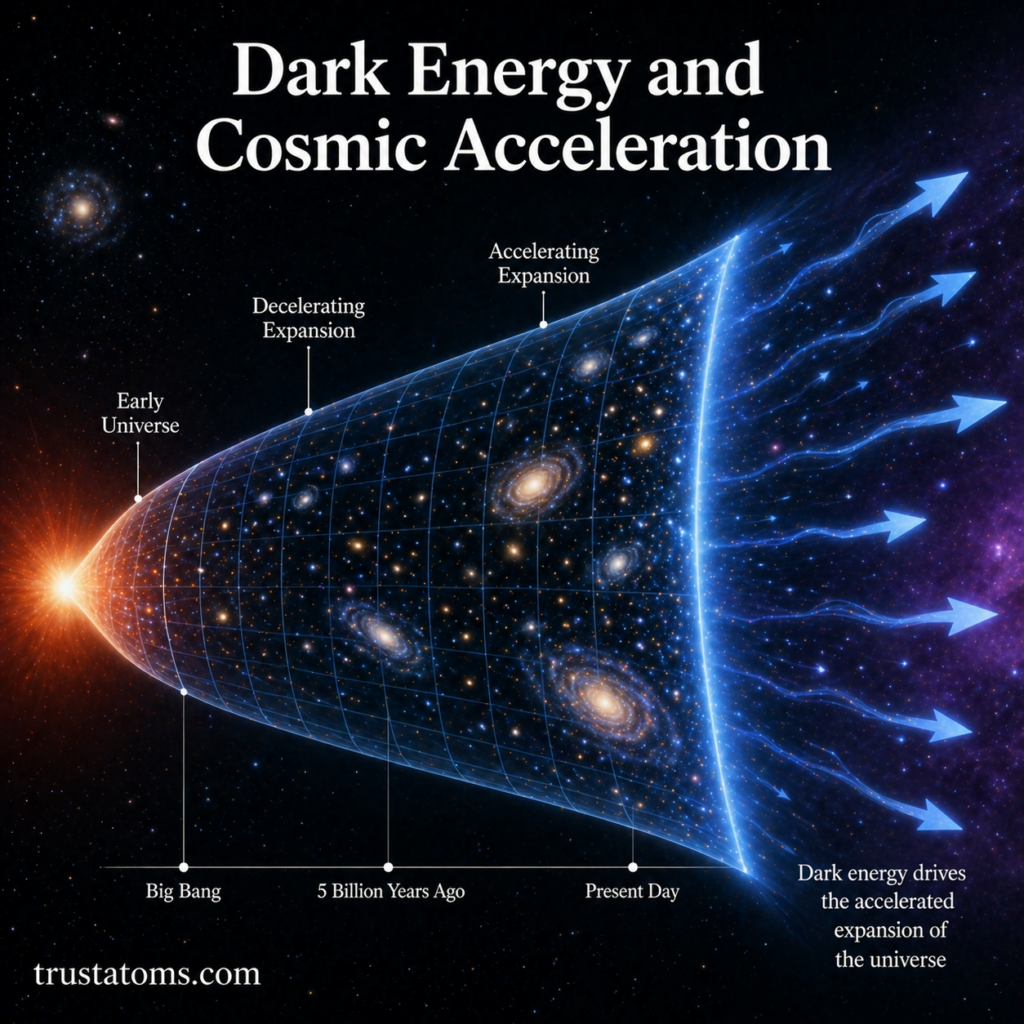
The universe is not just expanding—it’s accelerating. Instead of slowing down due to gravity, the expansion of the universe is speeding up over time. This surprising discovery led scientists to propose the existence of dark energy, a mysterious force that makes up most of the universe.
Understanding dark energy is one of the biggest challenges in modern astronomy and cosmology.
What Is Dark Energy?
Dark energy is an unknown form of energy that permeates all of space and drives the accelerated expansion of the universe.
Unlike matter:
- It does not emit, absorb, or reflect light
- It cannot be directly observed
- It is detected through its effects on cosmic expansion
Scientists estimate that dark energy makes up about 68–70% of the total energy content of the universe.
The Discovery of Cosmic Acceleration
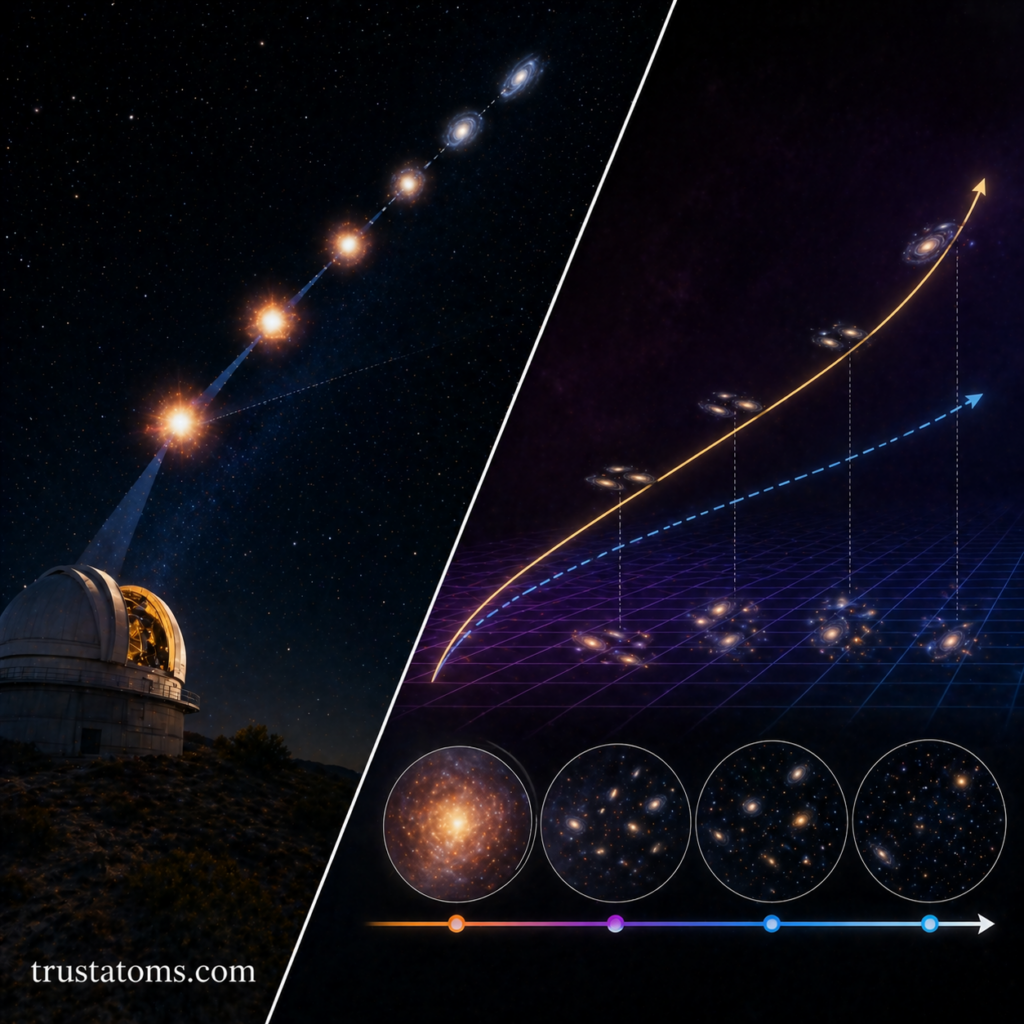
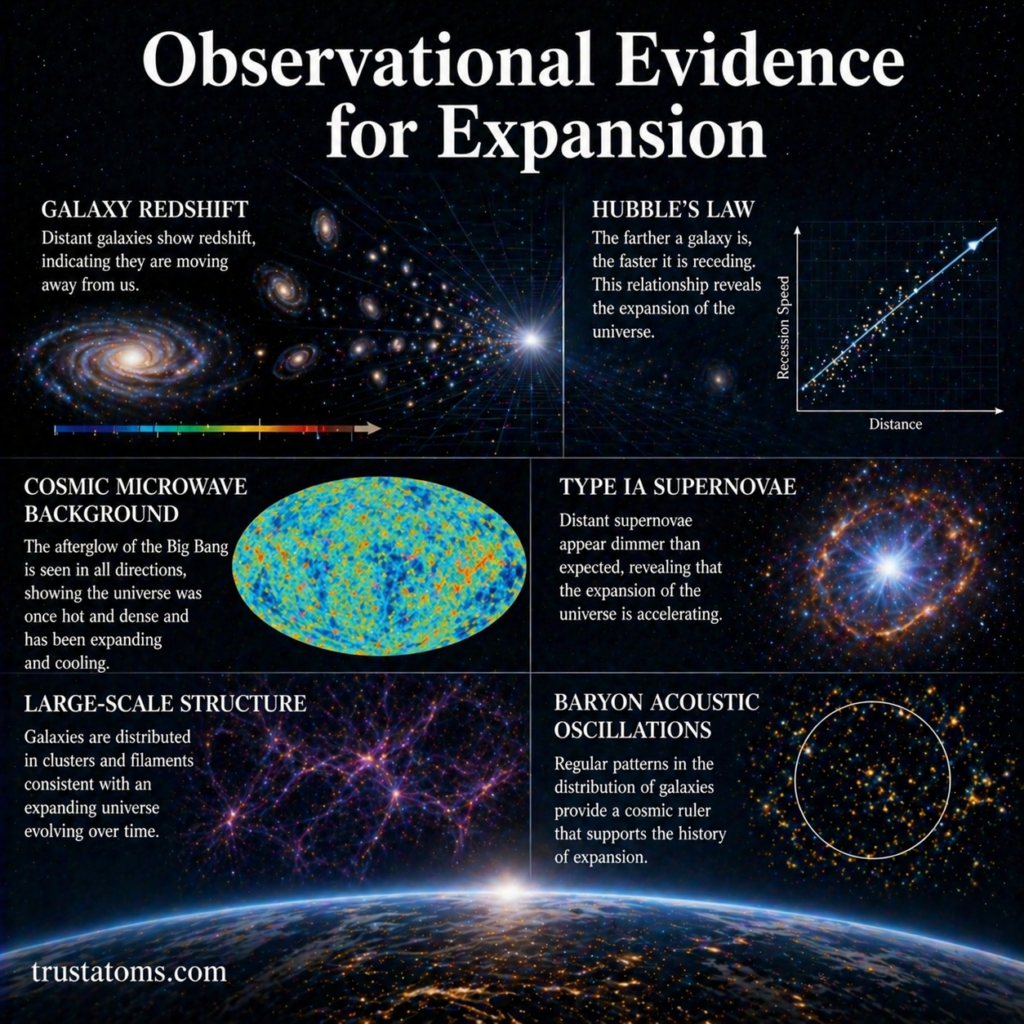
In the late 1990s, two independent research teams studying distant supernovae made a groundbreaking discovery.
These exploding stars—called Type Ia supernovae—act as “standard candles” for measuring cosmic distances.
What Scientists Found
- Distant supernovae were dimmer than expected
- This meant they were farther away than predicted
- The universe’s expansion must be accelerating
This discovery earned the 2011 Nobel Prize in Physics and reshaped our understanding of the cosmos.
How Dark Energy Works
Dark energy is often described as a property of space itself.
Key Characteristics
- It exerts a repulsive effect, opposing gravity
- Its influence increases as the universe expands
- It appears to be evenly distributed throughout space
As more space is created, more dark energy seems to exist—leading to even faster expansion.
The Role of the Cosmological Constant
One explanation for dark energy comes from a concept introduced by Albert Einstein called the cosmological constant.
What It Means
- A constant energy density filling space
- Originally proposed to keep the universe static
- Later reinterpreted as a driver of acceleration
This idea fits well with observations, though its true nature remains uncertain.
Evidence for Dark Energy
Although dark energy cannot be observed directly, multiple lines of evidence support its existence.
1. Supernova Observations
Distant supernovae show that expansion is accelerating.
2. Cosmic Microwave Background
The Cosmic Microwave Background reveals the universe’s composition and supports the presence of dark energy.
3. Large-Scale Structure
The distribution of galaxies across the universe matches models that include dark energy.
4. Baryon Acoustic Oscillations
Patterns in galaxy distribution act as “cosmic rulers,” confirming accelerated expansion.
Dark Energy vs. Dark Matter
Dark energy is often confused with dark matter, but they are very different.
Key Differences
- Dark matter:
- Attracts matter through gravity
- Helps form galaxies
- Makes up about 27% of the universe
- Dark energy:
- Drives expansion
- Acts as a repulsive force
- Makes up about 68–70% of the universe
Together, they dominate the universe’s total energy and matter content.
The Fate of the Universe
Dark energy plays a major role in determining the future of the universe.
Possible Scenarios
- Continued acceleration: Galaxies move farther apart, leading to a cold, empty universe
- Big Freeze: Star formation ends, and the universe slowly fades
- Big Rip (theoretical): Expansion becomes so strong it tears apart galaxies, stars, and even atoms
The exact outcome depends on the nature and behavior of dark energy over time.
Why Dark Energy Matters
Understanding dark energy is essential for answering fundamental questions about the universe.
Key Takeaways
- Explains why the universe’s expansion is accelerating
- Dominates the total energy content of the cosmos
- Challenges our understanding of physics
- Helps predict the universe’s long-term evolution
It represents one of the greatest unsolved mysteries in science.
Final Thoughts
Dark energy has transformed our understanding of the universe. What was once thought to be slowing down is now known to be speeding up, driven by a force we still don’t fully understand.
As observations improve and new theories emerge, scientists hope to uncover the true nature of dark energy—and with it, a deeper understanding of the cosmos itself.