Groundwater is one of Earth’s most important hidden resources. It exists beneath the surface in soil and rock layers, supplying drinking water, supporting agriculture, and sustaining ecosystems. Understanding how groundwater moves through geological systems helps explain water availability, quality, and long-term sustainability.
What Is Groundwater?
Groundwater is water that fills the spaces between soil particles and within cracks in rocks below Earth’s surface.
It originates from precipitation such as rain or snow that seeps into the ground through a process called infiltration.
Where Groundwater Is Found
- In pores between sediment grains (sand, gravel)
- In fractures and cracks within rocks
- In underground layers called aquifers
The Water Table
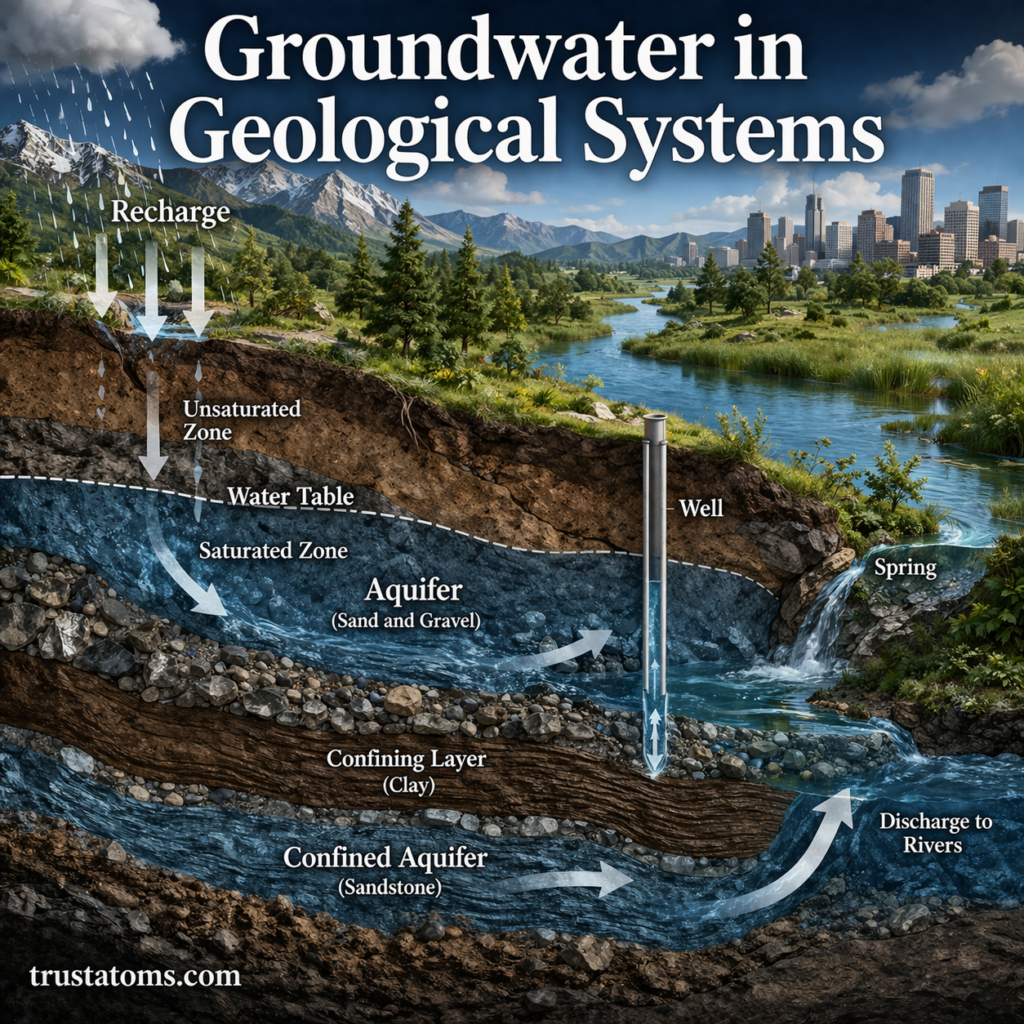
The water table is the upper surface of groundwater.
It separates:
- The saturated zone (fully filled with water)
- The unsaturated zone (air and water mixed in soil)
Key Points About the Water Table
- It rises after heavy rainfall
- It falls during drought or heavy water use
- Its depth varies depending on location and geology
Aquifers: Natural Water Storage Systems
Aquifers are underground layers of rock or sediment that store and transmit groundwater.
Types of Aquifers
1. Unconfined Aquifers
- Closest to the surface
- Recharge directly from rainfall
- More vulnerable to contamination
2. Confined Aquifers
- Trapped between impermeable layers (like clay or rock)
- Under pressure
- Can create artesian wells where water flows naturally
Characteristics of Good Aquifers
- High porosity (many spaces to hold water)
- High permeability (water flows easily through it)
Common materials:
- Sand
- Gravel
- Sandstone
How Groundwater Moves
Groundwater does not stay still—it flows slowly through underground materials.
Factors Affecting Movement
- Permeability of rocks
- Slope of the water table
- Gravity and pressure differences
Flow Rate
- Typically very slow (centimeters to meters per day)
- Much slower than surface water
Recharge and Discharge
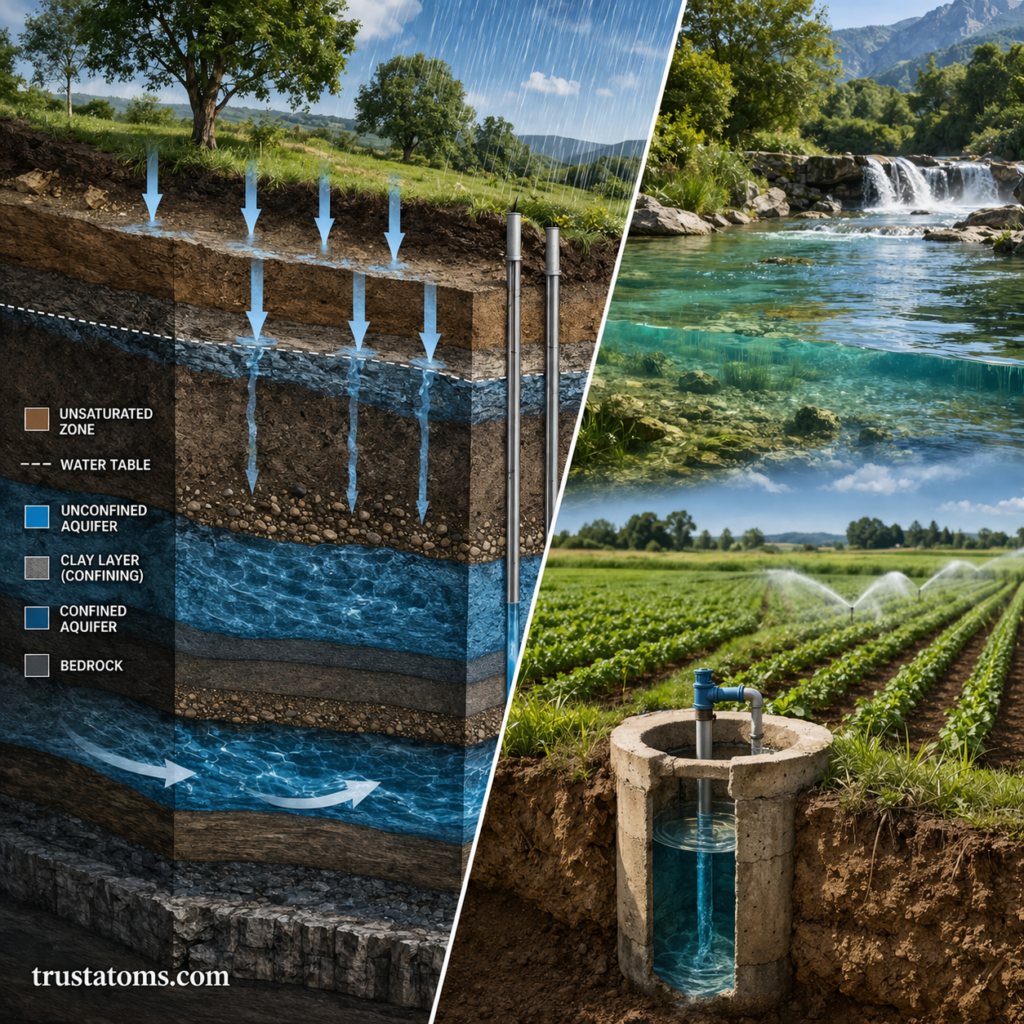
Groundwater systems depend on continuous movement through recharge and discharge.
Recharge
Recharge occurs when water enters the ground.
Sources include:
- Rainfall
- Snowmelt
- Rivers and lakes
Discharge
Discharge occurs when groundwater returns to the surface.
Examples:
- Springs
- Rivers
- Wetlands
- Ocean seepage
Geological Controls on Groundwater
Geology plays a major role in determining how groundwater behaves.
Rock Types and Their Effects
- Porous rocks (sandstone): Store and transmit water well
- Impermeable rocks (clay, granite): Block water flow
- Fractured rocks: Can store water in cracks
Structural Features
- Faults can either block or channel groundwater
- Folds can trap water in certain layers
- Layers (strata) control water movement direction
Groundwater Quality
Groundwater is often cleaner than surface water, but it can still become contaminated.
Natural Influences
- Dissolved minerals (calcium, iron, salt)
- Rock composition
Human Impacts
- Agricultural chemicals (fertilizers, pesticides)
- Industrial pollution
- Leaking waste systems
Importance of Groundwater
Groundwater is essential for both human and environmental systems.
Key Uses
- Drinking water supply
- Irrigation for agriculture
- Industrial processes
- Maintaining ecosystems (wetlands, rivers)
In many regions, groundwater is the primary source of freshwater.
Groundwater Depletion and Sustainability
Overuse of groundwater can lead to serious problems.
Consequences of Overuse
- Lowering of the water table
- Land subsidence (ground sinking)
- Reduced water availability
- Saltwater intrusion in coastal areas
Sustainable Management Practices
- Monitoring groundwater levels
- Reducing over-extraction
- Protecting recharge areas
- Promoting water conservation
Final Thoughts
Groundwater is a vital part of Earth’s geological systems, quietly moving beneath the surface and supporting life above it. Its behavior is controlled by rock types, geological structures, and natural processes that determine how water is stored and transported underground.
By understanding groundwater systems, we can better manage this critical resource and ensure it remains available for future generations.