Bioinformatics in Genomic Data Analysis

Illustration of bioinformatics in genomic data analysis showing DNA sequences, genome visualization tools, and computational analysis of genetic data.
Illustration representing how bioinformatics tools analyze genomic data to study DNA sequences and genetic variation. trustatoms.com

Genomic research has expanded rapidly over the past few decades, producing enormous volumes of biological data. Sequencing technologies can now generate millions or even billions of DNA reads in a single experiment. To make sense of this information, scientists rely on bioinformatics—a field that combines biology, computer science, statistics, and mathematics to analyze complex biological data.

Bioinformatics plays a crucial role in genomic data analysis, helping researchers interpret DNA sequences, identify genes, detect mutations, and understand how genetic variations influence health, disease, and evolution.

Continue reading “Bioinformatics in Genomic Data Analysis”


DNA Sequencing Technologies in Research

Illustration showing DNA sequencing technologies with a central DNA double helix surrounded by sequencing machines and laboratory tools.
Illustration showing modern DNA sequencing technologies used in research laboratories to analyze genetic information. trustatoms.com

DNA sequencing technologies have transformed modern biological research. By determining the exact order of nucleotides in DNA, scientists can study genes, understand biological functions, and explore the genetic foundations of life.

Advances in sequencing technology have dramatically increased the speed, accuracy, and affordability of DNA analysis. Today, researchers use sequencing tools in fields ranging from medicine and biotechnology to environmental science and evolutionary biology.

Understanding how DNA sequencing technologies work helps explain how scientists investigate genomes and uncover genetic information that shapes living organisms.

Continue reading “DNA Sequencing Technologies in Research”

Gene Therapy Technologies in Biology

Illustration showing gene therapy technologies including viral vectors delivering genetic material, CRISPR gene editing, DNA strands, and modified blood cells.
Illustration showing key gene therapy technologies such as viral gene delivery, DNA editing, and cellular genetic modification. trustatoms.com

Gene therapy is one of the most transformative developments in modern biology and medicine. It involves modifying or replacing genetic material inside cells to treat or prevent diseases. Instead of managing symptoms with drugs or surgery, gene therapy targets the underlying genetic causes of certain conditions.

Advances in molecular biology, genetic engineering, and biotechnology have made gene therapy technologies increasingly precise and effective. Scientists are now developing tools that allow genes to be inserted, edited, or regulated directly within living cells.

These technologies hold promise for treating genetic disorders, certain cancers, and other diseases that arise from faulty or missing genes.

Continue reading “Gene Therapy Technologies in Biology”

Microbial Symbiosis in Environmental Systems

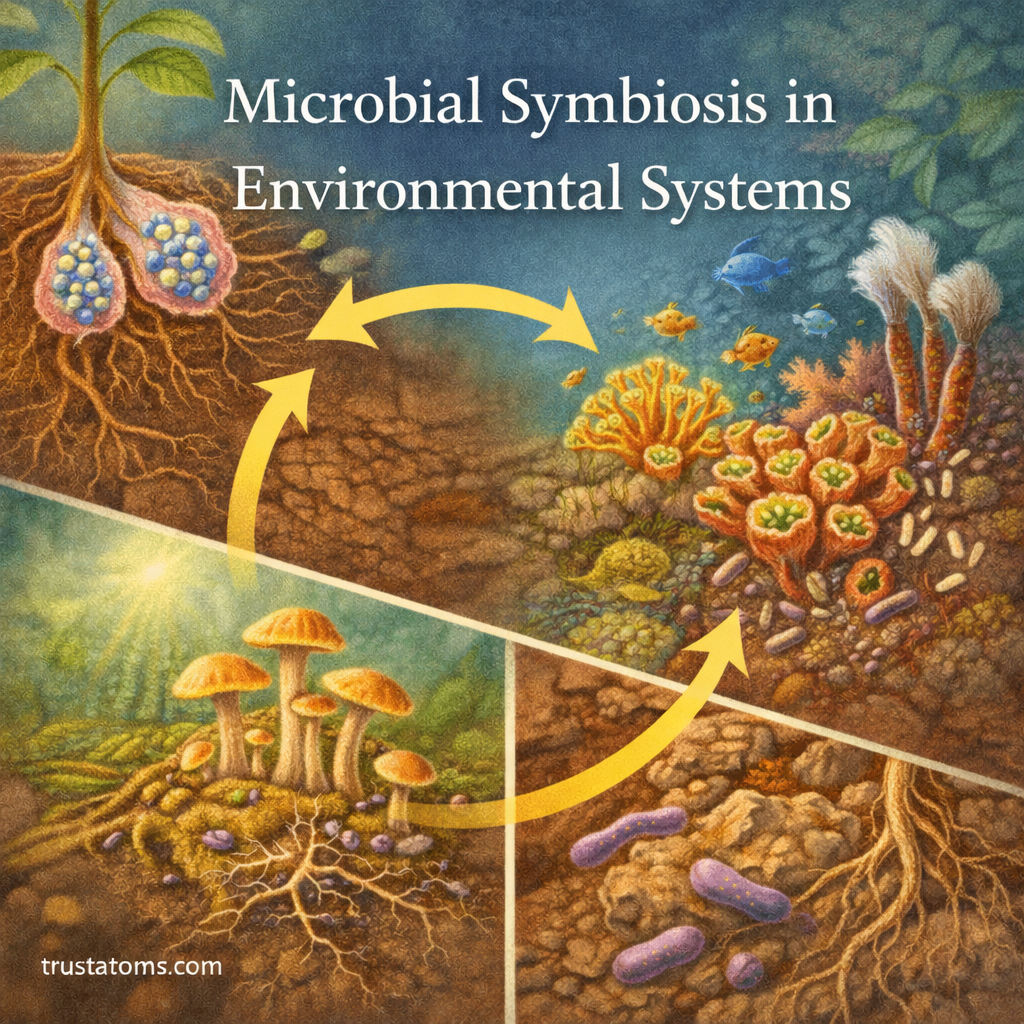
Illustration showing microbial symbiosis between plant roots, fungi, bacteria, and coral ecosystems exchanging nutrients.
Illustration depicting microbial symbiosis across soil and marine ecosystems, including plant–microbe and coral–algae partnerships. trustatoms.com

Microbial symbiosis plays a critical role in shaping ecosystems across the planet. Microorganisms such as bacteria, fungi, and archaea often form close biological partnerships with plants, animals, and other microbes. These relationships influence nutrient cycles, ecosystem productivity, and environmental stability.

Symbiotic microbial interactions allow organisms to share resources, exchange nutrients, and improve survival under challenging environmental conditions. Many ecosystems depend on these partnerships to maintain biological balance.

Understanding microbial symbiosis helps scientists explain how ecosystems function and how environmental systems remain productive and resilient.

Continue reading “Microbial Symbiosis in Environmental Systems”

Microbial Roles in Nutrient Cycling

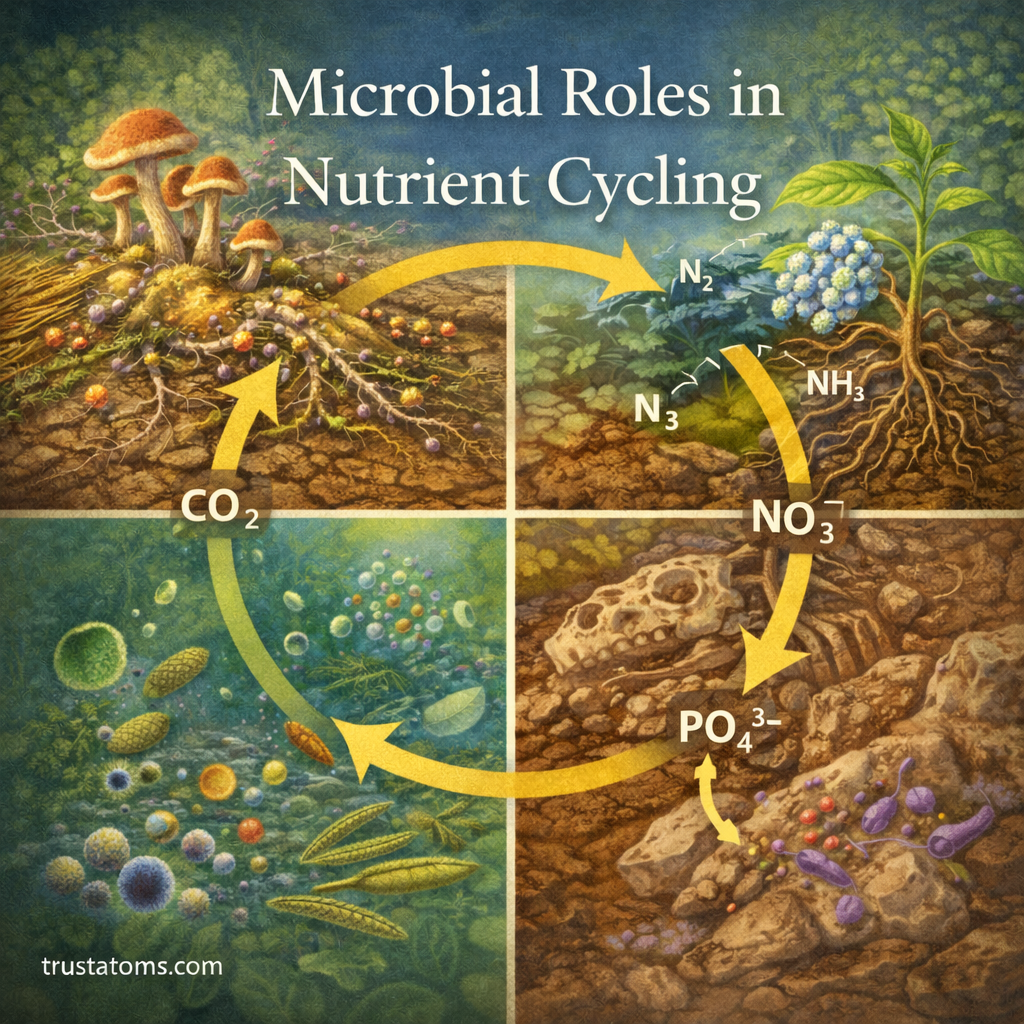
Illustration showing microbes such as bacteria and fungi breaking down organic matter and recycling nutrients in soil ecosystems.
Illustration showing how soil microbes recycle nutrients through decomposition and nutrient transformation in ecosystems. trustatoms.com

Microorganisms play a fundamental role in maintaining the balance of ecosystems. Bacteria, fungi, archaea, and other microbes help recycle essential nutrients that support plant growth, sustain food webs, and regulate environmental processes.

These microscopic organisms drive nutrient cycling—the continuous movement and transformation of elements such as carbon, nitrogen, phosphorus, and sulfur through ecosystems. Without microbial activity, nutrients would remain locked in dead organisms and waste materials, making them unavailable to living organisms.

Understanding the role of microbes in nutrient cycling helps scientists better understand soil health, ecosystem productivity, and global environmental processes.

Continue reading “Microbial Roles in Nutrient Cycling”

Plant Stress Responses to Environmental Change

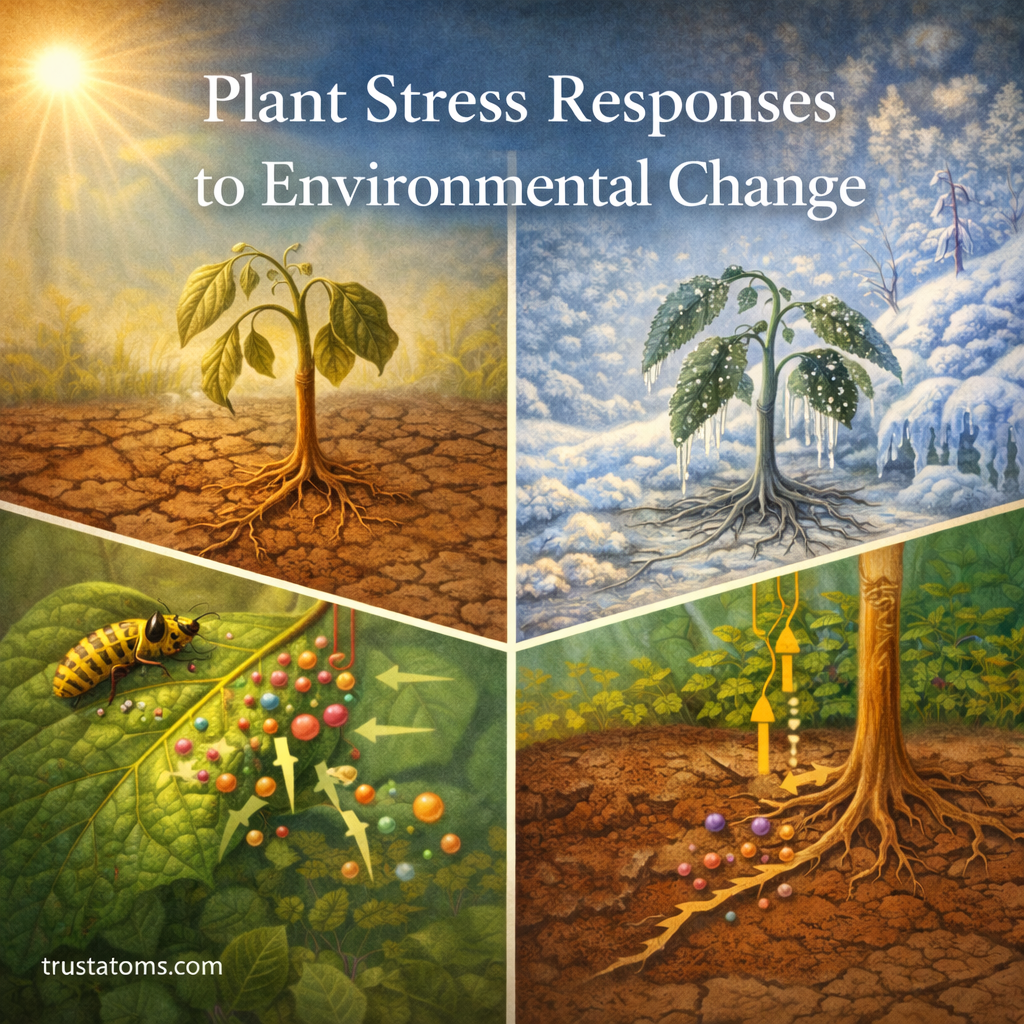
Illustration showing plant stress responses to environmental change including drought, cold stress, insect attack, and adaptive root growth.
Illustration showing how plants respond to environmental stress such as drought, cold temperatures, insect damage, and soil conditions. trustatoms.com

Plants live in constantly changing environments. Unlike animals, they cannot move away from unfavorable conditions, so they rely on sophisticated biological systems to detect environmental stress and respond effectively.

Plant stress responses to environmental change involve cellular signaling, physiological adjustments, and genetic regulation. These responses help plants survive challenges such as drought, extreme temperatures, nutrient shortages, and attacks from pests or pathogens.

Understanding plant stress responses is essential for fields like agriculture, ecology, and climate science because it helps researchers develop crops that are more resilient to environmental pressures.

Continue reading “Plant Stress Responses to Environmental Change”

Plant Cellular Communication Systems

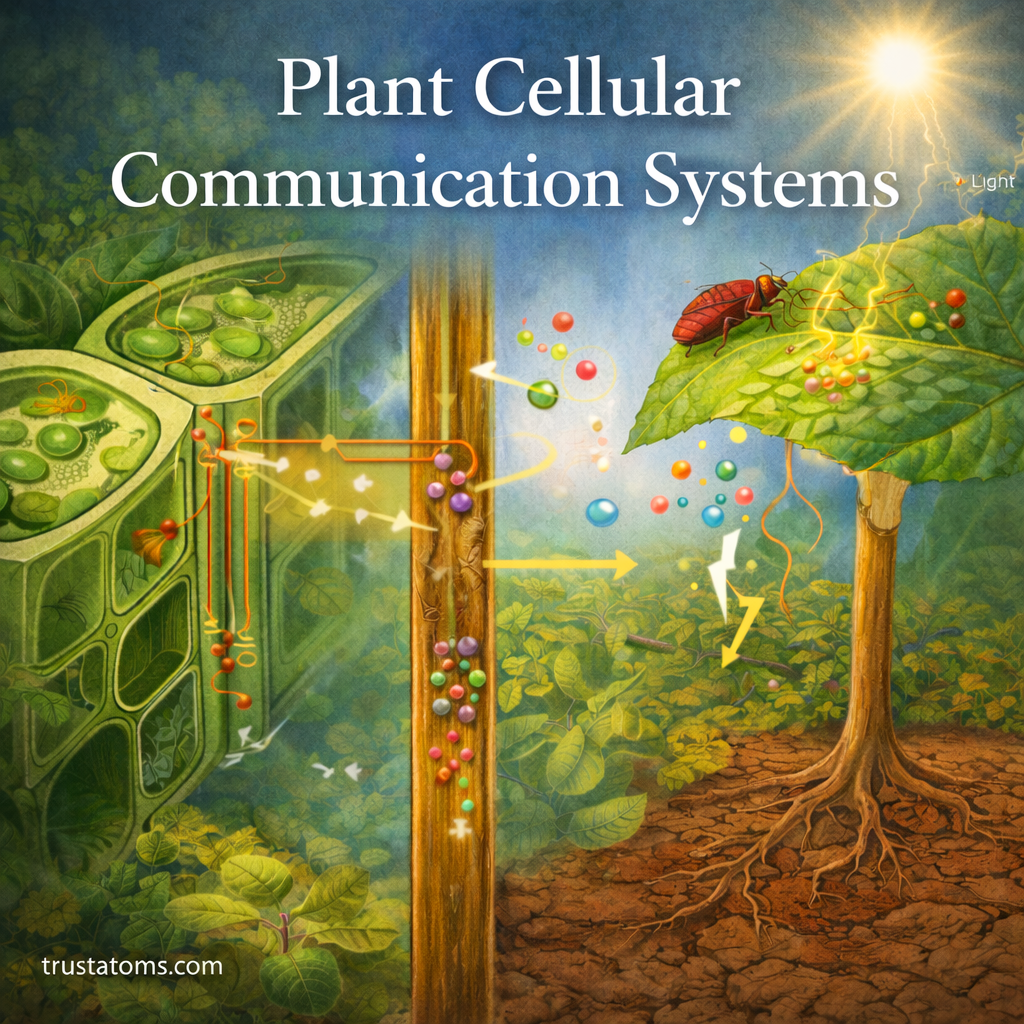
Illustration showing plant cellular communication with signals moving between plant cells and through plant tissues in response to environmental stimuli.
Illustration depicting how plant cells communicate through internal signaling pathways that coordinate growth, defense, and environmental responses. trustatoms.com

Plants may appear stationary and silent, but inside their tissues exists an active network of cellular communication systems. Plant cells constantly exchange information to coordinate growth, respond to environmental conditions, defend against threats, and regulate internal processes.

Unlike animals, plants lack a nervous system, yet they rely on complex signaling pathways that allow cells to detect stimuli and transmit signals throughout the organism. These communication systems involve chemical messengers, electrical signals, and specialized cellular connections that maintain coordination across roots, stems, leaves, and reproductive structures.

Understanding plant cellular communication systems helps scientists explain how plants adapt to changing environments and maintain healthy biological functions.

Continue reading “Plant Cellular Communication Systems”

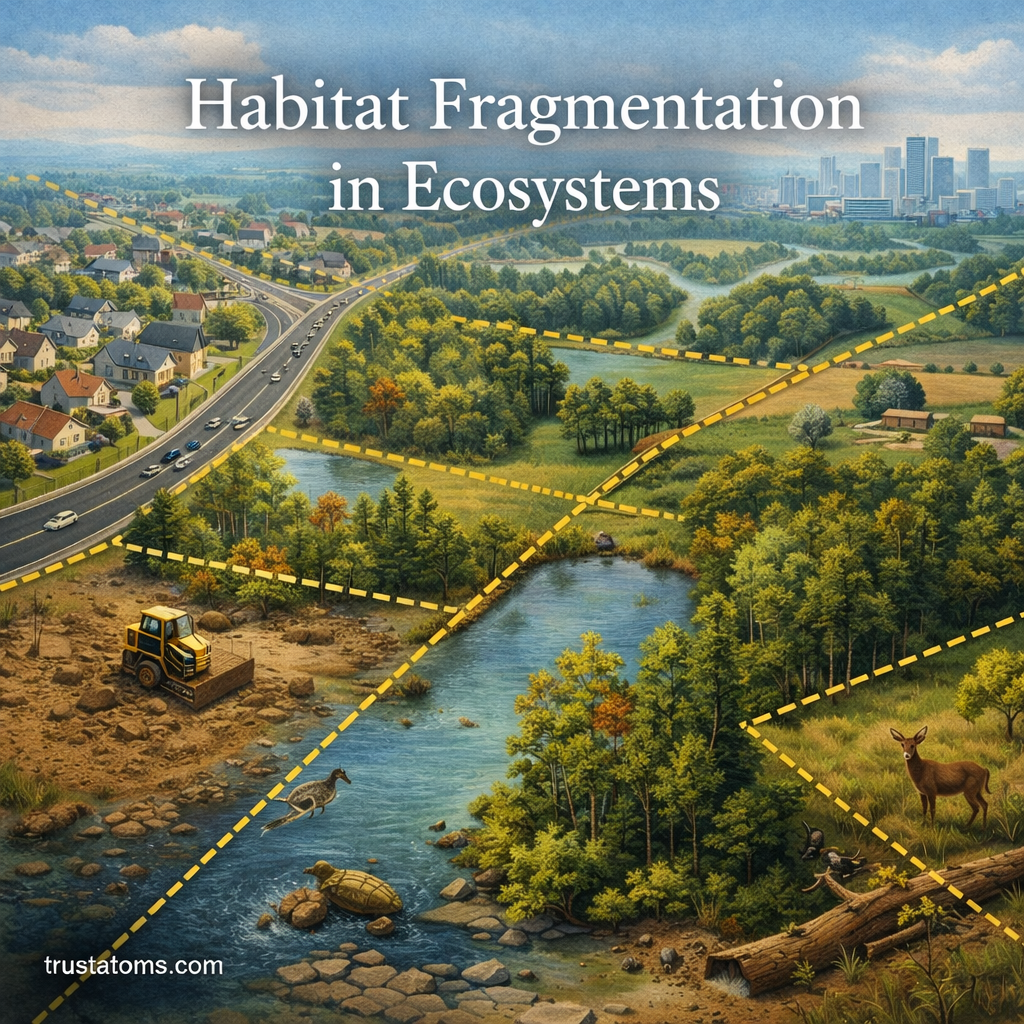
Habitat Fragmentation in Ecosystems

Illustration showing habitat fragmentation in ecosystems with forests divided by roads, farmland, and urban development affecting wildlife movement.
Illustration showing how roads, cities, and land development divide natural habitats into smaller isolated patches. trustatoms.com

Habitat fragmentation is one of the most significant environmental challenges affecting ecosystems around the world. It occurs when large, continuous habitats are divided into smaller, isolated patches, often due to human activities such as urban development, agriculture, and infrastructure expansion.

When habitats become fragmented, ecosystems lose their natural connectivity. This separation can disrupt species movement, reduce genetic diversity, and alter ecological processes that maintain healthy environments.

Understanding habitat fragmentation helps scientists and conservationists develop strategies to protect biodiversity and maintain ecosystem stability.

Continue reading “Habitat Fragmentation in Ecosystems”

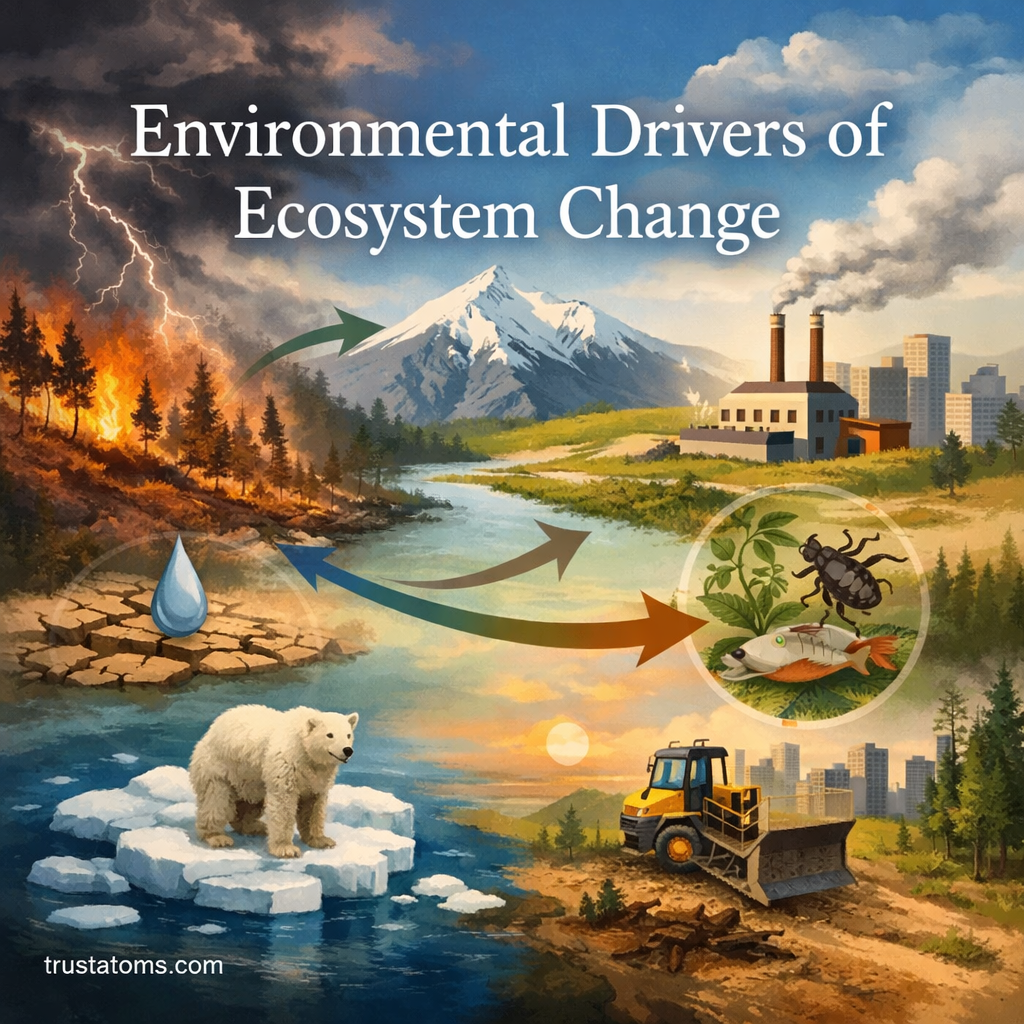
Environmental Drivers of Ecosystem Change

Illustrated diagram showing environmental drivers of ecosystem change including climate impacts, habitat modification, drought, invasive species, and human activity.
Illustration showing major environmental drivers that influence ecosystem change across natural landscapes. trustatoms.com

Ecosystems are dynamic systems that constantly evolve in response to environmental conditions. From forests and oceans to deserts and wetlands, ecosystems are shaped by a wide range of environmental drivers that influence species interactions, biodiversity, and ecological stability.

Environmental drivers of ecosystem change include both natural processes and human-driven influences. These forces affect factors such as temperature, water availability, nutrient cycles, and habitat structure. Understanding these drivers helps scientists predict ecological shifts, manage natural resources, and develop strategies for conservation.

This guide explores the main environmental drivers that influence ecosystem change and explains how they reshape biological communities over time.

Continue reading “Environmental Drivers of Ecosystem Change”

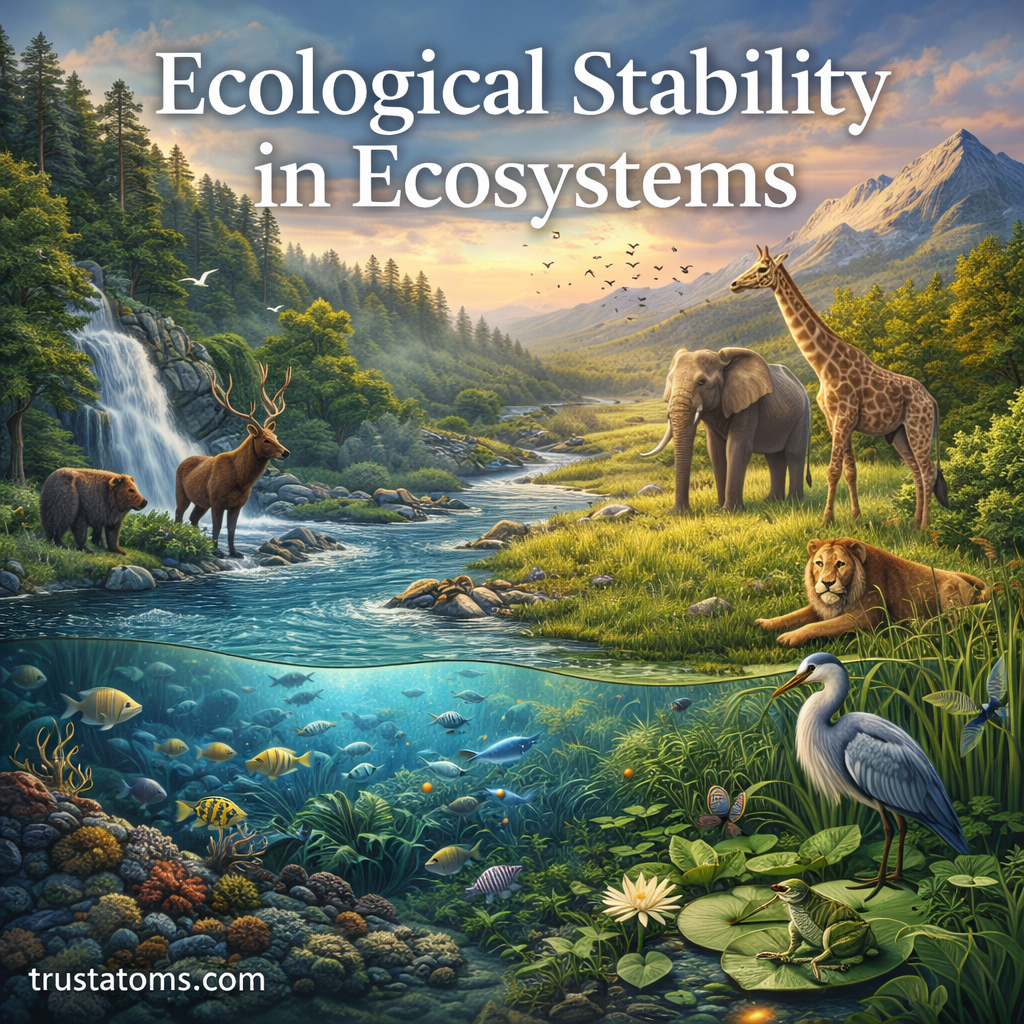
Ecological Stability in Ecosystems

Illustration showing diverse ecosystems including forests, rivers, wetlands, and wildlife representing ecological stability and balanced biodiversity.
Illustration depicting diverse ecosystems and wildlife interactions that contribute to ecological stability and balanced environmental systems. trustatoms.com.

Ecological stability refers to the ability of an ecosystem to maintain its structure, functions, and biological diversity over time, even when faced with disturbances or environmental changes. Stable ecosystems are able to resist disruptions, recover from disturbances, and sustain balanced interactions among species.

In natural environments, stability arises from complex relationships among organisms, resources, and environmental conditions. These interactions form networks that regulate energy flow, nutrient cycling, and population dynamics.

Understanding ecological stability is important for conservation biology, environmental management, and predicting how ecosystems respond to challenges such as climate change, habitat loss, and invasive species.

Continue reading “Ecological Stability in Ecosystems”