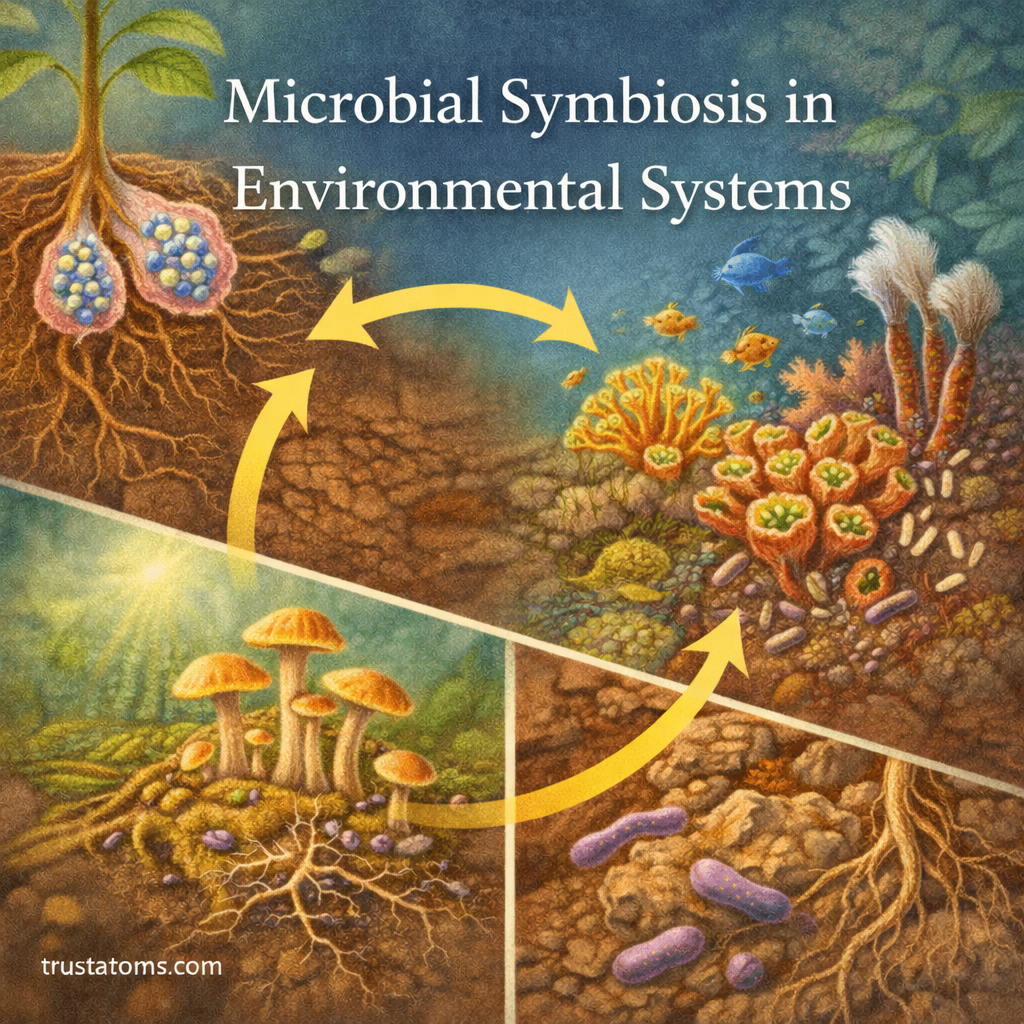
Microbial symbiosis is a close, ongoing relationship between a microorganism and another living organism. These relationships can benefit both partners, benefit one without significantly affecting the other, or benefit one while harming the other. Examples include bacteria living in plant roots, fungi exchanging nutrients with plants, and microscopic algae living inside corals.
Microbial symbiosis influences ecosystems across the planet. Microorganisms such as bacteria, fungi and their relatives, and archaea often form close biological partnerships with plants, animals, and other microbes. Studying these relationships helps explain how nutrients move through ecosystems, making microbial symbiosis an important subject in the study of biology.
Some partnerships allow organisms to obtain nutrients they could not easily access alone. Others provide protection or help organisms survive difficult conditions. However, symbiosis is not always beneficial, and the effects of a relationship can change with environmental conditions.
What Is Microbial Symbiosis?
Microbial symbiosis describes a close association involving at least one microorganism and another organism. The partners may live together on a surface, within a body, or in specialized structures such as plant root nodules.
In some relationships, microbes supply nutrients or perform chemical reactions that benefit their hosts. In others, microorganisms obtain food or shelter without providing an obvious benefit in return.
These relationships are part of the broader interactions examined in microbial ecology in environmental systems, which studies how microorganisms interact with their surroundings and other living things.
Microbial partnerships can also influence nutrient availability. The processes described in microbial roles in nutrient cycling explain how microorganisms transform elements such as carbon and nitrogen into different chemical forms.
Symbiosis is one category within the wider range of ecological interactions between organisms, which also includes competition and predation.
Three Main Types of Microbial Symbiosis
Scientists commonly classify symbiotic relationships according to how each partner is affected. The three major categories are mutualism, commensalism, and parasitism.
Mutualism: Both Partners Benefit
Mutualism occurs when both organisms gain an advantage from their association. One partner may provide nutrients, while the other supplies energy-rich compounds, shelter, or protection.
Examples include nitrogen-fixing bacteria associated with legumes, mycorrhizal fungi connected to plant roots, and certain microorganisms living in animal digestive systems.
Mutualism does not necessarily mean both partners benefit equally. The advantages can also vary depending on nutrient availability, environmental stress, and the condition of each organism.
Commensalism: One Benefits Without Harming the Other
Commensalism describes a relationship in which one organism benefits while the other experiences no detectable benefit or harm.
For example, a microorganism may use nutrients released by another organism without noticeably changing that organism’s health or growth. Some microbes also occupy plant or animal surfaces without producing an obvious effect on their hosts.
Commensalism can be difficult to establish experimentally because subtle effects may be overlooked. A relationship that appears neutral under one set of conditions may become beneficial or harmful under another.
Parasitism: One Benefits While the Other Is Harmed
Parasitism occurs when one organism obtains resources from another while causing harm. Microbial parasites may live inside host tissues or obtain nutrients from host cells.
Examples include certain plant-pathogenic fungi, disease-causing bacteria, and parasitic protists. These organisms can affect host growth, reproduction, or survival.
Parasitic relationships can also influence ecological communities by affecting population sizes and changing interactions among species.
How Microbial Symbiosis Supports Plant Growth
Plant roots interact with many soil microorganisms. Some of these associations improve access to nutrients that plants would otherwise struggle to obtain.
Mycorrhizal Fungi and Plant Roots
Mycorrhizal fungi form associations with the roots of many plant species. Their thread-like structures, called hyphae, extend through the soil and can access nutrients beyond the immediate root surface.
In many mycorrhizal relationships, fungi help plants obtain phosphorus and other mineral nutrients. Plants supply the fungi with carbon compounds produced through photosynthesis.
These partnerships can improve plant nutrition, particularly in soils where certain nutrients are difficult to access. Their effectiveness depends on the plant, fungal species, and environmental conditions.
Nitrogen-Fixing Bacteria in Root Nodules
Some bacteria form specialized partnerships with legumes such as beans, peas, clover, and soybeans. Compatible bacteria infect developing roots and stimulate the formation of structures called nodules.
Inside these nodules, bacteria convert atmospheric nitrogen gas into ammonia through a process called nitrogen fixation. The plant can use the resulting nitrogen to support the synthesis of amino acids and other essential compounds.
In exchange, the plant supplies carbon compounds that support bacterial metabolism. The partnership also requires carefully controlled conditions because the enzyme responsible for nitrogen fixation is sensitive to oxygen.
A Real-World Example: How Soybean Roots Obtain Nitrogen
Consider a soybean plant growing in soil with limited available nitrogen. Soybeans require nitrogen to produce proteins, chlorophyll, and other cellular components, but they cannot directly use atmospheric nitrogen gas.
When compatible nitrogen-fixing bacteria are present, a symbiotic relationship can develop through several stages:
- Chemical signaling: The soybean root releases compounds that can attract compatible bacteria and stimulate bacterial signaling responses.
- Root infection: The bacteria enter suitable root tissues through a coordinated interaction with the plant.
- Nodule development: The plant forms specialized structures that house the bacterial partners.
- Nitrogen fixation: Bacteria use the enzyme nitrogenase to convert atmospheric nitrogen into ammonia.
- Nutrient exchange: The plant receives usable nitrogen compounds and supplies the bacteria with carbon-based resources.
This partnership can reduce the soybean plant’s dependence on nitrogen already present in the soil. However, successful nitrogen fixation depends on suitable bacterial partners, soil conditions, and the plant’s nutritional status.
The example illustrates how microbial symbiosis can influence agriculture. Farmers sometimes use bacterial inoculants to help establish effective nitrogen-fixing associations when suitable bacteria are insufficient in the soil.
Microbial Symbiosis in Oceans and Coral Reefs
Marine environments contain many organisms that depend on microbial partners for nutrition or other biological functions. Some relationships involve photosynthetic microorganisms, while others depend on chemical energy.
Coral and Photosynthetic Algae
Many reef-building corals maintain a close relationship with microscopic photosynthetic dinoflagellates, commonly called zooxanthellae, from the family Symbiodiniaceae.
The algae use sunlight to produce organic compounds, some of which are transferred to their coral hosts. Corals provide a protected environment and access to substances needed for photosynthesis.
This partnership helps support coral growth in many nutrient-poor tropical waters. However, prolonged heat stress can disrupt the association, causing corals to lose their symbiotic algae or their pigments in a process known as coral bleaching.
Microbial Partners in Marine Animals
Marine animals may host microbial communities on their surfaces, in digestive systems, or within specialized tissues. Depending on the species, these microorganisms can contribute to nutrient processing, chemical defense, or other functions.
Not every microbe associated with an animal is beneficial. Scientists distinguish stable symbiotic partnerships from temporary associations by studying how the organisms interact and whether measurable effects occur.
Microbial Partnerships in Extreme Environments
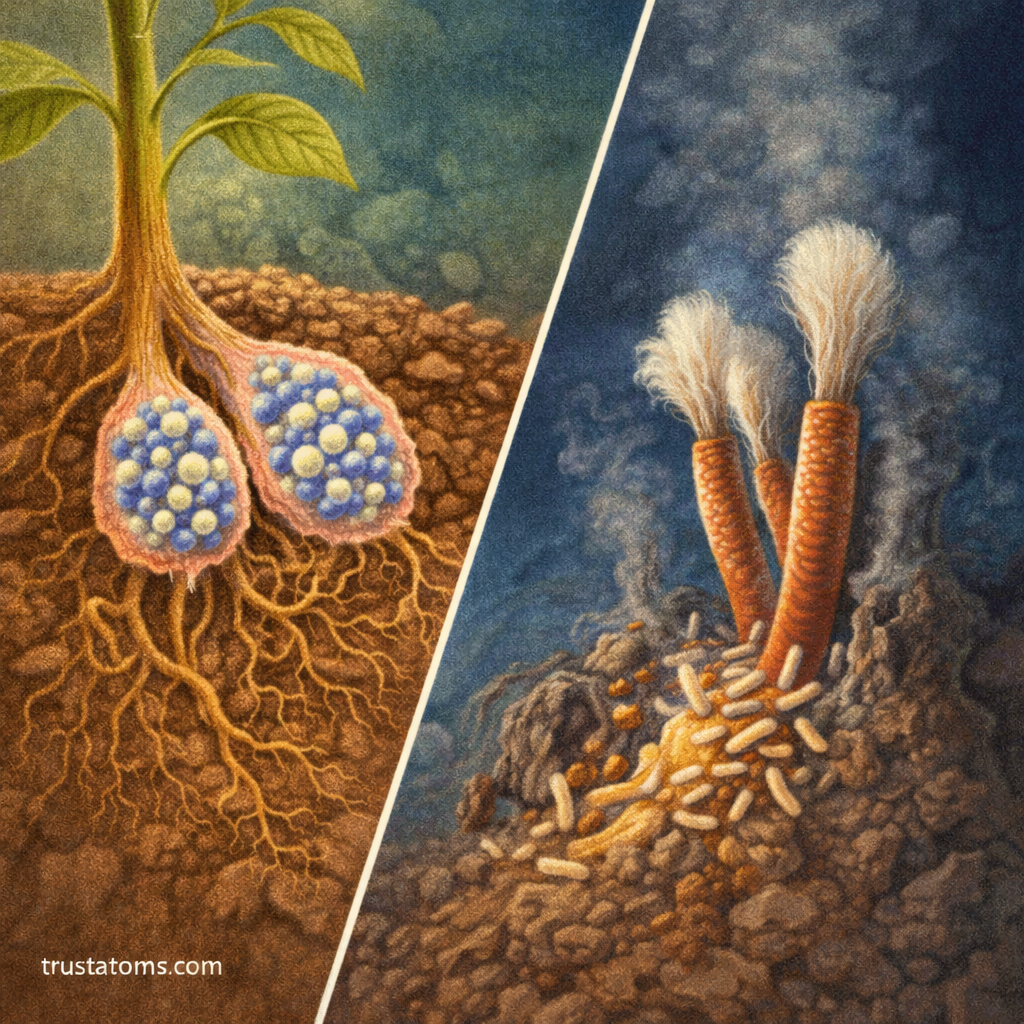
Some organisms survive in environments with little or no sunlight by forming partnerships with microorganisms that obtain energy from chemical reactions.
Deep-sea hydrothermal vents provide a well-studied example. These environments contain reduced chemicals, including hydrogen sulfide, that certain microorganisms can use as energy sources.
Giant tubeworms found near some hydrothermal vents contain symbiotic bacteria within a specialized internal organ called the trophosome. The bacteria use chemical energy to produce organic compounds that support the worms.
The tubeworms supply their bacterial partners with substances obtained from the surrounding environment, including oxygen, carbon dioxide, and sulfide. This exchange allows the partnership to function without depending directly on sunlight.
Similar principles occur in other environments where organisms rely on microbial partners to obtain nutrients or tolerate unusual chemical conditions.
How Symbiotic Microbes Influence Ecosystems
Microbial symbiosis affects ecological processes by connecting organisms with different metabolic abilities. These partnerships can influence nutrient availability, plant productivity, and the survival of organisms in challenging habitats.
Common ecological effects include:
- Nutrient exchange: Microbes and hosts transfer compounds needed for growth and metabolism.
- Access to limited resources: Symbiotic partners may obtain nutrients that are difficult to acquire independently.
- Protection: Some microbial partners produce substances that discourage pathogens or other harmful organisms.
- Environmental tolerance: Certain associations help organisms cope with nutrient shortages or other stressful conditions.
- Community interactions: Symbiotic relationships can influence competition, population growth, and food-web connections.
These effects are not universal. A partnership may be beneficial in one environment but provide little advantage in another. Some relationships can even shift toward conflict when the costs of maintaining a partner exceed the benefits.
How Environmental Changes Disrupt Microbial Symbiosis
Symbiotic relationships depend on environmental conditions that support both partners. Changes in temperature, moisture, nutrient availability, or chemical exposure can alter these interactions.
For example, excessive nutrient availability may reduce a plant’s dependence on certain microbial partners. Soil disturbance can also affect fungal networks and the distribution of microorganisms associated with plant roots.
In aquatic environments, warming and pollution may disrupt associations between hosts and their microbial partners. Coral bleaching illustrates how environmental stress can interfere with a normally beneficial relationship.
Researchers study these changes to understand ecosystem responses and improve environmental management. In agriculture, this includes investigating how soil conditions and farming practices influence beneficial plant–microbe partnerships.
Frequently Asked Questions
What is an example of microbial symbiosis?
One example is the relationship between nitrogen-fixing bacteria and legume plants. The bacteria convert atmospheric nitrogen into usable nitrogen compounds, while the plant provides carbon-based nutrients and a suitable environment for bacterial activity.
Is microbial symbiosis always beneficial?
No. Microbial symbiosis includes mutualism, commensalism, and parasitism. Both organisms benefit in mutualism, one benefits without a detectable effect on the other in commensalism, and one benefits while harming the other in parasitism.
How does microbial symbiosis help plants?
Some symbiotic microorganisms help plants obtain nutrients from soil. Mycorrhizal fungi can improve access to phosphorus and other minerals, while certain bacteria supply usable nitrogen through nitrogen fixation. The benefits depend on the plant species, microbial partner, and environmental conditions.
Microbial symbiosis connects organisms through relationships that influence nutrition, survival, and ecological processes. From nitrogen-fixing bacteria in plant roots to photosynthetic algae in corals and chemosynthetic bacteria in deep-sea tubeworms, these partnerships demonstrate how different organisms can depend on one another. Understanding their benefits, costs, and environmental sensitivity helps scientists explain how ecosystems function and respond to change.
Sources: Madigan et al., Brock Biology of Microorganisms; Smith and Read, Mycorrhizal Symbiosis; Douglas, The Symbiotic Habit.