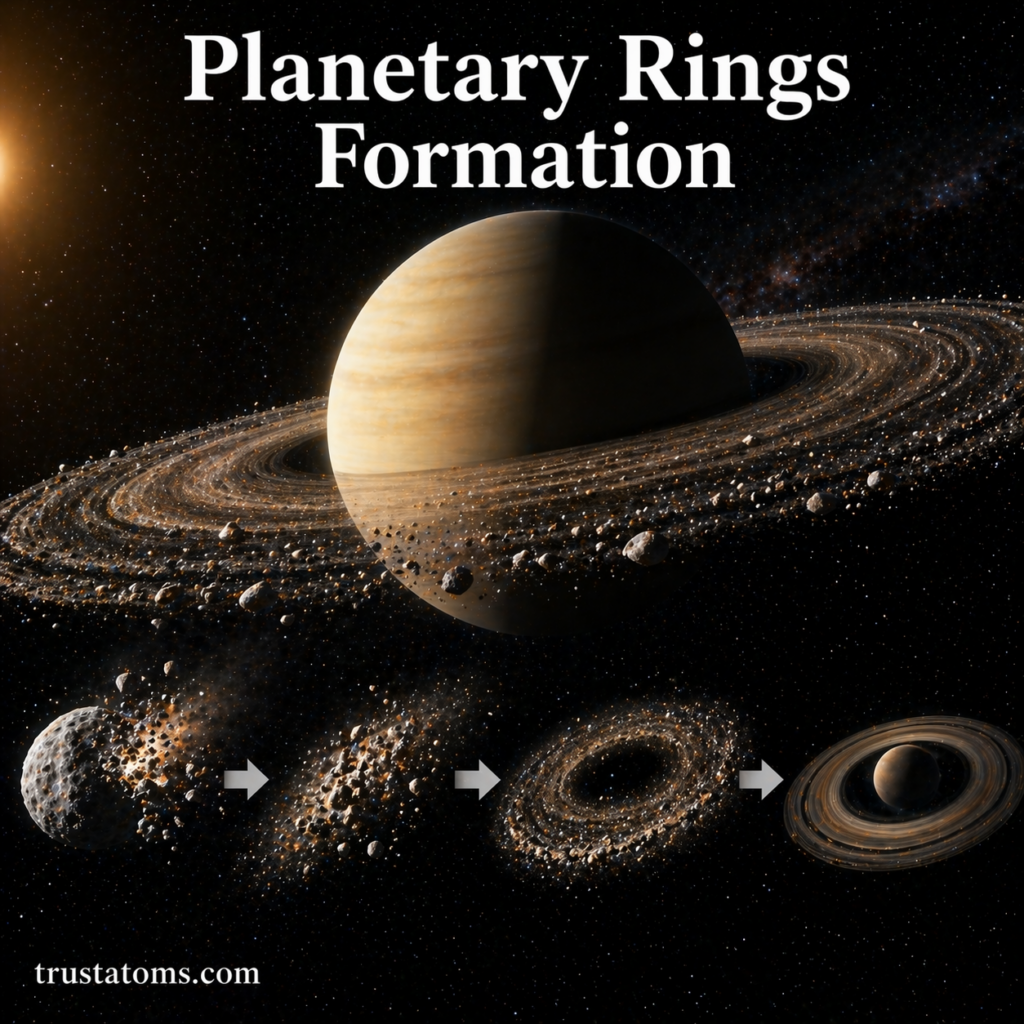
Planetary rings are among the most visually striking features in our solar system. From the bright, complex rings of Saturn to the faint and dusty rings of Jupiter, these structures reveal important clues about how planets and their surrounding systems evolve.
Understanding how planetary rings form helps scientists uncover the history of collisions, gravitational forces, and the dynamic processes shaping planetary environments.
What Are Planetary Rings?
Planetary rings are collections of countless small particles—ranging from tiny dust grains to large chunks of ice and rock—orbiting a planet in a flat, disk-like structure.
Composition of Rings
Rings can be made of:
- Water ice (common in outer planets)
- Rock and dust particles
- Organic compounds
Each particle follows its own orbit, but together they create the appearance of a continuous ring.
Which Planets Have Rings?
All four gas giants in our solar system have ring systems.
Ringed Planets
- Saturn — The most prominent and complex ring system
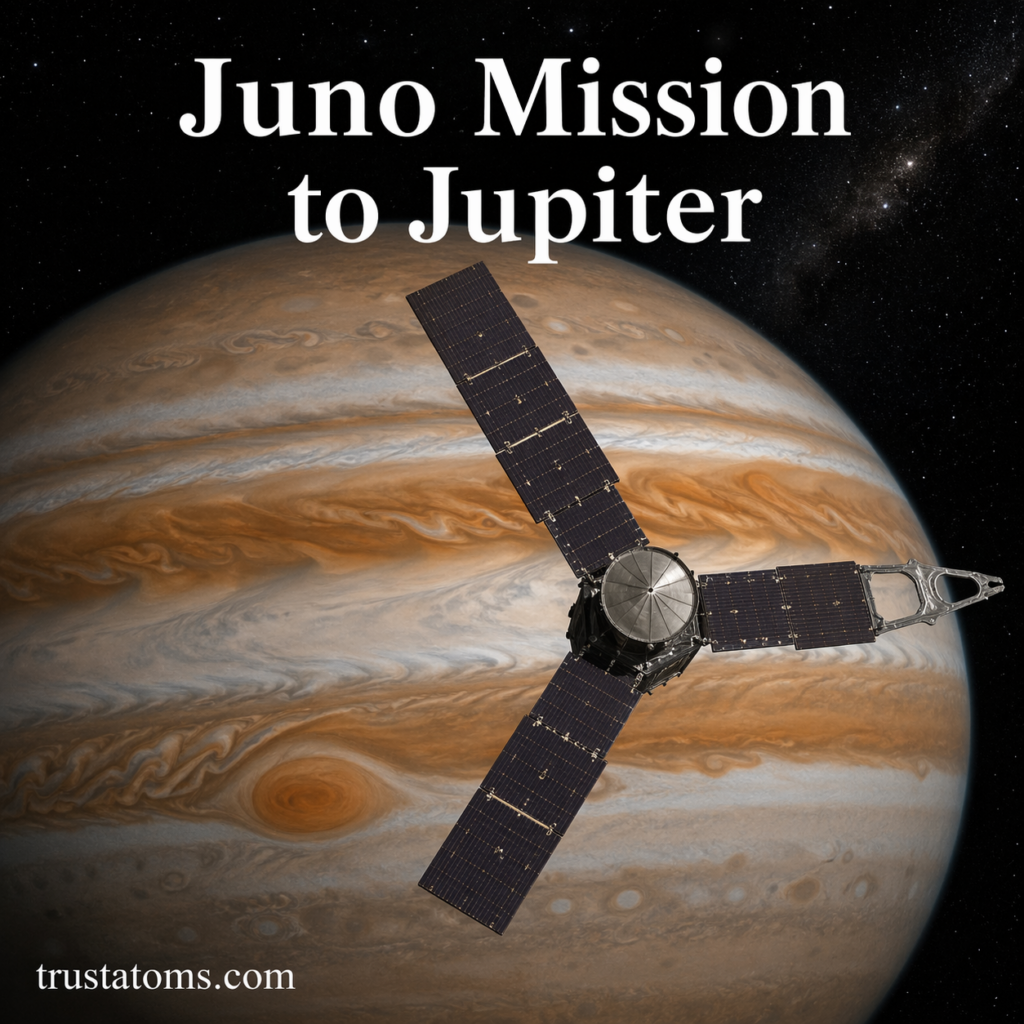
- Jupiter — Thin and faint rings made mostly of dust
- Uranus — Dark, narrow rings
- Neptune — Faint rings with clumpy structures
While Saturn’s rings are the most visible, all gas giants demonstrate that ring formation is a common process.
How Planetary Rings Form
There are several leading theories explaining how planetary rings are created.
1. Tidal Disruption (Roche Limit)
One of the most important concepts in ring formation is the Roche limit.
When an object (like a moon or comet) gets too close to a planet:
- Gravitational forces stretch it apart
- The object breaks into smaller pieces
- Debris spreads into orbit, forming a ring
This process is believed to be a major source of ring material.
2. Collisions Between Moons or Asteroids
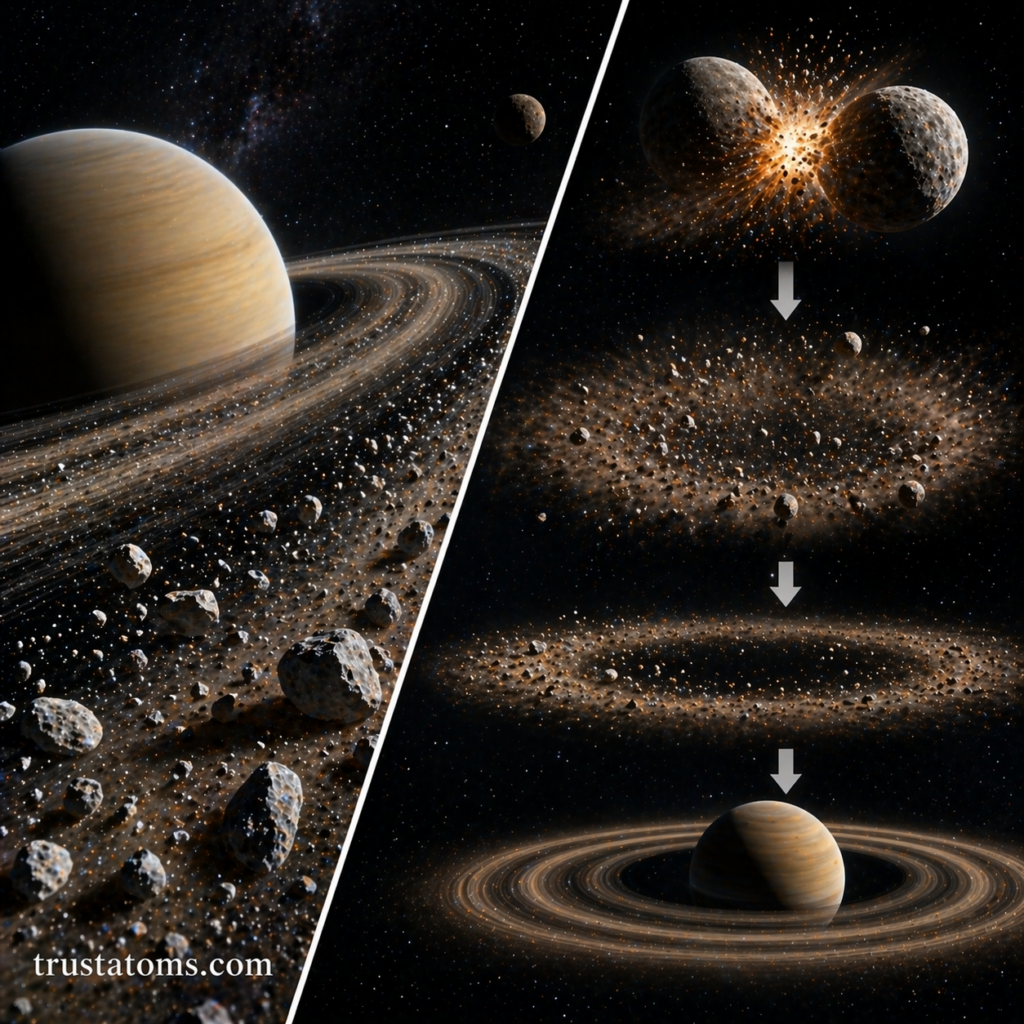
Rings can also form from high-speed impacts.
Process
- Two moons or objects collide
- Debris is ejected into orbit
- Particles spread out and flatten into a ring
These collisions may occur early in a planet’s history or during later chaotic events.
3. Leftover Material from Planet Formation
Some rings may be remnants of material that never formed into moons.
Key Idea
- During planet formation, not all debris clumps together
- Remaining particles stay in orbit
- Over time, they form a stable ring system
This is more likely in regions where gravitational forces prevent clumping.
The Role of Gravity and Orbital Motion
Gravity is the key force that shapes and maintains planetary rings.
Why Rings Stay Flat
Rings form a thin disk because:
- Collisions between particles reduce vertical motion
- Gravity pulls particles into a stable plane
- Orbital speeds vary depending on distance from the planet
Orbital Dynamics
- Inner particles orbit faster than outer ones
- Constant interactions keep particles distributed
- Gravitational resonances influence ring structure
The Roche Limit Explained
The Roche limit defines the distance within which a celestial body cannot hold itself together due to tidal forces.
Why It Matters
Inside the Roche limit:
- Objects cannot form stable moons
- Material remains as loose particles
- Rings are more likely to exist
Outside this limit, debris can eventually clump together into moons.
Why Rings Have Gaps and Patterns
Planetary rings are not uniform—they often contain gaps, waves, and distinct structures.
Causes of Ring Features
- Gravitational influence of nearby moons
- Orbital resonances
- Collisions between particles
Shepherd Moons
Small moons called shepherd moons help shape rings by:
- Keeping particles confined
- Creating sharp edges
- Maintaining gaps between ring sections
How Long Do Planetary Rings Last?
Rings are not permanent—they evolve over time.
Ring Lifespan Factors
- Particle collisions
- Gravitational spreading
- Loss of material into the planet
- Solar radiation effects
Some scientists believe that Saturn’s rings may be relatively young and could eventually disappear.
Differences Between Ring Systems
Not all rings are the same.
Saturn’s Rings
- Bright and highly visible
- Made mostly of ice
- Complex structure with many divisions
Jupiter’s Rings
- Thin and faint
- Composed mostly of dust
- Created by impacts on small moons
Uranus and Neptune
- Darker and less reflective
- Narrow and less dense
- Influenced by gravitational interactions
Rings Beyond the Solar System
Scientists have also discovered evidence of ring systems around objects outside our solar system.
Examples
- Exoplanets with massive ring systems
- Rings around small bodies like asteroids
These discoveries suggest that ring formation is a widespread cosmic process.
Why Planetary Rings Matter
Studying planetary rings helps scientists understand broader astronomical concepts.
Scientific Importance
- Insights into gravitational physics
- Clues about planetary formation
- Understanding collision dynamics
- Observing disk-like systems similar to protoplanetary disks
Rings act as natural laboratories for studying motion, forces, and long-term evolution.
Final Thoughts
Planetary rings are dynamic, ever-changing systems shaped by gravity, collisions, and time. Whether formed from shattered moons, leftover debris, or cosmic impacts, they reveal the complex processes at work in our solar system.
By studying how rings form and evolve, scientists gain deeper insight into how planets—and even entire solar systems—develop over billions of years.