The universe is constantly in motion. Stars orbit galaxies, galaxies move through space, and the universe itself is expanding. One of the most powerful tools astronomers use to detect and measure this motion is the Doppler Effect.
By analyzing how light changes as objects move, scientists can determine whether stars and galaxies are approaching or moving away—and how fast they’re traveling.
What Is the Doppler Effect?
The Doppler Effect is the change in frequency or wavelength of a wave as its source moves relative to an observer.
You’ve probably experienced this with sound:
- A passing siren sounds higher in pitch as it approaches
- The pitch drops as it moves away
The same principle applies to light in astronomy.
How the Doppler Effect Works with Light
Light travels in waves, and each color corresponds to a different wavelength.
When a celestial object moves:
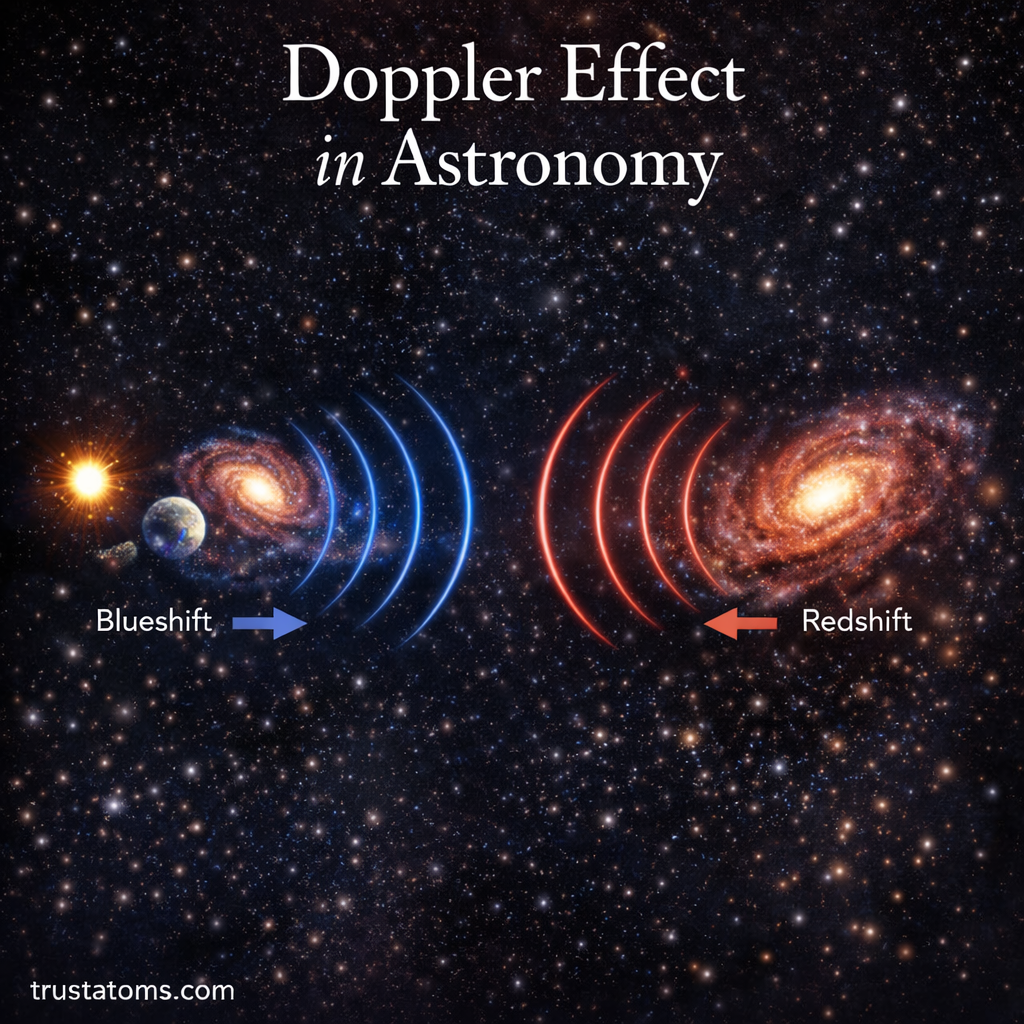
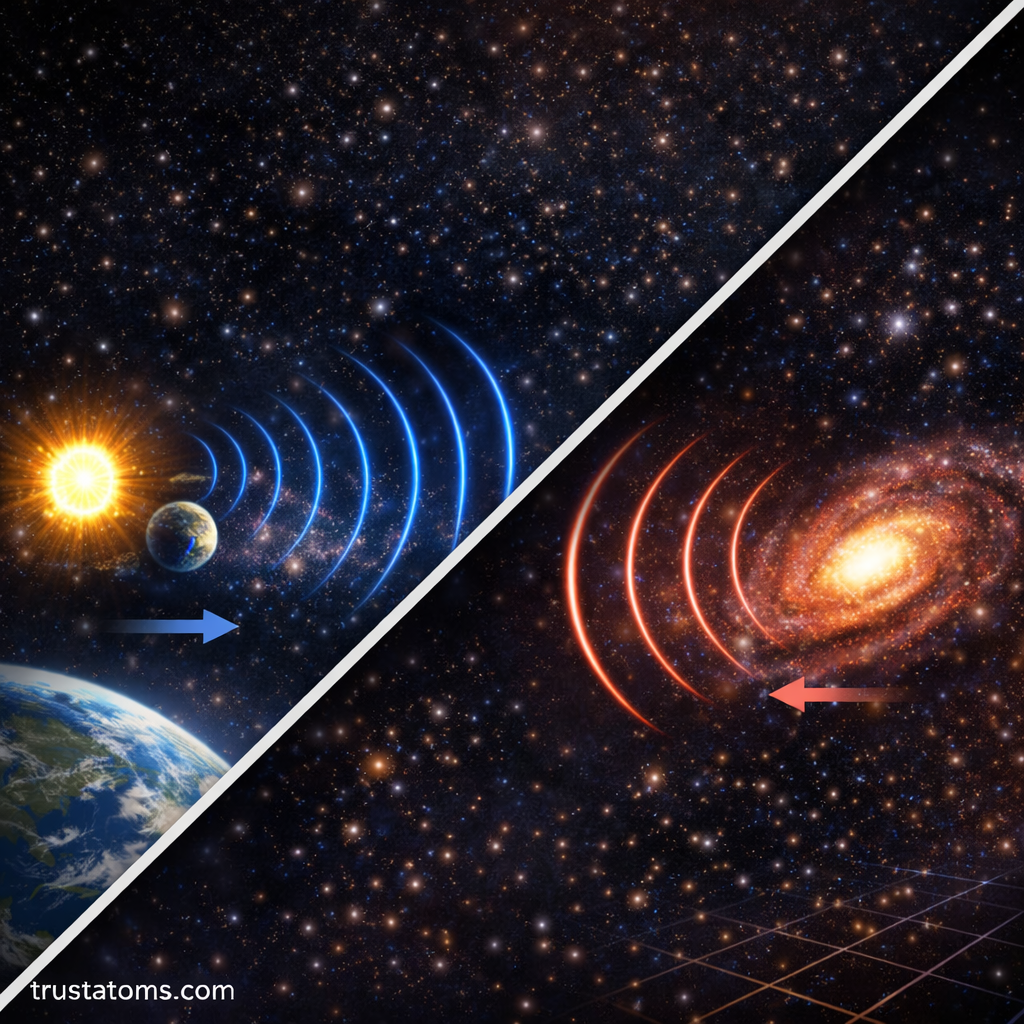
- Toward us: Light waves are compressed → shorter wavelengths → shift toward blue
- Away from us: Light waves are stretched → longer wavelengths → shift toward red
These shifts are known as:
- Blueshift (approaching)
- Redshift (receding)
Understanding Redshift and Blueshift
Redshift
Redshift occurs when an object moves away from the observer.
Key characteristics:
- Light shifts toward the red end of the spectrum
- Indicates increasing distance over time
- Common in distant galaxies
Redshift is one of the strongest pieces of evidence that the universe is expanding.
Blueshift
Blueshift happens when an object moves toward the observer.
Key characteristics:
- Light shifts toward the blue end of the spectrum
- Indicates the object is getting closer
- Less common on large cosmic scales
An example is the Andromeda Galaxy, which is moving toward our galaxy.
How Astronomers Measure Doppler Shifts
Astronomers use instruments called spectrometers to analyze light from stars and galaxies.
The Process
- Light from an object is collected using a telescope
- The light is split into a spectrum (like a rainbow)
- Known spectral lines are identified
- Shifts in these lines reveal motion and speed
Even tiny shifts can provide valuable information about an object’s velocity.
The Role of Spectral Lines
Every element leaves a unique “fingerprint” in light, known as spectral lines.
For example:
- Hydrogen produces specific, recognizable lines
- These lines shift depending on motion
- The amount of shift tells us how fast the object is moving
This allows astronomers to measure motion with incredible precision.
Doppler Effect and the Expanding Universe
The Doppler Effect plays a central role in understanding the universe’s expansion.
Hubble’s Discovery
Astronomers observed that:
- Most galaxies show redshift
- The farther away a galaxy is, the greater its redshift
This led to the conclusion that:
- The universe is expanding
- Galaxies are moving away from each other
This relationship is described by Hubble’s Law.
Applications of the Doppler Effect in Astronomy
The Doppler Effect is used in many areas of modern astronomy.
Measuring Star and Galaxy Motion
- Determines if objects are moving toward or away from Earth
- Helps map galaxy movement and structure
Discovering Exoplanets
- Detects tiny wobbles in stars caused by orbiting planets
- One of the main methods for finding planets outside our solar system
Studying Binary Star Systems
- Reveals how stars orbit each other
- Helps calculate mass and orbital speed
Understanding Supernovae and Explosions
- Measures how fast material is ejected
- Provides insight into stellar life cycles
Limitations and Challenges
While powerful, the Doppler Effect has limitations.
Common Challenges
- Requires precise instruments
- Motion must be along the line of sight to Earth
- Other factors (like gravity) can affect light
Astronomers must carefully interpret data to avoid errors.
Doppler Effect vs Other Measurement Methods
The Doppler Effect is often used alongside other techniques.
Comparison
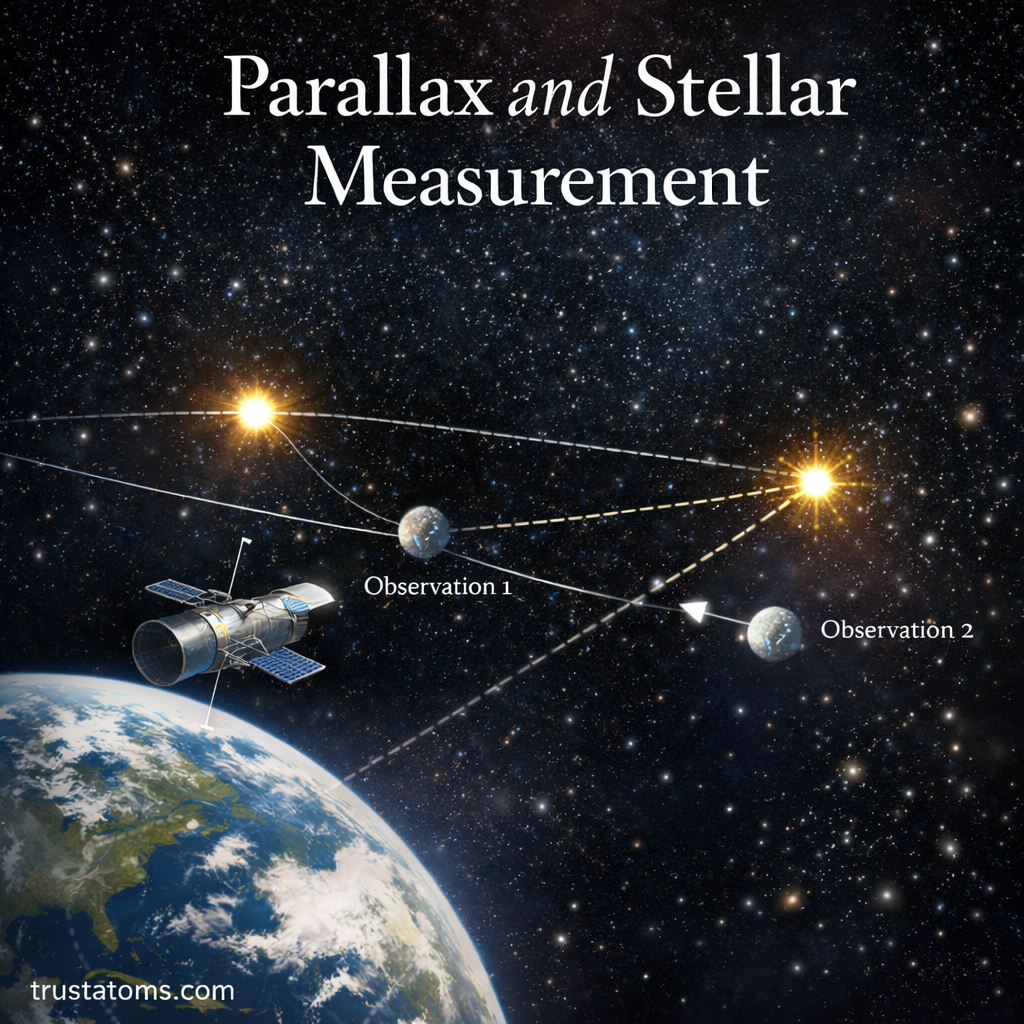
- Parallax: Measures distance to nearby stars
- Standard Candles: Estimates distance using brightness
- Doppler Effect: Measures motion and velocity
Together, these methods provide a complete picture of the universe.
Why the Doppler Effect Matters
The Doppler Effect is essential for understanding how the universe behaves.
It helps scientists:
- Track movement across space
- Measure expansion of the universe
- Discover planets and star systems
- Study the life cycles of stars
Without it, modern astronomy would be far more limited.
Final Thoughts
The Doppler Effect transforms light into a powerful tool for exploring motion in the universe. By studying shifts in wavelength, astronomers can uncover how stars and galaxies move—even across billions of light-years.
This simple principle has led to some of the most important discoveries in science, from the expansion of the universe to the detection of distant planets.