The International Space Station (ISS) is one of humanity’s most remarkable achievements in space exploration. Orbiting Earth at incredible speeds, it serves as a floating laboratory, a hub for international cooperation, and a symbol of what nations can accomplish together.
This article provides a complete overview of the ISS—its purpose, structure, history, and importance in modern astronomy and science.
What Is the International Space Station?
The International Space Station (ISS) is a large, habitable spacecraft that orbits Earth.
It functions as:
- A scientific research laboratory
- A living space for astronauts
- A platform for testing space technologies
The ISS travels at about 28,000 km/h (17,500 mph), completing an orbit around Earth roughly every 90 minutes.
History and Construction
The ISS was built through a collaboration between multiple countries and space agencies.
Key Partners
- NASA
- Roscosmos
- European Space Agency
- Japan Aerospace Exploration Agency
- Canadian Space Agency
Major Milestones
- 1998: First module launched (Zarya)
- 2000: First crew arrives, beginning continuous human presence
- 2011: Assembly largely completed
- Present: Ongoing research and upgrades
The ISS remains one of the longest-running and most complex engineering projects ever undertaken.
Structure and Components
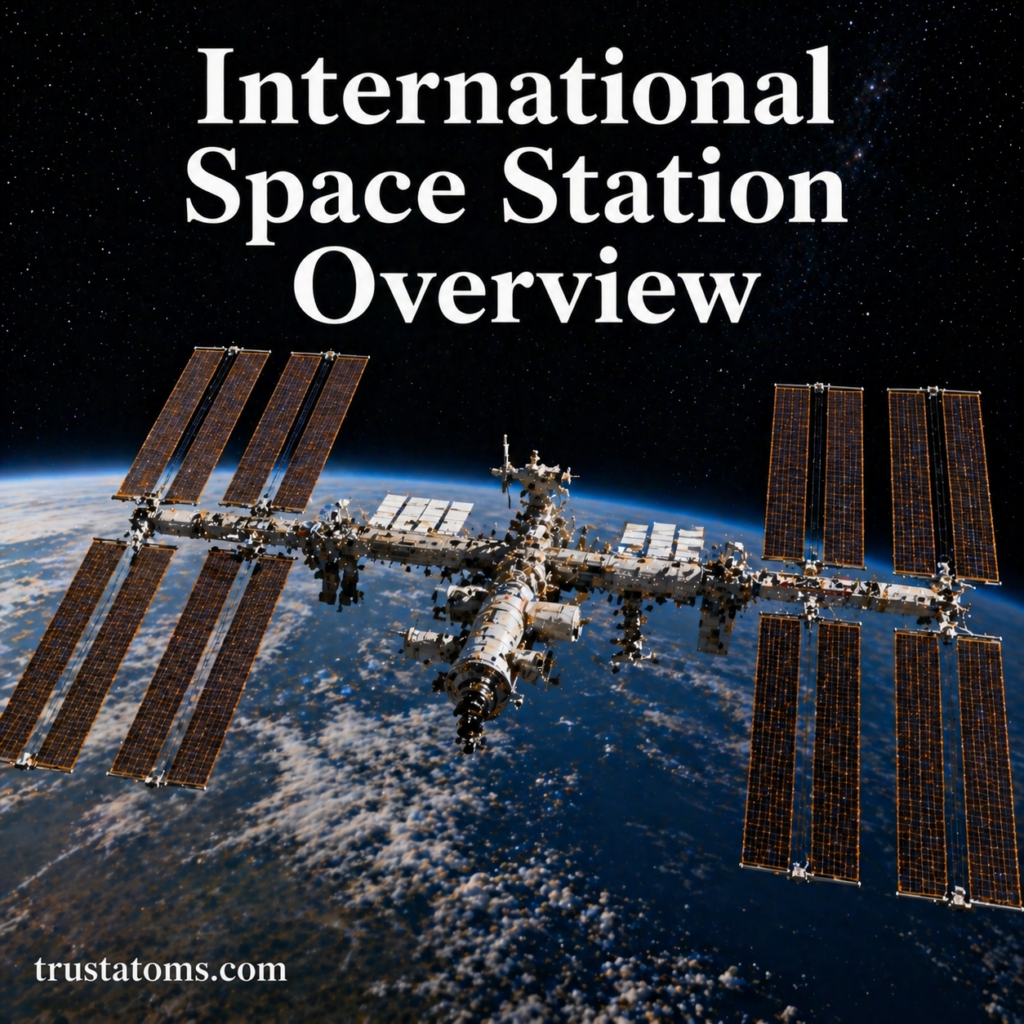
The ISS is made up of multiple interconnected modules, each serving a specific purpose.
Main Components
- Laboratory Modules – Used for scientific experiments
- Living Quarters – Sleeping, eating, and daily activities
- Solar Arrays – Provide power from sunlight
- Docking Ports – Allow spacecraft to attach
- Robotic Arms – Assist with maintenance and assembly
These components work together to support long-term human life in space.
Life Aboard the ISS
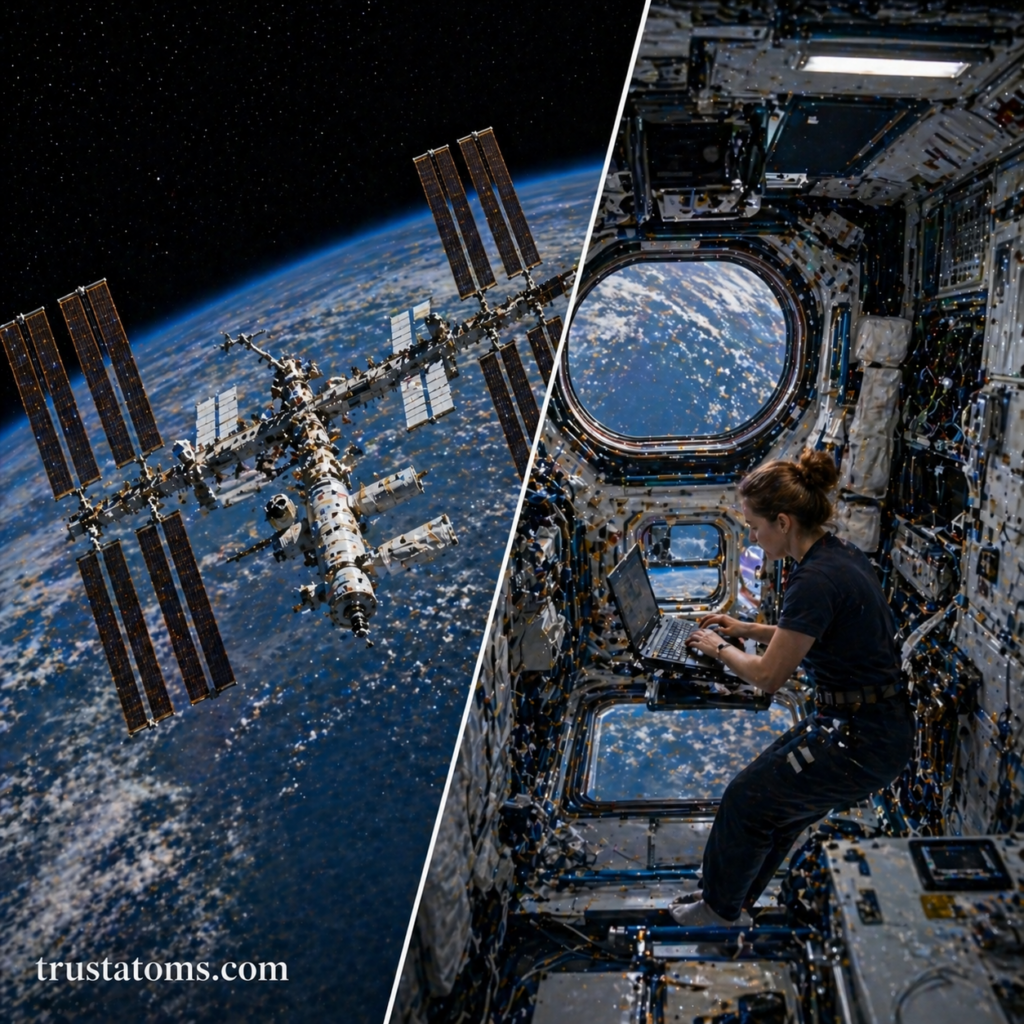
Living in space presents unique challenges and experiences.
Daily Life for Astronauts
- Conducting scientific experiments
- Exercising to maintain muscle and bone health
- Maintaining station equipment
- Communicating with Earth
Astronauts typically stay on the ISS for about six months.
Unique Conditions
- Microgravity environment
- 16 sunrises and sunsets per day
- Limited personal space
Despite these challenges, astronauts adapt and carry out complex tasks.
Scientific Research on the ISS
The ISS plays a crucial role in advancing scientific knowledge.
Areas of Research
- Human health in space
- Physics and fluid dynamics
- Earth observation and climate monitoring
- Space technology testing
Experiments conducted on the ISS help prepare for future missions to the Moon and Mars.
Importance of International Collaboration
One of the most significant aspects of the ISS is global cooperation.
Countries that may compete on Earth work together in space to:
- Share knowledge and resources
- Conduct joint missions
- Promote peaceful exploration
The ISS is often seen as a model for future international projects.
Transportation to and from the ISS
Astronauts and supplies reach the ISS using specialized spacecraft.
Key Spacecraft
- Soyuz spacecraft
- SpaceX Crew Dragon
- Progress spacecraft
These vehicles ensure continuous operation and support of the station.
Challenges of Operating the ISS
Operating a space station comes with complex challenges:
- High maintenance requirements
- Exposure to space radiation
- Aging infrastructure
- High operational costs
Engineers and scientists continuously monitor and maintain the station to ensure safety.
The Future of the ISS
The ISS is expected to remain operational through the end of this decade, with plans for eventual retirement.
What Comes Next?
- Development of commercial space stations
- Expanded private sector involvement
- Preparation for deep space missions
The knowledge gained from the ISS will directly influence future exploration efforts.
Why the ISS Matters
The ISS has had a lasting impact on science and humanity.
Key Benefits
- Advances in medicine and technology
- Better understanding of long-term space travel
- Inspiration for future generations
- Strengthened international partnerships
It represents a major step toward becoming a spacefaring civilization.
Final Thoughts
The International Space Station is more than just a spacecraft—it’s a symbol of human achievement and cooperation.
As we look toward missions to the Moon, Mars, and beyond, the ISS continues to serve as a vital stepping stone in our journey into space.