Moon landing missions represent one of the most extraordinary achievements in human history. Landing humans on the Moon required groundbreaking technology, immense coordination, and years of scientific progress.
This article explores the history, key missions, major milestones, and lasting impact of Moon landing missions.
What Are Moon Landing Missions?
Moon landing missions are space expeditions designed to transport spacecraft—and in some cases, humans—to the surface of the Moon.
These missions can be:
- Robotic (uncrewed landers and probes)
- Crewed (astronauts landing and returning to Earth)
Their goals include scientific research, exploration, and technological advancement.
Early Robotic Missions to the Moon
Before humans could land on the Moon, robotic missions paved the way.
Key Early Achievements
- Luna program successfully sent probes to the Moon
- 1959: Luna 2 became the first human-made object to reach the Moon
- 1966: Luna 9 achieved the first soft landing
These missions provided critical data about the Moon’s surface and conditions.
The Apollo Program
The most famous Moon landing missions came from the Apollo program, led by the NASA.
Goals of the Apollo Program
- Land humans safely on the Moon
- Return them to Earth
- Conduct scientific exploration
Apollo 11: The First Moon Landing
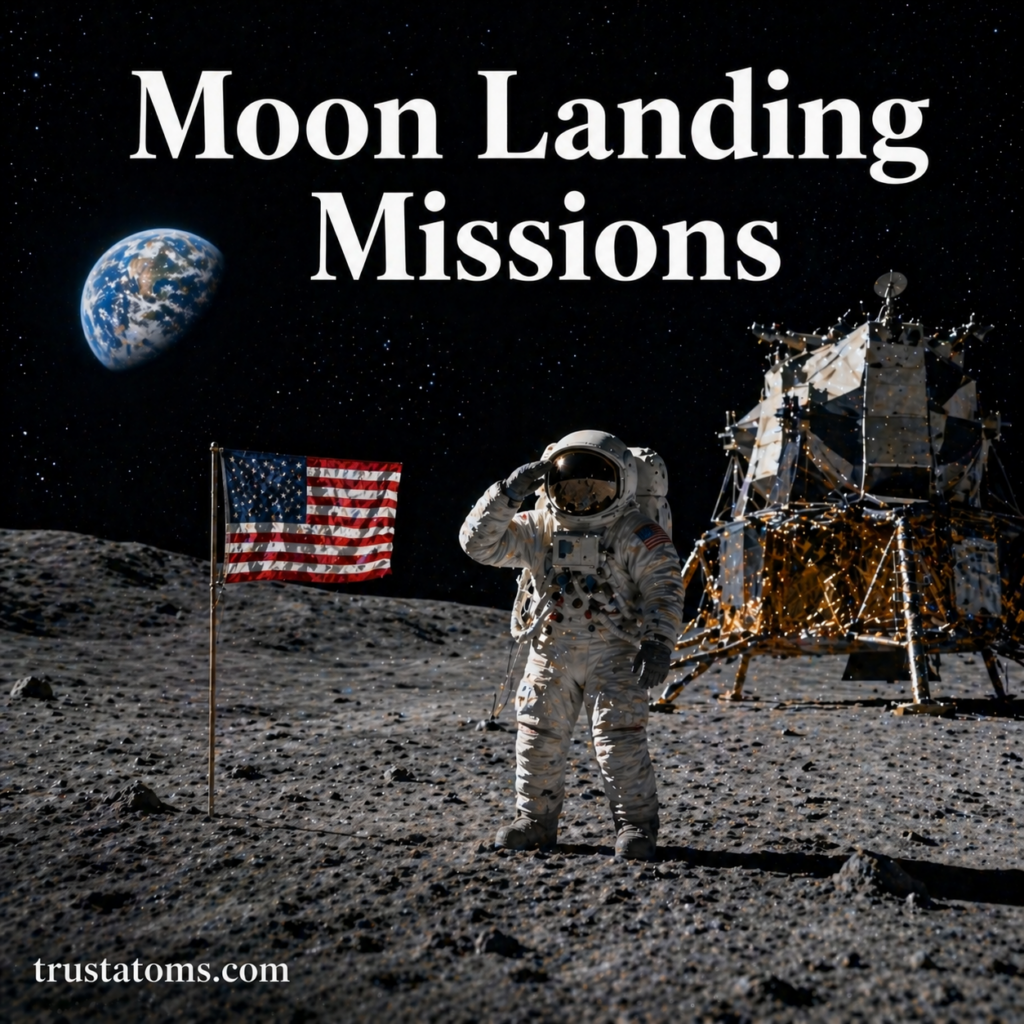
On July 20, 1969, Apollo 11 achieved the first successful crewed Moon landing.
Historic Crew
- Neil Armstrong
- Buzz Aldrin
- Michael Collins
Key Moments
- Armstrong became the first human to walk on the Moon
- Aldrin joined him shortly after
- Collins remained in lunar orbit
This mission marked a defining moment in the Space Race and human exploration.
Subsequent Apollo Moon Landings
After Apollo 11, several missions continued exploring the Moon.
Successful Moon Landing Missions
- Apollo 12 (1969) – Precision landing and equipment deployment
- Apollo 14 (1971) – Scientific exploration and sample collection
- Apollo 15 (1971) – First use of the Lunar Rover
- Apollo 16 (1972) – Exploration of highland regions
- Apollo 17 (1972) – Final crewed Moon mission
Each mission expanded our understanding of the Moon’s geology and environment.
Scientific Discoveries from Moon Missions
Moon landing missions provided valuable scientific insights.
Key Findings
- The Moon’s surface is covered in regolith (fine dust and rock)
- Evidence of volcanic activity in the past
- Insights into the formation of the Earth-Moon system
Astronauts also brought back over 800 pounds of lunar samples for study.
Technology Behind Moon Landings
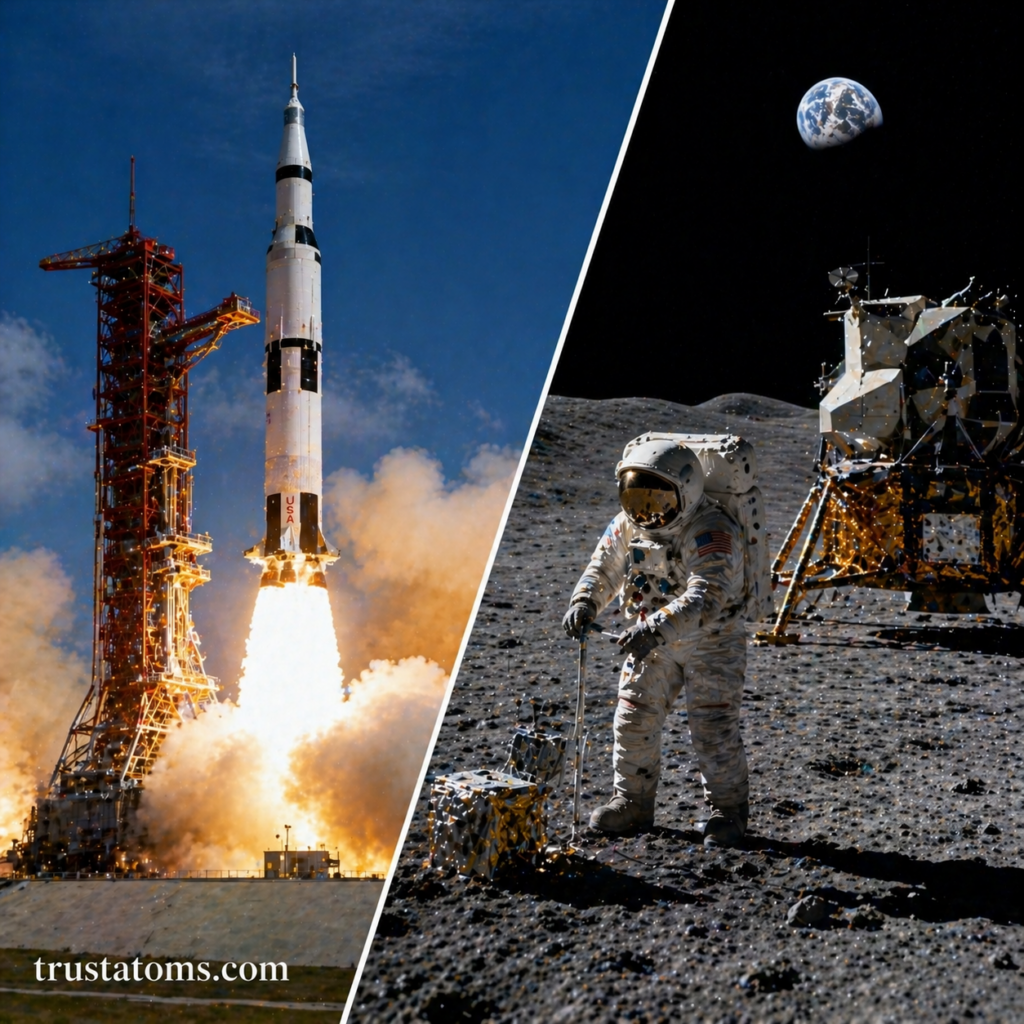
Landing on the Moon required innovative technology.
Major Components
- Saturn V Rocket – Powerful launch vehicle
- Command Module – Transported crew
- Lunar Module – Landed on the Moon
These systems worked together to enable safe travel, landing, and return.
Challenges of Moon Landing Missions
Moon missions were extremely complex and risky.
Key Challenges
- Precise navigation and landing
- Limited computing power
- Life support in space
- Safe re-entry into Earth’s atmosphere
Despite these risks, all Apollo landing missions after Apollo 11 were successful.
The End of the Apollo Era
The Apollo program ended in 1972 with Apollo 17.
Reasons for Ending
- High costs
- Shifting political priorities
- Focus on other space initiatives
For decades afterward, no humans returned to the Moon.
Modern Plans to Return to the Moon
Interest in Moon exploration has grown again in recent years.
Current Initiatives
- Artemis program aims to return humans to the Moon
- Plans include establishing a sustainable human presence
- Increased international and private sector involvement
These efforts could lead to a new era of lunar exploration.
Why Moon Landing Missions Matter
Moon missions continue to influence science and technology today.
Key Impacts
- Advances in engineering and computing
- Development of new materials
- Inspiration for generations
- Foundation for future Mars missions
They also represent humanity’s ability to achieve ambitious goals.
Final Thoughts
Moon landing missions remain one of the greatest accomplishments in human history. From early robotic probes to the groundbreaking success of Apollo 11, these missions expanded our understanding of space and our place within it.
As new programs like Artemis program take shape, the next chapter of Moon exploration is just beginning.