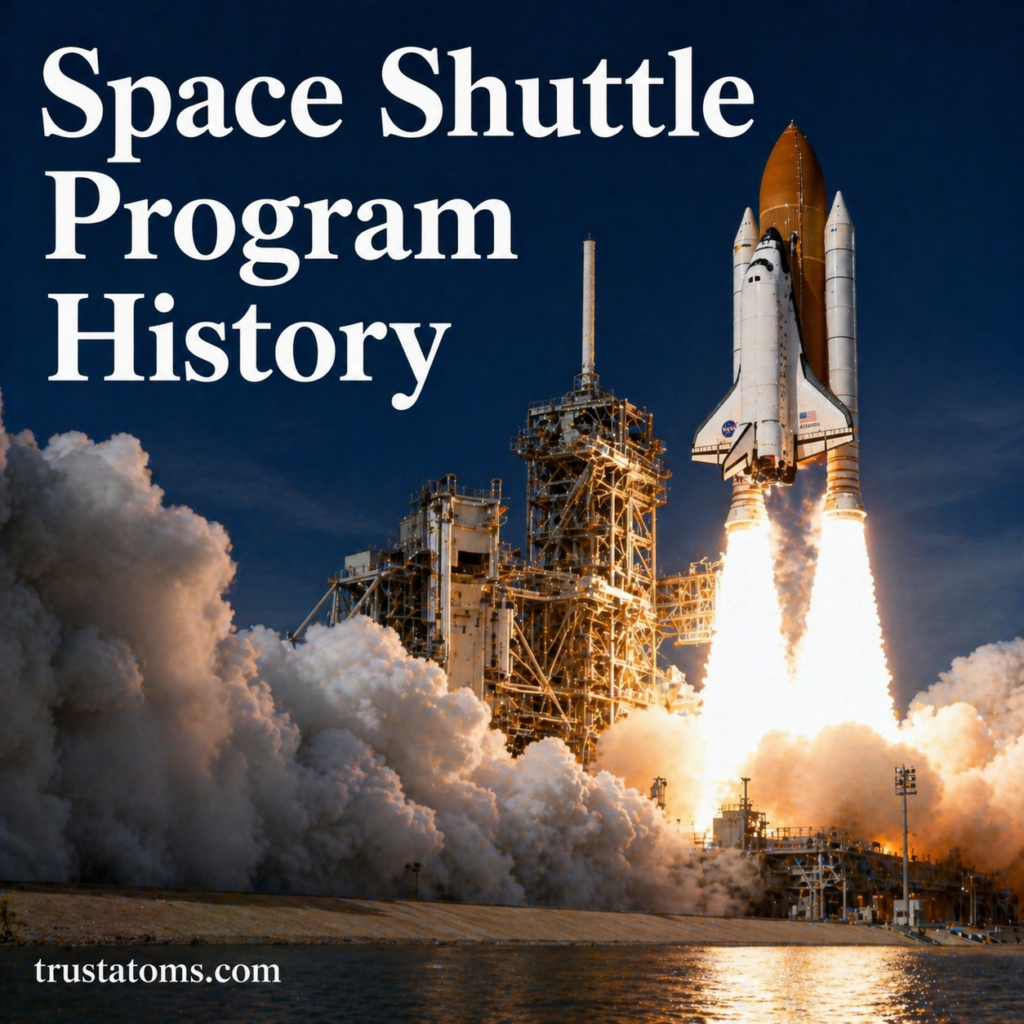
The Space Shuttle program was one of the most ambitious and influential chapters in the history of space exploration. Developed by NASA, it introduced reusable spacecraft, expanded access to orbit, and played a crucial role in building modern space infrastructure.
This article explores the history, milestones, achievements, and legacy of the Space Shuttle program.
What Was the Space Shuttle Program?
The Space Shuttle program was a series of missions conducted between 1981 and 2011 using partially reusable spacecraft.
Key Features
- Reusable orbiter spacecraft
- Solid rocket boosters
- External fuel tank
Unlike earlier missions, the Shuttle could launch, orbit Earth, and return for reuse—similar to an aircraft.
Why the Space Shuttle Was Developed
After the Apollo Moon missions, NASA sought a more cost-effective and flexible way to access space.
Main Objectives
- Reduce the cost of launching payloads
- Enable frequent missions
- Support scientific research
- Build and service space infrastructure
The Shuttle was designed to make space travel more routine.
The First Shuttle Launch
The program officially began on April 12, 1981, with the launch of Columbia.
Mission Highlights
- First reusable spacecraft mission
- Carried astronauts into orbit and safely returned
- Demonstrated new spaceflight capabilities
This marked the beginning of a new era in human spaceflight.
The Shuttle Fleet
NASA operated five Space Shuttle orbiters during the program.
Main Orbiters
- Columbia
- Challenger
- Discovery
- Atlantis
- Endeavour
Each orbiter contributed to dozens of missions over three decades.
Major Achievements of the Shuttle Program
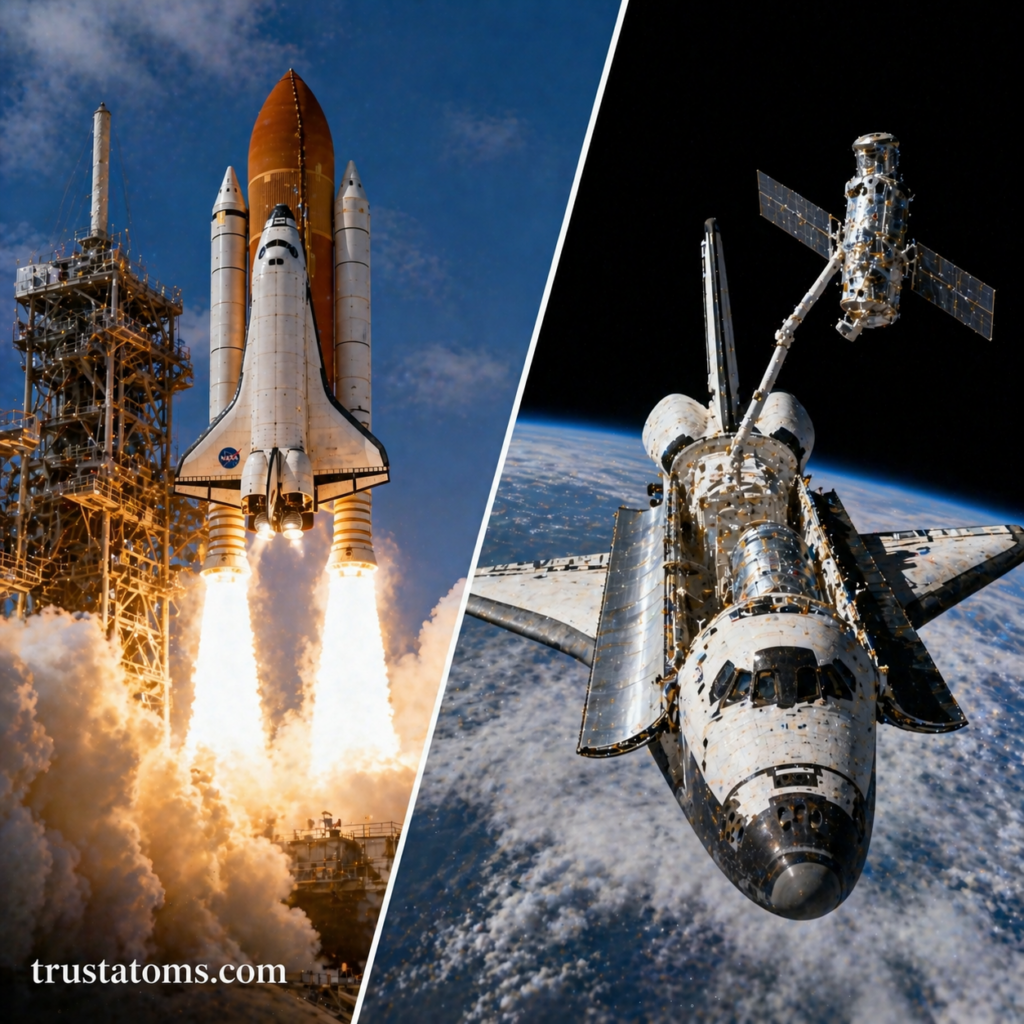
The Space Shuttle program enabled a wide range of missions and breakthroughs.
Key Accomplishments
- Satellite Deployment and Repair
- Launched and serviced satellites, including the Hubble Space Telescope
- Scientific Research
- Conducted experiments in microgravity
- Construction of the ISS
- Played a central role in assembling the International Space Station
- International Collaboration
- Enabled joint missions with global partners
The Shuttle became a workhorse for space operations.
Notable Missions
Several Shuttle missions stand out for their importance and impact.
Key Missions
- STS-1 (1981) – First Shuttle flight (Columbia)
- STS-31 (1990) – Deployment of Hubble Space Telescope
- ISS Assembly Missions (1998–2011) – Construction of the space station
These missions helped shape modern space exploration.
Challenges and Tragedies
Despite its successes, the Shuttle program faced serious challenges.
Major Disasters
- 1986: Loss of Challenger shortly after launch
- 2003: Loss of Columbia during re-entry
Impact
- Led to major safety reviews and improvements
- Highlighted the risks of human spaceflight
- Resulted in temporary program suspensions
These events were tragic but led to important advancements in safety protocols.
Daily Operations and Life on Shuttle Missions
Shuttle missions typically lasted from a few days to a couple of weeks.
What Astronauts Did
- Conduct experiments
- Deploy or repair satellites
- Perform spacewalks
- Support construction tasks
The Shuttle’s design allowed for a wide variety of mission types.
The End of the Shuttle Program
The Space Shuttle program ended in 2011 with the final mission of Atlantis.
Reasons for Retirement
- High operational costs
- Safety concerns
- Shift toward new spacecraft development
NASA began transitioning to new systems for deep space exploration.
Legacy of the Space Shuttle Program
The Shuttle program left a lasting impact on space exploration.
Key Contributions
- Proved the viability of reusable spacecraft
- Enabled construction of the ISS
- Advanced satellite technology
- Inspired future space programs
It also paved the way for modern reusable rockets developed by private companies.
Influence on Modern Spaceflight
Today’s space programs build on the Shuttle’s legacy.
Continued Impact
- Development of reusable rocket systems
- Growth of commercial spaceflight
- Increased international collaboration
Companies like SpaceX have adopted and improved upon reusable technology concepts.
Final Thoughts
The Space Shuttle program transformed how humans access space. While it faced challenges, its contributions to science, engineering, and international cooperation are undeniable.
From launching satellites to helping build the International Space Station, the Shuttle program remains one of the most important eras in space exploration history.