The Artemis program represents the next major chapter in human space exploration. Led by NASA, this ambitious initiative aims to return humans to the Moon and establish a sustainable presence that will pave the way for future missions to Mars.
In this article, we’ll break down the goals, phases, technologies, and long-term vision of the Artemis program.
What Is the Artemis Program?
The Artemis program is a series of missions designed to:
- Return astronauts to the Moon
- Build long-term lunar infrastructure
- Prepare for deep space exploration
Named after the twin sister of Apollo in Greek mythology, Artemis symbolizes a new era of exploration that builds on past achievements while expanding future possibilities.
Why Artemis Matters
The Artemis program is more than just a return to the Moon—it’s a strategic step toward long-term human space exploration.
Key Reasons for Artemis
- Establish a sustainable human presence beyond Earth
- Test technologies needed for Mars missions
- Strengthen international partnerships
- Encourage commercial space innovation
Unlike the Apollo missions, Artemis focuses on long-term exploration rather than short-term visits.
Core Goals of the Artemis Program
The Artemis program has several clearly defined objectives that guide its missions.
1. Return Humans to the Moon
One of the primary goals is to land astronauts on the Moon again for the first time since 1972.
Key Objectives
- Land the first woman on the Moon
- Land the first person of color on the Moon
- Conduct extended surface missions
This goal reflects a more inclusive and sustainable approach to exploration.
2. Establish a Sustainable Lunar Presence
Artemis aims to move beyond brief visits by creating long-term infrastructure.
Planned Developments
- Lunar habitats for astronauts
- Surface mobility systems (rovers)
- Resource utilization (such as extracting water ice)
This will allow astronauts to live and work on the Moon for longer durations.
3. Build the Lunar Gateway
The Lunar Gateway is a key component of the Artemis program.
Purpose of the Gateway
- Serve as a staging point for Moon missions
- Enable longer-duration missions
- Support scientific research in lunar orbit
It will act as a bridge between Earth and the Moon.
4. Advance Scientific Research
Artemis missions will enable new scientific discoveries about the Moon and beyond.
Research Goals
- Study lunar geology and history
- Investigate water ice deposits
- Conduct experiments in deep space conditions
These findings will improve our understanding of the solar system.
5. Prepare for Human Missions to Mars
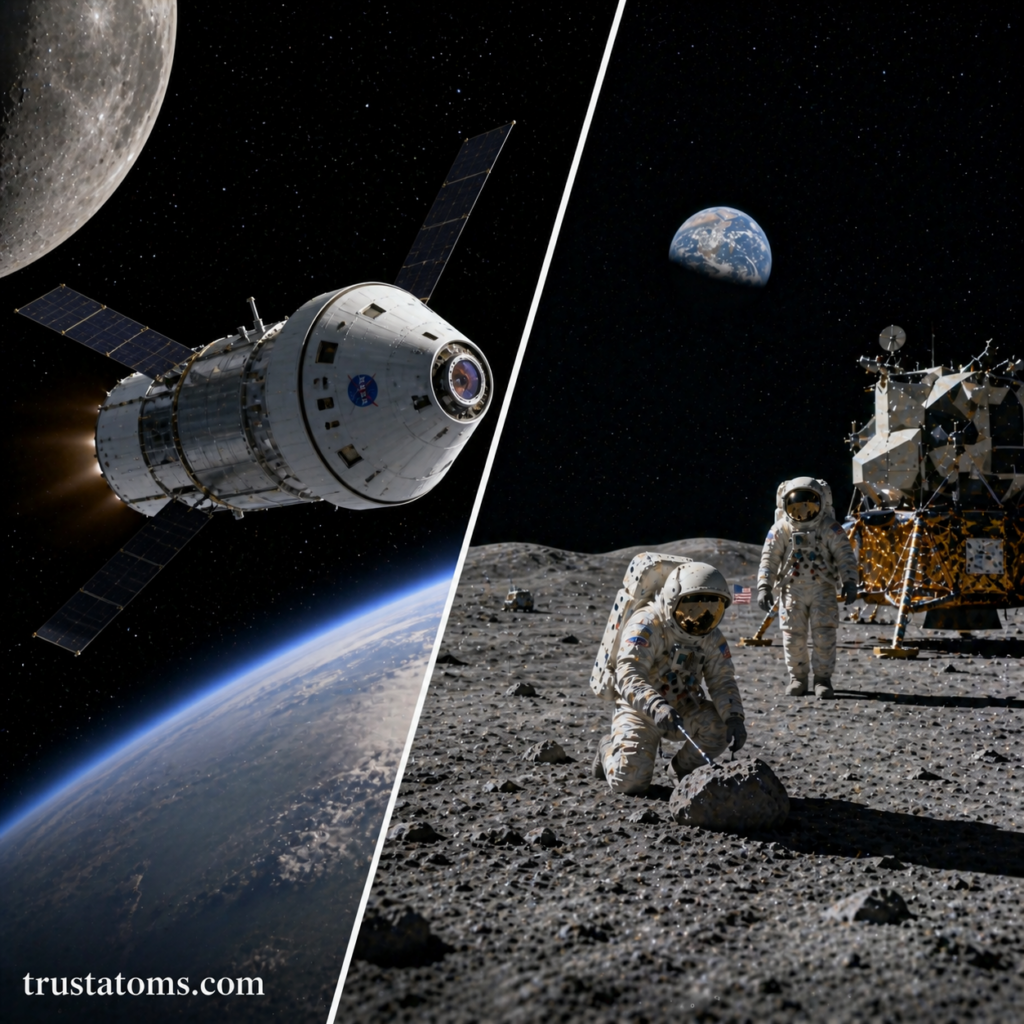
One of the most important long-term goals of Artemis is to prepare for Mars exploration.
How Artemis Supports Mars Missions
- Tests life support systems
- Develops deep space navigation
- Studies long-duration human spaceflight
The Moon serves as a proving ground for future missions to the Red Planet.
Key Technologies Behind Artemis
The Artemis program relies on advanced technologies to achieve its goals.
Major Systems
- Orion spacecraft – Carries astronauts into deep space
- Space Launch System – Launches missions beyond Earth orbit
- Human Landing System (HLS) – Transports astronauts to the lunar surface
These technologies are designed for deep space travel and long-term missions.
Artemis Mission Phases
The Artemis program is structured in multiple phases.
Artemis I
- Uncrewed mission testing Orion and launch systems
- Demonstrated deep space capabilities
Artemis II
- First crewed mission
- Astronauts orbit the Moon without landing
Artemis III
- Planned crewed Moon landing
- Marks humanity’s return to the lunar surface
Future missions will expand capabilities and infrastructure.
International and Commercial Partnerships
Artemis is a global effort involving both governments and private companies.
Key Partners
- European Space Agency
- Japan Aerospace Exploration Agency
- Canadian Space Agency
Private companies such as SpaceX also play a major role in developing landing systems and transportation.
Challenges Facing Artemis
Despite its ambitious goals, the Artemis program faces several challenges:
- High development and mission costs
- Technical complexity
- Safety concerns for deep space missions
- Timeline delays
Overcoming these challenges is essential for long-term success.
The Future of Artemis
The Artemis program is expected to shape the future of space exploration for decades.
Long-Term Vision
- Permanent lunar bases
- Regular missions to the Moon
- Preparation for Mars colonization
Artemis represents a shift from exploration to sustained presence in space.
Final Thoughts
The Artemis program is a bold step forward in human space exploration. By returning to the Moon and building a sustainable presence, it lays the foundation for future missions to Mars and beyond.
As technology advances and global collaboration continues, Artemis may redefine humanity’s relationship with space.