Symbiotic relationships are close, sustained interactions between organisms of different species that can benefit, harm, or have little measurable effect on the participants. In ecosystems, these relationships influence nutrient availability, population sizes, food webs, and how organisms respond to environmental change.
In the study of biology, symbiotic relationships help explain why the survival and success of one species may depend on another. A fungus associated with plant roots can improve nutrient uptake, while a parasite may reduce its host’s health and reproductive success.
These interactions occur in forests, grasslands, freshwater habitats, oceans, and even within animal bodies. Their ecological effects extend beyond the organisms directly involved, sometimes changing the resources available to entire communities.
How Symbiotic Relationships Affect Ecosystems
Symbiosis describes a close association between different species, often lasting for a substantial portion of their lives. The organisms involved are called symbionts, and their relationship may be beneficial, harmful, or nearly neutral for either partner.
The broader concept of symbiosis in biology explains these partnerships at the organism level. An ecological perspective goes further by examining how they affect communities, resource movement, and population dynamics.
For example, a plant–fungus partnership may improve plant growth, increasing the amount of vegetation available to herbivores. A parasite affecting a dominant species may change competitive relationships among other organisms.
These effects connect symbiosis to broader ecological interactions within communities, including competition, predation, and relationships between consumers and their resources.
Three Types of Symbiotic Relationships
Ecologists commonly classify symbiotic relationships according to their effects on the participating species. These categories describe the outcomes of an interaction rather than assuming that every partnership remains unchanged.
| Relationship | Species A | Species B |
|---|---|---|
| Mutualism | Benefits | Benefits |
| Commensalism | Benefits | Little or no effect |
| Parasitism | Benefits | Harmed |
Mutualism: Both Species Benefit
Mutualism occurs when both participating species gain an advantage. Mycorrhizal fungi may help plants acquire phosphorus and other nutrients, while receiving carbon compounds produced by the plants.
Mutualisms vary in how dependent the partners are on one another. Some organisms require particular partners to complete their life cycles, while others can survive independently under suitable conditions.
Commensalism: One Benefits Without a Clear Effect on the Other
Commensalism occurs when one species benefits and the other experiences little or no measurable effect. For example, some epiphytic plants grow on tree branches to reach better light conditions without drawing nutrients directly from the tree.
Identifying true commensalism can be difficult because small costs or benefits may be overlooked. A relationship considered neutral under one set of conditions may produce different effects elsewhere.
Parasitism: One Benefits at the Host’s Expense
Parasitism occurs when an organism obtains resources from a host while causing harm. Ticks feed on vertebrate blood, and tapeworms obtain nutrients while living inside animal hosts.
A parasite and its host may remain associated for extended periods. The consequences depend on factors such as parasite abundance, host condition, and whether the parasite transmits disease-causing organisms.
How Symbiosis Changes Food Webs and Nutrient Availability

Symbiotic relationships can influence an ecosystem’s productivity by changing how organisms obtain resources. Plant–fungus associations affect nutrient uptake, while some microbial partnerships make nutrients available in forms that other organisms can use.
Animal partnerships may also affect food webs. Cleaner shrimp obtain food by removing parasites and other material from visiting fish. When cleaning reduces parasite burdens, the client fish may benefit as well.
These interactions do not automatically increase ecosystem stability. Their effects depend on the species involved, how common the relationships are, and whether environmental conditions allow the partners to continue interacting.
Plant–Fungus Partnerships in Forests and Grasslands
Many land plants form mycorrhizal associations with fungi. Fungal filaments extend into surrounding soil, increasing the area through which nutrients can be acquired. Plants supply the fungi with carbon compounds obtained through photosynthesis.
These partnerships can influence plant growth, competition, and nutrient distribution. Their benefits vary with soil fertility, fungal species, and the amount of carbon the plant must provide.
In nutrient-poor soils, some mycorrhizal partnerships may substantially improve phosphorus acquisition. Where nutrients are already abundant, the carbon cost of supporting fungi may reduce the net benefit to the plant.
Nitrogen-Fixing Bacteria Support Plant Growth
Some legumes form mutualistic associations with nitrogen-fixing bacteria, including rhizobia. The bacteria inhabit specialized root nodules and convert atmospheric nitrogen gas into ammonia, which can be incorporated into biologically useful nitrogen compounds.
The plant supplies carbon compounds and helps maintain conditions suitable for nitrogen fixation. This partnership can reduce the plant’s dependence on nitrogen already available in the soil.
These exchanges connect symbiosis with microbial roles in nutrient cycling, including the transformations that move nitrogen and other elements through ecosystems.
Worked Example: How a Legume Partnership Affects a Field
Imagine two garden beds with similar soil conditions. One contains legumes that form effective partnerships with compatible nitrogen-fixing bacteria. The other contains plants that do not form this type of nitrogen-fixing association.
In the legume bed, the bacteria can supply biologically usable nitrogen to their host plants. Some of that nitrogen may later enter the soil when roots and other plant material decompose.
The effect on the next crop depends on how much plant material remains, how much nitrogen was removed during harvest, and how quickly organic matter decomposes. Planting legumes therefore does not guarantee that the following crop will receive enough nitrogen without additional inputs.
This example illustrates an ecological consequence of symbiosis: a partnership between two species can influence nutrient availability for organisms that are not directly involved.
Coral–Algae Partnerships in Marine Ecosystems
Many reef-building corals contain photosynthetic dinoflagellates from the family Symbiodiniaceae within their tissues. The algae provide photosynthetically produced organic compounds, while the coral supplies a protected environment and access to inorganic nutrients.
This partnership helps many corals grow in tropical waters where dissolved nutrients are relatively scarce. It also links sunlight-driven primary production to the construction of reef habitats used by numerous marine organisms.
Under stressful conditions, especially unusually high water temperatures, corals may lose symbiotic algae or their photosynthetic pigments. This produces coral bleaching, which can reduce the coral’s energy supply. Bleached corals are not necessarily dead, but prolonged stress can increase the risk of mortality.
Microbial Symbiosis Within Animals
Animals host diverse microbial communities on body surfaces and within digestive systems. Some microorganisms help break down dietary compounds, produce useful metabolites, or influence interactions with the immune system.
These relationships are not uniformly beneficial. Their effects depend on the microbial species, the host’s condition, diet, and surrounding environment.
Microbial Symbiosis in Environmental Systems examines how partnerships involving microorganisms influence biological processes in different habitats.
Environmental Change Can Alter Symbiotic Partnerships
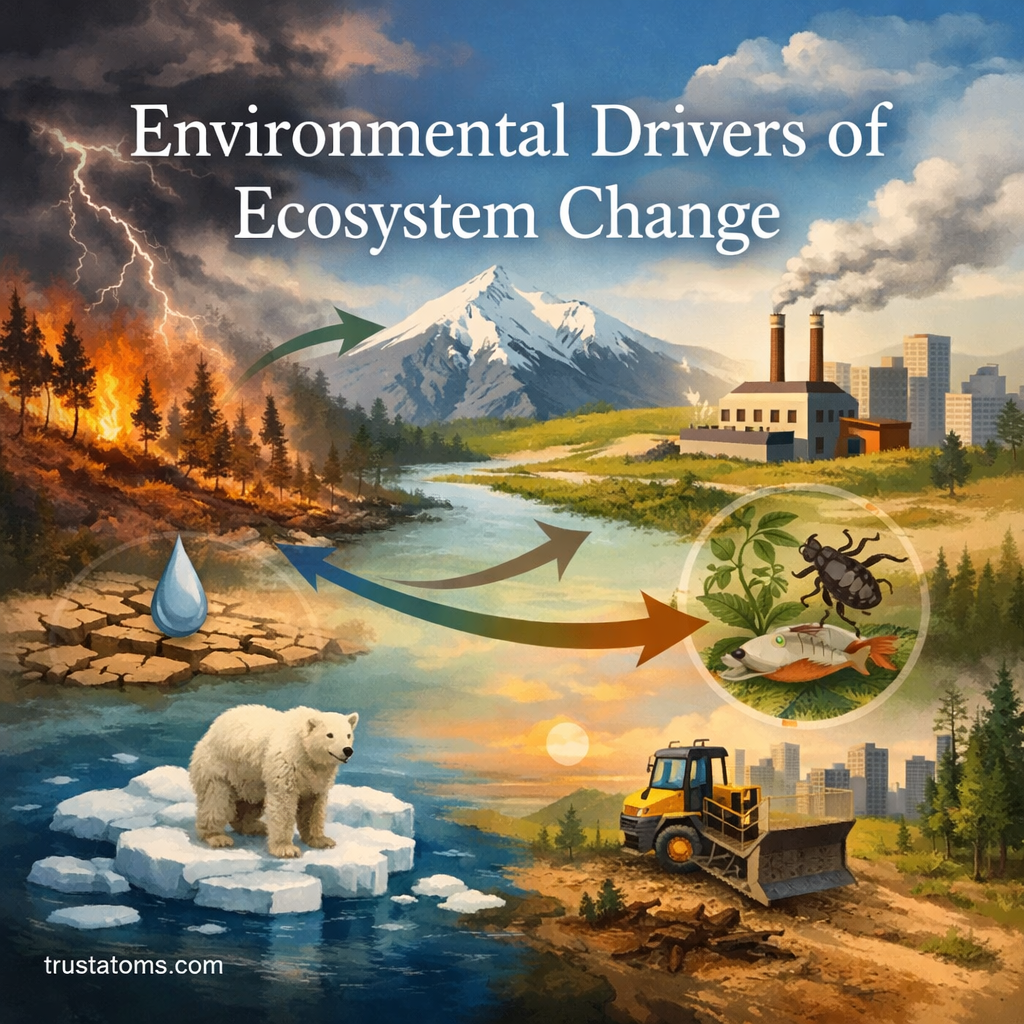
Symbiotic relationships are affected by temperature, moisture, nutrient availability, pollution, and habitat disturbance. A partnership that benefits both organisms under one set of conditions may become less beneficial when resources or environmental pressures change.
For example, drought can influence the effectiveness of plant–fungus associations by changing water availability and plant carbon supply. Ocean warming can disrupt coral–algae partnerships, affecting both coral health and the habitat supported by reefs.
Ecologists therefore study not only which species interact, but also how strongly they depend on each other and how those interactions respond to changing conditions.
How Symbiotic Relationships Influence Species Populations
Symbiotic relationships can change survival, reproduction, and population growth. Mutualistic partners may increase one another’s access to resources, while parasites can reduce host survival or reproductive output.
When these effects are widespread, they may alter competition among species. A plant that benefits from effective fungal partners, for instance, may compete differently with neighboring plants that lack similar associations.
Scientists also investigate how populations change over generations in response to these interactions. According to evolutionary biology, natural selection can favor traits that improve the benefits of a partnership or strengthen defenses against harmful organisms.
Frequently Asked Questions
Are all symbiotic relationships beneficial?
No. Mutualism benefits both species, commensalism benefits one with little measurable effect on the other, and parasitism benefits one while harming its host. The effects of a relationship may also change with environmental conditions.
How does symbiosis affect nutrient cycling?
Some symbiotic organisms help their partners obtain or transform nutrients. Nitrogen-fixing bacteria provide usable nitrogen compounds to certain plants, while mycorrhizal fungi help many plants acquire soil nutrients. These activities can influence how nutrients move through ecosystems.
Can symbiotic relationships change over time?
Yes. Changes in temperature, resource availability, population density, and other conditions can alter the costs and benefits experienced by each partner. Over generations, natural selection may also change traits involved in the interaction.
Symbiotic relationships connect individual organisms to larger ecological processes, from nutrient cycling in soils to habitat formation on coral reefs. Their effects depend on the organisms involved and the environmental conditions surrounding them. Examining these partnerships helps ecologists understand how changes affecting one species can spread through an entire community.
Sources: OpenStax, Biology 2e; Begon, Townsend, and Harper, Ecology: From Individuals to Ecosystems; National Oceanic and Atmospheric Administration, Coral Reef Conservation Program.